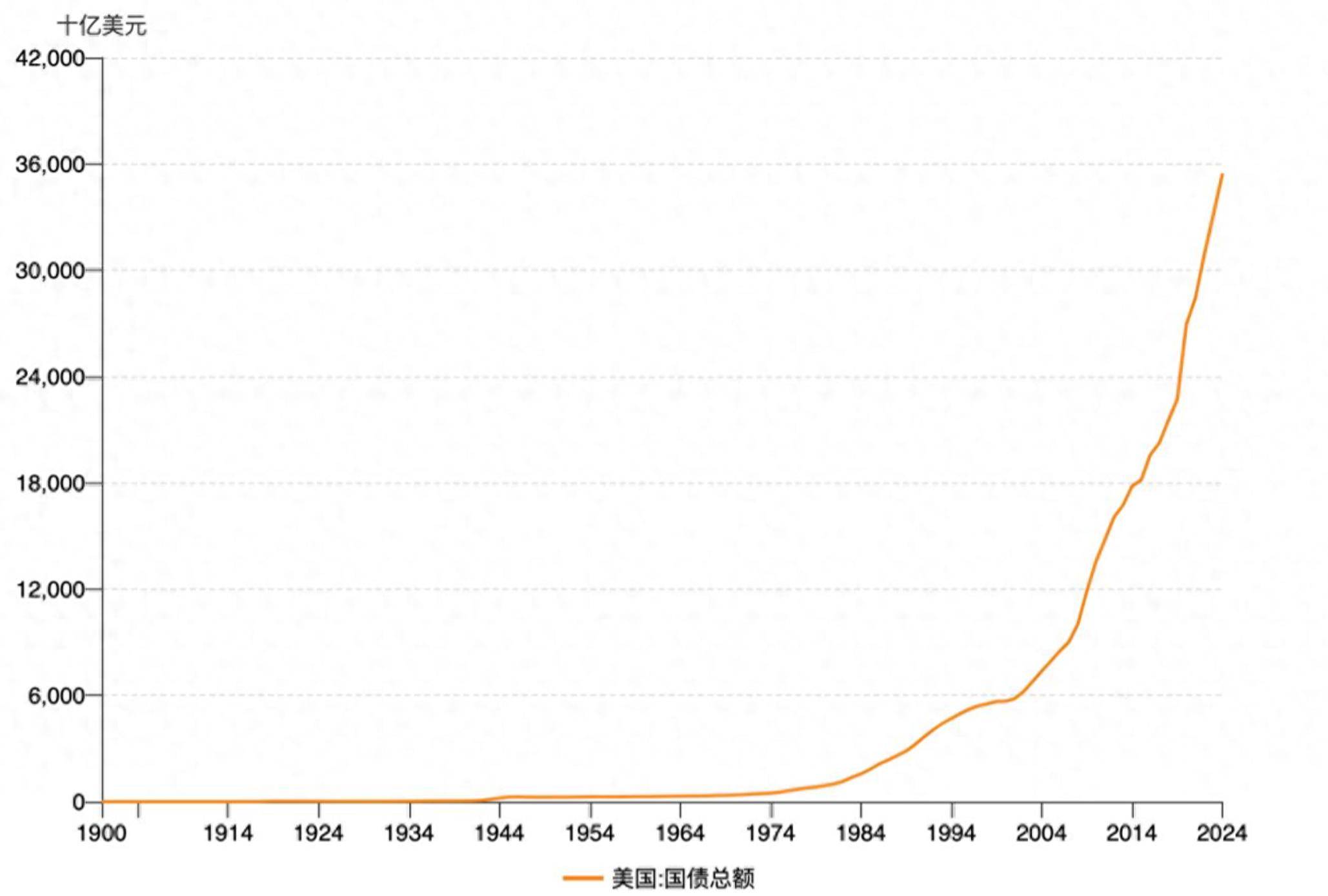
美债

Search documents
美债还有不少挑战
Bank of China Securities· 2025-09-15 01:06
Report Industry Investment Rating The document does not provide a clear industry investment rating. Core Viewpoints of the Report - The US Treasury bonds still face many challenges. Although the 10-year yield of US Treasury bonds once touched the 4% mark, due to the fragile fiscal balance, judicial challenges to tariffs, and the inertia of inflation in the US, the Fed should be cautious when loosening monetary policy to avoid the risk of re - inflation [4][13]. - The growth of domestic household loans continues to slow down. In August, the year - on - year growth rate of household RMB loans and household RMB medium - and long - term loans decreased, while the government bond stock maintained a relatively high growth rate. The impact of this part of social financing on medium - and long - term bond interest rates may not be significant [4][17]. Summary According to Relevant Catalogs High - Frequency Data Panoramic Scan - **US Treasury Bond Situation**: In August, the US PPI was lower than expected, and the non - farm payroll employment data was significantly revised down. The 10 - year yield of US Treasury bonds once touched 4%. However, considering the fragile fiscal balance (the average fiscal deficit ratio of the US government in the past 4 quarters as of the second quarter of this year was about 6.3%, still higher than the pre - pandemic level), judicial challenges to tariffs, and the inertia of inflation (the commodity inflation in the US showed a rebound momentum in August, and the downward trend of service inflation stagnated), caution should be exercised when the 10 - year yield of US Treasury bonds reaches or is lower than 4% [4][13]. - **Domestic Household Loan Situation**: In August, the year - on - year growth rate of domestic household RMB loans was about 2.4%, and that of household RMB medium - and long - term loans was about 3.3%, both lower than the previous month. The government bond stock increased by 21.1% year - on - year [4][17]. - **High - Frequency Data Changes**: This week (the week of September 12, 2025), the average wholesale price of pork increased by 0.14% week - on - week and decreased by 26.31% year - on - year; the Shandong vegetable wholesale price index decreased by 0.14% week - on - week and 21.17% year - on - year; the edible agricultural product price index increased by 0.80% week - on - week and decreased by 12.29% year - on - year. The Brent and WTI crude oil futures prices decreased by 1.22% and 1.87% week - on - week respectively; the LME copper spot price increased by 0.54% week - on - week, and the LME aluminum spot price increased by 1.18% week - on - week. The domestic cement price index decreased by 0.53% week - on - week, the Nanhua iron ore index increased by 2.61% week - on - week, the operating rate of coking enterprises with a capacity of over 2 million tons increased by 3.57% week - on - week, the rebar inventory increased by 3.90% week - on - week, and the rebar price index decreased by 0.11% week - on - week. From September 1 - 10, 2025, the average daily trading area of commercial housing in 30 large and medium - sized cities was about 196,000 square meters, lower than the 229,000 square meters in September 2024 [4]. High - Frequency Data and Important Macroeconomic Indicators Trend Comparison The document mainly presents various charts showing the relationship between high - frequency data and important macroeconomic indicators such as industrial added value, PPI, CPI, etc., but does not provide a detailed text summary or conclusion [22]. Important High - Frequency Indicators in the US and Europe The document shows charts related to US weekly economic indicators, initial jobless claims, same - store sales growth, PCE, and the Fed's and ECB's implied interest rate adjustment prospects, but there is no specific text analysis [91]. Seasonal Trends of High - Frequency Data The document presents the seasonal trends of various high - frequency data through charts, including the production of crude steel, production material price index, etc., but there is no detailed text description [106]. High - Frequency Traffic Data in Beijing, Shanghai, Guangzhou, and Shenzhen The document shows charts of the year - on - year changes in subway passenger volume in Beijing, Shanghai, Guangzhou, and Shenzhen, but there is no corresponding text analysis [163].
华夏数字资本创始人叶开:美元稳定币通过绑定美债缓解压力,却藏“瞬间崩塌”隐患
Feng Huang Wang Cai Jing· 2025-09-12 03:29
Group 1 - The event "25th Investment Fair · Phoenix Network Wutong Night Talk" focused on high-level discussions about investment opportunities and industry trends in the context of global dynamics [1] - The core requirement of the US Stablecoin Act mandates that globally issued US dollar stablecoins must be 1:1 backed by US dollars or short-duration US Treasury bonds, which has significant implications for the market [3] - The decentralization of US Treasury bond holdings to billions of global users through stablecoins poses a risk of sudden capital flight, making it harder for the US government and Federal Reserve to intervene in times of crisis [3] Group 2 - The development path of the Chinese Renminbi stablecoin is gaining attention as it aims to establish a digital financial system that relies on real assets rather than the traditional dollar system [4] - The concept of a gold-backed stablecoin is emerging as a potential global consensus choice, with advantages such as high standardization and the ability to avoid geopolitical risks [5] - The trend of dollar stablecoins and the digitization of traditional finance could lead to the marginalization of sovereign currencies in smaller countries, highlighting the need for these nations to adapt quickly [6]


美国总统突然宣布!特朗普称哈塞特、沃什和沃勒是美联储主席的前三人选,这回可是直接点名了,名单从11人缩到3人
Sou Hu Cai Jing· 2025-09-07 14:34
Core Viewpoint - The article discusses the potential influence of former President Trump on the Federal Reserve's leadership and monetary policy, highlighting concerns about the independence of the Fed and the implications for the U.S. dollar's credibility in global markets [3][14]. Group 1: Federal Reserve Leadership - Trump has proposed three candidates—Hassett, Waller, and Walsh—to replace Powell, indicating a desire for immediate changes despite Powell's remaining term of over eight months [3]. - Hassett is seen as a loyalist to Trump, raising concerns about the potential loss of the Fed's independence and the impact on the dollar's credibility, which currently holds a 58% share of global foreign exchange reserves [5]. - Waller, a current Fed governor, has expressed a desire for rate cuts, but his academic background suggests a more consistent approach to monetary policy, making him a more reliable choice than Hassett [5][7]. Group 2: Market Reactions and Economic Implications - The market has reacted swiftly, with a 99.4% probability of a rate cut in September, raising questions about the extent of the cut [9]. - The potential for a 25 or 50 basis point cut is debated, with Hassett likely favoring a larger cut, while Waller may prefer a more cautious approach [10]. - Despite the pressure to cut rates to alleviate debt burdens, inflation remains a concern, with the July CPI showing a year-on-year increase of 2.9%, still above the 2% target [10][12]. Group 3: Broader Economic Context - The article suggests that hasty rate cuts could lead to rising prices for essentials like oil and food, increasing financial pressure on consumers [12]. - The reluctance of Treasury Secretary Basent to take on the role of Fed Chair indicates the precarious nature of the position amid political pressures [12]. - The overarching concern is whether the Fed will become a tool of the White House, potentially undermining the dollar's global pricing power and leading to a rapid outflow of capital from U.S. Treasuries [14].
美债的“近忧”和“远虑”
2025-09-03 14:46
Summary of Key Points from Conference Call Industry Overview - The discussion primarily revolves around the U.S. Treasury bond market and its implications for the domestic economy, particularly in relation to the Chinese market and currency dynamics. Core Insights and Arguments 1. **Impact of U.S. Treasury Rates on Currency**: Fluctuations in U.S. Treasury rates directly affect the USD/CNY exchange rate, which in turn constrains domestic monetary policy and expectations for easing [1][3][4] 2. **Shift in Investment Preferences**: There has been a notable shift of resident deposits towards wealth management products, dollar deposits, and U.S. Treasuries, leading to an expanded foreign exchange deficit and negatively impacting domestic risk assets [1][3] 3. **Attraction of A-Shares**: Since 2025, the actual yield on U.S. Treasuries has decreased due to expectations of rate cuts, making A-share dividends, which may approach 5%, more attractive compared to U.S. Treasuries yielding only 1% to 2% [1][3] 4. **Factors Influencing Treasury Rate Pricing**: U.S. Treasury rates are influenced by economic data, policy changes, and market sentiment, with significant volatility observed in 2025 due to various economic indicators and policy announcements [1][4][5] 5. **Global Economic Instability**: The current global economic environment is unstable, with significant fluctuations in U.S. Treasury and dollar markets, influenced by political events in France and Japan, as well as a reversal in global equity markets [1][6] 6. **Short-term Treasury Maturities**: In Q2 2025, $6 trillion in U.S. Treasuries are set to mature, primarily short-term bonds, which are not expected to significantly impact Treasury rates or dollar credit due to stable long-term issuance patterns [1][7] 7. **Foreign Investment Trends**: Despite concerns about foreign selling of U.S. Treasuries, data indicates that while some countries like China have sold off, major holders like Japan and the UK have increased their holdings, leading to an overall increase in non-U.S. government Treasury reserves [1][8] 8. **Fiscal Sustainability Concerns**: Long-term risks regarding U.S. fiscal sustainability are highlighted, with the potential for high borrowing to continue unless effective fiscal reforms are implemented [2][9][12] 9. **Government Spending Structure**: The U.S. government’s spending structure is deemed unhealthy, with a heavy reliance on necessary expenditures and insufficient contributions from corporate taxes, necessitating a resolution of supply-demand imbalances for sustainable development [12][14] 10. **Future Economic Outlook**: The impact of new fiscal legislation on the U.S. economy is significant, with a focus on whether the government can achieve effective fiscal consolidation or will continue to rely on high levels of borrowing [15] Other Important but Overlooked Content - The relationship between the Federal Reserve's monetary policy and Treasury rates is crucial, as short-term rates are directly influenced by Fed decisions, while long-term rates reflect market expectations of the U.S. economy [11] - The Treasury's cash management strategies, including the current balance of the Treasury General Account (TGA), are expected to have limited impact on market liquidity and Treasury rates in the near term [10]
恐慌指数涨幅扩大至20%,金价继续走高,避险货币与美债保持下跌
Sou Hu Cai Jing· 2025-09-02 16:41
Core Insights - The VIX volatility index experienced a daily increase of 20.0%, reaching 19.35 [1] - The S&P 500 index declined by over 1.5%, while the Dow Jones fell by 1.2% and the Nasdaq dropped by 1.8% [1] - Spot gold prices rose by more than 1.3%, hitting a historical high above $3520 [1] - The US dollar appreciated against the Japanese yen by over 0.7% and against the Swiss franc by 0.4% [1] - The yield on the US 10-year Treasury bond increased by over 4.6 basis points, although it significantly deviated from the daily high of 4.3043% recorded at 20:33 Beijing time [1]
全球市场迎来“降息倒计时”?
Sou Hu Cai Jing· 2025-08-31 23:52
Group 1 - The core viewpoint indicates that signals for a rate cut in September have been established, but there remains a possibility for future adjustments depending on economic conditions [1] - The article raises questions about the driving forces behind a potential Federal Reserve rate cut and the implications if no cut occurs, highlighting the uncertainty in the market [1] - It emphasizes the importance of monitoring three key variables that could influence the direction of U.S. stocks and bonds [1]
特朗普亲自动刀美元霸权?美联储告急,37万亿美债会引爆吗?
Sou Hu Cai Jing· 2025-08-26 11:30
Core Viewpoint - The article discusses the potential implications of former President Trump's actions against the Federal Reserve, suggesting that his attempts to undermine its independence could threaten the stability of the U.S. dollar and the broader financial system [1][5][10]. Group 1: Trump's Actions and Motivations - Trump has been pressuring the Federal Reserve, including the dismissal of board member Lisa Cook, to lower interest rates in an effort to stimulate the economy and reduce debt costs ahead of the midterm elections [1][4][10]. - The urgency behind Trump's actions is linked to rising inflation and unemployment in the U.S., as well as the significant national debt of $36 trillion, which incurs over $1 trillion in interest annually [4][10]. Group 2: Federal Reserve's Independence - The Federal Reserve was established in 1913 to prevent financial crises, designed to be an independent entity that balances power between the government and private banks [7][8]. - The independence of the Federal Reserve is crucial for maintaining confidence in the U.S. dollar and preventing inflation, as historical instances of political interference have led to severe economic consequences [9][11]. Group 3: Potential Consequences - Trump's actions could lead to a loss of confidence in the Federal Reserve, prompting global investors to sell off U.S. dollars and bonds, which could destabilize the financial system [10][12]. - The article warns that undermining the Federal Reserve's independence for personal political gain could have dire repercussions, as seen in past instances where political pressure led to rampant inflation [11][12].
中美会谈结束后,不到24小时,特朗普就收到噩耗,美联储拒绝降息(2)
Sou Hu Cai Jing· 2025-08-23 06:35
Group 1 - The Federal Reserve announced to maintain interest rates and emphasized that a rate cut in September is premature, which is unfavorable for Trump [1] - Trump's pressure on Fed Chairman Powell has not yielded results, indicating his limited influence over monetary policy [1] - The trade war has significantly impacted the U.S. economy, disrupting international trade and contributing to a soaring fiscal deficit of $36 trillion [1] Group 2 - There is a growing consensus that the U.S. is approaching bankruptcy unless substantial measures to curb the deficit are implemented [1] - The failure of government efficiency reforms leaves Trump with limited options, primarily relying on tax increases [1] - International investors are increasingly pessimistic about U.S. Treasury bonds, leading to rising yields and further discouraging the Fed from cutting rates [1]

美论坛:为什么中国在明知道我们不会偿还的情况下还要购买美债?
Sou Hu Cai Jing· 2025-08-23 05:00
Group 1 - The core question raised by a user on a U.S. social platform is why China continues to purchase U.S. Treasury bonds despite the U.S. being unable to repay its debts, highlighting a complex international financial game and strategic considerations [2] - U.S. Treasury bonds are key assets in the global financial system, characterized by high security, liquidity, and a significant scale, making them a preferred choice for foreign exchange reserves [6][8] - China's investment in U.S. Treasury bonds is driven by rational financial logic rather than emotional factors, as it seeks safe and liquid investment channels for its substantial dollar reserves accumulated from trade surpluses [11] Group 2 - As the U.S. debt continues to grow, China is adjusting its strategy by increasing investments in gold and raising the proportion of non-dollar assets, aiming for a more diversified foreign exchange reserve structure [13][29] - Purchasing U.S. Treasury bonds allows China to manage foreign exchange reserve risks while providing stable returns and liquidity, making them a preferred asset for reserve management [14][16] - The purchase of U.S. Treasury bonds also maintains the interdependence of the U.S. and Chinese economies, as the flow of dollars back to the U.S. supports American consumption [22] Group 3 - Despite benefits from purchasing U.S. Treasury bonds, there are concerns in the U.S. about the return on investment due to the large debt scale, with some U.S. politicians suggesting that the U.S. may not repay its debts [23] - The likelihood of U.S. default is extremely low, as it would lead to a collapse of the dollar's credit system and a severe economic crisis for the U.S. [25] - China's strategy adjustment and the trend of "de-dollarization" reflect a decreasing reliance on U.S. Treasury bonds, with an increasing focus on the internationalization of the yuan [27][30] Group 4 - The gradual reduction of U.S. Treasury holdings by China increases financing pressure on the U.S., and if more countries follow suit, the global dominance of the dollar could be significantly challenged [30][33] - China's decision to purchase U.S. Treasury bonds is a well-considered rational choice, allowing for effective management of foreign exchange reserves, while the ongoing adjustments do not indicate an immediate rupture in U.S.-China economic relations [33]

美债濒临崩盘,特朗普已求救,3大债主国出手,中国只增持1亿美元
Sou Hu Cai Jing· 2025-08-22 03:44
Core Viewpoint - The article discusses the recent actions of the three major holders of U.S. debt—Japan, the UK, and China—in increasing their holdings of U.S. Treasury bonds, highlighting the mixed implications for the U.S. economy and government debt situation [1][4]. Group 1: U.S. Debt Market Performance - Japan increased its U.S. Treasury holdings by $12.6 billion, while the UK significantly raised its holdings by $48.7 billion, indicating a relatively stable performance of U.S. debt in June [1][3]. - China's increase was minimal, with only $0.1 billion added, reflecting its ongoing trend of reducing U.S. debt holdings while occasionally purchasing short-term bonds [3][4]. Group 2: Implications of Rising U.S. Debt - The total U.S. national debt surpassed $37 trillion for the first time, indicating a record pace of debt accumulation by the federal government [4]. - The continuous rise in U.S. debt heightens the risk of government default and potential financial crises, which could have cascading effects on both domestic and global markets [6][9]. Group 3: Political and Economic Consequences - The increase in U.S. debt raises concerns about the government's fiscal discipline, especially with discussions around potentially lifting the debt ceiling, which could lead to unchecked borrowing and inflation risks [8][9]. - The suggestion to eliminate the debt ceiling reflects the immense fiscal pressure faced by the government, but such a move is unlikely to gain support due to its severe potential consequences [9].