美国债务问题

Search documents
美股三大指数走势分化,热门中概股涨跌互现
Feng Huang Wang Cai Jing· 2025-09-03 14:53
Company News - Nvidia clarified rumors regarding the H100 and H200 GPUs, stating that supply is sufficient to meet all orders immediately, countering claims of limited availability [7] - Tesla announced a significant shift in strategy with the release of its "Master Plan Part IV," focusing on integrating artificial intelligence into the physical world, moving beyond its previous emphasis on electric vehicles and energy [8][9]

外网上的美国华人竟然都认为,中国已经输掉了关税战,原因何在?
Sou Hu Cai Jing· 2025-08-28 05:56
Group 1 - The perception among some Chinese Americans is that the U.S. has won the tariff war, believing that the U.S. has achieved its goals and gained hundreds of billions in additional revenue, despite the looming $9 trillion debt due this year [1][3] - The U.S. currently has nearly $37 trillion in debt, with approximately $28 trillion being domestic debt, mostly held by the Federal Reserve and large family trusts on Wall Street [3][5] - Wall Street has raised the interest on U.S. debt to over 5% annually, with about one-third of this debt maturing this year, leading to a potential doubling of interest payments by 2026 [5][9] Group 2 - A significant portion of the funds from U.S. debt has been funneled into the valuations of the "Big Seven" Wall Street firms, which have valuations nearing $2-4 trillion, almost equivalent to the U.S. GDP [7][9] - The ongoing financial strategies in the U.S. are characterized as "number games," with concerns that the country may face challenges in military production capabilities if a conflict arises, given the reliance on foreign components for critical projects like the F35 [9]


国际观察|高关税难解美国高债务困局
Xin Hua She· 2025-08-20 06:47
Core Viewpoint - The total federal debt of the United States has surpassed $37 trillion, raising alarms about the uncontrolled expansion of U.S. debt and the associated risks [1][2]. Debt Expansion - U.S. federal debt exceeded $10 trillion in 2008 and $20 trillion in 2017, with rapid growth since 2020, reaching $34 trillion, $35 trillion, and $36 trillion in January, July, and November of 2024, respectively, indicating an increase of approximately $1 trillion every five months [2]. - The U.S. Congressional Budget Office had predicted that federal debt would exceed $37 trillion by the fiscal year 2030, but this threshold was reached five years earlier than expected, highlighting the alarming pace of debt expansion [2]. - The annual deficit is close to $2 trillion and continues to grow, with the government expected to spend $1 trillion on interest payments this year, surpassing defense and Medicare expenditures [2]. Economic Impact - The increase in debt is detrimental to the U.S. economy and future growth prospects, raising living costs for ordinary citizens and reducing private sector investment [2]. - The U.S. is projected to hit its debt ceiling again in two years if the current debt expansion rate continues [2]. Tax and Tariff Measures - The U.S. government is attempting to address the budget deficit through increased tariffs, claiming that this will benefit federal finances and slow debt expansion. However, tariff revenue is insufficient to cover the growing deficit, which has surged by 19% compared to the previous year [4][5]. - The U.S. Treasury reported that customs net revenue reached $27.7 billion in July, an increase of nearly $21 billion year-on-year, but this is dwarfed by the $47 billion increase in the federal budget deficit [4]. - Estimates suggest that tariffs could generate over $2 trillion in revenue from 2026 to 2035, but other policies, particularly large tax cuts and spending measures, will exacerbate the debt issue [4]. Political Polarization - The ongoing political polarization in the U.S. complicates the debt situation, as both major parties are more focused on partisan interests than on genuine solutions to control debt expansion [6][7]. - Proposals from both parties often serve as tools for political maneuvering rather than effective fiscal strategies, leading to a lack of motivation to address the debt crisis [7]. - Prominent figures, such as Ray Dalio, have warned about the debt situation, advocating for spending cuts, tax increases, and lower interest rates to reduce the annual deficit as a percentage of GDP [7]. Future Outlook - The establishment of the "American Party" by billionaire Elon Musk highlights concerns over government spending, emphasizing that every dollar wasted is a debt incurred for future generations [8]. - The overarching sentiment is that no country can sustain such a pace of borrowing indefinitely, raising questions about the severity of the eventual consequences [8].
海外投资者6月净买入美债802亿美元 中国持仓增加1亿美元
Xin Hua Cai Jing· 2025-08-18 05:14
Group 1 - The core viewpoint of the article highlights the continued recovery of overseas demand for U.S. Treasury bonds, with a notable increase in holdings by major foreign investors in June 2025 [1] - In June 2025, the total overseas holdings of U.S. Treasury bonds rose by $80.2 billion to $9.13 trillion, marking the fourth consecutive month above $9 trillion [1] - The top three holders of U.S. Treasury bonds, Japan, the UK, and mainland China, all increased their holdings in June, with Japan and the UK showing significant growth [1][2] Group 2 - Japan's holdings of U.S. Treasury bonds increased by $12.6 billion to $1.1476 trillion, while the UK saw an increase of $48.7 billion to $858.1 billion [2] - Mainland China's holdings slightly rose by $1 billion to $756.4 billion, maintaining its position as the third-largest holder [2] - Canada ranked fifth with net purchases of $8.4 billion in June, while Belgium continued to buy, adding $1.79 billion [4] Group 3 - The article notes a general trend of optimism in the market due to effective trade negotiations and rising expectations for interest rate cuts, leading to a decline in Treasury yields [4] - The 10-year Treasury yield fell by 19 basis points to 4.23%, reaching a two-month low, while the 2-year yield also dropped by 19 basis points to 3.72% [4] - Market expectations for interest rate cuts have significantly increased, with most traders anticipating a reduction to the 3.5%-3.75% range by December [4] Group 4 - The U.S. Senate has advanced a bill that could increase the national debt by $3.3 trillion over the next decade, with former Treasury Secretary Lawrence Summers suggesting the actual increase could exceed $4 trillion [5] - The U.S. federal debt recently surpassed $37 trillion, with projections indicating it could reach $150 trillion by 2055 if no action is taken [5] - Interest payments on the debt are projected to reach $1 trillion this year, becoming the second-largest item in the federal budget, surpassing defense and Medicare spending [5][6]

【环球财经】美国债务雪球越滚越大 化解危机“没有简单方案”
Xin Hua Cai Jing· 2025-08-14 05:24
Core Points - The U.S. federal government debt has surpassed $37 trillion, highlighting the growing concern over the nation's fiscal health and the potential risks associated with this escalating debt burden [1][2] - The imbalance between government spending and revenue is alarming, with an annual deficit nearing $2 trillion, and interest payments on the debt now the second-largest budget item, exceeding defense and Medicare expenditures [2][3] - Experts warn that the current trajectory of debt accumulation could lead to a loss of confidence in the U.S. government's ability to manage its finances, with all three major credit rating agencies having downgraded the country's credit rating [3][4] Debt Expansion Concerns - The U.S. debt has increased significantly from $10 trillion in 2008 to over $37 trillion, with rapid growth during the COVID-19 pandemic contributing to this trend [2] - The U.S. government is projected to spend $1 trillion on interest payments this year, which is a substantial burden on the federal budget [2] - The long-term outlook is dire, with projections suggesting that U.S. debt could reach $150 trillion by 2055 if current trends continue [3][4] Political Challenges - Bipartisan efforts to address the debt crisis have been hindered by political interests, making it difficult to implement effective solutions [5][6] - Proposed measures, such as spending cuts and tax increases, face significant opposition from both parties, complicating the path to fiscal responsibility [6][7] - The reliance on debt as a means to address immediate fiscal challenges has created a cycle of dependency that is difficult to break [5][6] Economic Implications - The increasing debt levels are expected to exert upward pressure on interest rates, which could raise living costs for ordinary citizens and reduce private sector investment [2][3] - High tariffs and other fiscal measures proposed by the government may not adequately address the underlying issues of rising debt and could lead to negative economic consequences [6][7] - The potential for reduced international capital flow and demand for U.S. Treasury bonds due to high tariffs poses additional risks to the country's financial stability [7]
金价回调降息托底 沪金大幅上涨
Jin Tou Wang· 2025-08-04 03:00
Core Viewpoint - The gold futures market is showing a bullish trend despite a slight decline at the beginning of the Asian trading session, driven by expectations of a Federal Reserve rate cut and concerns over U.S. debt levels [3][4]. Group 1: Gold Market Analysis - As of August 4, gold futures are trading around 780.54 yuan per gram, with a 1.25% increase, reaching a high of 781.78 yuan and a low of 778.42 yuan [1]. - Analysts suggest that the recent employment data indicates economic weakness, which may lead to a more dovish stance from the Federal Reserve, enhancing gold's appeal as an investment [3]. - The key resistance level for gold futures is identified between 781 yuan and 840 yuan per gram, while the support level is between 766 yuan and 815 yuan per gram [5]. Group 2: U.S. Debt Concerns - Notable investor Rogers draws parallels between the current U.S. debt situation and the 1976 British debt crisis, warning that the U.S. may face similar challenges if its debt levels continue to rise unchecked [4]. - The total U.S. federal debt has surpassed 38 trillion dollars, raising concerns about the sustainability of this debt and its potential impact on the confidence in dollar assets [4]. - Rogers emphasizes that while U.S. debt is currently denominated in dollars, which mitigates short-term default risks, any decline in the U.S.'s global leadership could lead to a rapid loss of confidence in dollar assets [4].
传奇投资家吉姆·罗杰斯清空美股持仓,警示美国将迎史上最严重经济危机
Huan Qiu Wang· 2025-08-03 01:59
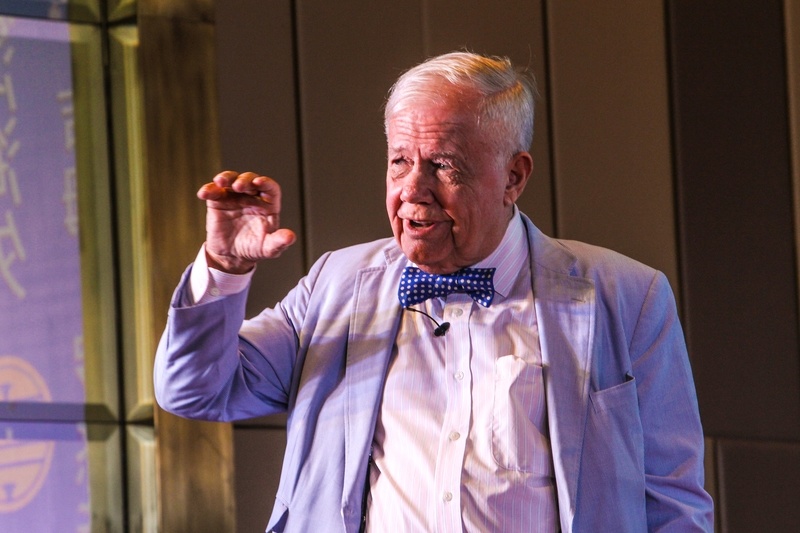
Group 1 - Jim Rogers has liquidated all his U.S. stock holdings and currently only holds stocks in China and another undisclosed country, predicting that the next U.S. economic crisis will be the worst in his lifetime [1][3] - Rogers highlights the U.S. debt issue, citing the 1976 British debt crisis as a historical parallel, emphasizing that high public debt and fiscal deficits can lead to a loss of investor confidence in government bonds [3] - The total U.S. federal debt has surpassed $38 trillion, with unemployment rising to 4.2% and a prolonged period of low interest rates due to quantitative easing, leading Rogers to believe the U.S. economy is in an "unusual prosperity" phase, with an impending recession that will be "beyond imagination" [3] Group 2 - In contrast to his U.S. stock sell-off, Rogers is increasing his investments in China, particularly in the tourism sector, which he believes is entering a golden age due to a surge in outbound travel demand [3][4] - Rogers praises the Belt and Road Initiative, likening its potential impact on the global economy to that of 19th-century railway construction [3][4] - He recalls the significant changes in China since his first visit in 1984, asserting that China will become the most important country of the 21st century and encourages future generations to learn Mandarin [4] Group 3 - Rogers maintains a preference for physical assets as safe havens, expressing interest in silver, which he views as undervalued, while remaining cautious about gold despite its high prices [4] - He acknowledges holding a significant amount of U.S. dollars as a tactical arrangement, anticipating that during a crisis, panic will drive funds into the dollar, although he does not consider it a true safe haven [4][5] - Rogers' investment philosophy reflects a contrarian approach, warning that when everyone is excited, it is typically a time to be concerned [5]
已清空所有美股!传奇投资家Jim Rogers重磅发声,“下一次美国危机将是我有生以来最严重的”
Zhong Guo Ji Jin Bao· 2025-08-02 05:54
Group 1 - Legendary investor Jim Rogers has completely divested from U.S. stocks and currently holds stocks from only two countries, one of which is China, indicating a strong belief in China's rising global influence [1] - Rogers emphasizes that the next U.S. crisis will be the most severe in his lifetime, highlighting concerns over U.S. debt and economic stability [4][6] - He believes that all sectors in China have potential, with a particular focus on the tourism industry, which he sees as having significant growth prospects due to increasing outbound travel from Chinese citizens [3] Group 2 - Rogers points out the importance of the "Belt and Road" initiative, suggesting it will transform global trade and infrastructure similar to historical railway expansions [3] - He holds gold and silver as part of his asset allocation, viewing them as safe havens during crises, although he is currently not purchasing more gold due to its high price, while considering silver to be undervalued [3] - The investor expresses a critical view of Washington's perception of U.S. debt, arguing that complacency regarding debt levels could lead to severe consequences, drawing parallels to historical debt crises in other nations [4][6]
黄金为什么这么火爆
2025-07-16 06:13
Summary of Key Points from the Conference Call Industry Overview - The discussion revolves around the **gold market** and its recent performance, particularly focusing on the factors driving the surge in gold prices. Core Insights and Arguments 1. **Gold Price Projections for 2024**: The gold price is expected to rise by **25% to 30%**, potentially breaking the **$2500** mark by year-end, driven by factors such as **Federal Reserve interest rate cuts** and global uncertainties [3][4][5]. 2. **Historical Price Movements**: In early 2024, the domestic gold price was around **480 RMB per gram**, increasing to approximately **614 RMB** by year-end, indicating a growth of over **20%** [3][4]. 3. **2025 Price Trends**: Since 2025, the price of gold has increased by over **200 RMB per gram**, with expectations of reaching **750 RMB to 800 RMB** [4][5]. 4. **Investor Sentiment**: The recent surge in gold prices is partly attributed to **investor sentiment** driven by geopolitical tensions and trade uncertainties, leading to increased demand for gold as a safe-haven asset [6][7]. 5. **Central Bank Purchases**: Global central banks have significantly increased their gold purchases, reflecting a shift away from reliance on **USD assets** due to concerns over the dollar's credibility [10][16]. 6. **Impact of Tariff Policies**: Tariff policies have created uncertainty in capital markets, leading to a decline in trust in USD assets and prompting increased gold purchases by central banks [9][10][11]. 7. **Long-term Outlook**: The long-term outlook for gold remains positive due to its monetary properties and the ongoing low-interest-rate environment, which enhances the demand for gold as a store of value [8][19]. 8. **Demand Structure**: The demand for gold is primarily driven by **investment and central bank purchases**, while consumer demand, although significant, does not directly influence pricing [22][23][24]. Additional Important Points 1. **Investment Demand vs. Consumer Demand**: Investment demand for gold tends to increase with rising prices, while consumer demand may decrease as prices rise, indicating a complex relationship between price and demand [22][23]. 2. **Institutional Participation**: There is a growing trend of institutional investors, including central banks and hedge funds, increasing their allocations to gold, reflecting its perceived value as a stable asset [26][27][28]. 3. **Correlation with Other Assets**: Gold tends to have a low correlation with stocks and bonds, making it a valuable component for diversifying investment portfolios and reducing overall volatility [30][31]. 4. **Gold as a Risk Hedge**: Despite not generating interest, gold is viewed as a crucial part of an investment portfolio for risk management and inflation protection [32][33]. This summary encapsulates the key discussions and insights from the conference call regarding the gold market, its drivers, and future outlook.
美联储也救不了?特朗普这一决策,让美国债务突破二战纪录
Sou Hu Cai Jing· 2025-07-10 05:27
Group 1 - The core argument of the articles highlights the escalating U.S. debt crisis exacerbated by Trump's policies, which threaten the credibility of the dollar and the U.S. economy [1][5][7] - Trump's "America First" policy has led to significant tariff increases, contributing to domestic inflation, with the Consumer Price Index (CPI) rising by 3.1% year-on-year as of April 2025, surpassing the Federal Reserve's 2% target [2][3] - The Congressional Budget Office (CBO) warns that if current policies persist, the debt-to-GDP ratio could exceed 122% by 2030, significantly higher than the post-World War II peak of 106% [1][5] Group 2 - The market's distrust in the U.S. is reflected in a 10.7% decline in the dollar index in the first half of 2025, the worst performance since 1973, while gold prices surged by 27% [5][7] - Major creditor nations, including China and Japan, have been reducing their holdings of U.S. Treasury bonds for three consecutive months, opting instead for gold and yuan assets [5][7] - Analysts predict that 2026 could be a critical turning point for the U.S. debt crisis, coinciding with the end of Powell's term and the potential for more aggressive monetary policies under Trump [7]