金融危机

Search documents
为何清空美股?对话投资家罗杰斯:预感危机即将来临
Sou Hu Cai Jing· 2025-08-04 14:35
Group 1 - Jim Rogers has liquidated all his U.S. stocks, currently holding stocks only in China and one other country, expressing concerns about an impending severe economic crisis in the U.S. [1][4] - The U.S. stock market has been in a bull run since 2009, which Rogers believes indicates that a crisis is approaching, as prolonged prosperity often leads to problems [3][4] - Rogers criticizes President Trump's erratic decision-making, suggesting it will exacerbate economic instability and that Trump lacks the capability to manage an upcoming crisis [4][6] Group 2 - Rogers remains optimistic about China's future, stating it will be the most important country in the 21st century and emphasizing the need for future generations to learn Mandarin [6][7] - He advocates for policies that stimulate domestic demand and consumption in China, such as tax cuts and infrastructure investments, to foster economic growth [6][7] - Rogers highlights the potential in emerging sectors in China, including artificial intelligence, renewable energy, and electric vehicles, indicating a strong growth outlook across various industries [7] Group 3 - In addition to Chinese stocks, Rogers holds stocks in Uzbekistan, noting the country's economic reforms and potential due to its natural and human resources [7] - He advises young people in China to learn foreign languages and travel to better understand the world and themselves, viewing travel as a valuable educational experience [7]


数据中心建设狂潮让美国重现“2008式金融危机”?如同1990年代的电信和1873年的铁路
美股IPO· 2025-08-04 07:22
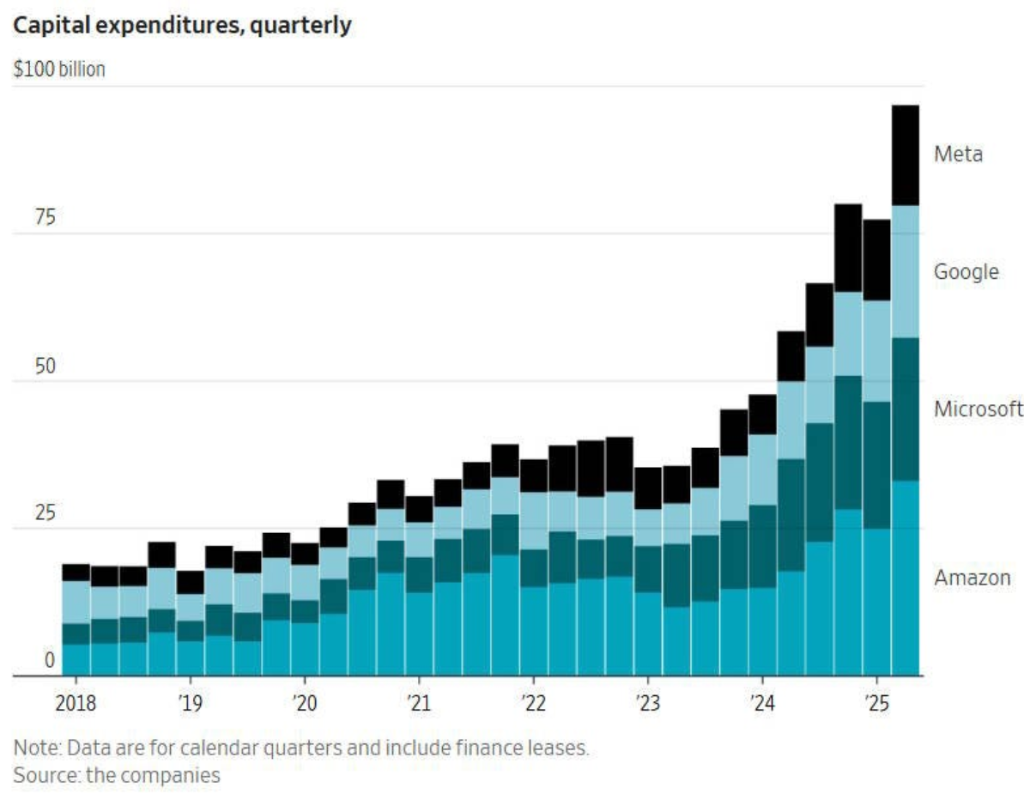
Core Viewpoint - The current data center construction boom driven by AI is shifting funding sources from traditional equity financing to a growing and opaque "private credit" market, raising concerns about systemic risks similar to the 2008 financial crisis [1][3]. Group 1: Data Center Construction Boom - The capital expenditure of major tech companies in the U.S. has reached a record level, totaling $102.5 billion in the recent quarter, primarily driven by Meta, Google, Microsoft, and Amazon [3]. - AI-related capital expenditures have contributed more to U.S. economic growth than all consumer spending over the past two quarters [3]. - Current investments in AI infrastructure have surpassed the peak telecom investments of the late 1990s, with telecom capital expenditures reaching $120 billion in 2000, accounting for 1.2% of GDP at that time [6]. Group 2: Shift to Debt Financing - The growth rate of capital expenditures for tech giants has outpaced their cash flow growth, leading to an increased reliance on debt financing, particularly through private credit [7]. - Microsoft’s financing lease related to data centers has nearly tripled since 2023, indicating a significant rise in debt financing [7]. - Private credit is becoming a crucial funding source for the data center boom, with its scale rapidly expanding and becoming a significant part of the U.S. debt market [7][10]. Group 3: Systemic Risks and Financial Institutions - Banks are becoming increasingly exposed to private credit, with their loans to private credit companies rising from 1% in 2013 to 14% of total loans to non-bank financial institutions [12]. - The interconnectedness between banks and the private credit market poses potential risks, especially if there are unexpected defaults concentrated in the data center sector [12]. - Insurance companies, particularly life insurers, have significantly increased their exposure to below-investment-grade corporate debt, surpassing the scale of subprime mortgage-backed securities held in 2007 [13].





数据中心建设狂潮让美国重现“2008式金融危机”?
Hu Xiu· 2025-08-04 06:24
Core Viewpoint - The current data center construction boom in the U.S. raises concerns about a potential financial crisis reminiscent of past infrastructure bubbles, driven by excessive debt rather than equity markets [1][3]. Group 1: Data Center Construction Boom - The capital expenditure of major tech companies in the U.S. has reached a record level, totaling $102.5 billion in the recent quarter, primarily from Meta, Google, Microsoft, and Amazon [1]. - AI-related capital expenditures have contributed more to U.S. economic growth than all consumer spending over the past two quarters [2]. Group 2: Historical Context - The current investment in AI infrastructure has already surpassed the peak of telecom investments during the late 1990s, with telecom capital expenditures reaching $120 billion in 2000, accounting for 1.2% of GDP at that time [7]. - Historical infrastructure investment booms, such as the 1873 railway and 1990s telecom bubbles, ended poorly due to overbuilding and unmet demand [8]. Group 3: Financing Sources - The financing for the tech giants' data center investments comes from various sources, including internal cash flow, bond issuance, equity financing, venture capital, special purpose vehicles, and cloud service commitments [9]. - The role of debt financing is increasing as capital expenditure growth outpaces cash flow, with significant increases in investment-grade bond issuance and financing leases related to data centers [10]. Group 4: Private Credit and Shadow Banking - Private credit is emerging as a significant funding source for the data center boom, with private credit funds providing loans in a less transparent market [10]. - The private credit market has rapidly expanded, becoming an important part of the U.S. debt market, and is seen as a dangerous bridge connecting the data center boom to the traditional financial system [13]. Group 5: Risk Exposure - Banks are major lenders to private credit companies, with their loans to these firms increasing from 1% in 2013 to 14% currently, raising concerns about indirect exposure to high risks [14]. - Insurance companies, particularly life insurers, have also significantly increased their exposure to below-investment-grade corporate debt, reminiscent of the subprime mortgage crisis prior to the 2008 financial crisis [16].
数据中心建设狂潮让美国重现2008式金融危机?如同电信和铁路
Hua Er Jie Jian Wen· 2025-08-04 05:18
Core Insights - The current data center construction boom, driven by AI investments, raises concerns about a potential infrastructure bubble reminiscent of past financial crises [1][2][5] - Major tech companies, including Meta, Google, Microsoft, and Amazon, have significantly increased capital expenditures, totaling $102.5 billion in recent quarters, with some companies spending over one-third of their total sales on these investments [1][2] - AI-related capital expenditures have contributed more to U.S. economic growth than consumer spending in recent quarters, indicating a shift in economic dynamics [2] Group 1: Investment Trends - The capital expenditure growth rate of tech giants has outpaced their cash flow growth, leading to increased reliance on debt financing, particularly through a large and opaque "shadow banking" system [2][7] - Private credit is emerging as a significant funding source for the data center boom, with companies like Meta negotiating loans up to $30 billion with private credit institutions [2][6][7] Group 2: Historical Context - Current investments in AI infrastructure have surpassed the peak telecom investments of the late 1990s, with telecom capital expenditures reaching $120 billion in 2000, accounting for 1.2% of GDP at that time [5] - Historical precedents, such as the railroad and telecom bubbles, ended in overbuilding and unmet demand, raising questions about the sustainability of current investments [5] Group 3: Financial System Implications - The increasing role of private credit in financing tech investments poses risks to traditional financial systems, as banks are becoming major lenders to private credit firms [11] - A report indicates that banks' loans to private credit companies have surged from 1% in 2013 to 14% of total loans to non-bank financial institutions, highlighting the interconnectedness and potential risks [11][13] - Insurance companies, particularly life insurers, have also increased their exposure to below-investment-grade corporate debt, reminiscent of the risks seen in the 2008 financial crisis [13]
数据中心建设狂潮让美国重现“2008式金融危机”?如同1990年代的电信和1873年的铁路
Hua Er Jie Jian Wen· 2025-08-04 04:24
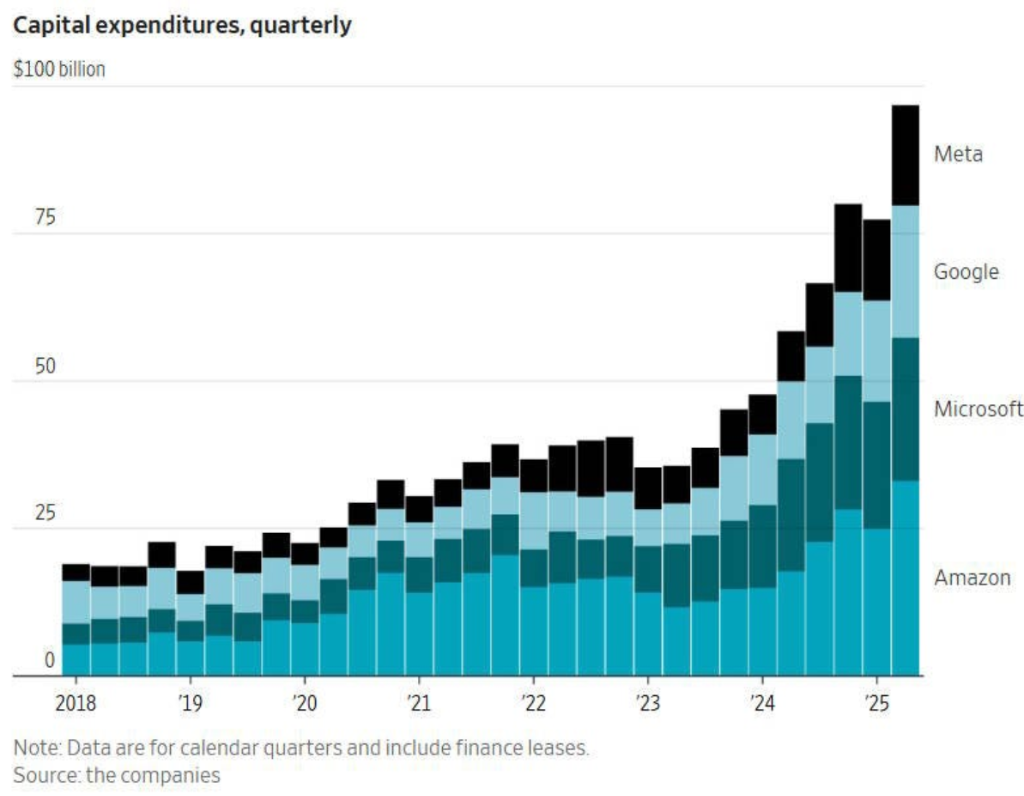
Core Insights - The current data center construction boom, driven by AI, raises concerns about a potential infrastructure bubble reminiscent of past financial crises [1][4] - Major tech companies in the U.S. have reported record capital expenditures, totaling $102.5 billion, primarily from Meta, Google, Microsoft, and Amazon, with some companies spending over one-third of their total sales on capital investments [1] - AI-related capital expenditures have contributed more to U.S. economic growth than consumer spending in recent quarters [1] Group 1: Historical Context - The investment in AI infrastructure has surpassed the peak telecom investments of the late 1990s, with current spending exceeding 1.2% of GDP [4] - Historical precedents, such as the railroad and telecom booms, ended in overbuilding and unmet demand, leading to significant losses for investors [4] - The combination of asset price bubbles and credit growth poses a serious threat to the economy, as evidenced by past financial crises [4] Group 2: Financing Sources - The financing for the tech giants' data center investments comes from various sources, including internal cash flow, bond issuance, equity financing, venture capital, special purpose vehicles, and cloud service commitments [5] - As capital expenditure growth outpaces cash flow, debt financing is becoming increasingly important, with a significant rise in investment-grade bond issuance [6] - Private credit is emerging as a crucial funding source for the data center boom, with its scale rapidly expanding within the U.S. debt market [6] Group 3: Risk Exposure - Banks are major lenders to private credit firms, which have seen their share of total loans from banks increase from 1% in 2013 to 14% currently [10] - The interconnectedness between banks and private credit markets raises concerns about potential risks, particularly if there are unexpected defaults in the data center sector [10] - Insurance companies, especially life insurers, have also increased their exposure to lower-rated corporate debt, reminiscent of the pre-2008 financial crisis environment [12]
16万人一夜爆仓!美联储降息急刹车,9万亿养老金冲向比特币
Sou Hu Cai Jing· 2025-07-20 02:01
Core Viewpoint - The passage of the GENIUS Act in the U.S. House of Representatives has created significant turbulence in the global cryptocurrency market, marking a pivotal moment for the industry with strict regulations on stablecoins [1][3]. Group 1: Regulatory Changes - The GENIUS Act mandates that all stablecoin issuers must hold reserves in a 1:1 ratio with U.S. dollars or short-term U.S. Treasury securities, requiring monthly public disclosures of their assets [1]. - Non-bank entities wishing to issue stablecoins must obtain a special license, while major banks are granted expedited access to the new market [1][3]. - A critical provision in the act states that stablecoins can only be used for payment settlements and cannot be classified as securities or commodities, aiming to bypass traditional banking systems [3]. Group 2: Market Reactions - Following the act's passage, Ethereum surged by 7% to over $3,600, while Bitcoin surpassed $120,000, with other cryptocurrencies like XRP and Dogecoin also experiencing significant gains of over 10% [3]. - However, the market also saw a dramatic fallout, with 160,000 investors liquidated within 24 hours, resulting in $585 million lost, and the largest single liquidation amounting to $23 million [3]. Group 3: Future Projections - U.S. Treasury Secretary predicts that the stablecoin market could grow to $2 trillion by 2028, significantly exceeding the current $250 billion market size, which would compel stablecoin issuers to purchase large amounts of U.S. Treasury securities [3]. - Major tech companies like Apple and PayPal are accelerating their entry into the payment sector, potentially sidelining algorithmic stablecoins that lack transparency [3]. Group 4: Political and Institutional Dynamics - Trump's personal meme coin has reportedly generated $350 million, and his family-associated stablecoin USD1 has seen a 40% increase in circulation following the act's passage [4]. - The Federal Reserve has expressed strong opposition to Trump's plans to allow $9 trillion in 401k funds to flow into the cryptocurrency market, with key Fed officials warning that such policies could lead to inflation [4]. - The SEC and CFTC are engaged in a jurisdictional dispute over the classification of cryptocurrencies as either securities or commodities, which could lead to a redefinition of major cryptocurrencies [6]. Group 5: Institutional Responses - Major banks like JPMorgan and Citigroup are quickly establishing digital asset departments, although skepticism remains regarding the market demand for stablecoins from some banking executives [6]. - Despite doubts, the stock price of Circle (issuer of USDC) has surged by 25% in two weeks, and inquiries from Goldman Sachs clients have tripled, indicating strong interest in digital assets [6].
前IMF官员称,美国应为可能爆发的金融危机做好准备
财富FORTUNE· 2025-07-15 11:14
Core Viewpoint - The global confidence in the US dollar is declining, and the US may face a financial crisis next year [1] Group 1: Economic Policies and Their Impact - The fiscal situation in the US was already precarious before Donald Trump's second presidential term, exacerbated by tax cuts that could increase the deficit by trillions of dollars [2] - Trump's tariff policies and pressure on the Federal Reserve to lower interest rates have heightened inflation concerns, further undermining confidence in the dollar [2][4] - The market's distrust in the Trump administration's economic policies is evident, as reflected in the 10% drop in the dollar's exchange rate against other major currencies, marking the worst performance since 1953 [3][6] Group 2: Market Reactions - The significant rise in gold prices, over 25% this year, signals a collapse of confidence in the US [5] - Despite concerns about tariffs and inflation, tariff revenues are expected to reach $300 billion this year, indicating a complex market response [9] - The demand for US debt remains strong, as recent bond auctions show robust interest, contradicting fears of a bond market crisis [10][12] Group 3: Future Outlook - The US should prepare for potential crises in the dollar and bond markets ahead of the midterm elections next year, as the tolerance for fiscal deficits is diminishing [8] - Analysts believe that despite attempts to promote alternative currencies, the dollar will maintain its status as the primary global reserve currency [11] - Concerns about the scale of debt and its impact on borrowing costs are present, but it remains unclear when these concerns will materialize [13]
43亿美元打水漂,印度对准华尔街开火!美国集体沉默,背后不简单
Sou Hu Cai Jing· 2025-07-13 05:44
Group 1 - India has taken a strong stance against US financial firms, specifically targeting JaneStreet with significant fines and trading bans, indicating a shift in its approach to foreign investment [1] - JaneStreet earned $4.3 billion in profits within two years in India but faced a temporary trading ban and the confiscation of $5.8 billion (484 crore INR) due to alleged market manipulation, leading to total losses of approximately $4.87 billion [1] - The incident reflects a broader trend where foreign companies are struggling in the Indian market, with 2,783 foreign firms shutting down operations in the past seven years, averaging one exit every eight hours [5][4] Group 2 - The Indian market has become increasingly hostile for foreign businesses, with significant challenges such as tax intimidation and regulatory hurdles, exemplified by Xiaomi's assets being frozen and high-profile executives being arrested [7] - In 2024, foreign direct investment in India plummeted to just $2.6 billion, a nearly 90% decrease year-on-year, indicating a severe decline in investor confidence [8] - Major companies like Ford and Disney have exited the Indian market after incurring substantial losses, highlighting the difficulties faced by foreign enterprises [5] Group 3 - India's regulatory environment is perceived as a double-edged sword, as it seeks to attract Western capital while simultaneously fearing loss of economic sovereignty, with foreign ownership constituting 18% of the Indian stock market [12] - The country is experiencing a capital flight risk, with external debt significantly exceeding foreign exchange reserves, raising concerns about potential financial crises [12] - The Indian government's attempts to stimulate manufacturing through initiatives like the Production-Linked Incentive (PLI) scheme have largely failed, with over half of the participating companies not meeting their targets [10][11]

韩国央行行长李昌镛:在金融危机中,美元流动性的支持是恢复稳定的关键。
news flash· 2025-07-01 14:19
Core Viewpoint - The support of dollar liquidity is crucial for restoring stability during financial crises [1] Group 1 - The Bank of Korea Governor Lee Chang-yong emphasized the importance of dollar liquidity in stabilizing the financial system during crises [1]
大国金融:全球金融变局下的中国机会
Sou Hu Cai Jing· 2025-06-03 07:12
Group 1 - The book discusses the evolution of finance and the current choices faced by China and the United States, highlighting the development and market issues in finance [3][5] - It examines the collective decline of the American banking industry, illustrating the chain reaction of bank failures and the underlying logic, emphasizing that information and credit are the soul of the financial industry [7][10] - The book identifies a significant slowdown in the U.S. economic growth and stresses the urgency for China to find a third path distinct from Wall Street, as finance stands at a historical crossroads [10] Group 2 - The second section analyzes why traditional financial theories are no longer applicable, discussing three major debates in economics and the unique expression of finance in China [11] - It emphasizes that the evolution from financial capital to industrial capital is not merely a mechanical transfer of funds but requires organic integration to build a new capital model aligned with technology and industry [13] - The book outlines three stages of financial development in China, from the initial phase of supervision without regulation to the era of stricter regulation in internet finance [14] Group 3 - The third section explores the cyclical nature of financial crises, identifying four key time points that reveal the essence and fate of financial crises, as well as the underlying logic of the financial system facing collapse [16] Group 4 - The final section discusses new trends and missions in finance, focusing on the international financial decisions that reshape currency and the reconstruction of China's financial credit [17][19] - It provides insights into the evolution of the international monetary financial system and the characteristics of financial crises, offering new perspectives for China's financial development [21]