
首店经济

Search documents
盒马德州首店为何吸引力不减
Qi Lu Wan Bao· 2026-01-29 23:27
Core Insights - Hema Fresh opened its first store in Dezhou on January 15, marking a significant case of "first store economy" and regional consumption upgrade [1] - The store has maintained high foot traffic, resembling a "tourist attraction" even a week after opening, indicating strong consumer interest [2] Group 1: Store Performance - The store spans 5,000 square meters and features a vibrant shopping atmosphere, with consumers crowding various product areas [2] - Staff reported high demand, frequently restocking items to meet consumer needs, highlighting the store's popularity [2] - Customers expressed satisfaction with the variety and quality of products available, indicating a strong market fit [3] Group 2: Consumer Experience - Hema offers a wide range of products, including organic vegetables, seasonal fruits, seafood, and baked goods, enhancing the shopping experience [3] - The store's immediate consumption options cater to the fast-paced lifestyle of young professionals, providing convenient meal solutions [4] - Hema's logistics service promises delivery within three kilometers in half an hour, significantly improving customer convenience [5] Group 3: Marketing and Promotions - During the Spring Festival shopping season, Hema launched promotional activities, including the distribution of millions in consumer coupons, enhancing customer engagement [6] - The store's success is attributed to its understanding of market demands and focus on user experience, offering competitive pricing, quality, and convenience [6] Group 4: Economic Impact - Hema's entry into Dezhou is part of a broader initiative to enhance the city's consumption landscape and support local economic growth [7] - The store's presence is expected to stimulate related industries and create job opportunities, contributing to the local economy [7] - Dezhou aims to become a regional consumption center, with plans to expand consumer ecosystems and enhance retail innovation [8] Group 5: Future Outlook - The establishment of Hema and similar stores signifies a shift in Dezhou's consumption patterns, moving from "trial" to "regular" shopping experiences [9] - The city plans to implement various measures to boost consumption and support economic stability in the upcoming years [9]
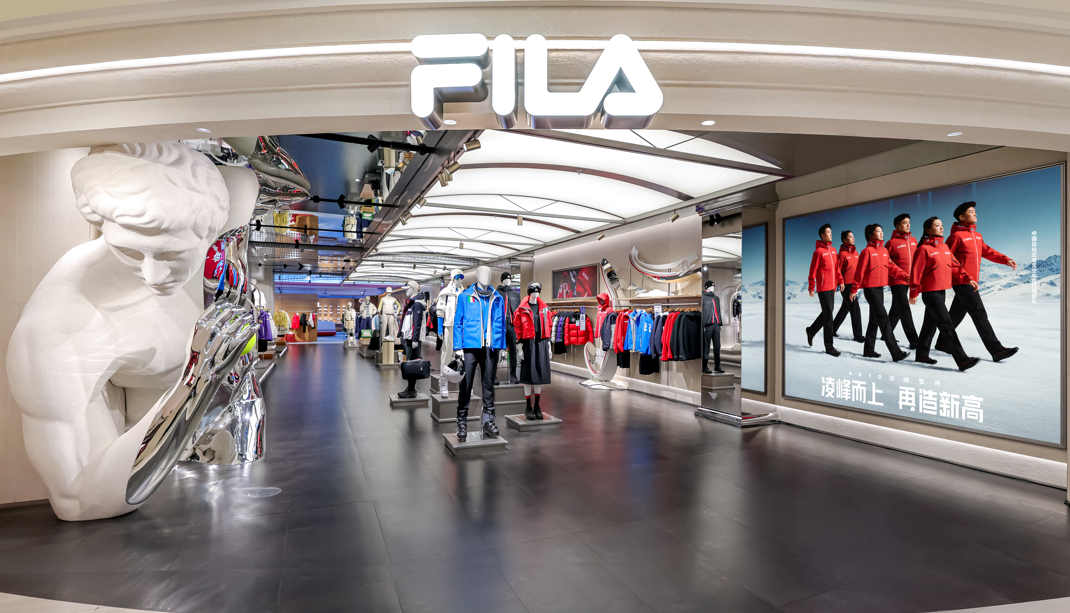
把罗马“搬进”长安,FILA 西安壹号店重塑运动时尚零售体验
Jing Ji Wang· 2026-01-29 10:03
Core Insights - FILA has opened its first upgraded flagship store, "FILA TOPIA Xi'an No.1," in Xi'an, integrating its century-long history and local culture into the retail experience [1][3][4] Group 1: Store Concept and Design - The store features four thematic areas designed to enhance consumer experience, including a professional sports area reminiscent of ancient Rome and a footwear section inspired by maritime exploration [3][4] - The design aims to create an immersive shopping environment, with cultural narratives embedded in every detail, such as a ski area reflecting the winter sports atmosphere and a living series area resembling a cozy living room [3][4] Group 2: Strategic Goals and Consumer Engagement - The CEO of FILA Greater China emphasized that the "ONE FILA" strategy focuses on reconnecting with consumers and enhancing brand resonance [3][4] - The store introduces a "brand friend" role to guide customers and narrate the brand's history, along with personalized styling advice and interactive experiences to deepen emotional connections with consumers [4][5] Group 3: Market Positioning and Local Adaptation - The opening of the flagship store aligns with China's "first store economy" initiative, which aims to stimulate consumer spending and support local markets [5][7] - FILA has tailored exclusive products for the Xi'an market, such as "Terracotta Warrior Skating" and "Bell Tower Shadow" series, to cater to local preferences [7][8] Group 4: Future Expansion Plans - FILA plans to innovate its retail formats across various cities, focusing on niche customer segments and specific scenarios, such as a golf-themed store and a collaboration with cultural tourism [8][9] - The brand aims to continue expanding its presence in China, leveraging its innovative capabilities to enhance the consumer experience in the sports fashion sector [9]

人挤人,开业一周的盒马德州首店为何吸引力不减
Qi Lu Wan Bao· 2026-01-29 05:55
Core Insights - Hema Fresh has officially opened its first store in Dezhou on January 15, marking a significant step in the city's "first store economy" and regional consumption upgrade [1] Group 1: Store Performance - The Hema store in Dezhou has maintained high foot traffic even a week after opening, resembling a "tourist attraction" with long queues during peak hours [2] - The store features a 5,000 square meter immersive shopping space filled with consumers, indicating strong demand and a busy atmosphere [2] - Staff are frequently restocking due to high sales, with reports of multiple replenishments needed each day to meet customer demand [2] Group 2: Consumer Experience - Customers appreciate the wide variety and quality of products available at Hema, with many expressing a preference for shopping there due to convenience and quality assurance [3][4] - Hema offers a diverse range of products, including organic vegetables, seasonal fruits, seafood, and baked goods, enhancing the shopping experience [3] - The store's ready-to-eat services cater to the fast-paced lifestyle of consumers, providing convenient meal options [4] Group 3: Logistics and Promotions - Hema's logistics service promises delivery within half an hour for orders placed within a three-kilometer radius, significantly enhancing convenience for consumers [5] - The store has implemented self-checkout options to reduce wait times, further improving the shopping experience [5] - During the Spring Festival shopping season, Hema has launched promotional activities, including the distribution of millions in consumer vouchers, to attract shoppers [5] Group 4: Economic Impact - Hema's entry into Dezhou is seen as a catalyst for the city's new consumption upgrade and has contributed to the local economy by creating job opportunities [7] - The store's presence has stimulated surrounding industries and contributed to a vibrant consumption environment, aligning with Dezhou's goal of becoming a regional consumption center [7][8] - The local government is actively promoting new consumption initiatives and retail innovations to sustain economic growth and enhance consumer satisfaction [8][9]
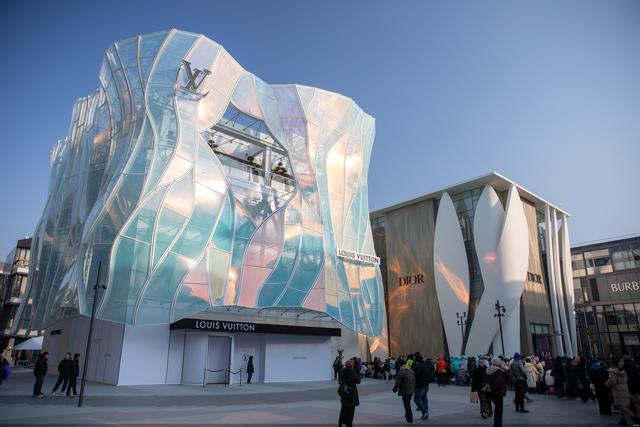
打造潮流样本:三里屯太古里重构消费空间
Bei Jing Ri Bao Ke Hu Duan· 2026-01-28 23:47
Core Insights - Beijing is witnessing a solid step towards high-quality development during the "14th Five-Year Plan" period, with a regional GDP exceeding 5.2 trillion yuan, marking the beginning of a new journey in the "15th Five-Year Plan" [1] - The focus is on Beijing's exploration and leading practices in various fields such as technological innovation, industrial upgrading, urban governance, and improvement of people's livelihoods [1] Group 1: Retail and Consumer Trends - Sanlitun Taikoo Li has become a fashion consumption symbol in Beijing, showcasing a new high-end commercial landscape with flagship stores from luxury brands like Dior and Louis Vuitton [1][3] - The high-quality upgrade of the first-store matrix since 2022 has transformed Sanlitun Taikoo Li into a cluster of flagship stores, enhancing its commercial value amid competition and consumer upgrades [3][5] - By 2025, the global luxury goods market is projected to reach 358 billion euros, with China's market share increasing from approximately 8% in 2015 to about 12% [3][4] Group 2: Brand and Experience Innovation - Sanlitun Taikoo Li has introduced 171 high-quality brand first stores and hosted 227 exclusive events, reinforcing its position as a premier platform for limited edition products and cultural collaborations [4][6] - The integration of experiential retail spaces, such as the new Sacony boutique and Balenciaga flagship store, reflects a shift from traditional retail to multifunctional spaces that enhance consumer engagement [7][8] - The design of the South District emphasizes exploration and diversity, while the North District caters to high-end brands, creating a complementary consumption matrix [4][6] Group 3: Urban Development and Cultural Integration - Sanlitun serves as a key node in Beijing's consumer landscape, contributing to the city's goal of becoming an international consumption center and a cultural landmark [9][10] - The project emphasizes local cultural integration, adapting international brands to meet local consumer needs while maintaining high-end quality [11] - The collaboration between commercial projects and local government aims to foster a harmonious environment that combines commerce, culture, and community [10][11]
他们传递一线心声
Xin Lang Cai Jing· 2026-01-28 16:48
Core Insights - The government work report addresses concerns and expectations regarding the development of Hainan Free Trade Port after its closure, emphasizing strategic, guiding, and actionable elements. Healthcare - The proposal encourages the introduction of policies to attract medical talent to grassroots levels, enhancing financial performance subsidies for local medical institutions and promoting a transparent performance distribution system [1] Energy - A focus on transforming Hainan's energy structure is suggested, with an emphasis on developing clean energy and optimizing industrial structures to meet the demands of the Free Trade Port [2] Digital Economy - The establishment of a core platform for the digital economy is recommended, aiming to enhance data flow and compliance, and support the construction of high-performance computing centers [3] Consumer Economy - The development of a "first store economy" is encouraged to enhance consumer experience and promote zero-tariff policies for daily necessities, along with the establishment of a "duty-free account" for residents [4] Electric Vehicle Management - Suggestions include the promotion of smart charging stations with integrated management platforms and regular inspections of electric vehicle sales and repair shops to combat illegal activities [5] Digital Product Passport - A unified digital product passport information platform is proposed to facilitate data sharing and support pilot projects in specific regions [6][7] Agricultural Products - The establishment of a special group for deep processing of agricultural products is recommended to support high-value product development and innovative farming models [8] Ecological Protection - Emphasis is placed on leveraging local resources to develop unique industries in central ecological areas, transforming natural resources into economic benefits [9] Farmer Income Increase - The creation of a provincial agricultural product information platform is suggested to connect farmers with enterprises, addressing sales concerns [10] Transportation - The proposal includes planning for a new high-speed train station to enhance transportation accessibility and support local economic development [11] Traditional Chinese Medicine - The integration of traditional Chinese medicine into the tourism industry is recommended to leverage local resources and promote health tourism [12] Cultural Promotion - Increased efforts to promote local cultural heritage through various platforms are suggested to attract tourists and enhance community engagement [13] Culinary Brand Development - The creation of a public brand for "Hainan Li Family Banquet" is proposed, focusing on talent cultivation and industry integration [15] Education - A proposal for a seamless talent cultivation program across different educational levels is suggested to enhance educational quality and international project implementation [16] Cross-Regional Industry Chain - The establishment of a cross-border venture capital fund is recommended to support strategic emerging industries and optimize investment ecosystems [17] Intangible Cultural Heritage - The integration of intangible cultural heritage into the education system is proposed, promoting cultural activities within school curricula [18]
服务消费领航 多元业态赋能 2025年北京消费市场韧性十足
Bei Jing Shang Bao· 2026-01-28 14:13
Group 1 - The core viewpoint of the articles highlights the significant growth and transformation of Beijing's consumer market, particularly emphasizing the role of service consumption as a key driver of economic activity [1][2][10] - In 2025, Beijing's total market consumption is projected to grow by 1.6% year-on-year, with service consumption increasing by 5%, indicating a shift towards a more service-oriented economy [1][4] - The integration of online and offline retail channels is accelerating, with the penetration rate of enterprises in wholesale and retail, accommodation, and catering sectors reaching 51.9%, up by 2.4 percentage points year-on-year [2][4] Group 2 - The retail sales of social consumer goods in Beijing are expected to decline by 2.9% year-on-year, although the decline is narrowing compared to previous quarters, reflecting a structural adjustment in the consumption market [4] - Certain categories, such as gold and jewelry, cosmetics, and staple food, have shown positive growth, with retail sales increasing by 39.5%, 12.6%, and 5.7% respectively [4] - The penetration rate of new energy vehicles is rising, with retail sales of these products increasing by 13.2% year-on-year, driven by policies promoting consumption and the popularity of new models [4] Group 3 - The emergence of new retail formats and the "first store economy" is becoming a key indicator of urban commercial attractiveness, with over 1,068 new first stores opened in 2025, marking an 11.3% increase [5][8] - The night economy is expanding, with the number of night economy consumption points increasing from 22 in 2019 to 139 in 2025, indicating a growing demand for nighttime activities [8] - The integration of traditional cultural elements with modern consumption trends is evident, as seen in the rise of local brands and international brands adapting to local culture [8][12] Group 4 - The focus on quality and fashion in consumption is becoming more pronounced, with the development of a diverse range of consumer experiences that cater to high-quality and multi-faceted lifestyles [10][12] - The concept of "fashion consumption" is evolving, with expectations that it will become a significant growth point in the market, driven by innovation and cultural resonance [12][13] - The importance of fashion consumption as a commercial and social value is highlighted, indicating its potential to drive consumer trends and create substantial market value [13]
一年2415家海外企业开出首店,中国仍是全球品牌“试金石”
Huan Qiu Wang· 2026-01-28 11:56
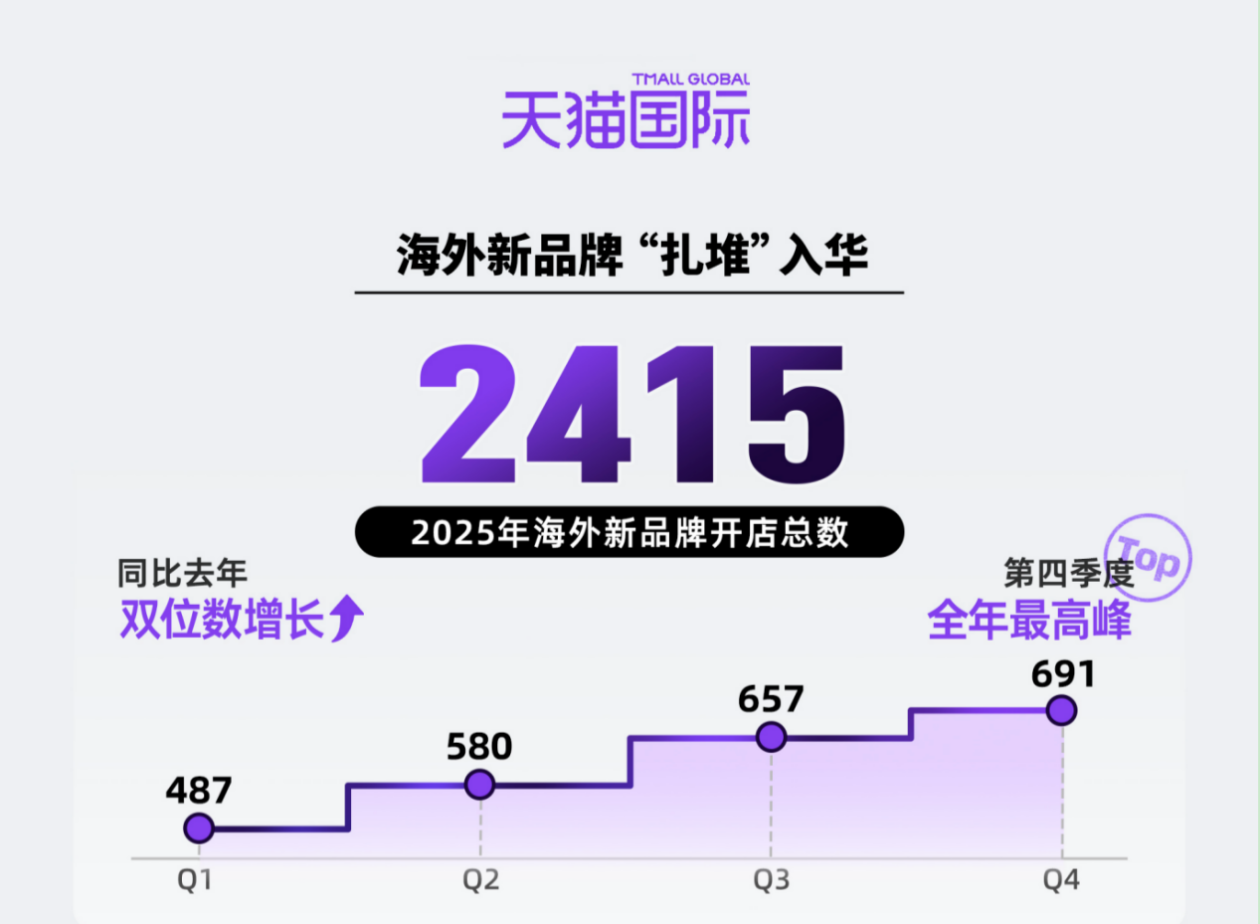
【环球网科技报道 记者 李文瑶】2025年,天猫国际迎来了2415个海外新品牌开出首店,首店数量实现双位数增长。这意味着,平均每天有超过6家海外新品 牌在天猫国际正式"开门营业"。第四季度入驻势头最猛,691家新品牌入驻,创下全年峰值。 在全球经济波动、贸易环境日趋复杂的背景下,这一数据呈现了海外品牌对中国消费市场的持续关注。与以往不同的是,品牌入驻呈现出明显的结构性变 化,反映出中国进口消费市场演进的具体路径。 首店形态迁移:从线下商圈到线上平台 传统意义上的"首店经济"多指品牌在重点城市核心商圈的首家线下门店,往往被视为城市商业活力的标志。如今,这一概念正延伸至线上——电商平台成为 众多海外品牌,尤其是中小型品牌进入中国的首个落脚点。 通过平台开设"线上首店",品牌可以较低成本完成初步的市场测试与渠道建设。天猫国际等平台提供的跨境物流、支付、数字营销等基础设施,降低了入华 门槛。2025年,来自全球52个国家和地区的品牌以此方式进入中国,其中美国(555家)、韩国入驻数量居前,法国、新西兰、澳大利亚增速显著。古巴、 智利、立陶宛等国的品牌首次出现,反映了平台覆盖范围的扩大。 这种迁移不仅是渠道的调整,也对 ...
2025年北京新增首店1068家 同比增长11.3%
Bei Jing Shang Bao· 2026-01-28 03:12
北京商报讯(记者程靓)1月28日,据北京市统计局消息,2025年全年,北京新增首店1068家,同比增长 11.3%,共汇聚159家高能级首店。新开商业面积超150万平方米,中海大吉巷、隆福寺街区二期等将京 韵特色与时代活力充分融合,注入发展新动能;湾里、中关村ARTPARK大融城等高端品牌云集,集聚 艺术空间、科技体验等融合消费场景,带动区域消费品质升级。全年发布"跟着电影去旅游""跟着赛事 去旅游""跟着展览游北京"等155条"漫步北京"主题游线路,文旅消费场景更加丰富。 ...
打造潮流样本 三里屯太古里重构消费空间
Bei Jing Shang Bao· 2026-01-27 16:58
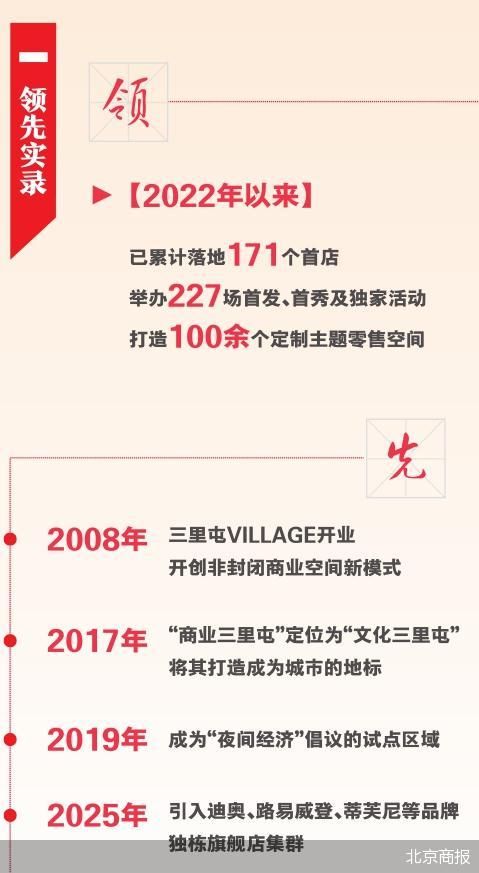
Core Insights - The article highlights the transformation of Sanlitun Taikoo Li into a fashion and retail landmark in Beijing, showcasing its evolution from a traditional shopping area to a hub for high-end brands and innovative retail experiences [1][12]. Group 1: Development and Upgrades - Sanlitun Taikoo Li has undergone significant upgrades since 2022, with the introduction of luxury brands like LV and Dior, enhancing its status from a trendy gathering place to a flagship store cluster [4][6]. - The area has seen a total of 171 high-quality brand flagship stores established, along with 227 exclusive events, reinforcing its position as a premier platform for limited edition products and cultural collaborations [5][6]. Group 2: Consumer Trends and Market Dynamics - The global luxury market is projected to reach €358 billion by 2025, with China’s share increasing from approximately 8% in 2015 to about 12% in 2025, making it a key driver of global growth [4]. - Chinese high-net-worth individuals prioritize uniqueness and exclusivity in luxury consumption, contrasting with Western consumers who focus more on product quality and service experience [4]. Group 3: Spatial and Ecological Innovation - Sanlitun Taikoo Li has redefined its commercial ecosystem by integrating innovative retail experiences and community culture, transitioning from a single commercial landmark to a collaborative commercial ecosystem [7][8]. - The introduction of multi-functional stores, such as the Sacai flagship that combines retail with social activities, exemplifies the shift towards experiential shopping environments [8][9]. Group 4: Cultural Integration and Local Adaptation - The project emphasizes the importance of local cultural integration, adapting international brands to fit local consumer preferences and cultural elements, thereby enhancing its competitive edge [10][11]. - The operational strategy focuses on collaboration with brands to create unique experiences that resonate with local consumers, moving away from traditional owner-led approaches [10][11].

首店经济成消费市场“焕新密码”
Zheng Quan Ri Bao· 2026-01-27 16:20
Group 1 - The "first store economy" is rapidly spreading across the country, becoming a key force in activating consumer momentum and promoting industrial upgrades, injecting vitality into the high-quality development of the consumer market [1][4] - In 2025, Beijing plans to add 1,068 first stores, a year-on-year increase of 11.3%, with an average of 3 new stores daily, marking a significant milestone [1] - Suzhou is expected to introduce around 280 first stores by 2025, while Nanjing aims to attract over 410 first stores, continuing to implement policies to foster the first store economy [1] Group 2 - The first store economy meets consumer demands for novelty and quality of life, as consumers are willing to try new brands and products for unique experiences [2] - For brands, the first store economy is a crucial avenue for market expansion and enhancing brand influence, allowing them to enter local markets and build reputation [2] - The first store economy serves as a powerful tool for cities to promote consumption and industrial upgrades, creating a complete industrial chain and ecosystem [2] Group 3 - Relevant authorities should implement policies to enhance the introduction and cultivation of first stores, creating a favorable environment for the development of the first store economy [3] - Brand enterprises need to continuously innovate and improve their competitiveness to meet consumer demands and promote the healthy development of the first store economy [3]