AI生态

Search documents
小扎何以“得罪”阿里:Qwen已经超越了Llama,夸克又要超越Meta眼镜?
21世纪经济报道· 2025-10-24 15:05
Core Viewpoint - Alibaba's Quark AI glasses have quickly become the top-selling smart glasses on Tmall within 10 hours of their pre-sale launch, marking a significant entry into the AI hardware market and indicating a strategic challenge to Meta's dominance in the sector [1] Group 1: Product Launch and Market Position - The Quark AI glasses are seen as the most anticipated AI hardware of the second half of the year, representing Alibaba's first large-scale foray into AI hardware [1] - The Qwen series, particularly the flagship Qwen 3-Max model, has surpassed Meta's Llama series in performance, positioning Alibaba as a global leader rather than a follower in AI development [2][4] Group 2: Competitive Landscape - On the LMarena text ranking list, Qwen 3-Max-Instruction ranks third, outperforming GPT-5-Chat and significantly ahead of Meta's Llama models [2][3] - Meta's Llama-4-Maverick, despite a brief second-place ranking, has fallen to 32nd due to performance discrepancies after the open-source version was released [4] Group 3: Hardware and Technological Advancements - The Quark AI glasses feature advanced hardware configurations, including dual flagship chips and a unique integrated design, showcasing China's technological capabilities [5] - The glasses are designed for seamless integration with Alibaba's ecosystem, offering exclusive features such as near-eye navigation and payment functionalities through Alipay [5] Group 4: Strategic Vision - Alibaba's "C Plan" aims to create an AI super entrance matrix that encompasses browsers, apps, and smart hardware, leveraging its existing user base of 200 million [6] - The company has established a comprehensive stack from computing power (Alibaba Cloud), models (Qwen), applications (Quark), to hardware (AI glasses), enhancing its competitive flexibility against international giants [6]



百度文心助手都成这样了
量子位· 2025-10-17 11:30
Core Insights - The article highlights the recent advancements in Baidu's AI capabilities, particularly focusing on the comprehensive upgrades to its AI assistant, Wenxin, and the introduction of new features in AI video generation [3][4][10]. Baidu's AI Upgrades - Baidu has launched eight new multimodal creative capabilities, including the ability to generate long videos in real-time, marking a significant upgrade from previous models [3][4]. - The Wenxin assistant has improved its speed and intelligence, being five times faster than competitors while maintaining lower operational costs [11][34]. - The assistant now offers a wide range of functionalities, including real-time responses for travel queries and 24/7 AI medical consultations [12][13]. User Engagement and Features - Wenxin assistant is designed to be a personal AI partner, capable of handling complex tasks like market analysis and homework assistance [14][15]. - It supports various creative outputs, including long videos, images, and music, making AI creation accessible to everyday users [16][19]. - The assistant can generate videos with over 30 special effects and allows users to interactively modify video content in real-time [21][29]. Market Position and Strategy - Baidu's AI search capabilities are ranked first in the industry based on user scale and technical ability, with daily AIGC generation exceeding ten million [4][6]. - The company emphasizes rapid execution and continuous iteration of its AI models to maintain a competitive edge in a saturated market [34][36]. - Baidu's strategy includes a dual focus on both B2B and B2C markets, leveraging its extensive product ecosystem to enhance AI offerings [36][39]. Future Developments - Baidu plans to launch an AI podcast feature by the end of October and continues to develop interactive digital personas for deeper user engagement [24][26]. - The company aims to refine its AI ecosystem further, ensuring a comprehensive range of services that meet diverse user needs [40][41].


手握万亿现金,英伟达如何“撒钱”构建AI生态?
Sou Hu Cai Jing· 2025-10-14 02:55
Core Insights - The AI revolution has provided NVIDIA with unprecedented opportunities, leading to explosive growth in revenue, profit, and cash reserves since the emergence of ChatGPT over two years ago, with a current market capitalization of $4.5 trillion [2] - NVIDIA is actively investing in startups, particularly in the AI sector, to expand its strategic footprint, having participated in 50 venture capital deals in 2025 alone, surpassing its total of 48 deals in 2024 [2] - NVIDIA's corporate venture fund, NVentures, has accelerated its investment pace, completing 21 deals in 2025 compared to just 1 in 2022 [2] Investment Activities - NVIDIA's investments in startups with over $100 million in funding since 2023 showcase its expanding influence in the tech industry, moving beyond its traditional role as a hardware supplier [3] - Notable investments include: - OpenAI: NVIDIA invested $100 million in OpenAI's record $6.6 billion funding round, valuing the company at $157 billion, and plans to invest up to $100 billion in future strategic collaborations [4] - xAI: NVIDIA participated in a $6 billion funding round for xAI, with plans to invest up to $2 billion in equity [4] - Mistral AI: NVIDIA made a third investment in Mistral AI during its €1.7 billion ($2 billion) Series C funding round, valuing the company at €11.7 billion ($13.5 billion) [4] Recent Funding Rounds - Reflection AI: NVIDIA led a $2 billion funding round for Reflection AI, valuing it at $8 billion, which offers a cheaper alternative to closed-source models from competitors [5] - Thinking Machines Lab: NVIDIA participated in a $2 billion seed round for Thinking Machines Lab, valuing it at $12 billion [7] - Inflection: NVIDIA co-led a $1.3 billion funding round for Inflection, which faced challenges after Microsoft acquired non-exclusive technology rights [7] Additional Investments - Wayve: NVIDIA participated in a $1.05 billion funding round for Wayve, which is developing self-learning systems for autonomous driving [8] - Figure AI: NVIDIA invested in Figure AI's over $1 billion Series C funding round, raising its valuation to $39 billion [8] - Scale AI: NVIDIA, along with other tech giants, invested $1 billion in Scale AI, bringing its valuation close to $14 billion [8] Other Noteworthy Investments - Commonwealth Fusion: NVIDIA participated in an $863 million funding round for Commonwealth Fusion, valuing the company at $3 billion [9] - Cohere: NVIDIA has invested in multiple funding rounds for Cohere, including a $500 million Series D round, valuing it at $6.8 billion [10] - Lambda: NVIDIA participated in a $480 million Series D round for Lambda, which provides model training services [11]

阅峰 | 光大研究热门研报阅读榜 20251005-20251011
光大证券研究· 2025-10-12 00:05
Group 1 - The article discusses the performance and outlook of the two-wheeled vehicle business of Ninebot Company, focusing on its core target audience and providing a full lifecycle user experience [3] - The company is expected to maintain a growth trajectory supported by internationalization and diversification strategies, with projected net profits of 2 billion, 2.7 billion, and 3.5 billion yuan for 2025-2027, corresponding to PE ratios of 23, 18, and 14 times [4] Group 2 - The report highlights the performance of public REITs in China, with a total of 75 products and a combined issuance scale of 196.62 billion yuan as of September 30, 2025, noting a downward trend in secondary market prices [10] - The article emphasizes the ongoing recovery of industrial profits in China, with a year-on-year growth rate improvement observed from January to August 2025, and suggests that domestic exports may remain resilient [12] - The report on the controllable nuclear fusion industry indicates positive progress with the successful installation of the BEST Dewar base, anticipating a period of intensive bidding and highlighting the long-term growth potential of the industry [14] Group 3 - The article outlines three new variables driving the recent rise in gold prices during the National Day holiday, including concerns over U.S. government shutdowns, political changes in Japan and France, and increased inflows into gold ETFs [22] - The credit bond market is experiencing growth, with a total outstanding balance of 30.49 trillion yuan and a net financing of 139.89 billion yuan in September 2025, indicating a widening credit spread [24] - The report indicates a sustained increase in market risk appetite, with over 60% of stocks in the CSI 300 index rising in the past month, reflecting optimistic market sentiment [27]
紫金黄金国际涨8%,坛金矿业飙升40%,中芯国际创历史新高
2 1 Shi Ji Jing Ji Bao Dao· 2025-10-06 09:02
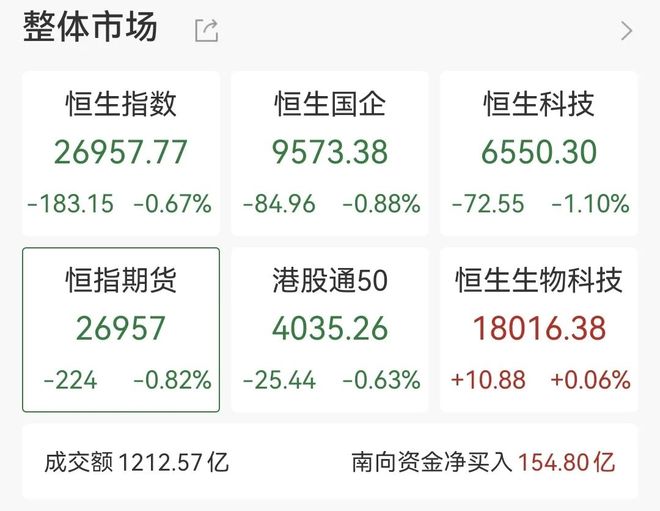
Market Overview - The Hong Kong stock market experienced a decline, with the Hang Seng Index falling by 0.67% to below 27,000 points, the Hang Seng Tech Index down by 1.1%, and the Hang Seng China Enterprises Index decreasing by 0.88% [1][3]. Technology Sector Performance - Major tech stocks such as Xiaomi, Alibaba, and JD.com saw declines of 2.09%, 2.49%, and 2.14% respectively, while NetEase and Kuaishou also dropped by over 1% [3]. Notable Stock Movements - China Gas Holdings (08246.HK) experienced a significant increase, initially rising over 300% and closing up 113.51% at HKD 0.158 per share. This surge followed an announcement of a subscription agreement for 334 million shares at a price of HKD 0.075, representing a premium of approximately 1.35% over the previous closing price [3][4]. Precious Metals Sector - The precious metals sector showed strength, with Zijin Mining International (02259) rising by 8.24% to HKD 147.2, doubling its listing price of HKD 71.59. The current spot gold price reached USD 3,948.81 per ounce, up by 1.26% [6]. Semiconductor Sector - Semiconductor companies continued their upward trend, with SMIC (0981.HK) reaching a new high of HKD 92.1, marking a 0.17% increase. Huahong Semiconductor (1347.HK) also saw a rise of 4.57%, with a year-to-date increase of 331.6% [7]. IPO Activity - The Hong Kong IPO market remains robust, with 68 companies listed in the first three quarters, a year-on-year increase of 47.83%. The total fundraising amount reached HKD 182.397 billion, a significant increase of 222.16% compared to the previous year, marking the highest level since 2021 [7].


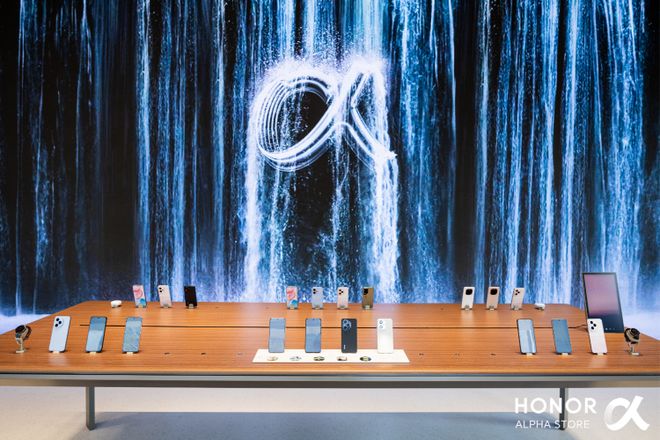
荣耀全球首店落地深圳,李健详解AI生态“三步走”战略
Nan Fang Du Shi Bao· 2025-09-30 09:23
Core Insights - Honor has opened its first Alpha flagship store in Shenzhen, marking a significant step in its transition to an AI terminal ecosystem company since announcing its "Alpha Strategy" at the MWC in March [2][6] - The store serves as a physical embodiment of Honor's AI strategy and adds a tangible narrative to its anticipated IPO process [2][6] Group 1: Store Concept and Roles - The flagship store is positioned as an "AI Terminal Smart Life Innovation Workshop," serving three main roles: a consumer experience window, a creative collaboration stage, and a platform for open partnerships [3][4] - The store features a scene-based experience rather than traditional sales counters, showcasing products like the YOYO assistant and innovative ecological products [3][4] - The "AI Inspiration Café" within the store aims to connect tech professionals, developers, and users, facilitating creativity and collaboration through events like global tech salons [3][4] Group 2: Strategic Framework - Honor's "Alpha" strategy is based on three phases: opening technological boundaries in the AI agent era, opening industrial boundaries in the physical AI era, and opening human potential boundaries in the AGI era [6][7] - This strategy reflects Honor's vision of combining technology with humanism to maximize human potential [6][7] - The collaboration with China Resources Group to establish the flagship store in Shenzhen Bay aligns with the goal of making Shenzhen a "global digital pioneer city" [7] Group 3: Market Implications - The opening of the flagship store is seen as a crucial step in Honor's AI transformation, providing a solid foundation for its narrative in the capital market ahead of its IPO [6][7] - The store is expected to facilitate broader industry collaboration and innovation, enhancing Honor's position in the AI ecosystem [7]
AI硬件的“实用”临界点,到来了吗?
3 6 Ke· 2025-09-29 09:56
Core Insights - The article emphasizes the growing importance of AI hardware in 2025, highlighting three main segments: AI learning machines, smartphones, and AI glasses [1][5][10] - AI education hardware is identified as a stable demand driver, while AI glasses are rapidly emerging as a new product category, leading to a competitive landscape [1][18] - The integration of large models into various devices is transforming user experiences and opening new possibilities for future lifestyles [1][10] AI Hardware Landscape - AI hardware is evolving beyond mere computational power, focusing on user needs, technology, and application scenarios [4][6] - The concept of "remaking" products with AI is prevalent, addressing previously unmet needs in traditional solutions [4][5] AI Education Hardware - AI learning machines are experiencing a resurgence due to their ability to meet the personalized and interactive learning demands of parents and students [5][6] - Leading companies in the AI education sector, such as Haoweilai and Zuo Ye Bang, are collaborating with Alibaba Cloud to enhance educational experiences through AI [5][6] AI Ecosystem Development - The construction of AI ecosystems is becoming a common strategy across various smart hardware sectors, enhancing device collaboration and service integration [6][7] - Companies like Midea and Tuya Smart are integrating AI with IoT to create smarter home environments [6][7] Smartphone Evolution - Smartphones are positioned as the primary consumer entry point for AI, with major manufacturers collaborating with large models to enhance user experiences [10][12] - The trend of AI integration in smartphones is seen as a model for other industries to follow [11][12] AI Glasses Market - AI glasses are emerging as a significant product category, with brands like Thunderbird and Halliday innovating to capture market share [18][19] - The success of AI glasses will depend on their ability to demonstrate value in high-frequency, essential use cases [23][24] Development Efficiency - The introduction of Alibaba Cloud's multi-modal interaction development suite is significantly reducing development cycles for smart hardware manufacturers [24] - Over 100,000 smart terminal clients have integrated with the multi-modal model, indicating a shift towards a more interconnected and intelligent hardware ecosystem [24]
谷歌官宣电脑版安卓系统
3 6 Ke· 2025-09-26 01:55
Core Insights - Google is set to launch a new computer operating system called "Android for PC" next year, integrating Gemini and the Android AI ecosystem to enable seamless collaboration between laptops and smartphones [1][2]. Group 1: Product Development - Google has been successful with ChromeOS and Android tablets, which are evolving into stronger productivity tools, creating an opportunity to accelerate AI advancements within the Android ecosystem for laptops [2]. - The upcoming "Android for PC" aims to retain the user experience of ChromeOS while rebuilding it on the Android system at a foundational level [2]. - Qualcomm's CEO expressed excitement about the "Android PC," highlighting its potential to merge mobile devices with personal computers [2]. Group 2: Market Context - The current PC market is dominated by Microsoft Windows and Apple's OS, with Huawei's HarmonyOS also gaining traction [3]. - Qualcomm has introduced the Snapdragon X2 Elite and X2 Elite Extreme processors, claiming they are the fastest and most efficient in Windows laptops [3][4]. - The new generation of Snapdragon PC chips is expected to be available by the first half of 2026, although it is unclear if they will be compatible with "Android PC" [5].


你的AI助手更万能了!天禧合作字节扣子,解锁无限新功能
量子位· 2025-09-25 11:42
允中 发自 凹非寺 量子位 | 公众号 QbitAI 天禧个人超级智能体 和 字节跳动扣子官宣生态合作! 天禧超级智能体是联想集团推出的 新一代AI助手平台 ,是"一体多端"策略中的"一体", 即智能终端设备的"AI大脑",旨在成为人机交互的第 一入口 。它集成了语音、文本、视觉等多种交互能力、全时空记忆和自主规划执行三大超级能力,并提供AI操控、AI搜索、AI翻译、AI笔记 和AI服务五大黄金功能,通过端云混合部署架构,为用户提供跨设备、跨生态的超级智能体验。 继ChatExcel"对话做表"功能成为现象级亮点后,天禧选择合作开发者平台扣子,不仅是其AI功能上的扩容,更标志着联想AI发展已走向平台 化、生态化的整合阶段,AI生态赋能的核心属性得到全面加强。 天然流量入口+高效开发 据悉,扣子平台具备开发成本低、功能完善的核心优势,支持用户通过可视化界面构建AI应用。此次合作旨在解决AI开发者 "开发易,分发 难" 的核心痛点,开辟了一条从AI创意到商用的"高速公路"。 开发者可通过扣子平台 高效开发 个性化智能体,再通过天禧平台 天然流量入口与设备覆盖优势 ,将这些智能体无缝推送到搭载天禧的AI终 端上。双 ...


魅族又迎关键时刻
Hua Er Jie Jian Wen· 2025-09-16 03:16
Core Viewpoint - Meizu is at a critical turning point as it faces internal turmoil and external competition, necessitating the launch of a new flagship product, the Meizu 22, to regain market trust and stability [2][5][8]. Product Launch - The Meizu 22 was finally launched on September 15, after two years of delays, with the theme "Return Home" [2]. - The device features a 6.3-inch display, which is considered the optimal size for single-handed use and visual balance [3]. - Meizu 22 is designed to cater to the growing demand for small-screen flagship phones, focusing on design, imaging, battery life, and performance [3]. Technical Specifications - The Meizu 22 is equipped with four 50-megapixel cameras and powered by the fourth-generation Snapdragon 8s mobile platform, along with a custom 5510mAh battery [3][4]. - The decision to use the Snapdragon 8s instead of the higher-end Snapdragon 8 Gen 2 was made to keep the price competitive, avoiding a price increase of up to 1500 yuan [4]. Pricing Strategy - The Meizu 22 is priced starting at 2999 yuan for the 12GB + 256GB version, with other configurations priced at 3299 yuan, 3399 yuan, and 4199 yuan for the highest version [4]. - This pricing strategy represents a significant reduction compared to the previous model, Meizu 21, which had a starting price of 3399 yuan for the base version [4]. Strategic Importance - The launch of Meizu 22 is crucial for the company to demonstrate its execution capability and regain confidence after recent management changes [5][6]. - The event also serves as an internal reassurance to employees and partners, signaling a clear strategic direction amidst recent leadership upheavals [5][6]. Broader Vision - Alongside the Meizu 22, the company introduced new products like the Meizu AI shooting glasses StarV Snap and significant upgrades to the Flyme AIOS ecosystem, indicating a shift towards an AI-integrated product strategy [6][8]. - Meizu aims to position itself not just as a smartphone manufacturer but as a player in the broader AI ecosystem, integrating AI into various devices [6][8].