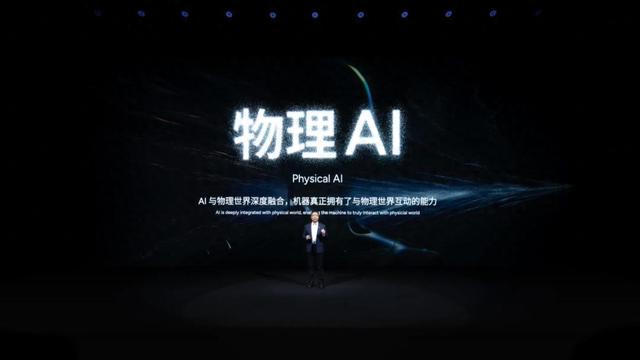
物理AI

Search documents
守擂“AI王冠” 小鹏拆掉的拐杖不止语言
2 1 Shi Ji Jing Ji Bao Dao· 2025-11-12 14:24
Core Insights - The core argument of the article emphasizes that electric vehicles (EVs) must evolve beyond mere electrification to incorporate intelligent driving as a fundamental differentiator from traditional vehicles [2][4][6]. Group 1: Company Strategy and Developments - He Xiaopeng, the founder of XPeng Motors, has consistently viewed intelligent driving as the "core battlefield" for the automotive industry, leading the company to invest heavily in smart driving technology [2][4]. - XPeng Motors has transitioned from XPILOT 1.0 to the VLA (Vision-Language-Action) model, marking a significant evolution in its intelligent driving capabilities [2][4]. - Recent leadership changes, including the appointment of Liu Xianming as the head of intelligent driving, reflect the company's response to market challenges and user feedback regarding the performance of its latest smart driving software [2][3][4]. Group 2: Technological Innovations - XPeng has focused on two technological routes in its smart driving research, ultimately deciding to concentrate on the VLA model after observing its superior learning and decision-making capabilities [4][6]. - The second-generation VLA model aims to eliminate the language processing step, which has been identified as a bottleneck, thereby enhancing the system's efficiency and reducing information loss [21][22][35]. - The company has amassed a vast dataset for training its models, reportedly using nearly 100 million clips of video data, which is equivalent to the driving experiences accumulated over 35,000 years [20][28]. Group 3: Competitive Landscape - XPeng faces increasing competition from companies like Li Auto and Huawei, which are also advancing their intelligent driving technologies and challenging XPeng's VLA approach [3][16]. - The competitive pressure highlights the challenges of managing the extensive data and computational requirements associated with the VLA model, particularly in long-tail scenarios [16][17]. - Industry experts have critiqued the VLA model for its complexity and potential inefficiencies, suggesting that the reliance on language processing may hinder real-time decision-making capabilities [17][18]. Group 4: Future Directions - XPeng's vision extends beyond traditional vehicles to include applications in Robotaxi, humanoid robots, and flying cars, aiming to establish a "physical AI" empire [6][19]. - The company is committed to overcoming the challenges of integrating AI into real-world applications, emphasizing the need for AI to handle the uncertainties of the physical world [6][19][35]. - The ongoing development of the second-generation VLA model is seen as a critical step towards achieving breakthroughs in autonomous driving capabilities, with expectations for significant advancements in the near future [33][34].


守擂“AI王冠”,小鹏拆掉的拐杖不止语言
2 1 Shi Ji Jing Ji Bao Dao· 2025-11-12 14:09
Core Viewpoint - The article discusses the evolution and challenges faced by XPeng Motors in the field of intelligent driving, emphasizing the shift from traditional electric vehicles to a focus on intelligent driving systems as the core competitive advantage. The recent leadership change and user feedback on the latest intelligent driving version highlight the urgency for XPeng to innovate and adapt its strategies in a rapidly evolving market [1][3]. Group 1: Company Strategy and Development - XPeng Motors has shifted its focus to intelligent driving as the core battlefield of the automotive industry, moving from XPILOT 1.0 to the VLA model era, which emphasizes the importance of intelligent systems over mere electrification [1][3]. - The company has invested heavily in intelligent driving research, with a reported expenditure of 2 billion yuan to develop a new autonomous driving system, indicating a commitment to innovation despite previous challenges [3][24]. - XPeng's new VLA model aims to eliminate the language processing step in its intelligent driving system, which is expected to enhance efficiency and reduce information loss during decision-making processes [15][19]. Group 2: Competitive Landscape - XPeng faces increasing competition from companies like Li Auto and Huawei, which have introduced advanced intelligent driving solutions and systems, intensifying the pressure on XPeng to innovate [2][11]. - Li Auto's recent presentation at the ICCV conference showcased its "world model + training loop" approach, which has gained recognition in the academic community, further highlighting the competitive challenges XPeng must navigate [2][11]. - Huawei's ADS 4.0 has already been deployed in over 1 million vehicles across multiple brands, presenting a significant challenge to XPeng's market position [2][11]. Group 3: Technological Innovations - The second-generation VLA model developed by XPeng is designed to handle multi-modal data more effectively, with a focus on self-supervised learning to enhance the model's capabilities without relying on extensive human labeling [19][22]. - XPeng has established a large-scale cloud computing infrastructure, reportedly utilizing 30,000 cloud cards, with plans to expand to 50,000 or even 100,000, to support its ambitious AI and intelligent driving initiatives [21][22]. - The company has trained its models using nearly 100 million video clips, equating to the driving experience of 35,000 years, to improve its autonomous driving capabilities [13][21]. Group 4: Future Directions and Challenges - XPeng's future strategy includes applying the new VLA paradigm to various projects, including Robotaxi and flying cars, as part of its vision to create a "physical AI" empire [4][12]. - The company acknowledges the challenges ahead, including the need to validate the effectiveness of the new VLA model and address potential gaps in common sense reasoning and interpretability that may arise from removing the language processing step [24][26]. - XPeng's leadership emphasizes the importance of innovation and the willingness to abandon past successful practices to explore new frontiers in intelligent driving technology [25][26].
再见黄仁勋,软银58亿清仓英伟达,All in OpenAI
3 6 Ke· 2025-11-12 09:22
Core Insights - SoftBank has divested all its shares in NVIDIA, totaling 32.1 million shares for $5.83 billion, to invest in OpenAI, indicating a strategic shift towards AI development [1][5][10] - Following the sale, NVIDIA's stock price dropped nearly 3%, while SoftBank's shares fell over 5%, reflecting market reactions to the divestment [2][6] - SoftBank's recent financial maneuvers include selling $9.17 billion worth of T-Mobile shares, with proceeds aimed at funding significant AI projects, including a $40 billion commitment to OpenAI and a $500 billion "Star Gate" project [2][10] SoftBank's Investment Strategy - SoftBank was once NVIDIA's largest shareholder but sold nearly 5% of its stake in 2019, missing out on a potential $250 billion gain as NVIDIA's stock soared [3][4] - The company has re-entered NVIDIA's stock market, accumulating approximately $3 billion in investments before the recent full divestment [5][6] - The decision to exit NVIDIA is part of a broader strategy to focus on AI, with SoftBank's valuation increasingly tied to its relationship with OpenAI, which has seen a valuation increase of $14.6 billion since SoftBank's investment [13][15] Future AI Investments - SoftBank is heavily investing in AI infrastructure, including a $5.4 billion acquisition of ABB's robotics division and a planned $6.5 billion purchase of Ampere Computing [17][20] - The company has established a new division, "Robo HD," to consolidate its robotics-related businesses and has committed $575 million for further investments in this area [20] - SoftBank's strategy reflects a belief in "Physical AI" as the next wave of the AI revolution, integrating AI technologies into real-world applications like robotics and autonomous vehicles [17][20]


守擂“AI王冠”,小鹏拆掉的拐杖不止“语言”
21世纪经济报道· 2025-11-12 08:17
Core Viewpoint - The article emphasizes the importance of integrating intelligence into electric vehicles, highlighting that smart driving is the core battlefield for the future of the automotive industry, as articulated by He Xiaopeng, the founder of XPeng Motors [5][7]. Group 1: XPeng's Strategic Shift - XPeng Motors has transitioned to a new phase in its smart driving technology, appointing Liu Xianming, the head of the world foundation model, to lead its autonomous driving business, indicating a shift towards a large model-driven approach [5][7]. - The company has invested 2 billion yuan in developing its second-generation VLA (Vision-Language-Action) model, which aims to enhance the capabilities of its autonomous driving system by focusing on large-scale data and model training [7][24]. Group 2: Technological Innovations - The second-generation VLA model eliminates the language processing step, which previously acted as a bottleneck, allowing the system to learn directly from visual and action data, thereby improving efficiency and reducing latency [26][30]. - XPeng has collected nearly 100 million clips of video data for training, equating to the driving experience of 35,000 years, which is crucial for developing its autonomous driving capabilities [25][24]. Group 3: Competitive Landscape - XPeng faces increasing competition from companies like Li Auto and Huawei, which are also advancing their autonomous driving technologies, with Huawei's ADS 4.0 already deployed in over 1 million vehicles [6][20]. - The article discusses the challenges of the VLA model, particularly its high demands for multimodal data, computational power, and potential delays due to the language conversion process [20][21]. Group 4: Future Directions - XPeng aims to apply the new VLA paradigm to various applications, including Robotaxi, humanoid robots, and flying cars, as part of its vision for a "physical AI" empire [9][24]. - The company is committed to overcoming the uncertainties associated with its new approach, emphasizing the need for innovation and the willingness to abandon past successful experiences to explore new frontiers [40][41].

如果你迫切需要一只兼具避险与AI贝塔属性的股票,那就是苹果(AAPL.US)
智通财经网· 2025-11-11 14:18
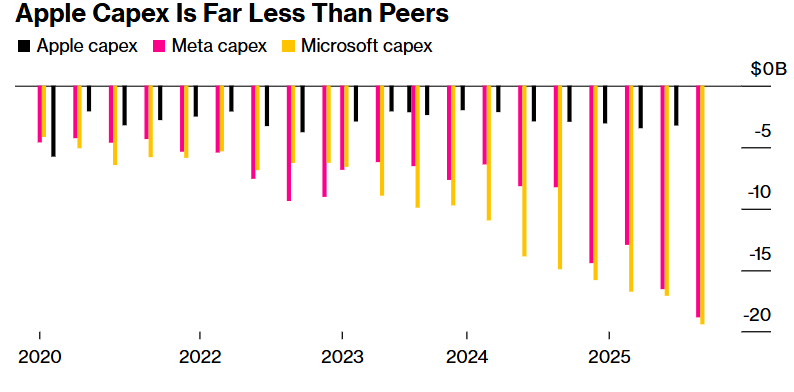
Core Viewpoint - Apple has adopted a conservative "cost-saving AI" strategy, which has now positioned the company as both a "safe haven" and an "AI beta" investment amid the ongoing AI investment wave, contrasting with other tech giants that have heavily invested in AI infrastructure [1][2][10] Group 1: Investment Positioning - Apple is viewed as a potential winner in the AI wave without the heavy capital expenditure risks faced by competitors, supported by strong free cash flow and the belief that "AI inference blue ocean" and "physical AI" will become new revenue engines for the company [2][4] - Unlike other tech giants, Apple does not face the existential question of the return on massive AI investments, allowing it to leverage cutting-edge AI models from other companies to enhance its iPhone user experience without incurring significant infrastructure costs [3][10] Group 2: Capital Expenditure Comparison - Apple's projected capital expenditure for the current fiscal year is approximately $14 billion, significantly lower than Microsoft's expected over $94 billion and Meta's forecast of over $70 billion, despite Meta's smaller market cap [7][8] - This difference in capital expenditure has resulted in Apple's stock underperforming compared to peers in an AI-driven market, with a year-to-date increase of only 7.6% compared to substantial gains for companies like Alphabet and Nvidia [8][9] Group 3: Market Performance and Sentiment - Despite a mixed earnings report and unexpected revenue decline in China, Apple's stock rose nearly 3%, contrasting with declines in stocks of other tech giants facing heavy AI spending and disappointing revenue outlooks [9][10] - Apple's stock has shown resilience during market downturns, highlighting its strong cash generation ability and solid balance sheet, making it a defensive choice compared to competitors with higher AI expenditure [10][12] Group 4: Future Growth Potential - Analysts believe that "physical AI" could be a significant growth engine for Apple, with potential revenue opportunities from its planned Apple Robotics series estimated at around $130 billion by 2040, representing a substantial portion of its current revenue base [11][12] - The ongoing optimism in the AI market suggests that even amid skepticism, large-cap tech companies like Apple are unlikely to lose their status as market favorites, with short-term pullbacks seen as buying opportunities [12][13]

“十五五”新起点上,小鹏以“物理AI”构建新质生产力
Bei Jing Ri Bao Ke Hu Duan· 2025-11-11 11:02
Core Viewpoint - The article highlights the emergence of a new industrial wave in China's manufacturing sector characterized by intelligence and embodiment, with artificial intelligence (AI) transitioning from virtual algorithms to real-world applications, exemplified by XPeng Motors' focus on "physical AI" [1][3]. Group 1: Industry Trends - The "14th Five-Year Plan" is nearing completion, while the "15th Five-Year Plan" emphasizes the acceleration of innovation in strategic emerging industries such as new energy, new materials, aerospace, and low-altitude economy, particularly focusing on embodied intelligence [3]. - The embodied intelligence industry in China is projected to reach a scale of 400 billion yuan by 2030 and exceed 1 trillion yuan by 2035, fostering industrial clusters in transportation, logistics, industrial manufacturing, and commercial services [4]. Group 2: Company Developments - XPeng Motors showcased its advancements in embodied intelligence at the "2025 XPeng Technology Day," presenting the second-generation VLA model, Robotaxi, the new generation humanoid robot IRON, and the flying car system, aligning with national strategic directions [3][4]. - The new generation IRON humanoid robot features 82 degrees of freedom and is designed for commercial applications such as guiding and touring, with plans for mass production by the end of 2026 [6]. - XPeng's flying car, the A868, is entering critical flight verification stages, with a range of 500 kilometers, as part of its low-altitude economy initiatives [8][9]. Group 3: Technological Innovations - The second-generation VLA model serves as the intelligent core of XPeng's physical AI system, enabling autonomous understanding of environments and decision-making without high-precision maps [10][12]. - XPeng has invested over 50 billion yuan in research and development over the past decade, with a focus on self-developed technologies, including the Turing chip, which provides approximately 2250 TOPS of effective computing power for advanced autonomous driving and robotic perception [13][15].
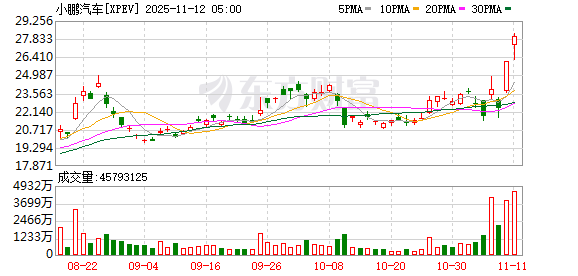
小鹏汽车,暴涨
Zhong Guo Ji Jin Bao· 2025-11-11 10:29
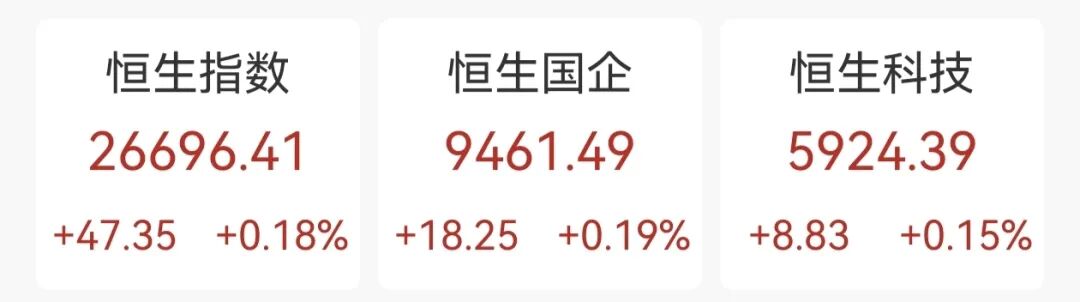
Group 1: Market Overview - The Hong Kong stock market experienced slight gains, with the Hang Seng Index rising by 0.18% to close at 26,696.41 points, and the Hang Seng Technology Index increasing by 0.15% to 5,924.39 points [1][5] - The total market turnover was HKD 210.23 billion, a slight decrease from the previous trading day's HKD 214.79 billion [1] Group 2: Stock Performance - Among the Hang Seng Index constituents, 53 stocks rose while 31 fell, with notable gainers including China National Pharmaceutical Group, which rose by 3.98%, and China Resources Mixc Lifestyle, which increased by 3.88% [3][4] - Xpeng Motors saw a significant increase of 17.93%, closing at HKD 108.50 per share, with a total market capitalization of HKD 207.2 billion, surpassing competitors like Li Auto and NIO [6][5] Group 3: Xpeng Motors Developments - Xpeng Motors' recent "Technology Day" introduced four key applications centered around "Physical AI," including the second-generation VLA and the new Robotaxi, enhancing its positioning as a global leader in embodied intelligence [6][7] - The company is expected to see revenue growth, with projections of HKD 88.5 billion, HKD 128 billion, and HKD 147.2 billion for the years 2025 to 2027, respectively [7] Group 4: Real Estate Sector - The Hong Kong real estate sector index rose by 1.39%, with J.P. Morgan expressing optimism about the market's recovery [9][11] - Notable gainers in the real estate sector included Evergrande Group, which surged by 38.46%, and Japan's Kyoshin, which rose by 29.82% [10][9] - J.P. Morgan noted that since the low in March 2025, Hong Kong residential prices have rebounded by over 4%, with expectations of an additional 5% increase by the end of 2026 [11]
小鹏汽车,暴涨
中国基金报· 2025-11-11 10:23
Group 1: Market Overview - The Hong Kong stock market experienced slight gains, with the Hang Seng Index rising by 0.18% to close at 26,696.41 points, and the Hang Seng Technology Index increasing by 0.15% to 5,924.39 points [2] - A total of 53 stocks in the Hang Seng Index rose, while 31 declined, indicating a generally positive market sentiment [3] Group 2: Key Stock Performances - Xpeng Motors saw a significant increase of approximately 18%, closing at HKD 108.50 per share, with a total market capitalization of HKD 207.2 billion, surpassing competitors like Li Auto and NIO [8][11] - Other notable gainers included China National Pharmaceutical Group, which rose by 3.98%, and China Resources Mixc Lifestyle, which increased by 3.88% due to expectations of a recovery in commercial real estate [3][4] Group 3: Real Estate Sector Insights - The Hong Kong real estate sector index rose by 1.39%, with J.P. Morgan expressing optimism about the industry [12][13] - Evergrande Group Holdings surged by 38.46%, while Japan's Jien and Yida China also saw significant gains of 29.82% and 19.61%, respectively [16][17] - J.P. Morgan noted that since the low in March 2025, Hong Kong residential prices have rebounded by over 4%, with expectations of an additional 5% increase by the end of 2026 [18]
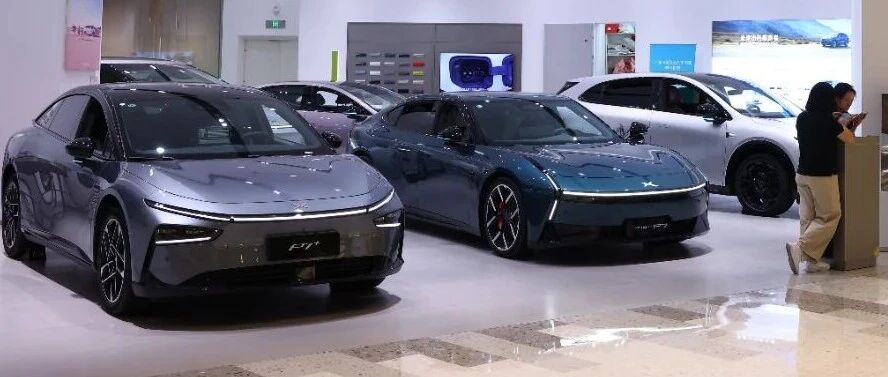
股价大涨近18%,这家车企在模仿特斯拉?
Di Yi Cai Jing· 2025-11-11 10:06
Core Viewpoint - Xiaopeng Motors has seen a significant increase in its stock price following its Technology Day, with a market capitalization of HKD 207.2 billion, surpassing competitors like Li Auto and NIO, sparking discussions about its value in the capital market [1] Group 1: Business Developments - Xiaopeng's Technology Day highlighted advancements in four key areas: robotics, Robotaxi, flying cars, and the second-generation VLA large model [1] - The new generation of the IRON robot is powered by three Turing AI chips, with a total computing power of 2250 TOPS, and features solid-state batteries for enhanced safety and lightweight design [2] - Xiaopeng aims to achieve mass production of high-end humanoid robots by the end of 2026, with initial applications in familiar commercial scenarios such as sales and guidance [4][5] Group 2: Market Position and Comparisons - Xiaopeng Motors is often compared to Tesla, but it still lags behind in key metrics such as sales, profitability, and market capitalization [1][6] - The company is focusing on technology and product development, with a strategy that includes both AI and robotics, while acknowledging that it has not yet received the same level of market recognition as Tesla [7] - In terms of sales, Xiaopeng delivered approximately 355,200 vehicles in the first ten months of the year, a 190% increase year-on-year, while Tesla's sales in China exceeded 600,000 units [7][8]
股价大涨近18%,这家车企在模仿特斯拉?
第一财经· 2025-11-11 09:47
Core Viewpoint - Xiaopeng Motors has seen a significant increase in its stock price, rising approximately 17.93% as of November 11, 2025, with a market capitalization of 207.2 billion HKD, surpassing competitors like Li Auto and NIO, sparking discussions about its value in the capital market [3] Group 1: Business Developments - Xiaopeng's 2025 Technology Day highlighted four key areas: robotics, Robotaxi, flying cars, and the second-generation VLA large model, leading to comparisons with Tesla [3] - Xiaopeng's CEO He Xiaopeng emphasized that both Xiaopeng and Tesla are exploring cross-domain integration, suggesting that innovative companies may arrive at similar solutions [3] - The new generation of Xiaopeng's humanoid robot, IRON, is powered by three Turing AI chips with a total computing power of 2250 TOPS and aims for mass production of advanced humanoid robots by the end of 2026 [5][6] Group 2: Market Position and Comparisons - Xiaopeng's robots are designed to be "automotive-grade," with a focus on high-quality production standards, and the company plans to establish a robot automation factory [5][6] - The humanoid robot market is heating up, with Goldman Sachs reporting that humanoid robot suppliers in China are adopting a "capacity-first" strategy, anticipating mass production by the second half of 2026 [6] - Xiaopeng's cumulative delivery volume for the first ten months of the year reached approximately 355,200 units, a year-on-year increase of 190%, with the Xiaopeng MONA M03 contributing nearly 40% of sales [10] Group 3: Future Outlook - He Xiaopeng stated that while Xiaopeng's robots are in the early stages of commercialization, achieving household tasks may take 3 to 5 years, and more complex scenarios will require additional time [7] - Xiaopeng is pursuing a range of technologies and products, including extending range capabilities with the launch of the Xiaopeng X9, aiming for quarterly breakeven by Q4 2025 [10] - Despite similarities in business strategies with Tesla, significant gaps remain in key financial metrics, with Xiaopeng still striving to catch up to Tesla's established market position [9][10]