智能驾驶

Search documents
豪恩汽电董事长陈清锋:深挖护城河 勇闯新赛道
Zheng Quan Ri Bao· 2026-01-13 16:49
Core Insights - The article highlights the evolution of Shenzhen Haon Automotive Electronics Co., Ltd. from a supplier of ultrasonic radar to a comprehensive provider of "perception + decision" systems in the automotive industry [1] - The company aims to leverage its technological capabilities to expand into robotics and low-altitude economy sectors, marking a significant strategic shift [1] Group 1: Company Evolution - Haon Automotive has transitioned from a single product supplier of ultrasonic sensors to an integrated solution provider for perception and decision systems over 16 years [2] - The product matrix now includes ultrasonic radar (including the latest AK2), visual perception systems, and 4D millimeter-wave radar, with the AK2 being crucial for advanced parking solutions [2] - The company has established partnerships with leading chip manufacturers to enhance decision-making capabilities, which are essential for advancing from L2 to L4 autonomous driving [2] Group 2: Market Positioning - Haon Automotive has successfully entered the supply chains of major international automotive manufacturers such as Ford, Stellantis, and Renault, demonstrating its competitive edge [2] - The rigorous process of gaining supplier codes from top-tier manufacturers took eight years, emphasizing the importance of technical integration and management capabilities [3] Group 3: Strategic Expansion - In 2024, Haon Automotive plans to enter the robotics sector, viewing it as a next trillion-yuan market with significant technological overlap with automotive applications [3][4] - The company is focusing on developing advanced algorithms for motion control and environmental perception, which are critical for robotics [4] - A phased approach is being adopted for the robotics business, with a projected one to five years for large-scale production, while also preparing for emerging fields like low-altitude economy [5] Group 4: Growth Objectives - Since its IPO in 2023, Haon Automotive has set ambitious revenue and profit growth targets, aiming for a tenfold increase [6] - The growth strategy includes expanding existing automotive business, entering new markets, and pursuing strategic acquisitions to mitigate risks [7][8] - The company emphasizes strategic execution over aggressive short-term expansion, allowing flexibility for its R&D teams while maintaining strict quality standards [8]
2026年第2周计算机行业周报:智谱及MiniMax上市带动国产AI应用行情-20260113
Changjiang Securities· 2026-01-13 15:23
Investment Rating - The industry investment rating is "Positive" and is maintained [7] Core Insights - The computer sector experienced a significant increase of 9.12%, ranking 4th among primary industries in the Yangtze River region, with a trading volume accounting for 7.72% of the total market [2][4][15] - The recent listings of Zhiyu and MiniMax are expected to drive investment opportunities in domestic AI applications, with MiniMax's stock surging nearly 110% on its debut, reaching a market capitalization of over HKD 105 billion [6][49] - The report suggests focusing on domestic large model manufacturers, major cloud service providers, vertical scenario agent manufacturers, and the domestic computing power industry chain [6][49] Summary by Sections Market Performance - The computer sector saw a substantial rise, with the Shanghai Composite Index achieving a sixteen-day winning streak, closing at 4120.43 points, reflecting an overall increase of 3.82% [4][15] - AI-related stocks were particularly active, with notable gains in companies such as Starry Technology (+49.74%) and Zhuoyi Information (+43.33%) [17] Key Developments - NVIDIA launched the Alpamayo series of open-source AI models aimed at enhancing autonomous driving capabilities [20][22] - OpenAI introduced ChatGPT Health, a specialized version of ChatGPT designed for health and wellness applications [31][38] - China submitted a proposal to the ITU for multiple satellite constellations, totaling 203,000 satellites, indicating a strategic acceleration in the commercial space sector [41][42] Investment Recommendations - The report emphasizes the importance of the recent IPOs of Zhiyu and MiniMax, which may reshape the industry landscape and capital market pricing logic, shifting the focus from parameter competition to profitability and implementation efficiency [49][60] - Investors are encouraged to monitor developments in the AI application sector, particularly in relation to large model manufacturers and cloud service providers [6][49]
万马科技:公司智算中心用液冷服务器机柜研发项目目前已开发完成
Zheng Quan Ri Bao Wang· 2026-01-13 13:10
Group 1 - The core viewpoint of the article highlights that Wanma Technology (300698) has completed the development of its liquid-cooled server cabinet project for its intelligent computing center [1] - The company's wholly-owned subsidiary, Shanghai Youka, is collaborating with NVIDIA on the application of NVAIE in the autonomous driving data closed-loop platform, enhancing the intelligent driving data closed-loop toolchain for automotive enterprises [1] - In 2026, the company will continue to adhere to prudent management and long-termism, focusing on investor interests and systematically promoting market value management to achieve a dynamic balance between intrinsic and market value, thereby safeguarding the long-term interests of all shareholders [1]

喜相逢集团拟收购厦门旷时科技的51%股权
Xin Lang Cai Jing· 2026-01-13 11:33
Core Viewpoint - Xixiangfeng Group (02473.HK) has signed a memorandum of understanding with an independent third party to acquire a 51% stake in Xiamen Kuangshi Technology Co., Ltd. through equity acquisition or capital increase, aiming to enhance its position in the intelligent driving sector [3][9]. Group 1: Company Overview - Xixiangfeng Group, established in 2007, is a well-known automotive retailer that primarily provides automotive financing leasing services and related services through its self-operated sales network [10]. - The company was listed in Hong Kong on November 9, 2023, issuing 103 million shares at HKD 1.1 per share, raising approximately HKD 113 million [10]. - As of the latest update, Xixiangfeng Group's share price is HKD 9.95, with a total market capitalization of approximately HKD 15.391 billion [10]. Group 2: Strategic Acquisition - Kuangshi Technology is a leading provider of millimeter-wave radar intelligent perception solutions in China, offering a full range of products including chips, algorithms, modules, and system platforms, integrated with artificial intelligence for high-performance solutions in fields such as assisted driving and smart IoT [3][9]. - Xixiangfeng Group is actively exploring the autonomous vehicle business, leveraging its nationwide self-operated sales network and extensive experience in vehicle operation and management [3][9]. - The board of Xixiangfeng Group believes that if the potential transaction is realized, it will help expand the smart driving automotive industry chain, enhance technological reserves and product competitiveness, and align with the company's strategic layout in this business area [3][9].

丘钛科技发盈喜,预期年度综合溢利同比增长约400%至450%
Zhi Tong Cai Jing· 2026-01-13 10:33
Core Viewpoint - The company anticipates a significant increase in consolidated profit for the year ending December 31, 2025, projecting a growth of approximately 400% to 450% compared to the previous year, with an expected profit of around RMB 279 million [1][2]. Group 1: Factors Contributing to Profit Growth - The board believes that the substantial year-on-year growth in consolidated profit is primarily due to the company's unwavering commitment to its five-year strategic development plan (2021-2025), accelerating the business development of smart visual products outside the mobile phone sector [2]. - The rapid development of the global smart driving and IoT smart terminal industries has significantly increased the demand for camera modules, leading to a notable rise in product specifications [2]. - The company has maintained strong partnerships with leading smart driving solution providers, handheld shooting equipment brands, and other prominent IoT smart terminal brands, resulting in a year-on-year doubling of sales volume for camera modules applied in other fields, which has contributed to steady revenue growth [2]. Group 2: Product Strategy and Operational Improvements - The company continues to focus on mid-to-high-end camera modules and fingerprint recognition modules, with significant year-on-year growth in sales volume for periscope camera modules, optical image stabilization camera modules, and ultrasonic fingerprint recognition modules, effectively enhancing product added value [2]. - The company has made substantial progress in operational efficiency, development capabilities, quality capabilities, and delivery capabilities through its digital transformation efforts, which have collectively improved gross margin [2]. - The company completed the sale of approximately 51.08% of its subsidiary Kunshan Q Tech Microelectronic (India) Private Limited, generating income from this transaction, while also benefiting from improved performance of an associated company, which contributed to the company's share of profits compared to a loss in the same period last year [2].
丘钛科技(01478)发盈喜,预期年度综合溢利同比增长约400%至450%
智通财经网· 2026-01-13 10:00
Core Viewpoint - The company, Q Technology (01478), anticipates a significant increase in consolidated profit for the year ending December 31, 2025, projecting a growth of approximately 400% to 450% compared to the consolidated profit for the year ending December 31, 2024, amounting to around RMB 279 million [1][2]. Group 1 - The board believes that the expected substantial growth in consolidated profit is primarily due to the company's unwavering commitment to its five-year strategic development plan (2021-2025) and the accelerated development of smart visual products outside the mobile phone sector [2]. - The rapid development of the global smart driving and IoT smart terminal industries has significantly increased the demand for camera modules, leading to a notable rise in product specifications [2]. - The company has maintained strong partnerships with leading smart driving solution providers, handheld imaging device brands, and other prominent IoT smart terminal brands, resulting in a year-on-year doubling of sales volume for camera modules applied in other fields [2]. Group 2 - The company continues to focus on mid-to-high-end camera modules and fingerprint recognition modules, with substantial year-on-year growth in sales of periscope camera modules, optical image stabilization camera modules, and ultrasonic fingerprint recognition modules [2]. - The scale growth of high-end products has effectively improved the company's product added value [2]. - The company has made significant progress in operational efficiency, development capability, quality capability, and delivery capability through its digital transformation efforts [2]. Group 3 - The steady growth in operating revenue, effective improvement in product structure, and optimization of internal operations have collectively contributed to a noticeable improvement in the company's gross profit margin [2]. - The company completed the sale of approximately 51.08% of its subsidiary Kunshan Q Tech Microelectronic (India) Private Limited, generating income from this transaction [2]. - Additionally, the performance of a joint venture has improved compared to the same period last year, allowing the company to recognize income from the joint venture, whereas it previously recorded a loss [2].
金鹰基金:天量遭遇主线暂歇 春躁行情踏浪前行
Xin Lang Cai Jing· 2026-01-13 09:38
Market Overview - All three major indices closed lower, with the ChiNext index experiencing a significant decline of 1.96%, while the Shanghai Composite Index fell by 0.64% to 4138 points. The Hong Kong Hang Seng Index opened high but closed lower. Trading volume in both markets increased, approaching 3.7 trillion yuan [1][8]. Sector Performance - The commercial aerospace sector saw a substantial drop, leading to a decline in market sentiment. According to WIND data, most of the 31 primary industries tracked by Shenwan experienced declines, with notable gains in oil and petrochemicals (1.62%), pharmaceuticals (1.21%), non-ferrous metals (0.91%), and media (0.67%). In contrast, sectors such as defense, electronics, communications, and computers lagged behind. Out of over 5300 stocks in the market, 3726 saw declines, indicating poor profitability [1][9]. Reasons for Market Correction - The primary reason for the market correction was the cooling off of previously popular speculative themes, particularly in commercial aerospace and controllable nuclear fusion sectors. The commercial aerospace concept stocks notably weakened after several companies issued risk warnings on January 12. This decline raised concerns among investors regarding high-volatility sectors, prompting some to quickly realize profits, which led to concentrated selling pressure [2][9]. Short-term Outlook - The current short-term fluctuations may present a good opportunity for allocation. Historical data from the past two decades indicates that spring market rallies typically occur, although the timing and magnitude can vary. Compared to historical trends, the current bull market has not yet reached its peak, and market sentiment remains subdued. The influx of absolute return funds from insurance, private equity, and retail investors suggests that the spring rally in A-shares has already begun [2][10]. Future Market Dynamics - As the annual performance forecast disclosure window opens for listed companies, the market logic is expected to shift from valuation recovery to profit growth. The current spring market is anticipated to be characterized by a more tradable and significant upward trend after digesting market sentiment [3][10]. Sector Allocation Recommendations - The importance of performance realization is expected to increase, focusing on core technology and manufacturing sectors. Key areas to prioritize include overseas computing power, storage, consumer electronics, and wind energy storage, which currently have low trading congestion and still present buying opportunities. Additionally, sectors like innovative pharmaceuticals and gaming, which may see fundamental improvements in Q1, are also expected to rotate into focus [4][11]. Commercial Aerospace Sector Outlook - Despite the recent adjustments and the need to digest short-term overheating sentiment, the commercial aerospace sector may still hold strong investment appeal. The ongoing developments with SpaceX and robust policy support, along with significant industry catalysts, suggest that the sector could remain active with participation opportunities [5][12].
当问界均价超过宝马,旧富难敌新贵?
和讯· 2026-01-13 09:13
Core Viewpoint - The luxury car market is experiencing significant challenges in 2026, with traditional luxury brands struggling to maintain their status as the definition of luxury evolves [4][5][6]. Group 1: Price Adjustments and Market Dynamics - BMW has implemented substantial price reductions across 31 models, with 24 models seeing price cuts exceeding 10% and 5 models over 20%, including the i7 M70L, which dropped by 301,000 yuan [7]. - Despite these reductions, core volume models like the 3 Series, X3, and X5 did not see similar price adjustments, indicating that the most popular models remain relatively stable in pricing [8]. - BMW's official stance is that these price changes are not a "price war" but rather a strategic response to market dynamics, aiming for long-term growth rather than short-term profits [9]. Group 2: Impact on Dealers and Sales - The price adjustments have provided tangible benefits to dealers by reducing the discrepancy between suggested retail prices and actual transaction prices, alleviating cash flow pressures [10]. - BMW's revenue for the first three quarters of 2025 fell by 5.6% to 99.999 billion euros, with a net profit decline of 6.9%, and new car deliveries in China dropped by 11.2% [11]. Group 3: Competitive Landscape and Market Share - The luxury car market is seeing a shift as new energy vehicle brands gain traction, with brands like AITO surpassing traditional luxury brands in sales, indicating a significant market share loss for established players [18]. - The market segment priced between 300,000 to 500,000 yuan has seen domestic brands increase their share from under 10% in 2020 to over 40% by 2025, signaling a breakdown of the traditional luxury pricing structure [18]. Group 4: Technological Advancements and Consumer Preferences - New energy brands are leveraging technological advantages, such as advanced driving assistance and smart cabin features, which are reshaping consumer expectations of luxury [19][20]. - Traditional luxury brands are responding by collaborating with tech companies to develop smart driving systems tailored to local needs, while also launching new electric models [20].


高含模量系统量产上车,千里浩瀚G-ASD推动智驾全面AI化进阶
Xin Lang Cai Jing· 2026-01-13 09:11
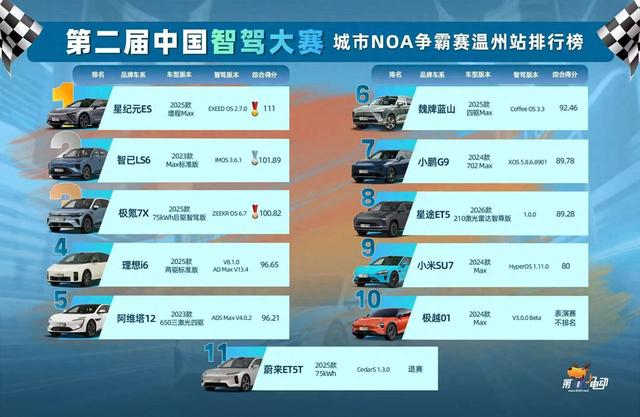
Core Insights - The second Intelligent Driving Competition's Wenzhou finals concluded, with the Zeekr 7X equipped with Qianli Haohuan G-ASD ranking in the top three, showcasing its industry-leading position [1] - The competition featured a challenging 28-kilometer course with 65 traffic lights and 7 difficult test points, demonstrating G-ASD's robust defensive driving capabilities and obstacle recognition in complex environments [1] Group 1 - Qianli Haohuan G-ASD is a new advanced driving assistance brand jointly launched by Qianli Zhijia and Geely, attracting significant attention in the global tech and automotive sectors since its debut at CES 2026 [3] - G-ASD offers a high-modulus intelligent driving solution that spans from Level 2 to Level 4 driving capabilities, differing from traditional systems by providing a smoother driving experience in complex urban conditions [3] - The system's human-like performance is attributed to its end-to-end model architecture, integrating advanced AI technologies such as multimodal base models and reinforcement learning, aiming to reduce reliance on artificial maps and preset rules [3] Group 2 - The first version of the G-ASD system is currently installed in 16 models under the Zeekr and Lynk & Co brands, covering over 300,000 vehicles [5] - As G-ASD is gradually adopted in more Geely vehicles, a revolution in intelligent driving experiences driven by high-modulus technology is accelerating towards a broader user market [5]
【热点评述】关注地平线生态技术大会
乘联分会· 2026-01-13 08:40
Core Viewpoint - The article discusses the first Horizon Technology Ecosystem Conference held in Shenzhen, focusing on the development of smart vehicles and robots, and the collaboration among various industry players to promote technological advancements and accessibility [3][12]. Group 1: Market Achievements and Product Launches - Horizon has successfully shipped over 10 million units of its Journey series chips within five years, with the latest HSD model achieving over 12,000 activations in just two weeks after its launch [5]. - The company aims to reach a production target of 10 million units for the HSD model in the next 3-5 years [5]. Group 2: Technological Advancements - The fourth-generation compiler technology has significantly improved compilation speed from hours to minutes, with a 20% enhancement in model performance [6]. - The new Riemann architecture is expected to deliver a tenfold increase in computing power and a fivefold improvement in efficiency compared to the previous generation [6]. Group 3: New Service Models and Collaborations - Horizon introduced the HSD Together algorithm service model, which promises to reduce human, computing, and time costs by 90% for smart driving partners [7]. - The company announced that its urban auxiliary driving solution based on the Journey 6M model will soon be mass-produced, making it accessible for vehicles priced around 100,000 yuan [8]. Group 4: Expansion into Robotics - Horizon is expanding its technology from smart driving to general robotics, launching two foundational models: HoloMotion for embodied intelligence and HoloBrain for cognitive capabilities [9]. Group 5: Industry Challenges - The automotive industry is facing a potential storage chip supply crisis due to rising demands for higher performance and larger capacity products, with projections indicating that the supply satisfaction rate may fall below 50% by 2026 [11][12].