生成式AI

Search documents
杰富瑞上调IBM(IBM.US)评级至“买入”:2026年有望受益于软件业务增长
智通财经网· 2026-01-06 03:39
Group 1 - Jefferies upgraded IBM's rating from "Neutral" to "Buy" due to expected growth in its software business by 2026 [1] - The macro environment is turning more positive, driven by technological transformation and accelerated adoption of artificial intelligence (AI), leading to broad demand growth [1] - Management's outlook has become more optimistic compared to early 2025, supported by strong organic software growth, realization of synergies from acquisitions, and strategic wins in generative AI consulting projects [1] Group 2 - Key acquisitions by IBM, such as the completed acquisition of HashiCorp and the ongoing acquisition of Confluent, are noteworthy [1] - The integration of HashiCorp is complete, with expectations of achieving synergies and driving mid to high double-digit growth through IBM's distribution channels [2] - The ongoing acquisition of Confluent is expected to bring extensive software synergies in hybrid cloud, AI, automation, and data, helping to fill gaps in its real-time integration and security product portfolio [2]


浙文互联GEO智能体“HochiGEO”,抢占流量新入口布局AI营销新范式
Zheng Quan Shi Bao Wang· 2026-01-06 03:38
Core Insights - The rise of generative AI tools like DeepSeek and Kimi is transforming the flow of information from "webpage redirects" to "AI direct responses" [1] - Generative Engine Optimization (GEO) is emerging as a necessary marketing paradigm for brands to enhance their visibility and authority in AI-generated answers [1][2] Group 1: GEO Overview - GEO optimizes content's semantic expression, structure, credibility, and multimodal adaptability to increase brand information's citation rate and visibility in AI responses [1] - The essence of GEO is to systematically convert brand information into AI-understandable and trustworthy knowledge assets, enhancing brand visibility and conversion efficiency in an AI-dominated information landscape [1] Group 2: HochiGEO Development - The recently launched HochiGEO is built on the brand's AI content repository and integrates over 20 years of marketing methodologies to provide efficient Q&A training and content restructuring [2] - HochiGEO aims to not only influence AI responses but also to achieve stable exposure and dynamic adaptation of brand information, focusing on long-term knowledge system construction [2] Group 3: Market Potential - According to MarkNtel Advisors, the global SEO market is projected to reach $81.46 billion in 2024, with GEO expected to gradually take over and even reshape this market in the AI era [2] - The shift from traditional SEO, which relies on user clicks, to GEO, which ensures content is understood and trusted by AI, represents a significant evolution in marketing strategies [3] Group 4: Marketing Evolution - The transition to GEO is driving a shift in the marketing industry's business model from creative strategy and media services to integrated solutions that combine technology services [3] - GEO is positioned as a key solution to align with new user cognitive paths and habits, ultimately providing brands with broader visibility, more accurate recognition, and deeper understanding [3]

小米硬核拆车,让中国汽车竞争回归质量核心
Zhong Guo Qi Che Bao Wang· 2026-01-06 01:22
Core Insights - The article discusses Xiaomi's proactive approach in addressing public concerns regarding its electric vehicle, the YU7, through a transparent live-streamed disassembly event led by CEO Lei Jun, showcasing the vehicle's safety features and design [1][2][4]. Group 1: Product Transparency and Safety - Xiaomi's live-stream event aimed to dismantle the YU7 to directly address safety concerns, including the vehicle's structural integrity and battery protection mechanisms [1][2]. - The engineering team demonstrated the YU7's safety features, such as a design that allows front wheels to detach during a collision to absorb impact energy, thereby protecting the passenger cabin [1][2]. - Lei Jun acknowledged industry-wide issues like vague marketing practices and committed to improving transparency in promotional materials [2][4]. Group 2: Market Performance and Future Plans - Xiaomi reported impressive delivery figures, with over 410,000 vehicles delivered in 2025, surpassing the initial target of 300,000, and the YU7 achieving 150,000 deliveries within six months of launch [4]. - For 2026, Xiaomi plans to focus on three key areas: investing 200 billion yuan in technology research and development, enhancing AI capabilities, and creating a comprehensive user experience [4]. - The company set a delivery target of 550,000 vehicles for 2026, aiming for overachievement [4]. Group 3: Industry Impact and Consumer Engagement - The live-stream event served as a platform for consumers to better understand automotive technology, making complex safety designs more accessible [5]. - Xiaomi's transparent approach may encourage other companies in the industry to adopt similar practices, fostering a competitive environment focused on product and technological excellence [5][7]. - The event highlighted the importance of innovation and quality in the automotive industry, emphasizing that long-term consumer trust can only be built through transparency and technical advancement [7].



腾讯研究院AI速递 20260106
腾讯研究院· 2026-01-05 16:01
Group 1: Notion 3.0 Update - Notion 3.0 introduces personalized agent customization, integrating the latest models GPT-5 and Claude Sonnet 4, expanding the MCP list to include applications like Lovable and Perplexity [1] - Users can now complete complex tasks such as database setup and automation using natural language, significantly lowering the usage barrier for previously deterred users [1] - The commercial subscription is priced at $24 per month or $20 per month when billed annually, with a 14-day trial period, targeting users needing personal finance and data management systems [1] Group 2: Kiwi-do Model Emergence - A mysterious model named Kiwi-do has emerged in the large model arena, claiming to be from Kimi, with training data up to January 2025 and passing the VPCT visual physical understanding test [2] - Speculations suggest Kiwi-do may be related to the K2-VL multimodal version mentioned in AMA activities or the new K2.1/K2.5 models expected to launch in Q1 of this year [2] - Kimi has completed a C-round financing of 3.5 billion yuan, with cash reserves reaching 10 billion yuan, potentially accelerating the training of the K3 model with aggressive GPU expansion [2] Group 3: WeChat AI Mini Program Growth Plan - WeChat mini programs have launched an "AI Applications and Online Tools Mini Program Growth Plan," providing comprehensive support including cloud development, AI computing power, data analysis, and commercial monetization throughout 2026 [3] - Developers can receive a free personal cloud development environment for six months, 100 million tokens for Tencent's mixed yuan 2.0, 10,000 image generation credits, and a one-year subscription to WeAnalysis Pro [3] - The platform will enable virtual payment and membership subscription capabilities across all terminals with limited-time discounted rates, with AI mini programs like "Guess Salt" and "Style Converter" already showing commercial potential [3] Group 4: Huawei's Open Source Model - Huawei has released the open-source multimodal model openPangu-VL-7B, utilizing Ascend's native architecture, achieving a first-word inference delay of only 160 milliseconds on a single Atlas 800T A2 card at 720P, enabling real-time inference at 5 FPS [4] - The model completed stable training on over 3 trillion tokens during the pre-training phase, using a high-performance visual encoder adapted for Ascend, improving throughput by 15% compared to the ViT-H series [4] - It excels in tasks such as general visual question answering, document chart understanding OCR, visual localization, and short video comprehension, using relative coordinates for positioning [4] Group 5: Samsung's AI Home Ecosystem - Samsung unveiled its AI home ecosystem at CES 2026, featuring a 130-inch Micro RGB TV equipped with Vision AI Companion (VAC) for recommending movies, recipes, and music, along with an AI football mode for realistic match experiences [5] - The AI refrigerator Family Hub, powered by Google Gemini 3, automatically tracks ingredient usage and recognizes specific sounds to provide personalized dietary reports, supporting seamless integration with connected kitchen appliances for automated cooking processes [6] - Samsung plans to increase the number of mobile devices equipped with Gemini AI features to 800 million by 2026, with a health companion function that aggregates data from connected devices to proactively alert users to abnormal health signs and share data via the Xealth platform [6] Group 6: ima's PPT Generation Feature - The ima 2.1.3 update introduces a PPT generation feature that automatically creates charts and highlights key points from user data, supporting various styles [7] - This feature is designed for academic reports, workplace summaries, and proposal promotions, addressing challenges of time constraints and content distillation, simplifying the process of creating year-end summaries and final reports [7] - The new version is now live, allowing users to update and experience the enhancements, as ima continues to iterate and upgrade its products in response to user needs [7] Group 7: Chinese Eyewear Brands at CES 2026 - At CES 2026, 16 out of 23 AI eyewear exhibitors are Chinese brands, including Alibaba, Thunderobot, and Rokid, with a focus on brand exposure and international expansion [8] - The budget for independent exhibition booths starts at 1 million yuan, with TCL having the largest exhibition area, slightly surpassing LG and Sony [8] - Various Chinese hardware brands, including humanoid robots and AI companion robots, are showcased, while the density of Chinese smartphone manufacturers is lower as they shift focus to the MWC exhibition [8] Group 8: ByteDance's SeedFold Model - ByteDance's Seed team has proposed the SeedFold molecular structure prediction model, achieving state-of-the-art results in the FoldBench benchmark, surpassing AlphaFold3 through width expansion and large-scale data distillation [9] - The efficient variant SeedFold-Linear employs a linear triangular attention mechanism, reducing computational complexity from cubic to quadratic, and constructs a large-scale distilled dataset containing 26.5 million samples, expanding experimental structural data by 147 times [9] - Experiments indicate that the folding model's capacity is primarily limited by the paired representation hidden dimension (128 dimensions), with SeedFold outperforming AlphaFold3 in antibody-antigen predictions and SeedFold-Linear excelling in protein-ligand predictions [9] Group 9: Midjourney Founder Insights - The founder of Midjourney, David, shared that he completed more programming projects during the Christmas holiday than in the past ten years combined, with notable comments from Elon Musk about entering a singularity [10] - Engineers from Anthropic noted that programming agents, particularly Claude Opus, can compress six years of work into a few months, with Google's chief engineer generating a distributed agent coordinator in a day that took a year to build [10] - LiveBench's latest evaluation ranks Claude 4.5 Opus at the top, with developer Boris Cherny sharing his setup that achieves 50-100 pull requests weekly [11]

投行Piper Sandler发布2026年软件行业展望 首选标的是这些公司
智通财经网· 2026-01-05 15:08
Core Viewpoint - Piper Sandler has adjusted investment ratings for several software stocks in its latest 2026 outlook for the security and infrastructure software industry, indicating a cautious optimism for 2026 despite a challenging 2025 for software stocks overall [1] Group 1: Company Ratings Adjustments - Varonis Systems' rating has been upgraded from "Neutral" to "Overweight," with a target price increase from $45 to $47, as the company focuses on its more stable SaaS business despite previous challenges [2] - SentinelOne's rating has been downgraded from "Overweight" to "Neutral," with a target price decrease from $20 to $17, due to management changes and disappointing recent performance, despite its technology platform being viewed positively [3] Group 2: Industry Outlook - The software sector is expected to face a "scarcity of growth acceleration" in 2026, with a stable demand environment but potential disruptions from generative AI impacting traditional software business models [3] - Preferred stocks for 2026 include Palo Alto Networks, Atlassian, Check Point Software, Netskope, and ServiceNow, which are expected to stand out due to their platform integration advantages or strong defensive qualities in business models and cash flow [4]
快手大涨11%!可灵海外出圈,Motion Control玩法刷屏
华尔街见闻· 2026-01-05 11:10
Core Viewpoint - Kuaishou Technology is rapidly realizing its commercial potential in the generative AI sector, driven by its AI video generation model, Kling, and the technological empowerment of its core advertising business [3][7]. Group 1: Financial Performance - Kuaishou's stock surged over 13% during trading, closing up 11%, reflecting strong market sentiment [4]. - The company reported a trading volume of 135 million shares and a market capitalization of 317.9 billion [5]. Group 2: AI Business Growth - The Kling model's daily revenue reached 2.5 times the average level from mid-December 2025, driven by the "Motion Control" feature's popularity in overseas markets [7][9]. - Kuaishou's revenue from the Kling model is projected to exceed $140 million in 2025, with continued growth expected in 2026 due to version iterations and expansion into B-end users [9][16]. Group 3: Advertising Business Enhancement - AI technologies like OneRec and GFRL have significantly improved Kuaishou's advertising efficiency, increasing user engagement by 1-2% and ad revenue by 4-5% [8][14]. - The application of AI has optimized ad loading rates and enhanced eCPM, contributing to steady growth in user engagement and advertising revenue [8][14]. Group 4: Future Outlook and Valuation - Market optimism regarding Kuaishou's profit prospects is supported by projected profits of 20.6 billion RMB and 23.8 billion RMB for 2025 and 2026, respectively, with year-on-year growth rates of 16% and 15% [16]. - The investment logic will focus on the ongoing empowerment of Kuaishou's advertising business by AI technology and the high-frequency data performance of the Kling business [16].

有道AI答疑笔推出国内首个生成式视频讲解功能
Xin Lang Cai Jing· 2026-01-05 10:27
Core Viewpoint - NetEase Youdao's AI learning hardware "Youdao AI Answer Pen Space X" has completed a significant upgrade, introducing the first high-quality AI "video Q&A" feature in China, marking a transition from "text reasoning" to "generative video explanation" [1] Group 1: Product Features - The core upgrade of the Youdao AI Answer Pen is the newly launched "video Q&A" function, which extends the experience from static Q&A to dynamic explanations [2] - Unlike traditional smart learning tools that rely on pre-stored video libraries, the "video Q&A" feature can generate customized explanation videos in real-time for any subject and question, ensuring that every unique inquiry from students receives a tailored dynamic explanation [2] - The upgrade enhances the learning experience by making explanations more vivid and understandable, simulating real classroom board writing, and visualizing complex problems through dynamic video content [3] Group 2: Personalization and Engagement - The innovation supports highly personalized customization, allowing users to request specific focuses in the explanation videos, transforming the AI from a passive tool into an interactive "personal teacher" [3] - This feature not only aids children in understanding problems but also fosters a sense of achievement through personalized video generation, encouraging active questioning and exploration, thereby cultivating independent learning and deep thinking skills [3] Group 3: Market Response and Evolution - Since its launch in February 2025, the Youdao AI Answer Pen has continuously evolved around the core scenario of "instant Q&A," addressing common pain points in home education, such as difficulties in understanding complex problems and the potential for fostering dependency on answers [5] - The product has introduced features like "guided Q&A" and "panoramic puzzle scanning" to enhance user experience, with the former promoting independent thinking and the latter improving the efficiency of inputting complex questions [5] - The market response has been positive, with sales exceeding 100 million yuan within the first year of launch, establishing it as one of the first AI-native learning hardware products to successfully implement a business model [5]

联发科,豪赌ASIC
半导体芯闻· 2026-01-05 10:13
Group 1 - The core viewpoint of the article highlights the growing demand for generative AI and large language models, leading to an intensified competition in cloud computing power, particularly with Google's strong momentum in its self-developed TPU chips [1] - Media reports indicate that both Broadcom and MediaTek are increasing their production capacity for 2026 in response to the strong demand for Google's TPU, which is expected to enter its eighth generation and achieve a production scale of 5 million units in 2027 and 7 million units in 2028, significantly revised upwards from previous estimates [1] - MediaTek is reallocating resources from its mobile chip division to focus on ASIC and automotive sectors, aiming to capture opportunities in data centers and customized chips for CSP [1] Group 2 - MediaTek's current 112Gb/s SerDes DSP utilizes PAM-4 receiving architecture, achieving over 52dB loss compensation capability at 4nm process, which is crucial for data centers and advanced packaging architectures [2] - Analysts suggest that MediaTek's strategic shift in resource allocation signifies a structural transformation in its growth engine, with cloud AI, data centers, and ASIC becoming the most explosive application scenarios in the medium to long term [2] - MediaTek's first ASIC project is progressing well, with expected revenue contributions of approximately $1 billion in 2026, increasing to several billion dollars in 2027, and a second project anticipated to contribute revenue starting in 2028 [2]

CES将开幕,黄仁勋对谈联想杨元庆:未来合作或再翻5倍
Guan Cha Zhe Wang· 2026-01-05 08:48
Core Insights - The annual Consumer Electronics Show (CES) in Las Vegas will commence on January 6, showcasing advancements in AI hardware and technology [1] - NVIDIA CEO Jensen Huang is expected to address the ongoing demand for AI chips and the future of AI technology during his keynote speech [1] - Huang will emphasize "Physical AI," highlighting its applications beyond robotics, impacting various industries such as healthcare, automotive, and manufacturing [1] Group 1: NVIDIA and AI Trends - Huang will discuss the collaboration between NVIDIA and Siemens to apply AI in industrial scenarios [1] - The demand for NVIDIA's Blackwell chips remains high, but supply issues persist [2] - Huang and Lenovo's CEO Yang Yuanqing predict that enterprise-level AI will become a key battleground, with hybrid AI as a critical breakthrough [2] Group 2: Industry Participation and Innovations - Major chip executives from Intel, Qualcomm, and AMD will also participate in Lenovo's event, with AMD expected to announce significant updates to its Ryzen series [3] - Chinese companies will showcase advanced products, including Alibaba's "Quark AI Glasses" and Kuaishou's "Kling AI" model [3] - Various humanoid robots and AI-driven products from Chinese companies will be presented, demonstrating the growth of embodied intelligence in the industry [3]


借CES开幕展望2026年科技趋势
日经中文网· 2026-01-05 07:51
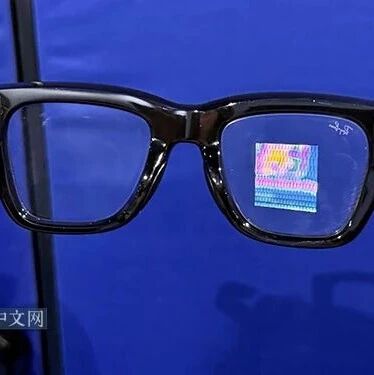
Core Viewpoint - The article discusses the upcoming trends in technology for 2026, particularly focusing on the application of generative AI and the emergence of new devices in the "post-smartphone" era, as showcased at the CES event [2][3]. Group 1: New Product Developments - OpenAI is expected to launch an "AI terminal" in 2026, which will operate solely through voice commands and will not have a display [3]. - Meta is developing AI-powered glasses that allow users to see the real world through transparent lenses while displaying digital images [5]. - Apple plans to release its first foldable iPhone in 2026, with IDC predicting a 30% growth in the global market for foldable smartphones compared to 2025 [7]. Group 2: Physical AI and Market Trends - Physical AI, which enables autonomous control of robots and machinery, is anticipated to be a major focus at CES, with NVIDIA's CEO highlighting it as the next wave of technology [8]. - The market for physical AI is projected to reach $68.5 billion by 2034, increasing 13 times from 2025 [10]. - The integration of AI in robotics is expected to expand into homes, with over 1 billion humanoid robots predicted to be in operation by 2050 [10]. Group 3: Generative AI Development - There are predictions that "General AI" (AGI) could be achieved by 2026, but concerns have been raised about a potential plateau in generative AI development [11]. - OpenAI plans to release a new, more powerful foundational model in January, while Meta is set to upgrade its "Llama" model by March [13]. - The competition between the US and China in AI technology is intensifying, with China working on building an independent AI supply chain [13].