
贸易保护主义

Search documents
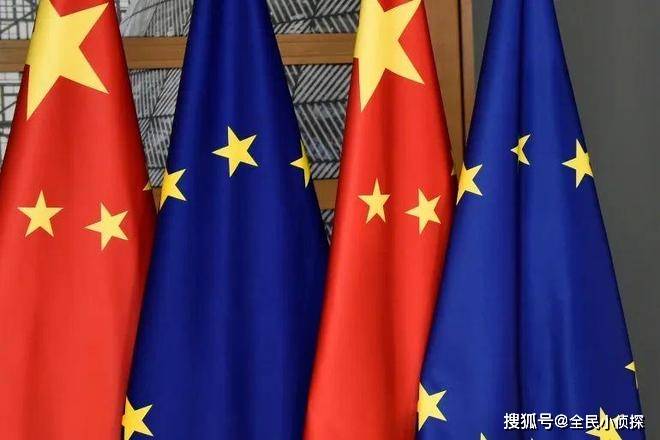
为了安抚美国,世界第三大经济体要对中国加税,最高加征50%!
Sou Hu Cai Jing· 2025-09-27 13:00
Core Points - The EU plans to impose high tariffs on steel and related products originating from China, with rates expected to be between 25% and 50% [1] - The EU will initiate over 20 anti-dumping investigations against Chinese goods, citing "unfair competition" and the need for punitive measures to address "overcapacity" issues [1][2] - The EU's actions are seen as a response to the isolation of a "partner" (implicitly the US), aiming to protect its own market and restore balance with the US [2][3] Group 1 - The EU's proposed tariffs are a reaction to perceived unfair competition from China, indicating a shift towards protectionist measures [1][2] - The EU acknowledges that these protective measures may not fully resolve underlying issues, suggesting a recognition of the limitations of trade protectionism [5] - The EU's alignment with US pressures may ultimately harm its own interests, as it risks protecting outdated industries rather than fostering future growth [5]

美国迷之操作!烂施关税,势力衰落,这是要步罗马帝国后尘
Sou Hu Cai Jing· 2025-09-27 07:58
Group 1 - The article draws parallels between the decline of the Roman Empire and the current situation in the United States, suggesting that America's recent actions may indicate a similar trajectory of decline [1][10] - The U.S. government has implemented high tariffs on Chinese electric vehicles and solar batteries, which has led to job losses and increased costs for consumers, mirroring the protectionist policies that contributed to Rome's downfall [3][12] - The U.S. is experiencing a significant immigration crisis, with record deportations and a backlog of asylum applications, which reflects a failure to address labor shortages in key sectors [5][7] Group 2 - The rise of populism in the U.S. is evident, as ordinary citizens face economic hardships while politicians focus on external threats rather than addressing domestic issues [9][10] - The elite in the U.S. are engaging in trade protectionism and politicizing immigration, exacerbating internal divisions, similar to the internal decay seen in the Roman Empire [10][11] - The article warns that if the U.S. continues down this path of trade protection, immigration issues, and internal strife, it may face a decline akin to that of Rome [12]

牺牲中国利益后,墨西哥好日子到头了,遭我方反制,美国背后补刀
Sou Hu Cai Jing· 2025-09-27 06:50
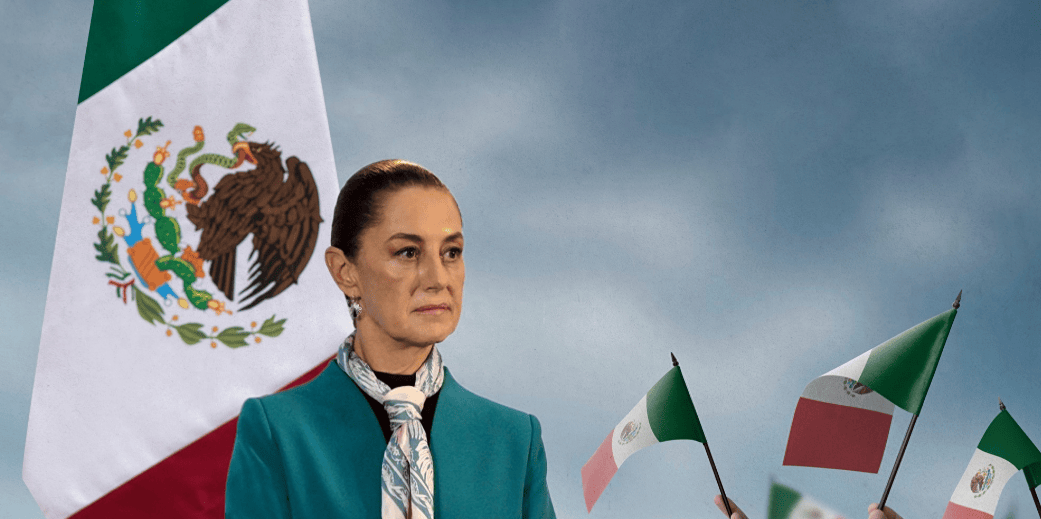
Group 1 - Mexico's President announced a significant trade policy adjustment, raising import tariffs on automobiles and certain industrial products to 50%, which observers link to U.S. trade pressures [1] - China's Ministry of Commerce responded with anti-dumping investigations on pecans from Mexico and the U.S., potentially impacting exports significantly if dumping is confirmed [2] - China is also conducting a comprehensive review of Mexico's recent trade protection measures, which could lead to retaliatory tariffs and affect investor confidence in Mexico [2] Group 2 - Analysts note that Mexico's economic growth has been driven by its geographical advantage and low labor costs, but current government policies may undermine these benefits by sacrificing relationships with other trade partners [3] - The Mexican government is facing consequences for its policy choices, including a decline in its business environment rating and warnings from economists about the risks of unilateral protectionism [4] - Amidst these trade policy challenges, the U.S. has intensified immigration controls, highlighting Mexico's precarious position as a subordinate ally in U.S. strategic interests [6]
特朗普拉长关税清单
Guo Ji Jin Rong Bao· 2025-09-27 06:49
Core Viewpoint - The effectiveness of trade policies, particularly tariffs, is being questioned even among Trump's supporters, who are beginning to recognize that job losses are more attributable to automation than to trade policies. The logic of free trade remains relevant despite the challenges it faces [1][10]. Tariff Measures - Trump's administration has raised the average tariff level in the U.S. from less than 2% to 17.7%, with specific tariffs on steel, aluminum, and copper reaching 50%, and most auto imports facing a 25% tariff. New investigations targeting robots, industrial machinery, and medical supplies may lead to further tariffs [2][3]. - Starting October 1, new tariffs will be imposed on various imported products, including 50% on kitchen cabinets and bathroom sinks, 30% on imported furniture, and 100% on patented and branded drugs [2]. Trade Agreements and Reactions - The U.S. has reached trade agreements with several major partners, including the EU, Japan, and South Korea, but skepticism about Trump's trade logic persists. Countries like South Korea are experiencing significant export declines due to high tariffs [4][5]. - Japan's former central bank governor criticized Trump's high tariff policies as misaligned with U.S. economic realities, while the EU has faced criticism for perceived concessions under U.S. pressure [5]. Geopolitical Implications - Trump's tariffs have led to geopolitical shifts, with Canada experiencing a 1.6% economic contraction due to export declines and a rising unemployment rate. Canada is now seeking to reduce its dependency on the U.S. [6]. - The EU is accelerating trade diversification efforts and increasing defense investments to reduce reliance on the U.S. for security commitments [6]. - Australia and New Zealand are also reassessing their diplomatic ties with the U.S. due to trade tensions, which could impact intelligence cooperation [7]. Global Trade Dynamics - Despite the challenges posed by Trump's protectionism, countries are recognizing the benefits of reducing tariffs. Indonesia has reached a free trade agreement with the EU, and other nations are pursuing similar agreements to mitigate the impact of U.S. tariffs [9]. - The WTO's multilateral trade system is under threat, with a decline in global trade share and increased unilateral measures by major economies, leading to fragmentation of the trade system [11]. Future Trade Frameworks - There are calls for the WTO to reform and better facilitate global cooperation amid the current trade turmoil. China has expressed its commitment to not seeking special treatment in future negotiations [12]. - Analysts suggest forming multiple alliances among like-minded countries to create a flexible network that can promote trade integration while ensuring supply chain security [13].
特朗普政府被曝酝酿重磅新规:拟按芯片数量对进口电子产品征税
智通财经网· 2025-09-27 05:38
Core Viewpoint - The Trump administration is considering imposing tariffs based on the chip content of imported electronic devices to encourage manufacturing to return to the U.S. [1][2] Group 1: Tariff Implementation - The U.S. Department of Commerce may levy tariffs proportionate to the estimated value of chip content in products [1] - If implemented, this plan could lead to increased taxes on a wide range of consumer goods, potentially exacerbating inflation [2] - The proposed tariff rates include 25% on imported equipment with chip content, while products from Japan and Europe may face a 15% rate [3] Group 2: Economic Implications - Economists warn that such tariffs could raise consumer goods costs, especially as inflation is already above the Federal Reserve's 2% target [2][3] - The administration's strategy includes tariffs, tax cuts, deregulation, and leveraging energy advantages to bring key manufacturing back to the U.S. [2] Group 3: Exemptions and Conditions - The Department of Commerce may consider granting equivalent tariff exemptions if companies relocate half of their production capacity to the U.S. [3] - There is a suggestion to exempt chip manufacturing tools from tariffs to avoid increasing production costs, but this has faced opposition from the White House [3]

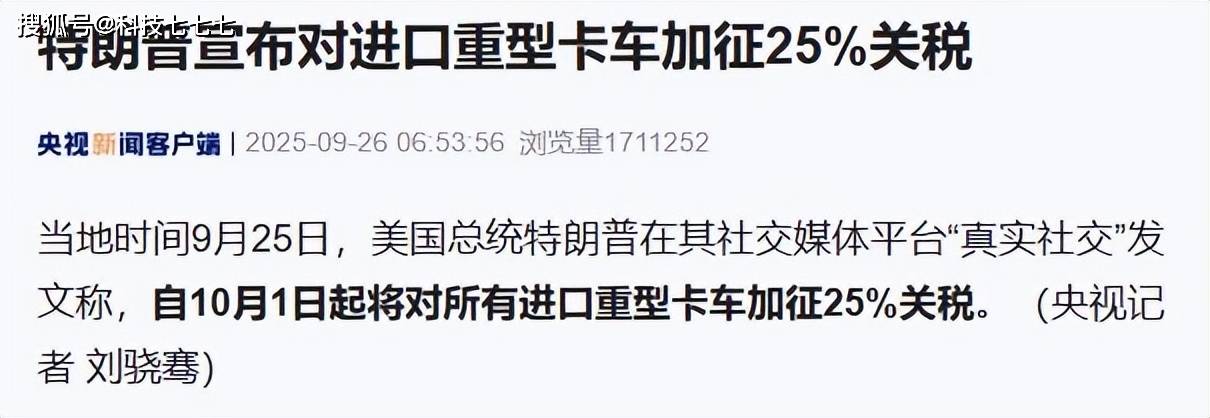
特讯!特朗普通告全球:10月1日起对所有进口重卡加征25%关税,引发全球高度关注
Sou Hu Cai Jing· 2025-09-26 15:51
Group 1 - The U.S. is imposing a 25% tariff on all imported heavy trucks, which is expected to significantly impact the already struggling heavy truck market [1] - Heavy truck sales in the U.S. have declined, with only over 50,000 units sold in the first quarter of this year, leading manufacturers to offer discounts to clear inventory [1][3] - The price increase from the tariff will raise the cost of an imported heavy truck from $100,000 to $125,000, creating financial strain for logistics companies [1] Group 2 - Mexico is likely to be the most affected, as many U.S. brands have manufacturing plants there, and the tariff disrupts the North American supply chain [3] - U.S. truck manufacturers are rushing to transport trucks produced in Mexico to the U.S. before the tariff takes effect, indicating a chaotic response to the new policy [3] Group 3 - The tariff on heavy trucks is expected to trigger a chain reaction affecting the entire pricing system, leading to increased transportation costs and higher prices for goods in supermarkets [5] - The U.S. Producer Price Index (PPI) inflation rate was already at 3.3% in July, and the new tariffs are likely to exacerbate inflationary pressures [5] Group 4 - Different companies are adopting various strategies to cope with the tariff impact, such as Chinese truck manufacturers considering "parts export and assembly in Mexico" as a workaround [7] - Truck manufacturers are advised to research tariff exemption clauses, parts suppliers are encouraged to implement dual-source procurement, and logistics companies need to recalculate total cost of ownership [8] Group 5 - The timing of the tariff imposition coincides with the intensifying election campaign, suggesting a political motive behind the decision to showcase a tough stance on trade [9] - Economic analysts have criticized the tariffs as potentially harmful to U.S. businesses and consumers, likening the situation to administering unnecessary treatment to a healthy patient [9] Group 6 - The tariff situation serves as a lesson in the interconnectedness of the global economy, highlighting that protectionist measures can have unintended consequences on domestic foundations [11]
Paccar shares rise after Trump announces tariffs on foreign heavy-duty trucks
Invezz· 2025-09-26 15:34
Core Viewpoint - Shares of US truck manufacturer Paccar increased following President Donald Trump's announcement of new tariffs on foreign-made heavy-duty trucks, aimed at protecting domestic manufacturing [1] Group 1: Company Impact - Paccar's stock price rose as a direct response to the tariff announcement, indicating a positive market reaction to the protective measures for domestic manufacturers [1] Group 2: Industry Implications - The new tariffs are expected to impact the competitive landscape of the heavy-duty truck market, potentially benefiting US manufacturers like Paccar while posing challenges for foreign competitors [1]


中方说到做到,敢损害中国利益,就得付出代价,中国商务部对墨西哥启动调查
Sou Hu Cai Jing· 2025-09-26 11:42
Core Viewpoint - The recent trade investigations initiated by China against Mexico highlight the ongoing international trade tensions and the complexities of trade relationships in the context of U.S. influence [1][3]. Group 1: Trade Investigations - China has officially launched two investigations against Mexico regarding restrictive trade measures and anti-dumping investigations related to pecan products from Mexico and the U.S. [1][3]. - These actions are seen as a necessary response to protect national interests and signal China's firm stance against trade protectionism [3][4]. Group 2: Impact on Trade Relations - Mexico's President, AMLO, has proposed raising tariffs on Chinese automobiles to 50%, which could severely impact the competitiveness of Chinese cars in the Mexican market [3][4]. - Experts express concerns that such policies could damage the long-term economic relationship between China and Mexico, affecting both countries' industrial chains [3][4]. Group 3: U.S. Influence - The increase in tariffs appears to be influenced by U.S. pressure on Mexico to reduce reliance on Chinese manufacturing [1][4]. - Analysts suggest that while Mexico seeks to appease the U.S., it may inadvertently jeopardize its own economic interests and cooperation with China [6][4]. Group 4: Future Trade Dynamics - The future of trade relations between China and Mexico remains uncertain, with calls for adherence to multilateral trade principles to ensure sustainable development [8]. - China is encouraged to defend its national interests while also adopting a constructive diplomatic approach to strengthen mutually beneficial cooperation with other countries [8].
美关税冲击加剧 约旦出口行业困则思变
Xin Hua Wang· 2025-09-26 10:46
Group 1 - Jordan's export industry is significantly impacted by US trade protectionism, with a strong call for market diversification and enhanced export capabilities [1][2] - The garment industry is the largest export sector in Jordan, facing profit compression and increased competition due to US tariffs [1][2] - The current tariff rate imposed by the US on Jordanian products is 15%, which poses a severe challenge for the economically vulnerable country [1] Group 2 - The food industry in Jordan is also experiencing negative effects from US tariffs, with exporters facing pressure to lower prices despite thin profit margins [2] - Jordanian exporters are urged to explore markets in Europe and Africa to mitigate the impact of US tariffs [3] - Structural reforms are necessary for Jordan to enhance competitiveness, including improving operational efficiency and expanding production capacity [3]
综述丨美关税冲击加剧 约旦出口行业困则思变
Xin Hua Wang· 2025-09-26 09:42
Group 1 - Jordan's export industry is significantly impacted by US trade protectionism, with a strong call for market diversification and enhanced export capabilities [1][2] - The US is Jordan's largest export market, with exports to the US projected to be approximately 2.2 billion dinars (about 3.1 billion USD) in 2024, accounting for a quarter of Jordan's total exports [1] - The garment industry is the largest export sector in Jordan, facing profit compression and increased competition due to US tariffs [1][2] Group 2 - The garment sector is particularly vulnerable, with small factories operating on thin margins (less than 4%) and high operational costs, making them susceptible to tariff impacts [1][2] - The food industry also reports significant negative effects from US tariffs, with exporters facing pressure to reduce prices, which threatens their profit margins [2] - Jordanian exporters are urged to explore markets in Europe and Africa to mitigate the impact of US tariffs, with a focus on improving operational efficiency and expanding production capacity [3]