
AI算力

Search documents
电新行业周报:国家超算互联网核心节点上线,电力投资聚焦绿色转型-20260208
Western Securities· 2026-02-08 08:29
Investment Rating - The report does not explicitly state an investment rating for the industry Core Insights - The domestic first commercial SAR satellite closed-loop service system is taking shape as Tianyi Research Institute aims for an A-share IPO [1] - The national supercomputing internet core node has been launched, establishing a foundation for a trillion-parameter model computing capacity with a 30,000-card domestic cluster [1] - Tesla has achieved mass production of dry electrode technology, and Changan Automobile will be the first globally to equip sodium-ion batteries from CATL in its vehicles [2] - The State Grid has clarified that the "14th Five-Year Plan" investment will focus on green transformation and enhancing cross-regional transmission capacity [2] - The offshore wind power sector in China is progressing, with an expected addition of 6.12 GW of new grid-connected capacity by 2025 [2] Summary by Sections Section 1: Commercial Space and AI Computing - Tianyi Research Institute is preparing for an A-share IPO, establishing a commercial SAR satellite service system [1] - The national supercomputing internet core node will provide efficient computing services for large-scale AI applications [1] Section 2: Battery Technology and Electric Vehicles - Tesla's dry electrode technology is now in mass production, significantly reducing costs and energy consumption [2] - Changan Automobile's introduction of sodium-ion batteries marks a significant advancement in battery technology for electric vehicles [2] Section 3: Power Infrastructure and Renewable Energy - The State Grid's investment plan for the "14th Five-Year Plan" will reach 4 trillion yuan, focusing on green energy and quality improvement [2] - The offshore wind power sector is set to expand with significant new installations planned for 2025 [2]

通信行业点评报告:当前时点如何看光模块 CPO NPO投资机会
Soochow Securities· 2026-02-08 07:25
证券研究报告·行业点评报告·通信 证券分析师 欧子兴 执业证书:S0600525110002 ouzx@dwzq.com.cn 行业走势 通信行业点评报告 当前时点如何看光模块/CPO/NPO 投资机会 2026 年 02 月 08 日 增持(维持) [Table_Tag] [Table_Summary] 投资要点 ◼ 风险提示:AI 建设不及预期、光互联技术发生重大变化、系统性风险 -18% -7% 4% 15% 26% 37% 48% 59% 70% 81% 2025/2/10 2025/6/10 2025/10/8 2026/2/5 通信 沪深300 相关研究 《我国卫星通信战略提速,建议布局 两大方向》 2026-01-11 《2026 年通信投资机会梳理:算力为 核,卫星为翼》 2026-01-04 东吴证券研究所 1 / 2 请务必阅读正文之后的免责声明部分 ◼ 光模块未来需求置信度进一步提升。本周海外亚马逊、谷歌、微软和 Meta 等主要 CSP 披露最新财报,2026 年资本开支合计将达 6600 亿美 元,同比大幅增长 60%,主要投向 AI 算力的建设。我们认为,海外主 要 CSP 大厂持 ...


机械设备行业跟踪周报:看好北美电力发展对应的燃气轮机、光伏设备锂电设备投资机会-20260208
Soochow Securities· 2026-02-08 05:41
Investment Rating - The report maintains a rating of "Buy" for the mechanical equipment industry, with a focus on specific companies such as Northern Huachuang, Sany Heavy Industry, and others [1]. Core Insights - The North American electricity shortage is driven by the contradiction between the non-linear growth of AI power demand and aging grid infrastructure. The Department of Energy (DOE) predicts an average peak gap of 20-40GW by 2030 due to this imbalance [2]. - The report highlights investment opportunities in gas turbines and photovoltaic equipment, particularly in response to the growing electricity demand in North America and the global shift towards renewable energy solutions [3][4]. - The report emphasizes the potential for domestic gas turbine technology to fill the electricity gap in the U.S. market, with specific recommendations for companies like Jerry Holdings and Yingliu Holdings [2][31]. Summary by Sections Gas Turbines - The gas turbine sector is expected to benefit from the increasing electricity demand driven by AI data centers. The supply-demand gap is significant, with global gas turbine orders exceeding 80GW while actual deliverable capacity is below 50GW [31]. - Recommended companies include Jerry Holdings, Yingliu Holdings, and Haomai Technology, which are positioned to capitalize on the growing demand for gas turbines [31][32]. Photovoltaic Equipment - The report notes a significant opportunity in the photovoltaic sector, particularly with the expected growth in space-based solar power due to initiatives like SpaceX's satellite deployment [3][4]. - Key recommendations include companies like Jing Sheng Mechanical and Aotwei, which are well-positioned to benefit from both ground and space photovoltaic markets [4][26]. Lithium Battery Equipment - The demand for lithium battery equipment is anticipated to surge due to the rapid growth of energy storage needs driven by AI and policy changes. Companies like Xian Dao Intelligent and Hangke Technology are highlighted as key players in this space [4][25]. - The report suggests that the global demand for energy storage solutions will significantly increase, with projections indicating a need for over 300GWh of storage equipment driven by major tech companies [4]. Engineering Machinery - The engineering machinery sector is expected to see a strong performance in Q1, with significant year-on-year growth in excavator sales. Companies like Sany Heavy Industry and XCMG are recommended for their strong market positions [5][43]. - The report indicates that the sector typically experiences a surge in sales during the first quarter due to seasonal factors and policy support [5]. General Recommendations - The report provides a comprehensive list of companies to watch across various segments, including Northern Huachuang, Sany Heavy Industry, and others in the mechanical equipment sector [1][15].
周五美股 算力大反弹
小熊跑的快· 2026-02-08 05:35
Group 1 - The core viewpoint of the article highlights the significant increase in capital expenditures (capex) for major tech companies like Google and Amazon, indicating a strong investment in AI computing power [1] - Google’s capex has risen from $91 billion to between $175 billion and $185 billion, effectively doubling its investment [1] - Amazon is projected to reach a capex of $200 billion by 2026, also doubling its investment [1] Group 2 - The article mentions that hardware investments have surged, reflecting a broader trend in the tech industry [1] - The focus of investments is shifting from cloud services to computing power, emphasizing the importance of AI capabilities [5] - Companies like AMD and NVIDIA are also highlighted, with AMD's market capitalization at $339.8 billion and NVIDIA's at $4,505.5 billion, showcasing their significant roles in the semiconductor industry [3][4]

马斯克:五年后,每年向太空发射的AI算力超过地球存量
Xin Lang Cai Jing· 2026-02-08 02:59
格隆汇2月8日|在2月6日刚结束的一场深度访谈中,马斯克称:"五年后,我预计我们每年向太空发射 并运营的AI算力,将超过地球上所有AI算力的总和。" 这一计划需要每年向轨道发射约100吉瓦(GW)的 太阳能与算力载荷,相当于1万次星舰发射任务。这也意味着SpaceX将不仅是火箭公司,更将成为AI时 代的"超级服务商"。 ...

100万颗卫星!马斯克掀起了“太空圈地运动”……
Xin Lang Cai Jing· 2026-02-07 23:54
Core Viewpoint - SpaceX has submitted an application to the U.S. Federal Communications Commission to deploy 1 million satellites in low Earth orbit, aiming to establish the world's first in-orbit data center, reflecting ambitions for U.S. dominance in space resources [1][4]. Group 1: SpaceX's Strategic Plans - The core mission of SpaceX's application is to create an orbital data center system with unprecedented computing power, aiming to overcome physical limitations on AI computation by utilizing the abundant solar energy and optimal cooling conditions in space [2]. - Elon Musk has indicated that the current growth of AI chip production is exponential, while power supply growth is lagging, which hampers the efficiency of data training and model deployment [2]. - The in-orbit data center plan is expected to significantly reduce costs for AI computing, enabling rapid iteration and upgrades of AI models [2]. Group 2: Military and Strategic Implications - SpaceX's Starlink system, while marketed as a civilian satellite network, serves as a strategic tool for military integration, being a key contractor for NASA and the U.S. Department of Defense [5]. - The implementation of the space data center plan could enhance U.S. military capabilities in space, allowing for real-time target identification and ballistic calculations, thus reducing response times from hours to seconds [5]. - The large-scale satellite distribution architecture is highly resilient, ensuring that the network remains operational even if individual satellites are damaged [6]. Group 3: Resource Competition and Risks - Low Earth orbit and frequency spectrum are considered scarce strategic resources, with the capacity for satellites limited to approximately 175,000 due to safety distances [7]. - SpaceX's application for 1 million satellites exceeds the current total of approximately 15,000 operational satellites, potentially leading to a monopolistic situation that could restrict other nations' access to space [8]. - The dense deployment of satellites raises collision risks and could lead to the Kessler syndrome, where space debris creates a hazardous environment for future satellite operations [8].
巨头砸钱6500亿加剧担忧,黄仁勋发声“灭火”
华尔街见闻· 2026-02-07 12:35
Core Viewpoint - The surge in AI infrastructure capital expenditure in the tech industry is deemed reasonable, appropriate, and sustainable, driven by extremely high demand for computing power, as stated by Jensen Huang [1][5]. Group 1: AI Infrastructure Investment - Huang indicated that the capital expenditure from key clients like Meta, Amazon, Google, and Microsoft is projected to reach approximately $650 billion by 2026, representing a 60% increase from 2025 [3][7]. - This spending level significantly exceeds the GDP of many medium-sized economies, with most funds allocated for purchasing NVIDIA chips [3][7]. - The anticipated capital expenditures for these companies will be close to or exceed their total spending over the past three years, setting records for individual company annual capital expenditures [7]. Group 2: Market Reactions and Concerns - Recent financial reports and guidance have led to severe sell-offs in tech stocks, with a cumulative market value loss of about $1.35 trillion among major tech firms [3][10]. - Despite some companies like Meta and Alphabet seeing stock price increases, others like Amazon and Microsoft faced significant declines, resulting in a total market value drop exceeding $950 billion since the latest earnings reports [10]. - Concerns about investment efficiency and potential overcapacity have created a negative sentiment in the market, with analysts highlighting the structural issues surrounding the massive capital expenditures required for AI development [11][12]. Group 3: Profitability and Future Outlook - Huang emphasized that as long as companies continue to pay for AI, they will generate profits, leading to exponential growth in revenue [6][5]. - AI companies are already becoming profitable, with NVIDIA's clients leveraging AI to enhance their operations, such as Meta transitioning its recommendation systems to generative AI [6][5]. - The ongoing demand for AI computing power is reflected in the rental of all previously sold GPUs, indicating a robust and sustained need for AI infrastructure [6][5].

算力需求强劲,关注CPO等新技术演进
Orient Securities· 2026-02-07 09:53
Investment Rating - The report maintains a "Positive" investment rating for the electronic industry, indicating an expectation of returns stronger than the market benchmark by over 5% [5]. Core Insights - Strong demand for computing power driven by AI applications is expected to continue, with significant investments from major cloud providers [8]. - The hardware supply-demand imbalance is spreading across various sectors, leading to price increases [8]. - New technologies such as CPO (Co-Packaged Optics) are anticipated to create additional demand [8]. Summary by Sections Investment Recommendations and Targets - Key investment targets include: - Semiconductor manufacturing: SMIC (688981, Buy), Hua Hong Semiconductor (01347, Buy) - Testing and packaging: Changdian Technology (600584, Buy), Tongfu Microelectronics (002156, Buy), and others [9]. - Server storage: Lianqi Technology (688008, Buy) - CPUs: Haiguang Information (688041, Buy), Longxin Technology (688047, Not Rated), and others [9]. - Passive components: Sanhua Group (300408, Buy), Fenghua Advanced Technology (000636, Not Rated) [9]. - Server manufacturing: Industrial Fulian (601138, Buy), Huaqin Technology (603296, Buy) [9]. - Analog and power chips: Naxin Micro (688052, Buy), Sierui Technology (688536, Not Rated), and others [9]. - Semiconductor equipment: Zhongwei Company (688012, Buy), Northern Huachuang (002371, Buy), and others [9]. - Optical devices/chips: Zhishang Technology (301486, Not Rated), Tianfu Communication (300394, Not Rated), and others [9]. AI Applications and Edge Computing - Key targets in edge AI applications include: - AI main control chips: Amlogic (688099, Buy), Hengxuan Technology (688608, Buy) - Edge storage: Zhaoyi Innovation (603986, Buy), Bawei Storage (688525, Buy) [10]. - Terminal manufacturers: Hikvision (002415, Buy), Luxshare Precision (002475, Buy), BYD Electronics (00285, Not Rated), and others [10]. - Core components for AI edge: Huanxu Electronics (601231, Buy), Sunny Optical Technology (02382, Buy), and others [10].





葛卫东定增失手后,关联人葛贵莲减持麦格米特
Huan Qiu Lao Hu Cai Jing· 2026-02-07 05:14
Group 1 - The core point of the news is that MagmiTech has announced a stock issuance at a price of 85.01 yuan per share, raising a total of 2.663 billion yuan by issuing approximately 31.33 million shares to 10 investors [1] - Notably, investor Ge Weidong participated in the issuance with a total subscription amount of 2.4 billion yuan but ultimately did not win any shares [1] - Ge Weidong's associate, Ge Guilian, has exited the top ten shareholders list of MagmiTech, having reduced her holdings by at least 760,000 shares since the beginning of 2026 [2] Group 2 - MagmiTech's performance in 2025 is projected to decline significantly, with a forecasted net profit attributable to shareholders of approximately 120 million to 150 million yuan, representing a decrease of 65.61% to 72.48% year-on-year [3] - The company attributes the substantial drop in performance to increased R&D investments in AI power and other emerging fields, rising management costs due to overseas and Hangzhou base construction, and pressure on gross margins from industry costs [3] - The company has also experienced significant foreign exchange losses due to currency fluctuations, contributing to the decline in profitability [3]

昨夜,暴力反弹了!
Xin Lang Cai Jing· 2026-02-07 04:15
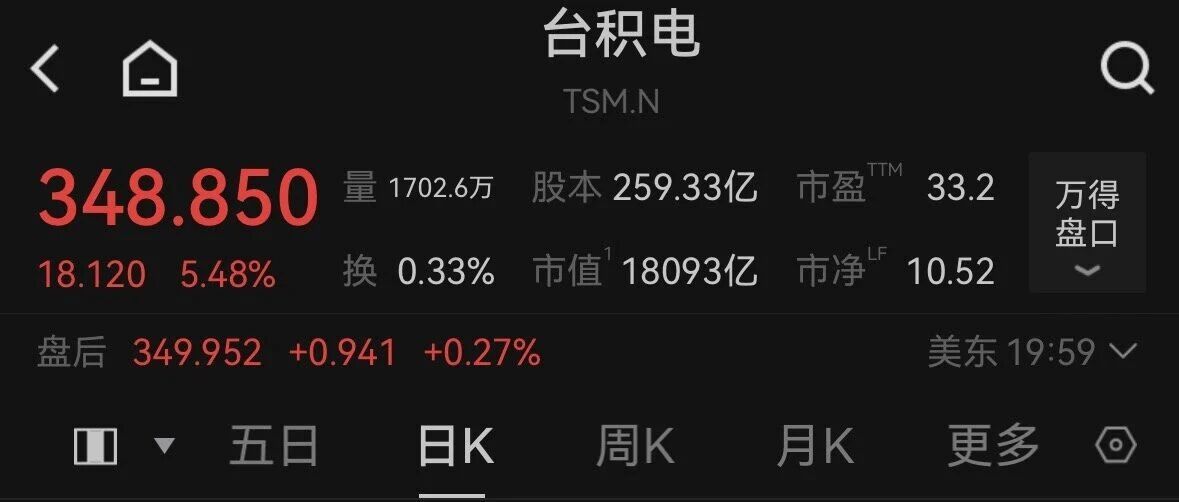
Market Overview - The U.S. stock market experienced a significant rebound, with the Dow Jones Industrial Average rising by 2.47%, surpassing the 50,000 mark for the first time, while the S&P 500 and Nasdaq Composite increased by 1.97% and 2.18%, respectively, driven primarily by large technology stocks [1] - Semiconductor stocks led the rally, with notable gains from ARM and AMD exceeding 11%, and Nvidia and Broadcom rising nearly 8% [1] - Smaller tech stocks in niche sectors such as quantum computing, drones, and nuclear power also showed remarkable performance, indicating a shift in market sentiment towards high-growth technology areas [1][3] Geopolitical Factors - A breakthrough in U.S.-Iran nuclear negotiations has significantly improved global risk appetite, contributing to the stock market rebound [2] - The negotiations, which took place in Oman, resulted in a "good start" according to Iranian officials, and have altered the pricing logic for commodities and risk assets, leading to a decline in oil prices and a return of funds to technology stocks [2] Technology Sector Insights - Despite the overall rebound, there are concerns regarding the divergence within the technology sector, particularly with major players like Amazon and Google facing stock price declines due to high capital expenditure plans [4][5] - Amazon's announcement of a $200 billion capital expenditure plan for 2026, significantly above market expectations, led to an over 11% drop in its stock price [4] - The total AI-related spending by major tech companies, including Amazon, Google, Microsoft, and Meta, has reached $660 billion, raising concerns about the sustainability of such investments relative to revenue growth [5] Emerging Sectors Solar Energy - Tesla's ambitious solar energy production goal of 100 gigawatts within three years is set to reshape the global solar industry, with plans for factory expansions in multiple U.S. states [6] - The integration of AI computing with renewable energy solutions is expected to drive growth in both sectors, presenting opportunities for domestic solar companies to increase market share [6] AI Computing - The Chinese government has initiated a new policy to enhance the efficiency of computing infrastructure, marking a transition to a 2.0 era in computing capabilities [7] - The policy aims to create a unified system for computing resource allocation, which is expected to benefit sectors such as optical communication and computing hardware [8] Chemical and Oil & Gas - The global chemical industry is experiencing price increases, with BASF raising TDI prices by 11% in the Asia-Pacific region, leading to a ripple effect in domestic chemical sectors [9] - The geopolitical situation in the Middle East and severe weather conditions in Europe have contributed to rising oil and gas prices, benefiting domestic oil and gas sectors [10]



