
物理AI

Search documents
何小鹏:我们十年后卖机器人肯定超过汽车
3 6 Ke· 2025-11-07 10:27
Core Insights - The article discusses the recent developments in Xiaopeng Motors' physical AI strategy, highlighting the launch of the second-generation VLA model and the company's focus on creating humanoid robots and Robotaxi services [1][2][4]. Group 1: Physical AI Strategy - Xiaopeng Motors introduced the second-generation VLA, which eliminates the language translation step, aiming to create a model that can understand and interact with the physical world [2][4]. - The company is exploring the integration of AI in various applications, including smart cars, robots, and flying vehicles, positioning itself as a competitor to Tesla in the physical AI space [2][4]. Group 2: Market Position and Collaboration - Xiaopeng Motors aims to build an open ecosystem, collaborating with Alibaba's Gaode Map to develop a Robotaxi network, allowing for independent validation of business viability [3][4]. - The company has seen a resurgence in vehicle deliveries, exceeding 40,000 units for two consecutive months, providing a sense of financial stability to pursue long-term goals [3][4]. Group 3: Robot Development and Market Potential - The humanoid robots are designed to be AI-driven, leveraging human-like characteristics to enhance adaptability and market appeal, which could lead to economies of scale [5][6]. - The global market for robots is projected to be $20 trillion, with Xiaopeng Motors believing that robot sales could surpass those of cars in the future [8][9]. Group 4: Robotaxi Business Model - Xiaopeng Motors differentiates its Robotaxi approach by focusing on commercial viability and user value rather than solely on technological advancements [10][11]. - The company plans to offer a "toolbox" for Robotaxi operations, providing vehicles and software to partners, which could reduce costs compared to competitors [10][11]. Group 5: Regulatory and Technical Challenges - The rollout of Robotaxi services faces regulatory and technical hurdles, and the profitability of this business model remains unproven [3][10]. - Xiaopeng Motors emphasizes the importance of combining hardware and software effectively to succeed in the automotive industry, acknowledging the ongoing challenges in product reliability [3][16].


市场正在重估小鹏,从AI到物理AI的价值拐点
华尔街见闻· 2025-11-07 10:24
Core Viewpoint - The article discusses the transformation of AI from the digital realm to the physical world, marking the emergence of the "Physical AI" era, with XPeng Motors as a leading representative in this trend [3][10][35]. Group 1: AI Transformation - The AI landscape is evolving from traditional concepts like "models, computing power, and algorithms" to exploring the relationship between AI and the physical world [2][6]. - The shift towards "Physical AI" signifies a new frontier where AI technologies are integrated into real-world applications, such as autonomous driving and robotics [7][10]. Group 2: XPeng's Strategic Shift - XPeng has redefined its corporate positioning from a "future mobility explorer" to a "global embodied intelligence company," reflecting its focus on Physical AI [4][24]. - The market has responded positively to this repositioning, with XPeng's stock experiencing significant gains following announcements related to its Physical AI strategy [4][34]. Group 3: Market Trends and Valuation - The capital market has shown enthusiasm for AI-related stocks, with companies like NVIDIA reaching a market capitalization of over $5 trillion, indicating strong investor confidence in digital AI [5][6]. - Observers note a shift in focus towards how AI impacts the real world, suggesting that the next phase of competition will center on the practical applications of AI technologies [6][11]. Group 4: XPeng's Product Innovations - XPeng showcased its advancements in Physical AI products, including the second-generation VLA model, which enhances autonomous driving capabilities [13][14]. - The company plans to launch multiple Robotaxi models and a new generation of humanoid robots by 2026, indicating a robust product pipeline in the Physical AI domain [16][20]. Group 5: Global Expansion and Market Position - XPeng has accelerated its global expansion, entering new markets in Europe and Southeast Asia, and achieving significant growth in overseas deliveries [29][30]. - The company aims to position itself as a leader in the global electric vehicle market, leveraging its advancements in Physical AI to differentiate itself from competitors like Tesla [32][34].

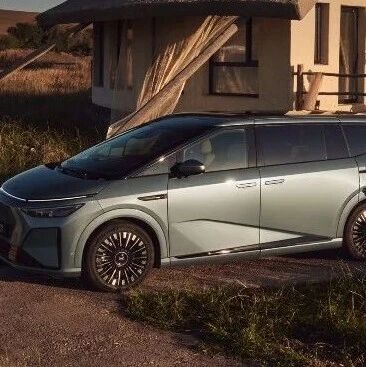
美银证券:升小鹏汽车-W目标价至105港元 重申“买入”评级
Zhi Tong Cai Jing· 2025-11-07 09:33
Core Viewpoint - Bank of America Securities has raised the target price for XPeng Motors (09868, XPEV.US) to $27 from $26 for its U.S. stock and from HKD 101 to HKD 105 for its Hong Kong stock, maintaining a "Buy" rating due to strong vehicle launch plans expected in the second half of 2025 to 2026 [1] Group 1: Product Development and Innovations - At the 2025 XPeng Technology Day, the company announced four key applications centered around "Physical AI," including the second-generation VLA large model, XPeng Robotaxi, a new generation of IRON humanoid robots, and the Huitian flying car [1] - The integration of digital and physical worlds is expected to drive the development of Physical AI, enabling machines to understand, interact with, and change the world [1] Group 2: Sales and Revenue Forecasts - Bank of America Securities has slightly increased XPeng's sales forecasts for 2025 to 2027 by 0.2%, 0.2%, and 0.3% respectively, leading to corresponding revenue forecast increases of 0.2%, 0.2%, and 0.3% for the same years [1] - Due to changes in the product mix, the gross margin forecast has been slightly adjusted downward [1] Group 3: Financial Performance Expectations - The company is expected to see a 37% increase in Non-GAAP net loss for 2025, with downward adjustments of 4% and 6% for Non-GAAP net profit forecasts for 2026 and 2027 respectively [1]
美银证券:升小鹏汽车-W(09868)目标价至105港元 重申“买入”评级
智通财经网· 2025-11-07 09:31
Core Viewpoint - Bank of America Securities has set a new target price of $27 for XPeng Motors (09868, XPEV.US) in the US market, up from the previous target of $26, and raised the Hong Kong target price from HKD 101 to HKD 105, maintaining a "Buy" rating due to strong vehicle launch plans anticipated in the second half of 2025 to 2026 [1] Group 1 - XPeng Motors announced four key applications related to "Physical AI" during the 2025 XPeng Technology Day, including the second-generation VLA large model, XPeng Robotaxi, a new generation of IRON humanoid robots, and the Huitian flying car [1] - The integration of the digital and physical worlds is expected to drive the development of Physical AI, enabling machines to understand, interact with, and change the world [1] - XPeng aims to be a pioneer in the Physical AI world, with all new product developments based on Physical AI [1] Group 2 - Bank of America Securities has slightly adjusted its sales forecasts for XPeng Motors, increasing projections for 2025, 2026, and 2027 by 0.2%, 0.2%, and 0.3% respectively [1] - Correspondingly, revenue forecasts for 2025, 2026, and 2027 have also been raised by 0.2%, 0.2%, and 0.3% [1] - Due to changes in the product mix, Bank of America Securities has slightly lowered its gross margin forecasts [1] Group 3 - The expected Non-GAAP net loss for XPeng Motors in 2025 is projected to widen by 37% [1] - The Non-GAAP net profit forecasts for 2026 and 2027 have been reduced by 4% and 6% respectively [1]
大行评级丨美银:上调小鹏汽车H股目标价至105港元 重申“买入”评级
Ge Long Hui· 2025-11-07 08:33
Core Insights - Bank of America Securities reports that at the 2025 XPeng Technology Day, XPeng Motors will unveil four significant applications centered around physical AI, including the second-generation VLA large model, Robotaxi, a new generation of IRON humanoid robots, and the Huitian flying car [1] Group 1: Physical AI Development - The integration of digital and physical worlds is driving the emergence of physical AI, enabling machines to understand, interact with, and alter the world [1] - XPeng aims to be a pioneer in the physical AI realm, with all new product developments grounded in physical AI technology [1] Group 2: Sales and Revenue Forecasts - Bank of America has raised XPeng's sales forecasts for 2025 to 2027 by 0.2%, 0.2%, and 0.3% respectively, and revenue forecasts by the same percentages for the same years [1] Group 3: Stock Price Target Adjustments - The target price for XPeng's US shares has been increased from $26 to $27, while the target price for its Hong Kong shares has been raised from HKD 101 to HKD 105 [1] - The "Buy" rating is reiterated due to anticipated strong vehicle launches planned for the second half of 2025 through 2026 [1]
独家对话群核科技董事长:未来机器人数量将超700亿
Sou Hu Cai Jing· 2025-11-07 08:11
Core Viewpoint - The "Hangzhou Six Little Dragons" are gaining attention, particularly with the focus on spatial intelligence and the potential for a significant increase in the number of robots globally, predicted to exceed 70 billion units [2][7]. Group 1: Company Overview - Qunhe Technology, a member of the "Hangzhou Six Little Dragons," has submitted its IPO application to the Hong Kong Stock Exchange, marking the beginning of the "Hangzhou Six Little Dragons IPO" [3]. - The company owns the spatial design software KuJiaLe, its overseas version Coohom, and the AI development platform SpatialVerse, and is recognized as the largest spatial design platform globally, holding a 22.2% market share in China [3]. Group 2: Spatial Intelligence - Qunhe Technology emphasizes a differentiated approach to spatial intelligence, focusing on understanding and reasoning about space rather than hardware development, which is already being addressed by other companies [3][4]. - The company believes that embodied intelligence requires spatial intelligence, as robots need to navigate physical environments, which involves spatial understanding and reasoning [3][4]. Group 3: AI Development - The current wave of generative AI has been anticipated by Qunhe Technology, which has previously encountered early forms of this technology. The unexpected aspect is the ability of algorithms to produce surprising intelligence through vast amounts of data [6]. - The company is leveraging its extensive physical design and spatial data accumulated through the KuJiaLe 3D cloud design platform to train models that generate spatial data consistent with the physical world, addressing issues of data scarcity and high acquisition costs [6]. Group 4: Future Predictions - The CEO predicts that the future may see a robot population ten times that of humans, with the global number of robots potentially exceeding 70 billion [7]. - The transition from automation to intelligent robots is expected to occur within the next two to three years, although achieving human-like flexibility and intelligence may take longer [7].
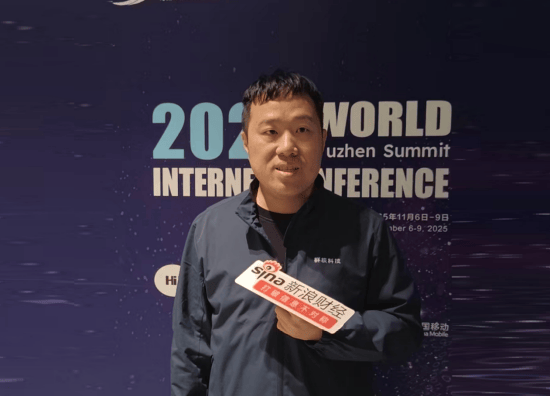
小鹏汽车发布鲲鹏超级增程技术 首搭车型小鹏X9超级增程预售35万元起
Zhong Guo Zhi Liang Xin Wen Wang· 2025-11-07 07:02
Core Insights - Xiaopeng Motors launched the "Kunpeng Super Extended Range" technology, addressing key pain points in traditional extended range vehicles such as pure electric range, charging efficiency, comprehensive energy consumption, low battery power performance, and operational noise [1][3][23] Technology Overview - The Kunpeng Super Extended Range technology combines a "super fast charging large battery" with a 60L fuel tank, featuring a third-generation 1.5T high-efficiency turbocharged engine, optimizing core user concerns in electric range and charging efficiency [3][5] - The technology enables a CLTC pure electric range of over 450 km and a comprehensive range exceeding 1600 km, suitable for daily commuting and long-distance travel [5][11] Performance Enhancements - The vehicle maintains a stable cruising speed of 150 km/h even in low battery conditions, thanks to the third-generation high-efficiency range extender and a highly integrated high-voltage oil-cooled generator [7][9] - The Kunpeng technology also addresses energy consumption concerns, achieving a comprehensive energy consumption of 16.5 CLTC and a low fuel consumption of 6.4L WLTC in low battery mode [13] Noise Reduction Features - The design of the range extender incorporates ultra-quiet technology and active noise cancellation, reducing noise during operation to below 0.5 dB, providing a driving experience comparable to pure electric vehicles [11][21] Model Launch - The first model featuring this technology, the Xiaopeng X9 Super Extended Range, is a large seven-seat MPV with a spacious interior and a focus on long-range capabilities [11][15] - The vehicle supports 92-octane gasoline, significantly lowering operating costs, and can travel from Guangzhou to Shanghai on a single charge [15][23] Safety and Testing - The Xiaopeng X9 meets stringent safety standards, including China and Europe’s five-star safety ratings, with a robust body structure and extensive global testing across various extreme conditions [21][23]
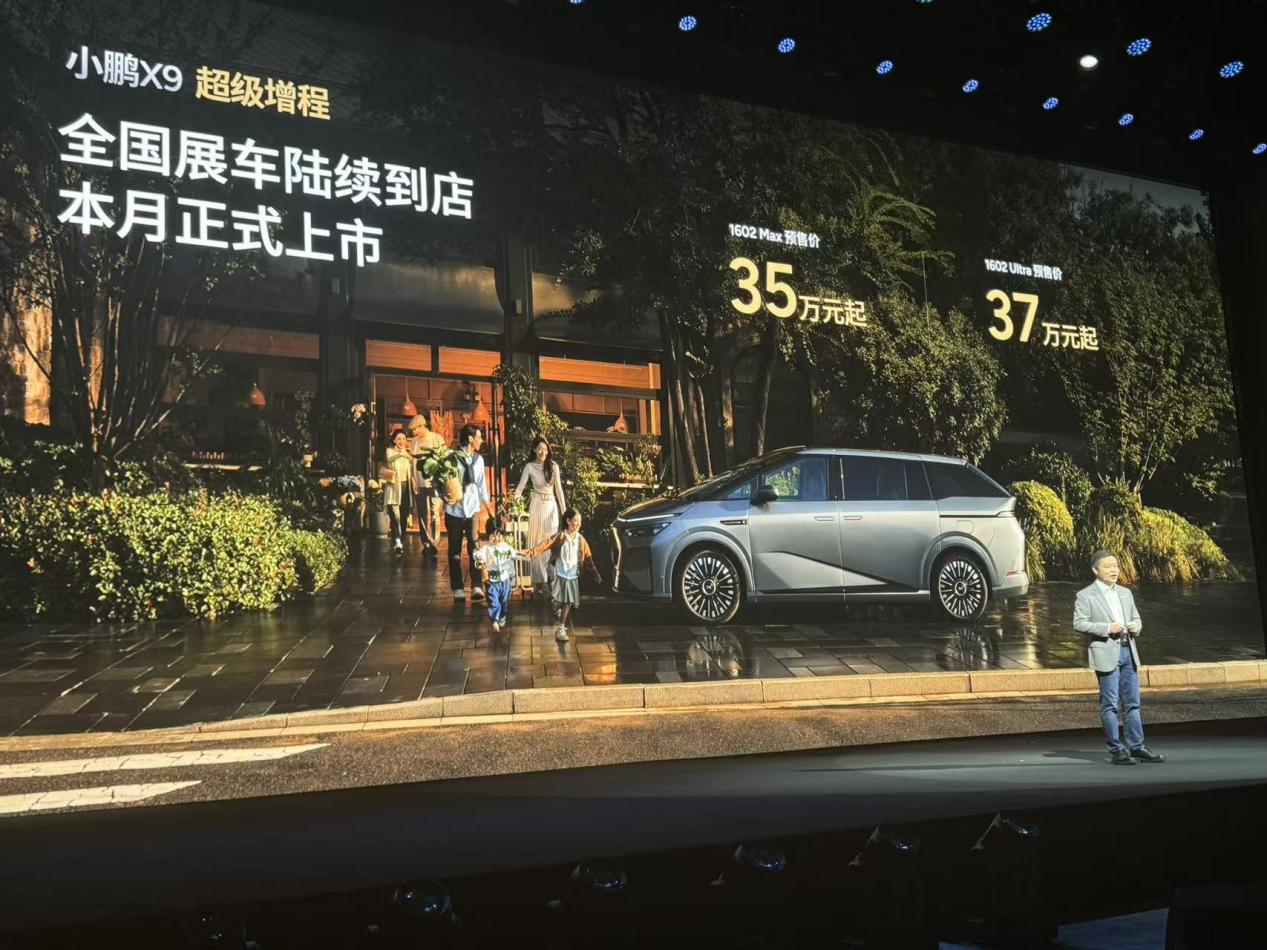
鲲鹏超级增程首发车型,小鹏X9超级增程正式预售,35万元起
数说新能源· 2025-11-07 06:57
Core Viewpoint - Xiaopeng Motors has launched the Kunpeng Super Extended Range technology, addressing five major pain points faced by traditional extended range users, and has introduced the Xiaopeng X9 Super Extended Range model for pre-sale, marking a new era in extended range vehicles [1][20]. Group 1: Technology and Performance - The Kunpeng Super Extended Range technology combines a large battery and fuel tank, featuring a 63.3 kWh lithium iron phosphate battery and a 60L fuel tank, achieving a CLTC pure electric range of 452 km and a comprehensive range of 1602 km, the longest in the world for a large seven-seater [9][11]. - The technology utilizes a third-generation 1.5T high-efficiency turbocharged engine, maintaining a stable cruising speed of 150 km/h even in low battery conditions, thus overcoming the issue of reduced power when the battery is depleted [5][20]. - The vehicle employs a high-integrated oil-cooled generator and intelligent energy management system, achieving a comprehensive fuel consumption that is 15% lower than competitors, addressing concerns about high energy consumption in extended range vehicles [7][11]. Group 2: User Experience and Comfort - The Kunpeng Super Extended Range technology features a quiet generator design with active noise cancellation, reducing noise during operation to below 0.5 dB, providing a driving experience comparable to pure electric vehicles [7][11]. - The Xiaopeng X9 Super Extended Range includes advanced comfort features such as zero-gravity seats in the second row and innovative electric folding technology for the third row, enhancing user convenience [18][20]. - The vehicle meets three international safety standards and includes nine airbags, ensuring comprehensive protection for passengers [18]. Group 3: Market Positioning and Future Outlook - The launch of the Xiaopeng X9 Super Extended Range signifies a significant breakthrough for Xiaopeng Motors in the new energy vehicle sector, positioning it as a leader in extended range technology [20]. - The company aims to leverage the Kunpeng Super Extended Range technology to enhance user experience and expand its global market presence, appealing to a broader audience [1][20].

交银国际:小鹏汽车-W人形机器人、Robotaxi及低空飞行器有望在2026年实现量产
Zhi Tong Cai Jing· 2025-11-07 03:32
Group 1 - The core viewpoint of the article is that XPeng Motors (09868) has made significant advancements in the electric vehicle sector, showcasing new technologies and products during the recent XPeng Technology Day in Guangzhou [1] - The company has achieved its annual sales target for the year within the first ten months, indicating strong performance in the new energy vehicle market [1] - Breakthroughs in humanoid robots, Robotaxi, and low-altitude flying vehicles are expected to reach mass production by 2026, highlighting potential growth opportunities for the company [1]
交银国际:小鹏汽车-W(09868)人形机器人、Robotaxi及低空飞行器有望在2026年实现量产
智通财经网· 2025-11-07 03:30
Core Viewpoint - The report from CMB International highlights that XPeng Motors (09868) recently held its Technology Day in Guangzhou, showcasing significant advancements in physical AI and four key applications, including the second-generation VLA, Robotaxi, the new generation IRON, and two flight systems from Huitian [1] Group 1: Sales and Production Goals - The company has achieved its annual sales target in the new energy vehicle sector within the first ten months of this year [1] - Breakthrough production for humanoid robots, Robotaxi, and low-altitude aircraft is expected by 2026, indicating substantial future growth potential [1]