
能源安全

Search documents
米价一年暴涨98%,日本“米荒”折射了什么问题?
Hu Xiu· 2025-06-25 00:16
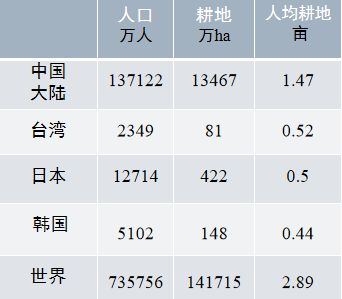
Group 1 - The core issue is the rice shortage in Japan, leading to a significant price increase of over 98% compared to the previous year, with prices reaching around 24 RMB per kilogram [1] - The rising rice prices have forced Japanese households to be more budget-conscious and alter their dietary habits, yet farmers are not benefiting from these price increases due to rising production costs and profit margins being squeezed by distribution channels [1][2] - The Japanese government is responding to the crisis by releasing reserve rice and increasing imports, which may alleviate short-term price pressures but could increase long-term dependency on international markets [2][3] Group 2 - The agricultural model in East Asia, including Japan, has historically been characterized by small-scale family farming, which has led to vulnerabilities in food security and reliance on external markets [4][5] - Since the mid-20th century, East Asian economies have shifted towards export-oriented manufacturing, sacrificing agricultural stability and increasing reliance on food imports [13][14] - The decline in food self-sufficiency rates in Japan, Taiwan, and South Korea has been significant, with Japan's grain self-sufficiency dropping from 88% in 1955 to below 50% by the 1980s [21][24] Group 3 - The agricultural policies in Japan, South Korea, and Taiwan have evolved to prioritize industrialization and urbanization, leading to a neglect of agricultural production and a shift towards a consumption-oriented society [12][14] - The reliance on imported food has been exacerbated by the increasing demand for meat and dairy, which requires substantial imports of feed grains [32][35] - The structural dependency on external food sources has created vulnerabilities, as seen in the recent rice crisis, highlighting the need for a reevaluation of agricultural policies in the region [42][48]

中东战火未冷,全球资本抢滩“人造太阳”
财富FORTUNE· 2025-06-24 12:42
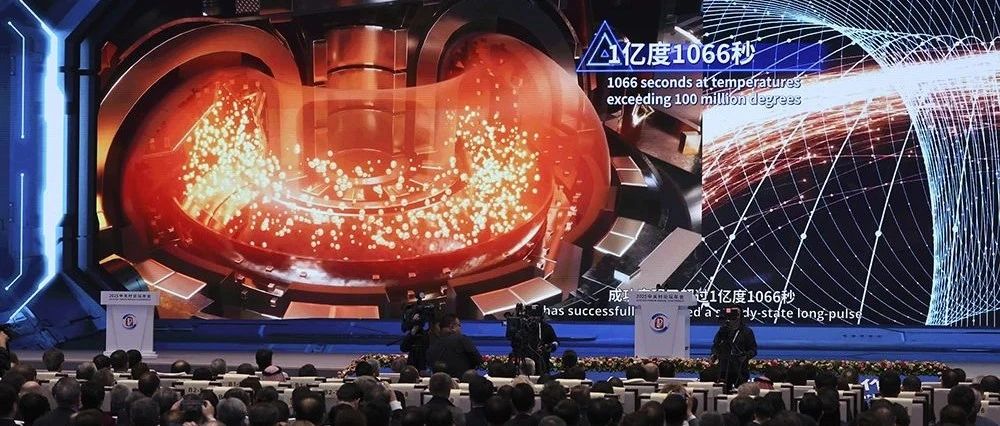
Core Viewpoint - The article emphasizes the accelerating development and investment in controllable nuclear fusion technology, which is seen as a "ultimate energy" solution amid geopolitical tensions and energy security concerns in China [1][7]. Group 1: Energy Security and Nuclear Fusion - China's energy import dependency is at 20%, with oil strategic reserves only sufficient for 24 days, highlighting severe energy security issues [1]. - Controllable nuclear fusion offers significant advantages, such as the energy released from 1 gram of deuterium-tritium fuel being equivalent to 8 tons of oil, and the cost of generating electricity can be controlled below 0.005 yuan per kilowatt-hour [1][6]. - The Chinese government has included nuclear fusion in its "Top Ten Future Industries" initiative, planning over 300 billion yuan investment by 2030 [1]. Group 2: Investment and Commercialization - Social capital is actively investing in nuclear fusion projects, with notable investments like the 3.275 billion yuan increase in Kunlun Capital aimed at controllable nuclear fusion [2]. - The establishment of Fusion New Energy, a core platform for commercializing nuclear fusion technology, has attracted significant investment, with registered capital reaching 14.5 billion yuan [2]. Group 3: Technological Advancements - The CRAFT project, a key system for fusion reactors, achieved full domestic production of its low-noise current drive system, marking a significant technological milestone [3]. - The HL-3, China's largest and most advanced nuclear fusion experimental device, achieved new operational records, indicating rapid progress in fusion technology [3]. Group 4: Market Potential and Future Outlook - The global controllable nuclear fusion market is projected to reach $496.5 billion by 2030 and may exceed $1 trillion by 2050 [6]. - The article notes a decline in China's crude oil imports for the first time in 20 years, reflecting a strategic shift towards reducing oil dependency and increasing focus on nuclear fusion as a viable energy solution [6][7].
从灰氢到绿氢,如何以氢能发展赋能“双碳”战略目标实现?
Zhong Guo Huan Jing Bao· 2025-06-24 00:21
国家能源局《中国氢能发展报告(2025)》显示,2024年我国氢能生产消费规模达3650万吨,位居全球 首位,可再生能源制氢产能占全球50%以上,这标志着我国正从氢能技术的追随者逐步向全球产业的引 领者跨越。 然而,当前氢能仍面临产业链需协同深入推进碳减排、成本高企、基础设施建设滞后、技术创新不足等 诸多挑战。亟须强化政策支持、加快基础设施建设、突破核心技术瓶颈以及深化国际合作与交流,真正 为"双碳"目标的实现提供强大动能。 成本高企制约市场推广。我国氢能的生产成本主要受制氢方式的影响。传统的化石能源制氢虽然技术成 熟,但随着环保要求的不断提高,其面临的碳排放成本逐渐上升,同时,化石能源的价格波动也会影响 制氢成本的稳定性。可再生能源制氢虽然具有零碳排放的优势,但设备投资大、制氢效率低,导致成本 居高不下。此外,氢能的储存和运输成本也较高,一定程度上限制了氢能的运输距离和市场范围。高昂 的成本使得氢能在与传统能源的竞争中处于劣势,严重制约了其市场推广和应用。如何降低氢能全产业 链成本,成为氢能产业发展的重要瓶颈。 同时,氢能是保障能源安全的战略选择。我国能源结构长期呈现"富煤、缺油、少气"的资源禀赋特征, 这 ...
【石油化工】地缘局势持续升级,看好油气油运战略价值——行业周报第408期(20250616—0622)(赵乃迪/蔡嘉豪/王礼沫)
光大证券研究· 2025-06-23 09:01
Group 1 - The article discusses the ongoing geopolitical tensions between Israel and Iran, which have led to increased oil prices, with Brent and WTI crude oil prices reported at $75.78 and $74.04 per barrel respectively, marking increases of 0.8% and 1.2% [2] - The International Energy Agency (IEA) and the U.S. Energy Information Administration (EIA) have both revised down their oil demand forecasts for 2025 and 2026, primarily due to weak demand from the U.S. and China [3] - OPEC+ has underperformed in its production increase plans, with a cumulative increase of only 180,000 barrels per day in May 2025, compared to the planned 410,000 barrels per day [3] Group 2 - The article highlights the strategic importance of oil and gas sectors amid external uncertainties, emphasizing that major Chinese oil companies will maintain high capital expenditures and focus on increasing reserves and production [4] - The ongoing conflict has heightened risks in oil transportation, with approximately 11% of global maritime trade passing through the Strait of Hormuz, which includes significant percentages of oil and gas exports [4] - The Baltic Dirty Tanker Index (BDTI) reported a significant increase in shipping rates, with rates reaching $57,758 per day, a 72% increase since the conflict began [4]
中国石油“买下”非洲2国?石油版图背后的地缘博弈
Sou Hu Cai Jing· 2025-06-23 03:55
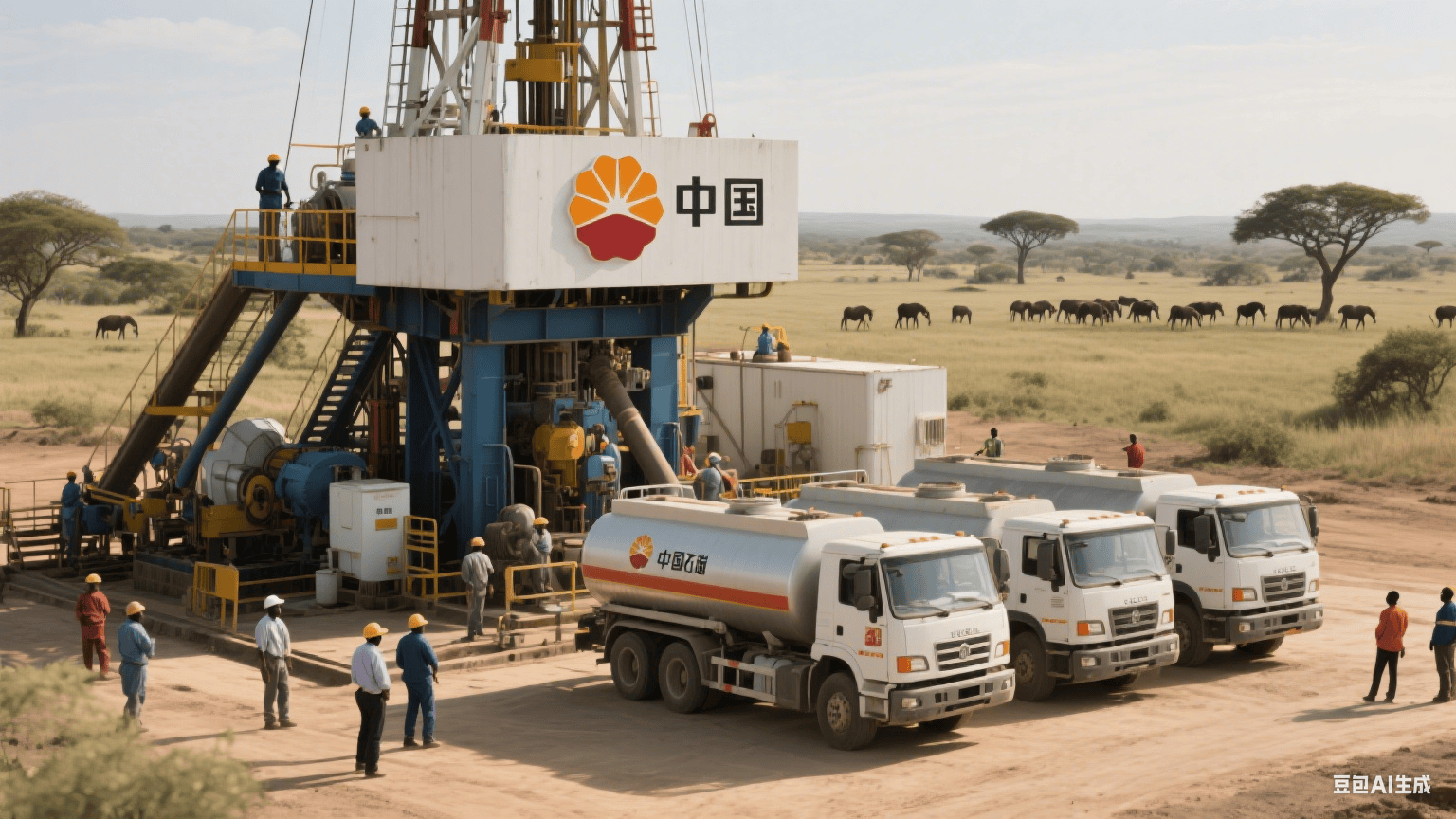
Core Insights - The article discusses the evolving relationship between China National Petroleum Corporation (CNPC) and African countries, emphasizing that the notion of "buying" African resources is a misinterpretation of a mutually beneficial partnership [1][9] - It highlights the strategic importance of Africa's oil and gas resources for China's energy security, as well as the developmental needs of African nations [5][9] Group 1: Historical Context - In 2000, China was a net oil importer with less than 30% dependency on foreign oil, while Africa was largely overlooked by major international oil companies [3] - CNPC's entry into Sudan's oil fields marked a significant shift, as it recognized the potential in regions that Western companies deemed unprofitable [3][4] - By 2011, Sudan had become China's largest source of oil imports in Africa, supplying over 3 million tons annually [3] Group 2: Current Operations and Impact - CNPC currently operates in 15 African countries, with its production rights accounting for nearly one-third of its total overseas output [4] - The company has engaged in local development initiatives, such as building schools and hospitals, and training local workers, which has fostered goodwill and mutual dependence [4][8] - CNPC's integrated approach to oil and gas operations contrasts with Western companies, focusing on full-cycle development from exploration to refining [6][8] Group 3: Geopolitical Dynamics - The partnership between China and African nations is driven by mutual needs: Africa seeks economic development through resource management, while China aims to secure stable energy supplies [5][7] - The diversification of oil sources from Africa helps China mitigate risks associated with geopolitical tensions in the Middle East [7] - Traditional energy players like the U.S. and Europe are losing influence in Africa, while China's non-political conditionality in partnerships is appealing to African governments [8][9] Group 4: Future Outlook - The narrative of "buying" African countries is a misunderstanding; the reality is a collaborative effort that benefits both parties [9] - The cooperation between CNPC and African nations is seen as a new variable in the global energy landscape, challenging Western dominance and promoting industrialization in Africa [9]

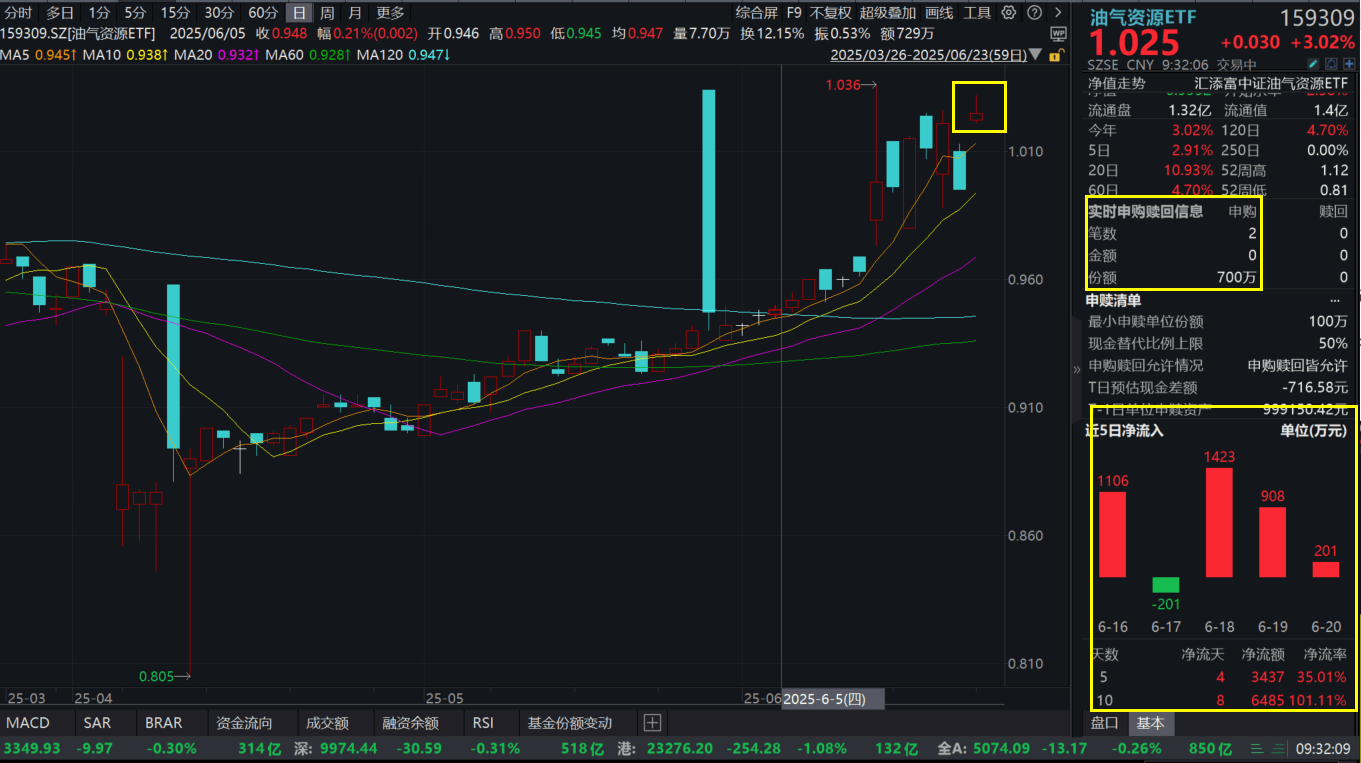
中东紧张局势加剧,油价狂飙!油气资源ETF(159309)开盘大涨超3%,地缘扰动下,油价或飙升至110美元?高盛火线点评!
Sou Hu Cai Jing· 2025-06-23 01:55
Group 1 - International oil prices have risen significantly, with Brent crude increasing by 2.48% and WTI by 2.7%, both showing over 20% gains since June, primarily driven by the Israel-Iran conflict [3][5] - The oil and gas resource ETF (159309) has seen a substantial inflow of capital, with over 7 million shares net subscribed and a total of over 64 million yuan raised in the past 10 days [1][3] - Major stocks within the oil and gas ETF have experienced significant price increases, with Tongyuan Petroleum rising over 10% and China National Offshore Oil Corporation (CNOOC) showing a slight increase of 0.90% [3][4] Group 2 - The geopolitical tensions, particularly the U.S. attacks on Iranian nuclear facilities, have escalated risks in the region, with potential implications for oil supply and prices [5][6] - Goldman Sachs has indicated that while they do not foresee major supply disruptions, the risks of supply decline and price increases have risen, predicting Brent crude could reach around 90 USD per barrel if Iranian oil supply decreases by 1.75 million barrels per day [6][7] - The strategic importance of the Strait of Hormuz is highlighted, as approximately 11% of global maritime trade passes through it, including significant percentages of oil and gas exports [8]
石油化工行业周报第408期:地缘局势持续升级,看好油气油运战略价值-20250622
EBSCN· 2025-06-22 09:15
Investment Rating - The report maintains an "Overweight" rating for the oil and gas sector [5] Core Viewpoints - The ongoing geopolitical tensions, particularly the Israel-Iran conflict, are expected to drive oil prices upward, with Brent and WTI crude oil prices reported at $75.78 and $74.04 per barrel respectively, reflecting increases of 0.8% and 1.2% [1][10][11] - The International Energy Agency (IEA) and the U.S. Energy Information Administration (EIA) have both revised down their oil demand forecasts for 2025, primarily due to weak demand from the U.S. and China [2][14] - The report emphasizes the strategic value of oil and gas, highlighting that the "Three Barrel Oil" companies are expected to maintain high capital expenditures and focus on increasing reserves and production [3][19] Summary by Sections Geopolitical Impact - The report discusses the escalation of the Israel-Iran conflict and its implications for oil prices, predicting continued upward pressure on prices due to geopolitical risks [1][11] - The conflict has already led to significant disruptions, with oil transportation risks increasing, particularly through the Strait of Hormuz, which accounts for a substantial portion of global oil trade [3][25] Oil Demand and Supply Forecasts - IEA forecasts a global oil demand increase of 720,000 barrels per day in 2025, with a downward revision of 20,000 barrels per day from previous estimates [2][14] - EIA's forecast for 2025 indicates an increase of 790,000 barrels per day, also revised down by 180,000 barrels per day [2][14] - OPEC+ has underperformed in its production increase plans, with actual increases falling short of targets [2][16] Strategic Developments in the Oil Sector - The "Three Barrel Oil" companies are expected to focus on high capital expenditures and strategic developments to counter external uncertainties, with production plans showing growth rates of 1.6%, 1.3%, and 5.9% respectively [3][19][20] - The report suggests that the geopolitical situation enhances the valuation of oil transportation, with freight rates significantly increasing due to the conflict [3][25] Investment Recommendations - The report recommends focusing on major players in the oil and gas sector, including China National Petroleum Corporation, Sinopec, and CNOOC, as well as related oil service companies and chemical industry leaders [4][19]


正略管理咨询:能源行业“十五五”发展的四大趋势
Zhong Guo Chan Ye Jing Ji Xin Xi Wang· 2025-06-20 08:23
Core Viewpoint - The "14th Five-Year Plan" for energy is crucial for achieving carbon peak goals and accelerating the construction of a new energy system, emphasizing the need for a comprehensive approach to energy planning and development [1] Group 1: Trends in Energy Development - Trend 1: The transition to green and low-carbon energy is advancing, with clean energy taking a leading role. The investment in non-fossil energy during the "14th Five-Year Plan" accounted for one-third of global investments, and during the "15th Five-Year Plan," installed capacity for wind and solar energy is expected to exceed 1.2 billion kilowatts [2] - Trend 2: Hydrogen and energy storage are becoming critical supports. The development of green hydrogen production technology is progressing rapidly, and the cost of renewable energy electrolysis for hydrogen production is decreasing [3] - Trend 3: The construction of a new power system is essential to address the challenges of renewable energy consumption. The new power system will enhance the flexibility and stability of the energy supply, focusing on improving grid infrastructure and integrating various energy sources [4] - Trend 4: The energy internet is taking shape, with continuous improvements in digitalization and intelligence. The integration of advanced information and communication technologies with energy systems will optimize energy production, transmission, and consumption [5][6] Group 2: Energy Security and Global Competition - The "15th Five-Year Plan" will see a blend of energy security and global competition, with a focus on self-sufficiency and resilience in energy supply. Domestic shale gas production is expected to exceed 50 billion cubic meters, and strategic mineral reserves will be extended to a six-month guarantee period [7] - Internationally, the shift towards carbon neutrality is reshaping global energy rules, moving from project-based cooperation to competition across the entire industry chain. This includes leading the establishment of international standards for green hydrogen and energy storage [7]
“我们不同意!”匈牙利与斯洛伐克硬刚欧盟,坚持与俄罗斯合作
Sou Hu Cai Jing· 2025-06-18 16:31
Group 1 - The EU's plan to cut off Russian gas by the end of 2027 faced strong opposition from Hungary and Slovakia, highlighting tensions within the bloc regarding energy security and national sovereignty [1][2] - Hungary's Foreign Minister Szijjarto emphasized that the EU's proposal would force Hungary to rely on a pipeline through Croatia, which has seen transit fees increase fivefold, while existing routes are blocked or unstable [2][4] - Slovakia's Prime Minister Fico criticized the EU's energy transition plan as "economic suicide," warning that the negative impacts on the EU would be greater than those from Russia [2][4] Group 2 - In response to the opposition, the European Commission announced a shift to a "qualified majority voting" mechanism to bypass member states' veto power, aiming to enforce the ban on Russian gas imports [4] - The new regulations include a complete ban on Russian pipeline gas and LNG imports starting January 1, 2026, with existing short-term contracts having a one-year transition period [4] - The EU invoked "force majeure" clauses to protect companies from legal repercussions of contract terminations due to the ban, although concerns about the economic impact remain [4][6] Group 3 - The ongoing conflict in the Middle East has exacerbated the energy crisis, with European natural gas prices surging by 6% in a single day and electricity wholesale prices rising by 40% [6] - The risk of disruptions in the Strait of Hormuz, which handles 20% of global LNG transport, could lead to oil prices soaring to $120 per barrel [6] - High inflation and GDP contraction in the Eurozone are anticipated as oil prices rise, raising questions about the economic costs of the EU's energy policies [6] Group 4 - The EU's push for a ban on Russian gas imports contrasts with its restrictive measures against Chinese renewable energy companies, leading to internal dissent [8] - The wind energy sector argues that limiting Chinese companies is a "lose-lose strategy," as past restrictions on Chinese solar components have resulted in decreased installation rates in Europe [8] - Austria's suggestion to reopen Russian gas imports if peace is achieved in Ukraine reveals divisions within the EU, particularly between Western and Eastern member states [8]
平庄煤业纳米碳氢研发项目取得新突破
Zhong Guo Neng Yuan Wang· 2025-06-18 09:01
近日,国能平庄煤业联合三易(海南)新材料有限公司创新采用1200°C高温高压碳氢耦 合技术成功将3000多大卡的褐煤制备出纳米碳氢燃料,检测十六烷值为49,标志着褐煤制备 碳氢燃料取得重大突破。随着纳米碳氢项目深入研究,煤种适应性更加广泛,多煤种制备出 的碳氢燃料十六烷值检测值达到49-52,达到国六(国Ⅵ)标准,碳氢燃料将作为新型燃料 油研究意义十分重大。 作为兼具燃烧性能、环境友好性与战略能源安全价值的新型燃料油,随着进一步深入的 研究和试验,未来,纳米碳氢燃料油将为远洋航运、农机系统、山区能源等领域带来更优化 的燃料选择,构建农村、军工、沿海能源闭环系统,减少进口能源依赖,推动燃料制造设 备、碳源处理设备、热能耦合技术等配套发展,为国家能源安全持续助力。 【责任编辑:王少晨 】 当前,由于高速柴油机燃料耗量低于汽油机,柴油逐渐成为拖拉机、大型汽车、内燃机 车、挖掘机、装载机、渔船、柴油发电机组和农用机械的主要动力来源。十六烷值是评定柴 油质量的重要指标之一。国家标准要求普通柴油和车用柴油的十六烷值均不低于45,具体范 围通常在40-60之间,以确保燃烧性能与排放控制的平衡,因为当十六烷值过高或过低,会 ...