人民币国际化

Search documents
美媒终于回过味:中国这哪是买石油,分明是在给俄进行大换血
Sou Hu Cai Jing· 2025-12-21 07:13
Group 1 - The core phenomenon of currency settlement in oil trade between China and Russia is not just a simple energy exchange but a significant economic lifeline for Russia, with 99.1% of transactions now conducted in local currencies [1] - In 2023, China imported 107 million tons of crude oil from Russia, expected to rise to 108.47 million tons in 2024, accounting for 19.6% of China's total imports [1] - The share of the US dollar in global oil trade has decreased from 80% to 72%, indicating a growing trend towards local currency settlements [1] Group 2 - The proportion of the Chinese yuan in Russia's foreign exchange reserves has increased from 13% to 26%, while gold reserves have reached a historical high, indicating a shift away from dollar dependency [2] - Despite a decline in trade volume in the first three quarters of 2025, the stability of local currency settlements has shielded the Russian economy from significant impacts [2] - Chinese automotive sales in Russia surged to 470,000 units in 2023, up from just 30,000 three years prior, with projections of 1.07 million units in 2024, capturing 58% of the Russian passenger car market [2][4] Group 3 - Chinese engineering machinery has dominated the Russian market, with market shares in machine tools rising from 20% to 80% and 95% in engineering machinery, filling the gap left by Western companies [4] - Russia's industrial production has recovered to 98% of pre-sanction levels, with GDP growth projected at 2.1% for 2023, supported by the replacement of Western equipment with Chinese technology [4] - The issuance of the first yuan-denominated federal loan bond by Russia marks a new phase in Sino-Russian financial cooperation, with a total amount of 20 billion yuan [6] Group 4 - The opening of a new Arctic container shipping route in September 2025, reducing transit time to Europe to 18 days, signifies deepening Sino-Russian cooperation [8] - The restructuring of global supply chains is leading to the formation of an economic bloc in Eurasia, enhancing China's energy security and promoting the internationalization of the yuan [10] - The trade volume between China and Russia reached $184.7 billion in the first three quarters of 2025, despite an 8.7% year-on-year decline, indicating strong strategic cooperation [12]


上海国际金融中心一周要闻回顾(12月15日—12月21日)
Sou Hu Cai Jing· 2025-12-21 04:52
Group 1 - Shanghai Municipal Party Committee emphasized the need for strategic focus on key industries and core technologies to achieve substantial breakthroughs in financial services and global supply chain management [1] - The Shanghai financial system launched a special exhibition to promote and practice Chinese financial culture, attended by key financial leaders [2] - The Shanghai International Trust completed the first full-process registration of a will trust in the country, marking a significant step in the standardization of the trust industry [9] Group 2 - The Shanghai Stock Exchange established the first consumer-oriented inter-institutional REITs, with a scale of 616 million yuan, providing a new financing channel for commercial real estate [10] - The launch of the "Hushang Batch Loan" service aims to enhance financial support for foreign trade enterprises, transitioning from a reactive to a proactive service model [11] - The Shanghai Equity Custody Trading Center introduced an AI-based account opening system, enhancing digital services in the regional equity market [12] Group 3 - The People's Bank of China and financial regulatory bodies issued new regulations to improve cash payment services and ensure the legal status of the renminbi [22] - The Ministry of Commerce and financial regulators released a notice to strengthen collaboration in boosting consumption through targeted financial measures [21] - The China Securities Regulatory Commission and the State Administration of Foreign Exchange held meetings to discuss the implementation of central economic work conference directives [15][17]
突发!中国“三连抛”美债持仓创14年新低,6887亿背后是何战略棋局?
Sou Hu Cai Jing· 2025-12-21 04:35
Core Viewpoint - China's holdings of US Treasury bonds have decreased to $688.7 billion, marking a 17-year low since the 2008 financial crisis, reflecting a strategic shift in response to perceived risks in the US debt market [2] Group 1: Direct Causes of China's Reduction in US Treasury Holdings - The US government shutdown lasting 43 days has undermined market confidence, revealing vulnerabilities in the creditworthiness of US Treasury bonds [3] - The US national debt has surpassed $38 trillion, with interest payments exceeding defense spending, leading to concerns about the sustainability of US debt and potential default risks [3] - Major credit rating agencies have downgraded the US credit rating, transforming US Treasury bonds from "risk-free assets" to "high-risk liabilities," prompting China to reduce its holdings as a precautionary measure [3] Group 2: China's Strategic Adjustments - China is diversifying its foreign exchange reserves, increasing gold holdings to 74.09 million ounces (approximately 2,305 tons), which now constitutes 4.3% of its foreign reserves, aiming to mitigate reliance on the US dollar [4] - The internationalization of the Renminbi is accelerating, with cross-border Renminbi payments rising to 12.7% in the first half of 2025, as countries like Brazil and Saudi Arabia adopt Renminbi for energy trade [4] - China is using the reduction of US Treasury holdings as a financial countermeasure against US tariffs and trade policies, with potential impacts on US interest rates and stock market stability [4] Group 3: Global Implications of the US Debt Crisis - The US is trapped in a cycle of increasing debt, with a deficit of $1.97 trillion in the first 11 months of the 2025 fiscal year, leading to a policy dilemma for the Federal Reserve [5] - Japan has increased its US Treasury holdings to $1.2 trillion, but this is seen as a forced response to US pressure, contrasting with China's strategy of gradual reduction [5] - Central banks globally are reconfiguring their reserve strategies, with emerging economies like China increasing gold and digital currency holdings, challenging the dominance of the US dollar [5] Group 4: Future Trends in China's Financial Strategy - China is implementing a controlled reduction strategy for US Treasury bonds, limiting monthly sales to the billion-dollar range to avoid market shocks while paving the way for Renminbi internationalization [6] - If the current pace of gold accumulation continues, China's gold reserves could exceed 3,000 tons by 2030, further diminishing the dollar's anchoring effect [6] - The expansion of Renminbi cross-border settlement networks is underway, with ASEAN trade using local currency rising to 35%, potentially reducing the dollar's share in global trade below 40% [6]

38万亿债务压顶!中国再抛118亿美元,金融反击大升级!
Sou Hu Cai Jing· 2025-12-21 04:32
编辑|小夜 12月18日,美国财政部公布的一组数据引发了全球金融圈的关注。 数据显示,中国10月份减持了118亿美元美国国债,持仓直接跌到6887亿美元,这是2008年以来的最低 纪录。 这个数据更像一场早有预谋的"战略调整",而非一时兴起的操作。 从1.3万亿到6887亿,中国持美债的"退烧"之路 2013年的时候,中国持有美债的规模达到过1.3万亿美元的峰值,算是美国最核心的海外债主之一。 那时候中美之间有种很特别的平衡状态,简单说就是中国出口商品赚美元,赚来的美元又拿去买美债, 帮美国填补财政赤字。 文|围炉 美国则靠发国债维持高消费,还借着美元霸权收割全球财富。 但这种平衡的根基其实是双方的合作互信,一旦信任没了,一切就都变了。 转折点出现在2018年,特朗普政府直接挥舞关税大棒,对中国发起贸易战,还喊着要减少5000亿美元贸 易逆差的口号。 更让人不舒服的是,美国一边在贸易上施压,一边还动用金融霸权的手段,一会儿制裁中国企业,一会 儿威胁要切断SWIFT通道,甚至还操纵美元汇率波动。 在这种情况下,中国手里的美债就成了应对博弈的关键筹码,继续大量持有显然并非明智之举。 所以从2022年4月开始,变化 ...

人民币国际化加速前进的“三重驱动”
Sou Hu Cai Jing· 2025-12-21 03:05
Core Insights - The internationalization of the Renminbi (RMB) has made significant progress this year, gaining widespread attention and positive evaluations from overseas markets [1][2][3] Group 1: RMB Internationalization Progress - The International Air Transport Association announced the inclusion of RMB in its settlement currency list, allowing global airlines to settle transactions in RMB [1] - The People's Bank of China reported that the total RMB cross-border payment amount reached 34.9 trillion yuan in the first half of 2025, a year-on-year increase of 14.0%, making RMB the second-largest trade financing currency globally [1] - The issuance of RMB-denominated bonds has gained favor in international markets, with a notable example being the issuance of 60 billion yuan green sovereign bonds in London, which was oversubscribed by 6.9 times [1][2] Group 2: Factors Driving RMB Internationalization - The acceleration of RMB internationalization is attributed to three main forces: trade and industrial foundation, institutional and market tools, and changes in the global monetary system [2] - China's stable position in the global supply chain and the expansion of foreign trade have made RMB settlements an effective choice for reducing transaction costs [2] - The optimization of financial infrastructure and institutional arrangements, such as bilateral currency swap agreements and the expansion of the Cross-Border Interbank Payment System (CIPS), supports the internationalization of RMB [2] Group 3: New Developments in RMB Clearing - The opening of the RMB clearing bank by the Industrial and Commercial Bank of China in Turkey marks the official start of RMB clearing operations in the country, which is expected to create new business opportunities for Turkish enterprises [3] - The diversification of foreign exchange reserves has made RMB assets an attractive option for international investors, further facilitating the acceleration of RMB internationalization [3] - The resilience and elasticity of the RMB exchange rate have improved, making RMB assets a choice for international investors in their asset allocation over the next decade [3]
新闻分析|人民币国际化加速前进的“三重驱动”
Xin Hua Wang· 2025-12-21 01:55
Core Insights - The internationalization of the Renminbi (RMB) is accelerating, driven by increased cross-border usage, a growing offshore RMB market, and favorable international perceptions [1][2] Group 1: Cross-Border Usage and Trade - The scale of cross-border RMB transactions has steadily increased, with a total of 34.9 trillion yuan in cross-border payments reported for the first half of 2025, marking a 14.0% year-on-year growth [1] - The RMB has become the second-largest trade financing currency globally and the third-largest payment currency by total volume [1] - China's position in the global supply chain continues to strengthen, with an expanding foreign trade scale that makes RMB settlements an effective choice for reducing transaction costs [2] Group 2: Financial Infrastructure and Market Tools - The establishment of bilateral currency swap agreements and the optimization of RMB clearing arrangements have enhanced the financial infrastructure supporting RMB internationalization [2] - The opening of the RMB clearing bank by the Industrial and Commercial Bank of China in Turkey signifies the operational launch of RMB clearing services, which is expected to create new business opportunities for Turkish enterprises [3] Group 3: Global Monetary System Changes - The diversification of foreign exchange reserves among countries has made RMB assets an attractive option for international investors seeking diversified asset allocation [3] - The resilience and elasticity of the RMB against external shocks have improved, contributing to its appeal as a stable asset for international investors [3] - The ongoing shift towards a multi-polar global economic landscape is facilitating the long-term process of RMB internationalization [3]
美债迎来坏消息,中国抛售万亿美债,持仓量创17年新低
Sou Hu Cai Jing· 2025-12-20 18:50
Group 1 - China sold $25.7 billion in U.S. Treasury bonds in one month, reducing its holdings to $730.7 billion, the lowest level since 2009, and a decline of over 40% from the peak of $1.3 trillion in January 2013 [1] - A bipartisan delegation from the U.S. Congress visited Beijing on September 21, 2025, to discuss the possibility of China pausing or slowing down its bond sales, marking the first visit by a House delegation since 2019 [1] - China's bond reduction is part of a continuous trend since April 2022, with significant reductions of $173.2 billion in 2022, $50.8 billion in 2023, and $57.3 billion in 2024, with a cumulative net reduction of $53.7 billion in the first seven months of 2025 [3] Group 2 - In contrast to China's actions, Japan increased its U.S. Treasury holdings to a record $1.147 trillion in June-July 2025, while the UK also raised its holdings to $858.1 billion during the same period [3] - Japan's increase in Treasury holdings is driven by a trade surplus with the U.S. and the higher yields of U.S. bonds compared to its domestic rates, reinforcing economic ties under the U.S.-Japan alliance [3] - The UK's situation is influenced by its role as a global financial hub, with many hedge funds and institutions holding U.S. bonds through UK accounts, alongside the uncertainty post-Brexit and the higher yields of U.S. bonds compared to UK government bonds [5] Group 3 - China's ongoing reduction of U.S. Treasury bonds reflects deep concerns about the U.S. fiscal situation and the credibility of the dollar, especially after Moody's downgraded the U.S. credit rating from AAA to Aa1 in May 2025 [5] - The U.S. federal debt has reached $37 trillion, with annual interest payments exceeding $1 trillion, raising concerns about the sustainability of U.S. fiscal policy [5][6] - The U.S. government is increasingly reliant on borrowing to service its debt, leading to heightened repayment pressures, with interest payments surpassing defense spending for the first time in fiscal year 2024 [6] Group 4 - Concurrently, the People's Bank of China has been increasing its gold reserves for ten consecutive months, reaching 74.02 million ounces by the end of August 2025, as gold serves as a hedge against dollar risk [8] - Global central banks are also increasing their gold reserves, with a reported increase of 166 tons in Q2 2025, indicating a structural shift in the global reserve system [8] - The internationalization of the renminbi is progressing, with cross-border settlement exceeding 500 billion yuan in 2025 and significant growth in the renminbi's share of cross-border payments [10] Group 5 - China's significant bond sales have impacted global markets, with the 30-year U.S. Treasury yield surpassing 5%, leading to forced liquidations in hedge funds and affecting approximately $800 billion in related transactions [12] - During the U.S. delegation's visit, former President Trump indicated a willingness to negotiate on various issues, but China emphasized the need for the U.S. to take concrete actions to resolve longstanding issues before financial cooperation could be considered [12] - The U.S. national debt has surpassed $38 trillion, with projections indicating that interest payments alone could reach $14 trillion over the next decade, highlighting the deteriorating fiscal situation [12]

全球稳定币监管成型,可在自贸区试点“中国方案”
Sou Hu Cai Jing· 2025-12-20 11:44
Core Viewpoint - The article emphasizes the need for China to develop a unique "Chinese stablecoin solution" that serves the real economy while ensuring financial security and monetary sovereignty, especially in light of global developments in stablecoin legislation and the recent U.S. "GENIUS Act" [2][3][4]. Group 1: Global Context and Legislative Developments - The U.S. "GENIUS Act," passed on July 17, 2025, is the first federal law specifically addressing payment stablecoins, providing a compliance pathway and signaling the significant impact of digital currencies on global financial governance [3]. - The act aims to maintain the dominance of the U.S. dollar in the cryptocurrency space, requiring stablecoin issuers to hold nearly 80% of reserves in short-term U.S. Treasury securities, thereby creating a substantial and ongoing demand for U.S. debt [3]. - The European Union's MiCA legislation, passed in October 2022, focuses on risk prevention and systemic risk management, contrasting with the U.S. approach [3]. Group 2: Hong Kong's Role and China's Opportunities - Hong Kong is positioned as a testing ground for cryptocurrency policies, aligning with U.S. regulatory dynamics while maintaining its currency peg to the U.S. dollar [4]. - The article advocates for China to leverage experiences from the U.S., EU, and Hong Kong to create a distinct regulatory framework for a "Renminbi stablecoin" that supports the real economy and safeguards financial sovereignty [4][5]. - The approval of the stablecoin regulatory framework in Hong Kong on August 1, 2025, marks a significant step in establishing it as a key financial hub for cryptocurrency in Asia [5]. Group 3: Stablecoin Applications and Trade - Stablecoins are increasingly being utilized in international trade, particularly in regions with volatile currencies, providing a low-cost and efficient payment method [6]. - China's manufacturing sector, which accounts for nearly 30% of global output, and its status as the world's largest trading nation, present a strong case for integrating stablecoins into cross-border payment systems [7]. - The potential for a Renminbi stablecoin to enhance the internationalization of the currency and supplement existing cross-border settlement mechanisms is highlighted [7]. Group 4: Recommendations for Implementation - The article suggests piloting stablecoin applications in Free Trade Zones (FTZs) such as Shenzhen Qianhai and Hainan Free Trade Port to cautiously explore regulatory frameworks [9]. - Specific recommendations include establishing a "cross-border fintech laboratory," creating a stablecoin "white list," and encouraging offshore Renminbi stablecoin trials to facilitate trade and payment efficiency [10][11]. - A focus on building a robust regulatory technology platform and enhancing blockchain infrastructure is essential for effective monitoring and compliance in stablecoin transactions [12]. Group 5: Risk Management and Compliance - The establishment of strict entry requirements for institutions and individuals participating in stablecoin transactions is crucial, limiting participation to compliant entities [13]. - Regular audits of reserve assets by third-party firms and transparent reporting are necessary to ensure the security and adequacy of stablecoin reserves [13]. - A comprehensive risk management framework should be implemented to monitor and mitigate potential compliance and capital flow risks associated with stablecoin usage [14].

封关不是关门,中国甩出王炸,全球格局要变天
Sou Hu Cai Jing· 2025-12-20 11:10
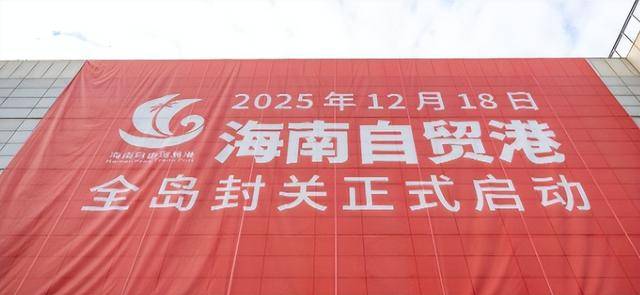
Core Viewpoint - Hainan's announcement of full island closure operation on December 18, 2025, represents a strategic move by China to counter global containment efforts, emphasizing openness rather than isolation [1][8][22] Group 1: Policy and Economic Implications - The concept of "closure" in Hainan does not imply isolation but rather a model of "open first, control second," allowing international access while regulating domestic channels [3][6] - Hainan will operate as a special zone with zero tariffs and simplified approvals for international goods, effectively becoming a "domestic outside" area in terms of trade rules [3][6] - The unique policy of "30% value-added processing for domestic sales exempt from tariffs" provides a significant competitive advantage for businesses, allowing them to import raw materials duty-free and sell processed goods to the mainland without tariffs [11][13] Group 2: Strategic Positioning - Hainan is not intended to replace Hong Kong or Singapore; instead, it aims to leverage its vast land and natural resources to focus on sectors like agriculture, deep-sea exploration, aerospace, and high-end manufacturing [15][17] - The region is positioned as a "testbed" for advanced medical devices and data flow, facilitating early access for domestic patients and exploring cross-border digital economy cooperation [19][21] Group 3: Global Context and Future Outlook - Hainan's closure is seen as a significant step comparable to China's WTO accession in 2001, marking a shift from product-level to institutional-level openness, allowing China to participate in international rule-making [22] - The initiative aims to attract global capital, talent, and technology to Hainan, countering efforts to isolate China and reinforcing the country's commitment to globalization [21][22]
去美元化以及蒙代尔不可能之三角
Sou Hu Cai Jing· 2025-12-20 10:20
Core Viewpoint - The discussion on the de-dollarization process emphasizes the necessity of five conditions for the renminbi to potentially replace the US dollar as the primary global settlement currency, as articulated by Xiang Songzuo, who draws from Mundell's theories [2][3]. Group 1: Five Conditions for De-dollarization - The first condition is that the economic scale must be sufficiently large [3]. - The second condition is a strong capability for technological innovation [3]. - The third condition requires a capital market that possesses both breadth and depth [3]. - The fourth condition emphasizes the need for both financial innovation and effective regulation [3]. - The fifth condition is the establishment of a legal system that ensures a secure haven for wealth [3]. Group 2: Mundell's Impossible Trinity - The concept of Mundell's Impossible Trinity suggests that a country cannot simultaneously achieve monetary policy independence, capital mobility, and exchange rate stability; it can only pursue two of these goals at a time [6]. - The US model prioritizes monetary policy independence and capital mobility, allowing the Federal Reserve to adjust interest rates autonomously to respond to domestic economic conditions [8]. - In contrast, the Chinese model focuses on monetary policy independence and relative exchange rate stability, which limits capital mobility and poses challenges for the renminbi's international credibility [9][11]. Group 3: Implications for the Renminbi - The renminbi's status as a currency is hindered by its lack of full convertibility, which is essential for it to be considered a safe haven for wealth [2][11]. - The current discourse should focus on whether the renminbi can open its capital account rather than whether it can replace the dollar as the primary global settlement currency [11].