
制度型开放

Search documents
浦东引领区建设五周年宣传片全球发布,全景展现国家战略的浦东实践
Zhong Guo Fa Zhan Wang· 2025-11-11 08:55
Core Insights - The event marked the global release of a promotional video celebrating the 5th anniversary of Pudong's initiative to become a leading area for socialist modernization in China [1][3] - Pudong has made significant strides in various sectors, including institutional openness, technological innovation, financial services, international cooperation, and urban development [5][10] Group 1: Achievements and Initiatives - Over the past five years, Pudong has embraced its national mission, demonstrating resilience and innovation in reform and opening-up efforts [3] - The promotional video highlights five key tasks that showcase Pudong's achievements, including the establishment of the Free Trade Zone and the development of the Zhangjiang Science City [5] - Pudong has positioned itself as a global hub for finance and shipping, with landmarks like Lujiazui Financial City and Yangshan Deep-Water Port [5] Group 2: Personal Stories and Community Impact - The event featured stories from five individuals who shared their experiences of growth alongside Pudong, illustrating the human aspect of the region's development [6] - Notable examples include advancements in AI-driven drug development and community-building efforts that connect residents from various countries [6] Group 3: Global Outreach and Communication - The promotional video was disseminated through multiple channels, including major media outlets and social media platforms, creating a buzz both domestically and internationally [8] - The initiative aims to enhance global awareness and engagement with Pudong's development narrative, emphasizing its role in China's modernization journey [7][10]


政策红利加速释放 中国“智造”凭实力驰骋全球 海南自贸港成投产投资新热土
Yang Shi Wang· 2025-11-11 07:48
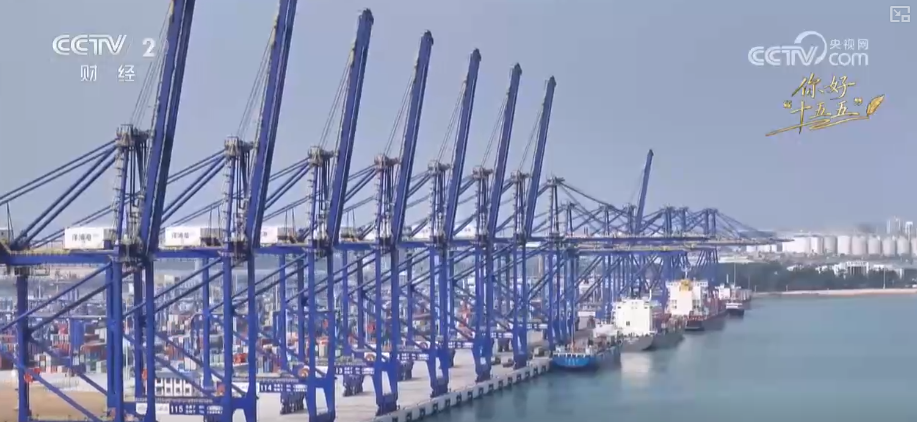
Group 1: China's Open Policy and Hainan Free Trade Port - The core viewpoint emphasizes the continuous expansion of China's high-level opening-up policy, aiming to deepen connections with the world and enhance international trade standards [1][14] - The Hainan Free Trade Port is set to commence full island closure operations by December 18, 2025, which will facilitate higher levels of foreign trade and investment [1] - Hainan's strategic positioning serves as a headquarters for domestic companies entering international markets and foreign companies entering China [14] Group 2: Hainan's Trade and Infrastructure Development - The opening of the new shipping route from Yangpu to QianKai Port strengthens trade ties between Hainan and South America, expanding the port's network to 58 routes, including 32 foreign trade routes [3][4] - The Yangpu International Container Port has become a key hub, handling over 70% of Hainan's import volume, necessitating upgrades in operational capacity [6] - The first phase of the port's expansion will increase its annual capacity to 5 million TEUs, representing a growth of over 30% [7] Group 3: Investment and Economic Growth in Hainan - In the first nine months of 2025, Hainan established 1,513 new foreign-funded enterprises, marking a year-on-year increase of 12.16%, with actual foreign investment reaching 18.368 billion yuan, up 42.2% [12] - The introduction of zero-tariff policies and streamlined customs procedures is attracting global investors and enhancing the appeal of Hainan as an investment destination [10][12] Group 4: Industrial Robotics and Export Growth - China's industrial robot exports surged by 54.9% year-on-year in the first three quarters of 2025, significantly outpacing overall foreign trade growth [26] - The shift towards high-end, intelligent products in the robotics sector is evident, with collaborative robots and AI-driven sorting equipment gaining market share [27] - The transformation of export models, including bundled solutions with other machinery, reflects the upgrading of China's industrial competitiveness [30][34]
金观平:坚定推进高水平对外开放
Jing Ji Ri Bao· 2025-11-11 05:24
Core Viewpoint - The article emphasizes that openness is a distinctive feature and a necessary requirement of Chinese-style modernization, highlighting the importance of expanding high-level openness to promote reform and development [1] Group 1: Economic Performance - Since the 14th Five-Year Plan, China has implemented a more proactive opening strategy, leading to a new pattern of high-level openness, evidenced by the total goods trade remaining the world's largest for several consecutive years and service trade exceeding $1 trillion for the first time, ranking second globally [1] - China's export share in the world has stabilized at over 14%, while the import share has increased from 9.7% in 2012 to 10.5% in 2024 [1] Group 2: Institutional Opening - The quality of bilateral investment has steadily improved, with a continuous reduction in the negative list for foreign investment access, and the removal of restrictions in the manufacturing sector [1] - The first batch of pilot measures for free trade zones has been fully implemented, showcasing China's commitment to embracing the world with an open stance [1] Group 3: Challenges and Opportunities - The article acknowledges the challenges posed by rising anti-globalization sentiments and increasing instability in global economic growth, emphasizing the need to expand high-level openness to counter these uncertainties [1][2] - It highlights the importance of actively engaging with international high-standard economic and trade rules, particularly in the service sector, and participating in the formulation of rules in emerging fields like digital trade and artificial intelligence [2] Group 4: Reform and Mechanism Improvement - There is a need to eliminate systemic barriers and promote mutual reinforcement between reform and opening, as deep reforms in domestic service industries and cross-regional openings face bottlenecks [3] - Issues such as "invisible barriers" faced by private and foreign enterprises, inadequate regulatory frameworks for new business models, and low standards for intellectual property protection need to be addressed to create a favorable market environment for innovation and investment [3] Group 5: Confidence in Openness - The confidence in advancing high-level openness stems from China's strong economic foundation, resilient potential, and advantages such as a complete industrial system, a vast market, and abundant talent resources [3] - The goal is to establish a new pattern of openness that is broader, deeper, and more extensive, injecting "open momentum" into Chinese-style modernization [3]
六个问答诠释进博会:加大制度型开放,以实践对抗贸易保护主义
Xin Lang Cai Jing· 2025-11-11 04:31
Core Viewpoint - The participation of multinational companies from developed economies in the China International Import Expo (CIIE) is driven by the desire to access China's vast market, its role as a manufacturing hub, and the potential for achieving economies of scale [1][2][3]. Group 1: Motivations for Participation in CIIE - Multinational companies value China's large and effective purchasing power market, being the second-largest importer globally after the U.S. [1] - China serves as a central hub for manufacturing, allowing foreign companies to sell intermediate and capital goods, which are then processed into final consumer products for global markets [1][2]. - The potential for achieving industry and enterprise scale economies in China is attractive, as it allows foreign firms to maximize average cost efficiency and gain monopoly profits [2]. Group 2: China's Trade Strategy - China aims to counter external pressures, such as U.S. supply chain reshaping, by signing more regional and multilateral free trade agreements, including RCEP and CPTPP [3]. - The implementation of unilateral visa-free policies for developed economies and the promotion of cross-border e-commerce are part of China's strategy to enhance trade facilitation [4]. Group 3: Unique Features of CIIE - The eighth CIIE introduced a special zone for products from underdeveloped economies, offering zero tariffs to help them access the market [5]. - The expo has expanded from a national to a provincial level, encouraging local government collaboration with foreign entities [5]. - Cross-border e-commerce is highlighted as a key feature, enabling small and medium enterprises to enter the Chinese market effectively [6]. Group 4: CIIE's Role Against Trade Protectionism - CIIE exemplifies China's commitment to multilateral free trade policies, promoting high-standard trade agreements to counteract protectionism [8]. - The expo facilitates the integration of domestic and international supply chains, particularly in key industries like photovoltaics and electric vehicles [8]. - Institutional reforms, such as visa facilitation and digital currency payment options, are seen as effective measures against trade protectionism [8]. Group 5: Integration into China's Ecosystem - For multinational companies, CIIE serves as a vital channel for integrating into China's economic ecosystem, especially for those familiar with the Chinese market since the 1980s [9]. - The expo provides opportunities for underdeveloped economies to find business prospects in China, thereby expanding China's economic ecosystem [9][10]. Group 6: CIIE's Broader Impact - CIIE acts as a connector between domestic and international markets, supporting the Belt and Road Initiative and fostering communication with underdeveloped economies [10]. - The expo's cross-border e-commerce platform addresses information asymmetry and reduces costs, allowing more small and medium enterprises to participate [10]. - By promoting multilateral trade and opposing protectionism, CIIE strengthens China's position in global trade dynamics [11].
10年33项首创!中新合作打造互联互通“金名片”
Xin Hua She· 2025-11-11 04:20
Core Insights - The Chongqing Connectivity Initiative (CCI) has achieved significant milestones over the past decade, including 347 government and commercial cooperation projects worth $26 billion and cross-border financing totaling $21.7 billion, resulting in 33 innovative institutional outcomes [1][5] Group 1: Project Achievements - The CCI has established itself as a key platform for China-Singapore cooperation, particularly in the context of the Belt and Road Initiative, facilitating high-level openness and development in western China [1][3] - Notable projects include the Raffles Hospital, the Chongqing Hanhai Ocean Park, and the Chongqing Multi-Modal Transport Demonstration Base, showcasing successful bilateral investment and cooperation [2][3] Group 2: Financial Innovations - The initiative has pioneered new financial models, such as the first real estate investment trust in Asia and green cross-border bonds, enhancing cost efficiency for over 100 western enterprises [3] - The Chongqing-New Singapore air corridor has expanded flight frequency from 5 to 24 weekly, with over 1,900 flights recorded from January to October, marking a 20.2% year-on-year increase [3] Group 3: Data and Connectivity - The establishment of the Chongqing International Internet Data Dedicated Channel has tripled the efficiency of cross-border data transmission, facilitating data sharing across multiple provinces [3][5] - The "Land-Sea New Corridor" has successfully shipped over 1 million standard containers to 581 ports in 127 countries and regions, enhancing international trade [3] Group 4: Educational and Research Initiatives - The National University of Singapore has set up a research institute in Chongqing, fostering innovation and education by incubating 45 tech companies and training 103 PhD students [5] - Regular events such as the "Singapore-Chongqing Week" and the "Chongqing-Singapore Experience Week" have been established to promote cultural and economic exchanges [5]
焦点访谈丨从“世界好物”到“全球商机” 进博八年交出亮眼“成绩单”
Yang Shi Xin Wen Ke Hu Duan· 2025-11-11 01:55
Core Points - The 8th China International Import Expo (CIIE) was held in Shanghai from November 5 to 10, with participation from 155 countries and regions, showcasing a record 4,108 foreign enterprises and achieving a transaction intention amount of $83.49 billion, a 4.4% increase from the previous year [2][4][5] Group 1: Event Overview - The CIIE has become a significant platform for international trade, featuring a diverse range of products from high-end medical devices to innovative pharmaceuticals, highlighting the event's role in connecting global markets [4][5] - The exhibition area exceeded 367,000 square meters, with over 600 new exhibitors added compared to the previous year, including 290 Fortune 500 companies [5][10] Group 2: Economic Impact - The event is seen as a gateway for global goods entering China, promoting the country as a prime destination for exports and investment [5][10] - The "World Open Report 2025" was released during the expo, indicating a significant increase in China's openness index from 0.5891 in 1990 to 0.7634 in 2024, a 29.6% rise, positioning China as a leader in global openness [12][14] Group 3: Participation and Engagement - Many foreign enterprises view the CIIE as a bridge for innovation and collaboration, integrating deeply into China's local ecosystem and expanding their value chains [16] - The participation of companies from the least developed countries increased by 23.5%, with significant growth in exhibitors from Africa and countries involved in the Belt and Road Initiative [22][24] Group 4: Success Stories - Nicaragua reported a 34% increase in exports, amounting to approximately $72 million, showcasing the tangible benefits of participating in the CIIE [26] - The successful transportation of Peruvian blueberries to Shanghai highlights the logistical advancements and trade opportunities facilitated by the expo [27]

从“世界好物”到“全球商机” 进博八年交出亮眼“成绩单”
Yang Shi Xin Wen Ke Hu Duan· 2025-11-11 01:31
Core Points - The 8th China International Import Expo (CIIE) was held in Shanghai from November 5 to 10, with participation from 155 countries and regions, showcasing a record 4,108 overseas enterprises and achieving a transaction intention amount of $83.49 billion, a 4.4% increase from the previous year [1][3][4] - The expo serves as a platform for global goods to enter China, promoting the country as a prime destination for exports and investment, and facilitating domestic and international dual circulation [4][12] - The event has become increasingly attractive to foreign enterprises, with many returning year after year, indicating the tangible business returns and opportunities within the Chinese market [8][27] Industry Insights - The exhibition area exceeded 367,000 square meters, with over 600 new exhibitors added to the previous year's total of 3,496, including 290 Fortune 500 companies [4][27] - The expo has seen significant participation from companies in various sectors, including high-end medical devices, innovative pharmaceuticals, and AI technologies, reflecting the diverse interests of global enterprises [3][5][14] - The event highlighted the growing integration of foreign companies into the Chinese ecosystem, with long-term investments in local industries and a focus on innovation and quality [7][14] Economic Impact - The CIIE has contributed to a notable increase in exports for participating countries, such as Nicaragua, which reported a 34% growth in exports, equivalent to approximately $72 million [22][24] - The expo has also facilitated the entry of products from developing countries, with a 23.5% increase in participation from the least developed countries and an 80% increase from African nations [20][25] - The overall openness of China has improved significantly, with the openness index rising by 29.6% from 1990 to 2024, positioning China as a leader in global trade openness [10][13]
坚定推进高水平对外开放
Jing Ji Ri Bao· 2025-11-11 00:55
Group 1 - The core viewpoint emphasizes that openness is a distinctive feature and a necessary requirement of Chinese-style modernization, with a strong signal for high-level opening up and cooperation for mutual benefit [1] - Since the 14th Five-Year Plan, China has implemented a more proactive opening strategy, leading to a new high-level opening pattern, evidenced by significant trade data [1] - China's total goods trade has remained the world's largest for several consecutive years, with service trade exceeding $1 trillion for the first time, ranking second globally [1] Group 2 - The article highlights the need to steadily expand institutional openness and enhance the ability to manage high-level foreign openness amid rising unilateralism and protectionism [2] - It calls for active participation in the formulation of international high-standard trade rules, particularly in the service sector and emerging fields like digital trade and artificial intelligence [2] - The importance of maintaining a multilateral trade system and expanding international cooperation is emphasized, alongside accelerating regional and bilateral trade investment agreements [2] Group 3 - The need to eliminate institutional and mechanism barriers to promote mutual reinforcement between reform and opening is discussed, particularly in the service sector and cross-regional openness [3] - The article points out existing challenges such as "invisible barriers" faced by private and foreign enterprises, and the need for improved regulatory frameworks for new business models [3] - It stresses the importance of building a favorable market environment for innovation and investment, leveraging China's strong economic foundation and large market size [3]
彭曦:打通堵点扩大制度型开放
Jing Ji Ri Bao· 2025-11-11 00:10
Core Insights - The article emphasizes the importance of institutional openness in China's economic reform, focusing on areas such as property rights protection, industrial policy, environmental standards, labor protection, government procurement, e-commerce, and service industry openness [1][2] Group 1: Institutional Openness - Institutional openness is a key focus for China's economic reform during the "14th Five-Year Plan" period, with nearly 110 innovative measures implemented in trade, investment, and intellectual property [1] - The Shanghai Lingang area has been a pioneer in implementing high-standard digital trade rules, establishing pilot scenarios for digital trade and exploring new business models such as offshore data processing and storage [1] Group 2: Service Industry Reform - The service industry, including finance, education, and healthcare, faces challenges such as slow approval processes and a lack of enthusiasm for reform among some stakeholders [2] - The Free Trade Pilot Zones have not yet established a systematic guarantee system for early trials, and mechanisms for corporate participation in international standard-setting need improvement [2] Group 3: Innovation and Integration - There is a need to strengthen integrated innovation across the entire industrial chain by breaking down barriers between different levels, departments, and entities [3] - The focus should be on aligning with the highest international trade rules to promote new economic models and ensuring that enterprises feel tangible benefits from these reforms [3] Group 4: Digital Trade and AI - To adapt to the needs of artificial intelligence development, it is essential to align with international high-standard trade rules regarding data localization, cross-border data flow, and digital intellectual property protection [3] - More bilateral and multilateral digital trade agreements should be signed to facilitate the international expansion of domestic AI companies [3] Group 5: Standardization and Competitiveness - There is a push to enhance the international influence of Chinese standards, particularly in industries where China has technological advantages, such as new energy vehicles and high-speed rail [4] - The transition from merely exporting low-cost products to providing a full industrial chain system is necessary for improving international competitiveness [4]
从进博会看中国“搬不走的优势”
Zhong Guo Jing Ji Wang· 2025-11-10 23:55
Core Insights - The eighth China International Import Expo concluded successfully, showcasing 4,108 participating companies across 430,000 square meters, highlighting foreign enterprises' confidence in investing and deepening their presence in China due to its unique and irreplaceable core advantages [1][3] Group 1: Market Opportunities - The vast market size in China provides unparalleled demand depth, making it essential for foreign companies to treat China as a core market for sustained performance growth [1] - New demands in digital and green economies are continuously emerging, prompting new supply opportunities, as demonstrated by New Zealand's Fonterra launching its "Fonterra 4.0 Grass-fed Omega-3 High Protein Milk" at the expo [1] Group 2: Competitive Advantages - A complete industrial chain in China offers significant cost advantages, allowing foreign companies to quickly find partners and achieve efficient collaboration, which is unique globally [2] - The high efficiency and resilience of the supply chain make deep integration into China's supply chain a wise choice for foreign enterprises, as evidenced by ABB's local supplier ratio exceeding 80% [2] Group 3: Institutional Environment - Continuous improvements in institutional openness provide a stable and predictable development environment for foreign companies, with policies reducing the negative impacts of external uncertainties [3] - The reduction of the foreign investment negative list and comprehensive opening of the manufacturing sector illustrate China's commitment to being a "must-choose" market for foreign enterprises [3]