
技术创新

Search documents
研判2025!中国汽车漆面保护膜行业产业链图谱、供需现状、市场规模、竞争格局及发展趋势分析:国产品牌逐步向高端市场渗透[图]
Chan Ye Xin Xi Wang· 2025-12-17 01:48
Core Viewpoint - The automotive paint protection film market in China is transitioning from a luxury to a mainstream consumer product, with significant growth expected in demand and market size by 2024 [1][6]. Overview - Automotive paint protection film (PPF) is a high-performance polymer film designed to protect vehicle paint from various damages while maintaining the original paint structure [1][3]. Market Policies - The Chinese government has implemented several policies to support the development of the automotive paint protection film industry, focusing on digital transformation, green manufacturing, and standardization [4][5]. Industry Chain - The industry chain includes upstream raw material suppliers (PVC, TPU, etc.), midstream R&D and production, and downstream applications primarily in the passenger vehicle market, especially for electric and luxury cars [5][6]. Current Development - The demand for automotive paint protection film is projected to reach 72.46 million square meters and a market size of 10.201 billion yuan in 2024, driven by rising consumer awareness and changing maintenance philosophies [1][6]. Competitive Landscape - The market features a layered competition structure, with foreign brands dominating the high-end segment and domestic brands leading the mid-range market, gradually moving towards high-end segments [8]. Representative Domestic Companies - Shanghai NAR Co., Ltd. focuses on precision coating and has seen significant growth in its automotive protection film segment, contributing 29.55% to its total revenue in the first half of 2025 [9]. - Jiangsu Hehe New Materials Co., Ltd. specializes in environmentally friendly hot melt adhesive films, with its automotive paint protection film business accounting for 50.37% of its total revenue in the first half of 2025 [9]. Future Trends - Future competition in the automotive paint protection film industry will center on technological innovation, with advancements in materials and coatings expected to enhance product performance and reduce costs [10].


浙江龙盛总资产765亿产能领先 拟7亿美元收购德司达剩余股权
Chang Jiang Shang Bao· 2025-12-17 00:33
Core Viewpoint - Zhejiang Longsheng, a leading dye manufacturer in China, is set to acquire a 37.57% stake in Dystar Global Holdings (Singapore) for $702 million, aiming for full ownership and enhanced profitability [1][3]. Company Overview - Zhejiang Longsheng has established a comprehensive industrial chain covering dyes, intermediates, water-reducing agents, and inorganic chemical products, maintaining the largest production capacity globally with an annual output of 300,000 tons of dyes and 100,000 tons of additives [1][5]. - The company has invested a total of 1.625 billion yuan in R&D from 2023 to the third quarter of 2025, supported by nearly 1,900 domestic and international patents, which underpins its global R&D system [1][6]. Financial Performance - For the first three quarters of 2025, Zhejiang Longsheng reported revenues of 9.671 billion yuan and a net profit of 1.397 billion yuan, demonstrating resilience despite industry cycles and non-recurring losses [1][6]. - In 2024, the company achieved revenues of 15.88 billion yuan, a year-on-year increase of 3.79%, and a net profit of 2.03 billion yuan, reflecting a significant recovery in profitability [6]. Acquisition Details - The acquisition of the remaining 37.57% stake in Dystar is a result of a legal dispute with KIRI Company, with the Singapore International Commercial Court imposing a deadline for the transaction [3]. - The total transaction amount of $702 million was adjusted based on interest from the delayed closing date and considerations of Dystar's recent performance and core intellectual property value [3]. Industry Context - The domestic dyeing industry in China is experiencing steady recovery, with the output of dyeing fabric from large-scale enterprises reaching 57.201 billion meters in 2024, a year-on-year increase of 3.28%, providing a favorable market for upstream dye and chemical companies [4]. - The full acquisition of Dystar signifies Zhejiang Longsheng's completion of the integration of core assets in the global dye industry, enhancing its market influence and enabling expansion into high-end specialty chemicals and environmentally friendly materials [4]. Asset Growth - As of the end of the third quarter of 2025, Zhejiang Longsheng's total assets reached 76.5 billion yuan, marking a historical high and a 3.39% increase from the previous year [2][7]. - The company's debt-to-asset ratio stands at 51.18%, indicating a healthy financial status [7].

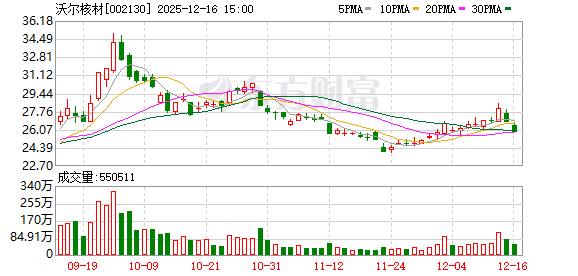
沃尔核材加码扩产通信线缆产能
Zheng Quan Shi Bao· 2025-12-16 18:09
Core Viewpoint - The company plans to invest up to 1 billion RMB (approximately 0.14 billion USD) in building production bases in Vietnam and Malaysia, with each location receiving up to 0.5 billion RMB. This investment aims to enhance the company's production capacity and respond to the growing demand in the communication cable industry [2][3]. Group 1: Investment Plans - The company intends to use self-raised funds for the construction of production bases in Vietnam and Malaysia, with a total investment not exceeding 1 billion RMB [2]. - The investment will cover land acquisition, new factory construction, equipment purchase, and working capital [2]. - Additionally, the company plans to invest up to 1.5 billion RMB in expanding the Huizhou Water口 Industrial Park to improve its production and R&D capabilities [2][4]. Group 2: Industry Context - The communication cable industry is experiencing rapid growth due to increasing demand from data centers, artificial intelligence, and high-performance computing applications [2][3]. - The company has established a strong market position in high-speed communication cables, serving major international clients [3]. Group 3: Strategic Advantages - The selected locations in Vietnam and Malaysia offer significant strategic advantages, including mature industrial support and favorable production conditions [3]. - Vietnam's robust port system and resource availability enhance operational efficiency, while Malaysia's political stability and skilled labor contribute to a conducive industrial environment [3]. - The establishment of overseas production bases is expected to optimize global capacity layout, enhance supply chain resilience, and improve market responsiveness [3][4]. Group 4: Capacity Expansion - The company has experienced rapid growth in its communication cable business, necessitating the expansion of its production capacity [4]. - The current facilities in Huizhou are insufficient to meet demand, prompting the need for additional external factory rentals [4]. - The expansion project aims to ensure stable production capabilities and mitigate risks associated with capacity shortages [4].

扬农化工:公司拥有完整的菊酯系列产品产业链和配套能力
Zheng Quan Ri Bao Wang· 2025-12-16 14:11
Core Viewpoint - The recent increase in the market price of pyrethroid products is influenced by changes in supply and demand dynamics as well as raw material costs, which presents an opportunity for the company to improve profitability and support sustainable industry development [1] Company Summary - The company possesses a complete industrial chain and supporting capabilities for pyrethroid products, enabling it to effectively respond to market fluctuations and seize price recovery opportunities [1] - Previous prices for products such as Kungfu pyrethroid and biphenyl pyrethroid were at historical lows, and the current price rebound is expected to enhance overall industry profitability [1] - The company plans to closely monitor market supply and demand changes, dynamically optimize sales strategies based on production capacity and order status, and strive for reasonable profit margins while maintaining customer relationships and market share [1] - Long-term product prices will continue to be determined by market supply and demand [1] - The company aims to enhance competitiveness through technological innovation and cost control, actively participating in market competition [1]

五奖加冕,唯一商用标杆!箭牌卫浴闪耀2025世界卫浴大会,彰显领军品牌硬实力
Sou Hu Wang· 2025-12-16 05:48
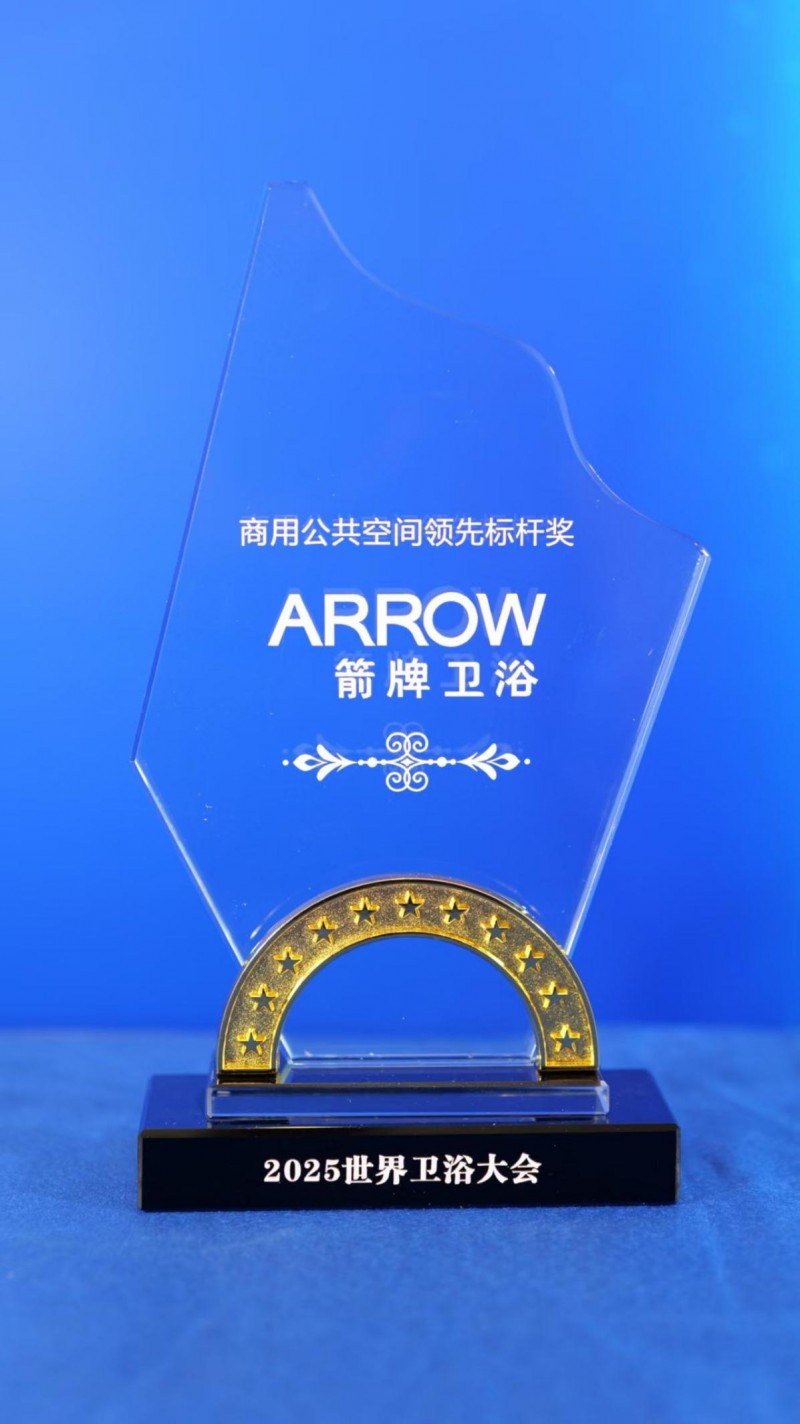
12月9日,由中国建材市场协会指导、卫浴新闻主办的2025世界卫浴大会在佛山盛大启幕。被誉为行 业"奥斯卡"的2025年度"中国家居力量榜"现场揭晓,箭牌卫浴不仅夺得行业唯一"商用公共空间领先标 杆奖",更将"年度影响力品牌"、"年度消费者喜爱品牌"、"年度技术领先企业"及"人气产品奖-洁净大师 P50智能座便器"悉数收入囊中,以五奖加身的亮眼成绩,彰显头部品牌的绝对领导力。 2025年度 影响力品牌 and and the lates of the lates ARROW 2025世界卫浴大会 2025年度 消费者喜爱品牌 ARROW 2025世界卫浴大会 2025年度 人气产品奖 ARROW 箭 牌 卫 浴 2025世界 P P P P A S A 特别值得一提的是,2025 年白云机场 T3 全面启用箭牌智慧卫浴系统,从如厕到盥洗全流程覆盖,以智 能、便利、舒适的体验,为千万旅客打造优质中转空间;厚塘庄园携手箭牌推进的"心远计划"第二期, 则将智感科技与自然场景融合,打造出能疗愈身心的卫浴环境。 በ - 1 - 0 & E e B ren 5,21 & the first and 5 and 2 == ...
昂瑞微登陆科创板上市 上市首日股价涨逾170%
Zheng Quan Ri Bao Wang· 2025-12-16 05:28
Core Viewpoint - Angrui Microelectronics officially listed on the Sci-Tech Innovation Board, with a first-day stock price increase of 174.27%, reaching a market capitalization of 22.674 billion yuan [1] Group 1: Company Overview - Angrui Micro is focused on integrated circuit design in the RF and analog fields, providing high-performance, low-power, and highly integrated core devices and system-level solutions for various sectors including smart mobile terminals, IoT, smart vehicles, and satellite communications [1] - The company is recognized as a national-level "little giant" enterprise, emphasizing innovation and technology breakthroughs in emerging application areas [1] Group 2: Financial Performance - Angrui Micro's revenue is projected to grow from 0.923 billion yuan in 2022 to 2.101 billion yuan in 2024, achieving a compound annual growth rate of 50.88% [2] - The company has significantly narrowed its losses in 2024 compared to previous periods, attributed to optimized customer and business structures [2] Group 3: Customer and Business Structure - Angrui Micro has diversified its customer base, increasing direct supply revenue to major brands like Samsung and Xiaomi by 229% year-on-year, reaching 0.202 billion yuan in the first half of 2025 [3] - The company is shifting resources towards high-end 5G modules while avoiding low-value markets and intense competition in the 4G sector [3] Group 4: Technological Innovation - Technological innovation is a core driver for Angrui Micro's stable development, with participation in significant national and local research projects [4] - The company has achieved substantial production output of its 5G high-integration modules and is actively promoting supply chain localization [4] Group 5: Future Outlook - Angrui Micro anticipates revenue for 2025 to be between 1.905 billion yuan and 2.275 billion yuan, with a continued trend of narrowing operating losses [4] - The company aims to transition from a domestic supplier to a global competitor in the RF chip market, focusing on key technology accumulation and product development [7]
科技添彩体育赛事(聚焦残特奥会)
Ren Min Ri Bao· 2025-12-15 22:52
Group 1 - The recent Special Olympics athletics event in Guangdong showcased significant advancements in accessibility technology, including a prominent information query screen for barrier-free facilities [1] - Guangzhou Huatu Information Technology Co., Ltd. provided technical support for accessibility services, designing specialized paths for different disabled groups, such as wheelchair-friendly routes and "digital blind paths" for visually impaired users [1] - Guangzhou Yuhong Technology Co., Ltd. developed a communication network that allows over a thousand walkie-talkies to operate simultaneously, significantly enhancing communication capabilities at large venues [1] Group 2 - The Tianhe District has fostered a number of technology companies over the past 30 years by using major sports events as application scenarios, contributing to the growth of the local tech industry [1] - Companies like Jiadu Technology and Shida Weizhi are developing smart traffic command platforms and digital twin services to ensure safety and optimize crowd management during events [2] - The Tianhe District is actively promoting the use of innovative technologies and products in sports events, creating a virtuous cycle of talent-driven innovation and capital support for industry development [2]
“钢魂” 太钢不锈从“不锈钢”跃迁到“手撕钢”
Shang Hai Zheng Quan Bao· 2025-12-15 19:19
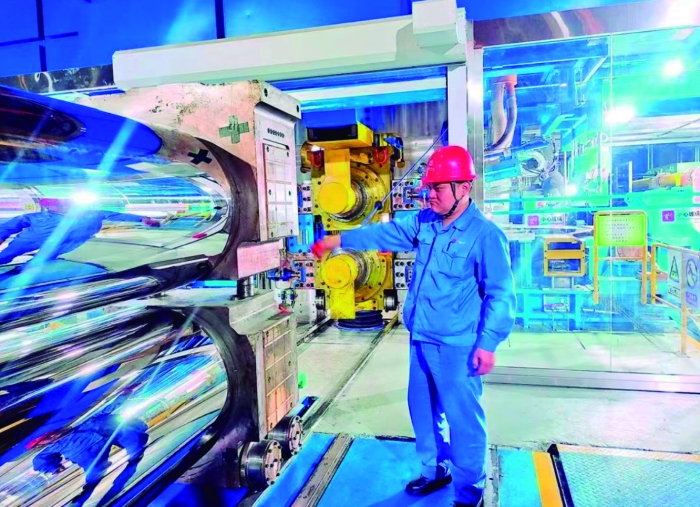
Core Viewpoint - Taigang Stainless Steel has evolved from a small steel producer to a global leader in the stainless steel industry, driven by continuous innovation and strategic development [3][4][5]. Company Development History - Taigang's origins date back to 1934, starting as a small steel plant with an annual production of only 16,000 tons [3]. - The company marked significant milestones, including the production of China's first stainless steel in 1952 and achieving an annual output of 1 million tons by 2003, entering the world's top eight stainless steel producers [4][5]. - In 2006, Taigang became the world's largest stainless steel producer with an annual capacity of 3 million tons [4]. Innovation and Technology - Taigang emphasizes innovation as a core strategy, successfully developing products like "hand-tear steel," which addresses critical supply issues in the market [6][7]. - The company has invested significantly in R&D, with 1.837 billion yuan allocated in the first half of 2025, resulting in 89 new patents and the establishment of 23 national standards [7][8]. - Taigang's focus on high-end products has led to over 60% of its sales coming from high-end products, including "hand-tear steel" and specialized alloys for the semiconductor industry [8]. Market Position and Strategy - The company aims to maintain its competitive edge by focusing on high-value products rather than increasing production capacity, especially in a market with over 50 million tons of stainless steel capacity and only a 70% operating rate [8]. - Taigang plans to reduce the proportion of ordinary stainless steel production from 60% to 40%, prioritizing high-temperature alloys and nuclear-grade steel [9]. Sustainability and Smart Manufacturing - Taigang is committed to green transformation, focusing on low-carbon technologies and aiming to establish a "near-zero carbon demonstration production line" by 2030 [9]. - The company is also investing in smart manufacturing, integrating AI into its operations to enhance efficiency and redefine the value chain in the steel industry [9].

六部门发文,促进服务外包高质量发展
Xuan Gu Bao· 2025-12-15 14:40
Group 1 - The core viewpoint of the article emphasizes the importance of the "Action Plan for Promoting High-Quality Development of Service Outsourcing," which aims to cultivate internationally competitive leading service outsourcing companies by 2030 [1] - The plan aims to enhance the digitalization, intelligence, greening, and integration of service outsourcing, significantly increasing employment and making service outsourcing a key component of innovative service trade and digital trade development [1] - Emerging technologies such as cloud computing, big data, artificial intelligence, and the Internet of Things will deeply integrate into the service outsourcing industry, driving its transformation towards digitalization, intelligence, and high-end services [1] Group 2 - The application of generative AI technology is expected to greatly improve the efficiency and quality of service outsourcing, facilitating the industry's shift towards intelligence and platformization [1] - The traditional service model will upgrade to an "industry empowerment + ecological service" model, transforming service outsourcing from a mere "cost center" to a "value center" [1] - The service outsourcing industry is projected to achieve high-quality development under digital transformation, technological innovation, and policy support, becoming a significant engine for promoting service trade and digital trade [1] Group 3 - Relevant A-share concept stocks mentioned include Supercom and Kanglong Chemical [1]
岚图汽车李博晓总结岚图2025:速度、质量和高端
2 1 Shi Ji Jing Ji Bao Dao· 2025-12-15 14:38
(原标题:岚图汽车李博晓总结岚图2025:速度、质量和高端) 21世纪经济报道记者 郑植文 实习生陈韵宜 在日前举办的2025新汽车年度盛典上,岚图汽车销售服务有限公司副总经理李博晓接受了21世纪经济报 道记者的专访。 他指出,2025年岚图汽车的三大关键词分别是速度、质量和高端。2025年,岚图汽车取得了超过82%的 同比增长,远远跑赢市场。不只是量在快速地提升,岚图汽车的平均销售单价也在快速提升,比如岚图 梦想家平均单价超过了40万元,"背后支持质量的其实还是技术创新、产品创新。" 今年岚图加快了渠道布局,在用户体验方面创立了一个独特的体制,叫用户共创委员会。 "我们会花很 多的时间跟我们的用户朋友去做交流,他们给了我们很多好的输入和建议,最终都很好地落实到了我们 的产品当中。 随着补贴政策的退坡,岚图也会保持随行就市,但李博晓表示根本在于要确保岚图的产品力始终处于一 个非常有竞争力的格局当中。 ...