制度型开放

Search documents
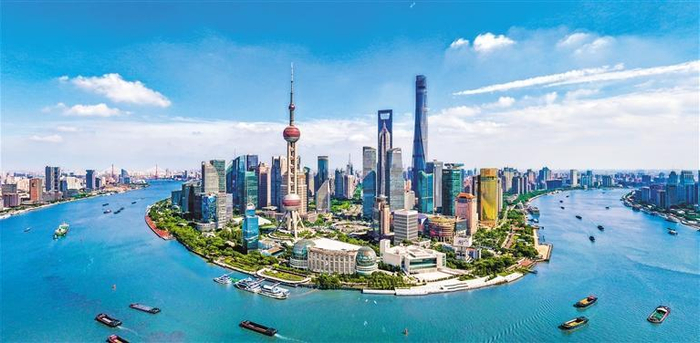
奋进引领区——浦东展现开发开放新气象
Zhong Guo Jing Ji Wang· 2025-11-10 23:03
Group 1 - China Commercial Aircraft Corporation (COMAC) delivered its first C909 aircraft to Lao Airlines on March 30, indicating progress in large aircraft development in the Pudong New Area [2] - Pudong has over 100 robot companies, with core enterprises generating more than 10 billion yuan in output value, showcasing the growth of the robotics industry [4] - The Pudong New Area has seen significant cultural developments, with landmarks like the World Expo Cultural Park and Pudong Art Museum meeting the increasing cultural needs of the public [5] Group 2 - The Haikou Port has established global shipping routes covering 131 countries and regions, with an average of 2 to 3 roll-on/roll-off ships loaded with domestic cars departing daily, reflecting the expansion of the domestic automobile export market [7] - Pudong's GDP, industrial output, service sector revenue, total import and export volume, and retail sales have all surpassed 1 trillion yuan, with three leading industries accounting for 46% of Shanghai's total, indicating robust economic growth [7] - Future plans for Pudong include the introduction of a new institutional opening-up plan, further reform measures, and the exploration of innovative institutional experiences that can be replicated nationwide [7]

新《证券法》实施5周年专辑|法治之光点亮债券市场新征程——纪念新《证券法》实施5周年
Xin Lang Cai Jing· 2025-11-10 23:03
Core Viewpoint - The implementation of the new Securities Law over the past five years has significantly advanced the legal framework of the bond market in China, focusing on registration system reform and zero-tolerance regulation, thereby enhancing the bond market's ability to support national strategies and manage risks [1][2]. Group 1: Legal Foundation - The new Securities Law has unified the regulation of corporate credit bonds, eliminating regulatory arbitrage and establishing a solid legal foundation for the bond market [3]. - The transition from administrative approval to a market-based registration system has streamlined the bond issuance process, significantly reducing the time required for bond registration [4][5]. Group 2: Trading Mechanism - The breaking of rigid repayment guarantees has led to the establishment of a risk pricing mechanism, enhancing market efficiency and accountability [6][7][8]. - The bond market has seen a reduction in the rolling default rate from 0.88% in 2019 to 0.05% in 2023, indicating a shift towards rational pricing and maturity in the market [8]. Group 3: Regulatory Environment - The new Securities Law has increased penalties for securities violations, enhancing the deterrent effect against illegal activities and improving market integrity [9]. - The regulatory framework has been strengthened to ensure that securities service institutions are held accountable for the accuracy and completeness of their reports [9]. Group 4: Economic Support - The bond market has played a crucial role in stabilizing the economy during crises, such as the issuance of 1 trillion yuan in special bonds to counter the economic impact of the COVID-19 pandemic [11]. - The rise of green bonds has supported the transition to a low-carbon economy, with issuance growing from 201.8 billion yuan in 2016 to 683.3 billion yuan by 2024 [12][13]. Group 5: Market Structure and Innovation - The bond market has diversified its product offerings, including the introduction of innovative instruments like tech innovation bonds and real estate investment trusts (REITs) [14][15]. - Technological advancements, such as blockchain, are being integrated into the bond market to enhance efficiency and transparency [15]. Group 6: Internationalization - The bond market has accelerated its internationalization, with the issuance of panda bonds and the establishment of cross-border investment mechanisms [16][17]. - The international influence of Chinese bonds has grown, with Chinese government bonds being included in major global bond indices [17]. Group 7: Future Outlook - The bond market must focus on risk prevention, regulatory openness, and technological empowerment to address challenges posed by global economic fluctuations and local debt pressures [19][20]. - Establishing a unified rating system and enhancing local government debt management are critical for maintaining market stability [20][21][22].
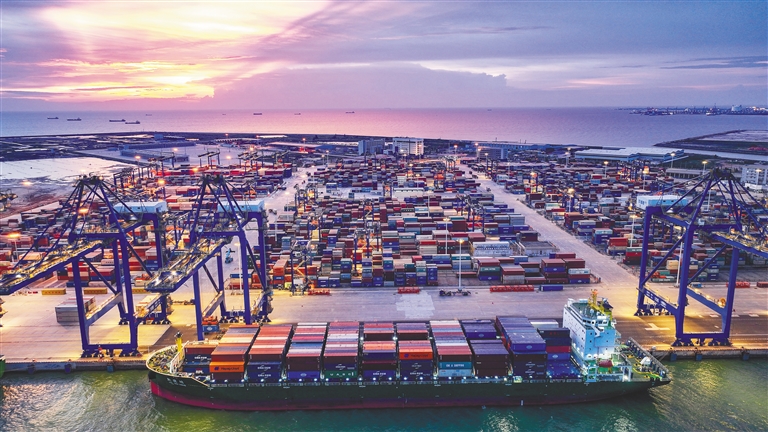
你好“十五五”丨航线“上新” 码头扩建 海南自贸港冲刺全岛封关
Sou Hu Cai Jing· 2025-11-10 14:30
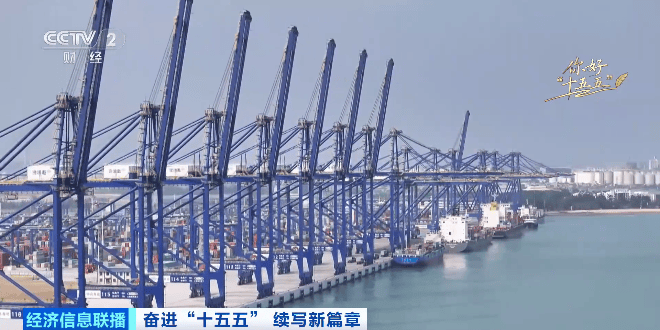
Group 1 - The article highlights China's commitment to expanding high-level opening-up and aligning with international trade rules, particularly through the establishment of the Hainan Free Trade Port [1][15] - The Hainan Free Trade Port is set to enhance trade connections with South America, as evidenced by the new shipping route from Yangpu to Peru, which will facilitate increased trade volume [3][5] - The Yangpu International Container Port has opened 58 shipping routes, with 32 dedicated to foreign trade, indicating a significant expansion in its operational capacity [5][7] Group 2 - The port's expansion project will increase its annual throughput capacity to 5 million TEUs, representing a more than 30% increase, which is crucial for handling the growing trade demands [9] - The upcoming policy benefits from the full closure of the island are prompting companies to prepare for enhanced operations, such as a new production line for a soup base company [11][15] - The zero-tariff policy on a broader range of imported goods is attracting global investors, with a reported 12.16% increase in newly established foreign enterprises in Hainan from January to September [15][17] Group 3 - The article notes that Hainan is positioned as a headquarters base for domestic companies entering international markets and for foreign companies entering China, showcasing its role in high-level institutional innovation [17][19] - The export of Chinese industrial robots has surged, with a 54.9% year-on-year increase in the first three quarters, reflecting the robust growth of the sector [28][34] - The transformation of export models, where industrial robots are packaged with other equipment, signifies an upgrade in China's industrial competitiveness and market expansion [30][32]
焦点访谈|三创历史新高!进博之约让“世界好物”变“全球商机”
Yang Shi Wang· 2025-11-10 13:45
Core Insights - The 8th China International Import Expo (CIIE) took place from November 5 to 10, 2023, in Shanghai, featuring participation from 155 countries and regions, with a record 4,108 foreign enterprises exhibiting, marking the highest exhibition area and number of companies to date [1][5][18] - The intended transaction amount reached $83.49 billion, representing a 4.4% increase from the previous year, also setting a new historical high [1][5] - The expo serves as a platform for global goods to enter China, enhancing China's role as a key destination for exports and a source of development for other countries [3][10] Exhibition Scale and Participation - The exhibition area exceeded 367,000 square meters, with over 600 new exhibitors added to the previous year's total of 3,496 [5][18] - Notably, 290 of the world's top 500 companies and industry leaders participated, highlighting the expo's significance in the global market [5][6] Innovation and Technology - The expo showcased a variety of innovative products, including advanced medical devices, smart appliances, and cutting-edge technologies in AI and robotics [3][12] - Companies like Samsung emphasized their commitment to the Chinese market, planning to invest over $56 billion by the end of 2025, with a focus on high-end components [8][12] Global Trade and Economic Integration - The event attracted 163 companies from 37 least developed countries, marking a 23.5% increase, and saw significant participation from African nations and countries involved in the Belt and Road Initiative [14][16] - Nicaragua reported a 34% increase in exports, amounting to approximately $72 million, since participating in the expo, demonstrating its impact on trade growth [16] Open Market and Policy Implications - The expo aligns with China's "14th Five-Year Plan" to expand institutional openness and maintain a multilateral trade system, with the openness index rising by 29.6% from 1990 to 2024 [10] - The event is viewed as a public good provided by China to the world, facilitating a new round of high-level opening-up and supporting global economic cooperation [10][12]
10年33项首创!中新合作打造互联互通“金名片
Xin Hua She· 2025-11-10 11:46
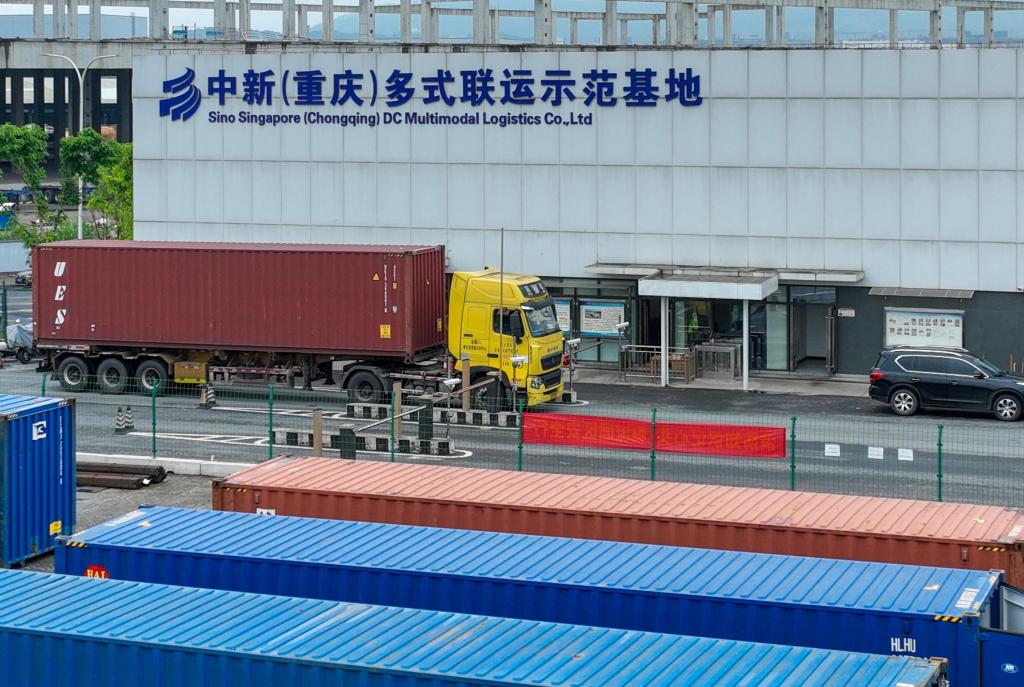
Core Insights - The China-Singapore (Chongqing) Strategic Connectivity Initiative has achieved significant milestones over the past 10 years, including 347 government and commercial cooperation projects worth $26 billion and cross-border financing totaling $21.7 billion, resulting in 33 innovative and recognizable institutional open results [1] Group 1: Project Achievements - The initiative has focused on creating a model of institutional openness, with achievements spanning finance, logistics, information, aviation, and agriculture, promoting the alignment of rules and standards across various regions [1] - The Chongqing Raffles project represents Singapore's largest investment in China, serving as a hub for Singaporean enterprises and a major attraction for tourists [2] - The establishment of the first overseas real estate investment trust in Asia and the launch of green cross-border bonds and digital RMB settlement pilot projects have enhanced cost efficiency for enterprises [3] Group 2: Connectivity and Infrastructure - The Chongqing-New Singapore air corridor has significantly improved trade connectivity, increasing flight frequencies from 5 to 24 per week, with over 1,900 flights recorded from January to October, marking a 20.2% year-on-year increase [3] - The International Consumption Center in Chongqing showcases a unified brand for regional products, with over 1 million TEUs shipped through the land-sea new passage, reaching 581 ports in 127 countries and regions [3] Group 3: Educational and Medical Collaborations - The establishment of the Chongqing Research Institute by the National University of Singapore has facilitated the incubation of 45 tech enterprises and the training of 103 PhD students [5] - The ongoing construction of the Pengrui International Medical Complex in Chongqing aims to create a model international community, integrating medical services and elderly care [5] Group 4: Future Prospects - The initiative is expected to continue evolving, enhancing cooperation across more fields and projects, and driving development towards higher standards and levels [5]
浦东:以开放创新破局 架起链接世界的桥梁
2 1 Shi Ji Jing Ji Bao Dao· 2025-11-10 11:04
Core Insights - The eighth Hongqiao International Economic Forum emphasizes the development path of Pudong in global economic governance, focusing on global supply chain management and the dual interaction of "bringing in" and "going out" [1][2] Economic Performance - Pudong's GDP has reached 1.34 times that of 2020, and its total import and export volume has increased to 1.25 times [2] - Pudong accounts for 25% of Shanghai's foreign-funded enterprises and nearly 50% of multinational company headquarters and foreign R&D centers, showcasing strong resilience and vitality [2] Open Policy and Innovation - Pudong has achieved a level of openness equivalent to CPTPP and DEPA, with 100% openness in manufacturing and the implementation of a 30-day visa-free entry policy for the upcoming Oriental Hub [2][5] - The region has established a comprehensive service network for enterprises "going out," enhancing global cooperation [2][5] Innovation Ecosystem - Pudong is home to major scientific facilities and has developed a full-chain layout in integrated circuits, biomedicine, and artificial intelligence, with over 150 specialized model enterprises in AI [3][4] - The "Qingchuang 15 Measures" and "Pearl Plan" provide a supportive environment for talent and innovation, with a total fund of over $140 billion for financial services [5] Global Cooperation and Future Outlook - The forum highlighted the importance of open cooperation as an inevitable choice to seize opportunities and address challenges in economic globalization [6] - Pudong aims to deepen high-level institutional openness, creating a better business environment and fostering collaboration with global partners [6]
新华鲜报丨10年33项首创!中新合作打造互联互通“金名片”
Xin Hua Wang· 2025-11-10 10:39
Core Insights - The China-Singapore (Chongqing) Strategic Connectivity Initiative has achieved significant milestones over the past decade, including 347 government and commercial cooperation projects worth $26 billion, and a cumulative cross-border financing amount of $21.7 billion [1][3]. Group 1: Project Achievements - The initiative has produced 33 innovative and recognizable institutional open results across various sectors such as finance, logistics, information, aviation, and agriculture, promoting the alignment of rules and standards [3][4]. - The project serves as a key platform for the western inland region of China to engage in high-level opening-up, showcasing its unique role in the Belt and Road Initiative [3][4]. Group 2: Investment and Economic Impact - Notable investments include the Raffles City Chongqing, which is the largest investment project by Singapore in China, and various other projects like the Raffles Hospital and the Chongqing Hanhai Ocean Park [6]. - The Chongqing-Lanzhou New International Land-Sea Trade Corridor has facilitated the export of local products, with over 1 million TEUs shipped to 127 countries and regions [7]. Group 3: Transportation and Connectivity - The Chongqing-New Singapore air corridor has increased flight frequency from 5 to 24 per week, with over 1,900 flights recorded from January to October, marking a 20.2% year-on-year increase [7]. - The establishment of the China-Singapore International Internet Data Dedicated Channel has tripled the efficiency of cross-border data transmission, enhancing cooperation in data flow [7]. Group 4: Educational and Cultural Exchange - The Singapore National University has set up a research institute in Chongqing, fostering innovation and education, with 45 tech companies incubated and 103 PhDs trained [9]. - Regular events such as the "Singapore-Chongqing Week" and the "Chongqing-Singapore Experience Week" have been held to strengthen cultural and economic ties [9].
和音:始终做推动全球发展的行动派——读懂中国的确定性⑤
Ren Min Ri Bao· 2025-11-10 07:41
Group 1 - The core message emphasizes China's commitment to sustainable development and global cooperation, advocating for the implementation of the UN 2030 Agenda to bridge development gaps and enhance people's well-being [1] - China positions itself as a key player in global development, actively promoting development cooperation and taking concrete actions to support developing countries [2] - The "14th Five-Year Plan" period showcases China's achievements in modernization, providing new opportunities for global development through initiatives like the Belt and Road Initiative and various cooperation frameworks with developing regions [1][2] Group 2 - China aims to expand institutional openness and maintain a multilateral trade system, countering the rise of protectionism that threatens the development environment for developing countries [3] - The World Bank projects that by 2030, initiatives related to the Belt and Road could lift 7.6 million people out of extreme poverty and 32 million out of moderate poverty in participating countries [3] - China is committed to being a contributor to global development, ensuring that development benefits are shared more equitably among nations, and promoting inclusive economic globalization [3]
三个维度看进博会溢出效应
Ren Min Ri Bao· 2025-11-10 02:57
Core Insights - The China International Import Expo (CIIE) has evolved from a mere exhibition platform to a new engine for development, showcasing significant spillover effects across various sectors [1][4][8] Length - The CIIE has been held annually since 2018, marking a duration of 8 years [2] - The distance from the Andes Mountains in Chile to the CIIE venue in Shanghai is over 19,000 kilometers, highlighting the global reach of the event [3] - 170 companies have participated in all 8 editions of the CIIE, demonstrating their confidence in the Chinese market [4] Depth - The CIIE serves as a major platform for observing China's high-level opening-up and offers immersive experiences of its vast market advantages [6][7] - The event has introduced 18 facilitation measures to support exhibitors, including easing customs procedures and expanding the variety of exhibition products [7] - Shanghai has implemented 80 measures for institutional opening-up, with 77 of these being promoted nationwide [7] Breadth - The CIIE integrates functions such as product display, trade promotion, investment matching, and supporting conferences, expanding its spillover effects into broader fields [8] - The concurrent Hongqiao International Economic Forum attracts global experts to discuss trade order and multilateralism, enhancing the event's international significance [8] - The Shanghai Conference and over 100 sub-forums aim to create high-level communication platforms for global exhibitors and investors [8][9]
以高水平开放引领高质量发展,海南坚定不移扩大高水平对外开放
Hai Nan Ri Bao· 2025-11-10 02:03
Core Viewpoint - Hainan is committed to expanding high-level openness to drive high-quality development, positioning itself as a significant gateway for China's new era of foreign trade and investment [5][12]. Group A: Investment and Trade Facilitation - A foreign investment company was able to register and obtain a business license in Hainan within one day due to streamlined registration processes [4]. - Cross-border fund settlement has been expedited from 1-2 working days to 2-3 hours through the multi-functional free trade account [4]. - Hainan has introduced the first foreign investment project in stem cell technology, highlighting its appeal to international investors [6]. - The establishment of the first independent overseas higher education institution in Hainan, the Lausanne Tourism University, marks a significant step in international educational collaboration [6]. Group B: Policy and Regulatory Environment - Hainan is implementing a series of policies to enhance trade and investment liberalization, including a negative list for cross-border service trade and measures to reduce institutional transaction costs [7]. - The provincial government is focused on promoting foreign trade and investment stability, with plans to implement tariff-free processing policies [7][15]. - Hainan is reforming its administrative system to create a market-oriented, law-based, and international business environment [14][15]. Group C: Talent Attraction and Development - Hainan is actively recruiting talent through large-scale job fairs in major cities, offering over 8,000 quality job positions [12]. - The province has established a new talent evaluation standard and offers tax incentives for high-end talent, aiming to create a conducive environment for talent development [12]. Group D: Regional Cooperation and Integration - Hainan is enhancing cooperation with the Guangdong-Hong Kong-Macao Greater Bay Area, signing multiple agreements across various sectors [18][19]. - The establishment of industrial parks is facilitating collaboration with other provinces, focusing on sectors like biomedicine and advanced manufacturing [20]. - Hainan's integration into the Belt and Road Initiative has led to a fourfold increase in trade with participating countries since 2020 [22].