
体育消费

Search documents
“竞技”流量变“经济”增量 深圳税务助力体育经济发展
2 1 Shi Ji Jing Ji Bao Dao· 2025-11-11 04:14
Core Insights - Shenzhen's cultural, sports, and entertainment industry saw a 14.6% year-on-year increase in invoiced sales from January to October, with the sports sector growing by 21.1% [1] - The upcoming 15th National Games and high-profile sports events are driving consumer demand for sports entertainment and health [1] - Shenzhen's sports industry output has surpassed 200 billion yuan, with plans to be recognized as one of the 30 cities promoting sports consumption and event economy by 2025 [1] Group 1: Sports Events and Economic Impact - Shenzhen is expected to host over 300 large-scale sports events this year, enhancing its reputation in the sports economy [3] - The establishment of the Kunlun Hongxing Ice Hockey Club has contributed to the development of a national training base for ice hockey in Longgang District [3] - The integration of sports events with tourism is creating new consumption scenarios and economic value, as seen in the rise of sports tourism in areas like Dapeng and Yantian [9][10] Group 2: Taxation and Financial Support - The Longgang District tax authority has formed a specialized service team to assist sports clubs with tax-related issues, ensuring compliance and maximizing benefits [4] - Tax incentives, such as VAT deductions and tax credits for employing disabled individuals, have provided significant financial relief to sports organizations [4][5] - The tax department's proactive approach includes personalized guidance and risk assessment to help businesses navigate complex tax regulations [5][12] Group 3: Infrastructure and Consumer Behavior - By the end of 2024, Shenzhen will have over 46,000 sports venues, with a per capita sports area 60% higher than the national average [5] - The average sports consumption per person in Shenzhen is projected to exceed 4,000 yuan in 2024, reflecting a growing trend in outdoor and smart sports facilities [5][6] - The rise of smart sports equipment and innovative products is reshaping consumer experiences and expanding the market [6][7] Group 4: Industry Growth and Innovation - Shenzhen has seen a significant increase in sports-related enterprises, with 27,000 legal entities in the sector by the end of 2024 [6] - Companies like Leqi Intelligent Technology are recognized as national-level specialized and innovative enterprises, contributing to the growth of the smart sports market [6][7] - The sports industry is evolving towards high-end and intelligent products, driven by technological innovation and the national strategy of promoting fitness [8]

体育赛事激活运动新热潮,深圳夜间运动健身订单量全国居首
Nan Fang Du Shi Bao· 2025-11-02 16:47
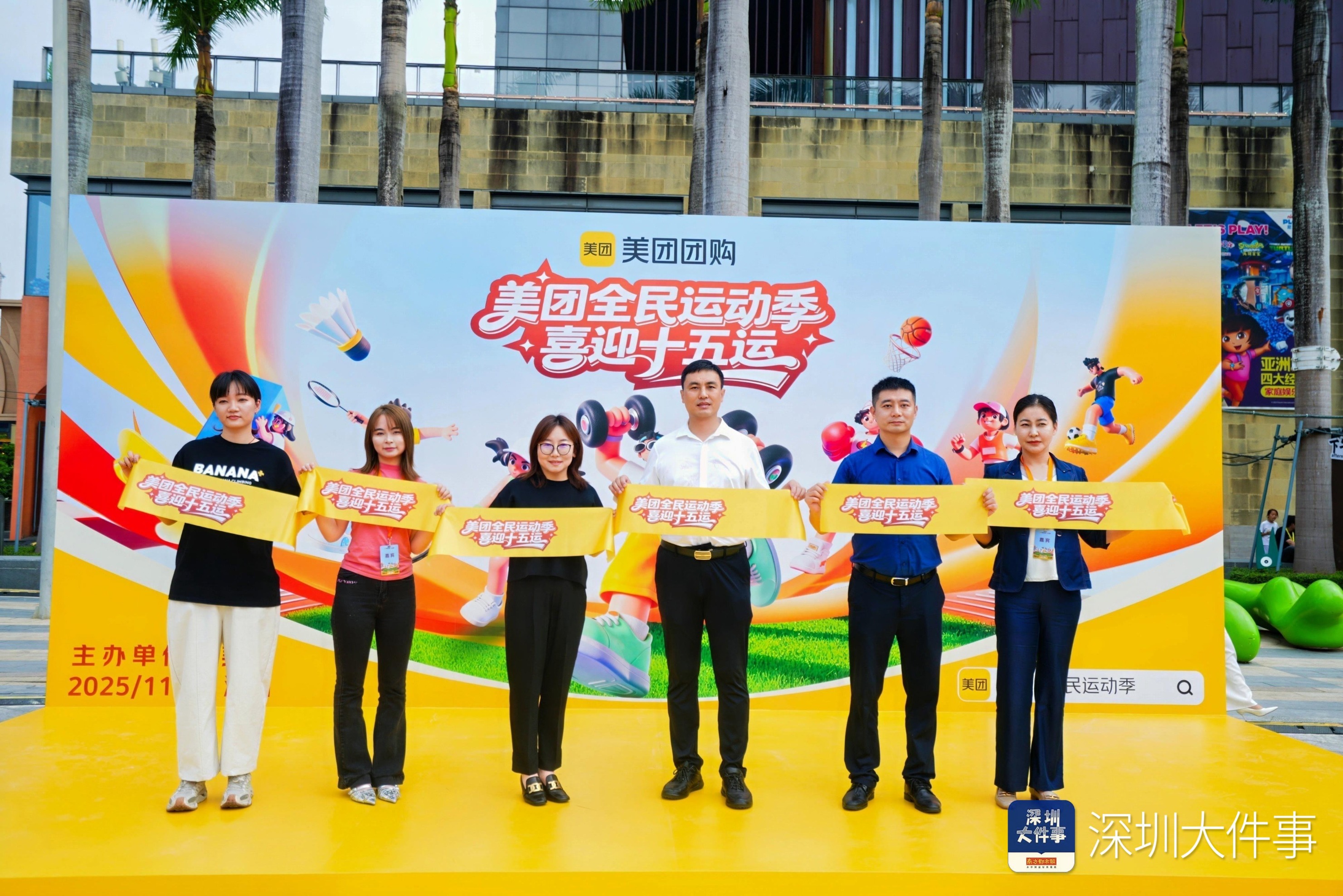
Core Insights - The 15th National Games is approaching, and Meituan has launched the "National Sports Season" event in Shenzhen, with over 10,000 sports and fitness merchants participating nationwide [1] - Since 2025, Guangdong has ranked among the top three in the country for sports consumption, with Shenzhen accounting for nearly 40% of the province's sports consumers [1][4] - The demand for diverse sports activities among young people is driving a new wave of consumption, with night-time fitness orders in Shenzhen leading the nation [4] Group 1: Sports Consumption Trends - Sports consumption in Guangdong has seen a 50% year-on-year increase, with Shenzhen being a significant contributor [4] - The number of tennis stores in Guangdong has increased by over 70% year-on-year, and the number of consumers has surged by 137% [4] - The popularity of climbing has also risen, with a 63% increase in search volume and 20% of the nation's climbing stores located in Guangdong [4][6] Group 2: Innovative Consumption Models - Meituan has introduced the "Flexible Payment and Runaway Compensation" solution to address trust issues in the fitness industry, covering nearly 80% of fitness merchants in Shenzhen [7] - The platform offers various payment models, including monthly and personal training packages, to enhance consumer confidence [7] - During the National Games, consumers can engage in various interactive activities through the Meituan app, starting from 9.9 yuan, promoting sports participation [8]

中国草根足球撬动消费热潮
Xin Hua She· 2025-11-01 08:58
Core Insights - The Jiangsu Provincial Urban Football League ("Su Super") has gained significant popularity, with a ticket lottery rate of only 1.2% for the finals, indicating high demand and engagement from fans [1] - The league has transformed into a phenomenon, with regular season attendance reaching 2.1189 million and online viewership exceeding 1.735 billion [1] Group 1: Economic Impact - The "Su Super" has driven retail sales in Jiangsu, with key retail enterprises achieving sales of 11.64 billion yuan during match periods, a year-on-year increase of 34.7% [3] - The overall social retail sales in Jiangsu reached 3.47883 trillion yuan from January to September, growing by 4.2%, with the league contributing significantly to this growth [3] - Tourist attractions in host cities received 23.973 million visitors during match days, a 17.7% increase, with foreign visitors accounting for 13.703 million, up 23.5% [3] Group 2: Consumer Experience - The integration of sports events with tourism has created a new trend in the Chinese market, with initiatives like "ticket root discounts" enhancing the experience for attendees [3] - Shopping malls and commercial areas have reported over 20% increases in foot traffic and nearly 30% growth in experiential consumption on match days [2] - The "Su Super" has inspired other regions to adopt similar models, with over 10 provincial football leagues in China either ongoing or upcoming, aiming to boost local consumption [3][4] Group 3: Cultural and Social Influence - The league has become a cultural event, with large screens in commercial areas broadcasting matches, creating a festive atmosphere and attracting fans [2] - The emotional value and immersive experiences associated with sports events are reshaping consumer spending patterns, making sports a new engine for urban vitality [4]
不到两天近三千人报名 全国户外运动达人下周来汉参赛
Chang Jiang Ri Bao· 2025-11-01 01:13
Core Insights - The Wuhan Sports Autumn Consumption Season features the 2025 China Urban Outdoor Sports Challenge, with the family outdoor challenge registration attracting over 1,000 families and nearly 3,000 participants within two days [1][2] - The main event will take place in Jiangxia District, integrating outdoor sports, industry exhibitions, and leisure experiences [1] - The event includes various activities such as the family outdoor challenge, shopping fairs, and autumn camping, aiming to stimulate sports consumption [1] Event Details - The family outdoor challenge will start on November 9, featuring an 8.5 km and a 14 km obstacle course, with participants competing in teams of 2 to 3 [2] - The registration opened on October 27, receiving a strong response from outdoor enthusiasts across 29 provinces, with approximately 1,500 participants from Wuhan [2] - The event is organized by several authorities, including the National Sports Administration and the Wuhan Sports Bureau, with support from local institutions [2]
共话发展新篇,“网络新视听:体育叙事的多元表达”体育沙龙圆满举行
Huan Qiu Wang· 2025-10-30 01:43
Core Insights - The event "Network New Audiovisual: Diverse Expressions of Sports Narrative" highlighted the importance of integrating technology and content in sports audiovisual development, aiming to create a new ecosystem for high-quality sports content [1][7][16] Group 1: Industry Trends - The sports audiovisual sector is evolving to become a core medium for conveying Chinese sports spirit and stories, with a focus on major events, quality content, and resource integration [4][12] - The sports industry is projected to exceed 7 trillion yuan by 2030, driven by technological innovation and policy guidance [7] - The integration of sports with various media forms, such as short videos and documentaries, is accelerating the creation of a new "sports + audiovisual" communication ecosystem [12][9] Group 2: Company Initiatives - China Mobile Migu is positioned as a leading sports content platform, focusing on "content + technology + integrated innovation" to explore new models for "audiovisual + sports" development [4][8] - Migu has established a comprehensive sports copyright coverage, providing over 30 event projects and 9,000 live broadcasts annually, utilizing advanced technologies like 5G, AI, and VR to enhance viewer experience [8][9] - Migu aims to transform online viewing traffic into tangible economic growth through innovative "sports +" integration strategies [3][12] Group 3: Collaborative Efforts - Strategic partnerships are being formed between platforms, content creators, and academic institutions to enhance the sports audiovisual industry's collaborative ecosystem [12][14] - Migu and Beijing Sport University signed a strategic cooperation agreement to promote diverse creative expressions in the sports sector, enhancing the global narrative of Chinese sports [12][14] - The industry is witnessing a trend towards optimizing resource allocation and fostering innovation through collaborative efforts across the value chain [14][16]

省体育局公布促进体育消费和赛事经济试点名单
Qi Lu Wan Bao· 2025-10-27 12:51
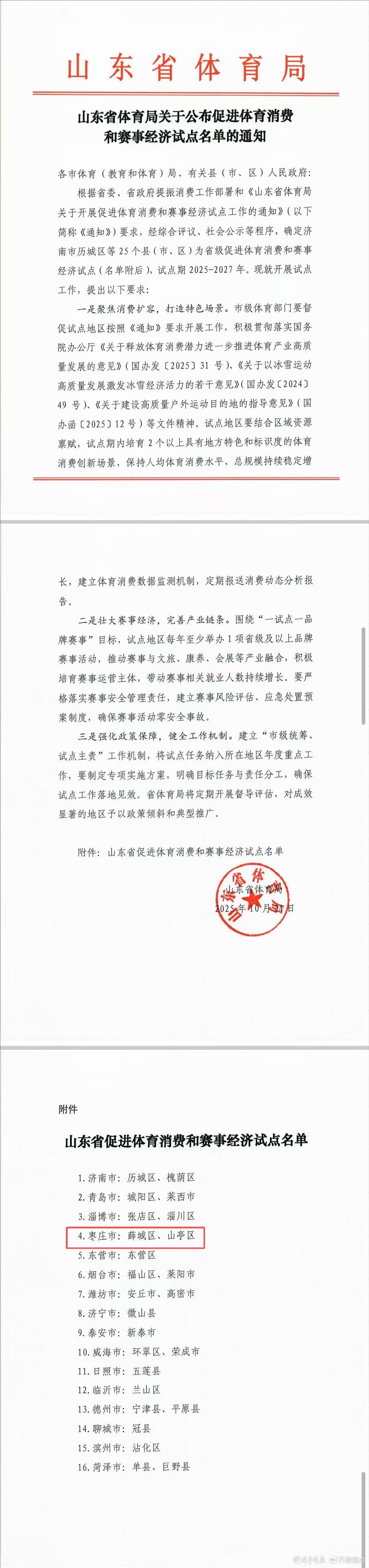
Group 1 - The Shandong Provincial Sports Bureau has recently issued a notice announcing the list of pilot projects to promote sports consumption and event economy [1] - A total of 25 counties (cities, districts) have been selected to carry out pilot projects aimed at promoting sports consumption and event economy [1] - The pilot period is set from 2025 to 2027 [1]
山亭区成功获评山东省促进体育消费和赛事经济试点称号!
Qi Lu Wan Bao Wang· 2025-10-23 02:55
Core Insights - Shandong Province Sports Bureau has officially announced the list of pilot areas for promoting sports consumption and event economy by 2025, with Shanting District being selected due to its solid sports industry foundation and significant sports consumption effects [1] Group 1: Sports Events and Activities - Shanting District has successfully hosted various brand events such as the Baodu Crag Mountain Climbing Competition and Meihua Mountain Bicycle Open, along with community sports events like table tennis, basketball, and themed competitions for farmers and seniors, which continuously release consumption potential [3] - The district is innovating consumption scenarios by launching a "Sports Benefit Consumption Season," encouraging community engagement through events in scenic areas and commercial districts, and promoting sports consumption through vouchers and free experiences [3] Group 2: Sports Tourism Integration - The district has made significant progress in integrating sports and tourism, creating influential sports tourism routes and events through projects like Baodu Crag Via Ferrata and Qianshan Cloud Top Outdoor Sports Station, establishing a positive cycle of "event attraction - consumption upgrade - industry linkage" [6] - Shanting District aims to leverage this pilot recognition to enhance sports event offerings, strengthen outdoor sports brands, and innovate sports consumption scenarios, setting a model for promoting sports consumption and event economy [6]
抓住“风口”扩大体育消费
Jing Ji Ri Bao· 2025-10-22 22:09
Core Viewpoint - The expansion of the sports consumption group in China is crucial for enhancing the quality of life and driving high-quality development in the sports industry, as highlighted by recent government policies aimed at increasing sports participation and consumption [1][2]. Economic Impact - The growth of the sports consumption group is expected to directly stimulate consumption in areas such as sports equipment, training services, and events, acting as a new engine for domestic demand [1]. - The increase in sports consumption will also promote the development of related industries, contributing to both economic and social benefits [1]. Social Development - A larger sports consumption group indicates greater public engagement in sports, which can effectively improve the overall physical fitness of the population [1]. Industry Development - The diverse demands of the expanding consumption group will drive continuous research and development of products and services, facilitating faster high-quality growth in the sports industry [1]. Public Service Improvement - To expand the sports consumption group, it is essential to enhance the public service system, particularly by improving fitness facilities in rural and community areas and promoting public access to sports venues [2]. - Engaging sports stars and teachers as social sports instructors can provide scientific fitness guidance, encouraging broader participation in sports [2]. Cultural Promotion - The cultivation and dissemination of sports culture are vital for creating a strong atmosphere for participation, including activities that promote the spirit of sportsmanship and the creation of engaging sports content [2]. - Initiatives like "Follow the Champion to Fitness" can leverage the influence of champions to inspire public enthusiasm for sports [2]. Focus on Youth - The youth demographic is identified as a key target for expanding sports consumption, as they represent the foundational strength for long-term development in sports [3]. - Enhancing the quality of physical education in schools and providing platforms for youth competitions can help instill a habit of sports participation among young people [3].
广州:大力发展体育消费
Di Yi Cai Jing· 2025-10-21 11:28
Core Viewpoint - The Guangzhou Municipal Government has issued a special action implementation plan to boost consumption, with a strong emphasis on developing sports consumption [1] Group 1: Sports Consumption Development - The plan includes preparations for major sporting events such as the 15th National Games and the Special Olympics, aiming for high-quality organization of events like the World Athletics Relay and the Guangzhou Marathon [1] - Various sports consumption activities will be launched, including Sports Carnival, Sports Consumption Season, and nationwide fitness activities, to promote sports events in scenic areas, streets, and commercial districts [1] - Support will be provided for the upgrading of ice and snow venues, such as the Huadu Sunac, and the acceleration of the construction and operation of the Hong Kong Jockey Club's Conghua Racecourse, to foster the development of ice sports and horse racing consumption [1]
城市更新搞体育,有红利吗?咋避坑?
Hu Xiu· 2025-10-21 05:06
Core Viewpoint - Urban renewal can leverage sports for financial gain, presenting both opportunities and challenges [1] Group 1: Government Support - The government has issued documents supporting sports consumption and infrastructure upgrades [1] - There are potential financial benefits from events, intellectual properties (IP), community fitness points, and leading industries [1] Group 2: Market Opportunities - The sports sector is positioned to capture a share of the urban renewal market [1] - Various stakeholders, including local communities and businesses, can benefit from the growth in sports-related activities [1] Group 3: Risks and Challenges - While there are financial incentives, there are also pitfalls associated with relying solely on sports for urban renewal [1] - Stakeholders must navigate the complexities of sports investment and its impact on urban development [1]