农村电商

Search documents
感知山东| 青岛精准培训农村电商带头人
Sou Hu Cai Jing· 2025-11-10 04:08
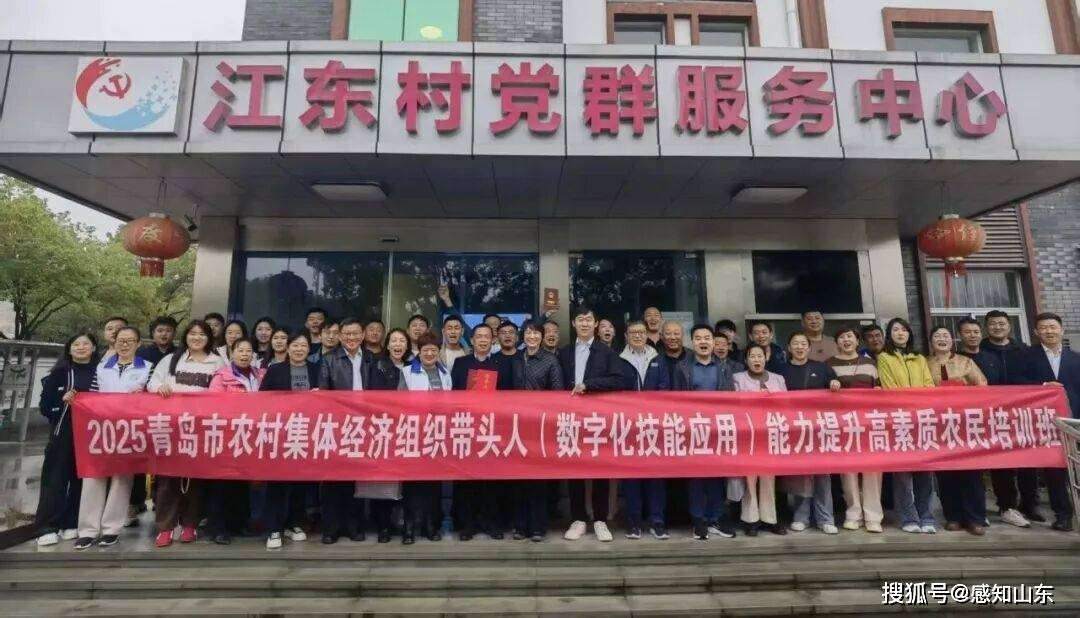
Core Insights - Rural e-commerce is emerging as a vital link between rural areas and urban consumers, facilitating the sale of natural products from farmers to city dwellers [1] - Qingdao is focusing on enhancing the capabilities of rural e-commerce leaders through targeted training programs to boost collective and individual farmer incomes [1][24] Training Programs - A 10-day training program for rural collective economic organization leaders was successfully completed, emphasizing rural e-commerce live streaming [3] - The training included theoretical learning and practical visits to various successful e-commerce models, enhancing participants' confidence and operational skills [4][13] Curriculum and Content - The training covered policy interpretation, market trends, and practical skills for rural e-commerce development, aiming to improve participants' operational capabilities [6] - Experts from various institutions provided insights on live streaming, AI tools, and digital marketing strategies relevant to agricultural products [8] Practical Applications - Participants engaged in hands-on activities, including creating promotional videos and conducting live sales, which resulted in significant engagement and sales [15][19] - The training also featured case studies and expert sharing sessions to provide real-world insights into successful e-commerce strategies [16][22] Future Directions - The initiative aligns with national policies aimed at enhancing agricultural product consumption and promoting rural e-commerce [24] - Qingdao plans to continue developing a talent cultivation system for rural e-commerce, leveraging digital tools to invigorate the rural economy and expand market reach [24]

农产品销售额居全省第二!饶平“土特产”助推电商破局
Sou Hu Cai Jing· 2025-11-07 17:16
Core Viewpoint - Rural e-commerce serves as an effective tool to enhance the upward movement of agricultural products and stimulate industrial development, with local specialties being a vital source of economic vitality in county areas [1] Group 1: E-commerce Development Strategy - The county has implemented a three-year action plan for high-quality rural e-commerce development, guided by government and led by associations, establishing a county e-commerce office to integrate supply chain, content promotion, and sales [3] - A service system consisting of 112 e-commerce service institutions across towns and villages has been established to connect member enterprises with farmers, providing one-stop services for agricultural product commercialization and quality sourcing [7] Group 2: Resource Integration and Collaboration - The county promotes collaboration between e-commerce enterprises and farmers, creating dual-platform exhibitions for local specialties such as single-clone tea, aquatic products, and lychees, while facilitating partnerships in live streaming venues, funding, and raw material security [6] - The county has cultivated leading enterprises in aquatic product processing, innovating products like frozen shrimp that are lightweight and adaptable, exporting to over 30 countries [6] Group 3: Logistics and Supply Chain Innovation - A cold chain logistics industry park with a total investment of 1.75 billion yuan is being developed to enhance the commercialization of agricultural products, ensuring a continuous cold chain from production to market [9] - The county has implemented an innovative supply and distribution model, facilitating efficient connections between southern e-commerce sales resources and northern high-quality agricultural products through 360 logistics stations [9] Group 4: Talent Development and Support - The county has established a four-pronged mechanism for talent cultivation, focusing on local talent discovery, precise training, returnee empowerment, and think tank support, providing comprehensive training services to over 1,000 individuals this year [10] - Local policies such as tax reductions and entrepreneurial guarantee loans have been introduced, along with legal service initiatives to support rural e-commerce, serving over 1,000 enterprises in 2023 [11]


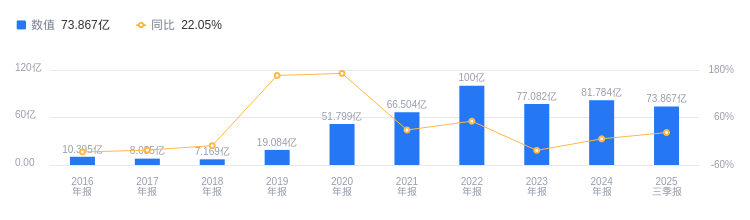
川发龙蟒涨2.04%,成交额5.30亿元,主力资金净流出2897.65万元
Xin Lang Cai Jing· 2025-11-07 02:17
Core Viewpoint - Sichuan Development Longmang Co., Ltd. has shown fluctuations in stock performance, with a year-to-date decline of 16.39% but a recent recovery in the last five trading days, indicating potential market interest and volatility [1][2]. Company Overview - Sichuan Development Longmang was established on May 20, 1997, and listed on December 3, 2009. The company operates in financial service outsourcing, express delivery, and phosphate fertilizer production [2]. - The revenue composition includes fertilizer products (45.58%), industrial-grade monoammonium phosphate (22.61%), feed-grade dicalcium phosphate (12.62%), and other products [2]. Financial Performance - For the period from January to September 2025, the company reported revenue of 7.387 billion yuan, reflecting a year-on-year growth of 22.06%. The net profit attributable to shareholders was 437 million yuan, with a growth of 2.81% [2]. - The company has distributed a total of 1.027 billion yuan in dividends since its A-share listing, with 853 million yuan distributed over the last three years [3]. Shareholder Structure - As of September 30, 2025, the number of shareholders decreased by 2.83% to 172,000, with an average of 10,950 circulating shares per person, an increase of 2.91% [2]. - Notable institutional shareholders include Penghua CSI Sub-Sector Chemical Industry Theme ETF and Southern CSI 500 ETF, with changes in their holdings observed [3].

今年以来,超7600万名消费者购买12大类家电以旧换新产品超1.26亿台
Yang Shi Wang· 2025-11-06 22:43
Group 1: Wholesale and Retail Industry Performance - The wholesale and retail industry in China has shown positive growth, with a total value added of 10.5 trillion yuan from January to September, representing a year-on-year increase of 5.6%, accounting for 10.3% of GDP [1] - In the wholesale sector, profits from key monitored commodity markets increased by 8.2% year-on-year, with industrial consumer goods and production materials seeing profit growth of 17.9% and 6.4% respectively [1] - Retail sales reached 32.5 trillion yuan in the same period, with a year-on-year growth of 4.6%, and various retail formats such as convenience stores and supermarkets also reported positive growth [1] Group 2: Urban and Rural Market Development - Urban commercial activity is improving, with foot traffic and sales in 78 monitored pedestrian streets increasing by 4.3% and 4.4% year-on-year respectively [2] - The rural market is showing significant vitality, with rural retail sales reaching 4.9 trillion yuan, a year-on-year increase of 4.6%, outpacing urban growth by 0.2 percentage points [2] - E-commerce in rural areas is thriving, with online retail sales growing by 7.7% and agricultural product online sales increasing by 9.6% from January to September [2] Group 3: Consumer Trends and Product Preferences - The "trade-in" policy has led to significant consumer engagement, with over 76 million consumers participating in the trade-in program for home appliances and digital products, resulting in over 1.26 billion units sold [3] - Retail sales of home appliances and audio-visual equipment from key monitored units increased by 25.3%, while communication equipment sales rose by 20.5% year-on-year [3] - Traditional brands are revitalizing, with events promoting "old brands" generating direct sales of 3.8 billion yuan and boosting overall sales to 16.9 billion yuan [3]
家家悦涨2.26%,成交额6052.34万元,主力资金净流出500.36万元
Xin Lang Cai Jing· 2025-11-06 05:48
Core Insights - The stock price of Jiajiayue increased by 2.26% on November 6, reaching 11.30 CNY per share, with a total market capitalization of 7.213 billion CNY [1] - Year-to-date, Jiajiayue's stock price has risen by 1.35%, with notable increases of 5.12% over the last five trading days and 12.55% over the last 20 days [2] Financial Performance - For the period from January to September 2025, Jiajiayue reported a revenue of 13.588 billion CNY, a year-on-year decrease of 3.81%, while the net profit attributable to shareholders increased by 9.43% to 206 million CNY [2] - Cumulative cash dividends since the A-share listing amount to 1.587 billion CNY, with 402 million CNY distributed over the last three years [3] Shareholder Information - As of September 30, 2025, the number of shareholders decreased by 10.62% to 21,800, with an average of 29,305 circulating shares per person, an increase of 11.89% [2] - The top ten circulating shareholders include Huaxia Large Cap Select Mixed Fund, which holds 3.7126 million shares, down by 2.1379 million shares from the previous period [3]

金正大涨2.13%,成交额1.02亿元,主力资金净流入346.05万元
Xin Lang Cai Jing· 2025-11-06 02:48
Core Viewpoint - The stock of Jinzhengdai has shown a positive trend recently, with a notable increase in trading volume and a slight recovery in share price after a year-to-date decline [1][2]. Group 1: Stock Performance - On November 6, Jinzhengdai's stock rose by 2.13%, reaching 1.92 CNY per share, with a trading volume of 1.02 billion CNY and a turnover rate of 1.63%, resulting in a total market capitalization of 6.309 billion CNY [1]. - Year-to-date, the stock price has decreased by 2.04%, but it has increased by 7.26% over the last five trading days, 9.71% over the last 20 days, and 10.98% over the last 60 days [1]. Group 2: Financial Performance - For the period from January to September 2025, Jinzhengdai reported a revenue of 7.319 billion CNY, reflecting a year-on-year growth of 14.44%. However, the net profit attributable to shareholders was -29.4764 million CNY, a decrease of 116.36% compared to the previous year [2]. - Since its A-share listing, Jinzhengdai has distributed a total of 1.227 billion CNY in dividends, with no dividends paid in the last three years [3]. Group 3: Shareholder Information - As of September 30, 2025, the number of shareholders for Jinzhengdai was 68,600, a decrease of 1.55% from the previous period. The average number of circulating shares per person increased by 1.58% to 47,922 shares [2]. - Among the top ten circulating shareholders, Hong Kong Central Clearing Limited is the fourth largest, holding 21.7362 million shares, which is an increase of 2.3025 million shares from the previous period [3].

四川美丰涨2.26%,成交额3393.53万元,主力资金净流出174.50万元
Xin Lang Cai Jing· 2025-11-06 02:12
Core Points - Sichuan Meifeng's stock price increased by 2.26% on November 6, reaching 7.23 CNY per share, with a market capitalization of 4.04 billion CNY [1] - The company reported a net outflow of 1.75 million CNY in main funds, with large orders accounting for 8.68% of purchases and 13.82% of sales [1] - Year-to-date, the stock price has risen by 2.23%, with a 5-day increase of 5.70% and a 20-day increase of 7.72% [1] Company Overview - Sichuan Meifeng Chemical Co., Ltd. was established on June 9, 1997, and listed on June 17, 1997 [1] - The company specializes in the manufacturing and sales of products such as urea, compound fertilizers, automotive urea, melamine, nitric acid, ammonium nitrate, packaging plastic products, and LNG [1] - The revenue composition includes: compound fertilizers (25.55%), natural gas supply (22.13%), urea (18.52%), others (13.66%), automotive urea (7.17%), real estate development (6.72%), and melamine (6.25%) [1] Financial Performance - For the period from January to September 2025, Sichuan Meifeng achieved a revenue of 2.717 billion CNY, a year-on-year decrease of 5.27% [2] - The net profit attributable to the parent company was -7.29 million CNY, a year-on-year decrease of 103.85% [2] Shareholder Information - As of October 31, the number of shareholders was 39,600, a decrease of 0.11% from the previous period [2] - The average circulating shares per person increased by 0.11% to 14,111 shares [2] Dividend Information - Since its A-share listing, Sichuan Meifeng has distributed a total of 1.683 billion CNY in dividends [3] - In the last three years, the cumulative dividend payout was 403 million CNY [3]

供销大集涨2.24%,成交额10.43亿元,主力资金净流入1516.54万元
Xin Lang Zheng Quan· 2025-11-03 05:37
Core Insights - The stock price of Gongxiao Daji increased by 2.24% on November 3, reaching 2.74 CNY per share, with a trading volume of 1.043 billion CNY and a market capitalization of 49.479 billion CNY [1] - Year-to-date, Gongxiao Daji's stock has decreased by 20.58%, but it has shown a recovery with a 5.38% increase over the last five trading days and a 19.65% increase over the last 60 days [1] - The company has been active on the stock market, appearing on the "Dragon and Tiger List" four times this year, with the latest appearance on September 16, where it recorded a net purchase of 262 million CNY [1] Financial Performance - For the period from January to September 2025, Gongxiao Daji reported a revenue of 1.209 billion CNY, reflecting a year-on-year growth of 6.91%, and a net profit attributable to shareholders of 72.355 million CNY, which is a significant increase of 165.19% year-on-year [2] - The company has distributed a total of 449 million CNY in dividends since its A-share listing, with no dividends paid in the last three years [3] Shareholder Information - As of September 30, 2025, the number of shareholders for Gongxiao Daji was 380,600, a decrease of 8.99% from the previous period, while the average number of circulating shares per person increased by 9.88% to 38,663 shares [2] - The top ten circulating shareholders include Hong Kong Central Clearing Limited, which holds 211 million shares as a new shareholder [3]
“头雁领飞”带动“雁群高飞” 湖北联合引领强化合作社产销对接
Chang Jiang Shang Bao· 2025-11-02 23:14
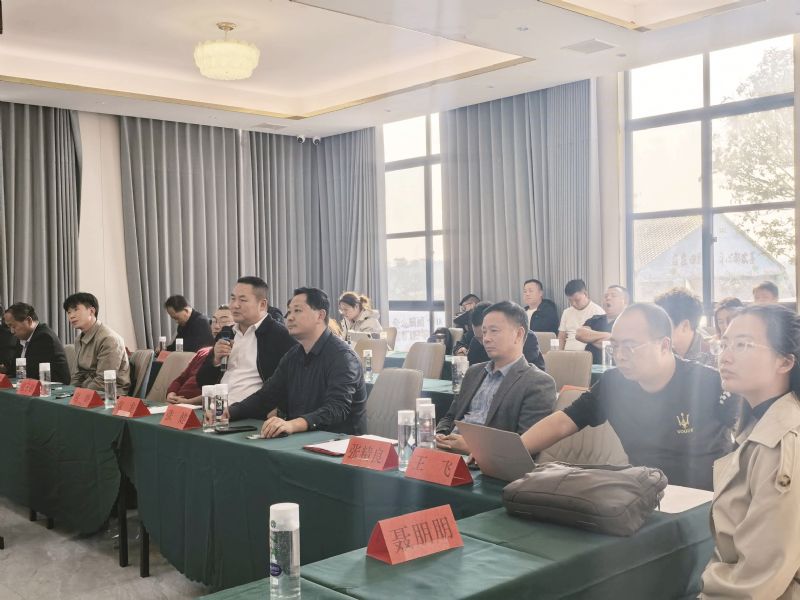
Core Insights - The article discusses the "Three Enhancements" initiative aimed at improving the operational capabilities and market reach of agricultural cooperatives in Hubei province, China, through branding and marketing strategies [4][5][6] - The "Hubei Good Ingredients" brand is being promoted to enhance the competitiveness and recognition of local agricultural products [4][5] - The third Rural E-commerce Live Streaming Competition in Hubei showcased the potential of digital platforms in promoting agricultural products and supporting rural employment [8][9][10] Group 1: Agricultural Cooperatives Development - The Hubei Provincial Farmers' Cooperative Federation is conducting activities to enhance the quality and marketability of agricultural products, focusing on branding and regional specialties [4][5] - The "Three Enhancements" initiative includes product branding, corporate image improvement, and personal skill enhancement for cooperative members [4][5] - The initiative aims to transition from unbranded products to standardized, branded offerings, integrating into regional public brand systems [4][5] Group 2: E-commerce and Digital Marketing - The Rural E-commerce Live Streaming Competition attracted over 2,000 participants, highlighting the growing importance of digital marketing in rural areas [8][9] - The competition served as a platform for promoting Hubei's agricultural products to major cities and international markets [8][9] - The event emphasized the need for training in e-commerce skills, with participants receiving professional training before the competition [9][10] Group 3: Economic Impact and Growth - The competition resulted in significant sales, with initial rounds generating over 8 million yuan in agricultural product sales [10] - Hubei's rural e-commerce market is expanding rapidly, with a reported rural online retail sales figure of 110.99 billion yuan in 2024, doubling since 2019 [13] - The provincial government aims to continue integrating digital technology with modern agriculture to foster talent and enhance agricultural productivity [13]
川发龙蟒的前世今生:2025年三季度营收73.87亿行业排第三,净利润4.46亿行业排第四
Xin Lang Cai Jing· 2025-10-31 01:16
Core Viewpoint - Chuanfa Longmang is a leading phosphate chemical enterprise in China, with a complete green circular economy industrial chain involving multiple resources, including sulfur, phosphorus, titanium, iron, lithium, and calcium [1] Group 1: Business Performance - In Q3 2025, Chuanfa Longmang achieved a revenue of 7.387 billion yuan, ranking third among nine companies in the industry [2] - The company's net profit for the same period was 446 million yuan, placing it fourth in the industry [2] - The revenue composition includes fertilizer products at 2.143 billion yuan (45.58%), industrial-grade monoammonium phosphate at 1.063 billion yuan (22.61%), and feed-grade dicalcium phosphate at 593 million yuan (12.62%) [2] Group 2: Financial Ratios - As of Q3 2025, Chuanfa Longmang's debt-to-asset ratio was 53.83%, higher than the industry average of 44.58% [3] - The company's gross profit margin was 14.63%, lower than the industry average of 14.88% [3] Group 3: Shareholder Information - As of September 30, 2025, the number of A-share shareholders decreased by 7.15% to 177,000 [5] - The average number of circulating A-shares held per shareholder increased by 15.33% to 10,600 [5] Group 4: Future Outlook - Chuanfa Longmang's revenue is projected to reach 9 billion yuan in 2025, 9.7 billion yuan in 2026, and 10.2 billion yuan in 2027 [6] - The company is expected to achieve net profits of 602 million yuan, 741 million yuan, and 910 million yuan for the same years [6] - The company is actively expanding its resource base, including a planned investment of 366 million yuan in a lithium dihydrogen phosphate project [6]