商业航天

Search documents
任泽平年度预测今日开讲,请拿好新世界的入场券
泽平宏观· 2026-03-25 16:06
Core Viewpoint - The article discusses the upcoming annual prediction event hosted by Ren Zeping, focusing on macroeconomic trends and investment opportunities for the next decade, particularly in the context of global monetary easing and technological advancements [4][5][6]. Group 1: Event Overview - The event will feature Ren Zeping's "Top Ten Annual Predictions for 2026," aiming to simplify complex macroeconomic trends and identify future opportunities [4]. - The annual prediction series has gained significant attention since its inception in 2022, with a large audience and high engagement across various platforms [7][9]. Group 2: Key Predictions - The first prediction emphasizes a new cycle and era, encouraging a proactive approach to seizing new opportunities [13]. - The second prediction highlights the global shift towards a rate-cutting cycle, influenced by geopolitical factors such as "Trump 2.0," leading to differentiated economic growth [14]. - The third prediction notes the ongoing fourth technological revolution, with breakthroughs in AI, renewable energy, commercial aerospace, low-altitude economy, and biomanufacturing [16]. - The fourth prediction indicates that China is initiating macroeconomic easing to boost confidence and develop new infrastructure and productivity [18]. - The fifth prediction discusses the transition of enterprises from export to global expansion, emphasizing localization as a key strategy [20]. - The sixth prediction anticipates a significant explosion in AI applications, including image recognition, humanoid robots, AI assistants, and consumer electronics [21]. - The seventh prediction points to an accelerated revolution in renewable energy, with opportunities in automotive exports, smart driving, solid-state batteries, energy storage, and hydrogen energy [22]. - The eighth prediction suggests a return to consumer-centric retail, with a focus on offline experiences and cultural consumption appealing to younger demographics [24]. - The ninth prediction addresses the post-real estate era, predicting market stabilization and demographic shifts towards urban clusters [25]. - The tenth prediction focuses on addressing aging and declining birth rates, seizing opportunities in the silver economy, and emphasizing early childhood development [27].


资产配置日报:还是科技和电力-20260325
HUAXI Securities· 2026-03-25 15:36
Group 1 - The core view of the report indicates a strong performance in the equity market, with the Wind All A index rising by 1.79% and a trading volume of 2.19 trillion yuan, reflecting a significant increase of 968 billion yuan compared to the previous day [1] - The technology sector led the gains, with the Wind Optical Communication Index and Semiconductor Index increasing by 5.35% and 2.63% respectively, while the power sector also saw substantial growth, with the Wind Thermal Power and Hydropower indices rising by 4.44% and 4.43% [1][2] - The report highlights that the market's upward movement is primarily driven by previously leading sectors such as AI computing power, non-ferrous metals, and electricity, although these sectors have already accumulated significant gains, raising concerns about their ability to sustain leadership in future rallies [2] Group 2 - In the Hong Kong market, the Hang Seng Internet Technology Index increased by 2.17%, outperforming the Hang Seng Innovation Drug Index, which rose by 0.67%. This performance is attributed to expectations of easing competition in the food delivery sector [3] - The report notes that the bond market is experiencing a narrow range of fluctuations, influenced by mixed factors such as easing geopolitical tensions and inflation expectations, which are affecting market sentiment [4] - The report suggests that the bond market may continue to exhibit a range-bound trading pattern, with a neutral duration strategy recommended, while also indicating potential trading opportunities within the long-end interest rate range [6]
星海逐鹿——商业卫星赛道在资本与技术双轮驱动下的爆发前夜 头豹词条报告系列
Tou Bao Yan Jiu Yuan· 2026-03-25 12:24
Investment Rating - The report rates the commercial satellite industry as a strong investment opportunity, with significant growth potential projected from 2025 to 2030 [3][38]. Core Insights - The commercial satellite industry is expected to grow from a market size of 180.70 billion RMB in 2020 to 592.92 billion RMB in 2024, and further to 7,344.88 billion RMB by 2030, driven by decreasing manufacturing and launch costs and increased private capital participation [3][38]. - The industry is characterized by high macro-strategic significance, strong military-civilian collaborative effects, and high capital barriers [9][12][13]. - The development of satellite internet is becoming a national strategy, with significant demand expected to drive market expansion [44]. Industry Definition - Commercial satellites are unmanned spacecraft designed and operated by private enterprises for commercial purposes, typically consisting of small or micro-satellites [4]. Industry Classification - The commercial satellite industry is classified based on orbital height into Low Earth Orbit (LEO), Medium Earth Orbit (MEO), and Geostationary Orbit (GEO) satellites [5]. Industry Characteristics - The industry has a strong macro-strategic significance, with satellite communications playing a crucial role in emergency communications and national defense [11]. - Military-civilian collaboration is reshaping military capabilities, as seen with the U.S. Starlink system providing critical support during conflicts [12]. - High capital barriers exist due to the substantial investment required for research, production, and operational phases [13]. Development History - The commercial space concept emerged globally in 2008 with SpaceX's involvement in NASA's commercial transport project, leading to a rapid acceleration in the U.S. commercial satellite sector [14]. - China has made significant technological advancements in commercial satellites since 2022, challenging U.S. dominance in the industry [14][16]. Industry Chain Analysis - The commercial satellite industry chain consists of upstream components and software supply, midstream satellite and ground equipment manufacturing, and downstream satellite launch and application services [17]. - Core components and service expenditures are the primary costs in the industry chain, with significant cost contributions from power management and attitude control systems [18][19]. Market Size and Growth - The commercial satellite market is projected to grow significantly, with a compound annual growth rate (CAGR) of 54.71% expected from 2025 to 2030 [38]. - The decline in satellite manufacturing and launch costs is a key driver of market expansion, with average launch costs in China decreasing from 115,000 RMB per kilogram in 2020 to 75,000 RMB in 2024 [39]. Future Market Drivers - The satellite internet sector is recognized as a national strategic priority, with substantial government support expected to drive demand for commercial satellites [44]. - The expansion of satellite constellations will enhance service revenue, with significant growth anticipated in satellite internet applications [45]. Competitive Landscape - The commercial satellite industry features a tiered competitive structure, with leading companies including China Eastern Red Satellite Co., China Aerospace Science and Technology Corporation, and Long光卫星技术股份有限公司 [53]. - The U.S. leads in commercial satellite deployment, particularly in low Earth orbit, while China focuses on remote sensing satellites [29][54].

头豹词条报告系列:星海逐鹿:商业卫星赛道在资本与技术双轮驱动下的爆发前夜,
Tou Bao Yan Jiu Yuan· 2026-03-25 12:15
Investment Rating - The report rates the commercial satellite industry as a high-growth sector with significant investment potential, projecting a market size increase from 180.70 billion RMB in 2020 to 7,344.88 billion RMB by 2030, reflecting a compound annual growth rate (CAGR) of 54.71% [3][33]. Core Insights - The commercial satellite industry is characterized by strong macro-strategic significance, high military-civilian synergy, and substantial capital barriers. The market is expected to expand due to decreasing satellite manufacturing and launch costs, along with increased private capital participation [3][6][8]. - The industry has evolved from a nascent stage in 2008 to a high-growth phase by 2022, with significant advancements in technology and policy support driving its development [9][11]. Industry Definition - Commercial satellites are unmanned spacecraft designed and operated by private enterprises for commercial purposes, typically consisting of small or micro-satellites. They are launched into various orbits depending on their intended use [4][5]. Market Size and Growth - The market size of the commercial satellite industry grew from 180.70 billion RMB in 2020 to 592.92 billion RMB in 2024, with a CAGR of 34.59%. It is projected to reach 7,344.88 billion RMB by 2030 [33][34]. Development History - The commercial satellite industry began to take shape in 2008 with the initiation of NASA's commercial cargo transport program. By 2015, China started to encourage private sector participation in commercial space endeavors, marking the beginning of its growth phase [9][10]. Industry Characteristics - The industry features high strategic importance, strong military-civilian collaboration, and significant capital barriers. The capital requirements for entry are substantial, with companies needing to invest billions in research and development [6][8]. Industry Chain Analysis - The commercial satellite industry chain consists of upstream components and software supply, midstream satellite and ground equipment manufacturing, and downstream satellite launch and application services [12][13]. Upstream Analysis - The upstream segment is dominated by core components such as the comprehensive electrical unit and attitude control unit, which account for a significant portion of satellite costs [20][21]. Midstream Analysis - The midstream segment is led by China and the United States, with both countries producing a large number of commercial satellites. The U.S. has a strong focus on communication satellites, while China emphasizes remote sensing satellites [23][24]. Downstream Analysis - The downstream segment is characterized by a high frequency of rocket launches in China, with a significant increase in launch success rates and a downward trend in launch costs [29][30]. Competitive Landscape - The competitive landscape of the commercial satellite industry is tiered, with leading companies including China Aerospace Science and Technology Corporation and Long光卫星技术股份有限公司, while emerging players are also gaining traction [48][49].
延续反弹,科技领涨
Tebon Securities· 2026-03-25 10:06
Market Overview - The A-share market continues its rebound, with the Shanghai Composite Index closing at 3931.84 points, up 1.30%, successfully reclaiming the 3900-point mark [2] - The total trading volume in the A-share market reached 2.19 trillion yuan, an increase of 4.6% compared to the previous trading day, indicating active trading and increased market participation [2] - The overall market sentiment is optimistic, with 4871 stocks rising and only 559 declining, reflecting a positive market atmosphere [2] Sector Performance - The technology sector leads the rebound, with significant gains in communication, non-ferrous metals, comprehensive, electronics, and consumer services sectors, which rose by 3.46%, 3.01%, 2.99%, 2.54%, and 2.45% respectively [5] - The power sector continues to perform strongly, with indices for thermal and hydropower rising by 4.44% and 4.43% respectively, and multiple stocks hitting the daily limit [5] - The market anticipates a potential easing of geopolitical tensions in the Middle East, contributing to a rise in risk appetite and a flow of funds back into high-volatility technology stocks [5][7] Bond Market - The government bond futures market shows a strong oscillation, with the 30-year government bond futures (TL2606) increasing by 0.01% to close at 111.18 yuan, with a trading volume of 775.82 billion yuan [10] - The central bank has conducted a 500 billion yuan MLF operation, marking the 13th consecutive month of increased MLF operations, signaling ample liquidity in the market [10] - The overall bond market remains stable, with Shibor rates showing little fluctuation, indicating a continued loose monetary environment [10] Commodity Market - The commodity index slightly increased, closing at 3052.19 points, up 0.08%, with significant rebounds in precious metals, particularly silver, which rose by 7.05% [10] - The market is experiencing notable volatility, with energy and chemical products showing a contrasting performance due to geopolitical influences [12] - The easing of geopolitical tensions has led to a significant drop in energy prices, with WTI crude oil falling below 90 USD per barrel, impacting related commodity prices [12] Investment Themes - The report highlights several key investment themes, including the acceleration of artificial intelligence industrialization, commercial aerospace development, and the impact of geopolitical factors on energy and commodity markets [13] - The focus on artificial intelligence is driven by rapid advancements and new applications, while commercial aerospace is supported by government initiatives [13] - The report emphasizes the importance of monitoring developments in the geopolitical landscape, particularly in the Middle East, as it influences market dynamics and investment opportunities [12][13]
从滞涨避险到 Taco 2.0/ 商业航天开篇十问; 森松国际/ 华润啤酒/ 乐舒适/ 吉利汽车/ China Literature / Yalla
Haitong International· 2026-03-25 03:38
Core Insights - The report discusses the shift in overseas asset logic from stagflation hedging to Taco 2.0, indicating a change in investment strategies due to evolving economic conditions [2][6] - It highlights the potential for growth in the commercial aerospace sector, driven by policy, technology, capital, and market dynamics, particularly in the context of US-China cooperation [9][10] Company Summaries 森松国际 (Mitsui & Co.) - The company reported new orders of 8.6 billion for 2025, with strong growth in pharmaceutical orders, maintaining an outperform rating despite a 7% target price reduction [8][10] 科伦博泰生物 (Kalon Biotech) - The company is progressing well in commercialization, with core products set for overseas commercialization, maintaining an outperform rating and a 2% target price increase [11] 华润啤酒 (China Resources Beer) - The beer business remains stable, with a reduction in liquor impairment, maintaining an outperform rating [11] 乐舒适 (Leisure Comfort) - The company exceeded expectations for 2025, benefiting from supply chain advantages amid geopolitical tensions, maintaining an outperform rating with a 6% target price increase [11] 吉利汽车 (Geely Automobile) - The company is accelerating its scale transition and releasing profit elasticity, maintaining an outperform rating with a 5% target price increase [12] Yalla Group - New games are expected to bring incremental revenue in the second half of 2026, maintaining a neutral rating with an 11% target price cut [12] China Literature - The company is enhancing profitability through short dramas and capturing opportunities in AI animation and IP merchandise, maintaining an outperform rating but cutting the target price by 16% [12] Industry Insights - The report emphasizes the increasing importance of commercial aerospace, with significant policy support from both the US and China, aiming to enhance competitiveness and safety in the sector [9] - It notes that the commercial aerospace market is expected to see a resonance between US and Chinese companies, driven by technological advancements and capital influx [9][10] - The report also highlights the potential for the semiconductor supply chain to become a strategic focus amid global geopolitical tensions [9]

倒计时1天丨任泽平年度预测在即,请拿好新世界的入场券
泽平宏观· 2026-03-24 16:07
Core Viewpoint - The article emphasizes the anticipation and curiosity surrounding AI's transformative impact on the world, highlighting the upcoming annual predictions event led by Ren Zeping, which aims to provide insights into future trends and opportunities in various sectors [3][5]. Summary by Sections Event Overview - The event is invitation-only, with an option for online viewing, featuring multiple giveaways during the four-hour presentation [4][5]. - Ren Zeping will present "Top 10 Annual Predictions for 2026," aiming to distill complex phenomena into underlying logic and identify unseen turning points [5][6]. Historical Context and Impact - The annual predictions series, organized by Zeping Macro, has been held since 2022 and has gained significant influence, becoming a notable financial event with over 10 million views on a single platform and a total online audience exceeding 30 million [9][10]. - Previous predictions have included concepts like "New Infrastructure" and "Confidence Bull Market," which have been validated over time, showcasing the series' credibility [10]. Key Predictions - The upcoming predictions will address various topics, including: - The true drivers behind the "Confidence Bull Market" during a global monetary easing cycle [11]. - The significance of AI as a transformative force rather than a mere trend, with implications for productivity and societal changes [11]. - The potential of AI applications in healthcare and autonomous driving to revolutionize industries [11]. - China's competitive position in the AI race, leveraging its market scale and supply chain advantages [11]. - The need for ethical considerations in technology amidst employment disruptions [11]. Future Trends - The predictions will explore new cycles and opportunities in sectors such as: - The fourth technological revolution, focusing on breakthroughs in AI, renewable energy, and biomanufacturing [17]. - The shift towards new infrastructure and productivity enhancements in China [18]. - The evolution of globalization and localization strategies for businesses [19]. - The acceleration of the renewable energy revolution, including advancements in electric vehicles and energy storage [23]. - The return to consumer-centric retail experiences and cultural consumption trends [24]. - The transition towards a post-real estate era, with market adjustments and urbanization trends [26]. - Strategies to address aging populations and promote early childhood development [28].

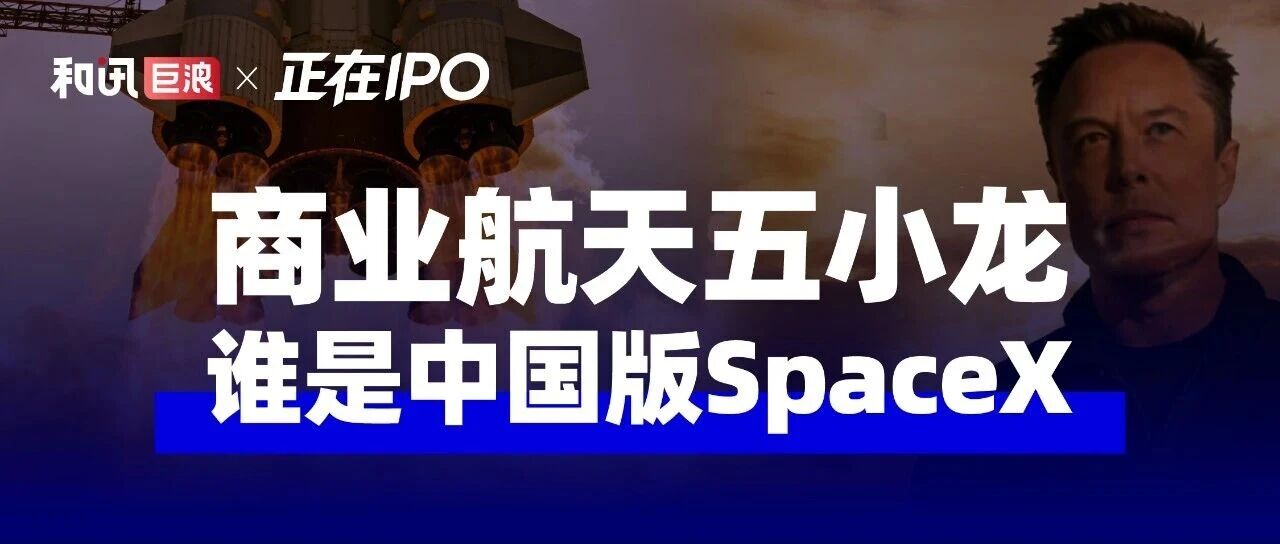
商业航天五小龙,谁会成为中国版SpaceX?
和讯· 2026-03-24 08:55
Core Viewpoint - SpaceX's valuation is approaching $1.8 trillion, significantly outpacing China's five private rocket companies, which collectively exceed 100 billion RMB, highlighting a stark disparity in the commercial space industry [1][2]. Group 1: Challenges in the Rocket Business - The commercial space industry faces three major challenges: high cash burn rates, technological bottlenecks, and capital market perceptions [3][5]. - For instance, Blue Arrow Aerospace reported revenue of 36.43 million RMB in the first half of 2025, but incurred a net loss of 635 million RMB, with R&D expenses alone consuming 360 million RMB, nearly ten times its revenue [4]. Group 2: SpaceX's Success Factors - SpaceX's success is attributed to its ability to create a profitable ecosystem through its Starlink satellite service, which is projected to generate $15.6 billion in revenue by 2026, significantly contributing to its valuation [13]. - The company has also innovated in cost reduction, achieving a marginal launch cost of approximately $15 million through complete rocket reuse, which allows for a gross margin of around 68% after five missions [14]. Group 3: China's Five Dragons' Potential - The five private rocket companies in China, referred to as the "Five Dragons," have a combined valuation that is only 0.8% of SpaceX's, indicating a need for significant advancements to close this gap [2][9]. - These companies are focusing on developing reusable liquid rockets, with Blue Arrow aiming for a launch cost below 20,000 RMB per kilogram, which is one-fifth of traditional rocket costs [16]. Group 4: Market Dynamics and Future Outlook - The Chinese market is characterized by a clear demand for satellite launches, with government projects like the "National Network Constellation" and "Thousand Sails Constellation" expected to create a launch market worth approximately 26.8 billion RMB by 2026 [9]. - The unique advantages of China's supply chain may allow for competitive pricing, with costs potentially decreasing by 50% in the next 3-5 years as reusable technology matures [16][17]. Group 5: Competitive Landscape - The competition among China's private rocket companies is not just about speed but also about who can establish a sustainable business model akin to SpaceX's [18]. - Each company has its unique strengths, such as Blue Arrow's full control over the production chain, Tianbing's use of 3D printing technology, and Zhongke Aerospace's deep technical expertise [19].
2026年建筑春季投资策略:寻找科技产业链中高价值/高通胀/高壁垒环节的高弹性引领者
GUOTAI HAITONG SECURITIES· 2026-03-24 08:27
Investment Rating - The report provides a positive investment rating for the AI industry, indicating strong growth potential and opportunities for investment [12][28]. Core Insights - The AI industry is projected to grow significantly, with an expected market size of 1.2 trillion by 2030, reflecting a compound annual growth rate (CAGR) of 19% from 2026 [5][12]. - The report highlights the increasing demand for AI chips, servers, and related infrastructure, driven by advancements in AI applications across various sectors such as finance, telecommunications, and healthcare [6][20]. - The integration of AI technologies in industries like autonomous driving, smart logistics, and entertainment is expected to enhance operational efficiencies and create new revenue streams [6][20]. Summary by Sections Industry Overview - The AI industry is characterized by a robust supply chain, including upstream components like AI chips and servers, midstream infrastructure such as data centers, and downstream applications across multiple sectors [6][20]. - The report emphasizes the importance of IT infrastructure and cooling systems in supporting AI operations, which are critical for maintaining performance and efficiency [6]. Market Trends - The AI market is witnessing a shift towards more energy-efficient solutions, with a focus on reducing power consumption in AI operations, projected to decrease from 8 kW to 5 kW by 2026 [5][12]. - The report notes a significant increase in the adoption of AI technologies, with IDC services expected to grow by 149.1% by 2025, indicating a strong market demand [12]. Financial Projections - The report forecasts substantial revenue growth for key players in the AI sector, with some companies expected to achieve net profit margins exceeding 30% by 2025 [12][28]. - Specific companies within the AI industry are highlighted for their strong financial performance, with projected revenues reaching billions, showcasing the lucrative nature of the market [12][28].
倒计时2天丨任泽平年度预测在即,请拿好新世界的入场券
泽平宏观· 2026-03-24 08:24
Core Viewpoint - The article emphasizes the anticipation and curiosity surrounding AI's transformative impact on the world, as highlighted by the upcoming annual predictions event hosted by Ren Zeping [1][3]. Group 1: Event Overview - The event is invitation-only, with an option for online viewing for those unable to attend in person [2]. - Attendees can expect a four-hour presentation where Ren Zeping will unveil the "Top 10 Annual Predictions for 2026," aiming to distill complex phenomena into underlying logic and identify unseen turning points [3][4]. Group 2: Historical Context and Impact - Ren Zeping's annual predictions have gained significant influence since their inception in 2022, becoming a notable annual event with a massive reach [7][8]. - Previous predictions have included concepts like "New Infrastructure" and "Confidence Bull Market," which have been validated over time, achieving over 10 million views on single platforms and a total online audience exceeding 30 million [8]. Group 3: Key Predictions for 2026 - The predictions will cover various topics, including: - The true drivers behind the "Confidence Bull Market" during a global monetary easing cycle [9]. - The onset of a new decade of upward trends and the implications of AI as a transformative force rather than a mere trend [9]. - The potential for AI to revolutionize productivity and everyday life through advancements like autonomous driving and AI-assisted healthcare [9]. - China's competitive position in the AI race, leveraging its market scale and supply chain advantages [9]. - The ethical considerations surrounding technology and its impact on employment [9]. Group 4: Specific Predictions - The predictions include: - A new cycle characterized by significant technological advancements in AI, renewable energy, and other sectors [15][21]. - A shift in corporate strategies from export to global integration, emphasizing localization [17]. - The emergence of a "post-real estate era" with market stabilization and urbanization trends [24]. - Addressing demographic challenges such as aging populations and low birth rates, focusing on opportunities in the silver economy [26].