多资产配置

Search documents
汇丰晋信基金总经理李选进,最新发声!
中国基金报· 2025-12-30 01:50
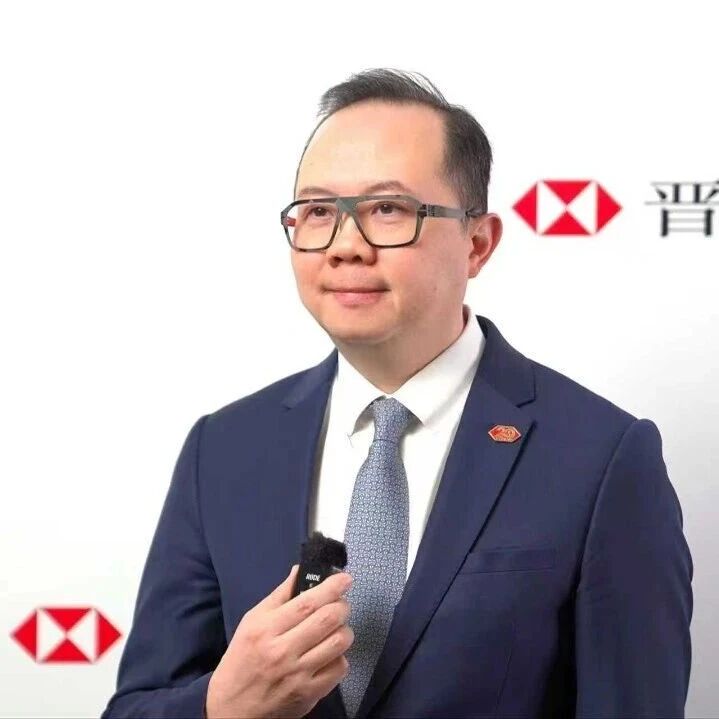
Core Viewpoint - The core philosophy of HSBC Jintrust Fund is to "make investment simpler," emphasizing a long-term perspective in investment strategies and investor experience [2][5][29]. Group 1: Company Philosophy and Development - HSBC Jintrust Fund has maintained a consistent commitment to "long-termism" over its 20-year history, focusing on sustainable investment systems and long-term investor needs [5][7]. - The company emphasizes the importance of clear product positioning and consistency in investment style, ensuring that products align with investor expectations [7][8]. - As of September 30, 2025, the company managed assets totaling 56.16 billion yuan, with equity assets amounting to 27 billion yuan, placing it in the top third of the industry [8]. Group 2: Investment Performance and Recognition - The majority of HSBC Jintrust's actively managed equity products have shown positive returns since inception, with many ranking in the top 10 across various time frames in Morningstar rankings [8][9]. - The company has been recognized by institutional investors, including insurance asset management firms, for its long-term investment capabilities [9]. Group 3: Research and Investment Framework - HSBC Jintrust has developed a systematic investment research framework that is "explainable, replicable, and predictable," enhancing the investment experience for clients [13][14]. - The investment process includes macro and strategy input, industry research, stock selection, and portfolio construction, all of which are transparent and traceable [14][15]. Group 4: Future Directions and Market Trends - The public fund industry is transitioning from providing "tools" to offering "solutions," focusing on multi-asset allocation and risk management to meet investor needs [18][19]. - HSBC Jintrust aims to enhance its global asset allocation capabilities and is actively developing multi-asset products to cater to both retail and institutional investors [21][22]. - The company recognizes the growing demand for overseas investment among domestic investors and is launching products that align with global asset allocation models [21][22]. Group 5: Talent Development and Organizational Growth - Talent development is identified as a critical area for growth, with a focus on cultivating professionals who can adapt to the evolving investment framework [28]. - HSBC Jintrust is committed to building a diverse and mature talent pool through both internal training and external recruitment [28][29].

中银理财黄党贵:建议提高中长期限产品发行比例 拓宽跨境理财业务
Feng Huang Wang Cai Jing· 2025-12-29 10:48
Core Viewpoint - The chairman of Bank of China Wealth Management, Huang Danggui, emphasized the need for wealth management companies to accelerate their professional and market-oriented transformation to better align with the high-quality development goals of the 14th Five-Year Plan [1][2] Group 1 - Wealth management companies should act as a bridge linking investment and financing more closely, focusing on expanding their positioning based on current conditions, particularly in direct and equity investments, which are currently underrepresented in their portfolios [1] - The development of multi-asset allocation and "fixed income plus" products is essential for enhancing the quality of service to the real economy and providing higher returns to clients in a low-interest-rate environment [1] - Strengthening the layout of medium- to long-term products and developing differentiated services is crucial, as the client base seeks stable returns, and longer product durations can help mitigate market volatility [1] Group 2 - Three suggestions were made for achieving high-quality development in the wealth management industry: optimizing business structure to encourage medium- to long-term products, promoting cross-border wealth management services, and enhancing investment capabilities to diversify product offerings [2]
多资产策略迎“高光时刻” 头部私募展望新一年配置框架
Zhong Guo Zheng Quan Bao· 2025-12-25 21:09
Core Insights - The average return of nearly 1,500 multi-asset strategy private equity products reached 19.55% in 2025, with over 90% achieving positive returns, indicating strong performance in the sector [1] - Leading private equity firms reported returns exceeding 30%, marking a second consecutive year of satisfactory results [1] - The effectiveness of multi-asset strategies has been validated, with a shift in focus from single asset predictions to building resilient investment portfolios for 2026 [3][4] Group 1: Performance and Strategy in 2025 - Multi-asset strategies demonstrated significant effectiveness in 2025, driven by flexible allocation across various asset classes, particularly equities, gold, and industrial metals [2] - The performance of the A-share market, especially in technology stocks, contributed to substantial returns in the equity segment [2] - The evolution of investment philosophy emphasizes the importance of multi-asset allocation over reliance on single asset performance [2] Group 2: Outlook for 2026 - Private equity firms exhibit a cautiously optimistic outlook for 2026, focusing on constructing resilient portfolios amid high asset prices and macroeconomic uncertainties [3] - Key investment themes for 2026 include structural opportunities in emerging industries, continued demand for precious metals, and selective opportunities in industrial metals and agricultural products [3] - The investment approach will prioritize risk management and scenario simulation to navigate potential market volatility [3][4] Group 3: Industry Evolution and Trends - The multi-asset strategy sector is maturing, with increased recognition and participation from high-net-worth individuals through wealth management channels [6] - The net subscription of multi-asset strategies has improved significantly in 2025, reflecting a deeper understanding of their value in risk reduction and adaptability [6] - Domestic private equity firms are developing unique competitive advantages by enhancing their investment capabilities and strategies, focusing on local market conditions [6][7]
2025年指数投资回忆录:锚点里的价值碎片
Sou Hu Cai Jing· 2025-12-25 01:13
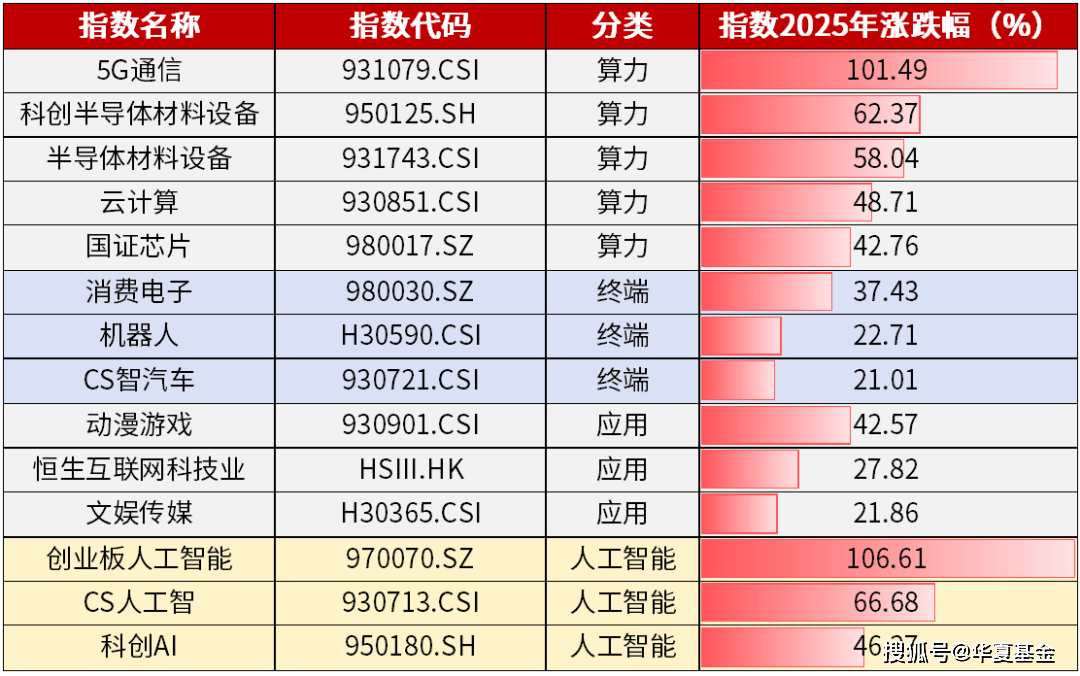
Core Insights - 2025 is recognized as a significant year for assets, with a shift in investment strategies focusing on industry trends, valuation restructuring, and global pricing power [1] - Understanding indices is crucial for grasping market consensus during specific periods, making it an essential skill for investors [1] Group 1: Seasonal Highlights - Spring marked a technological revaluation led by AI breakthroughs, reshaping market narratives around Chinese technology [2] - The AI and technology-related indices saw substantial annual gains, with the 5G communication index increasing by 101.49% and the AI-focused indices also performing strongly [3][6] - The introduction of new products related to the Sci-Tech Innovation Board simplified access to technology investments for the general public [4] Group 2: Mid-Year Developments - Mid-year saw a focus on dividend strategies, with low-volatility dividend indices gaining recognition for their stability and reliability [7] - The market acknowledged the value of dividends that do not rely on macroeconomic acceleration, with various categories of dividend assets being tailored to meet different investor needs [7] Group 3: Autumn Trends - Autumn brought renewed focus on fundamentals as US-China tariff negotiations began, with the AI industry and traditional sectors showing improved profitability [8] - The A-share market experienced significant trading volumes, with daily transactions exceeding 30 trillion, marking a ten-year high [8] Group 4: Year-End Reflections - By year-end, the Shanghai Composite Index briefly surpassed 4000 points, but concerns over AI sector bubbles and fluctuating monetary policy led to increased market volatility [9] - The A500 core index emerged as a balanced investment option, appealing to investors seeking stability amid market fluctuations [9] Group 5: Investment Trends - Industry-specific ETFs became the most attractive investment area, driven by technology and cyclical sectors, particularly in AI, semiconductors, and resource stocks [14] - The Hong Kong stock market attracted investor interest due to its differentiated value propositions, suggesting a strategy of gradual investment in undervalued assets [15] - Gold prices surged over 70% during the year, highlighting the importance of rational asset allocation in gold investments [16] - Broad-based indices like the CSI A500 and CSI 300 delivered solid returns, emphasizing the effectiveness of a balanced investment strategy [17] Group 6: Bond Market Insights - The bond ETF market saw significant growth, reflecting a strong demand for stable, low-risk assets despite the diminishing tax advantages of government bonds [18] Group 7: Future Outlook - The consensus around indices indicates a collective understanding of market dynamics, with ETFs experiencing rapid growth [19] - The narrative around AI technology is expected to continue evolving, with potential applications across various industries anticipated in 2026 [22] - The Hong Kong market presents promising opportunities, particularly in technology, consumer goods, and high-dividend stocks [22] - A diversified and balanced asset allocation strategy is projected to become increasingly important in the face of market uncertainties [23]
林伟斌的指数投资分享:在风格轮动中,构建高性价比组合
雪球· 2025-12-24 08:57
Group 1 - The core viewpoint of the article emphasizes the growing importance of index investment and the need for investors to establish a robust allocation framework amidst style rotation [1] - The development of index investment in China has significantly progressed, with ETFs becoming mainstream investment tools, surpassing active funds in holdings as of Q3 2024 [4][5] - The total scale of ETFs in China reached approximately 5 trillion yuan, with stock ETFs accounting for around 4 trillion yuan, representing about 3% of the total A-share market capitalization [4] Group 2 - The article discusses the increasing market differentiation, highlighting the performance of the ChiNext index compared to traditional large-cap indices, suggesting that investors should consider using style factor indices to enhance returns [6][8] - Style factor indices, which blend active and passive investment strategies, can provide higher excess returns by breaking the limitations of traditional market-cap-weighted indices [7][8] - The analysis of over 1,000 ETFs indicates that style factor indices exhibit superior mean and variance performance, suggesting better risk-adjusted returns [7] Group 3 - The article outlines a simple and practical configuration logic for utilizing style factors, emphasizing the importance of optimizing stock selection logic and avoiding pitfalls like value traps [9][10] - A recommended strategy for multi-factor combinations is the "constant proportion rebalancing" approach, which can potentially outperform the CSI 300 index through systematic adjustments [10] - The complexity behind index investment is acknowledged, with a focus on the intricate stock selection logic and asset allocation strategies that can lead to excess returns [10] Group 4 - Looking ahead, the article posits that China's capital market has entered a phase of high-quality development in index investment, driven by the maturation of market participants and the application of AI technology [11] - Continuous policy support is expected to enhance market vitality and attract more investors to index investment, particularly in the ETF market [11] - The article aims to encourage a deeper understanding of style factor indices among investors, promoting the construction of resilient investment portfolios in the evolving ETF era [12]

岁末年初,如何让投资不在波动中“失焦”?
Zhong Guo Zheng Quan Bao· 2025-12-22 22:45
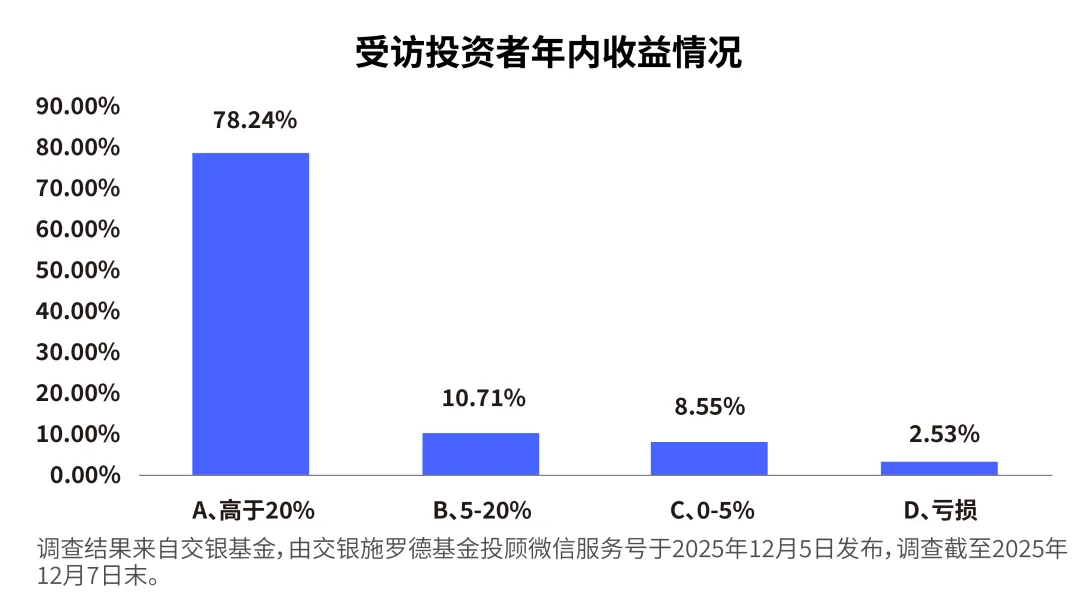
Core Insights - The public fund industry in 2025 is characterized by a "return to the original intention," emphasizing the importance of investor needs and experiences, driven by regulatory reforms and new product offerings [1][2][3] Industry Developments - The China Securities Regulatory Commission (CSRC) issued an action plan for high-quality development in the public fund industry, marking a clear direction for industry reforms [1] - The introduction of new floating fee rate funds aligns fund managers' interests with those of investors, breaking away from the traditional fixed income model [1] - The number of newly launched public fund products exceeded 1,370, with a total scale surpassing 1 trillion yuan, reflecting a year-on-year growth of nearly 35% [2] Performance Metrics - Active equity funds focusing on the equity market achieved an average return of 27.48%, significantly outperforming broad market indices [2] - The "fixed income plus" (固收+) products showed improved risk-return profiles, with a 2.3 percentage point increase in yield and a 0.5 percentage point reduction in maximum drawdown [2] Investor Sentiment - A survey indicated that 88.96% of investors achieved over 5% returns this year, fostering a positive feedback loop between performance and trust in fund managers [3] - Many investors expressed a desire for personalized asset allocation advice to navigate extreme market conditions [12] Asset Allocation Strategies - The "fixed income plus" strategy balances defensive and offensive positions, primarily investing in fixed income assets while also capturing equity opportunities [12][14] - The complexity of asset allocation requires professional management, as public "fixed income plus" products leverage expert teams to navigate market dynamics [13][14] Conclusion - The public fund industry aims to simplify investment for individuals, allowing them to benefit from professional management and diversified asset allocation strategies, thereby enhancing their investment experience as they approach 2026 [14]
易方达基金林伟斌谈如何使用风格因子指数构建投资组合
Zheng Quan Ri Bao Wang· 2025-12-22 09:47
Core Insights - The article discusses the increasing importance of index investment strategies and how to build a robust allocation framework amid style rotation, as highlighted by Lin Weibin, General Manager of the Index Investment Department at E Fund [1] Group 1: Industry Trends - Lin Weibin predicts that the next decade will be a golden period for ETF development in China, estimating that if the total market capitalization of A-shares achieves a 5% annual growth rate, it could reach 200 trillion yuan by 2035 [1] - He references the U.S. market's 10% ETF penetration rate, suggesting that the scale of stock ETFs in China could exceed 20 trillion yuan, and with contributions from bonds, gold, and commodities, the overall ETF market could reach 30 trillion yuan, positioning it among the global leaders [1] Group 2: Style Factors and Investment Logic - Lin Weibin defines style factors as a middle ground between active and purely passive investment, aligning with the Smart Beta concept in overseas markets, which aims to achieve excess returns through clear, rule-based stock selection logic [1] - He emphasizes that the main domestic style factors include dividend, low volatility, growth, value, and quality [2] Group 3: Practical Application of Style Factors - For single-factor usage, Lin suggests optimizing stock selection logic, such as avoiding the value trap by excluding stocks with unstable or negative ROE, and focusing on high dividend and free cash flow indicators [2] - In multi-factor portfolio configuration, he recommends a "constant proportion rebalancing" strategy, such as a 60% value and 40% growth mix, to outperform the CSI 300 index through regular adjustments [2] Group 4: Future of Index Investment - Lin asserts that index investment is not a "fool's investment," as it involves complex stock selection logic and asset allocation strategies [3] - He believes that China's capital market has entered a high-quality development phase for index investment, with participants evolving from simple beta investments to more complex factor investing and multi-asset allocations, further enhanced by AI technology [3]
年内九家银行赎回优先股,权益类理财难寻“代餐”
2 1 Shi Ji Jing Ji Bao Dao· 2025-12-18 11:16
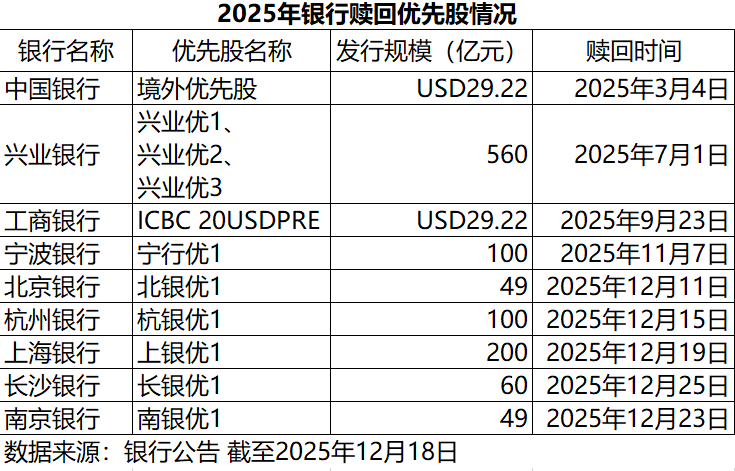
Group 1 - The core viewpoint of the articles indicates that since 2025, there has been an accelerated redemption of bank preferred shares, with several banks announcing their plans to redeem these shares, leading to a shrinking market for preferred stocks, particularly in the banking sector [1][4][7] - As of December 18, 2023, a total of 55 preferred shares have been issued, raising a total of 906.55 billion yuan, with bank preferred shares accounting for 35 of these, totaling 839.15 billion yuan [1][4] - The redemption trend is primarily driven by banks seeking to optimize financing costs, with significant redemptions occurring this year compared to only two last year [4][7] Group 2 - The preferred shares are a major component of bank wealth management products, with over 90% of equity investments in these products being allocated to preferred shares [2][10] - Due to the shrinking market for preferred shares, wealth management products are now looking for alternative investment options, as the supply of preferred shares diminishes [3][10] - The issuance of perpetual bonds has surged, with 69 perpetual bonds issued this year, totaling 821.8 billion yuan, indicating a shift in capital-raising strategies among banks [8][12] Group 3 - The redemption of preferred shares must comply with capital adequacy requirements, necessitating prior approval from regulatory authorities to ensure banks maintain sufficient capital levels [8] - The fixed and floating interest rates of preferred shares are subject to adjustments, with some banks reducing their dividend rates in response to changing market conditions [7] - The overall market for equity assets in bank wealth management has been declining, with the proportion of equity assets dropping from 4.8% in 2020 to around 2% by the end of 2023 [10][11]





东方证券:2026年多资产配置展望—当低利率邂逅风偏回归 资产配置被动为盾 主动为矛
Xin Lang Cai Jing· 2025-12-14 07:14
Core Insights - The asset allocation for 2026 faces both long-term and short-term challenges, with a transition into a low-interest-rate environment impacting the effectiveness of traditional stock-bond hedging strategies [1][4] - There is a shift in investor risk appetite, moving from extremes towards a more balanced approach, influenced by increasing confidence in China's governance and the positive outlook for the technology sector [1][4] Long-term and Short-term Challenges - Long-term, the low-interest-rate environment will diminish the historical stock-bond hedging effectiveness [1][4] - Short-term, the transition between old and new economic drivers has led to polarized risk preferences among investors, which are now stabilizing [1][4] Focus on Income Generation and Risk Reduction - In a low-interest-rate context, the focus should be on income generation through diversification into two asset categories and risk reduction using three specific tools [1][4] - Historical examples from mature markets, such as the Yale Endowment and Bridgewater, highlight the importance of expanding into overseas and alternative assets for income generation [1][4] Strategies for Low and High Volatility - For low volatility strategies, there is an emphasis on domestic trading opportunities in fixed income and overseas yield opportunities, while equity investments are shifting from dividends to mid-cap blue chips [5] - High volatility strategies should focus on risk control, including diversifying overseas assets beyond US stocks and reallocating some technology investments in A-shares to mid-cap blue chips [5] Passive and Active Management Approaches - The asset allocation strategy for 2026 is characterized by a "passive as shield" approach, focusing on diversification through passive asset allocation, including commodities like gold and alternative assets such as REITs [6] - The "active as spear" approach emphasizes active management in low volatility strategies for flexibility and high volatility strategies for risk mitigation, including style rotation in equities and seeking active trading opportunities in bonds [6]

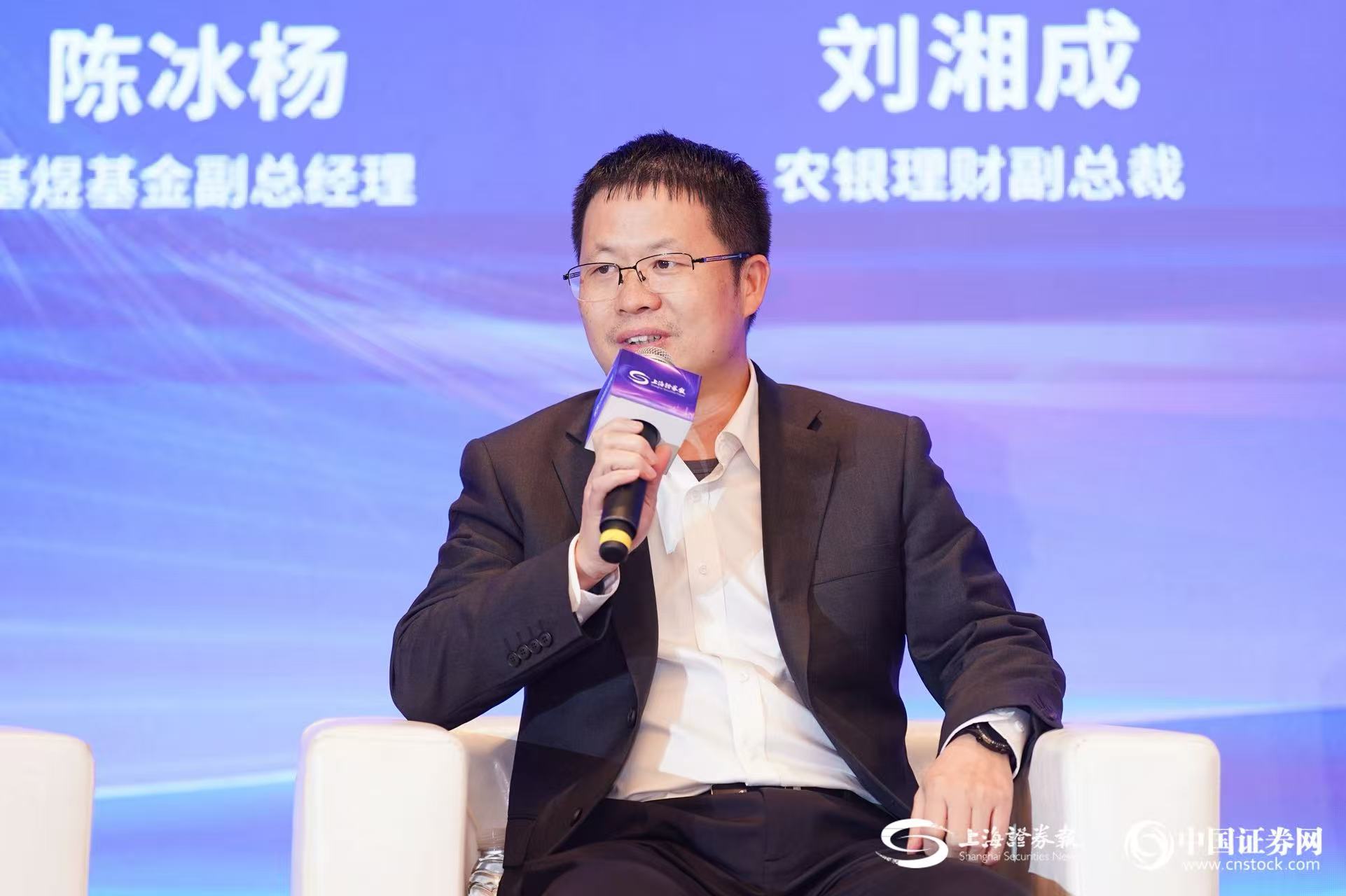
农银理财副总裁刘湘成:多资产配置已成为资管机构的必要选择
Xin Lang Cai Jing· 2025-12-12 14:13
来源:上海证券报·中国证券网 上证报中国证券网讯(记者 张欣然)12月12日,由上海证券报与交通银行上海市分行联合主办、基煜基金全程协办的"上证·大虹桥金融高质量发展大会"在 上海长宁举办。 农银理财副总裁刘湘成在会上表示,当下全球经济周期、地缘政治环境及宏观变量的不确定性显著上升,使得单一资产在风险抵御与收益表现方面愈发不 足。面对不确定性和低利率的环境,仅依赖单一资产难以为投资者带来稳定且可持续的回报,多资产配置已成为资管机构的必要选择。 农银理财副总裁刘湘成在会上表示,当下全球经济周期、地缘政治环境及宏观变量的不确定性显著上升,使得单一资产在风险抵御与收益表现方面愈发不 足。面对不确定性和低利率的环境,仅依赖单一资产难以为投资者带来稳定且可持续的回报,多资产配置已成为资管机构的必要选择。 农银理财副总裁刘湘成 刘湘成表示,从金融模型与风险管理的基本原理来看,只有借助多类资产之间的低相关性,才能有效降低组合波动,使投资体验更为平稳。当前的市场环境 也进一步强化了这一需求。过去数年,我国利率明显下行,当前整体维持在偏低水平,与五年前相比,基于固定收益资产所能获得的"安全垫"显著降低,这 使传统固收策略获取稳 ...