大规模设备更新

Search documents
【新华解读】同比增速转正!8月份我国规上工业企业利润缘何向好?
Xin Hua Cai Jing· 2025-09-27 10:33
Core Insights - The profit growth of China's industrial enterprises has turned positive, signaling an improvement in the industrial economy [1][5] - In August, the profit of large-scale industrial enterprises increased by 20.4% year-on-year, marking a significant recovery from a decline of 1.5% in July [1][2] - The positive trend is attributed to both base effect from last year's natural disasters and the effectiveness of macroeconomic policies [1][2] Group 1: Profit and Revenue Trends - From January to August, the profit of large-scale industrial enterprises grew by 0.9%, reversing a 1.7% decline in the first seven months [1] - The revenue of large-scale industrial enterprises increased by 2.3% year-on-year from January to August, with August's revenue growth accelerating to 1.9% [2][4] - The profit margin for large-scale industrial enterprises improved to 5.83%, up by 0.90 percentage points year-on-year [5] Group 2: Policy Impact - The "anti-involution" policy has positively influenced industrial pricing and competition, contributing to improved profit margins [3][4] - The ongoing construction of a unified national market and large-scale equipment updates are key factors driving the recovery of industrial enterprise profits [1][5] - Local governments have actively supported enterprises, which has also aided in improving profit data for August [4][5] Group 3: Industrial Production and Price Dynamics - The Producer Price Index (PPI) ended an eight-month decline, remaining flat month-on-month in August, with a year-on-year decrease of 2.9% [2][3] - Industrial added value grew by 6.2% year-on-year from January to August, with August's growth at 5.2% [2] - Equipment manufacturing saw an 8.1% increase in added value, significantly outpacing the overall industrial growth rate [3][4] Group 4: Future Outlook - Experts anticipate further improvement in profits for large-scale industrial enterprises, driven by seasonal consumption peaks and government support measures [5] - The upcoming "Golden September and Silver October" period is expected to boost consumer spending, potentially increasing orders for industrial enterprises [5]
前8月广东太阳能电池增长21.9%
Shang Hai Zheng Quan Bao· 2025-09-22 08:37
Economic Overview - In the first eight months, Guangdong's industrial added value increased by 2.2% year-on-year, with mining growing by 0.5%, manufacturing by 2.6%, and the electricity, heat, gas, and water production and supply sector declining by 1.8% [1] - The computer, communication, and other electronic equipment manufacturing sector saw a growth of 7%, electrical machinery and equipment manufacturing grew by 6.5%, and automobile manufacturing increased by 8.3% [1] Product Performance - The robotics and drone industries showed strong growth, with industrial robots, service robots, and civilian drones' production increasing by 32.1%, 17.3%, and 54.7% respectively [1] - Clean energy products also performed well, with wind turbine units, solar cells (photovoltaic cells), and new energy vehicles' production increasing by 43.3%, 81.5%, and 21.9% respectively [1] Fixed Asset Investment - Fixed asset investment in Guangdong decreased by 12.4% year-on-year in the first eight months, but investment in equipment and tools increased by 0.8% due to large-scale equipment renewal policies [2] - Investment in the livelihood sector saw significant growth, with railway transportation investment up by 9.7%, water transportation by 46.1%, air transportation by 37.2%, and electricity and heat production and supply by 13.2% [2] - Industrial investment accounted for 37.8% of total investment, with industrial technological transformation investment growing by 0.4%, representing 35.5% of industrial investment, an increase of 3.7 percentage points compared to the same period last year [2] Real Estate Market - Real estate development investment declined by 19%, and the sales area of commercial housing decreased by 11.7%, narrowing by 16.8 and 10.1 percentage points compared to the same period last year and the entire previous year respectively [2] Economic Outlook - The Guangdong Provincial Bureau of Statistics indicated that while macro policies are working together to stabilize the economy, the external environment remains complex and severe, and domestic effective demand is still insufficient, necessitating continued efforts to consolidate and enhance the economic recovery [2]

广东发布前8月经济数据 经济运行总体平稳
Nan Fang Ri Bao Wang Luo Ban· 2025-09-22 07:56
Economic Overview - In August, Guangdong's economy showed overall stability despite a complex external environment and insufficient domestic demand [1] - From January to August, the industrial added value above designated size increased by 2.2% year-on-year, with the manufacturing sector growing by 2.6% [1][2] Key Industries Performance - The computer, communication, and other electronic equipment manufacturing industry saw a 7.0% increase in added value, while the automotive manufacturing industry grew by 8.3% [1][2] - The production of industrial robots, service robots, and civilian drones increased by 32.1%, 17.3%, and 54.7% respectively [2] - Clean energy products also showed strong growth, with wind turbine units, solar cells, and new energy vehicles increasing by 43.3%, 81.5%, and 21.9% respectively [2] Consumer Market Insights - The total retail sales of consumer goods in Guangdong increased by 3.2% year-on-year in the first eight months, with urban consumption growing by 3.4% and rural consumption by 1.3% [2][3] - Retail sales through public networks grew by 17.9%, accounting for 43.7% of total retail sales, an increase of 5.4 percentage points from the previous year [3] Service Sector Growth - The revenue of the service industry above designated size reached 3.38 trillion yuan, marking a 7.0% year-on-year increase [4] - Key sectors such as information transmission, software and IT services, and transportation services reported revenue growth of 9.2%, 6.9%, and 8.7% respectively [4] Investment Trends - Fixed asset investment in Guangdong decreased by 12.4% year-on-year, with significant growth in investments in the transportation sector, including rail and water transport [4][5] - Investment in research and experimental development increased by 15.4%, indicating a focus on innovation [5] - Investment in modern service industries, particularly in internet and related services, grew by 63.8% [5]
2025年8月经济数据点评:充分释放政策效应,经济仍偏平稳
Shanghai Securities· 2025-09-16 12:21
Economic Performance - In August, the industrial production growth rate was 5.2%, a decrease of 0.5 percentage points compared to the previous month[10] - Fixed asset investment from January to August was 326,111 billion CNY, with a year-on-year growth of 0.5%, down from 1.6%[10] - Retail sales of consumer goods in August totaled 39,668 billion CNY, growing by 3.4% year-on-year, a decline of 0.3 percentage points from the previous month[10] Investment Trends - Infrastructure investment decreased by 1.2 percentage points, while manufacturing investment growth fell by 1.1 percentage points[18] - Real estate development investment from January to August was 60,309 billion CNY, down 12.9% year-on-year, with the decline expanding by 0.9 percentage points[19] - The first industry investment grew by 5.5%, while the second industry saw a growth of 7.6%[18] Consumption Patterns - Urban retail sales grew by 3.2%, while rural retail sales increased by 4.6% in August[21] - Jewelry sales saw a significant increase, and automotive consumption turned positive after previous declines[22] - The decline in retail sales growth was primarily influenced by a drop in commodity retail sales, despite a rebound in dining consumption[25] Policy Outlook - The macroeconomic policy is expected to remain proactive, with continued support for infrastructure and real estate investments to stabilize the economy[29] - The government aims to effectively release domestic demand potential, which is crucial for economic recovery[29] Risk Factors - Potential risks include worsening geopolitical events, changes in international financial conditions, and unexpected shifts in US-China policies[30]
固投增速下滑加快的逻辑
Xinda Securities· 2025-09-15 15:39
Group 1: Fixed Asset Investment Trends - Fixed asset investment growth has significantly declined, with a cumulative year-on-year increase of only 0.5% in the first eight months of 2025, falling short of market expectations by 0.8 percentage points[5] - The marginal decline in fixed investment growth accelerated in July and August, with both months experiencing a drop exceeding 1 percentage point[5] - The current level of fixed investment growth is at a historical low, positioned at the 1.9th percentile, marking the weakest performance since data collection began, excluding the first three quarters of 2020[6] Group 2: Investment Categories Analysis - All three major categories of fixed investment—manufacturing, infrastructure, and real estate—are experiencing downward trends, with infrastructure investment growth declining due to project implementation delays and adverse weather conditions[8] - Equipment purchase investment remains the only significant support for fixed investment, with a year-on-year growth of 14.4% in the first eight months of 2025, contributing 2.1 percentage points to overall fixed investment growth[8] - Construction and other investment categories are in negative territory, with construction investment down by 2.2% and other investments down by 0.9%[8] Group 3: Transition in Investment Types - The type of fixed investment is shifting from high-growth expansion projects to new construction, with expansion investments now entering negative growth at -5.6% year-on-year[9] - New construction investment, while currently the highest growth category, only increased by 6.7% year-on-year in the first seven months, indicating limited potential for acceleration[9] - The decline in high-growth expansion investments, coupled with insufficient new construction activity, is likely to exacerbate the decline in overall fixed investment growth[9] Group 4: Risks and Consumer Confidence - Consumer confidence recovery is slow, and the implementation of policies is not meeting expectations, posing risks to investment and consumption[24]
民间投资为何持续下滑?国家统计局回应
Jin Shi Shu Ju· 2025-09-15 10:17
Core Insights - The growth rate of private investment in China has been negative for three consecutive months, with a decline of 2.3% year-on-year from January to August [2][5] - The overall fixed asset investment (excluding rural households) increased by only 0.5% year-on-year during the same period [2] Private Investment Trends - Real estate development investment, which constitutes a significant portion of private investment, decreased by 16.7%, dragging down the overall private investment growth by 4.5 percentage points [5] - Excluding real estate development, private project investment grew by 3% year-on-year, outpacing the overall investment growth [5] Manufacturing Sector Performance - Private investment in the manufacturing sector increased by 4.2% year-on-year, representing 40.6% of total private investment, which is an increase from previous periods [5] - Among 31 major manufacturing industries, 16 experienced double-digit growth, with notable increases in automotive manufacturing (22.6%) and transportation equipment manufacturing (16.2%) [5] High-Tech and Emerging Industries - Private investment in high-tech industries showed significant growth, with information services up by 26.7% and professional technical services up by 17.6% year-on-year [5] Infrastructure Investment - Private investment in infrastructure rose by 7.5% year-on-year, exceeding the overall infrastructure investment growth by 5.5 percentage points [6] - Notable growth was observed in the electricity, gas, and water production and supply sectors, which saw a 23.5% increase [6] Policy and Future Outlook - The implementation of the "Private Economy Promotion Law" signals strong support for private investment, enhancing the investment environment and encouraging participation in major national projects [7] - The resilience and adaptability of private enterprises are highlighted as key factors for future investment growth, with a focus on high-quality development and innovation in green and future industries [7]


为经济增长与产业升级注入强劲动力
Ren Min Ri Bao· 2025-09-03 06:04
Core Viewpoint - The large-scale equipment upgrade policy implemented over the past year has effectively driven industries towards high-end, intelligent, and green upgrades, laying a solid foundation for high-quality economic development and new productive forces [1][2]. Group 1: Policy and Economic Context - China is currently in the fourth equipment investment cycle, with significant demand for equipment upgrades [1]. - The large-scale equipment update focuses on optimizing industries and promoting green development, aiming for systematic upgrades across the entire industrial chain and significant improvements in production efficiency and service quality [1]. - The policy emphasizes new industrialization, urbanization, transportation, and education, forming a comprehensive and multi-layered equipment update system [1]. Group 2: Market and Government Interaction - The policy combines effective market mechanisms with proactive government involvement, utilizing fiscal subsidies, tax incentives, and financial support to lower costs and risks for enterprises [1]. - Encouragement for collaboration between enterprises and research institutions is aimed at overcoming technical challenges and accelerating innovation and technology transfer [1]. Group 3: Investment and Economic Growth - Equipment updates play a crucial role in stabilizing growth by motivating enterprises to renew production and energy equipment, thus expanding investment scale [2]. - From April 2024 to July 2025, the procurement amount for machinery and equipment by industrial enterprises is expected to increase by 9.8% year-on-year, with significant growth in the information transmission and technology service sectors [2]. - The policy has led to the establishment of 1,382 new national-level green factories and 123 green industrial parks, with green factories accounting for approximately 20% of total manufacturing output value, an increase of 2 percentage points from the previous year [2]. Group 4: Economic Circulation - The equipment update has facilitated a smoother domestic economic cycle, creating a positive interaction between policy-driven demand release and industrial upgrades [2]. - The combined effects of the "two new" policies have directly stimulated consumer demand growth, which in turn supports supply-side enhancements, leading to a 5.8% year-on-year increase in manufacturing sales revenue from April 2024 to July 2025 [2].
深度观察丨大规模设备更新带来什么
Ren Min Ri Bao· 2025-09-03 05:49
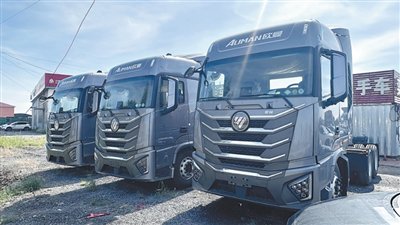
Core Insights - The implementation of a new round of large-scale equipment updates is a significant measure to promote high-quality development, expand effective investment, facilitate industrial upgrading, promote green development, and improve people's lives [1] Policy Impact - The large-scale equipment update policy has led to substantial outcomes, with the National Development and Reform Commission stating that by 2025, special long-term bonds will support approximately 8,400 projects, driving total investment exceeding 1 trillion yuan [1][3] - The support for equipment updates in key industrial sectors can reach up to 15% of total investment, with energy-using equipment support potentially reaching 20% [4][9] Financial Support - Central fiscal policies provide interest subsidies of 1.5 percentage points on bank loans for eligible entities undertaking equipment updates, with local and central governments sharing the funding burden [4] - The People's Bank of China has established a re-lending program for technological innovation and equipment upgrades, with a total quota of 800 billion yuan [4] Local Initiatives - Local governments have creatively implemented policies, such as Jiangsu's "Transportation Loan" fiscal interest subsidy, benefiting various transportation projects with significant financial support [5] Application Process - The application process for subsidies is streamlined, with companies reporting quick approval times for funding, enhancing participation in the equipment update program [6][7] Industry Transformation - The equipment update policy has accelerated industrial transformation, with significant increases in automation and efficiency reported across various sectors, such as automotive and manufacturing [10] - The digital transformation of industrial enterprises has also seen a notable rise, with the penetration rate of digital design tools reaching 85.4% [10] Environmental Focus - The equipment updates are aligned with green initiatives, including the replacement of old transformers and the promotion of energy-efficient vehicles, contributing to sustainability goals [11][12] Public Benefits - The policy extends to public infrastructure, with significant funding allocated for the replacement of aging elevators and improvements in water supply systems, enhancing community welfare [14][15] Recycling and Standards - The initiative includes a focus on recycling and the enhancement of standards, with the re-manufacturing industry seeing substantial growth and the establishment of new standards to guide equipment updates [16][18] Future Directions - The National Development and Reform Commission plans to continue coordinating efforts to ensure effective project implementation and fund management, aiming to maximize the impact of the equipment update policies [19]
大规模设备更新带来什么,产生了哪些成效?
Guo Ji Jin Rong Bao· 2025-09-03 05:36
Core Insights - The implementation of a large-scale equipment update is a significant measure to promote high-quality development, expand effective investment, facilitate industrial upgrading, and enhance green development [10] - The special bonds issued to support equipment updates have led to a total investment exceeding 1 trillion yuan, with approximately 8,400 projects supported [10] Policy Impact - The equipment update policy provides substantial support, with funding covering up to 15% of total investment in key industrial sectors [12] - The policy has resulted in significant financial benefits for companies, such as a transportation company saving nearly 100,000 yuan when updating old trucks [12][16] - Financial support includes interest subsidies on bank loans, with the central government covering a significant portion of costs for old vehicle scrapping and new energy vehicle purchases [13] Implementation and Accessibility - The application process for subsidies has been streamlined, allowing companies to receive funding quickly, often within 20 days [16] - Local governments have creatively adapted policies to suit regional needs, such as Jiangsu's "transport loan" program, which has significantly reduced financing costs for transportation companies [15] Economic Growth and Investment - The equipment update policy has contributed to stabilizing investment and growth, with a reported 15.2% year-on-year increase in equipment investment from January to July 2024 [18] - The total number of equipment updates in key sectors is expected to exceed 20 million units in 2024, indicating a robust response to the policy [18] Technological Advancement - Companies are increasingly adopting automation and intelligent equipment, leading to improved production efficiency and cost savings [19] - The policy has facilitated the digital transformation of industrial enterprises, with a significant increase in the adoption of digital design tools and CNC technology [20] Environmental Focus - The equipment update initiative emphasizes green technology, with significant progress in replacing outdated energy-consuming equipment [21] - The National Grid has completed energy efficiency upgrades for over 240,000 transformers, enhancing energy conservation efforts [22] Community Benefits - The policy extends to public infrastructure, with substantial funding allocated for updating residential elevators and improving public utilities, benefiting millions of households [23] - The initiative aims to enhance the quality of life for citizens by addressing aging infrastructure in essential services [24] Circular Economy and Standards - The promotion of recycling and circular economy practices is integral to the equipment update strategy, with significant advancements in the re-manufacturing industry [25][26] - The establishment of new standards for equipment efficiency and performance is underway, supporting the transition to high-quality development [28]
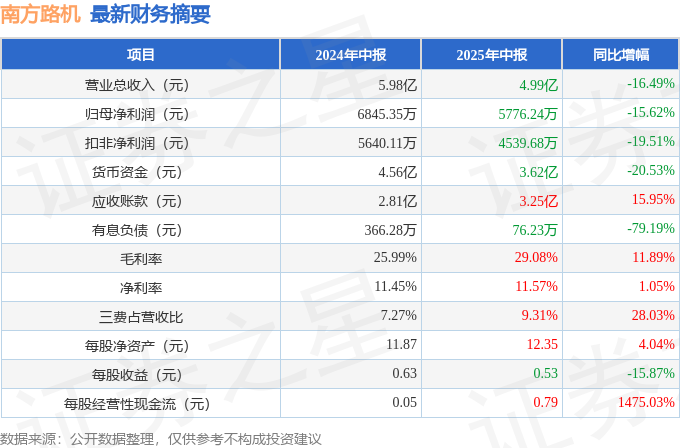
南方路机2025年中报简析:净利润同比下降15.62%,盈利能力上升
Zheng Quan Zhi Xing· 2025-08-30 23:27
Financial Performance - The company reported a total revenue of 499 million yuan for the first half of 2025, a decrease of 16.49% year-on-year [1] - The net profit attributable to shareholders was 57.76 million yuan, down 15.62% year-on-year [1] - The gross margin increased by 11.89% to 29.08%, while the net margin rose by 1.05% to 11.57% [1] - Total expenses (selling, administrative, and financial) amounted to 46.51 million yuan, representing 9.31% of revenue, an increase of 28.03% year-on-year [1] - Earnings per share decreased by 15.87% to 0.53 yuan, while operating cash flow per share surged by 1475.03% to 0.79 yuan [1] Financial Changes - Accounts receivable increased by 15.95% to 325 million yuan, while cash and cash equivalents decreased by 20.53% to 362 million yuan [1][3] - The company experienced a significant reduction in interest-bearing liabilities, down 79.19% to 762,300 yuan [1] - Deferred tax liabilities increased by 49.46% due to differences in the fair value of trading financial assets [7] Business Model and Strategy - The company relies heavily on research and development to drive its performance [10] - Plans for business expansion in 2025 include entering markets in Central and South America, Europe, and Africa, as well as launching new products in mud treatment and smart products [11] - The company aims to achieve carbon neutrality in its operations by 2050 and has set a roadmap for reducing emissions across its value chain [12] Market Position and Outlook - The company’s return on invested capital (ROIC) was 6.38% last year, indicating average capital returns [8] - The company is expected to benefit from national policies promoting large-scale equipment updates, particularly in its concrete mixing and waste treatment equipment segments [16] - Customer feedback on the newly launched special sand and mortar mixing machine has been positive, highlighting improvements in production efficiency and cost control [14]