
并购整合

Search documents
美的集团董事长方洪波:以丹纳赫为镜,锻造企业韧性
首席商业评论· 2025-09-24 03:50
Core Insights - The article discusses the challenges faced by Chinese companies in a highly competitive environment characterized by homogenization, price wars, and rising costs, emphasizing the need for a systematic methodology to navigate these challenges [2] - It highlights the "Danaher Model," which is based on the Danaher Business System (DBS), showcasing how it has been successfully applied in various acquisitions and operational improvements [2][4] - The narrative underscores the importance of transforming lean management from a tool into a core competency, as demonstrated by Midea Group's implementation of the Midea Business System (MBS) [4][5] Group 1: Challenges in the Business Environment - The business landscape in 2025 is marked by unprecedented restructuring, with companies facing common anxieties related to profit erosion and growth stagnation [2] - The failure rate of mergers and acquisitions remains high, necessitating a robust approach for companies to survive and thrive [2] Group 2: The Danaher Model - The Danaher Group's early acquisitions were strategic, focusing on undervalued assets, but its transformation was driven by a strategy of industry upgrade through systematic acquisitions [7] - The evolution of Danaher from diversified acquisitions to a focus on healthcare illustrates that a company's boundaries are defined by its core capabilities rather than just capital [7] Group 3: Implementation of Lean Management - Midea Group's journey in adopting the DBS framework led to significant improvements in operational efficiency, with an average annual efficiency increase of approximately 15% across its factories [5] - The establishment of the MBS capability center and the development of over 60 lean management educational materials have empowered both domestic factories and suppliers [5] Group 4: Globalization Strategy - Danaher’s globalization strategy combines internal and external growth, emphasizing the importance of localizing research and development to meet local demands [8] - Midea's establishment of 17 R&D centers and 22 manufacturing bases abroad reflects a commitment to building a "second home market" through an Own Branding & Manufacturing (OBM) strategy [8] Group 5: Lessons for Chinese Enterprises - The book serves as a high-density management tool, addressing key questions about achieving capability integration through acquisitions, evolving lean management into a core competency, and balancing localization with integration in globalization [10] - The historical context of Danaher’s growth, from a $1 million loan for its first acquisition to a market valuation exceeding $200 billion, emphasizes the importance of adhering to fundamental principles such as process efficiency and factual respect [10]




博格华纳(BWA):海外零部件巨头系列六:涡轮增压龙头研发并购、战略转型
Minsheng Securities· 2025-09-23 05:56
Investment Rating - The report maintains a positive outlook on BorgWarner, highlighting its leadership in the turbocharging sector and its strategic transformation towards electric vehicles [1]. Core Insights - The report emphasizes the historical development and strategic transformation of BorgWarner, showcasing its successful mergers and acquisitions, robust R&D investment, and global operational footprint [2][9]. - It identifies the shift in the automotive industry towards electric vehicles, presenting a significant opportunity for Chinese automotive suppliers to learn from global leaders like BorgWarner [2][3]. Summary by Sections Historical Overview - BorgWarner has evolved from a mechanical transmission company established in 1880 to a global leader in automotive components, with a focus on turbocharging and electric vehicle technologies [9][42]. - The company has strategically expanded through numerous acquisitions, enhancing its capabilities in both traditional and electric powertrain components [9][42]. Success Factors - The report attributes BorgWarner's success to its strong management, commitment to R&D, and a well-established global presence, with R&D expenses projected to exceed $740 million in 2024, maintaining a rate of around 5% [7][9]. - BorgWarner's proactive approach to mergers and acquisitions has allowed it to enter new markets and expand its product offerings effectively [7][9]. Industry Context - The report discusses the competitive landscape of the automotive parts industry, noting that German and Japanese suppliers dominate, while Chinese suppliers have significant growth potential [3][27]. - It highlights the transition from traditional fuel vehicles to electric vehicles, indicating that this shift presents a historical opportunity for domestic suppliers to enhance their market positions [2][8]. Future Outlook - The report anticipates continued growth for BorgWarner as it capitalizes on the electric vehicle trend, with a focus on developing advanced technologies such as electric drive modules and battery systems [9][42]. - It suggests that the integration of AI and robotics into the automotive supply chain will further enhance the competitive edge of companies like BorgWarner [6][9].

奥瑞金20250922
2025-09-23 02:34
Summary of the Conference Call for Aoyuan (奥瑞金) Company and Industry Overview - **Company**: Aoyuan (奥瑞金) - **Industry**: Metal packaging, specifically focusing on two-piece cans Key Points and Arguments 1. **Market Share and Competitive Position**: After acquiring COFCO Packaging, Aoyuan has expanded its market share, enhancing its competitive position in the industry. The combined market share with COFCO is close to 40%, leading to a more stable competitive landscape and improved bargaining power with downstream brand owners [2][4][7] 2. **Profitability Challenges**: In the first half of 2025, Aoyuan's operating profit was only 4 billion RMB, which is below expectations. The overall profit for 2025 is projected to be around 8 billion RMB, primarily due to ongoing losses in the domestic two-piece can market [2][6] 3. **Future Profit Projections**: If Aoyuan successfully implements price increases and realizes the benefits of its overseas expansion, net profit could reach approximately 13 billion RMB in 2026, with a potential valuation increase to 17-20 times PE [5][13] 4. **Industry Dynamics**: The domestic two-piece can market is expected to gradually return to a break-even or slightly profitable state. Each increase of one cent in net profit could yield an additional 200 million RMB in net profit, significantly improving the current profit level [7][8] 5. **International Market Potential**: The global metal two-piece can industry has a higher gross profit margin, with net profit margins close to 10%. In contrast, the domestic market faces challenges due to oversupply and intense competition, making it difficult to improve profit margins [9][10] 6. **Strategic Expansion Plans**: Aoyuan is actively pursuing an overseas expansion strategy, planning to establish new production lines in Southeast Asia, Central Asia, and the Middle East. Collaborations with partners like Ball Corporation are aimed at controlling capital expenditures and sharing investment returns [11][12] 7. **Long-term Outlook**: The long-term outlook for Aoyuan and the industry is optimistic. The acquisition of COFCO is expected to lead to price increases and improved profitability in the domestic market, while international expansion will further enhance scale and market share [13][14] 8. **Investment Timing**: Current market conditions present a favorable opportunity for investors to consider Aoyuan and related companies. The potential for significant profit growth and a relatively low valuation make it an attractive investment [14][15] Additional Important Insights - **Historical Context**: The domestic metal two-piece can industry has faced challenges due to overcapacity, leading to weak bargaining power and low profit margins. However, recent mergers and acquisitions are expected to change this dynamic [10] - **Performance Metrics**: The current factory price per can is approximately 0.4 RMB, and any increase in profit per can directly correlates to net profit margins [8]

开润股份深化并购整合 拟进一步收购上海嘉乐20%股份
Zhong Zheng Wang· 2025-09-22 14:17
Core Viewpoint - The acquisition of a 20% stake in Shanghai Jiale by Kairun Co., Ltd. aims to enhance control and operational efficiency, supporting the company's strategy of creating a "fabric + garment" growth curve [1][3]. Group 1: Acquisition Details - Kairun's wholly-owned subsidiary, Chuzhou Mirun Technology Co., Ltd., plans to acquire a 20% stake in Shanghai Jiale for 280 million yuan, funded through self-raised or self-owned funds [1]. - After the acquisition, Chuzhou Mirun's stake in Shanghai Jiale will increase to 71.85%, further consolidating control [1]. Group 2: Shanghai Jiale's Performance - Since being included in Kairun's consolidated financial statements in June 2024, Shanghai Jiale achieved a revenue of 1.489 billion yuan in 2024, a year-on-year increase of 15.81%, and a net profit of 48.93 million yuan, marking a return to profitability [2]. - In the first half of 2025, Shanghai Jiale reported a revenue of 685 million yuan, a year-on-year growth of 6%, and a net profit of 34.75 million yuan, a significant increase of 65.01% [2]. Group 3: Strategic Integration and Synergy - Kairun is actively promoting the integration of Shanghai Jiale's apparel business with its existing bag business, enhancing operational efficiency and performance [2]. - The company is focusing on digitalization and refined operations at Shanghai Jiale, leading to improved management, customer expansion, and innovation [2]. - The acquisition is seen as a critical step in optimizing the industrial layout and enhancing strategic synergy, which is expected to provide broader development opportunities in the apparel sector [3].

广东迪生力汽配股份有限公司关于2025年广东辖区上市公司投资者 网上集体接待日活动召开情况的公告
Sou Hu Cai Jing· 2025-09-19 22:32
Core Viewpoint - The company has been facing continuous losses for three years and is actively seeking ways to turn around its financial situation through various strategic measures [2]. Group 1: Company Performance and Strategy - The company operates in a capital-intensive manufacturing industry and has experienced losses primarily due to the relocation of its factory and the addition of high-tech production equipment, compounded by challenging international trade conditions [2]. - The management team is focused on resolving issues related to old factory assets, increasing cash flow, and completing a green food cooperation project to enhance profitability [2]. - The company is considering mergers and acquisitions to strengthen its resilience and is looking to expand into other beneficial projects and businesses [2]. Group 2: Investor Concerns and Responses - Investors expressed concerns about the company's ability to turn a profit this year, to which the company responded by outlining its strategic initiatives aimed at improving operational performance [2]. - The company indicated that the recent Federal Reserve interest rate cuts would not significantly impact its performance [2]. - The company confirmed that the transfer of its food company for a 20% stake in "New Farmers" has been completed and that it will provide necessary resources to support the food company's operations [2]. - The company acknowledged the risk of being classified as a special treatment (ST) company due to its continuous losses and emphasized its commitment to enhancing project implementation and market value management [2].

美的集团董事长方洪波:以丹纳赫为镜,锻造企业韧性
首席商业评论· 2025-09-17 03:46
Core Viewpoint - The article discusses the challenges faced by Chinese enterprises in a highly competitive environment characterized by homogenization, price wars, and rising costs, emphasizing the need for a systematic methodology to navigate these challenges and achieve sustainable growth [2][4]. Group 1: Challenges in the Business Environment - By 2025, the business landscape is undergoing unprecedented restructuring, with common issues such as homogenized competition eroding profits and price wars squeezing survival space [2]. - The failure rate of mergers and acquisitions remains high, indicating a pressing need for effective strategies among Chinese companies [2]. Group 2: The Danaher Model - The book "The Danaher Model" dissects the success strategies of Danaher, known as the "king of acquisitions," highlighting the Danaher Business System (DBS) as a key engine for success [2][10]. - Danaher’s approach involves transforming lean management from a tool into a core competency, validated by over 400 successful acquisitions [2]. Group 3: Midea Group's Implementation - Midea Group began learning from international advanced enterprises, specifically the Toyota Production System, but initially saw limited success [4]. - After engaging with Danaher, Midea developed its own Midea Business System (MBS), focusing on establishing a lean talent system and achieving factory lean transformation [4][5]. - By 2018, Midea completed the lean transformation of its domestic factories, leading to an average efficiency improvement of approximately 15% annually [5]. Group 4: Globalization and Core Competencies - Danaher’s strategy evolved from diversified acquisitions to a focus on healthcare, demonstrating that a company's boundaries are defined by its core competencies rather than capital [7]. - Midea's global strategy includes establishing 17 R&D centers and 22 manufacturing bases, emphasizing the importance of localizing R&D to meet local demands [8]. Group 5: Lessons for Chinese Enterprises - The book serves as a high-density management tool, addressing key questions about achieving capability integration through acquisitions, evolving lean management into a core competency, and balancing localization with integration in globalization [10]. - The success of Danaher, which grew from a $1 million loan for its first acquisition to a market value exceeding $200 billion, underscores the importance of adhering to fundamental principles such as process reliance, fact respect, and efficiency [10].

Stryker(SYK) - 2025 FY - Earnings Call Transcript
2025-09-04 19:15
Financial Data and Key Metrics Changes - Stryker's MedSurg and Neurotechnology business has grown over 11% organically for the past three years, with year-to-date growth also exceeding 11% [3][5] - The company expects to grow 200 to 300 basis points faster than its end markets [3][4] Business Line Data and Key Metrics Changes - The endoscopy division achieved 15% organic growth, driven by strong performance in the visualization business and hospital infrastructure [21][22] - The Medical division is expected to be a double-digit grower, with strong contributions from products like LifePak 35 and ProCuity beds, despite some supply chain challenges [30][31] - Neurocranial business experienced 20% growth, with strong performance from interventional spine and neurosurgical segments [36][38] Market Data and Key Metrics Changes - The neurovascular business is larger outside the U.S. than domestically, with growth impacted by various market activities in China [43] - The company is optimistic about new product launches in neurovascular, including the Broadway catheter and Surpass Elite system, which are expected to drive future growth [44] Company Strategy and Development Direction - Stryker maintains a consistent strategy focused on power brands and innovation, with a strong emphasis on M&A to enhance its business portfolio [4][8] - The company is actively assessing opportunities in robotics, particularly in soft tissue robotics, while ensuring thorough evaluation of potential acquisitions [18][19] Management's Comments on Operating Environment and Future Outlook - Management expressed confidence in a stable hospital capital equipment environment and a strong order book, indicating a solid second half of the year [10] - The company expects to continue its trend of outpacing competitors through innovation and specialized sales forces [70] Other Important Information - Stryker's upcoming Investor Day in November will focus on growth areas and updates on long-term financial goals [11] - The company is committed to exploring consolidation opportunities in the crowded neurovascular market [45][49] Q&A Session Summary Question: What is the growth outlook for Stryker's MedSurg segment? - Management indicated that MedSurg is crucial for Stryker's success, and they expect solid growth in the second half of the year [6] Question: Can you provide insights on new product launches? - Management highlighted several key product launches, including LifePak and the 1788 visualization platform, which are expected to drive growth [7][8] Question: What are the challenges in the Medical division? - Supply chain issues have impacted growth, but the division is still expected to achieve double-digit growth this year [30] Question: How is the Neurocranial business performing? - The Neurocranial business is performing strongly, with significant growth driven by interventional spine and neurosurgical segments [36][38] Question: What is the company's approach to M&A? - Stryker is actively pursuing M&A opportunities across its diverse business lines, with a focus on strategic fit and market growth potential [12][14]

“包子第一股”一年股价翻倍
Mei Ri Jing Ji Xin Wen· 2025-09-04 16:40
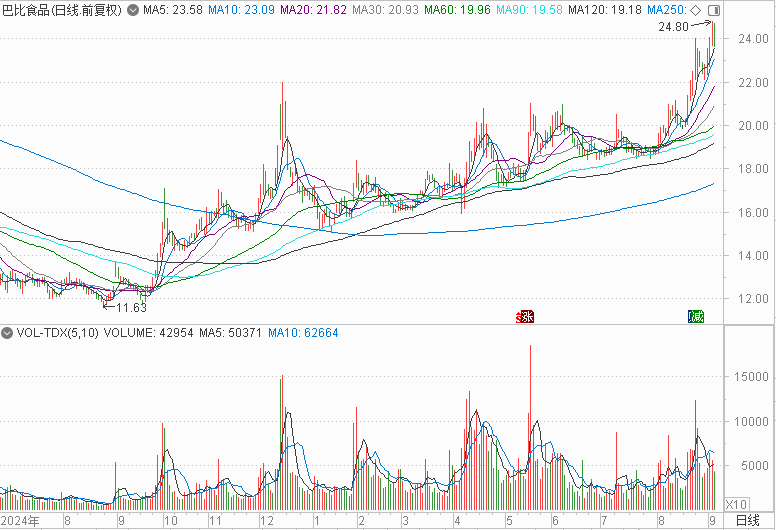
Core Viewpoint - Baba Food, known as the "first stock of buns," reported a net profit growth of 18.08% year-on-year in its 2025 semi-annual report, achieving this amidst intensified competition in the restaurant industry [1][3]. Group 1: Performance Drivers - The company focuses on expanding the number of franchise stores and improving single-store models, with a total of 5,685 franchise stores as of June 2025, a net increase of 542 stores since the beginning of the year [6]. - Successful integration of acquisition projects, including the completion of the "Qinglu" and "Xunweilai" projects in Nanjing and Jiangxi, respectively [6]. - Collaboration between major clients and retail businesses led to a combined sales revenue of 199 million yuan, an increase of 18.99% year-on-year [6]. - Implementation of lean management practices resulted in a 60% increase in production capacity and annual cost savings of several million yuan [6]. Group 2: Market Focus - The East China region remains the primary market for Baba Food, accounting for 82.29% of revenue in the first half of 2025, while other regions like South China, Central China, and North China each contributed less than 10% [6]. - The company is considering expanding into the Southwest market in the long term, although immediate plans are not in place due to capacity investment requirements [6]. Group 3: Stock Performance and Management Actions - Following a recovery in performance, Baba Food's stock price has steadily increased, rising from a low of 11.63 yuan in August 2024 to a high of 24.80 yuan by September 2025, effectively doubling in value [7]. - Company executives, including the Vice President and CFO, increased their holdings by approximately 196,570.2 yuan, with an average purchase price of about 18.67 yuan per share, resulting in a floating profit of around 28% as of September 3, 2025 [8][9]. - Employee stockholding platforms executed a high-level sell-off after the stock price surged, with selling prices ranging from 22.27 yuan to 23.93 yuan [9][10].
292亿!医械巨头完成重磅收购
思宇MedTech· 2025-09-03 02:39
Group 1 - The core transaction involves Solventum selling its Purification & Filtration (P&F) business to Thermo Fisher Scientific for $4.1 billion, marking a significant strategic move for both companies [2][4] - The deal was initially agreed upon on February 25, 2025, received EU approval on July 15, and was completed on September 2, 2025, aligning with the expected timeline [4] - Solventum expects to net approximately $3.4 billion from the sale after customary adjustments, primarily using the funds to pay down debt and enhance financial flexibility [4][8] Group 2 - The P&F business, previously part of Solventum's 3M medical segment, is crucial in various industries, particularly in biopharmaceutical manufacturing, where its filtration and membrane technologies are essential for drug production efficiency and purity [5][7] - In 2024, the P&F business is projected to generate around $1 billion in revenue and employs approximately 2,500 people across multiple regions [7] - Thermo Fisher anticipates that the acquisition will yield about $125 million in revenue and cost synergies over the next five years, aiming for a double-digit internal rate of return in the long term [7][11] Group 3 - Following its spin-off from 3M in April 2024, Solventum's primary focus has been on optimizing its asset portfolio and enhancing capital efficiency, with the sale of the P&F business being a key part of its three-phase transformation plan [8] - The company has raised its adjusted earnings per share (EPS) guidance for 2025 to between $5.88 and $6.03, benefiting from reduced interest expenses [8] - Trian Fund Management, a significant shareholder, has been advocating for Solventum to reduce debt and concentrate on core operations, and the transaction aligns with these shareholder expectations [8] Group 4 - Thermo Fisher's acquisition strategy focuses on consolidating its market position and expanding its business depth, particularly in the bioprocessing market, where it competes with companies like Danaher and Repligen [11] - The acquisition is expected to slightly dilute Thermo Fisher's adjusted EPS in the short term but is projected to enhance earnings in the long run as synergies are realized [11] - The deal reflects broader trends in the healthcare and biotechnology sectors, including accelerated mergers and acquisitions, divestiture of non-core assets, and increased market recognition of focused strategies [12]



军信股份(301109):出海扩张+并购整合,打造第二曲线
HTSC· 2025-09-02 09:10
Investment Rating - The report maintains a "Buy" rating for the company [6] Core Views - The company is actively expanding its business through overseas projects and acquisitions, which is expected to enhance its growth trajectory and lead to a potential revaluation of its stock [1][2] - The company has signed multiple overseas waste-to-energy projects, including a significant investment agreement in Kazakhstan, which is projected to contribute to its second growth curve [2] - The acquisition of Renhe Environment has strengthened the company's operational synergies, leading to substantial revenue growth [3] Financial Performance - In the first half of 2025, the company achieved a revenue of 1.478 billion RMB, representing a year-on-year increase of 33.07%, and a net profit of 400 million RMB, up 49.23% year-on-year [3] - The company reported a significant increase in operating cash flow, which rose by 59.81% year-on-year to 724 million RMB, attributed to the acquisition and increased business volume [4] - The company has adjusted its profit forecasts upward, projecting net profits of 785 million RMB, 836 million RMB, and 878 million RMB for 2025, 2026, and 2027 respectively, reflecting a 7% increase in estimates [5] Valuation - The target price for the company's stock has been raised to 19.21 RMB, based on a projected PE ratio of 19.4 times for 2025 [5] - The company is expected to maintain a high dividend payout ratio of at least 50% annually, enhancing shareholder returns [4]