
慢牛

Search documents
沪指再创本轮牛市新高,市场期待“慢牛”成型
Di Yi Cai Jing· 2026-01-06 10:26
Group 1 - The current bull market is characterized by long-term capital leading the way, differing from previous bull markets that were primarily driven by liquidity [1][4][5] - The Shanghai Composite Index reached a new high of 4083 points on January 6, 2024, following a 1.5% increase, with total trading volume across Shanghai, Shenzhen, and Beijing reaching 2.83 trillion yuan [1] - Analysts expect this bull market to evolve into a "slow bull" or "long bull" due to sustained liquidity, historically low domestic interest rates, and a focus on technological innovation [1][4] Group 2 - The current bull market is primarily driven by sectors such as artificial intelligence and non-ferrous metals, with companies like Jiangxi Copper and Zijin Mining reaching new highs [2] - The average duration of previous bull markets since 2008 has been between 23.5 to 25.5 months, with the current market showing similar duration but with significant changes in market structure and logic [3][4] - The market is experiencing a structural characteristic where funds are concentrated in sectors aligned with national strategies and global technological trends, such as AI and semiconductors [5][6] Group 3 - The margin financing balance in the current bull market is not significantly high, indicating that leverage has not expanded notably, with long-term funds like insurance and pensions continuing to flow into the market [7] - The current market is expected to transition from a valuation recovery phase to a profit-driven phase, with a focus on sectors like artificial intelligence, semiconductor localization, and new energy technologies [7][8] - The market is anticipated to maintain a "slow bull" characteristic, with structured increases in the index and a focus on technology and innovation as key drivers [7][8]
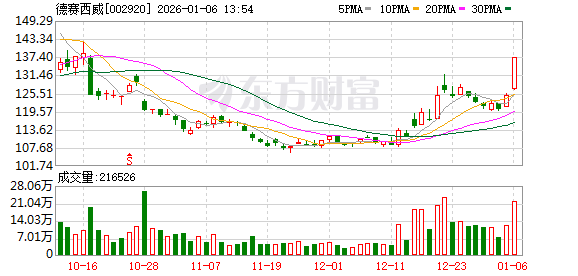
A股打开向上空间,人工智能AIETF(515070)持仓股德赛西威涨停
Mei Ri Jing Ji Xin Wen· 2026-01-06 05:54
Group 1 - The A-share market saw significant movements in sectors such as intelligent driving and commercial aerospace, with the Shanghai Composite Index reaching a nearly 10-year high of 4068 points [2] - The AI ETF (515070) saw its holdings, including companies like Desay SV and Beijing Junzheng, experience notable gains, with Desay SV hitting the daily limit and Beijing Junzheng rising over 8% [2] - The AI ETF recorded an intraday increase of over 0.5%, with trading volume surpassing 270 million yuan [2] Group 2 - Huolong Securities believes the market is in a "slow bull" phase, with expectations for upward breakthroughs, supported by anticipated overall growth in listed company performance through 2026 [2] - The supportive policies, including more proactive fiscal measures and moderately loose monetary policies, are expected to enhance the internal momentum of the economy, leading to continuous improvement in the fundamentals of listed companies [2] - Despite rising trade protectionism, the global economy is expected to remain resilient, with foreign trade maintaining strong resilience [2] - The overall market valuation is considered reasonable, and with continuous improvement in profitability, there is potential for valuation expansion [2] - Expectations for micro liquidity in the market are abundant, driven by policy support for long-term capital inflows and positive fundamental outlooks, alongside a stable RMB exchange rate [2] - The China Securities Regulatory Commission's "14th Five-Year Plan" for the capital market aims to steadily expand high-level institutional openness, enhancing the attractiveness of the capital market [2] Group 3 - The AI ETF (515070) tracks the CS Artificial Intelligence Theme Index (930713), selecting component stocks that provide technology, basic resources, and applications for artificial intelligence, focusing on the midstream and upstream of the AI industry chain [3] - The top ten weighted stocks in the ETF include leading domestic technology companies such as Zhongji Xuchuang, Xinyi Sheng, Cambricon Technologies, and Hikvision [3]


A股喜迎开门红
Sou Hu Cai Jing· 2026-01-05 16:08
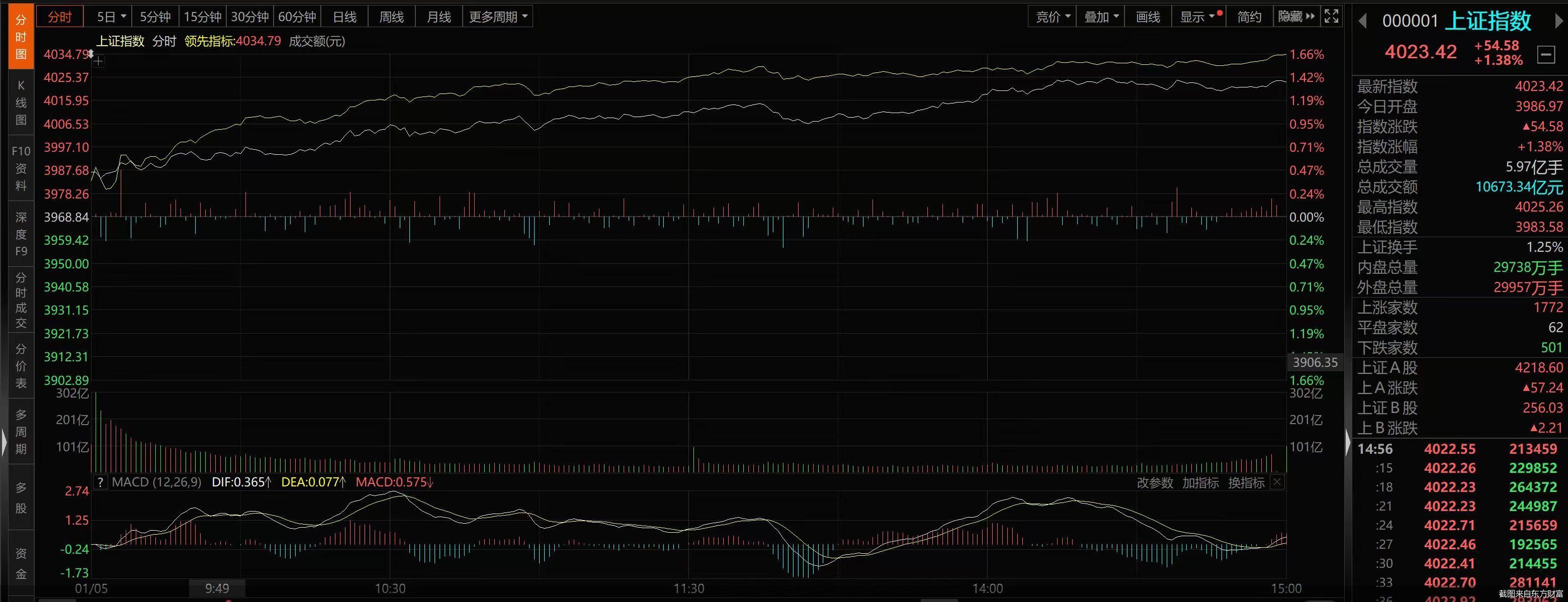
Core Viewpoint - The A-share market experienced a strong opening on January 5, 2026, with all three major indices rising significantly, indicating a bullish sentiment among investors and a potential continuation of the upward trend in 2026 [1][3]. Market Performance - The Shanghai Composite Index closed up 1.38% at 4023.42 points, marking a 12-day consecutive rise, the longest in over 30 years [3]. - The Shenzhen Component Index and the ChiNext Index rose by 2.24% and 2.85%, closing at 13828.63 points and 3294.55 points, respectively [3]. - The STAR 50 Index saw a notable increase of 4.4%, closing at 1403.41 points [3]. Trading Activity - The total trading volume on January 5 reached approximately 2.55 trillion yuan, with the Shanghai Stock Exchange contributing 1.067 trillion yuan and the Shenzhen Stock Exchange 1.479 trillion yuan [3][4]. - A total of 4185 stocks rose, with 127 stocks hitting the daily limit up, indicating a strong profit-taking environment for investors [4]. Sector Performance - The brain engineering sector led the gains, with several stocks hitting the daily limit up, including Sanbo Brain Science and Botao Biology [3]. - Other active sectors included insurance, fourth-generation semiconductors, medical devices, and AI pharmaceuticals, all showing significant upward movement [3]. Future Outlook - Analysts predict a continued inflow of capital into the A-share market, potentially reaching 1.56 trillion yuan, which would support a slow bull market [4]. - The core logic supporting the current bull market remains unchanged, driven by ongoing policy support, a significant shift in household savings, and advancements in technological innovation [4]. - The current market is characterized as a slow bull market, which could last from 3 to 10 years, marking a golden investment period for the Chinese capital market [4].



近4200股上涨 沪指重回4000点
Bei Jing Shang Bao· 2026-01-05 15:43
Core Viewpoint - The A-share market experienced a strong opening on January 5, 2026, with all three major indices rising significantly, marking a notable bullish trend and a potential continuation of the "slow bull" market phase for the coming years [1][3][5]. Market Performance - On January 5, the Shanghai Composite Index rose by 1.38% to close at 4023.42 points, achieving a "12 consecutive days of gains" record, the longest in over 30 years [3]. - The Shenzhen Component Index and the ChiNext Index increased by 2.24% and 2.85%, closing at 13828.63 points and 3294.55 points, respectively [3]. - The STAR 50 Index saw a remarkable increase of 4.4%, closing at 1403.41 points [3]. Trading Activity - The trading atmosphere was robust, with a total trading volume of approximately 2.55 trillion yuan across both the Shanghai and Shenzhen markets [1][3]. - The Shanghai Stock Exchange recorded a trading volume of 1.0673 trillion yuan, while the Shenzhen Stock Exchange had 1.4790 trillion yuan [3]. Sector Performance - The human brain engineering sector led the gains, with several stocks hitting the daily limit up, including Sanbo Brain Science and Botao Biology [3]. - Other active sectors included insurance, fourth-generation semiconductors, medical devices, and AI pharmaceuticals, all showing significant upward movement [3]. Individual Stock Highlights - China Satellite topped the individual stock trading volume with 19.454 billion yuan, followed closely by Sanhua Intelligent Control at 19.212 billion yuan [4]. - A total of 4185 stocks rose, with 127 hitting the daily limit up, indicating a strong profit-making effect for investors [4]. Future Outlook - According to a report from招商证券, A-share market is expected to see a net inflow of approximately 1.56 trillion yuan, providing liquidity support for a "slow bull" market [4]. - The core logic supporting the current bull market remains unchanged, driven by continuous policy support, a significant shift in household savings, and advancements in technological innovation [4]. - The current market phase is characterized as a "slow bull" or "long bull" market, potentially lasting 3-10 years, marking a significant investment period for Chinese assets [5].
A股喜迎开门红!沪指“12连阳”重回4000点,近4200股上涨
Bei Jing Shang Bao· 2026-01-05 09:01
Core Viewpoint - The A-share market experienced a strong opening on January 5, 2026, with all three major indices rising significantly, marking a notable recovery and investor enthusiasm in the market [1][3]. Market Performance - The Shanghai Composite Index rose by 1.38% to close at 4023.42 points, achieving a "12 consecutive days of gains," the longest streak in over 30 years [3]. - The Shenzhen Component Index and the ChiNext Index increased by 2.24% and 2.85%, closing at 13828.63 points and 3294.55 points, respectively [3]. - The STAR 50 Index performed exceptionally well, rising by 4.4% to 1403.41 points [3]. Sector Performance - The brain engineering sector led the gains, with several stocks hitting the daily limit of 20% increase, including Sanbo Brain Science and Botao Biology [3]. - The insurance sector was active, with all major stocks in the sector showing positive performance [3]. - Other sectors with notable gains included fourth-generation semiconductors, medical devices, and AI pharmaceuticals [3]. Trading Volume - The total trading volume on January 5 was approximately 2.55 trillion yuan, with the Shanghai Stock Exchange contributing 1.067 trillion yuan and the Shenzhen Stock Exchange 1.479 trillion yuan [3]. - The Beijing Stock Exchange recorded a trading volume of 21.14 billion yuan [3]. Individual Stock Performance - China Satellite topped the individual stock trading volume with 19.454 billion yuan, followed closely by Sanhua Intelligent Control at 19.212 billion yuan [4]. - A total of 4185 stocks rose, with 127 stocks hitting the daily limit, indicating a strong profit-making environment for investors [5]. Market Outlook - According to a report from招商证券, A-share market is expected to see a continued net inflow of funds, potentially reaching 1.56 trillion yuan, supporting a slow bull market [5]. - The core logic supporting the current bull market remains unchanged, including ongoing policy support, a significant shift in household savings, and continuous breakthroughs in technological innovation [5]. - The current bull market is characterized as a slow and long-term trend, potentially lasting 3 to 10 years, marking a golden investment period for the Chinese capital market [5].
开年重返4000点!盘点名私募们的慢牛共识,如何挖掘“不拥挤的成长”和抓住仍然“低垂的果实”
聪明投资者· 2026-01-05 07:08
Core Viewpoint - The consensus among investment managers is not whether a bull market will occur, but how a slow bull market will unfold, with a reminder to lower return expectations due to fewer "low-hanging fruits" compared to previous years [2] Group 1: Market Performance and Trends - The Shanghai Composite Index and CSI 300 Index saw annual gains of 18.41% and 17.66% respectively in 2025, while the Hang Seng Index rose by 27.77%, and the ChiNext Index surged by 49.57%, indicating strong profitability growth and valuation increases in high-growth sectors [2] - Notable private equity firms achieved impressive annual returns exceeding 50%, with some even doubling their investments, highlighting the potential for high returns in the current market [3] - Many investment managers have maintained above-average performance, focusing on risk management and capital preservation strategies [4] Group 2: Investment Outlook for 2026 - The first key theme for 2026 is AI, with a shift in focus towards the economic feasibility of applications rather than just increased computing power [5][6] - The second theme involves the repricing of dividend assets in a low-interest-rate environment, with many managers believing that the lack of significant price increases has made these assets more attractive [6][7] - The third theme is the structural recovery of consumption, with managers looking for undervalued assets in traditional consumption sectors and recognizing the re-emergence of price advantages in new consumption [7][8] - The fourth theme is the "anti-involution" trend, which has begun to show signs of improving price order in certain industries, such as automotive and aviation [8][9] - The fifth theme focuses on high-quality globalization, with a consensus on the importance of companies that can establish localized ecosystems abroad [9] Group 3: Key Insights from Investment Managers - Investment managers emphasize the importance of understanding macroeconomic trends and the need for a cautious approach to AI investments due to potential bubbles [10][16] - The outlook for consumer wealth is optimistic, with expectations for a recovery in consumer spending driven by a stabilization of household wealth [21][22] - The "anti-involution" strategy is seen as having strategic significance, with varying short-term effects across different industries [23] - The transition from "global pricing and safe outbound" to "global investment and local service" reflects the evolving landscape of Chinese manufacturing and its competitive advantages [24] Group 4: Macroeconomic Context - The performance of non-financial real estate companies in A-shares shows limited revenue growth compared to 2023, indicating a trend of declining demand against expanding capacity [26] - The downward trend in prices is expected to continue, supported by fiscal data showing stable tax revenues [27] - Interest rates are projected to remain low, with implications for investment strategies favoring stable, well-governed companies [28][29] - The overall market is anticipated to enter a prolonged slow bull phase, with a focus on sectors that can adapt to changing economic conditions [39]
2026掘金指南来了!A股机会在哪? “慢牛”共识凝聚,淡水泉、景林、仁桥、重阳、清和泉等最新观点分享| 私募透视镜
Jin Rong Jie· 2026-01-05 06:39
Group 1 - The core viewpoint of the article emphasizes a consensus on a "slow bull" market, with a focus on "uncrowded growth" opportunities in sectors like AI and high-end manufacturing [2][13] - The macro liquidity environment is expected to remain ample, supporting a favorable capital market for 2026, with a recovery in investor risk appetite [2][13] - There is a recognition of potential valuation bubbles in certain industries, prompting a strategy to identify quality companies that are not overvalued and have solid performance [2][13] Group 2 - The investment outlook for 2026 includes a focus on the AI industry chain, semiconductor domestic substitution, and the expansion of China's advantageous manufacturing overseas [2][13] - The report highlights the importance of structural growth deepening, with a significant emphasis on sectors that are expected to benefit from global technological innovation [2][13] - The article notes that while some industries show signs of valuation bubbles, there is a commitment to continuously track areas with positive marginal changes to ensure sustainable returns for investors [2][13]
公募豪掷3375亿自购,2025年非货产品成“香饽饽”
Huan Qiu Wang· 2026-01-05 05:12
Group 1 - The public fund industry demonstrated strong confidence in the capital market in 2025, with 118 fund companies executing 7,491 self-purchases totaling 337.51 billion yuan, significantly surpassing the previous year's 109.53 billion yuan and setting a historical record [1] - Non-monetary products became the focus of fund companies' investments, with a total net subscription of 8.70 billion yuan for non-monetary funds, compared to 3.51 billion yuan in 2024. Bond funds emerged as the main contributors, with a net subscription of 4.21 billion yuan, reflecting a year-on-year increase of over 227% [1] - Mixed funds reversed from net redemptions to net subscriptions, achieving a net subscription of 2.15 billion yuan in 2025, while stock funds maintained steady self-purchase levels with approximately 2.34 billion yuan in net subscriptions [1] Group 2 - The public fund industry experienced significant redemptions in money market funds, with a net redemption of 193.95 billion yuan in 2025, indicating a shift towards seeking higher returns in alternative assets amid a low-interest-rate environment [2] - Index products became increasingly popular among institutions, with passive index bond funds, mixed equity funds, and passive index funds leading in self-purchase amounts. Notably, E Fund's index products garnered a self-purchase amount of 1.8 billion yuan [4] - A total of 22 public fund managers had net subscription amounts exceeding 1 billion yuan in 2025, with Invesco Great Wall Fund leading at 2.77 billion yuan, followed by ICBC Credit Suisse Fund at 1.70 billion yuan [4] Group 3 - The China Securities Regulatory Commission's policy guidance in May 2025, which emphasized long-term performance and self-purchase of equity funds as evaluation criteria, played a crucial role in driving the self-purchase trend among fund companies [4] - Multiple public fund institutions expressed optimism for the market in 2026, anticipating a resonance between corporate earnings and liquidity, leading to a more balanced market style [5] - Analysts noted that the large-scale self-purchase of non-monetary products by public funds signals a belief in the long-term value of equity and bond markets, reflecting a shift towards prioritizing investor satisfaction and stabilizing market expectations [6]
广发证券刘晨明:2026年A股市场有望延续“慢牛”格局
Zheng Quan Shi Bao Wang· 2026-01-05 01:12
Group 1 - The core viewpoint is that in 2026, debt issues will be a global challenge, and there are three main ways to address this: real growth exceeding real interest rates (growth-based debt reduction), inflation exceeding expectations (inflation-based debt reduction), and fiscal tightening (fiscal-based debt reduction) [1] - AI and gold are expected to benefit from these pathways, forming a dual mainline logic for asset performance [1] - The A-share market is anticipated to continue a "slow bull" pattern in 2026, driven by a significant change in corporate profit structures despite weaknesses in real estate, infrastructure, consumption, social financing, and PPI [1] Group 2 - Non-financial companies in the A-share market have stabilized their net asset return on equity (ROE) over several quarters, with profits from eight advanced manufacturing industries increasing to 38% [1] - Companies with overseas revenue have seen their overseas revenue proportion rise to 20%, with overseas market gross margins exceeding domestic margins by 5 percentage points, which may drive overall ROE recovery in the A-share market [1] - Current valuation increases are relatively restrained, with limited overextension, suggesting potential for valuation improvement if profits recover [1] Group 3 - Investment direction should focus on industries with supply constraints and clear prosperity trends, such as the AI industry chain, which has strong capital expenditure demand and limited short-term supply release [1] - Other areas of interest include energy storage and metals, which have undergone capacity clearing [1] - Tactically, it is recommended to utilize market adjustments to position for spring rallies, prioritizing the aforementioned high-prosperity sectors [1]

广发证券刘晨明:A股市场将延续“慢牛”格局
Zheng Quan Shi Bao· 2026-01-04 17:48
Core Viewpoint - In 2026, under the global challenge of debt issues, there are three main ways to address debt: real growth exceeding real interest rates (growth-driven debt reduction), inflation exceeding expectations (inflation-driven debt reduction), and fiscal tightening (fiscal-driven debt reduction). Both AI and gold are expected to benefit from these paths, forming a dual mainline logic for asset performance [1]. Group 1: Market Outlook - The A-share market is expected to maintain a "slow bull" pattern in 2026, driven by a profound change in corporate profit structures. Despite weakness in real estate, infrastructure, consumption, social financing, and PPI, the net asset return on equity (ROE) of non-financial enterprises has stabilized over several quarters [1]. - The profit share of the eight major advanced manufacturing industries has increased to 38%, while the overseas revenue share of companies operating abroad has risen to 20%, with overseas market gross margins exceeding domestic margins by 5 percentage points. These factors are likely to drive the overall ROE of A-shares to recover after stabilization [1]. - Current valuation increases are relatively restrained, with limited overextension. If profits recover, there is still room for valuation improvement. Additionally, the migration of deposits from insurance and high-net-worth individuals will bring incremental capital [1]. Group 2: Investment Direction - The focus should be on industries with constrained supply and clear upward trends, such as the AI industry chain, which has strong capital expenditure demand and is unlikely to see supply release in the short term. Other areas include energy storage and metals, which have undergone capacity clearing [1]. - Tactically, it is recommended to utilize market adjustments to position for the spring rally, prioritizing the aforementioned high-prosperity sectors [1].