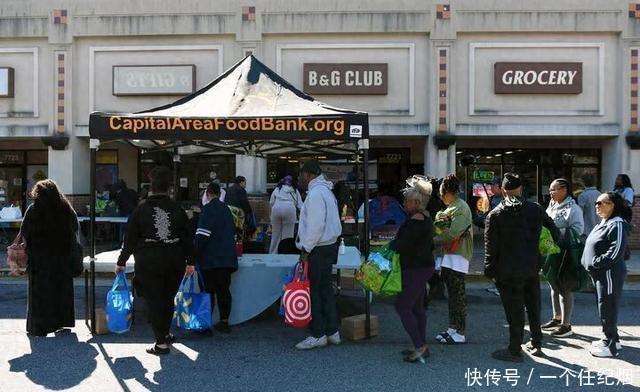
政府停摆

Search documents
今夜非农极具迷惑性,华尔街应该如何解读?
Jin Shi Shu Ju· 2025-12-16 09:33
Core Viewpoint - The upcoming non-farm payroll report for October and November is challenging to interpret, with uncertainty surrounding the labor market's condition due to the impact of a government shutdown and delayed employee departures [2][3]. Group 1: Employment Data - The non-farm payroll report will include partial data for October and complete data for November, but the October unemployment rate will not be published due to data collection issues during the government shutdown [2]. - Private sector job growth is expected to be around 40,000 to 50,000 for both October and November, significantly lower than the preliminary September figure of 97,000 [3]. - The average monthly job creation in the private sector for the first nine months of 2025 was 72,000, which is considered weak by historical standards [3]. Group 2: Unemployment Rate - The unemployment rate rose to 4.4% in September, the highest in four years, with predictions for a slight increase to 4.5% in November [4]. - The Labor Statistics Bureau will not release the October unemployment rate, marking the first time since 1948 that a single-month unemployment rate has not been published [4]. Group 3: Market Reactions - If the labor market appears to be deteriorating, Wall Street may support further interest rate cuts by the Federal Reserve, with expectations for additional cuts in 2026 [5]. - Conversely, if private sector job growth exceeds expectations, the market may remain skeptical due to a lack of other positive labor market indicators [5]. Group 4: Seasonal Hiring - The holiday season typically sees an increase in temporary hiring, which could introduce uncertainty into the employment data [6]. - If the number of temporary hires is lower than usual, seasonal adjustments by the Labor Statistics Bureau may make November's employment situation appear worse than it is [7]. Group 5: Government Employment - The exact reduction in government employment for October is unknown, but estimates suggest that the delayed departure plan from the Trump administration could lead to a decrease of 75,000 to 150,000 federal jobs [8]. - This potential reduction may result in a net decrease in October employment figures, with a possible rebound in November, complicating the understanding of the labor market's true state [8].
美元在美国就业数据公布前交投持稳
Sou Hu Cai Jing· 2025-12-16 08:12
Core Viewpoint - Investors are adopting a cautious stance ahead of the U.S. non-farm payroll report, with the dollar trading steadily but lingering near recent lows [1] Group 1: Economic Data - The U.S. Labor Department is set to release the delayed November report and partial data for October at 1330 GMT [1] - Recent government shutdowns have led to delays in the release of official data [1] Group 2: Market Reactions - The DXY dollar index is trading flat at 98.286, close to the nearly eight-week low of 98.134 reached on Thursday [1] Group 3: Analyst Insights - Volkmar Baur from Deutsche Bank advises caution regarding the upcoming data, as it was collected shortly after a record-length government shutdown, which may lead to distortions [1]
【宏观】胶着的医保谈判,不确定的政府停摆——《大国博弈》系列第九十二篇(赵格格)
光大证券研究· 2025-12-15 23:07
Core Viewpoint - In 2025, Biden's enhanced healthcare becomes a political tool for both parties, significantly impacting the capital markets. Currently, only three departments have reached a budget agreement, while nine departments' budgets will expire on January 30, 2026. The recent healthcare vote resulted in both parties rejecting each other's proposals, diminishing hopes for a resolution before the Christmas holiday [5]. Group 1: Political and Economic Scenarios - Scenario One: Government shutdown leads to a lapse in healthcare subsidies, triggering interest rate cuts, resulting in a "recessionary" trading environment. In this scenario, the US dollar index and US stocks would decline, while safe-haven assets like gold would benefit. However, this scenario remains low probability as neither party can afford the consequences of failing to extend healthcare subsidies, especially with midterm elections approaching for the Republicans [5]. - Scenario Two: Both parties reach an agreement on healthcare subsidies, allowing the government to operate smoothly, leading to a quarter-on-quarter economic rebound in the US and a pause in interest rate cuts. This scenario would favor US stocks and the dollar index, while gold as a safe-haven asset would face relative pressure. However, significant challenges remain for both parties to achieve a satisfactory agreement on healthcare in January [5][6]. - Scenario Three: Republicans push through fiscal budgets and their version of healthcare subsidies using "budget reconciliation." The economy would remain strong, similar to the first scenario, but this would prevent Republicans from using the "fast track" for future fiscal subsidies and budgets, creating risks for the next government shutdown [6]. - Scenario Four: A compromise budget agreement is reached before the January 30, 2026 deadline, leading to continued uncertainty in the US market. Asset price movements would be convoluted, favoring safe-haven assets like gold [7].


TMGM外汇:年末“圣诞老人行情”可期?美联储政策成关键
Sou Hu Cai Jing· 2025-12-08 09:46
Group 1 - The market is closely watching the upcoming Federal Reserve policy meeting, which will determine whether the traditional year-end rally, known as the "Santa Claus Rally," will occur this year [1][3] - Current market expectations suggest that the Federal Reserve is likely to adjust the benchmark interest rate, with nearly a 90% probability of a 25 basis point cut reflected in derivatives markets [3] - The recent market correction was influenced by concerns over overheating in AI-related trades and fears regarding the economic impact of a government shutdown, but the end of the shutdown and positive economic data have strengthened expectations for policy adjustments [3] Group 2 - Market observers emphasize that the outlook for future policy paths from the Federal Reserve will be more significant than the meeting itself, particularly the economic forecast summary and interest rate projections for the next year [3] - Increased volatility is anticipated around the meeting date, as options market data indicates a rise in expected index volatility, potentially due to delayed adjustments in institutional investor models following previously stalled economic data releases [3] - Upcoming employment data, including job vacancies and unemployment claims, will provide additional insights for investors assessing the economic situation [3]

美联储褐皮书:消费者支出进一步走弱,经济活动变化不大
Feng Huang Wang· 2025-11-26 23:22
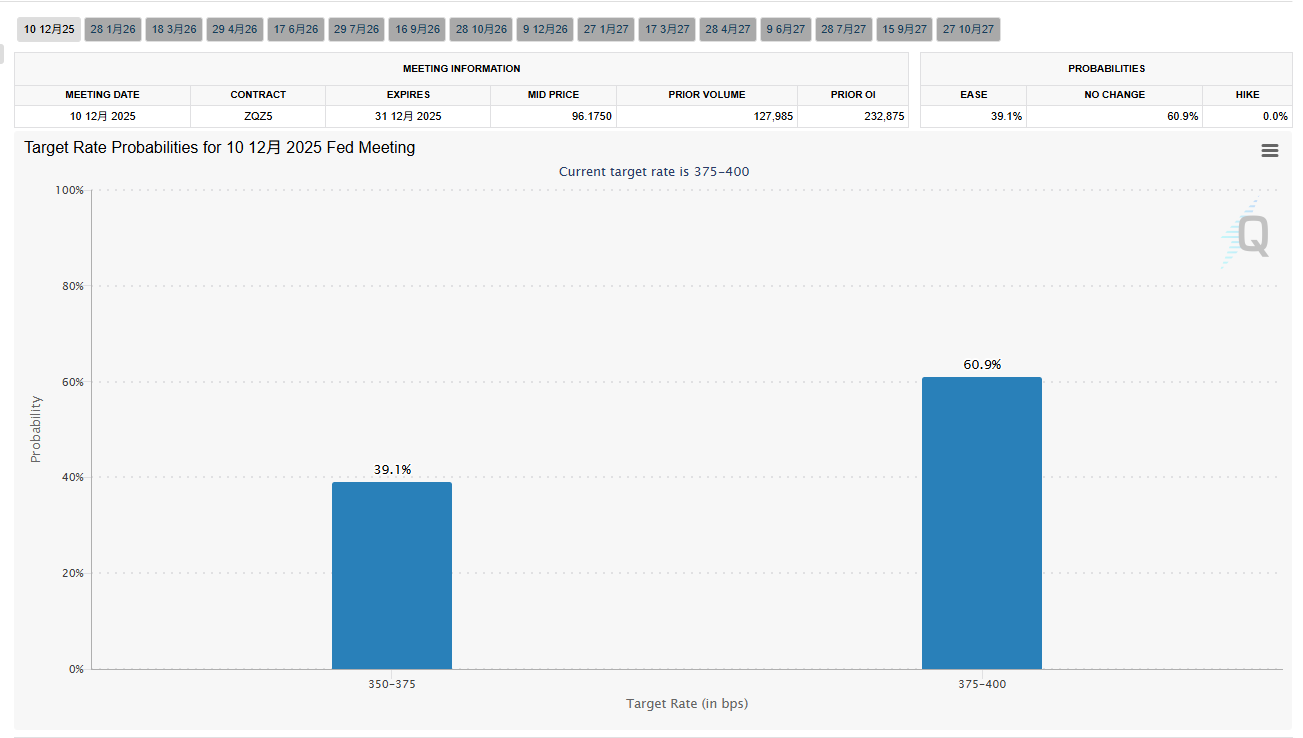
Economic Overview - The Federal Reserve indicates that overall economic activity in the U.S. has not changed significantly in recent weeks, with consumer spending declining further, except for high-income consumers whose spending remains robust [1] - The Fed's Beige Book highlights a rising risk of economic activity slowing in the coming months, although there is some optimism in the manufacturing sector [1] Consumer Spending - Regions including New York, Atlanta, and Minneapolis report that high-income consumers continue to show resilience in their spending [2] - In contrast, middle and low-income consumers are tightening their budgets, as noted by a respondent from the Minneapolis Fed [2] Employment Trends - Despite an increase in layoff announcements, many regions report that businesses are opting for cost-saving measures such as hiring freezes and natural attrition rather than direct layoffs [2][2] - The report notes that recent wage increases are generally in line with the Fed's inflation targets, but there are still "moderate" wage pressures in manufacturing, construction, and healthcare sectors [2] Price Pressures - Tariffs remain a significant concern for businesses, particularly in manufacturing and retail, with many reporting increased input cost pressures [2] - Some companies indicate that tariffs have led to tighter profit margins or increased financial pressure, while others report price declines due to decreased demand or postponed tariffs [2] Government Impact - The report was largely compiled during a federal government shutdown, which negatively affected consumer spending according to some retailers [3] - The shutdown disrupted the issuance of SNAP benefits, leading to an increase in demand for food assistance [3] Market Expectations - The Fed officials will not have access to most labor market and inflation data until after the December meeting, which has intensified internal divisions regarding potential interest rate cuts [3] - Market expectations for the December meeting fluctuate between "rate cut" and "no change," with the probability of a rate cut rising to approximately 80% following supportive comments from officials [3]
美国最长停摆落幕!67万雇员欠薪补发,复苏路却藏三大坑
Sou Hu Cai Jing· 2025-11-24 03:13
Group 1: Government Shutdown Impact - The recent government shutdown lasted six weeks, marking the longest in U.S. history, and ended with the signing of a funding bill by President Trump [1] - The shutdown resulted in significant disruptions, including the delay of 135 early education grants, affecting nearly one million children's school preparations [1] - The shutdown caused a loss of over 12,000 flights and direct economic losses exceeding $500 million in the airline industry [6] Group 2: Economic Consequences - The Congressional Budget Office reported that the shutdown led to a decline in GDP for the fourth quarter, with some losses expected to be irretrievable [8] - Over 30,000 small business loans were delayed during the shutdown, involving amounts up to $12 billion, leading to business closures and job losses [8] - The absence of economic data collection during the shutdown has created challenges for the Federal Reserve in adjusting monetary policy [8] Group 3: Social Welfare Challenges - Approximately 42 million people rely on the Supplemental Nutrition Assistance Program, but many are still waiting for benefits due to complex state processes [3] - In Texas, 3.8 million beneficiaries faced delays of over two weeks in receiving their benefits, impacting low-income families [3] Group 4: Research and Development Disruptions - The National Science Foundation reported that 800 research projects were interrupted during the shutdown, with over 200 projects in critical areas like biomedicine and climate change [9] - Recovery for research institutions may take months, affecting universities and ongoing experiments reliant on federal funding [9] Group 5: Political Ramifications - The shutdown has exacerbated political divisions, with eight Democratic senators breaking from party lines to support the funding bill, highlighting internal party conflicts [11] - The funding bill only extends government funding until January 30, 2025, leaving core issues unresolved and raising concerns about future shutdowns [11]

历史新低!美国突传重大利空!
天天基金网· 2025-11-23 03:10
Core Viewpoint - The article highlights a significant decline in consumer confidence in the U.S., with implications for the consumer sector and overall economic outlook [3][6]. Consumer Confidence - The final consumer confidence index for November dropped from 53.6 in October to 51, marking a historical low [3][6]. - The current conditions index fell by 7.5 points to 51.1, also a record low [3][6]. - Consumer assessments of personal financial situations have decreased by approximately 15%, with 47% of consumers citing high prices as a negative impact on their finances [6][10]. Stock Market Performance - The consumer sector in the U.S. stock market has faced significant sell-offs, with the essential consumer goods sector declining at three times the rate of the S&P 500 index since October [3][4]. - Non-essential consumer goods have also seen a 5.2% decline, making it one of the worst-performing sectors in the market during this period [4][6]. - If the market closes this week as projected, it will be the first time since 1990 that both essential and non-essential consumer sectors are the weakest among the 11 sectors of the S&P 500 [4][5]. Economic Implications - Consumer spending accounts for approximately 70% of the U.S. economy, making it a critical variable despite current market focus on companies like Nvidia [6]. - The article notes that consumer sentiment is deteriorating, with 69% of consumers expecting unemployment rates to rise, up from 64% in October [6][10]. - The disparity in financial health among different income groups is widening, with wealthier consumers maintaining spending while those without stock assets are experiencing worsening financial conditions [10].

12月降息预期骤降?白宫哈塞特:这时候“收手”,时机非常糟
Feng Huang Wang· 2025-11-21 02:09
Core Viewpoint - The unexpected increase of 119,000 non-farm jobs in September significantly exceeded market expectations, raising the likelihood that the Federal Reserve will not lower interest rates next month [1] Economic Impact - Kevin Hassett, Director of the National Economic Council, indicated that the government shutdown is expected to negatively impact Q4 GDP by 1.5 percentage points [1] - The strong employment report for September is not sufficient to offset other negative factors affecting the economy [1] Inflation and Interest Rates - The Consumer Price Index (CPI) for September showed better-than-expected inflation, which is currently above the Federal Reserve's 2% target [3] - There are concerns that lowering interest rates to support the labor market could prolong the high inflation cycle and increase risk appetite in financial markets [3] Employment Trends - The employment growth in September followed a downward revision of August's job gains from an increase of 22,000 to a decrease of 4,000 [1] - The recent trend shows fluctuations in job growth, with negative job additions in June, followed by increases in July and September [1] - Most job growth has been in the healthcare and education sectors, but the construction industry is also seeing an increase in jobs due to new factory openings driven by tax incentives [1][4] Unemployment Rate - Despite the significant job growth, the unemployment rate rose by 0.1 percentage points to 4.4%, attributed to an increase in labor force participation as more individuals begin to seek employment [1][4]
The September was initially scheduled for release on Oct. 3
WSJ· 2025-11-20 13:34
Core Insights - Job growth accelerated in the month leading up to the government shutdown, indicating a robust labor market despite potential economic disruptions [1] Group 1: Job Growth - The acceleration in job growth suggests resilience in the economy, with employers continuing to hire in anticipation of future demand [1] - This trend may reflect confidence among businesses regarding economic conditions prior to the shutdown [1] Group 2: Economic Implications - The increase in employment figures could influence policymakers' decisions regarding fiscal measures and economic support during the shutdown [1] - A strong labor market may mitigate some negative impacts of the government shutdown on consumer spending and overall economic activity [1]

全美停摆!工会反水起诉白宫,4000万人将断粮,对华战略彻底混乱
Sou Hu Cai Jing· 2025-11-20 06:10
Core Points - The U.S. government has been in a shutdown for four weeks, severely impacting federal services and leaving over 750,000 non-essential government employees on unpaid leave, with more than 4,000 receiving layoff notices [1][3] - The shutdown has created significant economic pressure on federal employees, with many unable to receive their salaries, leading some to apply for short-term loans to cover living expenses [3] - Low-income families relying on government food assistance are facing immense pressure, with warnings that the SNAP program may run out of funds, potentially affecting around 40 million Americans [5] - The American Federation of Government Employees (AFGE) has shifted its stance, calling for a clean temporary funding bill to restore government operations, which has sparked political controversy [7][9] - The shutdown has disrupted public services, including air traffic control and public health, with significant delays and the suspension of critical health data collection [11] - National parks and infrastructure projects have been halted, leading to financial strain on state and local governments [13] - The Federal Reserve's operations are impacted due to the lack of key economic data, hindering its ability to make informed policy decisions [15] Group 1 - The government shutdown has left over 750,000 employees on unpaid leave and affected 400,000 families facing food insecurity [1][5] - Federal employees are experiencing economic stress, with some unable to pay mortgages and school fees [3] - The AFGE's call for a clean funding bill has led to political backlash and legal actions against the government for illegal layoffs [7][9] Group 2 - Public services, including air traffic control and health services, are severely disrupted, leading to delays and halted research [11] - National parks and infrastructure projects are facing shutdowns, causing financial strain on local governments [13] - The Federal Reserve's decision-making is compromised due to the unavailability of critical economic data [15]