
新经济

Search documents
行业顾问沙利文100%参与,3家企业同日登陆港交所
Xin Lang Cai Jing· 2026-01-08 06:48
Core Viewpoint - Three companies successfully listed on the Hong Kong Stock Exchange on January 8, with Frost & Sullivan serving as their exclusive industry advisor [1] Group 1: Company Listings - Beijing Zhipu Huazhang Technology Co., Ltd. (stock code: 2513.HK) focuses on developing general large models and offers model-as-a-service (MaaS) products [3] - Shanghai Tensu Zhixin Semiconductor Co., Ltd. (stock code: 9903.HK) is the first Chinese company to achieve mass production of general-purpose GPU chips and has adopted advanced 7nm technology [6] - Precision Medical Technology Co., Ltd. (stock code: 2675.HK) specializes in innovative surgical robots and aims to provide systematic solutions for minimally invasive surgeries [7] Group 2: Frost & Sullivan's Role - Frost & Sullivan has assisted 83 companies (market share of 72%) and 180 companies (market share of 71%) in successfully listing on the Hong Kong Stock Exchange over the next 36 months [1] - The firm helps issuers understand their market positioning, highlights competitive advantages using objective market data, and collaborates with issuers and investment banks to complete key sections of the prospectus [7] - Frost & Sullivan has supported nearly 3,000 companies in successfully listing both in Hong Kong and internationally, maintaining a leading position in the investment consulting sector [8][10]


中国经济 - 经济或达 5% 增速但仍呈 K 型分化:2025 年第四季度数据前瞻-China Economics The Economy Seems Set to Hit 5 Growth But Remain K-Shaped DecQ4 Data Preview
2026-01-06 02:23
Summary of Key Points from the Conference Call Industry Overview - **Industry**: Chinese Economy - **Growth Forecast**: The economy is projected to achieve a 5% growth target for 2025, supported by year-end PMI surprises and earlier policy implementations [1][6] Core Insights and Arguments - **GDP Growth**: Estimated GDP growth for Q4 2025 is 4.6% YoY, with industrial production strengthening to 5.6% YoY due to improved PMI [1][6] - **K-Shaped Recovery**: The economy is expected to remain K-shaped, characterized by resilient exports and sluggish domestic demand [1] - **Exports and Imports**: Exports are estimated to grow by 2.0% YoY, while imports are expected to increase by 1.5% YoY in December, leading to a trade surplus of US$108.4 billion for the month [1][6] - **Retail Sales**: Retail sales are projected to remain subdued at approximately 1.0% YoY, primarily due to diminishing government subsidies [1][6] - **Fixed Asset Investment**: A contraction of -2.8% YoY in fixed asset investment is anticipated, marking the first decline since 1992 [1][6] Additional Important Insights - **Inflation Trends**: CPI is expected to rise to 0.8% YoY in December, while PPI may remain stable at -2.1% YoY, influenced by food prices and gold [2] - **Credit Data**: New RMB loans are projected at RMB1,000 billion, with a significant impact from a RMB500 billion policy-financing tool [3] - **Trade Dynamics**: Despite a slowdown in US-China trade, overall cargo throughput is expected to rise by approximately 1.9% YoY, with semiconductor demand remaining strong [1][6] Conclusion - The Chinese economy is on track to meet its growth targets, but challenges such as sluggish domestic demand and a contraction in fixed asset investment pose risks. The K-shaped recovery indicates disparities in growth across different sectors, with exports showing resilience while retail and investment lag behind.
港股收评:香港恒生指数收涨0.03% 恒生科技指数涨0.09% 脑机接口概念股领涨
Jin Rong Jie· 2026-01-05 08:45
Group 1 - The Hang Seng Index closed at 26,347.24 points, up 0.03%, while the Hang Seng Tech Index rose 0.09% to 5,741.63 points. The National Enterprises Index fell 0.22% to 9,148.47 points, and the Red Chip Index increased by 0.07% to 4,086.74 points [1] - Brain-computer interface concept stocks led the market, with Nanjing Panda Electronics rising nearly 40% and Brain动极光 up over 15%. Meanwhile, domestic property stocks also saw gains, with融信中国 up over 6% and世茂集团 up over 5% [1] - New energy vehicle stocks continued to decline, with Great Wall Motors down over 6%, NIO down nearly 6%, and XPeng Motors down over 4% [1] Group 2 - GF Securities indicated that the recent rise in Hong Kong stocks is supported by fundamentals, with signs of structural recovery in profitability starting from the second half of 2024, driven by stable internal and external demand and macro policy support [1] - The report highlighted that most core companies in strategic technology sectors between China and the U.S. are listed in Hong Kong, with growth in high-end manufacturing and technology transitioning from "single-point breakthroughs" to "multi-point explosions" [1] - The weighting of new economy-related stocks in the Hang Seng Index has increased from 17% to nearly 50%, indicating a shift from traditional economic cycles to hard technology sectors such as AI applications, new energy, and semiconductors [1] Group 3 - Huajin Securities noted a correlation coefficient of approximately 0.5 between the performance of the Hang Seng Index during the New Year holiday and the performance of the Shanghai Composite Index in the following 10 trading days, suggesting that a strong performance in Hong Kong could positively influence A-shares [2] - The Hang Seng Index, Hang Seng Tech Index, and Hang Seng China Enterprises Index rose by 2.8%, 4%, and 2.9% respectively on January 2, indicating a potentially strong short-term outlook for A-shares following the holiday [2]
北京城建也成了被执行人
3 6 Ke· 2026-01-05 03:25
Core Viewpoint - Beijing Urban Construction Group has faced a significant increase in "enforcement" cases since the second half of 2025, totaling approximately 120 million yuan, indicating a potential liquidity crisis and operational challenges for the state-owned enterprise [1][4]. Group 1: Legal Issues and Financial Impact - The company has been involved in numerous enforcement cases, averaging four per month, with amounts ranging from 420,000 to 29 million yuan [1]. - A specific dispute in Suzhou led to a "property preservation" application against the company, which could freeze its assets and severely impact its cash flow [3][4]. - The company has reported substantial losses in its real estate segment, with a net profit of -9.51 million yuan in 2024, reflecting a 270.17% year-on-year decline [8]. Group 2: Business Strategy and Market Position - The new chairman, Li Weidong, has signaled a strategic shift to shrink the real estate business due to ongoing market pressures, emphasizing the need for stability and careful project management [7]. - Despite the need to reduce real estate exposure, the company remains reliant on this sector for revenue, having acquired land in Beijing worth over 11.5 billion yuan [11]. - The company has faced challenges in project execution, with significant delays and losses reported in various developments, indicating operational inefficiencies [9][10]. Group 3: Debt and Financial Health - As of September 30, 2025, the company's total assets were approximately 1,093.96 billion yuan, with a debt ratio of 76.88%, suggesting a high level of financial leverage [15]. - The company has been actively divesting from non-core assets, including a 12% stake in a subsidiary for approximately 2.34 million yuan, to improve its financial position [16][20]. - The debt situation has shown some improvement, but the pace of recovery remains slow, with current levels comparable to those at the end of 2019 [13][14]. Group 4: Future Directions and New Ventures - The company is exploring new sectors such as renewable energy and artificial intelligence, aiming to diversify its business model amid declining traditional construction markets [21]. - However, the transition to these new areas requires significant investment and talent, posing additional challenges for the company's management [21].

中金2026年展望:弱美元周期带动全球经济共振修复 叠加国内外长线资金支撑 将对A/港股带来提振
智通财经网· 2026-01-05 00:48
Group 1 - The weak US dollar is driving a global economic recovery, boosting domestic export growth and profit improvement in China [1] - Global monetary policy and liquidity are becoming more accommodative, raising valuations for A-shares and Hong Kong stocks [1] - Increased foreign capital inflow is expected to support A-shares, driven by a weak dollar and domestic policy catalysts [1] Group 2 - The Trump administration's policies since 2025 have hindered the nominal economic recovery in the US, but a shift in focus towards domestic issues may lead to fiscal and monetary easing in 2026 [2] - The easing environment is expected to alleviate three major constraints on the US economy, including weak consumer confidence and sluggish housing demand [2] - The technology, industrial, and resource sectors in the US are anticipated to continue leading the market in 2026, while consumer and financial sectors may catch up as the nominal cycle improves [2] Group 3 - A weaker dollar may provide room for the renminbi to appreciate, supported by expectations of US interest rate cuts and year-end foreign exchange settlement peaks [3] - The anticipated trend of abundant dollar liquidity suggests that the US dollar is likely in a depreciation phase, which may support the renminbi [3]
中金:更多海外资金和长线资金入市有望从资金端提振A股
Zheng Quan Shi Bao Wang· 2026-01-05 00:07
人民财讯1月5日电,中金指出,近期在美联储降息预期升温和国内年底结汇高峰推动下,人民币兑美元 升值加速。特朗普"大重置"下,美国货币配合财政,认为美元流动性将趋势性充裕,美元大概率处于贬 值通道。这种情况下,此前积累的待外汇资金结汇的动机可能支撑人民币。弱美元推动全球经济共振修 复,带动国内出口增速和利润改善。全球货币政策和流动性都趋于宽松,推升A港股估值。同时,全球 资金更多流向增长弹性更高的新兴市场,以寻求更高的收益。在弱美元和国内政策催化下,中金认为更 多海外资金和长线资金入市有望从资金端提振A股。从结构上看,以科技和出海为代表的"新经济"在基 本面和回报方面有望持续表现。此外,在扩内需、反内卷和海外需求拉动下,国内企业盈利或出现改 善,带动消费等内需板块补涨。 ...
港股IPO“王者归来”,2025年募资登顶全球
Sou Hu Cai Jing· 2026-01-04 02:18
"含A量"飙升:A+H模式成龙头出海新范式 2025年,维多利亚港畔的上市锣声格外密集——全年117家企业敲钟登场,平均每两个交易日便有一声清脆回响。 伴随这密集的节奏,香港交易所以预计超2800亿港元的IPO募资总额,时隔多年重夺全球新股融资榜首。恰逢港 交所成立二十五周年,这场"王者归来"不仅是一次规模上的胜利,更标志着港股市场核心叙事的根本性转变:从 昔日的"估值洼地",正加速跃升为汇聚中国优质资产与新经济动能的"产业高地"。 驱动这一跃迁的,是两大结构性力量:"含A量"的显著提升与"向新力"的强劲迸发。 2025年港股IPO市场的最大亮点之一,是A股优质企业集体"南下"。据德勤预测,全年港股IPO募资额达2863亿港 元(约360亿美元),其中近半数来自A股公司——19家A股上市公司成功登陆港股,合计募资1399.93亿港元,占 比高达48.9%。 尤为引人注目的是,在募资前十大的IPO中,6家为"A+H"双上市企业:动力电池巨头宁德时代、医药龙头恒瑞医 药、调味品白马海天味业,以及三一重工、赛力斯、三花智控等行业领军者。仅这六家便贡献了1033亿港元,占 全年总额的36%以上。此外,募资第二的紫金黄 ...

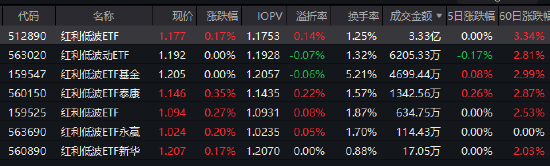
红利低波ETF(512890)近60个交易日吸金57亿 机构:春节躁动行情下,以红利为底 均衡配置!
Xin Lang Cai Jing· 2025-12-31 04:45
Group 1 - The core viewpoint of the news is the performance and investment potential of the Dividend Low Volatility ETF (512890), which has shown resilience in a fluctuating market environment [1][5][9] - The top ten holdings of the ETF exhibit mixed performance, with notable changes in stock values, including a decline in COFCO Sugar and Nanjing Bank, while Construction Bank and CITIC Bank showed slight increases [1][5] - The ETF has attracted significant capital inflows, with net inflows of 1.02 billion yuan over the last 10 trading days, 1.35 billion yuan over the last 20 days, and 5.72 billion yuan over the last 60 days, indicating strong investor interest [1][5] Group 2 - Huatai Securities' chief strategist He Kang expresses optimism about the "old economy" sector, highlighting its low valuations and potential for recovery, contrasting with the crowded and overvalued tech sector [3][8] - The current market is described as being in a "slow bull" phase, with a recommendation to use dividend assets as a foundational investment while balancing growth-oriented sectors [4][8] - The Dividend Low Volatility ETF (512890) has a historical return of 134.48% since its inception in December 2018, outperforming its benchmark and ranking 85th among 502 products, making it a stable investment tool in volatile markets [9]
史海钩沉系列:“亲历”一次科网泡沫,我们能学到什么?
Minsheng Securities· 2025-12-31 00:42
Market Overview - The tech bubble from 1995 to 2000 was driven by technological advancements, macroeconomic changes, regulatory relaxations, and shifts in monetary policy frameworks[6] - The NASDAQ Composite Index peaked at 5048.62 on March 10, 2000, before a significant sell-off began due to external economic shocks[9] Economic Factors - Labor productivity in the U.S. increased significantly during this period, breaking the long-standing relationship of "low unemployment and high inflation" and contributing to economic resilience[6] - The rapid increase in productivity led to a contraction of the output gap, with inflation remaining subdued despite declining unemployment rates[17] Monetary Policy - The Federal Reserve, under Alan Greenspan, adopted a technology-friendly monetary policy framework, maintaining low interest rates to support economic growth while being cautious about inflation[22] - The Fed's approach evolved to focus on maintaining overall price stability and managing the consequences of asset bubbles rather than attempting to burst them[23] Investment Trends - The number of tech IPOs surged from 1995, peaking in 1999, reflecting a growing investor appetite for technology stocks[9] - In 1998 and 1999, tech stocks experienced a significant rally, with the information technology sector showing returns of 77.64% and 78.44% respectively[32] Risk Factors - The report highlights that excessive liquidity and regulatory relaxation were common characteristics of bubbles, with the potential for chaotic leverage expansion being a critical concern[6] - The experience of the tech bubble serves as a cautionary tale, emphasizing that historical patterns cannot be solely relied upon for future investment decisions[2]