
日元贬值

Search documents
中国务必要小心!日元暴跌,经济陷濒临崩溃,警惕日本动武转移矛盾
Sou Hu Cai Jing· 2025-12-26 06:15
Group 1 - The core issue is the depreciation of the Japanese yen despite the Bank of Japan's recent interest rate hike from 0.5% to 0.75%, which was expected to support the currency but instead led to a drop below 157 against the US dollar, marking a new low [1] - The market's reaction indicates a lack of confidence in the Bank of Japan's ability to narrow the interest rate differential with other countries, leading to a sell-off of the yen in favor of higher-yielding currencies like the US dollar and euro [1] - Japan's debt-to-GDP ratio has reached 263%, significantly higher than other countries, with a debt exceeding $11 trillion, resulting in annual interest payments of 22.4%, which adds pressure on the government during interest rate hikes [3] Group 2 - Japan's economic challenges are compounded by external pressures, such as increased tariffs from the US, forcing Japan to use part of its trade surplus to purchase more US Treasury bonds, which raises concerns about financial stability [5] - Rising nationalist sentiments and discussions around nuclear armament reflect a response to Japan's economic and security dilemmas, with some politicians advocating for a revision of Japan's pacifist stance [5][7] - The potential for Japan to pursue nuclear capabilities, given its existing plutonium resources and advanced nuclear technology, poses risks for regional and global security, especially if Japan's economic situation continues to deteriorate [5][7]

STARTRADER:日元持续走软,市场预期弱势或延续至中期?
Sou Hu Cai Jing· 2025-12-26 05:27
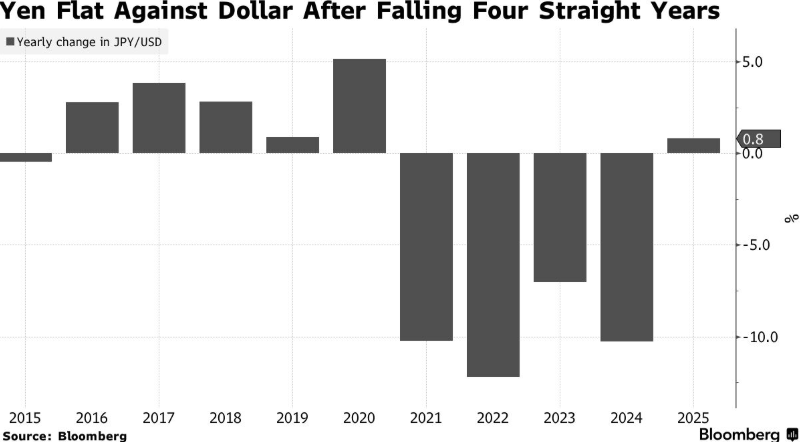
Group 1 - The recent interest rate hike by the Bank of Japan has not provided sustained support for the yen, reinforcing market perceptions of its structural weakness [1] - The primary factors influencing the yen's movement are the US-Japan interest rate differential, real interest rates, and capital flows, with single policy adjustments having limited impact [2] - Multiple international institutions predict that the yen's depreciation pressure may continue into the medium term, with JPMorgan and BNP Paribas forecasting the USD/JPY exchange rate could rise to 160 or higher by the end of 2026 [2] Group 2 - The yen has experienced a slight appreciation of less than 1% this year after four consecutive years of decline, but expectations of a currency reversal due to the Bank of Japan's rate hike and the Federal Reserve's rate cut have not materialized [5] - The yen's fundamentals have not improved, and in a pessimistic scenario, the USD/JPY rate could reach 164 by the end of 2026, with diminishing marginal effects from future rate hikes by the Bank of Japan [5] - The return of arbitrage trading has continued to suppress the yen, with leveraged funds increasing their short positions against the yen to multi-month highs [7] Group 3 - Japanese households and businesses maintain a strong preference for overseas assets, with retail investors significantly increasing net purchases of foreign stocks, reaching near a decade-high scale [7] - The ongoing growth in Japanese companies' foreign direct investment, with this year's M&A activity reaching multi-year highs, is a significant structural factor contributing to the yen's weakness [7] - As the exchange rate approaches levels that may trigger government intervention, official statements are becoming more assertive, although most analysts believe that intervention alone cannot reverse the yen's medium-term weakness [7]
东京通胀降温,加息难停?日元陷政策博弈困局
Sou Hu Cai Jing· 2025-12-26 02:32
Group 1: Inflation Data - Tokyo's core CPI rose by 2.3% year-on-year in December, which is a significant slowdown from the previous month's 2.8% and below the market expectation of 2.5% [6][7] - This marks the first inflation slowdown since August, primarily reflecting a deceleration in food price increases and a decline in energy costs [7] - Excluding fresh food, food prices in Tokyo increased by 6.2% year-on-year, down from 6.5% in the previous month [8] Group 2: Energy Prices - Tokyo's energy prices fell by 3.4% year-on-year in December, contrasting with a 2.6% increase in the previous month [10] - Electricity prices decreased by 2.5%, city gas prices dropped by 4.7%, and gasoline prices fell by 6.4% compared to the same month last year [10] Group 3: Economic Indicators - Japan's industrial output fell by 2.6% in November, reversing a 1.5% increase in October, which was worse than the expected decline of 1.8% [11] - Despite the decline, companies expect output to rebound, forecasting a 1.3% increase in December and a significant 8.0% rise in January [11] Group 4: Monetary Policy and Currency - The Bank of Japan raised its policy interest rate to 0.75%, the highest level in 30 years, indicating a potential for further tightening of monetary policy [13] - Despite the interest rate hike, the yen remains weak, trading near its lowest levels against the dollar, which may increase import costs and exacerbate inflationary pressures [14] - The Japanese government is prepared to intervene in the foreign exchange market if necessary, as indicated by recent statements from officials [15] Group 5: Fiscal Policy - The Japanese cabinet approved a record budget of 122.3 trillion yen (approximately $785 billion) for the next fiscal year, aiming to balance active fiscal policies with concerns over rising debt [16] - The government has assured investors that it will not engage in irresponsible debt issuance or tax cuts amid rising national debt yields and a weak yen [16]
日元没有“速效药”!日本央行渐进紧缩难逆转结构性颓势 华尔街唱空声浪高涨
Zhi Tong Cai Jing· 2025-12-26 02:06
Core Viewpoint - The recent interest rate hike by the Bank of Japan has failed to provide sustained support for the yen, leading to increased bearish sentiment towards the currency, with predictions of further depreciation against the dollar by 2026 [1][2]. Group 1: Economic Factors - Analysts from major financial institutions, including JPMorgan and BNP Paribas, predict that the yen could weaken to 160 yen per dollar or lower by the end of 2026 due to persistent factors such as significant US-Japan interest rate differentials, negative real interest rates, and ongoing capital outflows [1][2]. - The yen has seen a slight increase of less than 1% against the dollar this year after four consecutive years of decline, but expectations for a reversal driven by the Bank of Japan's rate hikes and potential Fed rate cuts have not materialized [1][2]. - The return of arbitrage trading, where investors borrow low-yielding yen to invest in higher-yielding currencies, is creating additional headwinds for the yen [2]. Group 2: Market Sentiment - Market sentiment remains cautious, with the overnight index swap indicating that the next rate hike by the Bank of Japan is not fully priced in, expected at the earliest in September [2]. - The ongoing high inflation in Japan, which exceeds the Bank of Japan's 2% target, continues to exert pressure on Japanese government bonds [2]. - Japanese retail investors are showing a strong preference for overseas assets, with net purchases through investment trusts hovering around 9.4 trillion yen (approximately 60 billion USD), a ten-year high, which is likely to persist and further suppress the yen [3]. Group 3: Long-term Predictions - Some analysts, including those from Goldman Sachs, believe that the yen may eventually strengthen to 100 yen per dollar over the next decade, although they acknowledge the presence of multiple short-term negative factors [4]. - Concerns about intervention risks are rising as the yen approaches levels that previously prompted official action, but experts suggest that intervention alone may not be sufficient to reverse the yen's downward trend [4][5].


日元没有“速效药”!日本央行渐进紧缩难逆转结构性颓势,华尔街唱空声浪高涨
Sou Hu Cai Jing· 2025-12-26 01:36
Core Viewpoint - The Japanese yen is facing structural weakness with no quick fix, as major financial institutions predict further depreciation against the US dollar by 2026, potentially reaching levels of 160 yen or lower per dollar [1][2]. Group 1: Economic Factors - The significant interest rate differential between the US and Japan, negative real interest rates, and ongoing capital outflows are key drivers of the yen's depreciation [1]. - The yen has seen a slight increase of less than 1% against the dollar this year after four consecutive years of decline, but expectations for a reversal due to Bank of Japan's rate hikes and Federal Reserve's rate cuts have not materialized [1]. - The return of arbitrage trading, where investors borrow low-yielding yen to invest in higher-yielding currencies, is making it more difficult for the yen to rebound [2]. Group 2: Market Predictions - Morgan Stanley's chief forex strategist predicts a pessimistic outlook for the yen, forecasting a dollar-to-yen exchange rate of 164 by the end of 2026, citing cyclical pressures and the impact of higher interest rate expectations in other regions [2]. - BNP Paribas anticipates that the global macro environment will favor risk sentiment, which typically benefits arbitrage strategies, leading to a dollar-to-yen rate of 160 by 2026 [3]. - Bank of America highlights that Japan's direct foreign investment has remained stable, indicating a persistent outflow of capital that could continue to pressure the yen [3]. Group 3: Government and Policy Responses - The Bank of Japan's lack of aggressive rate hikes and the persistence of negative real interest rates are seen as critical factors maintaining the yen's weakness [4]. - There is growing concern about potential government intervention as the yen approaches levels that previously triggered official action, although analysts believe that intervention alone may not be sufficient to reverse the yen's downward trend [4][5]. - The focus remains on the upcoming fiscal strategy from the Japanese government, which could influence market sentiment and the yen's trajectory [5].
日元看空声音渐响:受日本央行审慎政策影响,贬值趋势或延续至2026年
Xin Lang Cai Jing· 2025-12-25 22:30
格隆汇12月26日|摩根大通与法国巴黎银行等机构的策略师预计,受美日利差及负实际利率驱动,日元 汇率到2026年底将走软至160甚至更低。尽管日本央行在加息,但由于市场已消化其他地区的更高利 率,加之日元基本面疲软,明年周期性力量可能进一步利空日元。虽然日元目前已接近此前触发干预的 水平,官方干预风险重回视野,但仅凭干预手段恐难扭转日元的贬值趋势。 ...
122.3万亿日元!高市早苗财政“豪赌”点燃日元焦虑
Guo Ji Jin Rong Bao· 2025-12-25 13:03
然而,这项号称"史上最贵"的预算案,却因依赖大规模国债发行引发市场对日本财政可持续性的深切担 忧。 高市财政"豪赌" 日本政府此次推出的创纪录预算案总额达122.3万亿日元,比2025年度的115.2万亿日元增加了约6.3%。 这一史上最贵预算案的背后,是多重结构性压力共同作用的结果。 老龄化社会带来的社会保障负担成为预算增长的主要驱动因素。根据预算案,社保相关费用达到约39.1 万亿日元,在财政支出中占比最大。 彭博社获取的文件显示,日本的社会保障开支将从本财年的38.3万亿日元增至下一财年的39.1万亿日 元。 市场仍在担忧日本债务的可持续性,高市政府最新公布的财政预算案则被视为进一步加剧这一恶性循环 的重要因素。 就在市场为日元跌势忧心忡忡之际,日本首相高市早苗于12月25日宣布了总额高达122.3万亿日元(约合 人民币5.5万亿元)的2026财年预算案,创下日本史上最高预算纪录。 高市早苗称:"我们相信这份预算草案在财政纪律与实现强劲经济之间取得了平衡,同时确保了财政可 持续性。" 不过,截至今年7月,日本政府债务余额占GDP的比例已高达263%,显著高于2009年—2010年希腊主权 债务危机时期的 ...
加息难阻颓势 高市早苗政策被批动摇日元信用根基
Sou Hu Cai Jing· 2025-12-24 16:34
Core Viewpoint - The recent decline in support for Prime Minister Fumio Kishida's cabinet reflects growing concerns over Japan's economic policies and the effectiveness of the Bank of Japan's monetary strategies [1][5][6]. Group 1: Economic Indicators - The latest public opinion poll shows Kishida's cabinet support rate at 67.5%, down 2.4 percentage points from November, with a disapproval rate of 20.4% [1]. - The Japanese yen has been on a downward trend, recently trading at 157.76 yen per dollar, marking a significant depreciation of 20% compared to three years ago [1]. - Following a 25 basis point interest rate hike by the Bank of Japan, the 10-year government bond yield rose to 2.020%, the highest since August 1999 [3]. Group 2: Monetary Policy and Market Reactions - Economists note that the recent interest rate hike was conservative, failing to instill confidence in the market regarding the government's policies [2][3]. - The Bank of Japan's commitment to maintaining loose financial conditions has led to skepticism about the effectiveness of its monetary policy in controlling inflation and stabilizing the yen [3][4]. - The yield on long-term Japanese government bonds has reached a 26-year high, indicating a lack of investor confidence in domestic bonds [4]. Group 3: Fiscal Policy Concerns - Kishida's government has approved an additional budget of 18.3 trillion yen to support economic stimulus, with 11.7 trillion yen financed through new bond issuance, raising concerns about Japan's fiscal health [5][6]. - There is apprehension among investors regarding Japan's public debt, with projections suggesting that the debt-to-GDP ratio could rise from 215% to 230% by 2030 if current fiscal policies persist [6]. - The government's lack of a clear plan for debt repayment has led to market skepticism about its fiscal responsibility [6]. Group 4: Future Outlook - Analysts predict that the Bank of Japan may raise interest rates twice next year, potentially reaching 1.25%, but any significant intervention in the foreign exchange market may depend on the yen's performance against the dollar [8]. - The finance minister has indicated that the government has room to take decisive action in response to currency fluctuations, hinting at possible direct market interventions [7].
日本国债价格走势分化 首相表态或成债市支撑
Xin Lang Cai Jing· 2025-12-24 08:08
Core Viewpoint - The performance of Japanese government bonds is mixed, influenced by Prime Minister Fumio Kishida's concerns regarding domestic debt issuance, which may provide support for bond prices [1] Group 1: Government Debt Concerns - Prime Minister Kishida expressed worries about Japan's high national debt levels and opposed "irresponsible" debt issuance or tax cuts [1] - Kishida's statements may contribute to stabilizing bond prices amid investor concerns [1] Group 2: Currency and Interest Rates - The recent pause in the depreciation of the yen may alleviate investor fears regarding rising import prices and potential acceleration of interest rate hikes by the Bank of Japan [1] - The yield on 10-year Japanese government bonds decreased by 2 basis points to 2.020%, while the 30-year yield increased by 1 basis point to 3.435% [1]
加息未改日元汇率低迷状况
Sou Hu Cai Jing· 2025-12-23 22:42
日本央行此前将"按兵不动"的重要原因归结于对美国政府高关税政策影响的评估尚未完成,需要确认高 关税是否会显著冲击日本企业经营、抑制投资和工资增长,从而破坏刚刚出现的价格和工资改善势头。 但事实上,在10月的货币政策会议中,日本央行内部已基本形成高关税政策对国内企业直接影响有限的 共识。日本央行行长植田和男也在本月月初明确表示,对未来的不确定性正在逐渐消退。此外,日本央 行高度关注的明年春季劳资谈判"初期势头"已显现积极信号。由总行及全国33家分支机构实施的辖区内 企业加薪意向调查显示,有31家分支机构认为,2026财年的加薪幅度将高于或至少与上年度持平。 日本央行近期"按兵不动"的更重要原因来自政府立场。经济界普遍认为,日本政府倾向于积极财政政 策,对加息持谨慎态度,日本央行一度担忧与政府发生政策冲突。分析认为,此次央行加息是日本政府 在多重压力下的"妥协"。首先,在财政扩张政策持续推进的背景下,政府难以忽视日元疲软和通胀风 险。若央行长期停滞加息,日元持续贬值将对冲政府为遏制物价上涨所作的努力。其次,干预央行货币 政策将损害其独立性,可能违反《日本央行法》。再次,美国政府对日本央行的货币政策虎视眈眈,这 些 ...