
车路协同

Search documents
华设集团: 华泰联合证券有限责任公司关于华设设计集团股份有限公司部分募投项目延期的核查意见
Zheng Quan Zhi Xing· 2025-08-29 10:24
Summary of Key Points Core Viewpoint - The company has decided to postpone the completion date of the Huase Innovation Center project to June 30, 2026, due to adverse weather conditions affecting construction progress, while ensuring that the project’s implementation subject, funding usage, and investment scale remain unchanged [3][14][16]. Fundraising Overview - The company raised a total of RMB 400 million through the issuance of convertible bonds, with a net amount of RMB 391.61 million after deducting issuance costs [2][3]. - As of June 30, 2025, the total investment in fundraising projects was RMB 391.61 million, with a progress rate of 52.06% [2][3]. Postponement Details - The Huase Innovation Center project’s original completion date was September 1, 2025, which has now been adjusted to June 30, 2026 [3][16]. - The delay is attributed to extreme weather conditions and compliance with environmental regulations, which limited effective construction time [3][14]. Project Re-evaluation - The necessity and feasibility of the Huase Innovation Center project remain unchanged, aligning with national policies on digital technology and green development [4][5][6]. - The project aims to enhance the company’s design and research capabilities, contributing to its long-term strategic goals [13][14]. Implementation Measures - The company will closely monitor the project’s progress and implement a structured plan to ensure timely completion [14][15]. - Dedicated personnel will be assigned to oversee the project, ensuring effective coordination and dynamic control during the implementation phase [14][15]. Internal Decision-Making Process - The postponement was approved by both the board of directors and the supervisory board, confirming compliance with relevant regulations and ensuring no adverse impact on shareholder interests [16][17].

“车路协同技术发展”建设试点通过验收 让汽车驶上“智慧的路”
Si Chuan Ri Bao· 2025-08-28 06:53
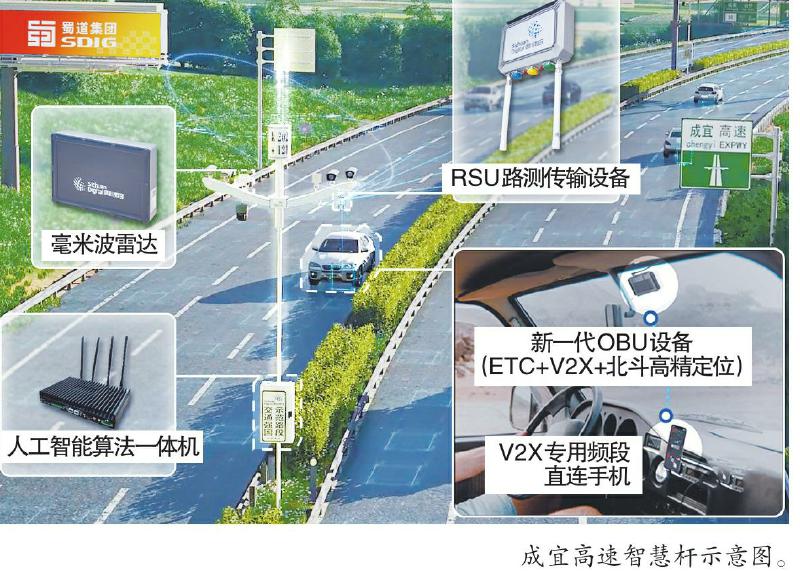
Core Insights - The pilot project of vehicle-road collaboration in Sichuan integrates "smart vehicles," "intelligent roads," and "powerful cloud" to create a closed-loop system of perception, decision-making, and control, enhancing traffic safety beyond single-vehicle intelligence [3][4][5] Implementation Strategy - Sichuan's pilot tasks are divided into three phases: identifying business scenarios, constructing test sites, and ultimately promoting the technology across entire highways [5][6] - The project has achieved breakthroughs in 15 key technologies, including low-cost perception technology and heterogeneous network transmission technology, covering a demonstration line of 340 kilometers [3][5][8] Technological Advancements - The Chengdu Ring Expressway and Chengdu Second Ring Expressway have implemented a "smart eye" management platform for real-time monitoring of traffic incidents and congestion, leading to significant advancements in traffic management [4][5] - The Chengyi Expressway, equipped with advanced cloud computing and AI technologies, has seen a 60% reduction in traffic accidents and a 30% improvement in accident response efficiency [6][9] Future Developments - Sichuan plans to further promote the pilot experiences through the construction of grid-based smart units, enhancing the intelligence level of its highways [7][9] - The province is also focusing on the integration of traffic big data and smart driving algorithms to attract more technology companies to its intelligent connected vehicle ecosystem [9][10] Market Potential - The roadside intelligent perception market is expected to exceed 40 billion yuan by 2025, driven by policy support and rich application scenarios [9] - The development of vehicle-road collaboration standards and the accumulation of data resources position Sichuan as a unique advantage in the intelligent connected vehicle industry [9][10]

金溢科技: 2025年半年度报告
Zheng Quan Zhi Xing· 2025-08-25 17:15
Core Viewpoint - Shenzhen Genvict Technologies Co., Ltd. reported a significant decline in revenue and net profit for the first half of 2025, indicating challenges in the digital transportation and energy integration sectors, while continuing to focus on technological innovation and expanding its product offerings in smart transportation solutions [3][4][5]. Financial Performance - The company's operating revenue for the reporting period was approximately CNY 202.92 million, a decrease of 11.01% compared to the same period last year [3]. - The net profit attributable to shareholders was approximately CNY -11.82 million, representing a decline of 175.92% year-on-year [3]. - The net profit after deducting non-recurring gains and losses was approximately CNY -21.25 million, a decrease of 913.81% compared to the previous year [3]. - The total assets at the end of the reporting period were approximately CNY 2.56 billion, down 3.32% from the previous year [3]. Business Overview - The company operates in the "digital transportation" and "energy integration" sectors, focusing on solutions and core equipment that promote smart highways, vehicle-road-cloud integration, automotive electronics, and digital monitoring [6][12]. - The company aims to achieve a sustainable transportation system that is safer, more efficient, and environmentally friendly, aligning with its mission of "zero deaths, zero accidents, zero congestion, and zero carbon" [6][12]. Key Business Segments - The smart highway business includes solutions for intelligent toll collection, highway collaboration, and smart traffic management, leveraging technologies like ETC and AI for enhanced operational efficiency [7][8]. - The vehicle-road collaboration solutions, branded as "Traffic Guardian," utilize ETC systems to provide real-time information services for highway management [8][10]. - The company has developed a comprehensive product matrix that includes vehicle-mounted V2X products, roadside units, and cloud-based vehicle-road collaboration platforms, enhancing the integration of smart transportation systems [11][12]. Technological Innovations - The company has established a strong foundation in core technologies such as sensing, computing, and communication, enabling the development of a full-stack product matrix for smart transportation [6][11]. - The integration of RFID technology in urban traffic management and vehicle identification has been a focus area, enhancing safety and efficiency in transportation systems [20][21]. Future Directions - The company is committed to continuous technological innovation, particularly in the fields of V2X, RFID, and smart vehicle electronics, to support the digital transformation of transportation infrastructure [14][15]. - The low-altitude network integration business is in the validation phase, focusing on AI applications in traffic and engineering sectors, aiming to improve inspection efficiency and data standardization [22].
中报揭示佑驾创新“布局即兑现”路径显效:收入大增46%,L4业务突破成新增长极
Zhi Tong Cai Jing· 2025-08-25 05:50
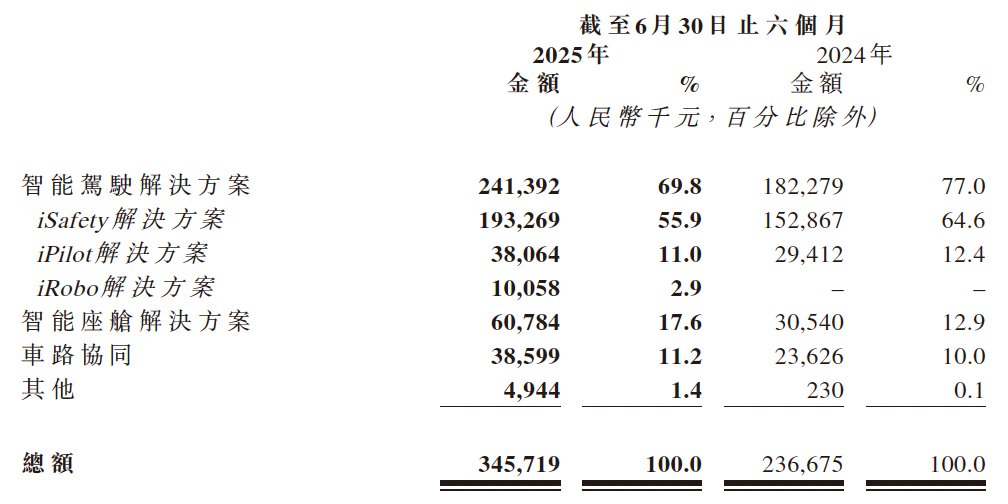
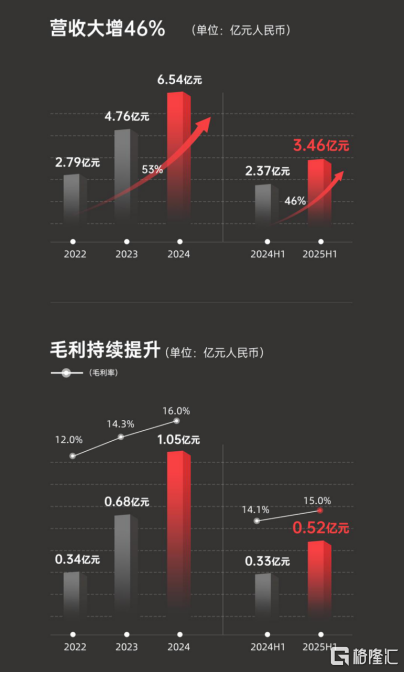
Core Insights - The article highlights the successful growth strategies of companies like Xiaomi and Youjia Innovation, emphasizing their ability to diversify and innovate to navigate competitive landscapes [1][2][8] Company Growth and Financial Performance - Youjia Innovation reported a revenue of 346 million RMB in the first half of 2025, marking a 46.1% year-on-year increase, with a gross profit of 52 million RMB and a gross margin of 15%, up by 0.9 percentage points [3][4] - The company's core business segments, including intelligent driving solutions and intelligent cockpit solutions, achieved revenues of 241 million RMB and 61 million RMB, respectively, with year-on-year growth rates of 32.4% and 99% [3][4] - The L4 autonomous driving segment, represented by the iRobo solution, generated over 10 million RMB in revenue within six months, indicating significant commercial progress [5][10] Strategic Development and Market Position - Youjia Innovation has adopted a flexible strategy, expanding into intelligent cockpit and vehicle-road collaboration markets, which has led to a synergistic growth model similar to Xiaomi's [9][10] - The company has successfully entered international markets, with its solutions being adopted by various OEMs for export models, targeting regions such as the EU, Australia, and Mexico [6][7] Innovation and R&D Focus - Youjia Innovation increased its R&D expenditure by over 50% in the first half of the year, reflecting its commitment to advancing high-level assisted driving and L4 autonomous driving technologies [9][10] - The launch of new products, such as the iPilot 4 Plus and iPilot 4 Pro, has driven strong demand and project acquisition, showcasing the company's innovative capabilities [4][5] Future Growth Potential - The company is expected to accelerate growth in its L4 autonomous driving segment, with logistics vehicles nearing commercialization and anticipated deliveries in the fourth quarter of this year [10] - Analysts project that Youjia Innovation will significantly reduce losses in the coming year and achieve profitability by 2027, supported by a low debt ratio and sufficient cash reserves [10]
佑驾创新2025年营收飙升46.1%,业务全线飘红,L4收入破千万
Ge Long Hui· 2025-08-22 14:42
Core Viewpoint - The company, Youjia Innovation, reported impressive mid-year results for 2025, showcasing significant growth in revenue, gross profit, and gross margin, indicating a strong operational performance and a robust self-sustaining capability [1][6]. Financial Performance - Total revenue reached RMB 346 million, a year-on-year increase of 46.1% - Gross profit amounted to RMB 52 million, reflecting a 54.8% year-on-year growth, with a gross margin of 15%, up by 0.9 percentage points from the previous year [1][3]. Business Segments - The intelligent driving segment generated revenue of RMB 241 million, a 32.4% increase, accounting for approximately 69.8% of total revenue - The intelligent cockpit solutions segment achieved revenue of RMB 61 million, with a remarkable growth rate of 99.0%, representing about 17.6% of total revenue - The vehicle-road collaboration business earned RMB 39 million, a 63.4% increase, contributing around 11.2% to total revenue [3][4]. Product Development and Innovation - The company launched several advanced intelligent driving solutions, including iPilot 4 Plus and iPilot 4 Pro, enhancing its product matrix - In the intelligent cockpit area, the new "Smart Butler BamBam" solution was introduced, offering personalized and scenario-based experiences, alongside the all-in-one DMS product, iCabin Lite [6][7]. Market Expansion and Global Strategy - Youjia Innovation is actively pursuing a global strategy, establishing a subsidiary in Singapore and expanding its customer base to include 42 automotive manufacturers across various international markets, including the EU, Australia, and several Asian countries [7][8]. - The company is also exploring commercial opportunities in unmanned logistics vehicles, with the first generation expected to be delivered in Q4 2025 [7]. Future Outlook - The company aims to focus on the "integrated cockpit and driving" strategy, expanding the application of L4 autonomous driving across diverse scenarios, while continuously iterating technology and upgrading products to enhance service quality [8].
预见2025:《2025年中国智慧交通行业全景图谱》(附市场规模、竞争格局、细分市场发展现状等)
Qian Zhan Wang· 2025-08-20 04:42
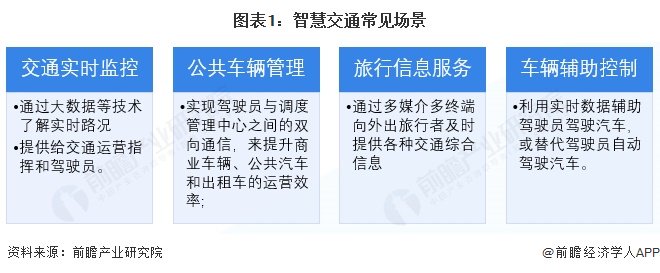
Industry Overview - The concept of smart transportation has evolved from intelligent transportation systems (ITS) to incorporate advanced technologies such as IoT, cloud computing, and big data, enhancing real-time traffic data services [1][2] - Smart transportation aims to improve traffic efficiency through integrated applications of information technology, data communication, and control systems [1][2] Industry Chain Analysis - The smart transportation industry chain includes upstream components like algorithm design, chip parts, data centers, and sensing devices; midstream focuses on infrastructure and services; and downstream applications cover smart highways, public transport, and smart ports [5][7] - Key players in the industry include traditional security companies, internet firms, and algorithm providers, with notable companies like Hikvision, Tencent, and Baidu involved in various segments [7] Industry Development Status - Transportation fixed asset investment in China reached 3.9 trillion yuan in 2023, with expectations to maintain high levels in 2024 [17] - The market size for urban intelligent transportation projects (excluding parking) is projected to be approximately 5.46 billion yuan in 2024, with a slight decrease from 2023 [19][20] Market Size and Growth - The smart transportation market in China has grown from 97.3 billion yuan in 2016 to 236.7 billion yuan in 2023, with projections to exceed 240 billion yuan in 2024 [25][26] - The average project size for urban intelligent transportation projects has remained stable between 200 million to 250 million yuan in recent years [20] Competitive Landscape - Major players in the smart transportation sector include telecommunications and internet companies, with China Mobile and China Telecom leading in project bids, accounting for over 22% of the total bid amounts [27][29] - The competitive landscape is characterized by a mix of regional players, with pilot projects concentrated in coastal areas like East China and South China [31][33] Future Trends - The smart transportation market is expected to grow significantly, driven by policy support, technological integration, and increasing urbanization, with projections indicating the market could exceed 300 billion yuan by 2030 [34]
AI正在重构高阶辅助驾驶
Zhong Guo Qi Che Bao Wang· 2025-08-13 01:11
Core Insights - The core viewpoint of the articles emphasizes that AI technology is a driving force in the evolution of advanced driver-assistance systems (ADAS), transitioning from "assistance" to "autonomy" in the automotive industry [2][3][4]. Group 1: AI Technology and Market Trends - AI has become the core driver for the transition of high-level ADAS, reshaping the automotive technology landscape and competitive dynamics [2][3]. - According to S&P Global Automotive, by 2024, L2 and above ADAS will be able to handle over 70% of structured road scenarios, with an 11% equipment rate for new models in China [3][4]. - The application of advanced AI technologies, including large language models, is enhancing the reasoning capabilities of ADAS, pushing the boundaries of functionality [4][5]. Group 2: Challenges and Ethical Considerations - Despite advancements, the technical boundaries of ADAS remain clear, particularly in extreme weather and complex scenarios where human intervention is still required [4]. - Ethical dilemmas, such as the "trolley problem," highlight the lack of a unified global standard for decision-making in unavoidable danger situations [4]. Group 3: Industry Transformation and Supply Chain Dynamics - The rapid penetration of high-level ADAS is driving profound changes in the automotive supply chain, necessitating a balance between cost reduction and quality enhancement [6][7]. - A collaborative model of "hardware standardization + software differentiation" is emerging, reshaping relationships between manufacturers and suppliers [6][7]. - The standardization of hardware components, such as LiDAR and radar, has significantly reduced costs, with some companies achieving over a 70% reduction since 2020 [7]. Group 4: Future Outlook and Policy Implications - The future of AI in high-level ADAS will follow a clear stepwise progression, heavily reliant on technological breakthroughs and the maturity of application scenarios [5]. - By 2030, it is predicted that over 65% of new light vehicles in China will be equipped with L2 and above ADAS, contingent on supportive policies and infrastructure [5]. - The upcoming 2025 Mobility Intelligence Dialogue series in major cities will explore how to evolve high-level ADAS from mere "assistive tools" to "mobility partners" [8].

智能汽车ETF(159889)涨超1.0%,行业聚焦电动智能化增量机遇
Mei Ri Jing Ji Xin Wen· 2025-08-12 07:09
Group 1 - The core viewpoint emphasizes the long-term opportunities in the smart automotive industry, focusing on the rise of domestic brands and the trend towards electric intelligence [1] - The global status of domestic automotive brands is improving, with three main types of companies involved: traditional automakers actively transforming, new force brands, and technology companies transitioning into automotive [1] - By 2025, it is expected that more vehicles will be equipped with lidar, domain controllers, and L2+ level models will enter mass production, marking the beginning of L3 high-level intelligent driving [1] Group 2 - The incremental components in the industry are developing along two main lines: data flow (sensors, domain controllers, etc.) and energy flow (power batteries, electric drive systems, etc.) [1] - The industry is transitioning from a growth phase to a maturity phase, with an expected annual compound growth rate of 2% over the next 20 years, and sales of new energy vehicles are projected to exceed 15.5 million units in 2025, representing a year-on-year growth of over 25% [1] - The Smart Automotive ETF (159889) tracks the CS Smart Automotive Index (930721), which selects listed companies involved in smart driving and vehicle networking technologies to reflect the overall performance of quality enterprises in the smart automotive sector [1]

金溢科技股价上涨1.53% 公司聚焦智慧交通领域发展
Jin Rong Jie· 2025-08-11 17:48
Group 1 - The core viewpoint of the article highlights that Jinyi Technology's stock price increased by 1.53% to 27.16 yuan as of August 11, 2025, with a trading volume of 69,212 hands and a transaction amount of 187 million yuan [1] - Jinyi Technology focuses on the smart transportation sector, specializing in the research, production, and sales of intelligent transportation system solutions, including ETC and V2X vehicle-road collaboration [1] - The company emphasizes the complementary relationship between single-vehicle intelligence and vehicle-road collaboration, supported by strong government policies and advanced infrastructure in China, which presents significant market opportunities for the industry [1] Group 2 - Jinyi Technology plans to continue its focus on the smart transportation field, following a business development path from "ETC—V2X vehicle-road collaboration—large vehicle-road cloud—vehicle, energy, road, cloud" [1] - On August 11, the net outflow of main funds was 3.7447 million yuan, but over the past five days, the overall trend showed a net inflow of 9.9406 million yuan [1]
金溢科技:公司将持续聚焦智慧交通领域
Zheng Quan Ri Bao Wang· 2025-08-11 08:42
证券日报网讯金溢科技(002869)8月11日在互动平台回答投资者提问时表示,单车智能与车路协同是 相辅相成、协同发展的关系,车路协同可以为单车智能提供更丰富的信息输入和决策支持,能够有效弥 补单车智能在感知范围、成本、极端天气应对、全局优化等方面的局限性,是实现更高级别自动驾驶、 提升交通整体效率和安全的重要支撑和有效补充。中国在车路协同领域的政策支持力度大、基础设施建 设走在世界前列,将为车路协同产业的发展提供广阔的市场机遇。公司将持续聚焦智慧交通领域,秉 承"零死亡、零事故、零拥堵、零碳"的交通使命,沿着"ETC—V2X车路协同—大车路云—车、能、 路、云—iACT网联交通智能体和CCTE网联交能复合体"的业务发展路径稳步前进,共同推动智慧交通 产业的发展。 ...