
高温超导

Search documents
上海超导科技IPO:技术光环下的财务隐忧与领导人迷雾
Sou Hu Cai Jing· 2025-06-20 13:58
Core Viewpoint - Shanghai Superconductor Technology Co., Ltd. has initiated its IPO process on the Sci-Tech Innovation Board, aiming to raise 1.2 billion yuan, with China International Capital Corporation (CICC) as the sponsor [1][3]. Group 1: IPO Journey - The company was established on October 18, 2011, with a registered capital of 520 million yuan, focusing on high-temperature superconducting materials [3]. - Key milestones include the start of IPO counseling on November 28, 2024, and the acceptance of the IPO application on June 18, 2025 [3]. Group 2: Business and Governance Risks - The company faces high customer concentration, with the top five clients contributing over 70% of revenue. A 30% decline in the State Grid's procurement volume in 2024 has led to an increase in inventory turnover days to 287 days, compared to 180 days in 2022 [5][6]. - The commercial viability of its technology is questioned, as claims of entering fields like controlled nuclear fusion and medical devices remain unproven, with large-scale applications expected to take 5-10 years to develop [7]. - The chairman, Ma Tao, has limited public information available, and his past associations raise concerns about governance and transparency [8][10]. Group 3: Financial Data Analysis - The company reported revenues of 0.35 billion yuan in 2022, increasing to 0.83 billion yuan in 2023, and projected to reach 2.39 billion yuan in 2024. However, it also faced net losses of 0.28 billion yuan in 2022 and 0.04 billion yuan in 2023, with a projected profit of 0.72 billion yuan in 2024 [12]. - The high accounts receivable, which accounted for 52% of revenue, raises concerns about the quality of earnings, especially given that some major clients are relatively new companies [12]. - The company plans to expand its production capacity significantly, aiming for an annual output of 6,000 kilometers, while the global market for high-temperature superconducting materials is only about 50 kilometers in 2024, indicating a severe supply-demand mismatch [12]. Group 4: Regulatory Inquiry Anticipation - The company may face inquiries regarding its technology commercialization capabilities, governance structure without a controlling shareholder, and high accounts receivable potentially indicating bad debt risks [13]. - Investors are advised to monitor three critical signals: the ability to diversify the customer base, the potential for positive cash flow, and the feasibility of capacity utilization [13].

午评:沪指涨0.08% 白酒、港口航运及仓储物流板块走强
Xin Hua Cai Jing· 2025-06-20 03:54
Market Overview - The Shanghai and Shenzhen stock markets opened mixed on June 20, with the Shanghai Composite Index and Shenzhen Component Index slightly lower, while the ChiNext Index opened slightly higher [1] - The market saw initial gains followed by a pullback, with the Shanghai Composite Index experiencing narrow consolidation during the day [1] - By midday, the Shanghai Composite Index was at 3364.83 points, up 0.08%, with a trading volume of approximately 248.3 billion yuan; the Shenzhen Component Index was at 10032.64 points, down 0.19%, with a trading volume of approximately 422.7 billion yuan; the ChiNext Index was at 2015.47 points, down 0.56%, with a trading volume of approximately 213.9 billion yuan [1] Sector Performance - The railway equipment, photovoltaic, and gaming sectors showed strong performance at the market open, while digital currency, oil and gas, and precious metals sectors faced declines [1] - The BC battery, photolithography machine, and solid-state battery sectors initially strengthened but retreated after reaching highs; meanwhile, the liquor, port shipping, and logistics sectors continued to perform well throughout the day [1] - Financial stocks, including banks and insurance, experienced slight gains, with institutions like Pudong Development Bank and Hangzhou Bank reaching historical highs [1] AI and Technology Investment Insights - CITIC Securities highlighted a resurgence in AI network construction driven by the demand for AI reasoning and training, as well as the maturity of ASIC chips, suggesting a positive outlook for the optical module and copper cable sectors [2] - Huatai Securities noted significant growth in Shanghai Superconductor, a leader in high-temperature superconducting materials, indicating an acceleration in the industry driven by controllable nuclear fusion demand [2] - China International Capital Corporation (CICC) emphasized that the current AI market is still in its early stages, recommending attention to opportunities in AI hardware and applications, particularly in areas like embodied intelligence and autonomous driving [2] E-commerce and International Cooperation - The Ministry of Commerce reported that the number of Silk Road e-commerce partner countries has increased to 35, reflecting China's expanding international e-commerce cooperation [3] - In the first five months of 2025, China's e-commerce sector demonstrated strong growth, with significant increases in sales across various digital products and services [3] Energy Consumption Data - The National Energy Administration reported that China's total electricity consumption in May reached 809.6 billion kilowatt-hours, marking a year-on-year increase of 4.4% [4] - Breakdown of electricity consumption by sector showed the first industry at 11.9 billion kilowatt-hours (up 8.4%), the second industry at 541.4 billion kilowatt-hours (up 2.1%), and the third industry at 155 billion kilowatt-hours (up 9.4%) [4]
华泰证券今日早参-20250620
HTSC· 2025-06-20 00:58
Group 1: Fixed Income and Economic Outlook - The Federal Open Market Committee (FOMC) maintained the federal funds rate target range at 4.25% to 4.5%, marking the fourth consecutive meeting without a rate change, aligning with market expectations [2] - The statement indicated a slight reduction in uncertainty regarding the economic outlook, although it remains at a high level [2] Group 2: Energy Transition and High-Temperature Superconductors - Shanghai Superconductor, a leading company in high-temperature superconducting materials, reported projected revenues of CNY 0.83 billion and CNY 2.40 billion for 2023 and 2024, respectively, reflecting year-on-year growth of 133% and 187% [2] - The company's gross profit margins are expected to improve to 55.77% and 60.52% in 2023 and 2024, respectively, with a significant increase in net profit to CNY 0.73 billion in 2024, indicating a turnaround [2] - The report anticipates that the demand for controllable nuclear fusion will drive down costs and expand application scenarios for high-temperature superconductors [2] Group 3: E-commerce and Retail Growth - The 2025 "618" e-commerce promotion is expected to see stable double-digit growth, driven by a slightly extended activity cycle, government subsidies, and increased user engagement through instant retail scenarios [4] - Major e-commerce platforms are expected to continue competing on improving merchant operations and enhancing user stickiness through multi-channel marketing [4] - Recommended stocks include Alibaba (BABA US/9988 HK) and JD.com (JD US/9618 HK) due to their strong brand support and potential for cross-selling in instant retail [4] Group 4: Utilities and Environmental Sector Performance - The report anticipates a mixed performance among major thermal power companies in Q2 2025, with coal prices expected to decline month-on-month [5] - Hydropower generation is projected to decline year-on-year, while nuclear power operations remain stable [5] - Key focus areas for green power operators include electricity pricing mechanisms and cash flow management for environmental companies [5] Group 5: New Energy and Technology Trends - The report highlights optimism in the profitability of battery and structural components in the electric vehicle sector, alongside advancements in solid-state battery technology [8] - Wind power demand is expected to remain robust, with profitability recovery driven by offshore wind projects [8] - Recommended stocks include CATL, EVE Energy, and others involved in emerging technology sectors such as humanoid robots and AIDC [8] Group 6: U.S. Treasury Market Demand - The report analyzes the structural characteristics of U.S. Treasury investors, noting that international investors, broad-based mutual funds, and the Federal Reserve account for over 60% of the market [7] - Different investor types exhibit distinct motivations for purchasing Treasuries, with expectations for continued demand from commercial banks and pension funds in the second half of 2025 [7]
可控核聚变系列 - 高温超导
2025-06-19 09:46
Summary of Key Points from the Conference Call Industry Overview - The conference call discusses the **high-temperature superconductors (HTS)** industry, focusing on the classification, applications, and advancements in superconducting materials [1][2][3]. Core Insights and Arguments - **Superconducting Materials Classification**: Superconductors are divided into two categories: Type I and Type II, with Type II being more practical due to its ability to form mixed states. They are further classified into low-temperature superconductors (LTS) and high-temperature superconductors (HTS) [1][3]. - **HTS Materials**: HTS materials can operate under liquid nitrogen conditions, making them more advantageous compared to LTS, which require liquid helium. HTS materials include copper-based (e.g., bismuth and yttrium barium copper oxide) and iron-based superconductors [1][5]. - **Performance Metrics**: The critical current density (JC) for HTS can reach the order of megaamperes per square centimeter, allowing for more compact magnet designs and higher magnetic field strengths [1][10]. - **Market Dynamics**: Shanghai Superconductor Company holds an 80% market share due to completed equipment depreciation, government support, and early expansion. However, increased competition may lead to price pressures [3][30][31]. Important but Overlooked Content - **Technological Advancements**: China has made significant breakthroughs in iron-based superconductors, achieving important applications such as full iron-based magnets and producing 100-meter-long iron-based tapes [7][8]. - **Cost Reduction Potential**: The cost of second-generation HTS tape has decreased from 260 RMB per meter in 2022 to 92 RMB per meter in 2024, indicating potential for further cost reductions depending on specifications and market demand [29]. - **Applications in Fusion Energy**: HTS materials are crucial in fusion energy applications, including current leads and magnetic coils, allowing for higher magnetic field strengths and reduced equipment sizes [24][25]. - **Future Price Stability**: The future price levels of HTS materials may be influenced by performance, pricing competition, and urgent project demands, with a potential downward trend due to low-price competition in the Chinese market [32]. This summary encapsulates the essential points discussed in the conference call, providing insights into the HTS industry, its current state, and future prospects.
未来产业:可控核聚变新阶段,迈向终极能源第一步(附46页PPT)
材料汇· 2025-06-13 15:14
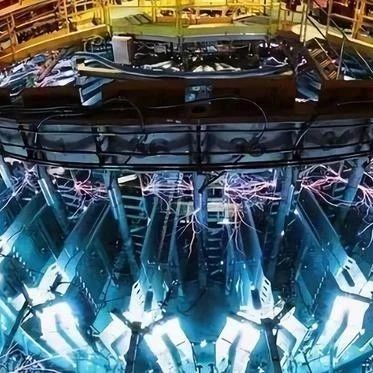
点击 最 下方 关注《材料汇》 , 点击"❤"和" "并分享 添加 小编微信 ,寻 志同道合 的你 正文 可控核聚变是终极能源解决方案,但实现难度高,当前技术路径多样 可控核聚变因能量密度高、燃料储量丰富、安全性优越,被视为终极能源解决方案。当前主流技术路径包括 磁约束(托卡马克装置)、惯性约束(NIF装置)及磁 惯性约束(直线型装置) ,国内外多个装置在建, 处于劳森判据Q>1的验证阶段 。 为什么当下是可控核聚变的新阶段? 一、政策与资本双轮驱动产业化。 1)政策上 ,中国通过多项财政支持、央企协同、研发创新及安全监管等政策举措推动核聚变产业发展;海外竞相锁定30-40年代商用时间窗口,通过资金注入、机 制优化和国际合作加速技术转化。 2)投资上 ,24年全球聚变企业达50家,80%为私营,美国占半数, 国内以聚变新能和中国聚变能领衔,分别布局低温超导和高温超导托卡马克,聚焦25-30年的Q 值验证和30-40年的商业电站落地目标。 二、多种技术路径百花齐放,实验&工程有望突破。 1)高温超导磁体 将托卡马克体积缩小至传统装置的1/40, 成本降低、迭代加速,是未来发展方向 ; 2)直线型磁惯性装置 He ...
可控核聚变新阶段,迈向终极能源第一步
Soochow Securities· 2025-06-13 07:48
Investment Rating - The report suggests a positive investment outlook for the controlled nuclear fusion industry, driven by policy and capital support, with significant potential for growth and commercialization in the coming years [4][30]. Core Insights - Controlled nuclear fusion is viewed as the ultimate energy solution due to its high energy density, abundant fuel supply, and superior safety [4][9]. - The current phase of controlled nuclear fusion is characterized by a dual drive of policy and capital, with numerous projects underway globally, particularly in China and the US, aiming for commercial viability by the 2030s to 2040s [4][30]. - Various technological pathways are emerging, including magnetic confinement (tokamak), inertial confinement (NIF), and magnetic inertial confinement, with significant advancements expected in the next few years [4][30]. Summary by Sections Part 1: What is Controlled Nuclear Fusion? - Controlled nuclear fusion involves the merging of lighter atomic nuclei to form a heavier nucleus, releasing significant energy, primarily using deuterium and tritium as fuel [9][10]. Part 2: Why is Now a New Phase for Controlled Nuclear Fusion? - The industry is experiencing a surge in support from governments worldwide, with China implementing multiple policies to foster development, including financial backing and international collaboration [30][33]. - The number of active fusion companies has increased significantly, with around 50 globally, 80% of which are private enterprises, indicating a robust investment landscape [40][41]. Part 3: Device Architecture Breakdown and Industry Cost Map - The report outlines the cost structure of fusion devices, with initial experimental tokamak investments around 15 billion yuan, and highlights the significant capital required for development [4][30]. Part 4: Competitive Cost of Fusion Power - The report estimates the cost of electricity from fusion devices, with projected costs of 0.31 and 0.27 yuan/kWh for low-temperature superconducting and linear magnetic inertial fusion devices, respectively, indicating competitive pricing compared to traditional energy sources [4][30]. Part 5: Investment Recommendations - The report recommends focusing on key suppliers in the fusion supply chain, including companies like Western Superconducting, Lianchuang Optoelectronics, and Antai Technology, as they are positioned to benefit from the anticipated growth in the fusion sector [4][30].


可控核聚变行业专题报告:核聚成能,众志成城
Changjiang Securities· 2025-06-03 05:16
Investment Rating - The report does not explicitly state an investment rating for the controlled nuclear fusion industry. Core Insights - Controlled nuclear fusion is considered a strategic energy source that is safe, clean, low-carbon, and has high energy density, potentially solving humanity's energy problems [12][18]. - The energy balance is a critical indicator for the commercial viability of controlled nuclear fusion, with future energy gain indicators expected to exceed 10 [22]. - The global timeline for achieving operational demonstration reactors is set for 2050, with significant advancements expected in the coming years [54][56]. Summary by Sections Section 1: Energy Solutions - Controlled nuclear fusion is a promising solution to energy needs, utilizing abundant fuel sources like deuterium from seawater, which could support humanity's energy demands for thousands of years [18][20]. - The energy gain (Q value) is a key metric, with a threshold of Q=1 indicating feasibility for scientific and engineering applications [22][23]. Section 2: Technological Progress - The report highlights the transition from copper-based magnets to high-temperature superconductors in fusion devices, which enhances efficiency and reduces costs [52][73]. - Major global projects like ITER are pivotal in advancing fusion technology, with significant international collaboration [59][62]. Section 3: Industry Structure - The current focus is on the midstream components of fusion devices and upstream materials, with a detailed breakdown of the value chain [98][100]. - Key materials include low-temperature superconductors, high-temperature superconductors, tungsten, and stainless steel, which are essential for the construction of fusion reactors [100][103]. Section 4: Market Opportunities - The report identifies upstream material suppliers and midstream equipment manufacturers as core beneficiaries of the fusion industry, with specific companies highlighted for their roles [114][117]. - The downstream segment includes research institutions and private fusion companies, indicating a growing market for fusion technology applications [117].
A股的重要判断发生改变了吗?!
格兰投研· 2025-05-26 14:09
Group 1 - The core viewpoint of the article is that BYD's debt situation is not comparable to that of Evergrande, as the majority of BYD's debt is interest-free and related to operational activities [2][4][7] - BYD's total liabilities increased significantly from 136.6 billion RMB in 2020 to a current level that is 4.4 times higher, with a 75% increase in 2023 alone [2][6] - The structure of BYD's debt is primarily operational, with 95% being interest-free liabilities, including supply chain payments and contract liabilities [5][7] Group 2 - The recent decline in the automotive sector is attributed to BYD initiating a price war, offering substantial discounts on its vehicles [9][10] - BYD's ability to lower prices significantly is due to its strong supply chain management and cost advantages from its integrated operations [11][14] - Historical comparisons indicate that automotive companies often experience a cycle of low to high profit margins, suggesting that the industry may consolidate over time [17][19] Group 3 - The article discusses the nuclear energy sector, highlighting a recent push by Trump to build new nuclear power plants to meet increasing electricity demands driven by AI development [24][28] - The potential of controlled nuclear fusion is emphasized as a future energy solution, with ongoing research focusing on various methods of achieving it [32][35] - The article notes that the investment logic for nuclear fusion has been previously discussed, indicating a positive outlook for this sector [38][40]


核聚变:人类终极能源的钥匙
HTSC· 2025-05-21 12:06
Investment Rating - The report maintains an "Overweight" rating for the mechanical equipment and specialized equipment sectors [5]. Core Insights - The global nuclear fusion industry is accelerating, with significant advancements expected in the coming years, particularly with the BEST project set to demonstrate fusion energy generation [17][21]. - Over 70% of surveyed fusion companies believe that commercial applications of fusion energy can be achieved between 2031 and 2040, indicating a positive outlook for the industry [2][25]. - The Tokamak technology is considered the most mature among various fusion technology paths and is expected to lead the commercialization of fusion energy [18][34]. Summary by Sections Industry Overview - The nuclear fusion industry is experiencing robust growth, driven by policy support and technological advancements. Countries like the US, China, Europe, and Japan have established detailed strategic plans for fusion development [17][21]. - The BEST project in China is expected to be completed by 2027 and will be the first to demonstrate fusion energy generation, marking a significant milestone for China's fusion energy development [29][30]. Market Potential - The market for Tokamak devices is projected to exceed 90 billion yuan, with high-value components such as magnetic coils, first wall components, and vacuum parts being key beneficiaries [19][4]. - As of April 2025, there are 80 Tokamak devices globally, with 57 operational and 23 under construction, indicating a growing demand for fusion experimental reactors [19][4]. Technological Advancements - The Tokamak device operates by creating a closed helical magnetic field to confine high-temperature plasma, which is essential for achieving fusion reactions. The EAST device in China has already achieved a plasma confinement time of 403 seconds [18][34]. - The report highlights that advancements in high-temperature superconductors will enhance plasma stability and contribute to the commercialization of Tokamak technology [18][34]. Future Outlook - The report emphasizes that the nuclear fusion sector is on a path to commercialization, with ongoing projects and technological innovations paving the way for practical applications of fusion energy [20][21]. - The anticipated completion of the ITER project by 2025 will further solidify the foundation for future fusion energy developments [21][22].


可控核聚变近期进度更新及市场展望
2025-05-20 15:24
Summary of Fusion Energy Conference Call Industry Overview - The conference call focused on the **nuclear fusion industry**, specifically advancements in **controlled nuclear fusion technology** and its commercialization prospects [1][3][5]. Key Points and Arguments 1. **Scientific Feasibility**: Laser fusion has surpassed the scientific feasibility threshold, while Tokamak magnetic confinement has not fully achieved this. The Chinese device, **Circulator No. 13**, is close but still has a gap to the Q value limit [1][3]. 2. **Progress of ITER Project**: The ITER project is delayed, with completion now expected around **2040**, which is at least five years behind schedule. Concurrently, countries are developing smaller-scale and new technology applications [5][8]. 3. **Funding and Commercialization**: The commercialization of nuclear fusion is primarily driven by private capital, focusing on small-scale technology development. Magnetic confinement (Tokamak) seeks funding support, while inertial confinement (FRC) emphasizes neutron source research [1][6][7]. 4. **Domestic Projects**: In China, the **Southwest Institute of Physics** leads domestic fusion projects, planning extensive financing and aiming to build a next-generation engineering pile after **2028**. The **EAST** and **WEST** devices are striving to become the first Tokamak to achieve Q>1 [1][8]. 5. **Cost and Material Challenges**: The construction cost of fusion power plants is high, with magnet systems accounting for about **35%** of the total cost. Key materials include rare earth elements and superconductors [3][14]. 6. **Commercialization Timeline**: The first commercial fusion reactor is optimistically projected for **2040**, with significant milestones expected between **2025 and 2035** [26][27]. 7. **Investment Outlook**: The nuclear fusion sector is expected to play a crucial role in the energy transition over the next 50 years, aiming to replace existing fission reactors [30]. Additional Important Content - **Technological Advantages**: Full superconducting Tokamak devices can achieve longer and stronger plasma confinement, with high-temperature superconductors becoming increasingly viable [9]. - **Challenges**: Significant challenges include the need for high precision control, substantial funding, and complex system coordination. The **NIF** project faces difficulties in achieving civilian energy applications due to its high precision requirements [9]. - **Component Suppliers**: Various suppliers are involved in the development of components for fusion reactors, including superconducting materials and heating systems. Companies like **West Superconducting** have improved production capabilities and reduced costs significantly [14][20]. - **Future of Heating Systems**: Heating systems, including microwave and neutral beam heating, are critical for achieving the necessary plasma temperatures for fusion [20][25]. - **Regulatory Environment**: The establishment of nuclear fusion safety standards is expected to be less stringent than those for fission, with a timeline for standards development projected between **2030 and 2035** [31]. This summary encapsulates the key discussions and insights from the conference call regarding the current state and future prospects of the nuclear fusion industry.