
价格战

Search documents
中国厂商打价格战,三星芯片很受伤,利润大跌62%
Sou Hu Cai Jing· 2025-05-04 08:37
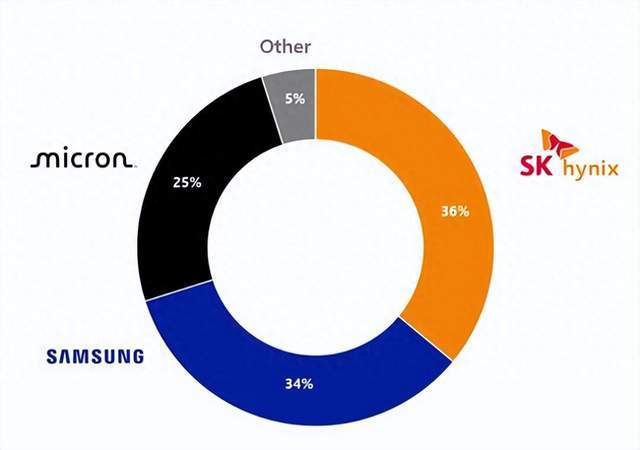
Core Insights - Samsung's semiconductor business is robust, comprising four main segments: DRAM, NAND flash memory, foundry services, and proprietary mobile chips [1][3][5] Segment Summaries - **DRAM Business**: Samsung was previously the global leader but was surpassed by SK Hynix in Q1 2025, holding a market share of 34% compared to SK Hynix's 36% [1] - **NAND Flash Memory**: Samsung maintains its position as the global leader with approximately 33% market share, while SK Hynix holds around 20% [3] - **Foundry Services**: Samsung is one of the two companies globally that has mastered 3nm chip technology, ranking second in foundry market share, just behind TSMC [3] - **Proprietary Chips**: Samsung's Exynos series competes closely with Qualcomm's flagship chips [3] Financial Performance - In Q1 2025, Samsung's total revenue reached 79.14 trillion KRW (approximately 4,120 million RMB), marking a 10% year-over-year increase, while operating profit was 6.7 trillion KRW, up 1.2% [8] - The semiconductor division (DS) generated revenue of 25.1 trillion KRW (about 1,305 million RMB), reflecting a 9% year-over-year increase but a 17% quarter-over-quarter decline [8] - Within the semiconductor division, memory chip revenue was 19.1 trillion KRW, showing a 9% year-over-year decline but a 17% quarter-over-quarter increase [8] - Operating profit for the DS segment in Q1 2025 was 1.1 trillion KRW (57.2 million RMB), with an operating profit margin of only 4.38%, down 42% year-over-year and 62% quarter-over-quarter [10] Market Dynamics - Despite revenue growth, profit margins are under pressure due to aggressive pricing strategies from Chinese competitors, leading to a classic scenario of "increased sales but decreased profits" [10][12] - The global memory market, including NAND and DRAM, is experiencing volatility, with rising output from Chinese manufacturers contributing to price declines that significantly impact Samsung [12]

一个新消费品从业者的五年创业思考
虎嗅APP· 2025-05-03 13:02
Core Viewpoint - 2024 is projected to be the most challenging year in the past decade for the industry, with many entrepreneurs facing significant difficulties in sustaining their businesses [3][4]. Group 1: Industry Overview - 90% of small and medium-sized enterprises in China do not survive beyond three years, indicating a high failure rate in the entrepreneurial landscape [6]. - The pet food industry has a compound annual growth rate (CAGR) that ranks second among consumer goods, with significant growth potential as pet ownership continues to rise in China [15]. - The industry concentration ratio (CR10) for the pet food sector was only 24% in 2022, suggesting a relatively low level of market maturity compared to other sectors like infant formula, which has a CR10 of 70% [18][17]. Group 2: Entrepreneurial Journey - The company was founded in 2020 during the pandemic, with the founder emphasizing the importance of committing fully to entrepreneurship without a fallback plan [23]. - Initial challenges included logistical issues and the need to learn e-commerce from scratch, leading to significant hands-on experience in operations [30][25]. - The first product launch was met with unexpected success, driven by organic marketing through podcasts and social media, resulting in a loyal customer base [31][48]. Group 3: Market Dynamics - The pet industry is perceived as a booming market, attracting many new entrants, but existing players often struggle with intense competition and market fragmentation [38]. - The company chose to focus on high-quality pet food, despite pressures to enter more lucrative segments like snacks or lower-end products, driven by a commitment to quality and consumer trust [40][41]. - The company has faced challenges in scaling and marketing, particularly in a landscape where traditional advertising methods are becoming less effective [49][56]. Group 4: Strategic Insights - The company has adopted a cautious approach to product development, launching only ten SKUs in five years, prioritizing quality and transparency in sourcing [41][46]. - The marketing strategy has evolved to include partnerships with pet influencers and adapting to changes in social media platforms, particularly the shift towards live streaming and short-form content [55][57]. - The company recognizes the importance of building a brand over time, emphasizing that true brand status requires a solid user base and market penetration [62][68]. Group 5: Challenges and Reflections - The founder reflects on missed opportunities for aggressive growth during favorable market conditions, noting that a more risk-tolerant approach could have led to greater scale [70][71]. - The competitive landscape is increasingly characterized by price wars, which threaten the sustainability of quality-focused brands [75][80]. - The company aims to maintain its commitment to quality and ethical practices, despite the pressures of a rapidly changing market environment [86][87].

集运日报:受SCFIS指数影响,盘面继续承压,关注今日欧美一季度宏观数据,风险偏好者可等待反弹机会,节日快乐-20250430
Xin Shi Ji Qi Huo· 2025-04-30 12:05
Group 1: Report's Investment Rating - No investment rating information is provided in the report. Group 2: Core Viewpoints - The core logic for this year lies in the direction of international tariff policies. In April, the US may change its tariff policies towards countries like Canada, Mexico, and Europe. With the approaching pricing window for long - term contracts on US routes, retaliatory tariffs are added to the negotiation means, which adds a major disturbing factor to the future shipping trend. Shipowners intend to support prices, but price wars among alliances are inevitable. Attention should be paid to the price war between MSK and MSC in the second quarter and the feedback of terminal demand under aggressive tariff policies [3]. - The spot freight rate maintains a downward trend. Under the game between long and short positions, the short - selling sentiment slightly prevails, and the market fluctuates at a low level. Future attention should be paid to tariff policies, the Middle East situation, and the spot freight rate [3]. Group 3: Summary by Related Catalogs Freight Rate Index - On April 28, the Ningbo Export Container Freight Index (NCFI, composite index) was 908.48 points, down 1.39% from the previous period; the Shanghai Export Container Settlement Freight Index (SCFIS, European route) was 1429.39 points, down 5.2% from the previous period; the NCFI (European route) was 796.14 points, down 5.19% from the previous period; the SCFIS (US West route) was 1368.41 points, down 10.1% from the previous period; the NCFI (US West route) was 1235.01 points, up 1.53% from the previous period [1]. - On April 25, the Shanghai Export Container Freight Index (SCFI) was 1347.84 points, down 22.74 points from the previous period; the China Export Container Freight Index (CCFI, composite index) was 1122.40 points, up 1.0% from the previous period; the SCFI European route price was 1260 USD/TEU, down 4.26% from the previous period; the CCFI (European route) was 1499.50 points, up 0.9% from the previous period; the SCFI US West route price was 2141 USD/FEU, up 1.81% from the previous period; the CCFI (US West route) was 823.14 points, up 1.4% from the previous period [1]. PMI and Investor Confidence Index - The eurozone's April manufacturing PMI was 48.7 (expected 47.5), the service PMI was 49.7 (expected 50.5), and the composite PMI was 50.1 (expected 50.3, previous value 50.9). The eurozone's April Sentix investor confidence index was - 19.5 (expected - 10, previous value - 2.9) [1]. - The US April S&P Global manufacturing PMI was 50.7 (expected 49.1, March final value 50.2), the service PMI was 51.4 (expected 52.8, March final value 54.4), and the composite PMI was 51.2 (expected 52.2, March final value 53.5) [2]. Market Conditions - On April 29, the main contract 2506 closed at 1275.6, with a decline of 7.83%, a trading volume of 54,900 lots, and an open interest of 37,600 lots, a decrease of 2001 lots from the previous day [3]. Strategies - Short - term strategy: Due to the volatile external policies in the short term, the operation is difficult. If participating in each contract, it is recommended to focus on the medium - and long - term [4]. - Arbitrage strategy: Against the background of tariff fermentation, the reverse arbitrage structure can be concerned. The window period is short and the fluctuation is large [4]. - Long - term strategy: It is recommended that risk - preferring investors can try to go long lightly when the 2508 contract falls below 1600 points and the 2510 contract falls below 1200 points, and set stop - losses [4]. Policy Adjustments - The daily limit for contracts from 2504 to 2602 is adjusted to 19% [4]. - The margin for contracts from 2504 to 2602 is adjusted to 29% [4]. - The daily opening limit for all contracts from 2504 to 2602 is 100 lots [4]. Other Information - On April 28, the US Treasury Department's Office of Foreign Assets Control (OFAC) announced sanctions on three ships and their owners supporting the Houthi armed forces in Yemen [5]. - In the first quarter, the total ocean production value was 2.5 trillion yuan, a year - on - year increase of 5.7%, 0.3 percentage points higher than the GDP growth rate [5].
“储能集成第一股”,首份完整年报来了!
21世纪经济报道· 2025-04-30 07:36
作 者丨费心懿 实习生余名伟 编 辑丨骆一帆 图 源丨摄图网 4月2 9日,海博思创(6 8 8 4 11 .SH)发布2 0 2 4年年度报告。 这是海博思创上市后的首份完整年报。 今年1月2 7日,海博思创成功登陆科创板,成为资本市场上备受瞩目的"储能集成第一股"。 上市3个月有余,海博思创的股价走势跌宕,从发行价1 9 . 3 8元/股,到上市首日以7 3 . 6 0元/股 开盘,最终发行首日市值便翻倍。三个月间,其股价最高之时触及9 2 . 8 4元/股,东吴证券研究 员曾朵红一个月前还在该股的研报中给出了9 4 . 0元/股的目标价。 不过,目前,海博思创股价有所回落,最新市值为1 3 0亿元,但也已较其发行之时的市值翻了 三倍。 毛利率连续承压 财报显示,海博思创2 0 2 4年全年营业收入为8 2 . 7 0亿元,同比增长1 8 . 4 4%;归母净利润为 6 . 4 8亿元,同比增长1 2 . 0 6%;扣非归母净利润为6 . 2 8亿元,同比增长11 . 8 7%。 其中,储能产品总营收8 1 . 9 3亿元,同比增长1 8 . 2 7%。产品结构较为单一,储能产品在总营 收中的占比高达9 ...
行业龙头业绩分化,智能锁市场还能维持高增长吗?丨家电财报观察
2 1 Shi Ji Jing Ji Bao Dao· 2025-04-30 06:15
Core Insights - The Chinese smart lock market is experiencing significant growth, with online retail volume reaching 1.79 million units and retail revenue at 1.8 billion yuan in Q1 2025, both showing over 20% year-on-year growth, continuing the trend from 2024 [1] - The market is shifting towards consumer (C-end) sales, which have now surpassed business (B-end) sales for the first time, becoming the main driver of industry growth [1][6] - The average price of smart locks is declining, with online prices dropping from 1,301 yuan in 2021 to 913 yuan in 2024, leading to increased competition and impacting profit margins for many companies [2][3] Market Dynamics - The smart lock market is undergoing a transformation due to various factors, including fluctuations in the real estate sector, which have led to a significant shift in sales channels and product structures [1] - The introduction of new subsidy policies in many regions is expected to sustain high growth in the smart lock market, alongside improvements in the real estate sector [1] - The competitive landscape is becoming more complex, with smaller brands being pushed out of the market as larger companies consolidate their market share [4][5] Sales Performance - In 2024, the revenue for Wangli Security reached 3.122 billion yuan, a year-on-year increase of 2.57%, while net profit surged by 154.09% to 139 million yuan [1] - Conversely, companies like Apac TianNeng and Top Solid experienced declines in both revenue and profit, with Apac TianNeng's revenue falling by 25.84% to 157 million yuan and a net loss of 32 million yuan [2] Consumer Trends - The C-end market's sales proportion exceeded 54.6% in 2024, marking a 12 percentage point increase from 2023, driven primarily by online retail growth [6] - The demand for mid-to-high-end smart locks is increasing, with sales in the 1,500-1,999 yuan, 2,000-2,499 yuan, and 3,000-3,499 yuan price segments growing by 31.7%, 42.1%, and 27.5% respectively [3][6] Competitive Landscape - The market is characterized by a low market share among leading brands, indicating significant potential for market share growth [4] - The ongoing price war is intensifying, particularly in the low-end segment, while high-end products maintain stable revenue [3][8] - The R&D investments of listed companies in the smart lock sector have been affected by market fluctuations, with Wangli Security, Top Solid, and Apac TianNeng investing 78 million, 38 million, and 14 million yuan respectively in 2024 [8]

“储能集成第一股”首份完整年报:“价格战”承压,毛利率继续下滑
2 1 Shi Ji Jing Ji Bao Dao· 2025-04-30 04:18
21世纪经济报道记者费心懿 实习生余名伟 上海报道 4月29日,海博思创(688411.SH)发布2024年年度报告。 这是海博思创上市后的首份完整年报。 毛利率连续承压 财报显示,海博思创2024年全年营业收入为82.70亿元,同比增长18.44%;归母净利润为6.48亿元,同 比增长12.06%;扣非归母净利润为6.28亿元,同比增长11.87%。 今年1月27日,海博思创成功登陆科创板,成为资本市场上备受瞩目的"储能集成第一股"。 上市3个月有余,海博思创的股价走势跌宕,从发行价19.38元/股,到上市首日以73.60元/股开盘,最终 发行首日市值便翻倍。三个月间,其股价最高之时触及92.84元/股,东吴证券研究员曾朵红一个月前还 在该股的研报中给出了94.0元/股的目标价。 不过,目前,海博思创股价有所回落,最新市值为130亿元,但也已较其发行之时的市值翻了三倍。 其中,储能产品总营收81.93亿元,同比增长18.27%。产品结构较为单一,储能产品在总营收中的占比 高达99%。 不可否认的是,储能产品近年来需求旺盛,海博思创是国内大型储能电站集成商中的佼佼者。2024年, 该公司储能出货量达11.81 ...
【期货热点追踪】马棕油期价连续三日走低,印尼突然下调出口税,棕榈油“价格战”开打,马棕油价格会否跌破这一支撑?
news flash· 2025-04-30 03:25
Core Viewpoint - The palm oil futures prices in Malaysia have declined for three consecutive days, influenced by Indonesia's sudden reduction of export taxes, leading to a "price war" in the palm oil market [1] Group 1 - Malaysian palm oil prices are under pressure due to competitive pricing strategies initiated by Indonesia [1] - The recent changes in export tax by Indonesia may significantly impact the pricing dynamics of palm oil in the region [1] - There is speculation on whether Malaysian palm oil prices will fall below a certain support level amidst these developments [1]
东鹏控股(003012):价格战延续中,等待行业企稳
Changjiang Securities· 2025-04-29 23:30
Investment Rating - The investment rating for the company is "Buy" and is maintained [7]. Core Views - The company achieved an annual revenue of 6.5 billion yuan, a year-on-year decrease of 17%, and a net profit attributable to shareholders of 330 million yuan, down 54% year-on-year [2][4]. - In the first quarter, the company reported a revenue of 1 billion yuan, a decline of 2% year-on-year, with a net profit of -30 million yuan, a decrease of 164% year-on-year [2][4]. - The ongoing price war in the industry is expected to continue, with a significant impact on profitability and revenue [11]. Summary by Sections Financial Performance - The company's revenue for 2024 is projected to decline by 17%, with tile revenue down 18% due to weak terminal demand and a 9% decrease in tile sales volume [11]. - The average price of tiles fell by approximately 10%, while production costs decreased by 7%, leading to a decline in gross margin from 33.5% in 2023 to 31.0% in 2024 [11]. - The net profit margin for 2024 is estimated to be around 5.1%, down 4.2 percentage points year-on-year [11]. Market Conditions - The first quarter showed a slight recovery in revenue decline, but profitability remains under pressure due to the ongoing price war [11]. - The construction area is expected to decline by about 28% in 2024, impacting overall demand in the industry [11]. Future Projections - The company is expected to achieve net profits of approximately 340 million yuan and 480 million yuan in 2025 and 2026, respectively, corresponding to valuation multiples of 21 and 15 times [6]. - The cash flow performance is strong, with a net cash flow from operating activities of 860 million yuan in 2024 [11]. Industry Dynamics - The supply side of the tile industry is experiencing significant exits, with production expected to decrease by 12% in 2024 compared to previous years [11]. - Environmental policies are pushing the industry towards green production and smart manufacturing, which may further influence supply dynamics [11].
蒙娜丽莎(002918):龙头经营承压,意味着价格战已至底部
Changjiang Securities· 2025-04-29 08:45
Investment Rating - The investment rating for the company is "Buy" and is maintained [7]. Core Views - The company achieved an annual revenue of 4.6 billion yuan, a year-on-year decrease of 22%. The net profit attributable to shareholders was 120 million yuan, down 53% year-on-year, while the net profit excluding non-recurring items was approximately 100 million yuan, down 58% year-on-year [2][4]. - In the first quarter, the company reported a revenue of 700 million yuan, a year-on-year decline of 16%, with a net profit of -60 million yuan, a decrease of 715% year-on-year, and a net profit excluding non-recurring items of approximately -70 million yuan, down 870% year-on-year [2][4]. - The company is expected to achieve net profits of approximately 200 million yuan and 250 million yuan in 2025 and 2026, respectively, corresponding to valuations of 18 and 15 times [6]. Summary by Sections Revenue and Profitability - The company’s revenue for 2024 is projected to decline by 22% due to weak terminal demand and intensified price competition, with tile sales expected to drop by 16% to approximately 120 million square meters. The average price of tiles is anticipated to decrease by about 7% year-on-year, cumulatively down 19% compared to 2021 [10]. - The gross margin is expected to continue its downward trend, decreasing from 29.5% in 2023 to 27.3% in 2024, with the distribution channel gross margin declining from 28.3% to 25.7% [10]. - The company’s revenue from distribution channels is expected to be around 3.5 billion yuan, down 7% year-on-year, while revenue from engineering channels is projected to be about 1.1 billion yuan, down 48% year-on-year [10]. Cost and Expenses - The company’s period expense ratio is expected to increase by 0.6 percentage points year-on-year, with management expenses rising by 1.9 percentage points due to weakened scale effects, while financial expenses are expected to decrease by 1.3 percentage points [10]. - The net profit margin for 2024 is projected to be approximately 2.7%, a decrease of 1.8 percentage points year-on-year [10]. Cash Flow and Financial Health - The company has shown strong cash flow performance, with cash collection ratios over the past three years being 1.12, 1.08, and 1.15. The cash flow from operating activities for 2024 is expected to be 810 million yuan [10]. - By the end of 2024, accounts receivable and notes are expected to be 700 million yuan, primarily due to a high retail proportion and a continuous contraction in the real estate business [10]. Industry Outlook - The supply exit in the tile industry is significant, with the production of building ceramics expected to be around 5.91 billion square meters in 2024, a year-on-year decrease of 12% [10]. - The number of large-scale enterprises in the industry has decreased from 1,048 in 2021 to 993 in 2024, with approximately 55 enterprises exiting the market [10].
疫苗行业至暗时刻:价格战压顶、库存高悬,谁能撕开“三难”困局?
Xin Lang Zheng Quan· 2025-04-25 05:06
Core Viewpoint - The Chinese vaccine industry is facing unprecedented challenges in 2024, with significant declines in market value and vaccine issuance, leading to a search for recovery strategies amidst a harsh environment [1] Group 1: Market Dynamics - The total market value of 11 A-share vaccine companies is less than the peak value of Zhifei Biological three years ago [1] - The issuance of HPV vaccines has plummeted by over 60%, while flu and rabies vaccines are embroiled in price wars [1] - The strategy of "exchanging price for volume" has failed, leading to high inventory pressures and cash flow issues for companies [1] Group 2: Structural Challenges - The industry faces a dual challenge of oversupply in low-end markets and a lack of high-end products, with over 10 companies competing in the rabies and flu vaccine markets [2] - High-end vaccines like shingles and multi-valent vaccines are still dominated by foreign companies such as GSK [2] - Companies are caught in a dilemma of high R&D costs, long return cycles, and rapid market changes [2] Group 3: Strategies for Survival - Companies are increasing investment in multi-valent vaccines, with Watson Bio and Kangtai Bio leading the charge [3] - Zhifei Biological is building a product matrix to reduce dependency on single products, while Kangtai Bio is developing 13 pipeline products [3] - Collaborations for international market access, such as Kanghua Bio's partnership with HilleVax, are emerging as a survival strategy for smaller firms [3] Group 4: Future Outlook - The current dark period for the vaccine industry may serve as a starting point for value reassessment [4] - Companies that possess strong technology, diverse product portfolios, and global market access are likely to survive the supply-side cleansing [4] - The potential for Chinese vaccine companies to develop world-class products will determine the industry's future [4]
