美元霸权

Search documents
中国开始行动,抛售276亿美债,预判特朗普行动?美国要过苦日子
Sou Hu Cai Jing· 2025-05-19 17:19
Core Insights - China has strategically reduced its holdings of US Treasury bonds by $27.6 billion in March, elevating the UK to the position of the second-largest holder of US debt, indicating a calculated financial maneuver rather than a mere currency adjustment [1] - Over the past three years, China has divested a total of $280 billion in US Treasury bonds while increasing its gold reserves from 50 million ounces to 73.77 million ounces, showcasing a sophisticated asset management strategy [3] - The US government's financial situation is precarious, with $6 trillion in Treasury bonds maturing soon, leading to significant interest obligations that could strain fiscal resources [7] Group 1 - China's recent actions reflect a tactical retreat from US debt, allowing it to avoid potential losses from rising interest rates and a declining US credit rating [3] - The geopolitical landscape is shifting, with countries like Brazil and Argentina entering into currency swap agreements with China, indicating a move away from the US dollar in international trade [9] - The US's reliance on financial instruments as a weapon has backfired, undermining its own credit system and revealing vulnerabilities in its economic strategy [11] Group 2 - The ongoing financial conflict highlights the importance of financial security as a key aspect of national strategy, with China using market mechanisms to fortify its position [9] - The US government faces a critical juncture, needing to either seek assistance from the Federal Reserve or attract foreign buyers back to its debt market, while China continues to reduce its holdings [7] - The ultimate lesson from this financial confrontation is that in today's globalized economy, true national security is increasingly tied to the management of financial assets rather than traditional military power [11]

抛!抛!抛!卖出一切美国资产,一个字母引发的“血案”
凤凰网财经· 2025-05-19 10:25
Core Viewpoint - Moody's downgraded the U.S. sovereign credit rating from Aaa to Aa1 due to increasing government debt and interest expenditures, while adjusting the rating outlook from "negative" to "stable" [1] Group 1: Market Reactions - Following Moody's announcement, U.S. stock futures, U.S. Treasury bonds, and the dollar index all weakened, with Dow futures down 0.93%, S&P futures down 1.29%, and Nasdaq futures down 1.73% [3] - Major tech stocks saw declines in pre-market trading, with Nvidia down over 3%, Apple down approximately 1.6%, and Tesla down over 4% [4] - The dollar index fell by 0.72%, reaching 100.24, approaching April's low [5] Group 2: U.S. Treasury Yield Changes - U.S. Treasury yields rose across the board, with the 30-year Treasury yield reaching 5.0269%, the highest level since November 2023; the 20-year yield increased by 8.34 basis points to 5.05% [7] Group 3: Investor Sentiment and Concerns - Analysts believe Moody's decision, while anticipated, significantly impacts market confidence, leading to a reassessment of U.S. Treasuries as a "risk-free asset" amid soaring debt interest expenditures and constrained fiscal policy [9] - Concerns are growing regarding the U.S. government's ability to address the debt ceiling, with warnings that failure to raise it by mid-July could lead to a financial crisis [10] - The potential passage of a comprehensive tax cut and spending bill could exacerbate the already high debt levels, which currently stand at $36 trillion, exceeding 123% of GDP [12] Group 4: Future Predictions - A report from Renmin University warns that 2025 could mark a critical year for U.S. Treasury bonds, with a significant risk of a credit crisis as the U.S. government loses credibility [12] - The report predicts that cumulative interest payments on U.S. debt could reach $13.8 trillion over the next decade, nearly double the inflation-adjusted total of the past 20 years [13] - The ongoing decline in global central banks' holdings of U.S. Treasuries and the drop in the dollar's share of global reserves to a 30-year low indicate a potential shift in the global monetary order [13]

中国这波操作真硬气!抛了189亿美债,把第二大债主位置让给英国
Sou Hu Cai Jing· 2025-05-18 16:30
减持189亿美元的美债,中国这一步,动静不小。让出全球第二大美国国债持有国的位置,看上去像是退了一步,实际上是在另一个方向稳稳推进。英国短 暂登场,顶上第二的宝座,但真正吸引目光的,是中国在另一个市场的动作:六个月连着买黄金,这可不是巧合。 放眼全球金融市场,美元仍然是一股主导力量,但凡事有因。一边是美方拿着美元霸权大做文章,另一边却在钢铝关税上不松口,还要打压芯片和稀土的出 海。说得好听是谈判,实则招招掐得准,掐的是中国制造的命门。可问题是,这回中国没接招,直接把话放那儿:不玩了。你不是真想谈,那就先摆正态 度。 抛债这事儿不是新鲜事,但这次的背景有点不一样。中美关系紧张是一方面,更深层的考量,是对美国经济体制的信任在动摇。美债利率波动频繁,政治博 弈高烧不退,对中国这种大体量资金来说,稳定比什么都重要。卖掉189亿,释放的不只是资金,更是一种态度。 与此黄金储备成了主角。2024年下半年开始,中国央行已经连续六个月增持黄金,官方数据每月都能看到数字在往上跳。不是一次性操作,是持续的布局。 这种节奏感,说明的是决心。黄金不仅是避险工具,更是一种战略储备。放在这个节点来看,简直像是把话挑明了:咱要做自己的底牌 ...
美国为何如此迫切?稳定币正迅速改变全球金融格局
Hua Er Jie Jian Wen· 2025-05-18 10:28
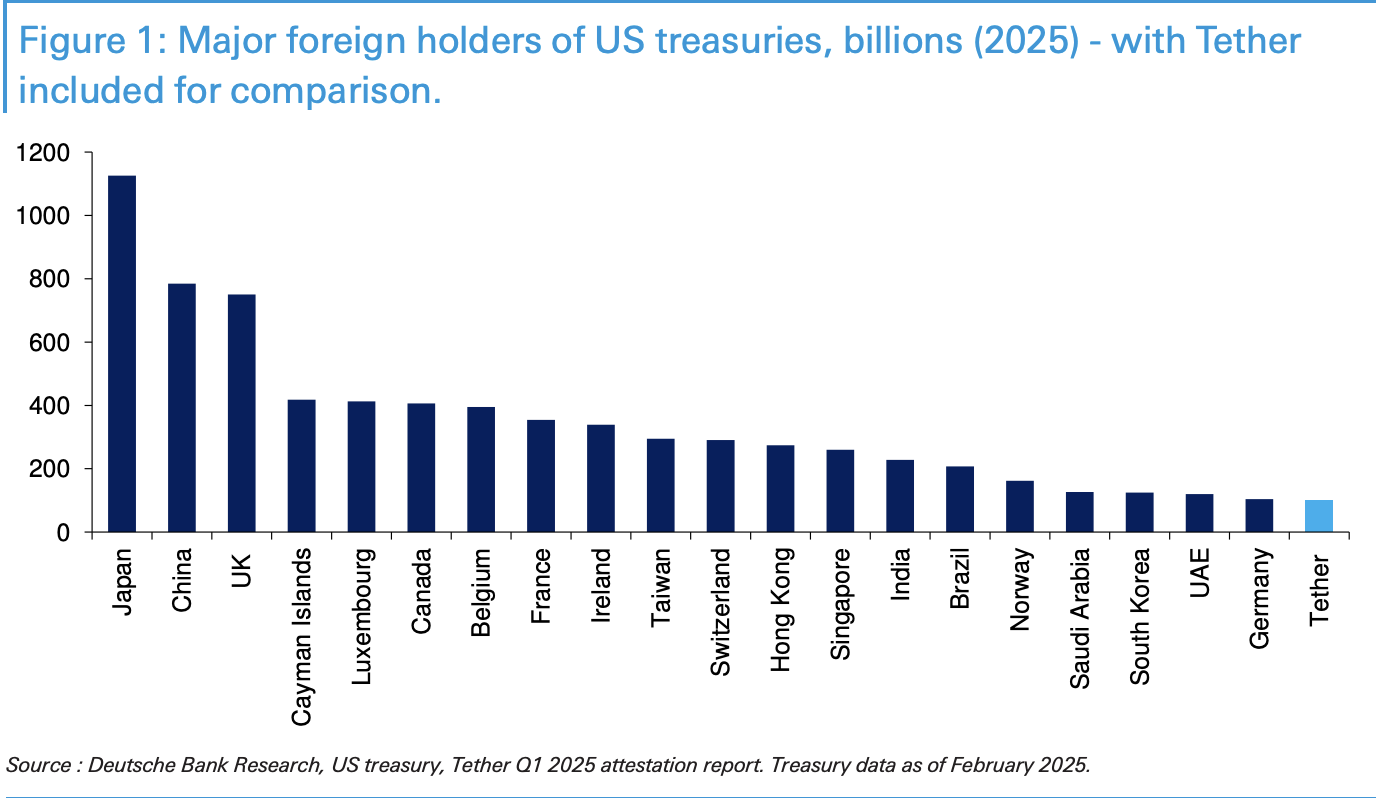
什么是稳定币?它如何运作? 稳定币是一种数字资产,可用于支付,由于与"稳定"资产1:1挂钩,波动性低于其他加密货币。德意志银行的报告指出,稳定币主要有四种类型:法定货币 支持的、资产支持的、加密货币支持的和算法型。 美元霸权摇摇欲坠,稳定币市场快速扩张,正成为美元新的支撑点,重塑全球金融体系? 据追风交易台,德意志银行全球宏观和专题研究主管Jim Reid在最新报告中提到,稳定币正以前所未有的速度快速扩张,企业财务高管们已感受到变革浪 潮。Reid表示: 我这周在美国西海岸参加一个企业财务会议,所有财务主管都注意到他们业务中稳定币交易的增加,这是一个不断增长的市场。 所谓的"稳定币"是一种数字资产,其中超过99%的稳定币市值都与美元挂钩,其实际上充当了支持美国短期债务市场的货币市场基金的角色,例如Tether已 跻身美债主要持有者行列。 目前,美国正加速推进稳定币监管立法,其中支付是一个大用例,监管可能为更广泛的采用打开支付大门。最近GENIUS的稳定币法案被否决,但德银预计 该法案今年将取得重大进展。 分析认为,稳定币市场潜力巨大,支付应用可能使加密基础设施获得更广泛接受。花旗预计,从长期来看稳定币的潜在市 ...


中美谈完不到4天,美债崩盘,二次会谈开启,我商务部开出新条件
Sou Hu Cai Jing· 2025-05-17 14:35
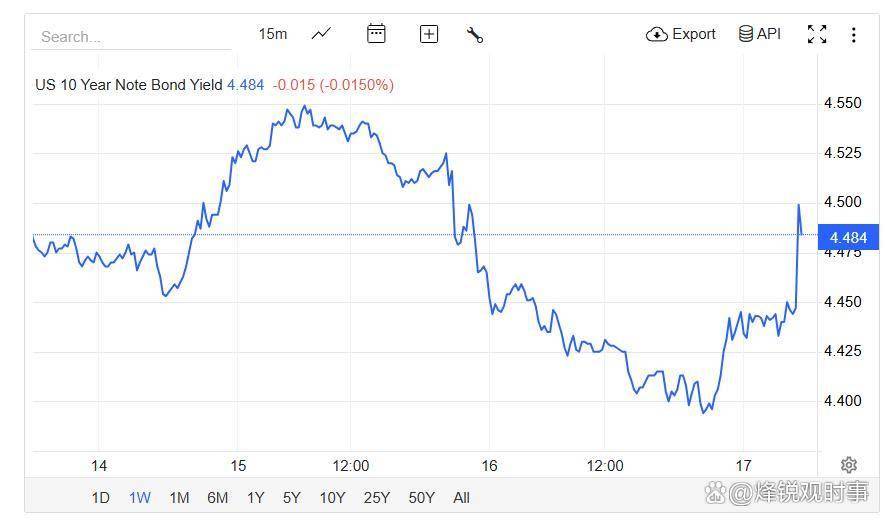
Group 1 - The 30-year US Treasury yield has surpassed the critical 5% mark, causing significant turmoil in global capital markets [1] - The current economic situation in the US is seen as a culmination of three decades of fiscal mismanagement, leading to a clash between inflation control and growth maintenance [3] - The US's urgent call for a second round of talks following the market crash indicates a desperate attempt to stabilize the situation [4] Group 2 - China's new negotiation conditions, including the lifting of technology sanctions and promoting cross-border RMB settlements, aim to strategically undermine the US dollar system [7] - The reduction of US Treasury holdings by China over the past six months, alongside an increase in gold reserves and local currency settlements, suggests a shift towards a new payment network that bypasses the dollar [9] - Global capital movements, such as Japan's secret bond purchases and Saudi Arabia's avoidance of US Treasuries, reflect a collective anticipation of a post-dollar era [9] Group 3 - The Federal Reserve faces a dilemma: raising interest rates to protect the dollar risks crushing corporate debt, while lowering rates to alleviate debt burdens could destabilize the currency [11] - The potential collapse of US Treasuries by 2025 may mark a critical point in the restructuring of the international monetary system, with significant implications for global trade and technology [13] - The current situation highlights the fragility of so-called "safe assets," suggesting that traditional wisdom of holding cash and hard currencies may be more prudent in times of systemic risk [13]
中美俄黄金储备断崖式差距:美8133吨,俄2350吨,中国是多少吨?
Sou Hu Cai Jing· 2025-05-17 02:49
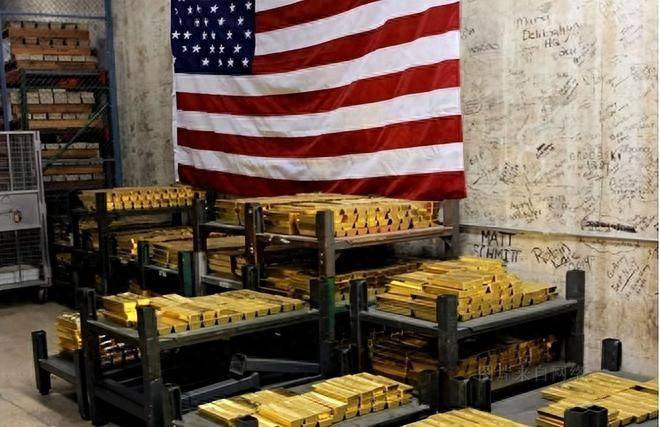
全球黄金储备的牌桌上,美国甩出8133吨的"王炸",俄罗斯捏着2350吨的"对子",中国手里攥着2264吨的底牌。这局牌打得比华尔街股市还刺激——美国用 黄金撑起美元霸权,俄罗斯拿黄金硬刚西方制裁,中国却闷声攒家底,暗地里把民间藏金堆到全球第一。黄金这玩意儿,咋就成了大国较劲的"硬通货"? 美国这8133吨黄金,可不是天上掉下来的。当年二战打得热火朝天,欧洲国家忙着互扔炸弹,美国蹲在后方卖军火收黄金。1944年布雷顿森林会议一开,美 元直接挂钩黄金,全球75%的黄金都进了美联储的地下金库。您瞅瞅现在,这些金砖摞起来能填满整个篮球场,老美光靠吃利息就能养活华尔街那帮西装革 履的精英。 但黄金太多也是个包袱。美元霸权绑着黄金,就像骑虎难下——既要靠黄金撑场面,又怕别人掀桌子不用美元。特朗普最近关税调得比过山车还猛,还不是 仗着家里金库够厚实?不过话说回来,要是哪天全球集体抛美元换黄金,美联储的地下室怕是要被掏空。 但咱的黄金战略可不止攒家底。人民币国际化这盘大棋,黄金就是关键棋子。您看现在中俄贸易用本币结算,中东土豪买石油收人民币,背后没点黄金撑腰 谁敢接盘?更绝的是中国黄金产量全球第一,自家金矿每年挖出300多 ...
张一:美元霸权的成本收益分析
和讯· 2025-05-16 09:40
以下文章来源于大势看财经 ,作者张一 大势看财经 . 《财经》杂志宏观学术部团队以独立、独家、独到的信念为读者提供原创的宏观政策解读、部委政策动 向、经济趋势前瞻以及名家前沿观察 美国有意无意推动美元贬值的行为对国际金融体系的影响有可能在未来进一步显现,金融市场的巨幅 波动不可避免。 张一 恒泰证券 研究所所长、 首席经济学家 自特朗普再度入主白宫后,其团队推出了一项被称之为"海湖庄园协议"(Mar-a-Lago Accord) 的经济战略构想。该战略构想来自特朗普政府经济顾问委员会(CEA)主席斯蒂芬·米兰(Stephen Miran)于2024年11月撰写的一份题为《重构全球贸易体系使用指南》(A User's Guide to Restructuring the Global Trading System)的报告(《米兰报告》)。从特朗普百日施政的结 果看,基于该报告的"海湖庄园协议"构想已经对全球金融、贸易、产业乃至政治格局产生影响。从 趋势看,未来相当长一段时间而不是特朗普执政这四年,相关战略思想都会持续对国际政治经济格局 产生影响。 图表1 美元储备和美元指数对比 该报告主要涵盖三方面内容,一是美 ...

美债,崩了!
凤凰网财经· 2025-05-15 14:21
Group 1 - The core viewpoint of the article highlights the significant rise in U.S. Treasury yields, with all maturities exceeding 4%, and the 30-year yield approaching 5% [1] - The recent sell-off in U.S. Treasuries is driven by four main factors: U.S. government tariffs leading to inflation expectations, declining foreign investor interest, rapid unwinding of basis trades due to soaring yields, and a diminished reputation of U.S. Treasuries as a safe asset [2] - There is a possibility of continued significant increases in long-term U.S. Treasury yields in the coming months, which could pose more risks to the U.S. economy and undermine the foundation of the dollar's dominance [2] Group 2 - Domestic institutions have differing views on U.S. Treasuries, with some indicating that the recent softening of U.S. tariff attitudes and progress in U.S.-China trade talks have improved risk appetite, while others warn of the declining safe-haven status of U.S. Treasuries [3][4] - A report from Renmin University warns that the U.S. national credit is approaching a visible crisis, predicting that 2025 could be the year of a U.S. Treasury collapse, urging vigilance regarding volatility in U.S. financial markets [5] - The report indicates that the U.S. government is losing credibility, with over a 50% chance of economic recession by 2025, exposing vulnerabilities in the dollar system and leading to a significant sell-off in U.S. Treasuries [6] Group 3 - Global central banks are continuously reducing their holdings of U.S. Treasuries, with the dollar's share of global official foreign exchange reserves dropping to 57.4%, the lowest in 30 years [8] - The report suggests that the potential collapse of U.S. Treasuries is not the end of the international financial system but the beginning of a long process of restructuring the global credit system, with a shift towards a multipolar currency system [8]
特朗普又喊话鲍威尔降息!看似不合,实则红白脸一唱一和
Sou Hu Cai Jing· 2025-05-15 10:36
Core Viewpoint - Trump is pressuring the Federal Reserve to lower interest rates to counteract the inflation caused by his tariff policies, while the Fed maintains its independence and focuses on combating inflation [3][4][5]. Group 1: Economic Policies and Impacts - Trump's insistence on lowering interest rates is primarily driven by the negative impact of his tariff policies, which have increased import costs and led to input inflation [3]. - The Federal Reserve has kept the federal funds rate target range at 4.25% to 4.5% for the third consecutive time, indicating a cautious approach to monetary policy amid economic uncertainties [1][5]. - The Consumer Price Index (CPI) in April increased by 2.3% year-on-year, which is below the market expectation of 2.4%, suggesting that the impact of tariffs has not yet fully manifested in economic data [5]. Group 2: Federal Reserve's Independence - The Federal Reserve is designed to be insulated from political fluctuations to maintain long-term economic stability, and it has stated that it will not yield to political pressure from Trump [4]. - The Fed's primary responsibilities include maintaining price stability and a healthy labor market, which are guided by economic indicators such as CPI and unemployment rates [4][5]. - The Fed's cautious stance is also influenced by historical lessons and the need to preserve policy space for potential future crises [5]. Group 3: Global Economic Dynamics - Despite the ongoing tensions, both the U.S. government and the Federal Reserve share a common goal of maintaining the dollar's strong position in the global financial system [7]. - There is a growing demand among Asian banks and brokers for currency derivatives that bypass the dollar, indicating a potential erosion of the dollar's dominance [8]. - The increasing interest in loans denominated in renminbi reflects a shift in global financial dynamics, as businesses seek alternatives to the dollar [8].
不容忽视的大趋势:稳定币--正在爆发的“数字美元霸权”
华尔街见闻· 2025-05-15 10:06
Core Viewpoint - Stablecoins are emerging as an unexpected ally in reinforcing the dominance of the US dollar amidst global de-dollarization discussions, with significant implications for international finance and payment systems [1][14]. Group 1: Growth and Adoption of Stablecoins - The total market size of stablecoins has surged from $20 billion in 2020 to an estimated $246 billion by May 2025, with Tether (USDT) alone growing from $67 billion in June 2022 to over $149 billion by May 2025 [7][19]. - Stablecoin transaction volume has increased by 598% since 2020, reaching $27.6 trillion in 2024, surpassing traditional payment giants like Visa and Mastercard [9][19]. - Active stablecoin wallet addresses grew from 22.8 million in February 2024 to over 35 million by February 2025, marking a 53% increase [9]. Group 2: Impact on Europe and Financial Stability - The widespread adoption of dollar-pegged stablecoins in Europe poses a threat to the European Central Bank's (ECB) control over monetary policy, as transactions may bypass the euro system, reducing the effectiveness of interest rate adjustments [2][3]. - Concerns arise regarding financial stability, as European businesses earning in euros but receiving payments in dollar stablecoins could face currency mismatch risks if the euro depreciates [2][3]. Group 3: Competitive Advantages of Dollar Stablecoins - Dollar-pegged stablecoins dominate the market, with 83% of stablecoins linked to the US dollar, while euro-pegged stablecoins hold a negligible market share, leading to higher transaction costs for euro stablecoins [5][16]. - The regulatory environment in the EU is stricter compared to the US, where there is more room for innovation and expansion due to the absence of comprehensive legislation [5][16]. - Dollar stablecoins have established a strong presence in early application scenarios, benefiting from network effects within the cryptocurrency trading ecosystem and decentralized finance (DeFi) platforms [5][16]. Group 4: Strategic Asset and Political Support - Stablecoins are increasingly viewed as strategic assets, with Tether being one of the largest holders of US Treasury securities, indicating a shift in how these digital currencies are perceived [13][15]. - Political backing from figures like former President Trump and Republican lawmakers positions stablecoins as a private sector solution to digital currency, contrasting with central bank digital currencies (CBDCs) [18][19]. Group 5: Future Projections - Standard Chartered forecasts that the supply of stablecoins could grow nearly tenfold from $230 billion to approximately $2 trillion by the end of 2028, significantly impacting foreign exchange market volumes [19].