
适度宽松的货币政策

Search documents
简单解读下今天的发布会
表舅是养基大户· 2025-09-22 13:31
Core Viewpoint - The financial conference primarily focused on summarizing the achievements of financial regulation over the past five years, with no short-term policy adjustments discussed [2][5]. Monetary Policy - The monetary policy remains moderately accommodative, with a shift from addressing external conflicts to balancing internal demand, emphasizing a low-interest financing environment and avoiding structural asset overheating [6][7]. - The number of local government financing platforms has decreased by over 60%, and their debt scale has dropped by more than 50% over the past five years, marking significant progress in managing hidden local debts [8][9]. Stock Market Insights - The conference highlighted a preference for a "slow bull" market rather than a "fast bull," with the annualized volatility of the Shanghai Composite Index decreasing by 2.8 percentage points to 15.9% over the past five years [10][11]. - The technology sector's market capitalization now exceeds 25% of the A-share market, with the number of top 50 listed companies in the tech sector increasing from 18 to 24 over the last five years [12]. - The capital market is encouraged to serve the real economy, promote industrial integration, and enhance resource allocation efficiency, with significant reforms in the stock market observed in the past year [13][14]. Market Trends - Recent market movements show a surge in the semiconductor and consumer electronics sectors, driven by strong iPhone 17 sales and rising prices in memory chips due to AI demand [17][19]. - Agricultural Bank of China continues to experience significant declines, with its price-to-book ratio at 0.85, indicating ongoing valuation discrepancies compared to other major banks [21][22][26].




国新办召开发布会介绍“十四五”时期金融业发展成就 潘功胜:不涉及短期政策调整
Sou Hu Cai Jing· 2025-09-22 12:48
Core Viewpoint - The People's Bank of China (PBOC) is implementing a series of monetary policy measures to support economic stability and growth during the 14th Five-Year Plan period, focusing on medium to long-term financial development without immediate policy adjustments [1][3][4]. Monetary Policy Measures - The PBOC is adopting a moderately accommodative monetary policy, enhancing counter-cyclical adjustments, and utilizing various monetary policy tools to support high-quality economic development [3][4]. - Key macro-financial indicators show positive trends, with social financing scale increasing by 8.4% year-on-year and loans growing by 7.4% [3]. - The broad money supply (M2) is maintaining a steady growth rate of around 7%, significantly higher than nominal economic growth [3]. Specific Policy Actions - The PBOC will implement ten specific measures categorized into three types: quantity-based, price-based, and structure-based policies [5][6]. - Quantity-based measures include a 0.5 percentage point reduction in the reserve requirement ratio, expected to provide approximately 1 trillion yuan in long-term liquidity [6][16]. - Price-based measures involve a 0.1 percentage point reduction in policy interest rates, which will likely lead to a similar decrease in the Loan Prime Rate (LPR) [6][17]. - Structure-based measures include the establishment of new policy tools to support technology innovation, consumption expansion, and inclusive finance [5][10]. Financial Market Performance - The stock market has shown stability with the Shanghai Composite Index around 3,300 points, while the bond market has self-corrected due to improved economic confidence [3]. - The onshore and offshore RMB have appreciated by approximately 1% against the US dollar since the end of last year, indicating balanced cross-border capital flows [3]. Risk Management and Financial Stability - The PBOC emphasizes maintaining a balance between economic growth and financial risk prevention, focusing on structural adjustments to address underlying economic challenges [11][12]. - Significant progress has been made in reducing risks associated with local government financing platforms, with the number of such platforms decreasing by over 60% since early 2023 [12]. - The PBOC is committed to enhancing the financial stability framework, including legislative efforts and the establishment of a financial stability guarantee fund [13][14].
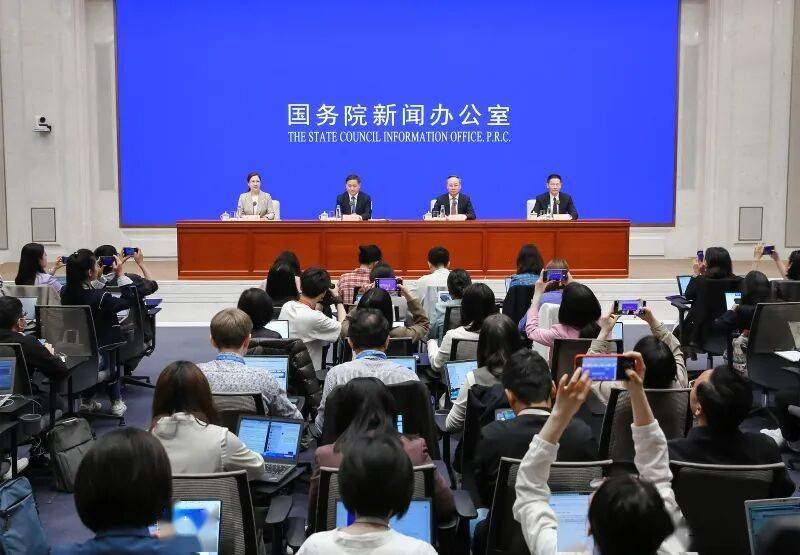
央行回应美联储降息:当前中国货币政策立场是支持性的,实施适度宽松的货币政策
Sou Hu Cai Jing· 2025-09-22 10:05
Core Viewpoint - The People's Bank of China (PBOC) is maintaining a supportive monetary policy stance, focusing on internal and external balance while responding to macroeconomic conditions and changes in the financial landscape [3][4]. Group 1: Monetary Policy Context - The Federal Reserve recently lowered the federal funds rate by 25 basis points, which was anticipated by global financial markets, leading to a relatively stable market reaction [3]. - The PBOC's current monetary policy is characterized as supportive and moderately accommodative, aimed at fostering a favorable environment for economic recovery and financial market stability [3][4]. Group 2: Future Policy Considerations - The PBOC plans to utilize a variety of monetary policy tools based on macroeconomic performance and changing conditions, aligning with practices of major international central banks [4]. - The focus will be on ensuring ample liquidity, reducing overall financing costs, boosting consumption, and expanding effective investment to solidify economic recovery and maintain stability in the financial markets [4].
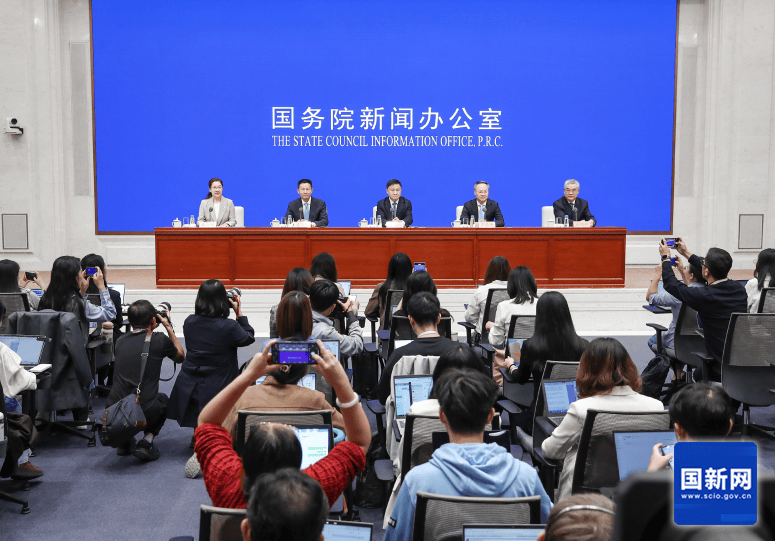
潘功胜:实施适度宽松的货币政策
Jin Rong Shi Bao· 2025-09-22 08:59
Core Viewpoint - The People's Bank of China emphasizes a supportive monetary policy stance aimed at fostering economic recovery and maintaining financial market stability [1] Monetary Policy - The current monetary policy is characterized as supportive and moderately loose, creating a favorable financial environment for economic recovery and market stability [1] - The central bank plans to utilize various monetary policy tools based on macroeconomic conditions to ensure ample liquidity and reduce overall financing costs [1] Economic Support - The focus is on supporting consumption and expanding effective investment to reinforce the positive trend of economic recovery [1] - The aim is to maintain the stability of the RMB exchange rate at a reasonable and balanced level [1]
美联储降息有何影响?潘功胜强调“以我为主”原则
Sou Hu Cai Jing· 2025-09-22 08:55
Core Insights - The press conference held by the State Council Information Office highlighted the achievements of the financial sector during the "14th Five-Year Plan" period [1] - The People's Bank of China (PBOC) Governor Pan Gongsheng commented on the recent 25 basis point interest rate cut by the Federal Reserve, noting that the global financial market had anticipated this move, resulting in a relatively stable market response in China [1] Group 1 - Pan Gongsheng emphasized that China's monetary policy is clearly defined, focusing on a self-directed approach [3] - The current stance of China's monetary policy is supportive, implementing a moderately loose monetary policy to foster a conducive environment for economic recovery and financial market stability [3] - The PBOC will utilize various monetary policy tools to mitigate risks based on the macroeconomic conditions and changes in the economic landscape [3]
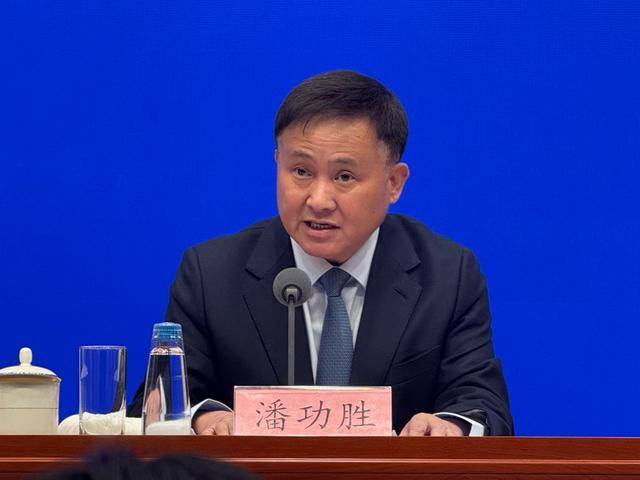
充分释放宏观政策综合效应 支持经济回升向好
Jing Ji Ri Bao· 2025-09-21 02:53
Group 1 - The core viewpoint emphasizes the synergy between proactive fiscal policy and moderately loose monetary policy to stimulate consumption and support economic growth [1][6] - The government has allocated approximately 420 billion yuan to boost consumption, leading to over 2.9 trillion yuan in sales [2] - The issuance of special government bonds has increased significantly, with 7.88 trillion yuan issued in the first half of the year, a 35.28% increase year-on-year [4] Group 2 - The introduction of various policies, such as child-rearing subsidies and personal consumption loans, aims to enhance consumer confidence and stimulate effective demand [3] - The total social financing increased by 26.56 trillion yuan in the first eight months, which is 4.66 trillion yuan more than the previous year [5] - Structural monetary policy tools have been implemented to support key sectors, including technology innovation and consumption expansion [7]
2025年CMBS、CMBN和类REITS存续期研究:发行活跃,资产类别多样化,多层次REITS市场稳步构建
Lian He Zi Xin· 2025-09-15 13:17
Policy and Market Overview - In 2025, the issuance of CMBS/CMBN and REITs is driven by the need to revitalize existing assets and reduce liabilities, supported by policies promoting a multi-tiered REITs market[4] - The issuance market remains robust with a total of 76 transactions from January to July 2025, reflecting a year-on-year increase of 35.71%[7] - The total issuance scale reached 1026.75 billion CNY, up 21.36% year-on-year, indicating strong financing demand[7] Issuance and Performance Metrics - The proportion of CMBS/CMBN and REITs in the ABS market was 8.95%, showing a slight year-on-year decline[7] - The average issuance rates for AAAsf and AA+sf rated securities were 2.44% and 2.66%, respectively, down 36bps and 95bps from the previous year[19] - The average issuance rate for AAAsf rated REITs was 2.40%, slightly lower than the 2.48% for CMBS/CMBN, maintaining a consistent spread of 8bps compared to the previous year[20] Asset and Investor Insights - Local state-owned enterprises accounted for nearly half of the actual issuers, with city investment enterprises primarily issuing CMBS/CMBN products[23] - The diversity of underlying assets has increased, with significant contributions from shopping malls, parks, and energy assets, each accounting for over 15% of issuance[17] - The number of projects with specific identifiers increased significantly, with 22 projects identified, including 11 related to green initiatives[9] Future Outlook - The low interest rate environment is expected to persist, with a continued trend of narrowing spreads anticipated in the second half of 2025[34] - The market for holding-type real estate ABS is expected to expand, with nearly 20 projects currently in the review stage for issuance[35] - The competition in the office and industrial park sectors is intensifying, with high vacancy rates projected to continue due to limited demand[36]
实体经济综合融资成本明显下行
Ren Min Ri Bao· 2025-09-14 22:03
Group 1 - The People's Bank of China reported an increase of 13.46 trillion yuan in RMB loans in the first eight months of this year, with a total loan balance of 273.02 trillion yuan as of the end of August, reflecting a year-on-year growth of 6.6% [1] - The structure of credit continues to improve, with inclusive small and micro loans reaching 35.20 trillion yuan, growing by 11.8% year-on-year, and medium to long-term loans for the manufacturing sector at 14.87 trillion yuan, up by 8.6% [1] - The weighted average interest rate for newly issued corporate loans in August was 3.1%, down by 40 basis points from the same period last year, indicating a significant decline in financing costs for the real economy [1] Group 2 - Some enterprises are experiencing loan growth due to a rebound in production activity, with manufacturing loans accounting for 53% of new corporate loans from January to August, a significant increase of 33 percentage points compared to the entire year of 2024 [2] - Personal loan growth has also been stimulated by seasonal consumer demand and government policies promoting consumption, leading to increased loan demand in major cities [2] - Recent real estate policy adjustments in cities like Beijing, Shanghai, and Shenzhen have resulted in a notable increase in housing transaction volumes, reflecting a recovery in residential purchase demand and a rise in mortgage loan inquiries and agreements [2] Group 3 - The cumulative increase in social financing scale for the first eight months reached 26.56 trillion yuan, which is 4.66 trillion yuan more than the same period last year, with 12.93 trillion yuan allocated to the real economy [3] - As of the end of August, the broad money supply (M2) stood at 331.98 trillion yuan, growing by 8.8% year-on-year, indicating a supportive monetary policy environment [3] - The continuous implementation of supportive monetary policies, including interest rate cuts and reserve requirement ratio reductions, has enhanced financial support for the real economy, with structural monetary policy tools covering key sectors [3]
8.8%,较高增速!政策合力持续显效 金融对实体经济支撑更稳
Yang Shi Wang· 2025-09-13 02:46
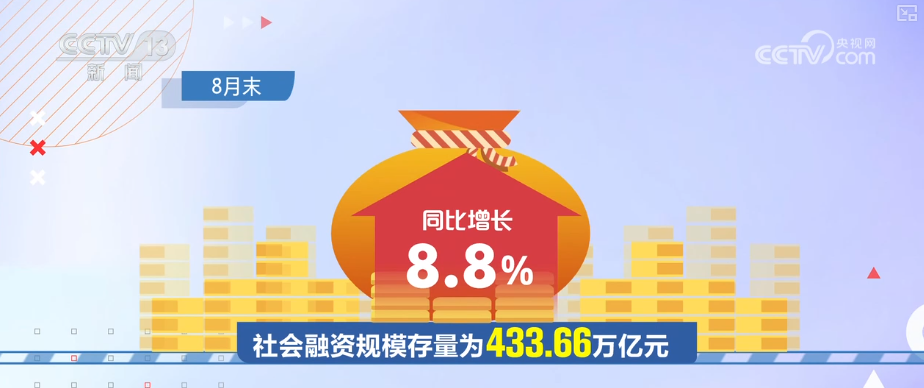
Group 1 - The core viewpoint is that the social financing scale has maintained a high growth rate, indicating strong financial support for the real economy, with a year-on-year growth of 8.8% as of the end of August [1][3] - As of the end of August, the total social financing scale was 433.66 trillion yuan, with the balance of RMB loans to the real economy at 265.42 trillion yuan, reflecting a year-on-year growth of 6.6% and accounting for 61.2% of the total social financing scale [3] - In the first eight months, the increment of social financing was 26.56 trillion yuan, which is an increase of 4.66 trillion yuan compared to the same period last year [5] Group 2 - The broad money (M2) balance reached 331.98 trillion yuan at the end of August, with a year-on-year growth of 8.8%, while the narrow money (M1) balance was 111.23 trillion yuan, growing by 6% [7] - The chief economist of Minsheng Bank noted that since 2025, a combination of proactive fiscal policy and moderately loose monetary policy has effectively supported the real economy, with cumulative financing increments consistently exceeding the previous year's levels [9] - The convergence of the M1 and M2 scissors difference indicates that more funds are being converted into demand deposits, which is beneficial for consumption and investment activities [9]
(经济观察)中国金融总量保持高增速传递哪些信号?
Zhong Guo Xin Wen Wang· 2025-09-12 13:51
Group 1 - The core viewpoint is that China's financial total maintains a high growth rate, indicating strong support for the real economy [1][2] - As of the end of August, the social financing scale increased by 8.8% year-on-year, reflecting robust financial backing for the economy [1] - The broad money (M2) balance reached 331.98 trillion yuan, also growing by 8.8% year-on-year, supported by fiscal policies and reasonable growth in social financing and loans [1] Group 2 - The credit support for the real economy remains strong, driven by factors such as industry recovery, resilient exports, summer consumption peaks, and real estate support policies [2] - Manufacturing loans have significantly increased, with new manufacturing loans accounting for 53% of new corporate loans from January to August, a rise of 33 percentage points compared to the entire year of 2024 [2] - Personal loan growth was boosted by traditional summer consumption demand and policies promoting consumption, alongside new real estate regulations in major cities [2] Group 3 - Future monetary policy will focus on optimizing structure rather than just maintaining total growth, as the economy transitions to medium-high speed and faces challenges like high household leverage and bank asset quality [3] - By the end of August, the balance of various RMB loans was 269.10 trillion yuan, with a year-on-year growth of 6.8%, while inclusive small and micro loans grew by 11.8% [3] - Structural monetary policy tools are expected to enhance financial institutions' ability and willingness to support key areas, with a focus on effective collaboration between monetary credit policies and fiscal measures [3]