高端化

Search documents
海信视像(600060):全球份额不断提升,H1业绩持续增长
GOLDEN SUN SECURITIES· 2025-08-26 11:00
Investment Rating - The report maintains a "Buy" rating for Hisense Visual [5] Core Views - Hisense Visual's market share is continuously increasing, with H1 2025 revenue reaching 27.231 billion yuan, a year-on-year growth of 6.95%, and a net profit attributable to shareholders of 1.056 billion yuan, up 26.63% [1] - The company has solidified its leading position in the high-end domestic and overseas markets, with significant market shares in large-screen TVs and MiniLED products [1][2] - Profitability is on the rise, with Q2 2025 gross margin at 16.8%, a year-on-year increase of 1.4 percentage points, and a net margin of 4.39%, up 0.71 percentage points [2] Financial Performance Summary - Revenue and profit forecasts indicate continued growth, with expected net profits of 2.589 billion yuan in 2025, 2.982 billion yuan in 2026, and 3.352 billion yuan in 2027, reflecting year-on-year growth rates of 15.3%, 15.2%, and 12.4% respectively [2][4] - The company's gross margin is projected to improve gradually, reaching 17.6% by 2027 [4] - The report highlights a strong return on equity (ROE) forecast, increasing from 11.1% in 2023 to 14.1% in 2027 [4]

财报 | 安徽合力2025上半年实现营业收入93.9亿,同比增6.18%
工程机械杂志· 2025-08-26 10:10
Core Viewpoint - Anhui Heli reported a revenue of approximately 9.39 billion yuan for the first half of 2025, a year-on-year increase of 6.18%, while net profit attributable to shareholders decreased by 4.6% to about 796 million yuan [1]. Industry Performance - The total sales volume of the Chinese industrial vehicle industry reached 739,300 units in the first half of 2025, reflecting a year-on-year growth of 11.66%. Domestic market sales were 476,400 units, up 9.79%, while overseas market sales increased by 15.21% to 262,900 units [1]. - The sales proportion of electric vehicles in the industry rose to 75% by the end of the first half of the year, an increase of nearly 2 percentage points compared to the end of the previous year [1]. Market Trends - The industry is witnessing a trend towards "high-end, intelligent, and green" development, indicating a shift in focus for manufacturers and consumers alike [1].


杭叉集团(603298):海外布局加速推进,多元化业务不断兑现
Shanxi Securities· 2025-08-26 09:51
Investment Rating - The report maintains an "Accumulate-A" rating for the company [3][8] Core Views - The company reported a revenue of 9.3 billion yuan in the first half of 2025, representing a year-on-year increase of 8.7%, and a net profit of 1.12 billion yuan, up 11.4% year-on-year [3][4] - The second quarter of 2025 saw the company achieve its highest quarterly revenue and net profit in history, with revenues of 4.8 billion yuan, a year-on-year increase of 9.4%, and a net profit of 680 million yuan, up 9.1% year-on-year [4][5] - The company is accelerating its overseas expansion and diversifying its business, with a significant increase in exports, achieving nearly 60,000 units sold overseas, a year-on-year growth of over 25% [5][6] Financial Performance - The company’s gross margin and net margin for Q2 2025 were 23.3% and 15.0%, respectively, with a slight year-on-year increase in gross margin [4] - The company’s earnings per share (EPS) for 2025 is projected to be 1.74 yuan, with expected P/E ratios of 13.0, 11.7, and 10.6 for 2025, 2026, and 2027 respectively [8][12] - The company’s net profit is expected to grow from 2.279 billion yuan in 2025 to 2.784 billion yuan in 2027, reflecting a compound annual growth rate of approximately 10.3% [12][13] Industry Position - The company is positioned as a leading player in the forklift industry, benefiting from brand effect, economies of scale, technological research and development, and service quality [7][8] - The overall sales volume of the forklift industry in the first half of 2025 was 739,334 units, a year-on-year increase of 11.66%, indicating a robust market environment [4][5]

古雷焕“新”,千亿产业集群加速崛起
Sou Hu Cai Jing· 2025-08-26 09:46
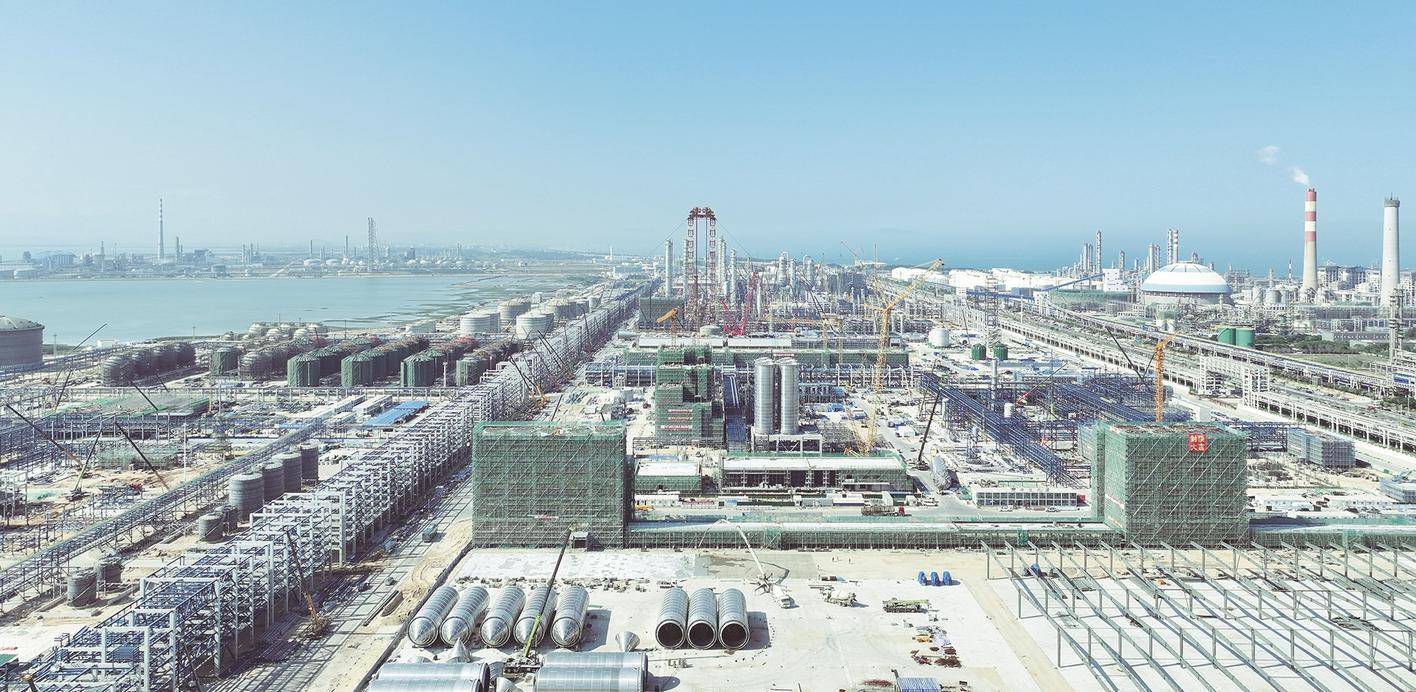
Group 1: Core Developments in Gulei Peninsula - The Gulei Peninsula is witnessing a vibrant industrial renewal, highlighted by the signing of a green methanol project with a total investment of 15 billion yuan, leveraging offshore wind power and biomass resources [1] - The successful relocation of the CCR control room and the establishment of a digital management system mark significant steps towards smart upgrades in the Gulei petrochemical sector [1] - The Gulei Petrochemical Company has successfully implemented an MPS system for dynamic monitoring of key operational indicators, aiding in resource optimization and cost reduction [1] - The selective hydrogenation project for butadiene at Gulei Petrochemical, recognized as a key national project, is set to transform by-products into high-value raw materials [1] Group 2: Policy and Support for Industrial Growth - The Gulei development zone is receiving strong support from national and local governments, with a series of policies aimed at fostering a world-class high-end smart green petrochemical base [3] - The provincial government has introduced "twenty measures" to support Gulei's development, facilitating project approvals and funding [3] - The Gulei area has seen significant project activity, with over 640 billion yuan in total investments from new and ongoing projects, including major projects exceeding 100 billion yuan [3][4] Group 3: Transition to High-End, Intelligent, and Green Industry - The Gulei development zone is focused on transforming the traditional petrochemical industry towards high-end, intelligent, and green development, emphasizing innovation and resource integration [5] - Investments of 1.356 billion yuan have been made to establish pilot bases for chemical and biopharmaceutical innovations, promoting deep integration of technology and industry [5] - The Gulei area is advancing its circular economy initiatives and aims to achieve a 90% direct supply of green electricity through integrated energy solutions [6] Group 4: Regional Collaboration and Infrastructure Development - Gulei is enhancing regional collaboration by constructing key transportation infrastructure and fostering industrial connections with surrounding areas [7] - Strategic partnerships have been formed to promote green low-carbon transitions and integrate oil trading and refining processes [7] - The Gulei development zone is actively engaging in international cooperation, aiming to create a new economic model that leverages its petrochemical base [8]
亚洲最大挖泥船下水
Zhong Guo Xin Wen Wang· 2025-08-26 09:17
Core Viewpoint - The successful launch of Asia's largest dredging vessels, "Tongjun" and "Junguang," designed and built by China, marks a significant advancement in high-end, intelligent, and environmentally friendly dredging technology [1] Group 1: Vessel Specifications - The dredging vessels have a design length of 198 meters, a width of 38.5 meters, a depth of 18 meters, a maximum dredging depth of 120 meters, and a maximum hold capacity of 35,000 cubic meters, making them the largest in Asia [1] - These vessels are equipped with advanced features that allow them to operate in conditions of up to level 8 wind and waves, with the dredging head capable of reaching depths equivalent to approximately 40 stories [1] Group 2: Technological Advancements - "Tongjun" and "Junguang" are characterized by four main features: intelligence, efficiency, versatility, and environmental protection, with a smart operation mode covering the entire dredging process from excavation to transportation [1] - The vessels utilize a self-developed "one-click dredging" and "integrated dredging control system," allowing a single crew member to manage all navigation and construction tasks, achieving fully automated dredging operations [1] Group 3: Operational Efficiency - Under normal working conditions, the vessels can fill their mud holds within 90 minutes, showcasing world-leading loading efficiency [1]

降费难阻业绩失速,蓝月亮连续5年上半年亏损,押注高价洗衣液仍需时间沉淀
Zheng Quan Zhi Xing· 2025-08-26 06:53
Core Viewpoint - Blue Moon Group reported a revenue of HKD 30.37 billion for the first half of 2025, a year-on-year decline of approximately 3%, with a loss of HKD 4.35 billion, although this loss has narrowed compared to the same period last year [1] Revenue Performance - The decline in revenue is attributed to a significant drop in the clothing cleaning product segment, which accounts for over 80% of total revenue, falling by 4.6% to HKD 26.41 billion [3][4] - Personal cleaning and home cleaning products saw revenue increases of 12.4% and 4.8%, respectively, generating HKD 2.16 billion and HKD 1.8 billion [3] Sales Channel Analysis - Online sales revenue decreased by 8.9% to HKD 20.68 billion, influenced by the company's control over sales and distribution expenses [4] - The online sales channel accounted for 68.1% of total revenue in the first half of 2025, up from 59.7% in 2024 [5] Marketing and Investment Strategy - The company has heavily invested in online platforms like Douyin, leading to a significant increase in marketing expenses, which rose by 55.6% to HKD 50.49 billion in 2024 [6][7] - Despite achieving record revenue of HKD 85.56 billion in 2024, the company reported a net loss of HKD 7.49 billion, marking its first annual loss since going public [7] Future Outlook - The company plans to leverage emerging online and distribution platforms to promote best-selling and new products, particularly focusing on concentrated laundry liquids [8] - The introduction of premium-priced products may face challenges in consumer acceptance and market education, indicating ongoing pressure on short-term performance [8]
赛轮轮胎上半年营收、销量创同期新高 高端化提速构筑竞争壁垒
Zhong Guo Jin Rong Xin Xi Wang· 2025-08-26 06:52
Core Viewpoint - The company has demonstrated significant growth in revenue and profit in the first half of 2025, driven by its high-end product development and market expansion efforts [1][2]. Financial Performance - In the first half of 2025, the company achieved operating revenue of 17.587 billion yuan, a year-on-year increase of 16.05% [1]. - The net profit attributable to shareholders reached 1.831 billion yuan [1]. - Tire sales amounted to 39.1449 million units, reflecting a year-on-year growth of 13.32% [1]. Strategic Focus - The company is accelerating its high-end transformation, emphasizing "high-end and intelligent" product development to address increasing competition and product homogenization in the tire industry [1]. - The company has increased its R&D investment to 537 million yuan, a year-on-year growth of 14.67%, to drive innovation towards high-end, intelligent, and green products [1]. Product Development - The company has made significant breakthroughs in high-end products, particularly with its "liquid gold tire," which successfully addresses key performance challenges in the industry [2]. - The company has achieved record sales in both domestic and international markets for its all-steel tires, while semi-steel tires have shown strong performance in the matching market [2]. Market Opportunities - The demand for giant tires is increasing due to domestic mining companies expanding overseas, providing new market opportunities for domestic tire manufacturers with core technology [2]. - The company has fully mastered the core technology for giant tires, achieving industrial production of a full range of products from 49 inches to 63 inches, meeting diverse market needs [2].

大飞机供应链智造基地项目在湘江新区开工 谭勇出席
Chang Sha Wan Bao· 2025-08-26 02:50
2025年上半年,湘江新区累计开工项目70个,总投资157.75亿元,累计新引进产业项目171个,合同引 资超500亿元。总体工程进度、投资进度和签约进度均实现了"双过半"的任务目标,为新区经济社会发 展注入了强劲动能。 据了解,湘江新区第三季度共有25个项目开工,涵盖产业发展、基础设施、社会民生,具有体量大、投 资实、结构优、拉动强的特点。 本次活动还签约了10个重大项目,总投资108.5亿元,包含磐云数据万卡算力集群、长沙居健肿瘤质子 中心、新奥泛能微网智慧能源产业、航天环宇复合材料机翼制造中心、草花互动总部及研发基地、奥创 普高精度半导体设备生产基地、时代电服换电站等项目,这些项目在高端化、智能化、绿色化方面的协 同突破,正是湘江新区产业升级路径的生动实践。 8月25日上午,大飞机供应链智造基地项目开工仪式在湖南湘江新区举行。长沙市委副书记,湖南 湘江新区(长沙高新区)党工委书记、岳麓区委书记谭勇宣布开工。湖南湘江新区(长沙高新区)管委 会主任、岳麓区区长何朝晖出席。 大飞机供应链智造基地项目总投资51亿元,位于黄桥大道与金洲大道交会处,毗邻许龙路"千亿工业走 廊",产业定位以大飞机起落架为核心,辅以航 ...
宇通客车2025上半年营收161.29亿 拟每10股派息5元
Zhong Guo Jing Ji Wang· 2025-08-26 02:22
Core Viewpoint - Yutong Bus Co., Ltd. demonstrated strong performance in the first half of 2025, maintaining its leading position in the bus industry despite a cyclical downturn in the domestic market, with significant sales and profit growth [1][2][6]. Financial Performance - In the first half of 2025, Yutong sold 21,321 buses, a year-on-year increase of 3.73% - The company achieved operating revenue of 16.129 billion yuan and a net profit attributable to shareholders of 1.936 billion yuan, reflecting a year-on-year increase of 15.64% [1]. Market Position - Yutong maintained its industry leadership with a market share of 55.4% in the large and medium-sized bus segment, which is an increase of nearly 7 percentage points year-on-year [2]. - In the public transport bus market, Yutong's sales of large and medium-sized buses reached 7,406 units, a year-on-year increase of 38.5%, with a market share of 22.2%, up 8.7 percentage points [2]. Product Innovation and Strategy - Yutong has focused on high-end, customized, and intelligent networked products in the tourism bus market, launching models like the Tianyu S12, which features the highest bus body in the industry [4]. - The company has also anticipated the demand for elderly-friendly and customized buses, increasing the sales proportion of low-floor elderly-friendly buses from 13% in 2021 to 60% in the first half of 2025 [5]. Export Growth - Yutong's export of buses reached 2,103 units in June 2025, a year-on-year increase of 33.19%, outpacing the industry growth rate [8]. - The company has made significant deliveries in key regions such as Europe, Africa, and Central Asia, including a notable order of 287 electric buses to Norway [9]. Research and Development - Yutong's R&D expenditure reached 746 million yuan in the first half of 2025, accounting for 4.63% of its operating revenue, indicating a strong commitment to innovation [11]. - The company has made breakthroughs in battery life and intelligent technology, including the development of a 15-year pre-lithiation long-life battery technology [11][12]. Future Outlook - The demand for buses is expected to see slight growth in the second half of 2025, driven by policies promoting new energy buses and urban transportation integration projects [12]. - Yutong is well-positioned to benefit from expanding domestic and international markets, leveraging its product, channel, and brand advantages [12].

华盛昌上半年营收增长4.91% 高端化智能化战略现成效
Shang Hai Zheng Quan Bao· 2025-08-26 02:10
Core Insights - The company reported a revenue of 349.39 million yuan for the first half of 2025, with a growth rate of 4.91% compared to the previous year [1] - The net profit remained stable year-on-year after deducting share-based payment expenses of 17.04 million yuan [1] - The company is focusing on optimizing its product structure, with core product segments including professional instruments, testing instruments, and medical diagnostic equipment showing a revenue growth of 13.85% [1] Revenue Breakdown - Revenue from professional instruments reached 157.56 million yuan, marking a year-on-year increase of 12.11% [1] - Sales of professional testing and scientific analysis instruments amounted to 40.72 million yuan, reflecting a growth of 16.42% [2] - Medical diagnostic and life science analysis instruments achieved sales of 4.36 million yuan, a significant increase of 76.68% [2] Strategic Developments - The company is enhancing its core competitiveness in intelligent measurement solutions, focusing on the development of AI-based measurement devices [1][3] - A dedicated artificial intelligence department has been established to keep pace with technological advancements and to develop next-generation intelligent detection equipment [3] - The company is expanding its overseas operations, particularly in Vietnam, to meet growing international demand and enhance its competitive edge [2]