
AI芯片

Search documents
半导体设备半年报:长川科技加码高端新产品成果显著,建议后续关注SoC、存储、AI测试机的放量突破
Xin Lang Cai Jing· 2025-09-26 07:30
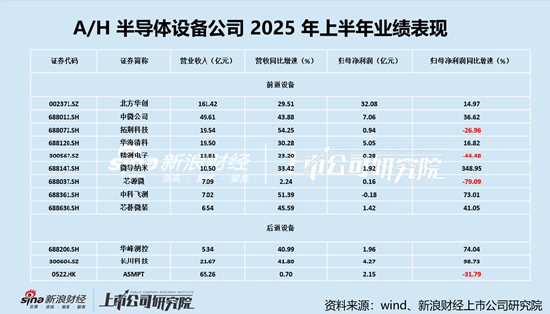
Core Insights - The AI chip industry has seen a continuous increase in prosperity since 2025, with significant growth in the semiconductor equipment sector driven by AI-related investments [1] - Global semiconductor equipment company revenues are projected to grow by 12% year-on-year in 2025, with a 24% increase in Q2 2025 [1] - The demand for high-performance SoC testing machines and storage testing machines has surged due to the complexity of chip design and manufacturing [1] Industry Overview - The overseas semiconductor equipment market has experienced a 40% year-on-year growth, particularly in testing and packaging equipment [1] - In contrast, the Chinese market saw a slight decline of 1% year-on-year in H1 2025, although the domestic semiconductor equipment localization rate increased by 6 percentage points to 21% [1] Company Performance - Among semiconductor equipment manufacturers, notable revenue growth was observed in several companies, with North Huachuang achieving a revenue of 16.14 billion yuan, a year-on-year increase of 29.51% [2] - The highest net profit growth was recorded by Weidao Nano at 348.95%, followed by Changchuan Technology at 98.73% [3] - Changchuan Technology's growth is attributed to an expanded product range and a shift from mid-to-low-end to mid-to-high-end markets [3] Financial Metrics - Changchuan Technology's revenue for H1 2025 reached 2.167 billion yuan, with a 41.80% increase, driven by a 34.30% rise in testing machine revenue [4] - The company's gross margin has remained stable between 54% and 56%, with a reported gross margin of 54.93% in H1 2025 [4] - R&D investment for Changchuan Technology was 577 million yuan in H1 2025, representing a 35.38% increase and accounting for 26.65% of revenue [4] Market Outlook - The demand for AI and HBM technologies is expected to continue driving industry growth, particularly in the testing equipment sector [4] - Companies are advised to monitor inventory and order status in the short term while focusing on advancements in high-end equipment for SoC and storage testing in the long term [4]


【公告全知道】AI芯片+算力+数据中心!这家公司是国内CPU/GPU龙头
财联社· 2025-09-25 15:40
Group 1 - The article highlights the importance of major announcements in the stock market, including suspensions, investments, acquisitions, and performance reports, to help investors identify potential investment opportunities and risks [1] - A leading company in AI chips, computing power, and data centers is noted as the only domestic producer of x86 chips, indicating its strong market position [1] - Another company is involved in humanoid robots, low-altitude economy, drones, and new energy vehicles, having established connections with top humanoid robot firms and completed sample testing of core products [1] - A company focusing on solid-state batteries, related to CATL concepts, machine vision, and hydrogen energy, has delivered core solid-state battery equipment to multiple clients [1]

港股收盘 | 恒指收跌0.13% 科技股多数上扬 海外矿端扰动刺激铜业股走强
Zhi Tong Cai Jing· 2025-09-25 08:56
Market Overview - The Hong Kong stock market experienced fluctuations, with the Hang Seng Index closing down 0.13% at 26,484.68 points and a total trading volume of 314.89 billion HKD [1] - The Hang Seng Technology Index rose by 0.89%, closing at 6,379.19 points, while the Hang Seng China Enterprises Index saw a slight increase of 0.01% [1] Blue-Chip Stocks Performance - Xiaomi Group-W (01810) saw a significant increase of 4.48%, closing at 59.45 HKD, contributing 72.84 points to the Hang Seng Index [2] - Other notable blue-chip stocks included Zijin Mining (02899) up 5.13%, JD Group-SW (09618) up 3.46%, while Haier Smart Home (06690) and Hang Seng Bank (00011) experienced declines of 4.79% and 3.13% respectively [2] Sector Highlights - The technology sector showed strong performance, with major tech stocks like Xiaomi and JD Group rising significantly [3] - Copper stocks surged due to production disruptions, with Luoyang Molybdenum (03993) up 11.73% and China Nonferrous Mining (01258) up 10.99% [4] - The robotics sector gained traction, with companies like Geekplus (02590) and Ubtech (09880) seeing increases [5] Copper Market Dynamics - A landslide at Freeport McMoRan's Grasberg mine in Indonesia has halted production, affecting approximately 3% of global copper supply [4] - Analysts predict a 35% reduction in copper output by 2026, which is expected to support copper prices [4] Robotics Sector Developments - The Chinese government is promoting humanoid robots and related technologies, with significant investments expected in the coming years [5] - Companies like Ubtech and others are experiencing increased orders and production, indicating a rising industry trend [5] Chip Sector Activity - Semiconductor stocks are active, with Huahong Semiconductor (01347) rising 4.74% and SMIC (00981) seeing a slight increase [5][6] - The demand for AI chips is projected to grow, benefiting domestic foundries like SMIC [6] Notable Stock Movements - China Everbright Holdings (00165) surged 25.89% due to its focus on technology investments [7] - Yimai Sunshine (02522) rose 14.08% following the launch of an AI medical imaging product in collaboration with Alibaba Cloud [8] - Contemporary Amperex Technology Co., Ltd. (300750) reached a new high, up 5.14%, driven by increased demand for energy storage batteries [9] - Chery Automobile (09973) debuted on the Hong Kong Stock Exchange, closing up 3.8% [10] - JD Group-SW (09618) announced plans for significant investments in AI over the next three years [11]


广西人工智能产业基金完成设立
Sou Hu Cai Jing· 2025-09-25 06:48
Core Viewpoint - Guangxi has established an artificial intelligence industry investment fund with a total expected scale of 10 billion RMB to promote the deep integration of AI with the real economy and empower various industries [1] Investment Focus - The fund will focus on cutting-edge areas such as artificial intelligence, digital economy, low-altitude economy, Beidou remote sensing, AI chips, and large model application development platforms [1] - The investment strategy employs a "sub-fund + direct investment" dual-drive model, with at least 80% of the funds allocated to sub-fund projects and no more than 20% for direct investments in innovative enterprises [1] Investment Mechanism - The fund aims to drive key technology breakthroughs, result transformation, and scenario implementation, assisting Guangxi in becoming an AI cooperation hub facing ASEAN [1] - For projects with significant investment returns, excess profits can be shared up to 100% [1] - Guangxi has established a due diligence exemption (or reduction) mechanism that aligns with the rapid iteration, new models, long cycles, and high risks of the AI industry, fostering an environment that encourages innovation and tolerates failure [1]
北方华创-蚀刻与沉积设备随产品结构升级放量;平台化解决方案拓展;买入
2025-09-25 05:58
Summary of NAURA (002371.SZ) Conference Call Company Overview - **Company**: NAURA (002371.SZ) - **Industry**: Semiconductor Equipment (SPE) - **Rating**: Buy Key Points Industry Dynamics - NAURA is positioned to benefit from increased semiconductor capital expenditure (Capex) in China, projected to grow by 5% YoY to US$40 billion in 2025 and US$42 billion in 2026 [1][2] - Rising demand for local semiconductor equipment is driven by increased cloud Capex spending from Chinese cloud service providers (CSPs) focusing on AI applications [2] Financial Performance - Earnings have been revised upwards by 2% and 3% for 2026 and 2027, respectively, due to higher revenues from etching and deposition tool shipments [3] - Gross margin (GM) is expected to decrease slightly by 0.1 percentage points in 2026 and 2027 due to product mix changes, while operational efficiency improvements are expected to reduce the operating expense (Opex) ratio by 0.2 percentage points [3] Revenue and Profit Projections - Revenue projections for 2025, 2026, and 2027 are Rmb39.34 billion, Rmb51.28 billion, and Rmb61.63 billion, respectively, reflecting a growth of 1% and 2% from previous estimates [4] - Net income is projected to increase to Rmb10.54 billion in 2026 and Rmb12.09 billion in 2027, marking a 2% and 3% increase from prior estimates [4] Valuation and Price Target - The target price for NAURA has been revised to Rmb561, based on a 38.4x P/E ratio for 2026, up from Rmb492 previously [6][14] - The target P/E is derived from a regression analysis of global SPEs' P/E ratios and forward earnings growth [6][14] Risks - Key downside risks include potential US export restrictions on Chinese semiconductor firms, which could hinder capacity expansion and reduce demand for NAURA's equipment [15] - Slower-than-expected capacity expansion at NAURA's mature node customers may lead to slower revenue growth than anticipated [15] Additional Insights - The company is expanding its product offerings, including new manufacturing capacities for advanced nodes to meet the demand for AI chipsets in China [2] - The localization trend in China is evident, with major telecom companies like China Mobile and China Unicom announcing new AI computing projects utilizing local chipsets [2] This summary encapsulates the essential insights from the conference call regarding NAURA's market position, financial outlook, and associated risks, providing a comprehensive overview for potential investors.

*ST仁东拟1亿元入股江原科技 进军AI芯片赛道
Zheng Quan Shi Bao Wang· 2025-09-25 01:54
Core Insights - *ST Rendo announced an investment of 100 million yuan in Shenzhen Jiangyuan Technology Co., Ltd., acquiring a 4.1427% stake, aiming to enhance its competitive edge in the AI chip market [1][2] - The investment aligns with the national push for domestic AI chip development and the increasing demand for "domestic chips + secure computing power" in various sectors [2] - This investment follows *ST Rendo's successful restructuring, which included clearing historical debts and achieving a net profit of 347 million yuan in the first half of the year [3] Group 1 - The investment in Jiangyuan Technology is part of *ST Rendo's strategy to establish a second growth curve, focusing on the future market potential of domestic AI chips [1] - Jiangyuan Technology, founded in November 2022, specializes in the research and development of domestic AI chips and has successfully completed the mass production of its first-generation chip product D1 [1] - The company is also developing its second-generation chip product T800, expected to achieve mass production by 2026 [1] Group 2 - The investment is seen as a strategic move to capitalize on the trend of "AI + payment," positioning *ST Rendo advantageously in the wave of domestic computing power [2] - Following its restructuring, *ST Rendo has established three wholly-owned subsidiaries focused on the national computing power hub initiative [3] - The company's strategic vision emphasizes integrating payment and AI to create a comprehensive smart technology ecosystem [3]

瑞芯微涨2.03%,成交额5.59亿元,主力资金净流入3346.22万元
Xin Lang Cai Jing· 2025-09-25 01:51
Core Viewpoint - 瑞芯微 has shown significant stock performance with a year-to-date increase of 109.39% and a recent market capitalization of 961.66 billion yuan [1] Financial Performance - For the first half of 2025, 瑞芯微 reported revenue of 2.046 billion yuan, representing a year-on-year growth of 63.85% [2] - The net profit attributable to shareholders for the same period was 531 million yuan, marking a substantial increase of 190.61% year-on-year [2] Stock Market Activity - As of September 25, 瑞芯微's stock price was 228.57 yuan per share, with a trading volume of 5.59 billion yuan and a turnover rate of 0.59% [1] - The stock has experienced a net inflow of 33.46 million yuan from main funds, with significant buying activity from large orders [1] Shareholder Information - As of June 30, 2025, 瑞芯微 had 64,900 shareholders, a decrease of 14.75% from the previous period [2] - The average number of circulating shares per shareholder increased by 17.82% to 6,480 shares [2] Dividend Distribution - Since its A-share listing, 瑞芯微 has distributed a total of 1.274 billion yuan in dividends, with 566 million yuan distributed over the past three years [3] Major Shareholders - The top ten circulating shareholders include significant institutional investors, with Hong Kong Central Clearing Limited holding 13.7097 million shares, an increase of 6.9373 million shares from the previous period [3]

专访中昊芯英CTO郑瀚寻:国产AI芯片也将兼容不同平台
2 1 Shi Ji Jing Ji Bao Dao· 2025-09-24 22:22
Core Insights - The demand for AI computing is driving attention towards AI chips beyond GPUs, with companies like Google and Groq leading the way in alternative technologies [1][3] - In the domestic market, ASIC custom chip manufacturers are rapidly developing, as the cost of specialized chips decreases, allowing more firms to explore personalized AI capabilities [2][4] AI Chip Market Trends - The trend of seeking development opportunities outside of GPU chips is becoming more pronounced, with companies recognizing that innovation is necessary to compete with NVIDIA [3][4] - The success of GPUs is largely attributed to NVIDIA's established engineering teams, which are not easily replicable by newcomers [3] Technological Advancements - The introduction of Tensor Cores in NVIDIA's Tesla V100 series has highlighted the efficiency of tensor processing units (TPUs) in handling large data volumes, offering significant computational advantages [4][5] - The scaling laws in AI models continue to demand higher performance from underlying AI computing clusters, presenting challenges for domestic XPU chips [5] Interconnectivity and Infrastructure - Companies are focusing on enhancing interconnectivity between chips, cabinets, and data centers to meet the demands of high-speed data transmission [5][6] - 中昊芯英 is exploring advanced interconnect technologies, such as OCS all-optical interconnects, to improve its capabilities [6] Competitive Landscape - NVIDIA's InfiniBand protocol is seen as a competitive advantage for large-scale data center deployments, while domestic firms are leaning towards Ethernet protocols for their flexibility and improved performance [6] - The development of software ecosystems is crucial for domestic AI chip platforms, as they need to build their own software stacks to compete with NVIDIA's established CUDA ecosystem [6][7] Future Directions - The evolution of AI models, particularly those based on the Transformer architecture, continues to shape the landscape, with ongoing optimizations and adaptations [7] - The compatibility and smooth operation of various platforms will be essential for the success of domestic AI chips, similar to the early days of the Android ecosystem [7]

中创智领双主业协同发力业绩双增 拟2.7亿设亚新科热管理提升竞争力
Chang Jiang Shang Bao· 2025-09-24 19:20
Core Viewpoint - Zhongchuang Zhiling is significantly investing in its thermal management business to enhance its core competitiveness and market position in the automotive thermal management system sector [1][2]. Group 1: Investment and Business Expansion - Zhongchuang Zhiling announced plans to invest CNY 270 million to establish a wholly-owned subsidiary, Yaxin Ke Thermal Management Technology (Yizheng) Co., Ltd., aimed at boosting its automotive thermal management system cold plate business [1][2]. - The new subsidiary will focus on technology development, consulting, and services in various sectors, including new energy vehicles and power systems, reflecting the growing demand for thermal management systems [2]. Group 2: Company Transformation and Performance - The company underwent a significant transformation, officially changing its name from Zhengmei Machine to Zhongchuang Zhiling on September 17, marking its shift from traditional manufacturing to becoming a provider of intelligent industrial solutions [3]. - For the first half of 2025, Zhongchuang Zhiling reported a revenue of CNY 19.97 billion, a year-on-year increase of 5.42%, and a net profit attributable to shareholders of CNY 2.515 billion, up 16.36% [4]. - The coal machinery segment remains a stable revenue source, generating CNY 10.149 billion in revenue, while the automotive parts segment showed remarkable growth with a revenue of CNY 9.833 billion, reflecting a 7.47% increase [4]. Group 3: Future Growth and Strategic Initiatives - The company is leveraging its experience from the first "lighthouse factory" in the coal machinery industry to cultivate its industrial intelligence segment, investing CNY 300 million in AI chip company Hanbo Semiconductor to empower its smart mining and digital factory initiatives [5]. - The industrial intelligence segment has already secured orders in various industries, indicating potential for becoming a third growth curve for the company [5].

中昊芯英CTO郑瀚寻:国产AI芯片也将兼容不同平台
2 1 Shi Ji Jing Ji Bao Dao· 2025-09-24 10:41
Core Insights - The demand for AI computing is driving attention towards non-GPU AI chips, with companies like Google and Groq leading the way in alternative architectures [1][2] - The rise of custom ASIC chips is notable, as companies seek to develop personalized AI capabilities at lower costs [1][2] - The evolution of AI chips is marked by a shift towards architectures that prioritize performance and energy efficiency, moving away from traditional GPU models [2][3] Market Trends - New players in Silicon Valley, such as Groq and SambaNova, are focusing on architecture innovation rather than GPU-based designs [2] - The success of NVIDIA is attributed to its established engineering teams, making it challenging for new entrants to replicate its model [2][3] - The increasing focus on custom ASIC chips is evidenced by significant orders, such as Broadcom's recent billion-dollar contracts [1][2] Technological Developments - The introduction of Tensor Cores in NVIDIA's Tesla V100 series has enhanced performance without significant changes to CUDA Cores [3] - TPU chips are likened to innovations in the electric vehicle industry, offering better data migration and lower energy consumption [4] - The need for efficient data transmission in AI infrastructure is becoming a critical challenge, with companies exploring high-speed interconnect solutions [5][6] Competitive Landscape - NVIDIA's closed approach has prompted competitors to advance Ethernet protocols, which have become more competitive in recent years [6] - The development of software ecosystems is crucial for domestic AI chip manufacturers, as they need to build their own toolchains to compete with NVIDIA's CUDA [6] - The Transformer architecture remains foundational for most large language models, providing opportunities for AI chip manufacturers to align their products with ongoing model iterations [7]