
国企改革

Search documents
险资加快入市,如何展望钢铁的红利价值?
Changjiang Securities· 2025-09-14 23:31
Investment Rating - The investment rating for the steel industry is Neutral, maintained [8] Core Views - The pace of insurance capital entering the market has accelerated, with insurance potentially adding several hundred billion yuan of long-term funds to the A-share market annually. This influx is expected to benefit low-volatility, high-dividend assets, enhancing their investment value [2][6] - The steel sector is witnessing a confirmation of profit bottoms and a slowdown in capital expenditure, highlighting the dividend attributes of quality leading companies, which are expected to attract long-term incremental capital [2][6] Summary by Sections Market Performance - The steel industry is experiencing a recovery in demand, with significant improvements in plate demand due to eased production restrictions in key manufacturing areas. However, the demand during the "Golden September" period appears slightly insufficient [5] - The average daily pig iron production has risen to 2.4055 million tons, an increase of 11.71 thousand tons per day, indicating a high level of production [5] - Total steel inventory has increased by 0.83% week-on-week and 0.49% year-on-year, reflecting a buildup in stock levels [5] Price Trends - The price of Shanghai rebar has dropped to 3,210 yuan/ton, a decrease of 50 yuan/ton, while hot-rolled steel has increased to 3,410 yuan/ton, up by 10 yuan/ton. The estimated profit for rebar is -87 yuan/ton [5] Policy and Structural Changes - The "anti-involution" policy is expected to optimize the supply-demand structure in the steel industry, potentially supporting steel prices by constraining backward production capacity [6][26] - The report anticipates that the supply of iron ore may become more relaxed, with new projects coming online, which could lead to a decrease in iron ore prices [6] Investment Opportunities - The report identifies four main investment lines: 1. Companies benefiting from cost reductions due to new capacities in iron and coke, such as Nanjing Steel and Hualing Steel [26] 2. Companies with low price-to-book ratios that may see significant performance and valuation recovery, such as New Steel and Fangda Special Steel [27] 3. Mergers and acquisitions under the state-owned enterprise reform theme, which could enhance asset quality and valuation [27] 4. Quality processing leaders and resource leaders, particularly in specialized fields, such as Jiuli Special Materials and Yongjin Co., with a focus on copper and iron resources [27]

进一步全面深化改革 推动“十五五”时期高质量发展——第二十二届中国改革论坛在京举行
Xin Hua Cai Jing· 2025-09-14 14:13
Core Viewpoint - The 22nd China Reform Forum emphasizes the need for comprehensive deepening of reforms to promote high-quality development during the "14th Five-Year" and "15th Five-Year" periods, highlighting the importance of continuous reform efforts and the leadership of the Communist Party of China [1][2]. Group 1: Key Themes of the Forum - The forum discusses the significance of institutional construction as a mainline for further reforms, focusing on economic system reforms and their impact on other areas [3]. - It stresses the importance of developing new productive forces and establishing new production relations that meet these requirements [3]. - The forum aims to accelerate the construction of a unified national market and deepen market-oriented reforms [3]. Group 2: Major Reform Topics - The forum addresses critical issues such as the construction of a high-level socialist market economy, supply-side structural reforms, and state-owned enterprise reforms [4]. - It shares research findings on enhancing consumption, social security, and stabilizing the stock market through coordinated reforms [4]. - Discussions include the need for a fair competitive market environment and preventing "involution" in competition [5]. Group 3: Specialized Forums - Three specialized forums are set up to discuss collaborative reform measures, enhancing economic development sustainability, and building support for comprehensive innovation [5]. - Topics include the evaluation system for state-owned enterprises, rural revitalization, and financial support for green and low-carbon development [5][6]. - Experts from various institutions participate in these discussions, contributing to a diverse range of insights and recommendations [6].
中药行业周报:中医药在基层使用推广有望加速-20250914
Xiangcai Securities· 2025-09-14 11:49
Investment Rating - The industry rating is maintained at "Overweight" [7] Core Views - The market performance of the traditional Chinese medicine (TCM) sector showed a slight increase of 0.03% last week, while the overall pharmaceutical sector experienced a minor decline of 0.36% [2] - The TCM sector's PE (ttm) is at 28.52X, with a PB (lf) of 2.42X, indicating a stable valuation compared to historical data [3] - The demand for TCM materials is expected to rise as the traditional medication peak season approaches, leading to a rebound in market conditions [4] - The promotion of TCM at the grassroots level is anticipated to accelerate, supported by government initiatives to enhance TCM services in community health centers and county hospitals [5][6] Market Performance - The TCM sector's index closed at 6720.55 points, reflecting a 0.03% increase, while the pharmaceutical sector index was at 9157.77 points, down 0.36% [2][18] - The performance of individual companies within the TCM sector varied, with leading companies including Yiling Pharmaceutical and Wanbangde, while companies like Kangyuan Pharmaceutical and Zhendong Pharmaceutical lagged [2][15][17] Valuation - The TCM sector's PE (ttm) is at 28.52X, unchanged from the previous week, with a one-year maximum of 30.26X and a minimum of 22.58X [3] - The PB (lf) stands at 2.42X, also stable, with a one-year maximum of 2.65X and a minimum of 1.99X [3] Policy and Regulatory Environment - The State Council's recent approval of the "Healthcare Strengthening Foundation Project" aims to enhance the use of TCM in grassroots healthcare settings, which is expected to significantly impact the sector [5] - The National Health Commission's response regarding the basic drug directory management indicates potential adjustments that could favor TCM applications in grassroots markets [6] Investment Recommendations - The report suggests focusing on three main investment themes: price governance, consumption recovery, and state-owned enterprise reform [10][11] - Specific investment targets include companies with strong R&D capabilities, those less affected by centralized procurement, and leading TCM brands [10][11]


徐工机械(000425):盈利能力持续提升 国企改革不断深化
Xin Lang Cai Jing· 2025-09-14 10:35
Core Viewpoint - In the first half of 2025, the company's revenue increased by 8% year-on-year, with overseas market growth at 17%, accounting for 47% of total revenue. The earthmoving machinery segment grew by 22%, contributing 31% to total revenue. The net profit attributable to the parent company increased by 17%, indicating stable improvement in profitability and continuous enhancement of financial statement quality. The upward trend in both domestic and overseas engineering machinery markets is expected to continue, and the company's ongoing state-owned enterprise reform and expansion into emerging businesses like mining machinery present promising growth potential [1][5]. Revenue Summary - In the first half of 2025, the company reported revenue of 54.808 billion yuan, a year-on-year increase of 8.04%, with a net profit of 4.358 billion yuan, up 16.63%. In Q2 alone, revenue was 27.993 billion yuan, reflecting a 5.41% increase year-on-year, while net profit was 2.336 billion yuan, up 9.33% [2][3]. Market Performance - The overseas market and earthmoving machinery are the main drivers of revenue growth. In the first half of 2025, domestic revenue was 29.263 billion yuan, a 1.5% increase year-on-year, while overseas revenue reached 25.546 billion yuan, up 16.64%, accounting for 46.61% of total revenue. Earthmoving machinery revenue was 17.019 billion yuan, a 22.37% increase, making up 31.05% of total revenue [3][4]. Profitability Analysis - The company's net profit attributable to the parent company for the first half of 2025 was 4.358 billion yuan, a 16.63% increase. The gross margin and net margin were 22.03% and 8.06%, respectively, reflecting improvements of 0.7 percentage points and 0.6 percentage points year-on-year. This stable enhancement in profitability is attributed to improved market structure and the company's proactive state-owned enterprise reform and high-quality development initiatives [4][5]. Industry Outlook - The engineering machinery industry is experiencing a synchronized upward trend in both domestic and overseas markets. A new cycle of equipment replacement is beginning, with policies accelerating the elimination of outdated models. The overseas market remains robust, particularly in regions like Asia, Africa, and Latin America, while marginal improvements are noted in Europe and North America. The company's diverse product offerings and the growth potential of its mining machinery business, bolstered by recent asset injections, are expected to drive future growth [5]. Investment Forecast - The company is projected to achieve net profits of 7.513 billion yuan, 10.007 billion yuan, and 12.419 billion yuan for the years 2025 to 2027, representing year-on-year growth rates of 25.72%, 33.19%, and 24.10%, respectively. Corresponding price-to-earnings ratios are estimated at 15.17x, 11.39x, and 9.18x [6].

e周招聘(2025年9月8日—9月13日)
Sou Hu Cai Jing· 2025-09-14 04:12
Group 1 - China Weaponry First Research Institute is recruiting for research and design positions [2] - Changsha Investment Holding Group Co., Ltd. is looking for a General Manager for Risk Control and Compliance Department [2] - Shandong Yiyang Health Industry Development Group Co., Ltd. has job openings [2] Group 2 - Guangxi Beigang Oil Co., Ltd. is hiring for managerial positions [4] - Guotour Cultural Investment Group Co., Ltd. is seeking a Head of Finance Department [4] - The magazine "Modern State-Owned Enterprise Research" focuses on state-owned enterprise reform and party building, serving as a research platform [4]


投资者走进中国医药活动成功举办
Zheng Quan Ri Bao Wang· 2025-09-12 10:43
Group 1 - The core activity involved investors visiting China National Pharmaceutical Group, which is a key player in the pharmaceutical and medical device industry, showcasing its comprehensive business model and strategic layout [1][2] - The company emphasizes its mission of leading a better life through technological advancement and quality service, with a focus on high-quality development and innovation [1][3] - The company operates across a full industry chain, including planting, processing, research and development, production, sales, logistics, international trade, academic promotion, and technical services [1][2] Group 2 - During the event, the management team presented detailed operational data, highlighting the company's competitive strengths in the pharmaceutical health industry [3] - The company is committed to green production and new drug research, while also enhancing its innovative business platforms in medical devices [3] - The company maintains a high cash dividend ratio to strengthen shareholder return mechanisms, and it aims to improve operational efficiency amid national enterprise reforms [3]

9月12日中捷资源(002021)涨停分析:国际业务拓展、国资股东入主驱动
Sou Hu Cai Jing· 2025-09-12 07:51
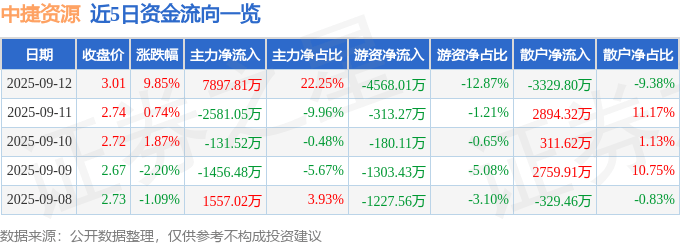
Core Viewpoint - Zhongjie Resources experienced a significant stock price increase, closing at 3.01 yuan with a daily limit up on September 12, 2025, attributed to various positive factors including international business growth and enhanced market confidence due to new major shareholders [1][2]. Group 1: Business Performance - The company reported a 15.51% year-on-year increase in overseas sales, supported by the establishment of a new office in Indonesia to strengthen its global presence [1]. - The gross profit margin for core business improved by 3.58 percentage points year-on-year, indicating better cost control capabilities [1]. - Research and development investment rose by 17.6% year-on-year, leading to the launch of new products such as "Line Master," which enhances competitive strength [1]. Group 2: Shareholder Dynamics - Yuhuan Guotou became the largest shareholder with a 10.84% stake, which is expected to boost market confidence due to its state-owned background [1]. - The stock is part of the Zhejiang state-owned enterprise reform concept, which saw a 0.28% increase on the same day, reflecting positive sentiment in the sector [2]. Group 3: Market Activity - On September 12, 2025, the net inflow of main funds was 78.98 million yuan, accounting for 22.25% of the total trading volume, while retail investors showed a net outflow of 33.30 million yuan, representing 9.38% of the total [1][2]. - The stock's performance on previous trading days showed fluctuations, with a notable increase of 9.85% on September 12, following a series of mixed results in the days prior [2].

全球造船第一股诞生!“南北船”上市公司合体
Sou Hu Cai Jing· 2025-09-12 06:38
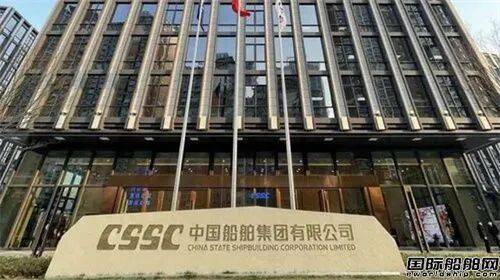
Core Viewpoint - The merger between China Shipbuilding Industry Co., Ltd. and China Shipbuilding Heavy Industry Co., Ltd. has been completed, creating the largest and most comprehensive publicly listed shipbuilding company globally [2][6]. Group 1: Merger Details - The merger was executed through a share swap, with China Shipbuilding issuing A-shares to absorb China Shipbuilding Heavy Industry, increasing its total share capital from 4,472,428,758 shares to 7,525,621,288 shares [2]. - The share swap ratio was set at 1:0.1339, meaning each share of China Shipbuilding Heavy Industry could be exchanged for 0.1339 shares of China Shipbuilding [2]. - The total value of the merger was reported at 115.15 billion yuan, marking it as the largest restructuring project in A-share market history and the largest merger in the global shipbuilding industry [6]. Group 2: Strategic Implications - The merger aims to enhance operational quality, core functions, and competitiveness of the combined entity, while also addressing industry competition and protecting minority shareholders' rights [4]. - Post-merger, China Shipbuilding will focus on strengthening its role in national defense and capitalizing on opportunities in the shipbuilding industry's transformation and upgrade [4][10]. Group 3: Financial and Operational Impact - Following the merger, the total asset scale of the combined company will exceed 400 billion yuan, with annual revenue projected to surpass 130 billion yuan [6]. - The merger will consolidate various shipbuilding and repair businesses, optimizing operations and enhancing market share across multiple dimensions [10]. Group 4: Market Position and Orders - As of mid-2023, China Shipbuilding secured 59 orders for civilian vessels totaling 5.4398 million deadweight tons, while China Shipbuilding Heavy Industry received 47 orders totaling 8.3826 million deadweight tons [9]. - Together, both companies captured 29% of the global new ship orders and 52% of domestic orders, with a combined order backlog representing 16% of the global total [9].
葫芦岛:用好改革“金钥匙” 激发国企新活力
Liao Ning Ri Bao· 2025-09-12 01:20
Core Viewpoint - The continuous deepening of state-owned enterprise (SOE) reform in Huludao City has revitalized six state-owned enterprises under the supervision of the municipal state-owned assets supervision and administration commission, leading to significant improvements in financial performance, including an 87.54% increase in operating revenue and a 69.63% reduction in losses in the first eight months of the year [1][8]. Group 1: Optimization and Restructuring - The reform addressed issues such as unclear main responsibilities and severe homogenization among SOEs, which led to internal competition and inefficiencies [2][3]. - The restructuring process involved optimizing and merging 11 state-owned enterprises into six, focusing on specialization and enhancing industry concentration and synergy [3][4]. - New entities, such as the Huludao City Engineering Consulting Group, were established to provide specialized services, eliminating overlapping business functions and improving operational clarity [3][4]. Group 2: Transition from Virtual to Real - The Huludao City Investment Group transitioned from being a government financing platform to a more diversified entity with real industry support, significantly improving its financial health [4][5]. - The investment group has seen substantial growth in its asset base and liquidity, with projected sales revenue of 2.059 billion yuan by the end of the year [5]. Group 3: Mechanism Reform and Employee Engagement - The implementation of the "Three Abilities" mechanism has fostered a competitive environment, allowing for more dynamic management and employee engagement [6][7]. - The reform has led to a significant reduction in management layers and an increase in employee productivity, with a reported 15% increase in average income for employees [7][8]. - The competitive hiring process has resulted in a more capable management team, with a notable increase in new business contracts and revenue growth [7][8]. Group 4: Overall Performance and Future Outlook - The six state-owned enterprises are expected to achieve over 60% year-on-year growth in operating revenue for two consecutive years, with tax contributions expected to double [8].
珠海国资大动作!大横琴集团90.21%股权无偿划转给这家1700亿总资产公司,涉及3家上市公司
Mei Ri Jing Ji Xin Wen· 2025-09-11 12:59
Core Viewpoint - Zhuhai Zhu Guang Group has acquired 90.21% of Zhuhai Da Hengqin Group's shares from the Zhuhai State-owned Assets Supervision and Administration Commission, marking a significant step in the reform of state-owned enterprises in Zhuhai [1][2]. Group 1: Acquisition Details - The acquisition agreement was signed on September 1, 2023, allowing Zhu Guang Group to gain control over Zhuhai Da Hengqin Group, which was previously the controlling shareholder of several listed companies [2]. - Following the acquisition, Zhu Guang Group indirectly holds 30.58% of the voting rights in Shijie Lianhang (SZ002285), 37.96% in *ST Baoying (SZ002047), and 60.28% in Shiron Zhaoye (SZ002016) [3]. Group 2: Financial Overview - As of 2024, Zhu Guang Group reported a revenue of 2.699 billion yuan and a net profit of 19.817 million yuan [4]. Group 3: Broader Context of State-Owned Enterprise Reform - The Zhuhai State-owned Assets Supervision and Administration Commission has been actively pursuing strategic restructuring and optimization of state-owned enterprises since early 2025, with multiple companies undergoing changes in their controlling shareholder structures [5]. - This restructuring initiative is part of a broader effort to concentrate quality resources in leading enterprises and to align with national and provincial directives for state-owned enterprise reform [2][5].


