
数字经济

Search documents
6500亿光模块龙头 登顶公募基金第一重仓股
2 1 Shi Ji Jing Ji Bao Dao· 2026-01-24 01:44
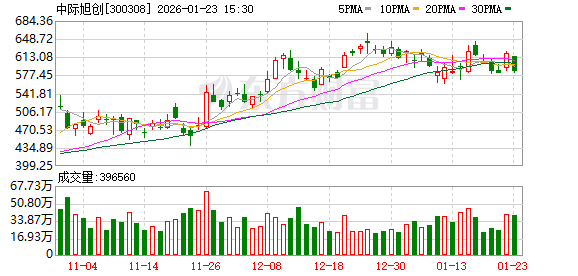
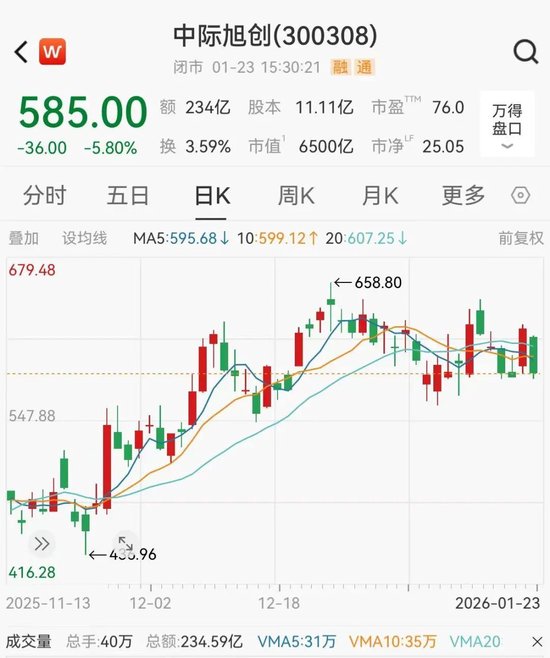
"从宏观角度看,市场资金在追求短期收益与长期战略配置之间寻求平衡,对行业发展前景与政策环境的综合 考量导致了资金流向的调整。"受访人士向21世纪经济报道记者指出。 公募主动权益基金第一大重仓股有了"新面孔"。 机构最新统计数据显示,截至2025年4季度末,中际旭创代替宁德时代成为主动权益基金(包括主动股票基 金、偏股混合基金、灵活配置基金)第一大重仓股。 截至1月23日收盘,中际旭创股价报585元,总市值6500亿元。 同时,主动权益基金第二大至第十大重仓股排序均较上一季度发生变化,如新易盛取代腾讯控股成为基金第二 大重仓股,紫金矿业从第八大重仓股晋级为第五大重仓股,寒武纪-U升为第七大重仓股;而宁德时代、腾讯控 股分别退为第三、第四大重仓股,中芯国际退出了前十大重仓股队列。 另外,主动权益基金在行业配置层面也有调整。据机构统计,2025年4季度,主动权益基金增配较多的行业包 括有色金属、通信、非银、化工、机械;主要减配了电子、医药生物、传媒、计算机、电力设备等行业。 重仓股排序更迭 截至2026年1月22日,公募基金2025年第4季度报告基本披露完毕,主动权益基金前十大重仓股名单随之更新。 从持股绝对市值来 ...

6500亿光模块龙头,登顶公募基金第一重仓股
2 1 Shi Ji Jing Ji Bao Dao· 2026-01-24 01:21
Group 1 - The core point of the article is that Zhongji Xuchuang has replaced CATL as the largest holding in actively managed equity funds as of the end of Q4 2025 [1][6] - The top ten holdings of actively managed equity funds have changed significantly, with Zhongji Xuchuang, Xinyi Semiconductor, and Zijin Mining moving up in rankings, while CATL and Tencent have dropped [3][6] - The total market value of the top ten holdings is reported, with Zhongji Xuchuang at 76.8 billion yuan and Xinyi Semiconductor at 63.8 billion yuan [6] Group 2 - The active equity funds have adjusted their industry allocations, increasing exposure to sectors such as non-ferrous metals, communication, and chemicals, while reducing exposure to electronics and pharmaceuticals [3][11] - The overall stock position of actively managed equity funds has decreased to 84.4%, down 1.4 percentage points from the previous quarter, indicating a cautious approach [10] - The increase in holdings in the non-bank financial sector is attributed to improved market activity and low valuations, while the reduction in electronics and pharmaceuticals is due to high valuations and weak short-term outlooks [11][12] Group 3 - The shift in fund holdings reflects a market focus on technology sectors, particularly communications, driven by the rapid development of the digital economy and AI [7] - The increase in allocations to the communication sector is linked to the ongoing development of 5G and 6G technologies [11] - The analysis suggests that the changes in fund allocations are influenced by macroeconomic factors and the balance between short-term gains and long-term strategic positioning [4][12]
6500亿光模块龙头,登顶公募基金第一重仓股
21世纪经济报道· 2026-01-24 01:05
Core Viewpoint - The article highlights a significant shift in the top holdings of actively managed equity funds, with Zhongji Xuchuang replacing CATL as the largest position, indicating changing market dynamics and investment strategies [1][5]. Group 1: Changes in Top Holdings - As of the end of Q4 2025, the top ten holdings of actively managed equity funds are: Zhongji Xuchuang, Xinyi Semiconductor, CATL, Tencent Holdings, Zijin Mining, Alibaba-W, Cambricon Technologies, Luxshare Precision, Kweichow Moutai, and Dongshan Precision, with total market values of 768 billion, 638 billion, 630 billion, 574 billion, 368 billion, 310 billion, 291 billion, 280 billion, 258 billion, and 244 billion respectively [5][6]. - The ranking of the top ten holdings has changed significantly compared to Q3 2025, with Zhongji Xuchuang moving from fourth to first, and Xinyi Semiconductor from third to second, while CATL and Tencent have dropped to third and fourth respectively [6][9]. Group 2: Sector Allocation Adjustments - In Q4 2025, actively managed equity funds increased their allocations in sectors such as non-ferrous metals, communications, non-bank financials, chemicals, and machinery, while reducing exposure to electronics, pharmaceuticals, media, computers, and power equipment [3][10]. - The increase in allocation to non-ferrous metals and chemicals is attributed to supply constraints and recovering demand from new energy and AI sectors, while the communication sector benefits from advancements in AI infrastructure [10][11]. Group 3: Fund Manager Activity - Fund managers have been actively adjusting their portfolios, with a notable increase in the total number of stocks held, reaching 2,467, indicating greater diversity in holdings [7][9]. - The overall stock position of actively managed equity funds decreased to 84.4%, down 1.4 percentage points from the previous quarter, reflecting a cautious approach amid changing market conditions [9][10]. Group 4: Market Dynamics and Investment Strategies - The shifts in fund allocations reflect a balance between short-term gains and long-term strategic positioning, influenced by industry outlooks and policy environments [3][11]. - The focus on technology sectors, particularly communications, is driven by the rapid development of the digital economy and AI, highlighting the strategic importance of communication infrastructure and chip manufacturing [6][10].

2025年全国对外直接投资比上年增7.1%
Ren Min Ri Bao· 2026-01-24 00:47
Core Insights - By 2025, Chinese enterprises are expected to maintain healthy and orderly development in foreign investment, with over 50,000 companies established abroad across 190 countries and regions [1] - China's foreign direct investment (FDI) is projected to reach $174.38 billion in 2025, marking a 7.1% increase from the previous year, keeping China among the top three in the world for nine consecutive years [1] - Chinese companies are actively fulfilling social responsibilities, creating over 2 million jobs annually and contributing to the construction of education, health, and environmental facilities, earning widespread praise from host countries [1] Industry Developments - The year 2026 marks the beginning of the "14th Five-Year Plan," during which the Ministry of Commerce will implement effective foreign investment management and enhance overseas service systems [1] - There will be a focus on promoting integrated trade and investment development, supporting enterprises in international operations, and deepening cooperation in emerging fields such as digital economy and green development [1] - These efforts aim to contribute significantly to stable global economic growth [1]
中国企业社会化用工趋势分析报告
艾瑞咨询· 2026-01-24 00:06
Core Viewpoint - The trend of socialized employment is expanding, driven by macroeconomic pressures, labor shortages, and the need for flexible workforce solutions across various industries, particularly in manufacturing and retail sectors [1][2][6]. Group 1: Concept and Environment - Socialized employment refers to various forms of employment outside standard labor relations, including outsourcing, labor dispatch, hourly pay, platform-based flexible employment, and shared employment [1][3]. - The macroeconomic environment is characterized by economic fluctuations and a declining working-age population, leading to labor shortages and rising costs for companies [1][6][16]. - The retail sector utilizes a mix of outsourcing, hourly pay, and platform-based flexible employment to adapt to market demand fluctuations, with high employee turnover being a core issue [1][29]. Group 2: Trends and Policy - The scale of socialized employment continues to grow, with supportive policies expected to improve further [2][9]. - Socialized employment is becoming a standard practice for companies, with human resource service providers upgrading to more specialized and digital services [2][9]. - Government policies are encouraging the development of socialized employment models to enhance competitiveness [9]. Group 3: Macro Environment - The digital economy is rapidly growing, projected to reach 63.2 trillion yuan by 2024, accounting for 46.8% of GDP, driving the demand for new employment forms [6]. - The integration of digital technology is reshaping employment relationships, fostering various platform-based flexible employment models [12][40]. Group 4: Industry Penetration - As of 2024, over 240 million people are engaged in flexible employment in China, with socialized employment deeply penetrating various industries [19]. - Business outsourcing has a penetration rate exceeding 50%, while labor dispatch accounts for 20-30%, and platform-based employment is below 20% [19]. Group 5: Micro Environment - External competition and internal management demands are driving companies to adopt socialized employment strategies to remain agile and control labor costs [23]. - Socialized employment effectively balances the need for cost efficiency and individual development, allowing companies to dynamically adjust labor costs based on business fluctuations [26]. Group 6: Sector-Specific Characteristics - In the retail sector, socialized employment is characterized by high employee turnover, with a turnover rate exceeding 30% for frontline positions [37]. - Manufacturing companies are increasingly using socialized employment to manage labor costs and risks, particularly during peak demand periods [44][49]. - Different types of retail enterprises have varying socialized employment needs, with fast-moving consumer goods companies focusing on promotional roles and instant retail emphasizing delivery personnel [35].

商务部:中芬双方有意愿、有信心、有能力推动双边经贸合作持续向好发展
Di Yi Cai Jing· 2026-01-24 00:05
Core Viewpoint - Finland is a significant economic and trade partner for China in Europe and the first European country to sign a government trade agreement with China [1][2] Group 1: Bilateral Trade and Investment - By 2025, the bilateral trade volume between China and Finland is expected to exceed 8 billion USD, with mutual investment stock surpassing 23 billion USD [2] - In 2024, the total trade volume between China and Finland reached 14.121 billion euros, a year-on-year increase of 7.5%, accounting for 6.14% of Finland's total trade [6] - The total goods trade between China and Finland was 11.118 billion euros, with a year-on-year growth of 3.3%, representing 7.5% of Finland's goods trade [6] Group 2: Export and Import Details - Finland's exports to China amounted to 4.675 billion euros, increasing by 9.59% year-on-year, making up 6.09% of Finland's total exports [6] - The largest category of exports to China is pulp and waste paper, accounting for 30%, followed by special industrial machinery at 11% [6] - Imports from China totaled 6.443 billion euros, showing a slight decline of 0.83% year-on-year, representing 9.13% of Finland's total imports [6] - The largest category of imports from China is electrical machinery and parts, accounting for 25%, followed by telecommunications and recording equipment at 14.5% [6] Group 3: High-Level Visits and Cooperation - Finnish Prime Minister Orpo will visit China from January 25 to 28, leading a delegation of over 20 business executives from key sectors such as machinery, forestry, innovation, clean energy, and food [2][4] - The visit aims to deepen bilateral economic relations, with plans to sign a memorandum of understanding to strengthen the work of the China-Finland Innovation Enterprise Cooperation Committee [4] - Approximately 50 representatives from Chinese enterprises have registered to participate in the upcoming meeting, indicating strong interest in collaboration [4]

从2025年“成绩单”看嘉兴经济社会稳中提质
Xin Lang Cai Jing· 2026-01-24 00:00
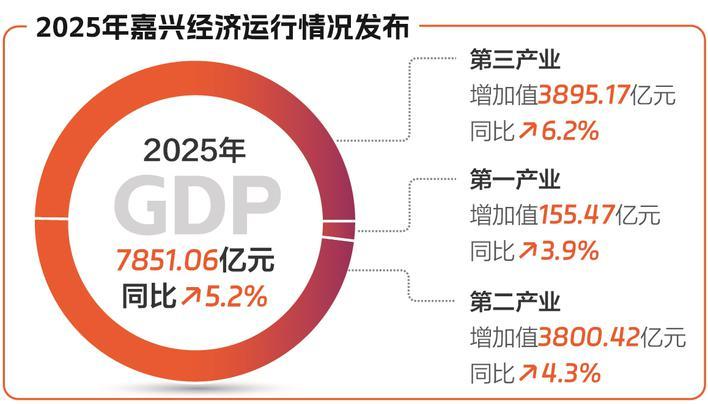
Core Viewpoint - The economic performance of Jiaxing in 2025 shows a robust growth trajectory with a GDP of 785.1 billion yuan, reflecting a 5.2% year-on-year increase, indicating resilience and structural optimization in a complex environment [3][4]. Group 1: Stability - The 5.2% growth is attributed to effective responses to internal and external risks, showcasing Jiaxing's strong economic foundation and high-quality development pace [4]. - The agricultural sector remains a cornerstone, with grain planting area and total output reaching 2.39 million acres and 1.0361 million tons, respectively, maintaining the top position in the province for 20 consecutive years [4]. - Industrial production is stable, with a 5.4% increase in industrial added value, and over 60% of 34 major industry categories achieving positive growth [5]. - The third sector's added value growth reached 6.2%, further solidifying its dominant role in the economy [5]. - Jiaxing's foreign trade performed well, with total import and export value reaching 495.72 billion yuan, a 2.9% increase, ranking among the top four in the province [5]. - The Consumer Price Index (CPI) rose slightly by 0.1%, indicating overall price stability, which supports social harmony and livelihood security [5]. Group 2: Progress - The economic pulse of Jiaxing is characterized by structural breakthroughs and systematic reshaping of development momentum [6]. - High-tech manufacturing added value increased by 13.6%, with significant growth in digital economy sectors, indicating a shift towards quality improvement [6]. - Retail sales of consumer goods grew at the fastest rate in the province, with online retail sales surging by 55.8% [6]. - Investment in high-tech and digital economy sectors grew by 29.1% and 25.0%, respectively, reflecting a focus on future-oriented investments [7]. - Equipment investment surged by 33.3%, indicating a strong willingness for enterprise transformation and upgrading [7]. Group 3: Quality - Economic development in Jiaxing emphasizes improving the well-being of residents, with rural per capita disposable income reaching 54,939 yuan, a 5.1% increase, maintaining the top position in the province [8]. - The income gap between urban and rural residents has narrowed, with the ratio improving to 1.48, showcasing progress towards common prosperity [8]. - Logistics efficiency is highlighted by a 21.6% increase in highway freight volume and the highest growth in container throughput at Jiaxing Port among coastal ports in the province [8]. - Overall, Jiaxing's economy in 2025 reflects a positive trend of stability, progress, and quality enhancement, laying a solid foundation for high-quality development in the "14th Five-Year Plan" [8].
四川2025年GDP67665.34亿元!国内排名第2,增量国内第2,实际增速5.5%!
Sou Hu Cai Jing· 2026-01-23 22:44
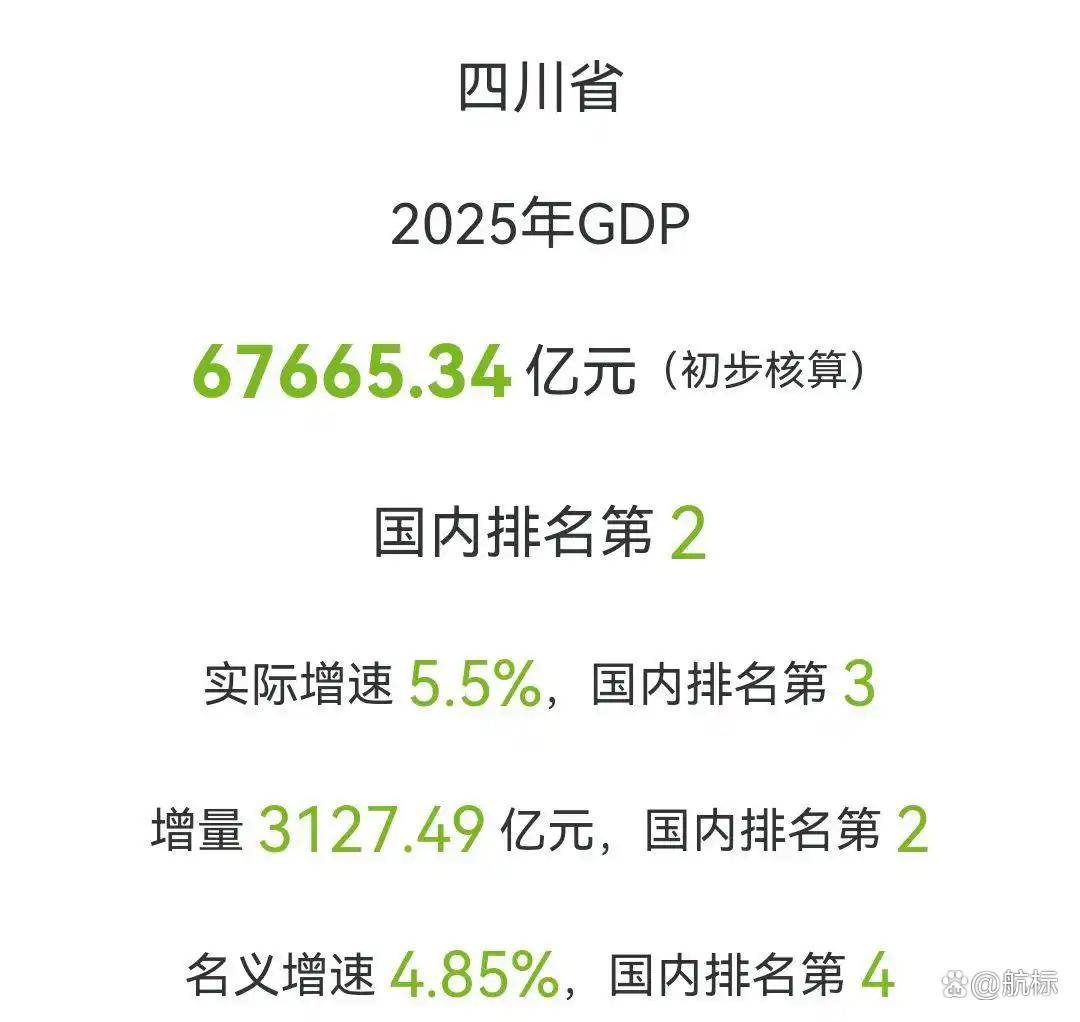
Core Insights - Sichuan's GDP for 2025 is projected to reach 67,665.34 billion yuan, ranking second nationally, with an increment of 3,127.49 billion yuan, also second, and a real growth rate of 5.5%, ranking third [1] Group 1: Economic Positioning - Sichuan is positioned as the core of the Chengdu-Chongqing economic circle and a logistics hub for the Western Land-Sea New Corridor, leveraging its significant lithium reserves (60% of national total) and over 100 million kilowatts of hydropower capacity [3] - The completion of major projects like the Baihetan Hydropower Station is expected to increase clean electricity exports to over 120 billion kilowatt-hours, supporting both local green industries and eastern industrial upgrades [3] Group 2: Development Engines - The dual national strategies of "Western Development" and "Chengdu-Chongqing Economic Circle" are providing ongoing policy benefits, while the province's "5+1" modern industrial system is fostering significant project and innovation synergies [5] - By 2025, CATL's Yibin base is projected to achieve a battery production capacity of over 300 GWh, accounting for 38% of the national total, while Tongwei's photovoltaic base in Meishan is expected to reach a production efficiency of 26.8% [5] Group 3: Industrial Growth and Infrastructure - The digital economy in Sichuan is expected to exceed 1.6 trillion yuan by 2025, constituting 23.6% of GDP, with significant contributions from sectors like aerospace and nuclear power equipment [5] - The annual passenger throughput at Tianfu Airport is projected to surpass 60 million, and the volume of the Chengdu-Europe Express is expected to grow by 27%, enhancing logistics efficiency and boosting import-export trade by 15.7% [5] Group 4: Regional Competitiveness - Sichuan's GDP growth places it second nationally, with its nominal growth rate of 4.85% ranking fourth, indicating resilience beyond traditional coastal provinces [7] - The economic growth is characterized by a "full-region blooming" approach, with significant growth in cross-border e-commerce and natural gas chemical clusters, which helps mitigate the "provincial siphoning" effect [7] - The economic growth logic in Sichuan is shifting from "policy infusion" to "self-sustaining growth," with potential future focus areas including green hydrogen and low-altitude economy [7]
中国经济基础稳潜能大(锐财经)
Sou Hu Cai Jing· 2026-01-23 22:43
Core Viewpoint - China's economy demonstrated resilience and growth in 2025, achieving a total economic output of 140 trillion yuan with a growth rate of 5%, positioning it among the top global economies [3]. Economic Strength - The economic output reached a new milestone of 140 trillion yuan, with a growth rate of 5%, which is significant compared to other major economies [3]. - The development of new productive forces has seen breakthroughs, particularly in artificial intelligence, biomedicine, and robotics, with manufacturing value added leading globally for 16 consecutive years [3]. Reform and Opening Up - The construction of a unified national market has been advanced, enhancing the advantages of a super-large market, with a 6.1% increase in goods exports despite external challenges [3]. - China's import share of global goods remained around 10%, making it a key export destination for 79 countries and regions [3]. Improvement in Public Welfare - The government has focused on enhancing public welfare through inclusive and foundational policies, such as childcare subsidies and free preschool education, to improve the quality of life for citizens [4]. Future Economic Potential - Looking ahead to 2026, the economy is expected to continue evolving positively, with structural improvements and new development dynamics emerging from consumption, investment, and technological advancements [5]. - New economic growth points are anticipated in sectors like renewable energy, aerospace, and quantum technology, with significant advancements in new energy storage capacity [6]. Market Vitality - To address supply-demand imbalances, macroeconomic policies will focus on expanding domestic demand and optimizing supply, aiming for a dynamic balance in the economy [7]. - The emphasis will be on strengthening the domestic economy, promoting modernization in industries, and enhancing market vitality through comprehensive reforms [7]. Confidence in Economic Growth - There is strong confidence in the ability to unlock economic potential through continued reform and innovation, ensuring a solid start to the 14th Five-Year Plan [8].
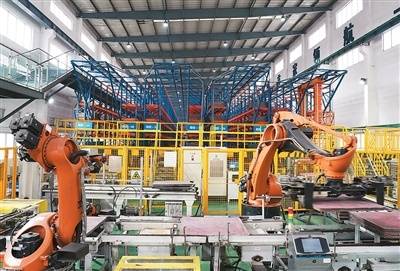
全国第三个、北方首个 山东跻身“十万亿俱乐部”
Shang Hai Zheng Quan Bao· 2026-01-23 18:13
Group 1: Economic Milestone - Shandong Province officially announced that its GDP will exceed 10 trillion yuan by 2025, reaching 10.3197 trillion yuan, making it the third province in China and the first in the north to join the "trillion-yuan club" [1] - The province achieved this milestone in just five years, showcasing its commitment to high-quality economic development [1] Group 2: Industrial Transformation - The achievement is attributed to systematic changes in the industrial sector, focusing on the real economy and innovation-driven transformation [2] - Traditional industries have seen significant transformation, with Shandong optimizing the layout of heavy industries like petrochemicals and steel, resulting in a capacity transfer of 23.56 million tons of crude steel and 26.96 million tons of refining capacity [2] - By mid-2025, the output value of new technology industries is expected to account for 55.2% of the industrial output above designated size, with over 35,000 high-tech enterprises and more than 50,000 technology-based SMEs [2] Group 3: Technological Advancements - Key technological breakthroughs include the commissioning of the world's first fourth-generation nuclear power plant and the global debut of 12-inch silicon carbide substrates, which are transitioning from concepts to industrial advantages [3] - The digital economy is becoming a core link between traditional industry transformation and the cultivation of new productive forces, with Shandong establishing itself as a national leader in industrial internet platforms [3] Group 4: Green and Low-Carbon Development - As the first national pilot zone for green and low-carbon high-quality development, Shandong's non-fossil energy power generation capacity reached 134 million kilowatts by Q3 2025, surpassing coal power for the first time [4] - The province has achieved a significant reduction in energy consumption per unit of GDP, creating a virtuous cycle of ecological protection, industrial upgrading, and economic growth [4] Group 5: Market and Government Synergy - The economic leap is a result of the synergy between an effective market and a proactive government, breaking down institutional barriers and aligning with market demands [5] - Shandong has optimized its business environment, with over 90% of government services available online, enhancing efficiency and reducing costs for enterprises [5] Group 6: Capital Market Performance - By the end of 2025, Shandong is expected to have 310 listed companies, a 33% increase from 2020, with 52 companies making it to the "China Top 500 Enterprises" list [6] - The province's import and export scale is projected to reach 3.53 trillion yuan, with exports growing over 60% since 2020, highlighting the importance of foreign trade in economic growth [6] Group 7: Future Industry Focus - Shandong's "14th Five-Year Plan" aims to build a modern industrial system, focusing on high-end transformation of traditional industries and emerging sectors like deep-sea aerospace and quantum technology [7][8] - The province is also committed to deepening market-oriented reforms and enhancing its position in the national value chain [8] Group 8: Challenges Ahead - Despite the achievements, Shandong faces challenges in further stimulating internal innovation and maintaining competitiveness in a dynamic regional landscape [9][10]