
新能源

Search documents
长江有色:美元反弹避险潮引爆金属抛售 6日锡价或下跌
Xin Lang Cai Jing· 2026-02-06 03:30
Group 1 - The core viewpoint is that the recent sharp decline in tin prices is driven by a combination of macroeconomic factors, weak fundamentals, and market sentiment, leading to significant selling pressure in the metal market [2][3] - The London Metal Exchange (LME) tin price dropped by 3.17% to $46,990 per ton, while the Shanghai Futures Exchange (SHFE) main contract for tin fell by 3.36% to 366,500 yuan per ton [1][2] - The macroeconomic environment is characterized by a "double whammy," with a collective drop in major U.S. stock indices and a strong U.S. dollar, which has increased the cost of dollar-denominated metals [2][3] Group 2 - The current industry chain shows a stark contrast, with profits concentrated in the upstream resource sector while the downstream processing sector faces cost pressures and weak demand [3] - The downward trend in tin prices is expected to continue before the Spring Festival, with a cautious approach recommended for trading [3] - Post-holiday, there may be opportunities for investment as global monetary easing expectations remain unchanged, and downstream recovery could drive restocking demand [3]


新能源拉升磷矿需求,化工行业周期拐点有望到来,聚焦石化ETF(159731)长期价值
Mei Ri Jing Ji Xin Wen· 2026-02-06 03:02
Group 1 - The core viewpoint of the articles highlights the positive performance of the petrochemical ETF (159731), which has seen a 0.71% increase, with significant inflows of 1.437 billion yuan over the past 20 trading days, bringing its total shares to 1.713 billion and total scale to 1.697 billion yuan [1][2] - The supply-demand dynamics of phosphate rock in China are tightening due to declining grades and increasing extraction costs, while demand from new fields such as lithium iron phosphate continues to grow, indicating a long-term bullish outlook for phosphate prices [1] - According to Guotai Junan Securities, phosphate rock is essential for the phosphate chemical industry, primarily driven by agricultural products, and its scarcity is becoming more pronounced with the expansion of new applications in the energy sector [1] Group 2 - The petrochemical ETF (159731) and its linked funds closely track the CSI Petrochemical Industry Index, with the basic chemical industry accounting for 60.02% and the oil and petrochemical industry for 32.43%, allowing for profit sharing from downstream chemical products [2] - The industry narrative is improving due to structural adjustments in supply and demand, suggesting a positive long-term outlook for the chemical sector [2]
逆风领涨全市场A股ETF!化工ETF(516020)低开高走急涨超2%
Mei Ri Jing Ji Xin Wen· 2026-02-06 03:02
Group 1 - The overall A-share market continued to decline, but the chemical sector rebounded significantly after a low opening, with the Chemical ETF (516020) rising over 2% in early trading, leading the A-share ETF market [1] - According to GF Securities, the chemical industry is a typical cyclical sector that usually follows a five-year cycle consisting of four stages: "profit upturn - capacity expansion - profit bottoming - capacity clearance/demand expectation improvement." The firm is optimistic about the chemical sector's prospects due to negative capital expenditure growth, anti-involution measures, global interest rate cuts, and domestic demand expansion [1] - China Merchants Bank Securities forecasts that the chemical industry's prosperity will be at a low point in 2025, but by 2026, the current round of industry expansion will be nearing its end. Anti-involution measures are expected to catalyze a recovery in industry profits, while new materials will benefit from rapid downstream demand growth, potentially initiating a new phase of high growth [1] Group 2 - The Chemical ETF (516020) and its connected fund (012537) track the CSI segmented chemical industry theme index, with component stocks covering popular themes such as AI computing power, anti-involution, robotics, and new energy. Nearly 50% of the portfolio is concentrated in large-cap leading stocks, including Wanhua Chemical and Salt Lake Industry, providing opportunities for strong performers [1] - The remaining 50% of the portfolio is diversified across leading stocks in sub-sectors such as phosphate fertilizer and phosphate chemicals, fluorine chemicals, and nitrogen fertilizers, aiming to capture investment opportunities within the chemical sector comprehensively [1]
保翮新能源科技(天津)有限责任公司成立,注册资本1000万人民币
Sou Hu Cai Jing· 2026-02-06 02:57
Group 1 - The establishment of Baohuo New Energy Technology (Tianjin) Co., Ltd. has been registered with a legal representative named Gang Zhining and a registered capital of 10 million RMB [1] - The sole shareholder of Baohuo New Energy is Zhonghuo Consulting (Tianjin) Co., Ltd., which holds 100% of the shares [2] - The business scope of Baohuo New Energy includes technology services, development, consulting, energy management, and research in emerging energy technologies [2] Group 2 - Baohuo New Energy is classified under the national standard industry of scientific research and technical services, specifically in professional technical services and industrial design [2] - The company is located in the Tianjin Free Trade Zone, specifically in the Airport Economic Zone [2] - The business registration is valid until February 5, 2026, with no fixed term thereafter [2]
天际股份2026年2月6日涨停分析:业绩扭亏+新能源需求+技术研发进展
Xin Lang Cai Jing· 2026-02-06 02:55
2026年2月6日,天际股份(sz002759)触及涨停,涨停价40.29元,涨幅9.99%,总市值202.01亿元,流 通市值201.83亿元,截止发稿,总成交额20.04亿元。 根据喜娜AI异动分析,天际股份涨停原因可能如下,业绩扭亏+新能源需求+技术研发进展: 1、公司经 营基本面改善明显,从上年亏损13.6亿转为盈利0.7 - 1.05亿。新能源和储能市场需求增长,六氟磷酸锂 等产品需求快速提升,带动了公司业绩增长,这是股价涨停的重要基础。 2、技术研发方面,公司硫化 锂材料制备专利已获授权并进入小型试验阶段,虽然技术尚处早期,但显示出公司在新能源材料领域的 布局和潜力,对市场信心有一定提振作用。同时公司开展套期保值业务,有助于对冲原材料价格波动风 险,稳定经营成本。 3、从行业来看,新能源行业是当前市场的热点题材,2026年新能源市场需求持续 增长,同概念板块的相关股票也受到资金关注。东方财富数据若显示当日新能源板块资金有净流入情 况,就会形成板块联动效应。 4、技术面上暂未获取到相关数据,但资金流向可能是推动涨停的因素之 一。若同花顺资金监控显示当日超大单净买入较多,说明有主力资金介入,推动股价涨 ...

全新一代理想L9
数说新能源· 2026-02-06 02:54
Group 1 - The core viewpoint of the article highlights the launch of the new Li Auto L9 Livis version, which features advanced technology and a competitive price point of 559,800 yuan [2] - The Li Auto L9 Livis is equipped with an 800V fully active suspension system, capable of lifting over 1,000 Newtons per wheel, and includes a steer-by-wire and rear-wheel steering system [2] - The vehicle is powered by two self-developed 5nm Mach 100 chips, with a total computing power of 2560 TOPS, and features 360-degree lidar perception coverage [2] Group 2 - The article mentions the importance of balancing performance and cost in battery cell procurement for manufacturers [8] - It discusses BYD's expansion efforts in Southeast Asia and the growth of CATL in the energy storage market, which is outpacing the growth in the power battery sector [11]


松下电池
数说新能源· 2026-02-06 02:54
Core Viewpoint - The article discusses the financial performance and outlook of Panasonic's Energy segment, highlighting the impact of market conditions on revenue and profit, particularly in the automotive battery sector, while also noting growth in industrial and consumer battery sales [4]. Financial Data - In Q4 2025, Panasonic's Energy business generated revenue of 11.8 billion yuan, a year-on-year increase of 22.3% and a quarter-on-quarter increase of 15.5% [4]. - The revenue from automotive batteries was 4.9 billion yuan, showing a slight year-on-year decline of 0.5% but a quarter-on-quarter increase of 10.6% [4]. - Industrial and consumer battery revenue reached 6.9 billion yuan, reflecting a year-on-year growth of 46.6% and a quarter-on-quarter growth of 20.0% [4]. Profitability - The adjusted operating profit for the Energy business in Q4 2025 was 1.87 billion yuan, a year-on-year decrease of 2.1% but a significant quarter-on-quarter improvement [4]. - The operating profit from automotive batteries was 0.56 billion yuan, down 44.9% year-on-year, but it turned profitable quarter-on-quarter [4]. - The operating profit from industrial and consumer batteries was 1.3 billion yuan, with a year-on-year increase of 58.5% and a quarter-on-quarter increase of 59.3% [4]. Impact of IRA - The North American AMPC subsidy had an impact of approximately 1.01 billion yuan on operating profit in Q4 2025; excluding this subsidy, the operating profit was about 0.86 billion yuan, reflecting a year-on-year increase of 55.3% and a quarter-on-quarter turnaround [4]. - The adjusted operating profit margin for the Energy business was 15.9%, down 3.96 percentage points year-on-year but up 15.8 percentage points quarter-on-quarter [4]. Market Outlook - The automotive battery business is expected to continue declining due to a weak North American electric vehicle market, while the industrial and consumer battery business is anticipated to grow alongside increased sales of energy storage systems and foreign exchange gains [4]. - The North American electric vehicle sales forecast for fiscal year 2026 has been revised down to 39 GWh from 40 GWh due to worse-than-expected market conditions [4]. - The company plans to maximize the utilization of its Kansas plant to meet customer demand for high-energy-density batteries and expand its customer base in North America [4]. Strategic Initiatives - The company aims to support AIDC through distributed power systems, targeting sales of 80 billion yen (approximately 3.5 billion yuan) and over 20% ROIC by fiscal year 2029 [4]. - Plans include tripling the production capacity of battery cells in Japan and building a new module factory in the U.S. [4]. - The company intends to start mass production of modular CBU, including supercapacitors, by 2026 [4].

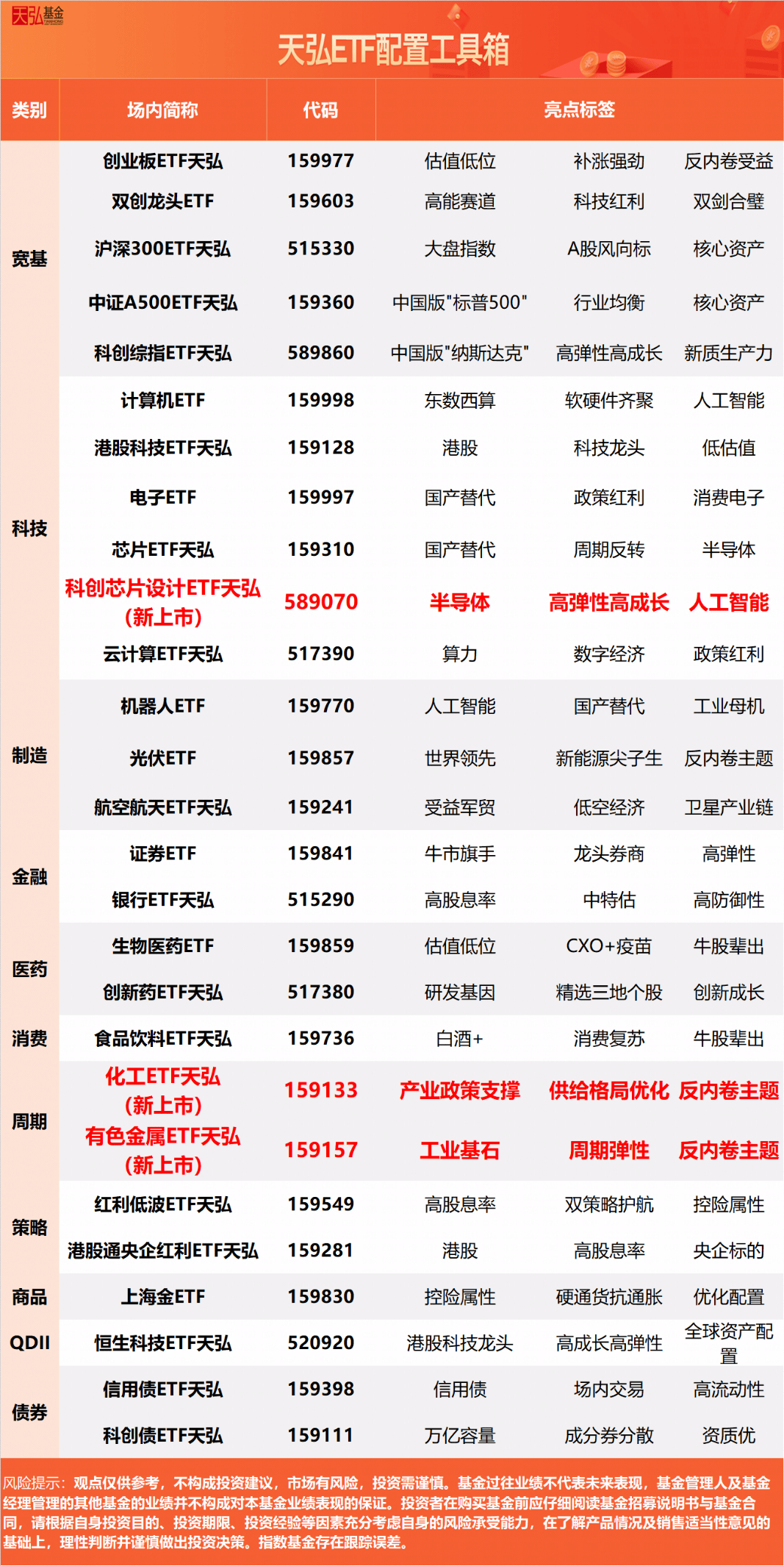
有色金属ETF天弘(159157)上市首日交投活跃,换手率居同类产品第一!
Sou Hu Cai Jing· 2026-02-06 02:17
Core Viewpoint - The industrial non-ferrous metals sector is experiencing a favorable cycle, driven by increasing demand from AI and other industries, while supply constraints are expected to keep prices elevated in the long term [2][4][5]. Group 1: Market Performance - As of February 6, 2026, the Tianhong Non-Ferrous Metals ETF (159157) had a turnover of 3.17%, leading its category with a transaction volume of 31.24 million yuan [1]. - The tracked index, the CSI Industrial Non-Ferrous Metals Theme Index (H11059), decreased by 0.78% [1]. - Among constituent stocks, China Tungsten High-Tech led with a gain of 2.60%, followed by Yun Aluminum Co. at 1.59% and Tianshan Aluminum at 1.54% [1]. Group 2: Industry Highlights - The industrial non-ferrous metals sector is relatively concentrated, with the top three industries being copper (31.1%), aluminum (21.9%), and rare earths (16.1%), collectively accounting for about 70% [2]. - The rapid development of the AI industry is driving increased demand for electricity, which in turn boosts the demand for industrial non-ferrous metals [2]. - Rare earth metals are becoming strategic national resources, with China holding the world's largest reserves and production, providing significant competitive advantages [2]. Group 3: Economic Indicators - In 2025, the industrial added value of China's non-ferrous metal enterprises grew by 6.9%, with the production of ten non-ferrous metals exceeding 80 million tons for the first time, reaching 81.75 million tons, a 3.9% increase from the previous year [4]. - Fixed asset investment in the non-ferrous metal industry rose by 4.9%, outpacing the national industrial investment growth by 2.3 percentage points, with mining sector investments surging by 41.0% [4]. - The total trade volume of non-ferrous metals reached 412.24 billion USD in the previous year, marking a 12.4% increase [4]. Group 4: Institutional Insights - Recent pricing logic for non-ferrous metals is shifting from short-term supply and demand to broader macroeconomic factors, benefiting from ongoing fiscal expansions in major economies and a generally abundant market liquidity [5]. - The copper market is characterized by tight supply due to limited new mine production and frequent disruptions, while demand is driven by energy transition and AI industries, leading to expectations of increased long-term consumption [5].
潍柴动力(000338) - 2026年2月5日投资者关系活动记录表
2026-02-06 00:50
Group 1: Heavy Truck Industry Outlook - The heavy truck market in China sold 1.145 million units in 2025, a year-on-year increase of 27% [2] - Exports accounted for 341,000 units, reflecting a growth of 17.4% [2] - The industry is experiencing a balanced development of multiple energy sources, including diesel, natural gas, and new energy [2] Group 2: Electric Power Energy Product Layout - The demand for electric power equipment in data centers is rapidly expanding due to advancements in AI technology [4] - The company has established comprehensive energy solution capabilities and has successfully delivered projects in various regions [4] - Future efforts will focus on leveraging delivery, product performance, and product mix advantages to expand strategic customer bases [4] Group 3: New Energy Powertrain Development - The company is accelerating its layout in new energy and technology sectors, focusing on pure electric power systems, fuel cells, and hybrid technologies [5] - The aim is to meet diverse market demands across different regions and application scenarios [5] - The company plans to capitalize on opportunities in the new energy sector by utilizing its full industry chain advantages [5] Group 4: Shareholder Return Outlook - The company is committed to optimizing its profit structure and enhancing long-term competitiveness [6] - Plans include high-frequency cash dividends and share buybacks to improve shareholder returns [6] - The company will consider shareholder expectations and market conditions to maintain a proactive and stable return policy [6]
广东普惠金融高质量发展“施工图”来了
Nan Fang Du Shi Bao· 2026-02-05 23:15
近日,广东金融监管局联合人民银行广东省分行、广东省委金融办、广东省发展改革委、广东证监局、 深圳金融监管局、人民银行深圳市分行、深圳证监局共8部门印发《广东省推动普惠金融高质量发展工 作方案》(下称《方案》),围绕普惠金融数智化服务场景、重点领域产品服务、多层次组织体系等6方 面明确17项任务。 南都湾财社记者了解到,《方案》紧扣广东省"十五五"规划,首提多项举措,包括金融支持广东"粤强 种芯""粤强农装""粤强智农"工程、港澳青年来粤创业、侨胞反哺侨乡等"湾区专属"金融服务;将跨境 数据验证服务扩展至珠三角区域;引入保险资金投资粤北生态发展区和广州、深圳康养社区,推广"保 险+养老社区"经验模式,支持候鸟式养老服务设施建设等。 围绕AI产业等开发特色化差异化金融产品 《方案》强化广东新兴产业集群的小微金融服务。近年来,广东省银行机构持续加强小微企业金融服 务,普惠型小微企业贷款突破4.89万亿,较"十四五"初期翻了两番。面对如此巨大的存量规模,《方 案》为银行机构小微金融服务再进一程指明了方向,要求围绕人工智能、低空经济、新能源等战略性新 兴产业,量子科技、生物制造、具身智能等未来产业,以及广东各类中小企业 ...