汽车智能化

Search documents
【2025年中报点评/德赛西威】智能化业务快速增长,海外贡献增量,业绩超预期!
东吴汽车黄细里团队· 2025-08-14 14:50
Core Viewpoint - The company reported strong financial performance for the first half of 2025, with significant year-on-year growth in revenue and net profit, indicating robust demand and operational efficiency in its core business segments [2][3]. Financial Performance - In the first half of 2025, the company achieved revenue of 14.6 billion yuan, a year-on-year increase of 25%, and a net profit attributable to shareholders of 1.22 billion yuan, up 46% year-on-year [2]. - For Q2 2025, revenue reached 7.9 billion yuan, reflecting a quarter-on-quarter increase of 30% and a year-on-year increase of 16%. The net profit for the same period was 640 million yuan, with a quarter-on-quarter increase of 41% and a year-on-year increase of 10% [2]. Business Segments - The smart cockpit business generated 9.5 billion yuan in revenue for H1 2025, up 18.8% year-on-year, while the smart driving business saw revenue of 4.1 billion yuan, a significant increase of 55.49% year-on-year. The growth in smart driving revenue is attributed to technological advancements and increased customer demand [3]. - The company also reported a slight decline in revenue from connected services and other businesses, which totaled 1 billion yuan, down 2.1% year-on-year [3]. Profitability and Margins - The gross margin for Q2 2025 was 20.2%, showing a slight decrease compared to previous quarters. However, the gross margin for overseas operations was notably higher at 29.0%, reflecting an 8.2 percentage point increase year-on-year [5]. - The company’s strategy of optimizing product mix and continuous technological iteration has led to stable improvements in gross margins for both smart cockpit and smart driving segments [5]. Global Expansion - The company is advancing its globalization strategy, with new production capabilities established in Indonesia and Mexico, and a smart factory in Spain expected to commence production by the end of 2025 [6]. - This global expansion is anticipated to provide significant support for the company's future performance, particularly in overseas markets [6]. Future Outlook - The company maintains a positive long-term growth outlook, projecting revenues of 36.9 billion yuan, 46.2 billion yuan, and 56.5 billion yuan for 2025, 2026, and 2027, respectively, with corresponding net profits of 2.76 billion yuan, 3.67 billion yuan, and 4.71 billion yuan [7]. - The projected growth rates for revenue and net profit indicate a strong compound annual growth rate, reflecting the company's competitive position in the smart driving components sector [7].


耐世特(01316):2025H1业绩公告点评:大中华区增长迅猛,利润同比高增
Soochow Securities· 2025-08-14 12:35
Investment Rating - The report maintains a "Buy" rating for the company [1] Core Insights - The company reported a strong revenue growth of 6.7% year-on-year for the first half of 2025, achieving total revenue of $2.242 billion [7] - The net profit attributable to the parent company surged by 304.7% year-on-year, reaching $0.63 million, indicating robust performance [7] - The Asia-Pacific region is identified as a significant growth driver, contributing to the majority of the revenue increase [7] - The company successfully launched 31 new customer projects in the first half of 2025, with a focus on electric vehicle-related projects [7] - The report highlights the company's leadership position in steer-by-wire technology and its positive outlook in the context of global electrification and automation trends [7] Financial Summary - Revenue projections for 2025-2027 are set at $4.4 billion, $4.5 billion, and $4.65 billion, reflecting a consistent growth rate of approximately 3% year-on-year [7] - The net profit forecasts for the same period have been revised upwards to $137.54 million, $161.83 million, and $187.24 million, with significant growth rates of 123%, 18%, and 16% respectively [7] - The company's P/E ratios are projected to decrease from 16.13 in 2025 to 11.85 in 2027, indicating improving profitability [7]
深蓝联手华为,甩出智驾新牌
Hua Er Jie Jian Wen· 2025-08-14 09:13
Core Viewpoint - The launch of the 2026 Deep Blue L07 marks a significant step for the newly established Changan Automobile Group, showcasing its commitment to innovation in the automotive industry, particularly in smart and electric vehicles [2][4]. Group 1: Product Launch and Features - The 2026 Deep Blue L07 is available in six versions, priced between 135,900 to 155,900 yuan, and is the only sedan in its price range to feature Huawei's intelligent driving system across all models [1][2]. - The vehicle offers both range-extended and pure electric power options, with the range-extended model achieving over 1,500 km and the pure electric model reaching up to 660 km [3][4]. - It is equipped with advanced safety features, including a 20-direction collision avoidance system and the only model in its class with full-direction collision capabilities [2][3]. Group 2: Strategic Importance and Future Goals - The launch of the 2026 Deep Blue L07 is seen as a strategic move for the new Changan, which aims to produce 5 million vehicles annually by 2030, with over 60% being new energy vehicles and nearly one-third of sales coming from overseas [4]. - Changan plans to invest over 200 billion yuan in research and development over the next decade, focusing on solid-state batteries and next-generation range-extending technologies [4].

德赛西威(002920):2025年中报点评:智能化业务快速增长,海外贡献增量,业绩超预期
Soochow Securities· 2025-08-13 23:30
Investment Rating - The investment rating for the company is "Buy" (maintained) [1] Core Views - The company has shown rapid growth in its intelligent business, with overseas contributions adding incremental revenue, resulting in performance exceeding expectations [1] - The company focuses on its core business, with significant growth in intelligent driving and cockpit businesses, driven by technological advancements and increasing customer demand [9] - The global strategy is progressing steadily, with new production capacities established in Indonesia and Mexico, and a smart factory in Spain expected to be operational by the end of 2025 [9] Financial Performance Summary - For the first half of 2025, the company achieved revenue of 146 billion yuan, a year-on-year increase of 25%, and a net profit attributable to shareholders of 12.2 billion yuan, up 46% year-on-year [9] - The revenue forecast for 2025-2027 is set at 369 billion yuan, 462 billion yuan, and 565 billion yuan, representing year-on-year growth rates of 34%, 25%, and 22% respectively [9] - The net profit attributable to shareholders is projected to be 27.6 billion yuan, 36.7 billion yuan, and 47.1 billion yuan for the same period, with growth rates of 37%, 33%, and 28% respectively [9] Business Segment Performance - In H1 2025, the intelligent cockpit business generated revenue of 95 billion yuan, up 18.8% year-on-year, while the intelligent driving business saw revenue of 41 billion yuan, a significant increase of 55.49% year-on-year [9] - The gross margin for the second quarter of 2025 was 20.2%, with overseas gross margins reaching 29.0%, an increase of 8.2% year-on-year [9] Market Position and Strategy - The company is positioned as a leader in the intelligent driving components sector, with a strong outlook for long-term growth [9] - The company is expanding its product offerings and optimizing its product mix to maintain steady revenue growth and enhance customer acquisition [9]
大摩闭门会-金融、机器人、汽车、锂行业更新
2025-08-13 14:53
Summary of Key Points from Conference Call Records Industry Overview Robotics Industry - The robotics industry is expanding its applications into manufacturing, commercial, and service sectors, driven by AI large models, although efficiency and accuracy still need improvement [1][2] - Significant hardware advancements in dexterous hands have been noted, but data and software remain bottlenecks, with physical data collection being a Chinese advantage [1][4] - Policy support is accelerating the development of the robotics industry, with a focus on technologies such as gear reducers, sensors, and new materials, as well as the profitability of related supply chain companies [1][6] Automotive Industry - The automotive industry is experiencing limited effects from anti-involution measures, with price increases being a passive adjustment rather than a demand-driven change [1][8] - Desay SV's performance in smart cockpit and intelligent driving solutions is highlighted, with a 30% year-on-year revenue growth and a 41% profit increase [1][9] - The development of humanoid robots presents new opportunities for automotive parts companies [1][9] Financial Sector - Chinese household financial assets maintained a 12% growth rate, primarily benefiting from rising equity values, with insurance products growing faster than other financial assets [1][10] - The institutionalization trend is driving market growth, with insurance and growth-oriented banking sectors showing investment potential [1][11] - The securities industry is entering an early recovery phase after a tightening cycle, with regulatory easing and increased trading volumes being key variables [1][12][13] Lithium Industry - The lithium industry is facing complexities due to the requirement for resource verification reports, leading to increased expectations of supply shortages [1][21] - Market sentiment is cautious, with predictions of tight supply in September but an overall slight surplus for the year [1][21][22] Steel and Cement Industries - The steel industry is expected to reduce production by 10 to 20 million tons by the end of the year, with profitability fluctuating due to rising raw material costs [1][24] - The cement industry has undergone a significant capacity reduction, with effective capacity dropping from 21-22 billion tons to 16 billion tons, leading to price increases as the peak season approaches [1][25][26] Core Insights and Arguments - The robotics industry is in an early stage but is rapidly exploring various applications, with a focus on ecological cooperation and international market expansion [1][5][7] - The automotive sector's price adjustments are not indicative of improved demand, and long-term capacity clearing remains challenging due to local government interests [1][8][9] - The financial sector's growth is supported by a shift towards institutional investments, particularly in insurance and high-dividend assets, which bolster stock market stability [1][10][11] - The securities industry is benefiting from regulatory changes and increased trading activity, with a focus on differentiated advantages in institutional and derivative businesses [1][12][14] Additional Important Content - The robotics industry is expected to see more supportive policies nationwide, which will facilitate the commercial rollout of wheel-type and composite robots [1][7] - The automotive industry's smart technology advancements are creating new market opportunities, particularly for companies involved in intelligent cockpit solutions [1][9] - The lithium market's volatility is influenced by regulatory requirements and market speculation, necessitating close monitoring of supply dynamics [1][21][22] - The cement industry's proactive pricing strategies indicate a shift towards a more favorable market environment as demand increases [1][25][26]



指数新高,注意盘面变化!题材板块轮动,还有哪些投资机会?
Sou Hu Cai Jing· 2025-08-13 08:17
Group 1: Market Trends and Policies - A-share listed companies are expected to enhance their willingness to improve both quality and returns, leading to an increase in overall dividend payout ratios and frequencies [1] - The policy goals of "stabilizing growth, stabilizing the stock market," and "boosting the capital market" will continue to guide the future direction of the securities sector [1] - The liquidity environment is expected to remain moderately loose, with ongoing improvements in the capital market environment and restoration of investor confidence [1] Group 2: Sector Performance and Investment Opportunities - The top five sectors with net inflows include military industry, new energy vehicles, PCB boards, new energy vehicle components, and automotive components [1] - The leading concept sectors with net inflows are Huawei supply chain, artificial intelligence, 5G, cloud computing data centers, and intelligent manufacturing [1] - The top ten individual stocks with net inflows include Dongfang Wealth, New Yi Sheng, China Great Wall, Hu Dian Co., Zhongxing Communications, Zhongji Xuchuang, WuXi AppTec, Shenghong Technology, China Ordnance, and Sanhuan Group [1] Group 3: Advanced Technologies and Industry Developments - Shanghai is actively promoting the application of high-level autonomous driving, with plans announced during the 2025 World Artificial Intelligence Conference [3] - Leading companies in the Robotaxi sector, such as Pony.ai and Baidu, have received demonstration operation licenses to provide paid services to the public [3] - The demand for advanced process wafer foundries is expected to increase significantly in the AI era, with domestic manufacturers striving to catch up despite existing bottlenecks [3] Group 4: AI and Market Demand - The market's expectations for global computing power demand remain significant, with ongoing developments in large-scale computing clusters and model architectures [5] - The demand for training computing power is anticipated to grow substantially in the long term, driven by advancements in pre-training and post-training scaling laws [5] Group 5: Seasonal Trends and Consumer Goods - The air conditioning market is experiencing a boost in demand due to high summer temperatures, leading to increased sales and replacement purchases [5] - National subsidy policies are further enhancing market demand for air conditioning units, with expectations for strong domestic sales momentum in 2025 [5] - The air conditioning sector is characterized by low valuations and high dividend yields, presenting significant long-term investment value [5] Group 6: Stock Market Dynamics - The Shanghai Composite Index has broken through last year's high, indicating stronger-than-expected consensus expectations [7] - The A-share market is recovering while the bond market is experiencing adjustments, with recent trends suggesting a "see-saw effect" between stocks and bonds [7] - Active equity funds have shown significant performance recovery, with an average return exceeding 27% over the past year, indicating optimism among institutions regarding future market opportunities [7]

首次牵手 四维图新获北汽新能源泊车软件产品开发合同
Quan Jing Wang· 2025-08-13 05:51
Core Viewpoint - The collaboration between Siwei Tuxin and Beijing New Energy marks a significant step in developing intelligent parking software, aimed at enhancing user experience in safety, comfort, and convenience [1] Group 1: Partnership Details - Siwei Tuxin has signed a development contract with Beijing New Energy to create intelligent parking software for two of its vehicle models [1] - The software will integrate advanced research and development technologies with extensive manufacturing experience [1] Group 2: User Experience Focus - The intelligent parking software aims to meet the core demands of end-users for a "safe, comfortable, and convenient" parking experience [1] - The collaboration is expected to provide smoother intelligent parking services for users [1] Group 3: Recognition and Strategy - Industry experts highlight that this partnership reflects a deep alignment in technological innovation and user value between the two companies [1] - Siwei Tuxin emphasizes its commitment to innovation-driven growth and the strategic focus on automotive intelligence development, which is expected to enhance its sustainable development capabilities and positively impact business performance [1]

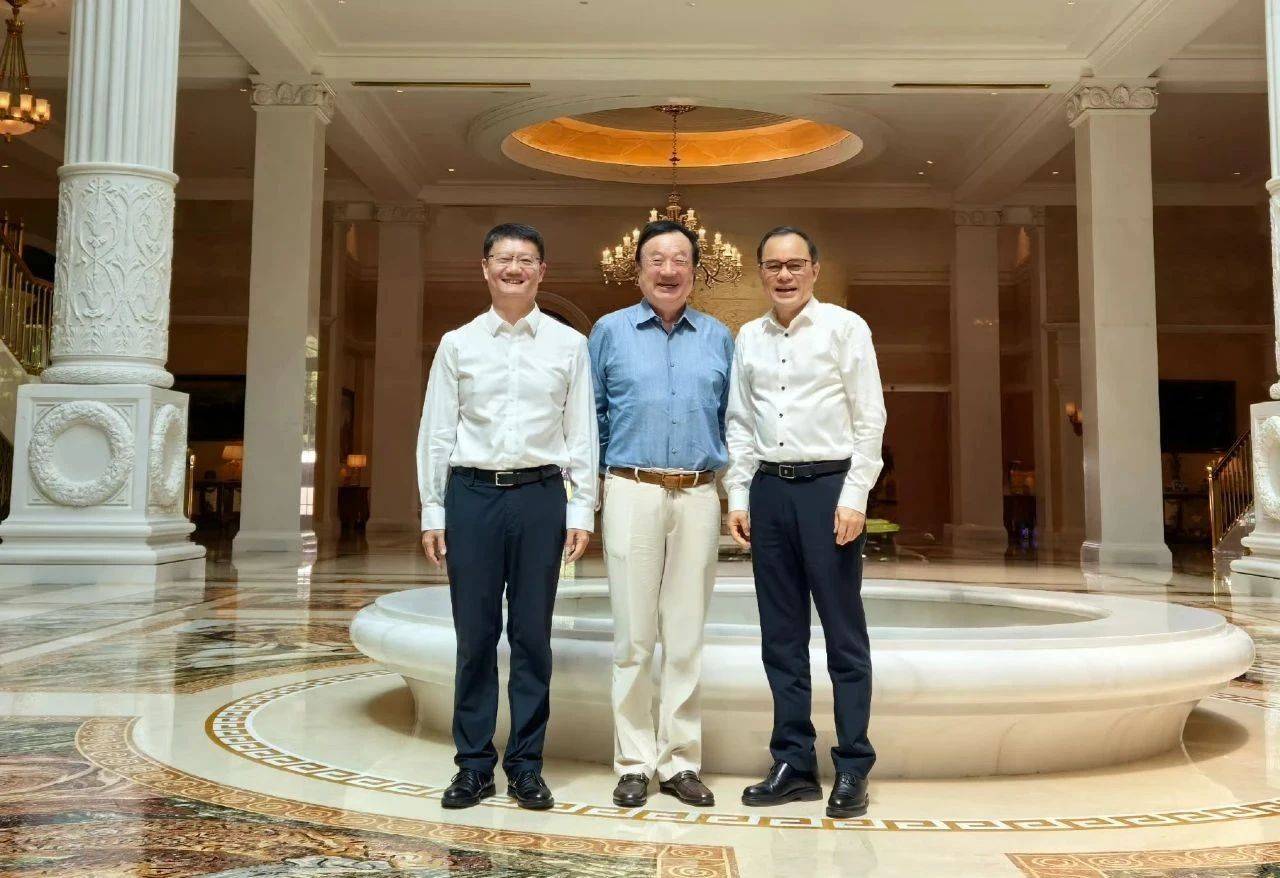
一锤定音:车企老总为何纷纷拜访华为掌门人任正非
Sou Hu Cai Jing· 2025-08-13 01:36
Core Insights - The meetings between automotive executives and Huawei's founder Ren Zhengfei signify a strategic exploration of future development directions in the automotive industry, emphasizing the integration of technology and automotive sectors [5][15]. - The collaboration between automotive companies and Huawei is aimed at leveraging advanced technology to enhance sustainable development and adapt to the evolving market demands [5][11]. Group 1: Company Collaborations - Changan Automobile's new chairman Zhu Huarong and general manager Zhao Fei visited Huawei to discuss competitive dynamics and future strategies, receiving valuable insights from Ren Zhengfei [1]. - GAC Group's chairman Feng Xingya also met with Ren Zhengfei to explore marketing innovation and cooperation projects, highlighting the importance of Huawei's advanced experience for GAC's reform and development [3]. - The partnership between Changan and Huawei dates back to 2018, focusing on technology support rather than equity participation, with Huawei providing significant technical assistance to the Avita brand [5][7]. Group 2: New Brand Developments - Avita Technology invested 11.5 billion yuan to acquire a 10% stake in Huawei's subsidiary, indicating a deepening collaboration in smart driving and intelligent cockpit technologies [7]. - GAC Group signed a cooperation agreement with Huawei to establish a new high-end smart electric vehicle brand named "Huawei Wang," with plans for the first model to launch in 2026 [9]. - GAC Aion plans to invest in "Huawei Wang," reflecting a broader strategy among GAC's brands to collaborate with Huawei [9]. Group 3: Industry Trends - The automotive industry is undergoing significant transformation towards electrification and intelligence, with traditional automakers facing challenges from rapid technological advancements and changing market demands [9][11]. - Huawei's strong R&D capabilities and comprehensive manufacturing strengths position it as a preferred partner for automotive companies seeking to enhance their technological edge [11][13]. - Collaborations with Huawei allow automotive companies to access advanced technology, global market channels, and brand influence, fostering innovation and efficiency across the automotive supply chain [13][15].

合资反攻:联手华为,奥迪能否在BBA电动化竞争中率先破局?
Zhong Guo Jing Ying Bao· 2025-08-13 01:22
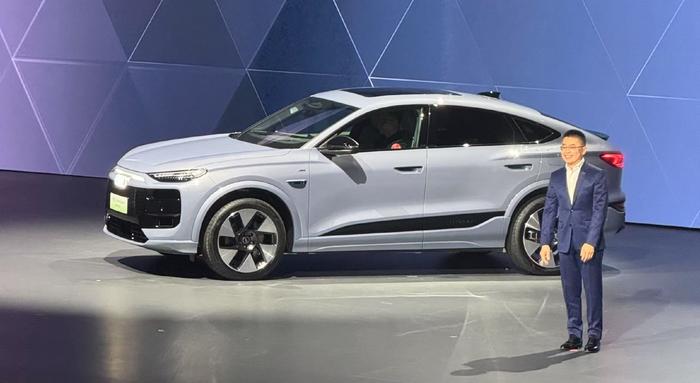
Core Insights - The electric vehicle (EV) market is becoming a critical focus for traditional luxury brands like Audi, BMW, and Mercedes-Benz (BBA) as the fuel vehicle market reaches its peak [3][4] - Audi's Q6L e-tron family and A5L have recently been launched, addressing concerns about the transition from fuel to electric vehicles and the perceived technological lag in traditional brands [3][4] - The collaboration between Audi and Huawei, initiated in 2019, aims to enhance the smart driving capabilities of Audi's electric vehicles, with the Q6L e-tron being the first to feature Huawei's advanced driving technology [5][6] Product Launch and Market Positioning - The Q6L e-tron is priced between 348,800 to 398,800 yuan, leveraging its advanced features such as the Huawei QianKun driving technology and a 107 kWh battery [4][5] - The vehicle is equipped with multiple sensors and cameras, providing L2-level autonomous driving capabilities, which include advanced traffic light recognition and efficient navigation in congested areas [5][6] Technological Advancements - The Q6L e-tron utilizes a new E³ 1.2 electronic architecture, allowing for high-speed data transmission and enhanced computational power, which is essential for integrating advanced driving technologies [6][7] - This architecture is a result of collaboration between Audi and the Volkswagen Group's CARIAD division, aimed at simplifying development processes and achieving economies of scale [7] Strategic Implications - Audi's strategy reflects a dual approach, launching both electric and fuel models simultaneously to cater to diverse market demands, demonstrating a strong commitment to the Chinese market [7] - The partnership with Huawei is expected to set a precedent for future models, including the new Q5L and A6L, indicating a broader trend of integrating advanced technology into traditional vehicle platforms [5][6]
押注华为,广汽埃安欲再战高端
Hua Er Jie Jian Wen· 2025-08-12 13:16
Core Viewpoint - The automotive industry is witnessing a significant shift as GAC Aion plans to invest up to 30% in Huawei's automotive venture, Huawang Automotive, indicating a renewed collaboration after a previous partnership downgrade two years ago [2][3]. Group 1: Investment and Strategic Moves - GAC Aion's investment in Huawang Automotive is part of a broader strategy to penetrate the high-end market, which has been challenging for Aion [3][7]. - The establishment of Huawang Automotive, with an investment of 1.5 billion yuan, aims to create a new high-end automotive brand, with the first model expected to launch in 2026 [4][6]. - The partnership with Huawei is seen as a crucial step for GAC Aion to leverage Huawei's expertise in smart vehicle technology, which is essential for competing in the high-end segment [9]. Group 2: Market Position and Challenges - GAC Aion has experienced significant sales growth, reaching over 50,000 monthly sales at its peak, but faces challenges in brand recognition and high-end market penetration [8]. - The high-end models from Aion, such as the AION LX and the newly launched AION RT, have struggled with low sales, indicating a need for a stronger market presence [8][9]. - The competitive landscape is intensifying, with various brands, including Changan and Lantu, also collaborating with Huawei, highlighting the necessity for GAC Aion to enhance its smart and high-end offerings to maintain market relevance [9].