大类资产配置

Search documents
聚焦“十五五”新征程,富国基金举办2026年度投资策略会
Sou Hu Wang· 2026-01-20 04:58
Core Viewpoint - The 2026 investment strategy conference by FuGuo Fund highlighted the potential for A-share market recovery, focusing on traditional industries and emerging sectors like AI, amidst a changing economic landscape [1][6][10]. Group 1: Market Outlook - The A-share index has reached 4100 points for the first time in a decade, with trading volume exceeding 3 trillion yuan, indicating a resurgence in market enthusiasm [1]. - The conference emphasized the importance of adapting investment strategies to the evolving economic model, moving from "incremental economy" to "stock economy" [6]. - The main challenge for 2026 is the potential recovery of traditional industries after a prolonged period of stagnation, with significant improvements expected in risk appetite [6][9]. Group 2: Profit Trends - A-share companies are showing stable profit growth, with signs of recovery in midstream, technology services, and non-bank financial sectors [7]. - The real estate sector is under significant profit pressure, which is a critical variable affecting overall profit trends in the A-share market [7]. Group 3: Interest Rate Trends - Interest rates may experience a phase of upward movement if a profit recovery cycle begins, influenced by economic recovery expectations reflected in the bond market [8]. Group 4: Risk Appetite - There is considerable room for improvement in risk appetite, as indicated by the decline in equity risk premium since the "924" event [9]. Group 5: Industry and Style Judgments - Traditional industries, particularly the real estate chain, are expected to drive improvements in market sentiment and institutional allocation [10]. - The focus on emerging industries, especially AI, is shifting from hardware to application development [10]. Group 6: Asset Allocation Strategies - The conference discussed the importance of diversified asset allocation in a low-interest-rate environment, with a focus on equities, overseas investments, and precious metals [13][20]. - The anticipated U.S. interest rate cuts and the global liquidity environment are expected to create favorable conditions for growth stocks [15][19]. Group 7: Sector-Specific Insights - The AI industry is expected to continue evolving, with significant commercial applications emerging [29]. - The domestic pharmaceutical sector, particularly in innovative drugs, is poised for growth, leveraging advantages in oncology and potential expansion into new areas [32]. - Consumer sentiment is anticipated to improve with better CPI and PPI data, which could positively impact consumption trends [34]. Group 8: Economic Policy and Planning - The "15th Five-Year Plan" emphasizes building a modern industrial system, which is expected to support manufacturing and commodity demand [36]. - The plan also highlights the importance of service consumption and its potential to enhance economic resilience and job creation [35].

中银量化大类资产跟踪:A股阶段性调整,距离触发极端风险预警仍有距离
Bank of China Securities· 2026-01-18 14:33
- The report does not contain any specific quantitative models or factors for analysis[1][2][3] - The report primarily focuses on market performance, valuation, style tracking, and fund flows without detailing any quantitative model construction or factor definitions[1][2][3] - Key metrics such as PE_TTM, ERP, and style performance (e.g., growth vs dividend, small-cap vs large-cap) are discussed, but no explicit quantitative model or factor construction process is provided[39][49][59]

招商基金固定收益混合投资团队:以左侧逆向为核心的绝对收益之路
Sou Hu Cai Jing· 2026-01-16 00:36
Core Viewpoint - The "fixed income +" product model has become mainstream, but there is a growing demand for more flexible options as the equity market valuation recovers. The article highlights the unique characteristics of the mixed investment team at China Merchants Fund, which aims to provide diverse investment opportunities for both institutional and individual investors. Group 1: Investment Style - The mixed investment team at China Merchants Fund adopts a left-side contrarian investment style, buying during market panic and selling during exuberance [1][3]. - Their investment philosophy is centered around absolute returns, focusing on high win rates through left-side buying and selling strategies [3][5]. - The team emphasizes cyclical thinking, believing that undervalued assets will eventually rebound while overvalued assets will decline [4]. - They prioritize valuation protection by buying assets at lower valuations, which provides stronger protection against market fluctuations [5][6]. Group 2: Asset Allocation - The team pursues high win rates in asset allocation, recognizing the importance of macroeconomic data, global policy directions, and asset valuations [7][8]. - They have demonstrated the ability to capitalize on market opportunities, such as increasing stock positions during significant market downturns [7][8]. - The team effectively transforms market volatility into a source of returns through strategic asset allocation [8]. Group 3: Investment Strategies - The mixed investment team employs diverse investment strategies, including stock selection, convertible bond investments, credit bond trading, and tactical asset allocation [2][11]. - They are not conservative in their rights-holding investments, focusing on growth potential while maintaining valuation discipline [9][10]. - The team has achieved over 10% returns in various products over the past year, showcasing their ability to provide unique product offerings [10]. Group 4: Innovation and Assessment - Continuous innovation is a hallmark of the team, encompassing product design, investment methods, and assessment models to enhance absolute returns and user experience [17][18]. - The team has developed a differentiated assessment approach based on user channels, focusing on long-term performance and client profitability [14][16]. - They aim to create a sustainable absolute return for clients by integrating various asset classes and strategies into their product offerings [19][20].

金价攀升驱动资金涌入 国内首只千亿级黄金ETF诞生
Shang Hai Zheng Quan Bao· 2026-01-15 18:01
Group 1 - The first domestic commodity ETF with a scale exceeding 100 billion yuan has been established, with the Huaan Gold ETF reaching a scale of 100.762 billion yuan as of January 14, 2026, marking it as the first commodity ETF in China to surpass this threshold [1][2] - The Huaan Gold ETF has experienced explosive growth, with a net subscription amount of 42.293 billion yuan since 2025, increasing its scale from 28.676 billion yuan to 100.762 billion yuan [2] - The overall scale of domestic gold-related commodity ETFs reached 262.861 billion yuan as of January 14, 2026, with a total net subscription amount of 118.227 billion yuan since 2025 [2] Group 2 - The chief index investment officer of Huaan Fund, Xu Zhiyan, indicated that the gold market has entered a new cycle since 2023, driven by factors such as the continuation of the Federal Reserve's interest rate cut cycle and strong central bank gold purchasing demand [3] - The low correlation between gold and other assets like stocks and bonds in the current low domestic interest rate environment highlights gold's significant allocation value, suggesting that including gold could improve portfolio Sharpe ratios [3] - Market expectations for monetary easing have increased due to weak U.S. non-farm payroll data, reinforcing the positive outlook for precious metals, although short-term volatility may increase [3]
2026年宏观和大类资产配置展望:行稳致远-五矿证券
Sou Hu Cai Jing· 2026-01-15 16:34
Global Economic Outlook - The global economy is expected to operate steadily in 2026, with major asset classes showing a "stocks outperform bonds, commodities in a long bull market" trend, and China aiming for around 5% growth amid its economic transformation [1][2] - Major economies are experiencing cyclical divergence, with the US in a late-stage downturn, the EU and Japan in late-stage recovery, and the UK entering a new downturn [1][2] - The Federal Reserve's interest rate cut cycle is projected to continue, with expected cuts of 50 to 75 basis points in 2026, influenced by pressures on the Fed's independence from the Trump administration [1][2] China Economic Analysis - China's economy faces a "macro-micro temperature difference," primarily due to low prices and structural factors such as weak financial cycles and a shift in consumer demand from goods to services [2][3] - Inflation is expected to recover moderately in 2026, but the difficulty of turning the Producer Price Index (PPI) positive remains significant [2][3] - Investment is anticipated to marginally recover, with manufacturing investment stabilizing and infrastructure investment supported by policy financial tools, while real estate investment is expected to see a narrowing decline [2][3] Currency and Exchange Rate - The US dollar is entering a long-term downtrend, influenced by overvaluation relative to purchasing power parity, government efforts to promote a weaker dollar, and high debt interest rates [2][3] - The Chinese yuan is expected to appreciate, supported by narrowing interest rate differentials with the US and trade surpluses with the EU and ASEAN [2][3] Asset Allocation Strategy - The stock market is expected to experience a slow bull market, benefiting from improved global liquidity due to a weak dollar, the central government's commitment to stabilizing capital markets, and breakthroughs in technology and military sectors [3][8] - The bond market's allocation value is declining, with monetary policy not being extremely loose and the central bank cautious about capital turnover [3][8] - Commodities are in a long-term upward cycle, driven by a weak dollar, supply-demand tensions from global supply chain restructuring, and policies promoting a shift from virtual to real assets [3][8]

中金财富买方投顾彰显专业价值 “中国50”累计创收超百亿元
Zheng Quan Ri Bao Wang· 2026-01-14 04:42
Core Insights - The market is experiencing structural differentiation and accelerated style rotation, leading to challenges in profitability for many investors. In this context, building a long-term investment system tailored to individual needs has become a central issue in the market [1] - CICC Wealth has pioneered a buy-side advisory model, achieving a scale of over 130 billion yuan, providing professional solutions to help investors overcome profitability challenges [1] Group 1: Investment Performance - In 2025, 72% of stock trading accounts and 93% of product investment accounts reported positive returns, with all "China 50" accounts established for over a year achieving positive annual returns [2] - The resilience of asset allocation is highlighted, with Alpha and Gamma contributing significantly to performance through deep research and asset selection, as well as professional support to mitigate irrational behaviors [2] Group 2: Service Model and Strategy - CICC Wealth has continuously strengthened its client-centered service system, evolving from the "Four Beliefs" in 2019 to the "Buy-Side Advisory Iron Triangle" in 2023, and introducing the "5A Allocation Model" in 2025 [2] - The company has developed a comprehensive buy-side advisory service system that covers core products such as "China 50," "Micro 50," "Public Fund 50," "Stock 50," and "ETF 50," assisting over 530,000 clients in configuration planning [2] Group 3: Research and Support System - The "China 50" product has generated over 10 billion yuan in cumulative profits for clients over six years, with over 99% of clients in profitable positions and an average maximum drawdown of only one-third of the market index [3] - CICC Wealth employs a complete research and service support system, utilizing top-down asset allocation research to capture market trends and relying on a professional research team of nearly 300 to identify quality assets for Alpha returns [3] Group 4: Future Outlook - As 2026 marks the beginning of the "14th Five-Year Plan," fostering long-term and patient capital is crucial for the high-quality development of the capital market. CICC Wealth aims to deepen its buy-side advisory model, enhancing research capabilities and providing detailed support to help millions of clients navigate market cycles and achieve stable wealth growth [3]

华金证券举办2026年度策略会
Zhong Zheng Wang· 2026-01-13 04:58
Group 1 - The core viewpoint of Huajin Securities is that the current market is transitioning from being driven by traditional economic cycles to being influenced by multiple factors such as industrial trends, institutional reforms, and changes in the global competitive landscape [1] - The company anticipates that in the first quarter of 2026, there will be a focus on major asset allocation, actively seizing investment opportunities in financial and commodity futures markets [1] - Huajin Securities emphasizes a balanced approach between growth and value styles, with structural opportunities primarily concentrated in technology sectors, undervalued value segments, and industries benefiting from domestic demand recovery [1] Group 2 - The asset management team of Huajin Securities plans to maintain a prudent investment philosophy, leveraging professional management capabilities to create core product series that act as a "stabilizer" in client asset allocation [1] - The company aims to provide high-quality investment research services and asset allocation solutions, focusing on customer core needs to enhance its distinctive wealth management brand [2] - Huajin Securities introduced its upgraded wealth management system and asset allocation services, including features like premium accounts, smart conditional orders, and enhanced T0 quantitative trading tools [1]
硬核赛道如何投?大类资产如何配置?2026博时基金投资策略会干货分享
券商中国· 2026-01-12 12:36
Core Viewpoint - The 2026 investment strategy conference hosted by Bosera Fund emphasized the importance of macroeconomic trends and investment opportunities in various sectors, including technology and fixed income, amidst a complex global environment [3][4][6]. Group 1: Macroeconomic Outlook - Bosera Fund's chairman highlighted that China's economic stability and continued openness will enhance the attractiveness of RMB assets globally [4]. - The upcoming "15th Five-Year Plan" will focus on technology innovation, green transformation, and rural revitalization, injecting continuous industrial momentum into the capital market [4]. - The coordination of fiscal and monetary policies is expected to be more flexible and precise, aiming for a dynamic balance between growth stabilization, transformation promotion, and risk prevention [4]. Group 2: Investment Strategies - The equity market presents structural opportunities, particularly in sectors like technology independence, energy transition, and consumer recovery, where companies with real competitiveness will continue to be revalued [7]. - The bond market remains valuable for allocation, with the role of interest rate bonds and high-grade credit bonds acting as stabilizers in a low-interest-rate environment [7]. - Asset allocation should focus on balance and flexibility, transitioning from "single Beta" to "multiple Alpha," allowing investors to seek low-correlation combinations across various asset classes [7]. Group 3: Sector-Specific Insights - The conference featured insights from industry experts on global macroeconomic trends, liquidity, and the impact of AI on capital markets [8]. - Bosera Fund's Chief Investment Officer discussed the importance of understanding industry trends for successful technology investments, identifying two key valuation phases in the growth of tech companies [8][10]. - Key investment opportunities in 2026 are expected to focus on artificial intelligence, particularly in areas like overseas computing power, domestic computing power, and AI large models [10]. Group 4: Asset Allocation Recommendations - Bosera Fund's senior investment director emphasized the potential for multi-asset allocation, predicting that "fixed income plus" strategies may perform better in 2026 [11]. - The report anticipates a slight increase in fiscal policy expansion and a stable low-interest-rate environment, with a focus on liquidity and the impact of various economic factors on market performance [13]. - The report also noted that while the A-share market may experience more rotation, the Hong Kong stock market remains attractive due to its relative valuation [14].
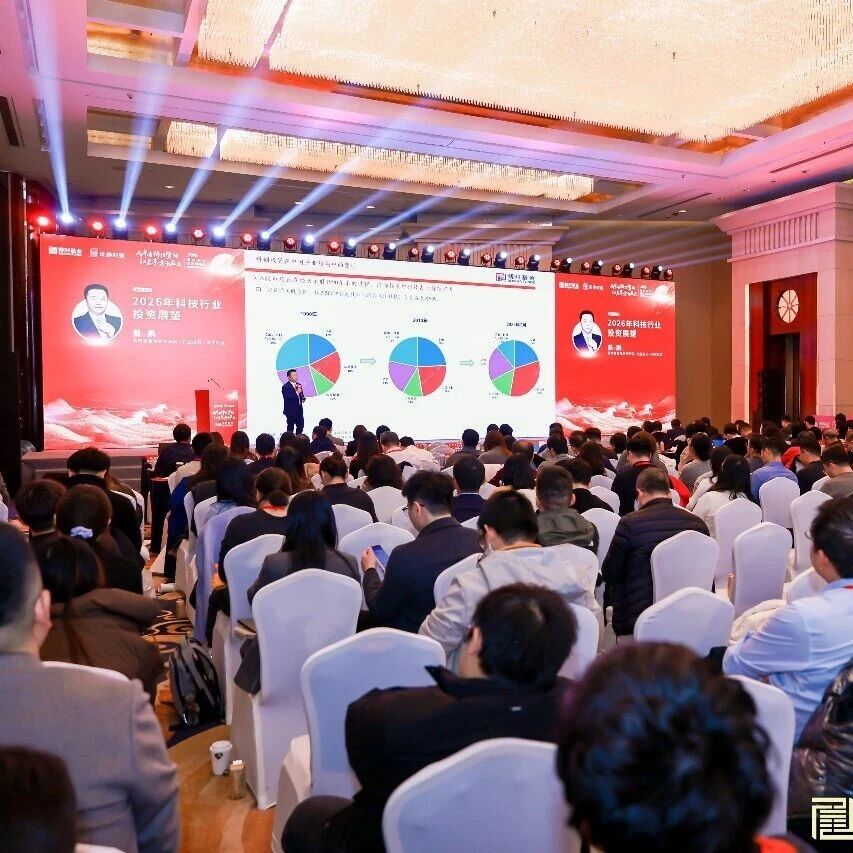
2026年,为什么普通人的投资组合里应该有一份FOF?
Sou Hu Cai Jing· 2026-01-12 10:08
Core Viewpoint - The investment landscape is shifting towards a new era characterized by low interest rates, increased market volatility, and the need for a robust asset system to meet long-term financial goals, making Fund of Funds (FOF) a compelling option for investors [1][36]. Group 1: Overabundance of Choices - The number of public funds in the market is projected to exceed 13,000 by the end of 2025, significantly outnumbering A-share listed companies, creating a challenging environment for ordinary investors [1]. - Understanding a fund requires deep analysis of its holdings, strategies, and fund manager movements, which is akin to a full-time job [2]. Group 2: Risk Diversification - FOFs provide dual-layer risk diversification by holding multiple funds that invest in various securities, thus mitigating individual asset risks [10]. - FOFs also diversify strategies and styles, creating a complementary ecosystem that can adapt to changing market conditions, thereby controlling volatility and drawdowns more effectively [11][13]. Group 3: Dynamic Asset Allocation - FOFs act as an automatic driving system for investment portfolios, adjusting asset allocations based on macroeconomic cycles, policy environments, and market valuations [20][24]. - The increasing allocation of public FOFs to QDII, alternative investments, and REITs exemplifies this dynamic asset allocation approach [24]. Group 4: Retirement Planning - By 2026, the personal pension system will be in its third year, emphasizing the importance of long-term wealth accumulation to combat inflation and ensure quality retirement living [27][28]. - Retirement FOFs, particularly those utilizing personal pension accounts, are tailored for this scenario, offering target date funds (TDF) and target risk funds (TRF) that adjust asset allocations over time [30][32]. Group 5: Balancing Stability and Growth - In a low-interest environment, relying solely on fixed-income assets is insufficient for wealth preservation and growth, necessitating a shift towards equity assets [36]. - FOFs offer a middle ground for investors, with options like bond-focused FOFs for conservative investors and balanced or equity-focused FOFs for those willing to take on more risk [38].
富国基金2026策略重磅:A股双重共振,十大主线精准锚定
Sou Hu Cai Jing· 2026-01-12 08:40
Group 1 - The core logic for A-shares in 2026 is the dual resonance of traditional industry profit recovery and improved risk appetite [3] - The manufacturing, technology services, and non-bank financial sectors are expected to lead the profit recovery, with the real estate chain's profit squeeze being a key variable for A-share profit growth [3] - The macro backdrop of synchronized interest rate cuts in China and the US will create diverse investment opportunities, with a focus on long-term asset reallocation [4] Group 2 - The AI sector is shifting from hardware to applications, with significant long-term potential in areas like AI coding and autonomous driving [6] - The pharmaceutical industry is focusing on the global competitiveness of domestic innovative drugs, particularly in oncology, with an emphasis on safety and efficacy in selection [6] - The consumer sector is anticipated to improve with inflation recovery and service consumption upgrades, with a focus on sectors like tourism and aviation [6] Group 3 - The cyclical sector is expected to benefit from policy support and external demand recovery, with industrial metals and precious metals showing strong price support [7] - The "14th Five-Year Plan" emphasizes the construction of a modern industrial system, which will accelerate investments in key sectors like high-end equipment and green energy [7] - The fixed income and "fixed income plus" sectors should focus on capturing trading opportunities through flexible duration management [7] Group 4 - A diversified asset allocation strategy is crucial for risk dispersion in the context of global monetary easing and changing asset correlations [8] - The investment logic for Hong Kong and overseas markets will evolve with liquidity trends and industry developments, particularly in AI applications [9] - The 2026 investment landscape is characterized by structural opportunities in traditional industry profit recovery and breakthroughs in emerging sectors [9]