情绪价值

Search documents
5 条关于 2026 的 AI 预言|锦秋小饭桌
锦秋集· 2026-01-22 11:14
Core Insights - The article presents predictions about the evolution of AI by 2026, emphasizing a structural transformation in production and service delivery driven by AI advancements [2][27]. Group 1: Predictions about AI's Role in Supply - By 2026, AI will transition from being a tool to becoming an essential part of supply, fundamentally altering production processes [4]. - The evolution of AI can be divided into three phases: 1. Tooling phase (2023-2024) focused on cost reduction and efficiency [5]. 2. Commoditization phase (2025) where AI becomes a standard part of business processes [5]. 3. "AI as Supply" phase (2026) where production costs drop to one-tenth of previous levels, disrupting traditional business models [5][6]. Group 2: Underlying Truths of AI Transformation - The first truth is about cost: a survival benchmark of reducing costs to one-tenth is essential for creating real barriers to entry [6]. - The second truth concerns service: AI will standardize previously non-scalable services into algorithm-driven products, allowing personalized experiences for users [7]. - The third truth relates to delivery: the shift from passive to proactive delivery, where AI anticipates user needs before they are expressed [8]. Group 3: Technological Evolution - The technological evolution leading to "AI as Supply" includes: 1. Coding Model (2024) enabling low-cost task reconstruction [10]. 2. Agentic Model (2025) allowing AI to autonomously plan and execute tasks [11]. 3. Memory Model (2026) providing AI with the ability to retain past experiences and user preferences, thus eliminating alignment costs [12][13]. Group 4: Business Model Changes - The shift from "tool-making" to "asset encapsulation" will redefine business opportunities, with a focus on deep industry knowledge as a unique asset [16]. - The business model will evolve from selling AI usage rights to selling results, as AI's marginal cost approaches zero [17]. Group 5: Trust and Community Value - In an environment where information is easily replicable, trust will become a critical asset, with brands and communities serving as long-term value anchors [25]. - The ability to foster genuine relationships and community interactions will be essential for maintaining user trust and loyalty in the AI landscape [25].


对话 Robopoet 孙兆治:全行业销量最高的 AI 陪伴玩具,Fuzozo 是如何「养成」的?
Founder Park· 2026-01-22 10:06
Core Insights - The article highlights the success of Robopoet's AI companion robot, Fuzozo, which has sold over 120,000 units since its launch in June 2025, with a monthly sales peak of over 50,000 units in December [2][3] - The founder, Sun Zhaozhi, emphasizes the unique positioning of Fuzozo as a new category of interactive hardware that fosters emotional connections, akin to the relationship between humans and pets [5][12] Sales Performance - Fuzozo's sales performance is notable, with a daily token consumption exceeding 10 billion and a net return rate maintained below 10% in a typically high-return hardware market [2] - The product's pricing strategy at 399 yuan has effectively penetrated the market, leading to a significant increase in sales volume [12][25] Product Development and Market Positioning - The development of Fuzozo involved iterative processes, with the first generation being a learning experience that aimed to identify target user groups and their interaction preferences [14][15] - Sun Zhaozhi believes that the AI companion hardware market is poised for growth, with potential for small giants to emerge, and positions Fuzozo as a new category rather than merely an AI toy [18][20] User Demographics and Emotional Value - The user base is primarily composed of women (80%), with significant segments being young children (6-12 years) and adults around 30 years old, indicating diverse emotional needs [32][36] - Emotional value is a core aspect of Fuzozo's appeal, with users seeking companionship and emotional support, which traditional products have not adequately addressed [38][39] Product Features and Future Development - Fuzozo's design incorporates elements of nurturing and social interaction, aiming to create a bond similar to that between humans and pets, while also encouraging real-life social connections [46][48] - Future iterations of the product will focus on enhancing social features and expanding the emotional engagement capabilities of the AI [50][52] Competitive Landscape and Market Strategy - The competitive landscape is evolving, with potential entrants like Pop Mart expected to enter the market, but the company aims to establish barriers through data-driven strategies and strong IP storytelling [97][98] - The collaboration with Huawei has significantly boosted brand visibility and sales, demonstrating the importance of strategic partnerships in scaling the business [91][92]

萧山:文旅体融合擘画现代江南新图景
Hang Zhou Ri Bao· 2026-01-22 02:31
Core Viewpoint - The article highlights the development of cultural and tourism industries in Xiaoshan, Zhejiang Province, emphasizing the integration of sports, culture, and tourism to create a vibrant and attractive urban environment for both residents and visitors [15][16][26]. Group 1: Cultural and Tourism Development - Xiaoshan is set to commence construction on the largest indoor ski resort in Zhejiang, injecting enthusiasm for ice sports and enhancing the cultural tourism industry [15]. - The district has achieved significant recognition, including 21 national honors and over 110 provincial honors, establishing itself as a leading area for cultural and tourism development in Zhejiang [15]. - In 2025, Xiaoshan hosted 7 international events and over 1,000 various competitions, showcasing its capability to attract global attention [17]. Group 2: Economic Impact and Visitor Engagement - The district's tourism revenue reached 52.75 billion yuan, with overnight visitors totaling 28.9 million, maintaining the highest figures in Hangzhou [18]. - The establishment of a "ticket economy" alliance has facilitated a shift from day trips to overnight and vacation tourism, enhancing visitor experiences [18]. - Xiaoshan's cultural industry value increased from 6.6 billion yuan in 2021 to 11.35 billion yuan in 2024, indicating robust growth in the sector [19]. Group 3: Youth Engagement and Community Involvement - By the end of 2025, Xiaoshan's youth population is projected to reach 1.03 million, with initiatives aimed at understanding and serving this demographic [20]. - The district promotes community involvement through innovative mechanisms, transforming idle spaces into vibrant cultural hubs [21]. - Various cultural activities and events have engaged over 3 million residents, fostering a strong sense of community and cultural identity [24]. Group 4: Technological Integration and Future Plans - Xiaoshan is advancing its digital tourism initiatives, incorporating AI and VR technologies to enhance visitor experiences and promote cultural heritage [22]. - The district aims to attract global tourism IP giants and optimize its business environment to support emerging industries like esports and digital culture [27]. - Future plans include enhancing the quality of life through cultural facilities and expanding the reach of cultural services to all residents [26].

为好心情买单
Xin Lang Cai Jing· 2026-01-21 22:38
Core Insights - "丘山House" serves as a social hub for young people seeking a retreat from the hustle and bustle of urban life, emphasizing emotional value and community connection [3][4][5] Group 1: Concept and Development - The establishment of "丘山House" was initiated by seven young individuals, averaging 29 years old, who aimed to revitalize their hometown by creating a space that combines traditional elements with modern stories [3] - The founders previously gained operational experience through their venture "丘山梧桐," which they refer to as their "training ground" [3] - The concept of "丘山House" is to create a "social living room" that fosters emotional connections among visitors [3] Group 2: Offerings and Experience - The venue features a diverse menu with nearly 60 drink options and local cuisine, including grilled meat and international dishes like Vietnamese pho and Thai curry, catering to the tastes of young patrons [4] - The ambiance shifts throughout the day, with a tranquil morning scene attracting older visitors who appreciate the vibrant atmosphere and nostalgic feelings [4] - The founders utilize social media platforms like Douyin and Xiaohongshu to share seasonal stories and attract a wider audience, especially during quieter winter months [4] Group 3: Community Impact - "丘山House" not only serves as a place for social interaction but also aims to preserve local culture and foster dreams within the rural community [5]

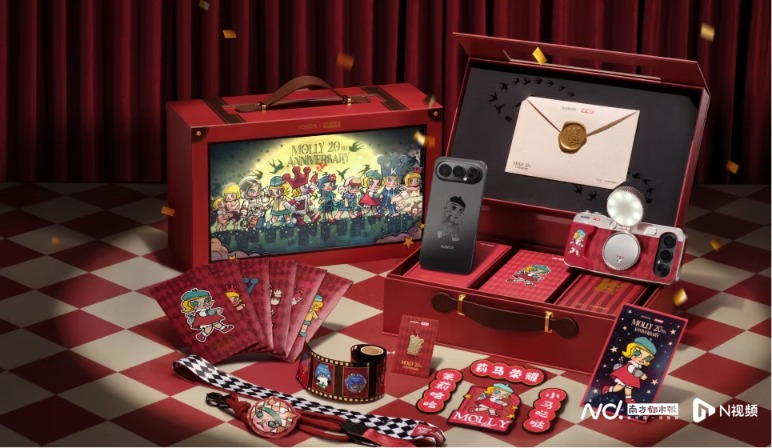
泡泡玛特联合荣耀发布首款潮玩手机,国补后3999元
Nan Fang Du Shi Bao· 2026-01-21 03:50
Group 1 - The core point of the news is the collaboration between Pop Mart and Honor to launch the "Honor 500 Pro MOLLY 20th Anniversary Limited Edition" smartphone, priced at 4,499 yuan, with a net price of 3,999 yuan after subsidies, set to be officially released on January 25 [1][3] - Following the announcement, Pop Mart's stock surged, with an increase of over 10% at one point, closing at a 9.07% rise, valued at 197.2 HKD per share and a market capitalization of 264.6 billion HKD [1] - Pop Mart clarified that it does not have plans to develop its own smartphone but is engaging in a deep co-creation partnership with a well-known mobile brand, moving beyond simple logo placements [1][3] Group 2 - In the context of the smartphone industry facing saturation, Honor aims to provide emotional value to young consumers rather than just competing on hardware specifications, targeting the demographic of 18-35-year-old women, which aligns with Pop Mart's user profile [3] - For Pop Mart, this collaboration represents an important attempt to find a "second growth curve" for IP monetization, especially as the novelty of blind box products diminishes and some new products face price drops in the secondary market [3] - Additionally, Honor also launched the highly anticipated ultra-light flagship model, the Honor Magic 8 Pro Air, weighing 155g and measuring 6.1mm in thickness, featuring a 6.31-inch OLED display and starting at a price of 4,999 yuan [3]

2026烤肉品类发展报告
Sou Hu Cai Jing· 2026-01-20 05:10
Core Insights - The Chinese barbecue market is undergoing significant transformation, with a projected increase in the number of barbecue outlets to 205,000 by the end of 2025, representing a year-on-year growth of 34.4% and a stable market size of approximately 106 billion yuan [1][21][18] - Consumer preferences are shifting towards fresh ingredients and diverse menu options, with emotional value and cost-effectiveness becoming key factors for brands to differentiate themselves in a competitive landscape [1][3][5] Market Overview - As of December 2025, the total number of barbecue outlets in China is expected to reach 205,000, with a market size of around 106 billion yuan, reflecting a 1.6% year-on-year growth from 105 billion yuan in 2024 [5][21][18] - The barbecue sector is characterized by a strong emphasis on high cost-performance self-service models and the rising popularity of "beautiful meals" that focus on aesthetic presentation and immersive dining experiences [5][3] Consumer Trends - The report highlights a shift in consumer behavior from merely seeking flavor to prioritizing overall emotional value in dining experiences, particularly among younger consumers [3][20] - Brands are increasingly adopting innovative strategies, such as themed store designs and interactive performances, to create memorable experiences and emotional connections with customers [3][5] Competitive Landscape - The barbecue market is becoming increasingly competitive, with the number of related enterprises growing from 86,000 in 2020 to 112,000 by the end of 2025, marking a 30.2% increase [20][21] - Notable brands are emerging in niche segments, such as regional specialties and international flavors, which are gaining traction on social media platforms [2][5] Regional Insights - The East China region has the highest concentration of barbecue outlets, accounting for 27.5% of the total, followed by Northeast and North China regions [22][24] - Major cities like Beijing, Chengdu, and Shenyang are leading in barbecue outlet numbers, reflecting strong local dining cultures [25][24]
未知机构:泡泡玛特历史第二次回购彰显公司信心情绪价值龙头底部锚逐渐清晰国金轻工潮玩-20260120
未知机构· 2026-01-20 02:10
Summary of the Conference Call for Pop Mart Company Overview - **Company**: Pop Mart - **Industry**: Toy and New Consumption Sector Key Points and Arguments 1. **Share Buyback Announcement**: On January 19, Pop Mart announced a buyback of 1.4 million shares at a cost of HKD 250 million, which reflects the company's confidence and indicates a clearer bottom signal for the stock price [1][2]. 2. **Previous Buyback Activity**: The company previously conducted a buyback from August 29 to December 30, 2022, and the shares were canceled on March 6, 2023, after which the stock price stabilized [1][2]. 3. **Share Price Context**: The average buyback price was approximately HKD 180 per share, while the share prices on January 9 and January 14 for the stock awards were HKD 197 and HKD 192, respectively, suggesting a clearer anchor point for the stock price [2]. 4. **Market Sentiment**: Recent stock price adjustments were primarily due to third-party high-frequency data falling short of expectations, leading to intense market speculation [3]. 5. **Short Selling Data**: As of January 9, the number of outstanding short positions was approximately 97.74 million shares, accounting for about 7.28% of the total share capital [4]. 6. **Bearish Reports**: Bernstein released a bearish report indicating a slowdown in average store efficiency for Pop Mart's offline stores in China [4]. 7. **Data Discrepancies**: There are concerns regarding the accuracy of third-party data, which may underestimate growth potential in North America for Q4 2025 [4]. 8. **Demand Side Potential**: - The depth of leading IPs may be significantly underestimated, with the Labubu series having substantial room for emotional and situational exploration [4]. - The width of the IP matrix is also underestimated, with healthy structural diversity among established and new IPs [4]. 9. **Supply Side Analysis**: - Plans to open approximately 208 new stores overseas by 2026 [5]. - The potential for increasing fan base penetration, with an estimated penetration rate of about 10% in the first half of 2025 [5]. - Opportunities for increasing average transaction value through product diversification and premiumization [5]. 10. **Future Catalysts**: Key upcoming events include the company's annual meeting in February, the disclosure of the 2025 annual report and 2026 outlook in March, and the Q1 report in April [5].
《2025北京商业发展蓝皮书》:情绪价值场景创新文化跨界成消费新增长点
Bei Jing Shang Bao· 2026-01-19 15:17
Group 1 - The core theme of the report is "Reconstructing Consumption through Trends," highlighting the expansion of fashion consumption beyond traditional retail into lifestyle categories, including smart wearables, automobiles, home goods, and service sectors like entertainment, sports, and beauty [1] - Unique data from the report indicates that in the first three quarters of 2025, new store openings in sectors such as fitness, wellness, medical beauty, and pet-related businesses in Beijing grew by 25% to 55%, significantly outpacing traditional retail and dining [1] - Consumer behavior in Beijing is shifting from "product transactions" to "emotional value" driven purchases, with IP-centric "dimension economy" emerging as a new retail driver, enhancing the influence of cultural IPs like the Palace Museum and Pop Mart [1] Group 2 - Scene innovation is identified as a key strategy for breaking through in Beijing's consumption landscape, with the rise of "smoky atmosphere + fashion" small shop clusters revitalizing the cultural and commercial tourism ecosystem [2] - The number of new "smoky atmosphere" shops on Douyin has seen a stable growth over three years, with a 66% year-on-year increase in 2025, and over 4.58 million active shops generating a 34% increase in transaction volume [2] - The nightlife economy, particularly the small bar sector, has shown robust growth, with Beijing's bar consumption order volume increasing by over 35% and nighttime consumption orders rising close to 40% [2] Group 3 - Cultural crossover is accelerating the growth of domestic trend consumption, with intangible cultural heritage brands leveraging short videos to reach wider audiences, exemplified by the rise of Beijing's intangible cultural heritage skills on platforms like Douyin [3] - In the past year, Douyin has added over 200 million videos related to national intangible cultural heritage, marking a 31% year-on-year growth, while enhancing e-commerce support for heritage businesses [3] - Beijing is constructing a new consumption ecosystem characterized by both international flair and local vibrancy, emphasizing that true quality consumption is defined by its fashionable and trendy attributes, which can expand the supply of quality goods and services [3]
深圳公司靠透明手机壳年入过亿,30美金一个卖爆海外|Insight全球
36氪· 2026-01-19 10:21
Core Viewpoint - The article discusses the successful strategies of CASEKOO, a Chinese phone case brand, in the global market, highlighting its focus on product quality and user experience to differentiate itself in a highly competitive industry [4][6][7]. Group 1: Market Positioning - CASEKOO has established itself as a high-profit, high-revenue player in the phone case market, achieving annual sales exceeding 100 million USD and expecting double-digit growth this year [7]. - The brand targets high-net-worth users, particularly Amazon Prime members and iPhone users, who are willing to pay a premium for quality products [10]. - By focusing on product details and user experience rather than competing in the low-cost segment, CASEKOO has maintained a strong market share and customer loyalty [10][12]. Group 2: Product Innovation - CASEKOO's strategy involves creating products that exceed user expectations, such as developing a transparent phone case that resists yellowing through innovative material use [13][14]. - The brand has implemented advanced features like hidden airbag structures for drop protection and a magnetic charging stand that enhances user convenience [14]. - The company plans to expand its product line to include patterned cases, aiming to tap into emotional value and brand recognition while maintaining its quality focus [15][18]. Group 3: Domestic Market Exploration - In 2024, CASEKOO intends to re-enter the competitive Chinese market, viewing it as a testing ground for brand and marketing strategies [20]. - The company is leveraging China's advanced mobile internet and rapid marketing response times to enhance brand building and user engagement [20][21]. - A recycling initiative has been launched to encourage user participation and promote environmental responsibility, which has positively impacted brand perception [20].

专访东风日产王骞:合资车企转型,要先去“爹味”丨合资反攻局
Di Yi Cai Jing· 2026-01-19 06:59
Core Viewpoint - The transformation of joint venture brands in the electric vehicle market is ongoing, with a focus on appealing to younger consumers and adapting to market demands [1] Group 1: Company Strategy and Market Position - Dongfeng Nissan's new energy models N7 and N6 have seen significant pre-order success, with over 20,000 orders for N7 in 50 days and over 10,000 for N6 in 10 days, but the brand still faces challenges in establishing a market-defining electric vehicle [1][2] - The company aims to enhance its appeal to younger consumers by emphasizing design, with 60% of N6 buyers citing aesthetics as their primary reason for purchase [3] - Dongfeng Nissan plans to invest 10 billion yuan by the end of 2026 to expand its R&D team to 4,000 people, indicating a long-term commitment to electric and intelligent vehicle development [16] Group 2: Product Development and Consumer Engagement - The company has shifted its product development approach to prioritize local market needs, gaining product definition rights in China starting with the N7 [9] - Dongfeng Nissan is adopting a simplified product configuration strategy, offering only two versions of new models to streamline consumer choices [11][12] - The N6 model is designed to appeal to new customers, with approximately 60-80% of its buyers being first-time Nissan customers [6] Group 3: Competitive Landscape and Future Plans - The company recognizes the competitive nature of the automotive market by 2026 and is focused on meeting customer demands to avoid falling behind [1][15] - Dongfeng Nissan plans to launch six new energy models by the end of 2027, including two sedans in 2025 and an SUV model NX8 targeting the 200,000 yuan market segment [22] - The company is learning from successful competitors like Huawei and Li Auto, adapting project-based operations to enhance efficiency and responsiveness [20][21]