
脱钩断链

Search documents
新华时评|携手维护全球发展“共赢链”
Xin Hua She· 2025-07-17 13:50
Core Viewpoint - The third China International Supply Chain Expo highlights the global demand for stable industrial and supply chains amidst geopolitical tensions and economic globalization challenges, showcasing China's commitment to enhancing global supply chain resilience and fostering cooperation [1][4]. Group 1: Event Overview - The expo attracted 1,200 domestic and foreign enterprises, indicating a higher level of international participation compared to previous editions, with a clearer supply chain logic and a stronger emphasis on innovation [1]. - Six major exhibition areas were established, including advanced manufacturing, clean energy, smart automotive, digital technology, healthy living, and green agriculture, providing a platform for real-world connections and showcasing the entire lifecycle from R&D to application [1][2]. Group 2: Industry Participation - Major global companies such as Airbus, NVIDIA, and Schneider participated for the first time, demonstrating the integration of supply chains and the collaborative achievements with Chinese partners [2]. - The expo reflects how deep cooperation in supply chains can enhance human well-being, with leading firms from healthcare, food, and cosmetics presenting their latest products and services [2]. Group 3: Global Supply Chain Challenges - The stability of global supply chains has been severely threatened by unilateralism, trade protectionism, and geopolitical tensions, leading to increased fragmentation risks and reduced efficiency in global economic operations [3]. - Companies are shifting from an "efficiency-first" approach to a "resilience-first" strategy, focusing on diversified procurement, regional production, and localized operations to enhance supply chain resilience [3]. Group 4: China's Role in Global Supply Chains - China is positioned as a "stabilizing anchor" in global supply chains due to its dual advantages in supply and demand, as well as its deep integration capabilities across various sectors [4]. - The country has developed a comprehensive and competitive industrial system, accounting for nearly 30% of global manufacturing value added, and continues to attract global capital with a high level of openness and innovation [4]. Group 5: Future Outlook - The maintenance of global supply chain stability is crucial for healthy economic development and mutual benefits, with a call for countries to foster a fair, open, and predictable market environment [5].
“十四五”期间中国经济增量预计超35万亿元
Shang Hai Zheng Quan Bao· 2025-07-09 18:22
Group 1 - China's innovation breakthroughs are driving industries towards mid-to-high-end transformation, with a shift from quantity to quality and from follower to leader in many fields [1] - The "decoupling and chain-breaking" efforts by external forces are reinforcing China's determination for self-reliance and accelerating the pace of independent innovation [1] Group 2 - The average life expectancy in China has reached 79 years, reflecting the tangible benefits of economic development and technological progress [2] - The "14th Five-Year Plan" includes seven livelihood indicators, the highest proportion in any five-year plan, aimed at enhancing people's sense of gain, happiness, and security [2] - China has established the world's largest education, social security, and healthcare systems, with over 95% coverage in compulsory education and basic insurance [2] - The national comprehensive transportation network is being rapidly improved, with over 10,000 kilometers of new high-speed rail lines added during the "14th Five-Year Plan," making China's high-speed rail mileage double that of other countries combined [2] Group 3 - The number of private enterprises in China has increased to over 58 million, reflecting a growth of more than 40% since the end of the "13th Five-Year Plan" [3] - The "14th Five-Year Plan" focuses on reform as a central task, emphasizing the need to streamline economic circulation and enhance market efficiency [3] - The establishment of a unified national market is progressing, with significant reductions in market access restrictions and the introduction of the Private Economy Promotion Law [3] - Comprehensive reforms are ongoing, with a commitment to address deep-seated issues and ensure the implementation of reform measures outlined in the 20th National Congress [3]
新闻发布丨“十四五”成绩单来了!这场发布会信息量很大→
国家能源局· 2025-07-09 06:05
Economic Development - The economic strength of the country has significantly increased, with the total economic volume expected to reach around 140 trillion yuan this year, contributing approximately 30% to global economic growth [3][9] - The average economic growth rate over the past four years has been around 5.5%, demonstrating resilience against various risks and challenges [3][9] Innovation Drive - The "14th Five-Year Plan" emphasizes innovation, with R&D investment reaching a new high, increasing nearly 50% compared to the end of the "13th Five-Year Plan," amounting to 1.2 trillion yuan [4][5] - Major technological breakthroughs include the launch of the first domestically produced aircraft carrier and the first Chinese space station, showcasing advancements in various sectors [4][5] Green Development - The country has established the world's largest clean power generation system, with renewable energy generation capacity historically surpassing coal power [8][10] - The forest coverage rate has increased to over 25%, contributing to a significant portion of global greening efforts [7][8] Safety Assurance - The country has built the largest power infrastructure system globally, with installed capacity accounting for one-third of the world's total, ensuring energy security during peak demand periods [9][10] - The establishment of over 10 million acres of high-standard farmland has strengthened food security [9] Governance Efficiency - The business environment has improved significantly, with the number of private enterprises increasing by over 40% compared to the end of the "13th Five-Year Plan" [6] - The ability to mobilize resources and respond to emergencies has been enhanced, as demonstrated by rapid disaster response efforts [6] Social Welfare - The country has built the largest education, social security, and healthcare systems globally, with participation rates in basic insurance exceeding 95% [5] - The average life expectancy has reached 79 years, reflecting improvements in public health and welfare [5]


“十四五”期间,我国经济增量将超35万亿元
中国基金报· 2025-07-09 02:55
"十四五"前4年我国经济增速平均达5.5% 来源:中国新闻网综合自新华社等 "十四五"规划纲要确定的战略任务全面落地 国务院新闻办公室9日举行"高质量完成'十四五'规划"系列主题新闻发布会。 在首场发布会上,国家发展改革委主任郑栅洁介绍,5年前制定的规划纲要设定的主要指标 中,经济增长、全员劳动生产率、全社会研发经费投入等指标进展符合预期;常住人口城镇化 率,人均预期寿命,粮食、能源综合生产能力等8项指标进展超预期;规划确定的战略任务全 面落地,部署的102项重大工程稳步顺利推进。总的来看,经济社会发展取得了新的开创性进 展、突破性变革、历史性成就。 国家发展改革委主任郑栅洁表示,中国坚定履行"双碳"承诺,单位GDP能源消耗四年累计降低 11.6%, 相当于减少了11亿吨二氧化碳排放量,接近欧盟2024年碳排放总量的50% ,中国的 行动充分体现了负责任大国的担当。 国家发展改革委主任郑栅洁在国新办举行的"高质量完成'十四五'规划"首场新闻发布会上表 示,前4年我国经济增速平均达到5.5%。 我国这么大的体量和增量,又经受了世纪疫情、贸易 霸凌等冲击,在这么大的基数上,能保持这样的增速,在经济发展史上前所未有 ...
国家发改委:“脱钩断链”、打压遏制 只会增强我们自立自强的决心和能力
news flash· 2025-07-09 02:15
Core Viewpoint - The "14th Five-Year Plan" emphasizes innovation as a critical driver for economic and social development, with significant increases in R&D investment and a shift towards higher-end industries [1] Group 1: R&D Investment - National R&D expenditure reached a new high, with a nearly 50% increase compared to the end of the "13th Five-Year Plan," amounting to an incremental investment of 1.2 trillion yuan [1] Group 2: Industry Transformation - The focus on technological innovation is facilitating the transformation of industries from low-end to mid-high end, marking a shift from being followers to leaders in various sectors [1] Group 3: Resilience Against External Pressures - The challenges posed by "decoupling" and suppression from external forces are reinforcing the determination and capability for self-reliance and accelerating the pace of independent innovation [1]
中美经贸磋商机制首次会议为全球经济注入确定性|专家热评
Di Yi Cai Jing· 2025-06-13 06:53
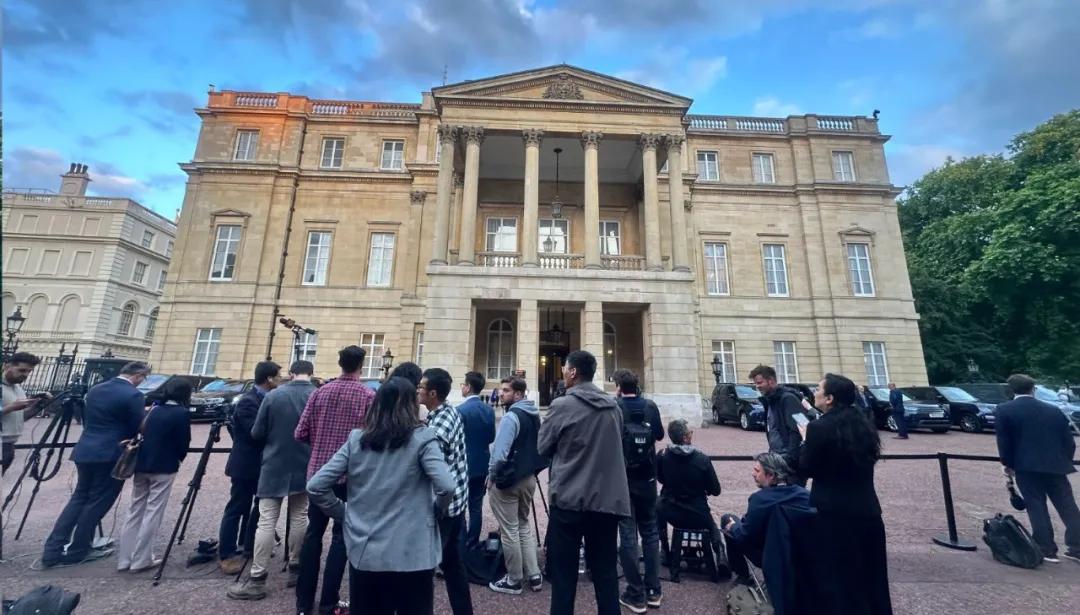
何立峰副总理强调"贸易战没有赢家",并提出中美双方要"进一步发挥好中美经贸磋商机制作用,不断 增进共识、减少误解、加强合作"。 作为发展阶段、经济制度不同的两个大国,中美双方在经贸合作中出现分歧和摩擦是正常的。然而,国 际贸易不可忽视的本质是互利共赢。在全球产业链分工日益细化的今天,世界经济体系高度相互嵌套, 一荣俱荣,这种基于市场选择的自然合作是全球化资源配置的必然结果。近年来,随着美方当局违背经 济规律,倒行逆施单边主义与保护主义,全球政治、经济、贸易局势呈现出显著地恶化趋势。这种将经 贸问题政治化、安全化的做法,不仅撕裂了全球供应链的完整脉络,更在根本上动摇了多边贸易体系的 根基。历史与现实反复印证,贸易战没有赢家,霸凌打压只会造成多败皆伤的困境。当保护主义阴云笼 罩全球经济之际,理性回归的呼声正逐渐汇聚成强大的力量——发展中国家联合捍卫公平贸易原则,跨 国资本用投资选择表达对开放市场的信心,美国国内工商界和农业州也持续发出反制关税的抗议。来自 各方的呼吁清晰表明,世界经济的复苏需要拆除人为藩篱,全球秩序的重构亟须重返合作轨道。 伦敦会议的成果是中美双方正视经贸互利共赢本质,尝试回归经济理性的重要探索。 ...
中美在伦敦谈了16个小时
Guan Cha Zhe Wang· 2025-06-12 15:24
Group 1 - The first meeting of the China-U.S. economic and trade consultation mechanism took place in London on June 9-10, involving key representatives from both sides, including China's Vice Premier He Lifeng and U.S. Treasury Secretary Yellen [1][4] - The meeting aimed to implement the consensus reached during the phone call between the two countries' leaders on June 5, and is seen as a significant step towards stabilizing China-U.S. economic relations and contributing to global economic recovery [1][4] - He Lifeng emphasized that the essence of China-U.S. economic relations is mutual benefit, stating that there are no winners in a trade war and that both sides should resolve differences through equal dialogue and cooperation [1][4] Group 2 - Despite the positive dialogue, there are ongoing challenges, including new discriminatory measures imposed by the U.S. against China, such as restrictions on AI chip exports and the halting of sales of chip design software [2][5] - The U.S. government has been reluctant to engage in serious discussions regarding export controls, focusing on unilateral concessions from China while neglecting its own obligations [5][6] - The complexity of the economic relationship is underscored by the presence of structural issues that cannot be resolved in just a few meetings, and external factors such as Taiwan and South China Sea issues may further complicate negotiations [6][7] Group 3 - The U.S. has indicated a willingness to explore the possibility of easing restrictions on certain exports to China, including semiconductor manufacturing software and components for aircraft engines [5][6] - The ongoing trade tensions and high tariffs could lead to significant declines in trade, potentially sacrificing hundreds of billions in exports and tens of thousands of jobs in the U.S., which could destabilize the American economy [6][7] - Both sides are encouraged to utilize the established consultation mechanism to find mutually beneficial solutions through pragmatic cooperation [7]
魏建国:中国单边开放是世界近代史的奇迹一一在郑永年新作《论单边开放》国内首发式上讲话
Feng Huang Wang Cai Jing· 2025-06-10 09:41
Core Viewpoint - China's unilateral opening is a remarkable achievement in modern history, representing a creative breakthrough in the logic and rules of globalization [1][2]. Group 1: China's Unilateral Opening - China's unilateral opening breaks the traditional "reciprocal opening" principle of Western-led globalization, showcasing a proactive approach to lowering tariffs from an average of 15.3% to 7.4% since joining the WTO [1]. - By the end of 2023, China has attracted a total foreign investment of $3.3 trillion, with 660,000 foreign enterprises operating in the country, maintaining its position as the top destination for foreign investment among developing countries for 30 consecutive years [1]. Group 2: Historical Context and Strategic Decision - The decision for unilateral opening was made during a time of significant challenges, including a weak industrial base and low technological levels, reflecting the courage and wisdom of the Chinese government [2]. - This approach is not a passive response to external pressures but a strategic decision based on a deep understanding of international economic dynamics and domestic development needs [2]. Group 3: Continuation of Traditional Open Ideals - China's unilateral opening is an extension and elevation of its traditional open mindset, which has been evident throughout history, from the Silk Road to Zheng He's voyages [3]. - This modern unilateral opening embodies the spirit of openness and inclusivity, linking China's development closely with global progress and challenging traditional protectionist barriers [3]. Group 4: New Model for Global Governance - China's unilateral opening offers a new model for global governance by moving away from "zero-sum" thinking, demonstrating that market openness can lead to "incremental win-win" outcomes [4]. - Initiatives like the Belt and Road Initiative and RCEP reflect China's commitment to regional cooperation and participation in global governance, contributing to the UN's 2035 global development agenda [4]. Group 5: Future Directions of Unilateral Opening - Future developments in China's unilateral opening will transition from "factor flow" to "rule-leading," focusing on institutional openness and establishing standards in emerging fields like digital economy and green trade [5]. - The approach will evolve from "economic and trade openness" to "civilizational dialogue," enhancing cultural exchanges and soft power to counter narratives of "China threat" [5]. - China's unilateral opening will shift from merely adopting international rules to contributing Chinese solutions, promoting a more inclusive and equitable global governance framework [5]. Group 6: Conclusion - The essence of unilateral opening is rooted in self-confidence regarding its development path and a belief in human progress, aiming to attract more entrepreneurs, scholars, and media to engage in this significant topic [6].
润物无声,方寸匠心问鼎世界之路
Feng Huang Wang Cai Jing· 2025-06-10 08:42
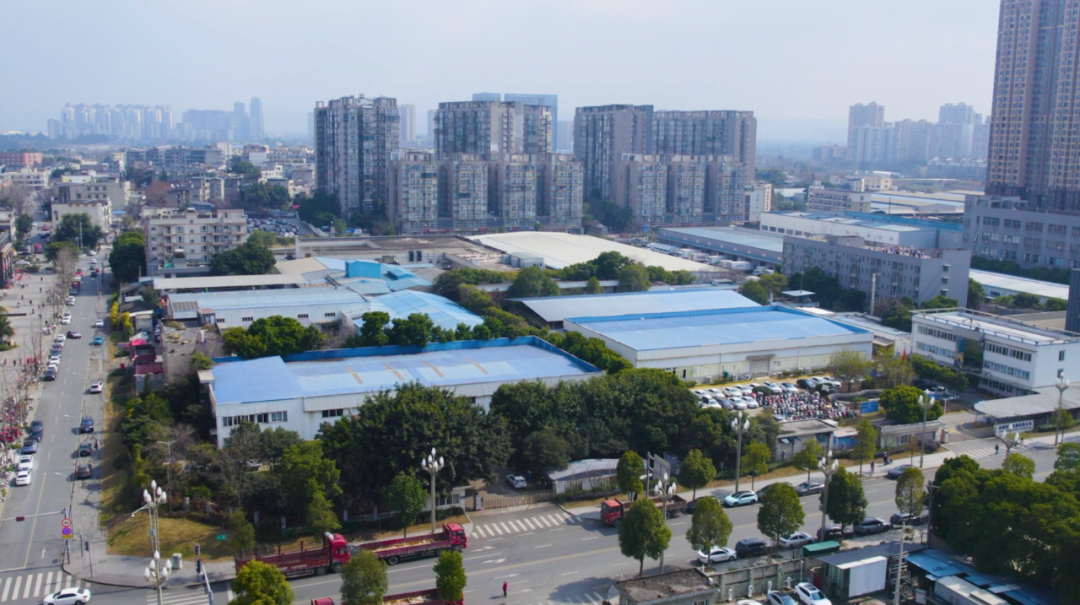
Core Viewpoint - The article highlights the journey of Chengdu Runlong Electric Co., Ltd., a small enterprise that has become a leading manufacturer of drying filters in China and globally, emphasizing its innovative approaches and resilience in the face of competition from international giants like Haier [1][4][26]. Company Overview - Chengdu Runlong Electric Co., Ltd. has grown over 30 years to become the market leader in drying filters in China and ranks among the top globally [1]. - The company was founded by Huang Yingli in 1995, initially as Chengdu Longquan Refrigeration Component Factory, focusing on a critical component of refrigeration systems [4][11]. Product Significance - Drying filters play a crucial role in refrigeration systems by filtering impurities and moisture, ensuring the longevity and efficiency of refrigerators [1][8]. - The design of drying filters includes a copper shell and a high-efficiency molecular sieve to effectively remove contaminants from refrigerants [8]. Technological Advancements - The company transitioned from outdated hot-rolling technology to cold-extrusion technology, significantly improving product quality and meeting stringent standards set by major clients like Haier [9][11]. - This shift not only enhanced the aesthetic and cleanliness of the products but also positioned Runlong as a competitive player in the market [11]. Market Position and Strategy - Runlong's dedication to meeting Haier's high standards led to its recognition as Haier's Best Quality Supplier in 1998, marking a significant milestone in its growth [11][12]. - The company adopted a diversification strategy to reduce dependency on a single client, enhancing its resilience against market fluctuations [15]. Industry Impact - By 2008, Runlong was designated as the leading unit for the national standard GB/T 23135-2008 for drying filters, showcasing its evolution from a follower to a rule-maker in the industry [18]. - The company has developed a rapid response system for customized solutions, catering to high-end markets such as vaccine cold chains and aerospace [17][18]. Competitive Edge - Runlong has built a competitive barrier through over 20 core patents and a focus on high-end customization, distinguishing itself from competitors who primarily engage in mass production [20]. - The company's commitment to quality, rooted in military standards, has established a strong reputation and customer trust [15][22]. Future Outlook - The article emphasizes the need for more companies like Runlong to emerge in China's manufacturing sector to strengthen the supply chain and enhance competitiveness amid global challenges [26].
确保中美经贸关系大船行稳致远
Jing Ji Ri Bao· 2025-06-09 21:52
此次中美元首通话,是继两国日内瓦经贸会谈后,双方从最高层级为弥合分歧、解决问题所做的又一次 重要努力。根据美方提议,两国经贸牵头人此前在日内瓦举行会谈,迈出了通过对话协商解决经贸问题 的重要一步,其成果受到两国各界和国际社会普遍欢迎,并为全球市场带来显著积极预期,再次证明对 话和合作是唯一正确的选择。 之后,中方始终秉持言必行、行必果的负责任态度,严肃认真执行了日内瓦会谈达成的协议。然而,美 方后续行为却与对话合作精神背道而驰,接连出台针对中国的歧视性政策,包括发布人工智能(AI) 芯片出口管制指南、停止对华芯片设计软件销售等举措。这些行径不仅违背日内瓦共识,损害中方正当 权益,更构成对双边关系发展的干扰甚至破坏。 中方通过对话协商解决经贸分歧的诚意是坚定的,同时坚守维护国家核心利益的原则立场也是明确的。 既然双方达成共识,就应当共同遵守。美方不能片面强调中方承诺而忽视自身义务,应当实事求是看待 取得的进展,撤销对中国实施的消极举措,与中方相向而行,为中美关系重返正轨创造必要条件。 中美关系稳定发展既关乎两国人民,也关乎人类前途命运。在当前重要关键节点,中美元首举行通话, 有助于双方增进共识、减少误解、加强合 ...