
辅助驾驶

Search documents
辅助驾驶,安全不能只是口号
3 6 Ke· 2025-11-28 11:24
Core Viewpoint - The automotive industry is shifting back to a development trajectory based on safety and quality, moving away from chaotic marketing practices, particularly in the autonomous driving sector [2][11]. Industry Trends - The introduction of new battery standards and regulations on autonomous driving indicates a regulatory push to ensure safety in the electric vehicle sector [2]. - The phrase "when the tide goes out, you see who is swimming naked" applies to the autonomous driving technology industry, highlighting the need for genuine technological capabilities [3]. Technological Developments - The industry is facing malicious attacks and misleading evaluations that disrupt healthy development, prompting national measures against "internet water armies" and black public relations [4]. - A joint live test by Pacific Automotive and Tongji University showcased the superior performance of vehicles equipped with Huawei's QianKun intelligent driving system, achieving full marks in all nine testing scenarios [5]. - Huawei's QianKun intelligent driving system has demonstrated significant advancements, including a 50% reduction in system latency and improved decision-making speed [6]. Safety and Standards - Safety is emphasized as a core principle, with Huawei's QianKun integrating a multi-sensor approach to enhance safety in various driving conditions [11]. - The CAS 4.0 system provides comprehensive collision avoidance capabilities, significantly enhancing safety features in vehicles [12][14]. Market Position - As of October 2025, Huawei's QianKun has partnered with 15 leading automotive companies, producing 35 models and capturing a 27.8% market share in the autonomous driving sector [9]. - In the luxury vehicle market, Huawei's market share reached 52.75%, indicating strong consumer preference for its technology [9]. Data and Ecosystem - Huawei's QianKun intelligent driving platform benefits from a "snowball effect" driven by data collection from vehicles, enhancing algorithm optimization and user experience [15][16]. - The platform's cloud computing power reached 45 EFLOPS, enabling efficient processing of vast amounts of driving data [16][17]. - By October 2025, the cumulative driving distance for Huawei's QianKun intelligent driving system reached 58.1 billion kilometers, establishing it as a leader in the industry [18]. Competitive Advantage - The combination of data and scale creates a robust competitive moat for Huawei, making it increasingly difficult for smaller competitors to keep pace [20]. - The focus on safety and quality, alongside significant investments in technology and infrastructure, positions Huawei as a leader in the autonomous driving market [20].


自主驶入/驶出超充站、防御性AES等,理想汽车将推多项更新
Guan Cha Zhe Wang· 2025-11-28 09:44
Core Insights - Li Auto plans to enhance its AD Max model with innovative VLA charging and defensive AES automatic emergency steering features, while also introducing urban NOA functionality to the upgraded AD Pro model [1][2] Group 1: VLA Charging and AES Features - The VLA charging feature allows vehicles to autonomously navigate to Li Auto's supercharging stations, automatically find available charging spots, and complete parking and payment processes without user intervention [2] - The VLA charging function is set to cover over 1,400 Li Auto supercharging stations by January 2026, with plans to expand to over 2,400 stations by February and over 2,900 by March [2] - The AES automatic emergency steering feature will be fully rolled out to AD Max users, evolving from active collision avoidance to passive collision defense, helping users avoid various dangerous scenarios [2] Group 2: User Experience and Market Position - The VLA driver model has achieved over 312 million kilometers in driving distance, with a 2.2 times increase in mileage penetration and a threefold increase in daily active usage [1][2] - The focus on enhancing user experience in parking and safety reflects a trend among leading new energy vehicle manufacturers to refine their autonomous driving capabilities [3]

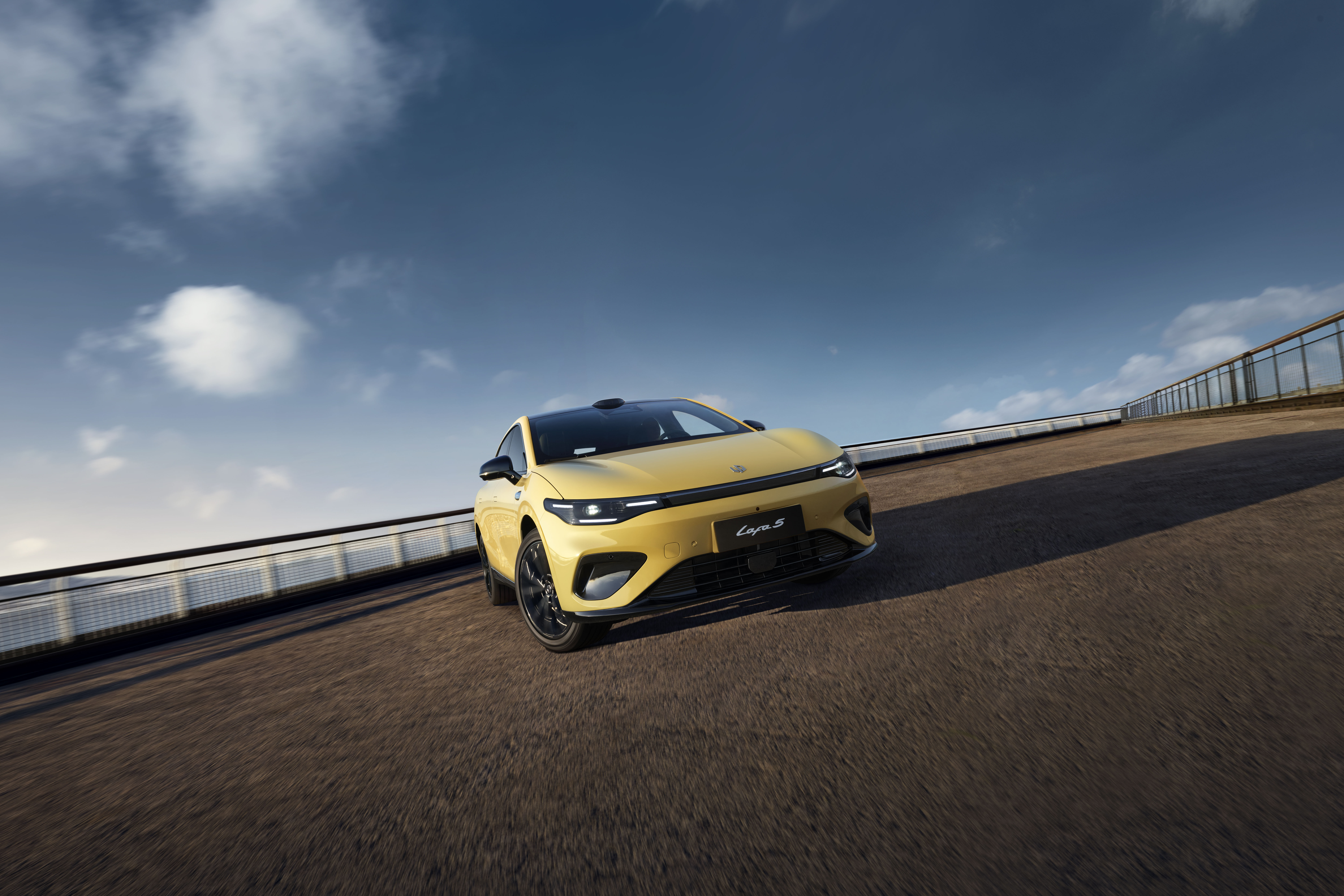
Lafa5上市 助力零跑冲击2026年百万目标
Yang Shi Wang· 2025-11-28 08:31
Core Viewpoint - Leapmotor has officially launched the new electric sports sedan, Lafa5, in Hangzhou, featuring a high-performance design and advanced technology aimed at filling the gap in the 100,000 RMB electric vehicle market [1][10]. Design and Space - The Lafa5 adopts a "technology natural aesthetics" design language, with a width of 1880mm, frameless doors, and 19-inch sport wheels, achieving a drag coefficient of 0.256 [6]. - The vehicle offers six exterior color options and an 86% cabin space utilization rate, with over 80% soft-touch materials, 256-color ambient lighting, and a 12-speaker audio system [6]. - The trunk capacity is 435L, and it features a panoramic sunroof with an electric sunshade [6]. Smart Features and Driving Control - The Lafa5 is equipped with a Qualcomm 8295P chip, a 14.6-inch 2.5K central control screen, and the Leapmotor OS 4.0 Plus system, integrating AI models for multi-intent voice control and dialect recognition [10]. - It features a rear-wheel drive layout with a maximum power of 160kW, achieving 0-100 km/h in 6.4 seconds, and a chassis jointly tuned with Stellantis [10]. - The vehicle supports fast charging, with a 30%-80% state of charge taking only 18 minutes, and includes advanced driver assistance systems with 27 high-precision sensors [10]. Safety Features - The Lafa5 has a cage body structure with 77.5% high-strength steel and uses 2000MPa hot-formed steel, ensuring safety during thermal runaway [13]. - The battery system meets new national standards, promising no fire or explosion for 48 hours post-thermal runaway, and offers lifetime warranty for the first owner [13]. - It includes 17 active safety features and an integrated control system [13]. Financial Performance and Market Position - Leapmotor's Senior Vice President revealed that by Q3 2025, the company expects to achieve a net profit of 150 million RMB and revenue of 19.45 billion RMB, nearly doubling year-on-year [13]. - Since March 2025, Leapmotor has maintained the top position in monthly sales among new force brands in China, achieving its annual sales target of 500,000 units ahead of schedule, with 44,000 units sold overseas [13]. - The launch of Lafa5 is a strategic move to target the high-value electric sedan market and support Leapmotor's goal of reaching annual sales of 1 million units by 2026 [13].
【光大研究每日速递】20251126
光大证券研究· 2025-11-25 23:07
Group 1: Market Overview - The domestic equity market indices experienced fluctuations and a downward trend, with various industry-themed funds performing poorly, while financial and real estate-themed funds showed relative resilience [4] - Passive funds significantly increased their positions in various broad-based ETFs, with notable inflows into TMT-themed ETFs [4] Group 2: Steel Industry Insights - The operating rates for cement and asphalt have dropped to the lowest levels for the same period in five years, indicating potential challenges in the construction sector [5] - The Ministry of Industry and Information Technology's recent policies aim to promote the orderly exit of outdated steel production capacity, suggesting a potential recovery in steel sector profitability to historical average levels [5] Group 3: Machinery Export Data - In October 2025, the export growth rates for various machinery products, including electric tools and forklifts, showed significant declines, primarily due to high base effects and calendar impacts [6] - The export amounts for electric tools, hand tools, and lawn mowers decreased by 17%, 16%, and 15% year-on-year, respectively, reflecting a broader trend of declining export performance in the machinery sector [6] Group 4: Company Performance - Company revenue for Q3 2025 reached 171 million yuan, marking a substantial year-on-year increase of 144%, driven by significant growth in robotaxi and robobus sales [7] - Product revenue surged by 429% to 79 million yuan, while service revenue increased by 67% to 92 million yuan, highlighting strong demand for intelligent data and driving support services [7] - Revenue from robotaxi-related businesses reached 35.3 million yuan, reflecting a remarkable year-on-year growth of 761% [7]
雷军:辅助驾驶不是自动驾驶;继续干!传库克明年不退休;Altman:谷歌复苏,OpenAI进入艰难时刻 | 极客早知道
Sou Hu Cai Jing· 2025-11-24 02:22
Group 1: Apple CEO Transition - There are no signs indicating that Tim Cook will step down as Apple's CEO, despite reports suggesting a succession plan may be in place for as early as next year [1][2] - Analyst Mark Gurman believes the timing for Cook's departure is not mature and that he is fully qualified to decide his own future [1][2] - Since taking over in 2011, Cook has led Apple to a market valuation increase from approximately $350 billion to over $4 trillion [1] Group 2: iPhone Air Sales Performance - iPhone Air sales have only reached about one-third of Apple's highest expectations, leading to a production plan cut by half shortly after its launch [2] - The product page for iPhone Air attracted 1 million views in its release month, a 28% increase from the previous year, but its conversion rate was about one-third lower than other models [2] - In China, iPhone Air is reported to be the worst-selling model in the 17 series, as consumers prefer other models [2] Group 3: OpenAI Talent Acquisition - OpenAI is aggressively recruiting from Apple's hardware engineering team, having hired over 40 employees in the past month, many of whom hold senior positions [4] - The talent acquisition includes engineers from various fields such as camera engineering, iPhone hardware, and industrial design [4] - Apple's internal response to OpenAI's recruitment efforts has been one of concern, viewing it as a significant challenge [4] Group 4: AI Market Insights - AMD's CEO Lisa Su expressed confidence in the expanding AI market, predicting it will reach $1 trillion annually by 2030, and emphasized the risks of under-investment [8] - Su noted a shift in demand from training large language models to inference tasks, which require less computational power, and AMD is positioning itself to capitalize on this trend [8] Group 5: Xiaomi's Clarification on Incident - Xiaomi clarified that a recent fire incident in its automotive battery production line was due to a minor operational error during equipment debugging, not a design flaw [3] - The fire was quickly extinguished, with no injuries reported, and the company reassured that all battery packs meet national standards [3]



理想汽车范皓宇:VLA大模型可视化,是理想聚焦用户价值的体现
2 1 Shi Ji Jing Ji Bao Dao· 2025-11-23 10:21
Core Viewpoint - The VLA driver model developed by Li Auto represents a new paradigm in assisted driving iteration, integrating reinforcement learning and a closed-loop training system, enhancing user trust and experience through visual and communicative interactions [2] Group 1: Technology and Innovation - The VLA driver model features capabilities such as spatial understanding, reasoning, communication, memory, and autonomous learning [2] - The model utilizes a CoT (Chain of Thought) reasoning chain displayed on the vehicle's screen to explain its decisions and the logic behind them, significantly increasing user confidence [2] Group 2: User Experience - The ability for users to control assisted driving through voice commands marks a revolutionary change in user interaction [2] - The focus on user value through visual and communicative methods aims to enhance trust in assisted driving technologies [2]
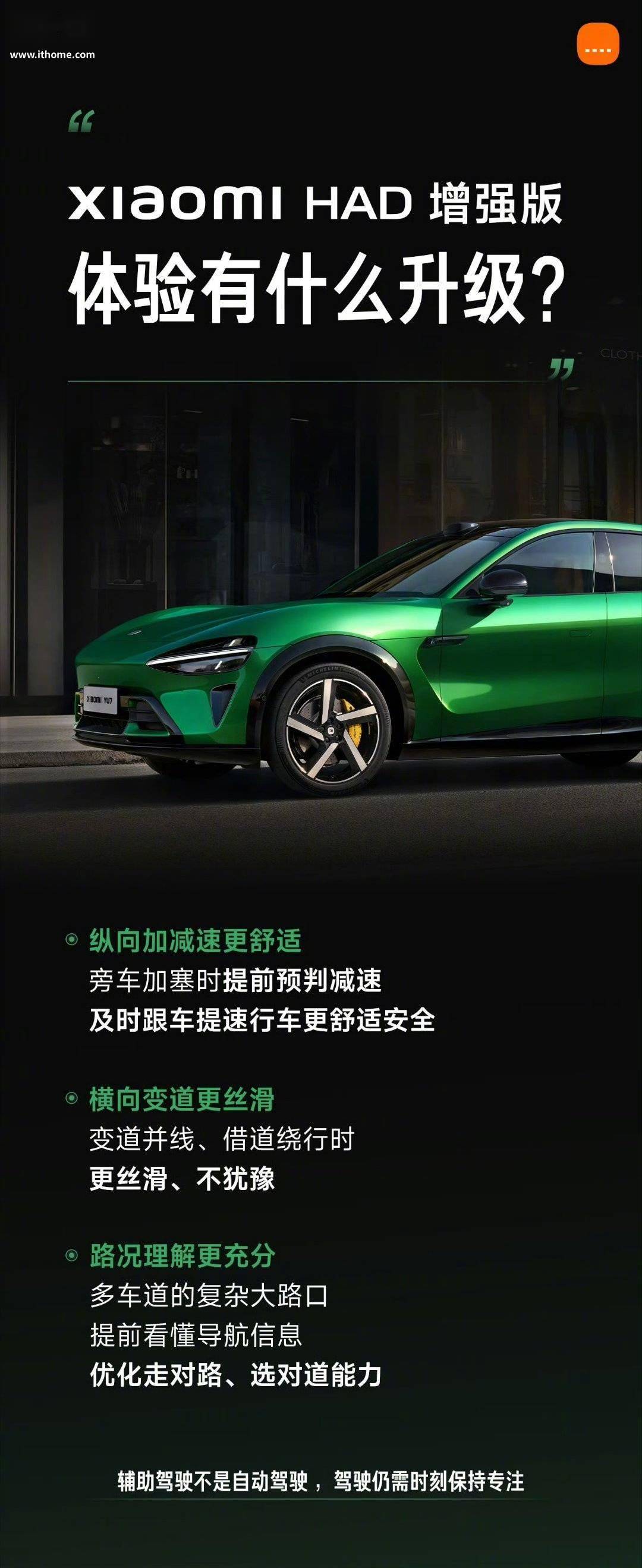
雷军提醒:辅助驾驶不是自动驾驶,驾驶时仍需时刻保持专注
Sou Hu Cai Jing· 2025-11-23 06:25
IT之家 11 月 23 日消息,小米创办人、董事长兼 CEO 雷军今日发文,总结了小米端到端辅助驾驶 HAD 增强版的升级点。 纵向加减速更舒适,旁车加塞时提前预判减速,及时跟车提速行车更舒适安全。 横向变道更丝滑,变道并线、借道绕行时,更丝滑、不犹豫。 路况理解更充分,多车道的复杂大路口,提前看懂导航信息,优化走对路、选对道能力。 雷军也再次提醒:辅助驾驶不是自动驾驶,驾驶时仍需时刻保持专注。 据IT之家此前报道,在 11 月 21 日 2025 广州车展开幕日当天,小米汽车端到端辅助驾驶"Xiaomi HAD 增强版"正式发布,其在 1000 万 Clips 版本的基础上 引入了「强化学习」与「世界模型」,同时 AEB 防碰撞辅助升级,并新增紧急转向辅助。 车道保持辅助 - 预警 车道保持辅助 - 纠偏 紧急车道保持 盲区监测预警 车门开启预警 变道辅助预警 其他安全能力 超速告警 红绿灯提醒 自适应防眩目矩阵3 辅助驾驶不是自动驾驶,驾驶仍需时刻保持 侧向安全能力 ...
魏牌冯复之:“焕新计划”将聚焦价值、形象、体验、服务四大维度
Bei Ke Cai Jing· 2025-11-22 12:23
Group 1 - The 2025 Guangzhou International Auto Show officially opened on November 21, showcasing new models from Wei brand, including the new Gaoshan family, new Lanshan, and new Mocha Hi4 [1] - Wei brand has initiated a brand renewal plan focusing on four dimensions: value, image, experience, and service to drive continuous brand enhancement [1] Group 2 - During the event, Great Wall Motors' Chief Technology Officer, Wu Huixiao, announced the launch of the Great Wall VLA auxiliary driving model, which will first be equipped in Wei brand vehicles, although specific models have not been disclosed [3] - The new generation of the auxiliary driving system will feature interactive capabilities with users and will be able to demonstrate its thought process during the driving assistance [3]


一汽奥迪A5L乾崑智驾 版震撼上市,开创全新的豪华燃油智能出行时代
Cai Jing Wang· 2025-11-22 03:13
Core Insights - The launch of the first fuel vehicle equipped with Huawei's QianKun intelligent driving technology, the FAW Audi A5L QianKun Edition, marks a significant milestone in the collaboration between Audi and Huawei, aiming to redefine luxury fuel vehicles with advanced intelligence [1][2] Group 1: Product Features - The FAW Audi A5L QianKun Edition is positioned as the "intelligent ceiling" for fuel vehicles, integrating luxury and top-tier intelligence to enhance the user experience [1][3] - The vehicle is equipped with a comprehensive sensor network, including 2 laser radars, 6 millimeter-wave radars, 13 cameras, and 12 ultrasonic radars, enabling advanced driving assistance in urban and highway scenarios [3] - The car supports various features such as trajectory reversing and remote parking assistance, providing a convenient all-scenario intelligent travel experience [3] Group 2: Technological Advancements - The collaboration has successfully overcome four major technical bottlenecks in fuel vehicle intelligence: low communication bandwidth, slow power response, unstable power supply, and poor heat dissipation [1] - The integration of Audi's VMM architecture with Huawei's QianKun technology allows for precise control of the vehicle's functions through a gigabit transmission speed, enhancing the driving experience [1] Group 3: Market Strategy - FAW Audi has launched a recruitment plan for "A5L QianKun Edition Ambassadors," offering the first 5,000 ambassadors a limited-time purchase fund of 3,000 yuan to enhance user engagement [3] - The partnership between Audi and Huawei is seen as a new paradigm for integrating cutting-edge Chinese technology into a Sino-German joint venture, paving the way for future models based on both the Premium Platform Combustion and Premium Platform Electric [2]
魏牌新能源携多款全新车型亮相广州
Huan Qiu Wang· 2025-11-21 14:42
Core Viewpoint - The 2025 Guangzhou International Auto Show has officially opened, showcasing new models from Wei brand, a subsidiary of Great Wall Motors, focusing on new energy and high-end development [1] Group 1: Brand and Product Development - Wei brand has launched a brand renewal plan, emphasizing advancements in technology and service [5] - The new Gaoshan series is positioned as a new energy MPV with features like a flat floor design and third-row seating, equipped with advanced driving assistance and intelligent four-wheel drive technology [3] - The new Lanshan SUV also features the Coffee Pilot Ultra system, which has accumulated 243 million kilometers of driving distance, enhancing safety through AEB functionality [3][8] Group 2: Sales Performance - From January to October 2025, Wei brand's cumulative sales exceeded 82,000 units, showing growth compared to the previous year, with the Gaoshan series leading MPV sales in September and October [6] - The personal user purchase ratio for the Gaoshan series reached 84%, while the Lanshan series has surpassed 110,000 units in cumulative sales [6] Group 3: Technological Advancements - The CTO of Great Wall Motors announced the VLA driving assistance model and the next-generation Coffee Pilot Master system, which will first be applied to Wei brand vehicles [8] - The new system supports voice control, environmental perception, and decision-making reasoning, enhancing user experience through improved interaction capabilities [8]
