制度型开放

Search documents
【招银研究|政策】创新驱动,内需主导——“十五五”规划建议学习体会
招商银行研究· 2025-10-30 11:01
Core Viewpoint - The article discusses the key points of the "15th Five-Year Plan" proposed by the Central Committee, emphasizing a shift from a focus on quantity to quality in economic development, addressing both opportunities and challenges in the current global and domestic landscape [2][29]. Group 1: Situation Assessment and Main Goals - The next five years will see a profound impact on China's development due to global changes, with a focus on high-quality development amidst increasing uncertainties and risks [2][3]. - The guiding principles for the "15th Five-Year Plan" include prioritizing economic construction, high-quality development, and balancing development with security [3][4]. - Key goals include enhancing economic quality, significantly improving technological self-reliance, upgrading living standards, and strengthening national security [4]. Group 2: Corporate Sector - The corporate sector's focus will shift towards building a modern industrial system, emphasizing the transformation from traditional industries to stronger, more competitive sectors [5][6]. - New and future industries will be cultivated, with a focus on emerging sectors like renewable energy and advanced technologies, aiming for a diversified technological and commercial landscape [6][7]. - The integration of manufacturing and services will be prioritized, enhancing the overall competitiveness of the industrial system [7]. Group 3: Resident Sector - The plan emphasizes improving residents' quality of life through a combination of enhancing welfare and promoting consumption, aiming for a more sustainable and inclusive growth model [10][11]. - Key indicators for the resident sector include consumer spending, income growth, and labor remuneration, all interconnected to enhance overall economic resilience [11][12]. - Specific initiatives will focus on boosting consumption, advancing urbanization, and improving social welfare systems [12][13][14]. Group 4: Government Sector - The government will enhance macroeconomic governance by promoting effective market mechanisms and ensuring a proactive role in economic management [16][20]. - Key tasks include invigorating various business entities, improving the market allocation of resources, and enhancing fiscal sustainability [21][22]. - Financial reforms will be prioritized to strengthen the financial system and support the real economy, with an emphasis on risk management and regulatory improvements [23][24]. Group 5: Regional Policy - The plan aims to leverage the synergies of various regional development strategies to optimize spatial layouts and promote coordinated growth [25]. - Highlighting key growth areas, such as the Beijing-Tianjin-Hebei region and the Yangtze River Delta, will enhance regional competitiveness [25]. Group 6: External Circulation - The plan emphasizes a shift towards a more proactive and rule-based approach to international trade, aiming to enhance China's global competitiveness [26][27]. - Initiatives will focus on promoting trade innovation, fostering a balanced investment environment, and enhancing financial openness and the internationalization of the Renminbi [27][28].

新疆生产建设兵团十二师汽车及零部件产业深度对接亚欧市场
Zhong Guo Jing Ji Wang· 2025-10-30 08:51
目前,兵团十二师已形成以专业市场为核心的汽车及零部件产业集群:天恒基汽车城吸引理想、问界等 22个乘用车品牌,以及东风、重汽等46个商用车品牌入驻,成为区域内汽车销售重要平台。恒汇机电城 吸引2000余家商户入驻,主营范围覆盖一类工程和矿山机械配件、农机配件、二三类机电设备、重型汽 车配件等,形成完整的零部件供应体系。依托这两大平台,兵团十二师汽车及零部件产品已远销中亚及 欧洲市场,进出口额年均增速连续多年保持两位数增长。 中国(新疆)自由贸易试验区成立以来,兵团抢抓历史机遇,持续推进制度型开放。截至2025年9月底, 兵团各自贸区块市场经营主体净增近2000户,较设立之初增长26.5%,开放型经济集聚效应凸显。在政 务服务优化方面,新疆生产建设兵团与新疆维吾尔自治区同步下放两批次省级经济社会管理权限40项, 3个自贸区块与毗邻地州实现203项高频事项"兵地联办",对企服务效率平均提升50%,有效降低企业制 度性交易成本。 新疆生产建设兵团商务局党组成员、副局长王旭阳表示:"兵团第十二师与中国汽车工业协会精诚合 作、双方优势互补,有利于企业开拓国际市场,促进汽车及零部件贸易良性发展。兵团商务局将持续优 化政务 ...
重磅部署!未来五年这么干→
Jin Rong Shi Bao· 2025-10-30 03:54
Group 1: Economic Development Goals - The "15th Five-Year Plan" outlines key economic and social development goals, emphasizing high-quality growth, technological self-reliance, and the expansion of the middle-income group [2][3] - The plan aims for economic growth to remain within a reasonable range, with a focus on improving total factor productivity and synchronizing income growth with economic growth [2][4] Group 2: Modern Industrial System - The plan emphasizes the construction of a modern industrial system centered on advanced manufacturing, highlighting the importance of maintaining a reasonable proportion of manufacturing in the economy [4][5] - It aims to enhance the resilience and competitiveness of the industrial system in response to global technological and trade challenges [4][6] Group 3: Technological Innovation - The plan calls for accelerating high-level technological self-reliance, focusing on original innovation and key core technology breakthroughs [6][7] - It promotes the integration of technological and industrial innovation, advocating for a collaborative mechanism among government, industry, academia, and finance [6][7] Group 4: Domestic Market Expansion - The plan stresses the importance of building a strong domestic market and enhancing the interaction between supply and demand [8][9] - It aims to increase residents' disposable income and stimulate consumption while optimizing government investment structures [8][9] Group 5: Open Economy - The plan outlines a strategy for gradually expanding institutional openness and maintaining a multilateral trade system [9][10] - It emphasizes optimizing trade development pillars, including goods, services, and digital trade, to enhance competitiveness [9][10] Group 6: Employment and Housing - The plan focuses on promoting high-quality and sufficient employment, addressing structural employment issues while ensuring income stability [11][12] - It aims to establish a new model for real estate development, emphasizing high-quality housing supply and meeting diverse housing needs [12]
屈宏斌:如何迈向中等发达国家
Di Yi Cai Jing· 2025-10-30 03:05
Core Insights - The strategic direction is clear: internally "stimulating consumption" and externally "enhancing technology" to reach the peak of industry [1][8] Group 1: Economic Goals - The 20th Central Committee has reaffirmed the goal of achieving "per capita GDP at the level of moderately developed countries" by 2035 [1][2] - Current per capita GDP in China is approximately $14,000, ranking 70th globally, indicating a significant gap to close to reach the target [2][3] Group 2: Growth Engines - Future economic growth will rely on two core actions: "expanding domestic demand" and "enhancing new momentum" [3][4] - Expanding domestic demand focuses on encouraging young people to spend, particularly by improving the pension system for rural elderly [4][5] Group 3: New Momentum - "New quality productivity" is essential for climbing the GDP peak, with a clear future industrial structure [6] - Traditional industries will be empowered with AI and green technologies, while emerging industries like new energy vehicles and industrial metaverse will be prioritized [6][7] Group 4: Open Strategy - The strategy includes transitioning from merely attracting foreign investment to participating in and leading the establishment of global standards and regulations [7] - Emphasis on maintaining multilateral trade and expanding two-way investment, particularly in high-tech and green energy sectors [7][8]
擘画新蓝图 开启新征程 “十五五”规划建议系统部署未来五年高质量发展路径
Jin Rong Shi Bao· 2025-10-30 00:44
Core Viewpoint - The "15th Five-Year Plan" emphasizes high-quality development, technological self-reliance, green transformation, and institutional openness, indicating a shift in China's development logic from "responding to uncertainty" to "shaping new certainties" [1][2]. Group 1: Future Development Goals - The plan identifies that China's development is characterized by both strategic opportunities and risks, with a focus on maintaining economic growth within a reasonable range and synchronizing income growth with economic growth [2][3]. - Key goals include steady economic growth, improvement in total factor productivity, and expansion of the middle-income group [2]. Group 2: Modern Industrial System - The plan stresses the importance of a modern industrial system centered on advanced manufacturing, highlighting the need for a resilient and competitive industrial framework amid global competition [4]. - Emphasis is placed on the role of the real economy, with advanced manufacturing and smart infrastructure being pivotal for future growth [4]. Group 3: Technological Self-Reliance - The plan calls for accelerating high-level technological self-reliance, enhancing the national innovation system, and fostering a robust environment for independent innovation [5][6]. - It advocates for deep integration of technological and industrial innovation, promoting efficient conversion of research outcomes into productive forces [6]. Group 4: Domestic Market and Investment - The plan aims to build a strong domestic market, emphasizing the need to increase disposable income and stimulate consumer confidence [7]. - It highlights the importance of optimizing government investment structures and activating private investment to align with national strategic directions [7]. Group 5: Institutional Openness - The plan outlines a strategy for gradually expanding institutional openness, maintaining a multilateral trade system, and enhancing international cooperation [8]. - It focuses on optimizing trade structures, particularly in goods, services, and digital trade, while creating a favorable environment for foreign investment [8].
制度优化赋能资本良性循环
Zheng Quan Ri Bao· 2025-10-29 17:20
Group 1 - The core viewpoint of the news is the release of the "Qualified Foreign Institutional Investor (QFII) System Optimization Work Plan" by the China Securities Regulatory Commission, which aims to enhance the capital market's resilience and vitality through a series of practical measures [1][2][3] - The optimization of the QFII system is expected to broaden long-term funding channels by attracting sovereign funds, insurance capital, and pension funds, thereby injecting stable incremental capital into the A-share market [1][2] - The introduction of a "green channel" and simplified processes for sovereign funds and international organizations will shorten the application and market entry timelines, encouraging foreign institutions to increase their allocation to Chinese assets [2] Group 2 - The work plan emphasizes systematic optimization of the institutional framework, enhancing investment convenience and expanding the range of investment options, including more commodity futures and options [2] - The influx of foreign capital is anticipated to activate resource allocation efficiency, bringing mature investment concepts and pricing logic, particularly in strategic emerging sectors like renewable energy and high-end manufacturing [3] - The ongoing implementation of high-level policies for foreign capital market access is expected to continuously inject vitality into China's capital market, enhancing its influence in the global financial system [3]
对话田轩:“十五五”扩大内需绝非“关起门搞建设”|新京报访谈
Xin Jing Bao· 2025-10-29 12:59
Group 1 - The core objective of the "15th Five-Year Plan" is to achieve significant results in high-quality development, emphasizing quality and efficiency over mere speed and scale expansion [4] - The plan indicates a shift in China's economic development stage, focusing on transforming development methods, optimizing economic structure, and converting growth drivers [4] - Resources will be directed towards innovation, industrial upgrading, green low-carbon initiatives, and improving people's livelihoods, aiming for sustainable development [4] Group 2 - The plan emphasizes building a modern industrial system and strengthening the foundation of the real economy, with a focus on intelligent, green, and integrated development [5] - It highlights the importance of the manufacturing sector in driving overall industrial advancement and enhancing the self-sufficiency of supply chains [5] - The strategy aims to address structural contradictions in development and improve the adaptability of the supply system to domestic demand [5] Group 3 - The "15th Five-Year Plan" promotes a dual approach of supporting both state-owned and private enterprises, enhancing the legal framework for private sector development [6] - The implementation of the Private Economy Promotion Law aims to ensure fair competition and protect the rights of private enterprises [6] - Special emphasis is placed on supporting small and medium-sized enterprises, which are crucial for the vitality of the private economy [7] Group 4 - The plan identifies expanding domestic demand as a strategic foundation for modernization, highlighting the importance of the domestic market [9] - It aims to enhance the resilience of the industrial chain and promote a dynamic balance between supply and demand through sustained domestic demand [9] - The strategy also seeks to optimize income distribution and improve public services, ensuring equitable access to development outcomes [9] Group 5 - The plan advocates for high-level opening up while simultaneously building a strong domestic market, indicating a complementary relationship between the two [10] - It emphasizes the need for internal and external market integration to stimulate domestic demand and enhance supply quality [11] - The plan outlines measures for expanding institutional openness and engaging in global economic governance, reflecting China's commitment to economic globalization [12][13]
数据 | 上海:截至今年9月已累计认定跨国公司地区总部1060家
Sou Hu Cai Jing· 2025-10-29 12:20
Group 1 - The core viewpoint of the news is the progress and achievements in the preparation for the 8th China International Import Expo, highlighting the role of the Expo in linking domestic and international dual circulation strategies during the 14th Five-Year Plan period [1] Group 2 - The level of institutional openness has been further enhanced, with 80 measures for institutional openness in the free trade pilot zone being implemented, and 77 of these measures being promoted nationwide [3] - The trade hub function has been strengthened, with the total trade volume at Shanghai ports expected to exceed 11 trillion yuan in 2024, representing a 26.5% increase from 2020 [4] - The quality of foreign investment has improved, with over 100 billion USD of actual foreign investment used in Shanghai during the 14th Five-Year Plan period, and 1,060 multinational company regional headquarters established [5]

251项国际标准、64项“上海标准”落地 上海全力推进标准化创新发展
Zhong Guo Xin Wen Wang· 2025-10-29 09:25
Core Viewpoint - Shanghai is actively promoting standardization innovation and development, having established 251 international standards and 64 "Shanghai standards" to enhance the synergy between standards and industry, particularly in fields like artificial intelligence [1][2]. Group 1: Standardization Initiatives - Shanghai's market regulatory authority is embedding standards into the entire process of technological innovation, facilitating the simultaneous development of standard formulation and technology research [2]. - The city has established 37 technical standard innovation bases and centers, leveraging regional industrial advantages to transform them into standard advantages [2]. - Over the past three years, Shanghai has led and participated in the formulation of 126 national standards in key industries such as integrated circuits, artificial intelligence, and biomedicine [2]. Group 2: International Collaboration - The International Organization for Standardization (ISO) has established a technical committee for creative digital design in Shanghai, enhancing the city's role in global standardization efforts [2][3]. - Shanghai is actively participating in the establishment of an international artificial intelligence standards federation and is encouraging enterprises to engage in international standard formulation [3]. - Companies like Hesai Technology and China State Construction Engineering are exploring the export of Shanghai standards in areas such as lidar and high-speed rail to countries like Germany, South Korea, and Thailand [3]. Group 3: Talent Development and Education - The Shanghai market regulatory authority is exploring new models for standardization talent cultivation, integrating standardization education with professional training in universities [4]. - Shanghai has guided several universities to participate in national standardization education trials, achieving a 100% internship rate for students in standardization engineering [4]. - A total of 583 enterprise standardization directors have been trained to support major technological breakthroughs and standard formulation efforts [4]. Group 4: Regional Cooperation - Shanghai is collaborating with Jiangsu, Zhejiang, and Anhui provinces to develop local standard management guidelines to promote integrated development in the Yangtze River Delta [5]. - The implementation of 33 regional standards in areas such as public services and transportation aims to enhance coordinated regional development [5]. - The introduction of the "Container Electronic Document Standard" has significantly reduced customs clearance time from three days to one or two days, improving the business environment at ports [5].

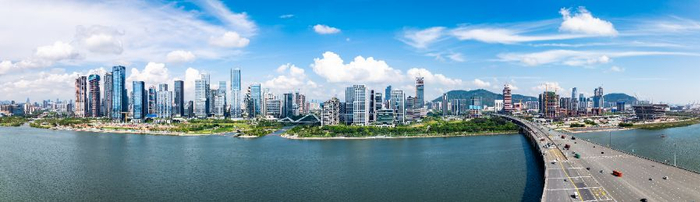
前海外资逆势增长25.4% 科技叙事与服贸开放成新引擎
2 1 Shi Ji Jing Ji Bao Dao· 2025-10-29 06:49
Core Insights - Qianhai has emerged as a key investment destination for foreign capital in China, with actual foreign investment reaching 15.27 billion yuan in the first three quarters of the year, a year-on-year increase of 25.4% [1][6] - The increase in foreign investment is driven by a shift in multinational companies' investment logic, focusing on deep integration into China's innovation system rather than merely seeking cost advantages [1][2] - The region has attracted over 12,000 foreign enterprises, with significant projects from companies like KONE, Cathay Pacific, and Fubon Bank establishing operations in Qianhai [1][4] Foreign Investment Trends - Actual foreign investment in Qianhai accounted for 56.4% of Shenzhen's total, with Hong Kong capital making up 80.3% of the foreign investment in Qianhai [1][6] - The growth rate of foreign investment in Qianhai has accelerated from 15.9% in the first half of the year to 25.4% in the third quarter, indicating increasing foreign confidence [1][6] - The service industry remains the largest sector for foreign investment in China, with actual foreign investment in the service sector reaching 410.93 billion yuan, accounting for over 70% of the total [6][8] Sector-Specific Developments - KONE Group established its Southern China headquarters in Qianhai, focusing on R&D and digital solutions rather than large-scale manufacturing [4][5] - Cathay Pacific set up its largest IT office in mainland China in Qianhai, emphasizing digital transformation and collaboration with technology firms [5][6] - The establishment of Japan's Ais Patent Office in Qianhai marks a significant step in enhancing intellectual property services, reflecting the region's growing importance in this field [8][10] Policy and Support Initiatives - Qianhai has implemented various supportive policies for foreign and Hong Kong enterprises, including financial incentives for R&D centers and technology service firms [12][16] - The local government has streamlined the application process for foreign investment incentives, significantly reducing the time and documentation required for funding applications [15][16] - Shenzhen has recognized multiple multinational companies as headquarters, providing them with various benefits, including talent rewards and customs facilitation [13][16]