智能化

Search documents
汽车周报:补贴落地践行渐进,看好预期修复下的交易机会-20251229
Shenwan Hongyuan Securities· 2025-12-29 07:16
Investment Rating - The report maintains a positive outlook on the automotive industry, particularly focusing on the mid-to-high-end and used car markets, as well as the impact of new subsidies [2]. Core Insights - The upcoming subsidies are expected to alleviate previous concerns regarding the total market volume for 2026, with a focus on companies like BYD and Geely, which cater primarily to mid-to-low-end demand [2]. - The report highlights the potential for significant performance improvement in parts manufacturers in the first half of 2026 due to subsidy support, recommending companies with strong fundamentals and low valuations [2]. - The report identifies new energy vehicle companies such as XPeng, NIO, and Li Auto, which have advantages in AI and robotics, as potential investment opportunities [2]. - The report notes a positive trend in the used car market and overall dealer profitability, recommending companies like Uxin [2]. - The report emphasizes the importance of state-owned enterprise reforms, particularly for SAIC and Dongfeng, as a key area to watch [2]. Industry Update - According to the China Passenger Car Association, the average daily retail sales of passenger cars in the third week of December reached 77,000 units, a year-on-year decrease of 11% but a month-on-month increase of 9% [2]. - The automotive industry recorded a total transaction value of 582.81 billion yuan for the week, with an industry index increase of 2.74%, outperforming the Shanghai Composite Index [6]. - The report indicates that 172 automotive stocks rose while 94 fell, with the largest gainers being Chaojie Co., Longi Machinery, and Zhejiang Sebao [11]. Market Conditions - The report notes that traditional and new energy raw material price indices have risen recently, with traditional vehicle raw materials increasing by 1.3% week-on-week and 1.0% month-on-month, while new energy vehicle raw materials rose by 5.6% week-on-week and 6.8% month-on-month [62]. - The automotive industry’s price-to-earnings ratio stands at 29.17, ranking 19th among all sectors, indicating a moderate valuation compared to the Shanghai Composite Index's 14.15 [8][10]. Key Events - The report highlights the optimization of toll road policies and the improvement of autonomous driving regulations as significant developments that will enhance the operational efficiency of the transportation system [3][4]. - The report mentions the launch of the first L3 autonomous driving license plate in China, awarded to Changan Automobile, marking a milestone in the industry [24][44].




家电行业深度研究:掘金欧美庭院经济 中国泳池机器人品牌加速出海
Xin Lang Cai Jing· 2025-12-29 06:52
Industry Overview - Pool cleaning robots are automated devices designed to clean pool water, walls, and floors by walking autonomously within the pool. Their main advantage lies in their underwater cleaning capabilities, utilizing a combination of structural, transmission, control, and cleaning components, along with multi-sensor fusion algorithms for intelligent navigation [1] Industry Scale - The global pool market is experiencing steady growth, with the total number of pools expected to increase from approximately 32.9 million in 2024 to 39.3 million by 2029, representing a CAGR of 3.6%. Pool cleaning expenditures are projected to rise from $9 billion in 2019 to $12.9 billion in 2024, and further to $16.7 billion by 2029. The global shipment of pool robots is anticipated to reach 4.5 million units in 2024, with a market size of approximately 2.48 billion yuan and a penetration rate of 26.2%. By 2029, shipments are expected to grow to 6.6 million units, nearly a 50% increase from 2024, with cordless pool robots offering significant advantages over corded models [2] Competitive Landscape - The industry is characterized by a significant concentration of market share, with the top five manufacturers holding over 70% of the market. Companies like Maytronics are experiencing a decline in competitiveness, with their market share dropping from 48% in 2022 to 34.8% in 2024. Chinese brands are rapidly expanding internationally, leveraging technological innovation and supply chain advantages to gain market share. The market features representatives across high, mid, and low-end segments, all focusing on cordless and intelligent product iterations, though their specific strategies and depths of innovation vary [3][4] Key Players - Major Chinese players include companies like Wangyuan Technology and Yuanding Intelligent, which are recognized as leading brands in the pool robot sector. Wangyuan Technology has developed a comprehensive product matrix covering cordless, corded, and handheld pool robots, emphasizing cordless products. Yuanding Intelligent, operating under the Aiper brand, is projected to achieve revenue of approximately 3 billion yuan in 2024, making it one of the fastest-growing smart cleaning brands globally. Xingmai Innovation targets the high-end market, focusing on four core areas: intelligence, mobility, cleaning capability, and user experience. Other players like Siato focus on ODM manufacturing of pool robots, emphasizing high cost-performance products priced below $500. Additionally, companies such as Dreame Technology, Ecovacs, and Roborock are entering the pool cleaning market from the home cleaning sector [4] Investment Insights - The revolution in product capabilities is expected to drive an increase in penetration rates for pool robots, which are set to achieve rapid market growth due to enhanced economic and reliability factors. Under the trends of cordless and intelligent designs, Chinese manufacturers are building core competitiveness through rapid technological iterations and deep supply chains, positioning themselves to seize opportunities in the burgeoning industry [5]

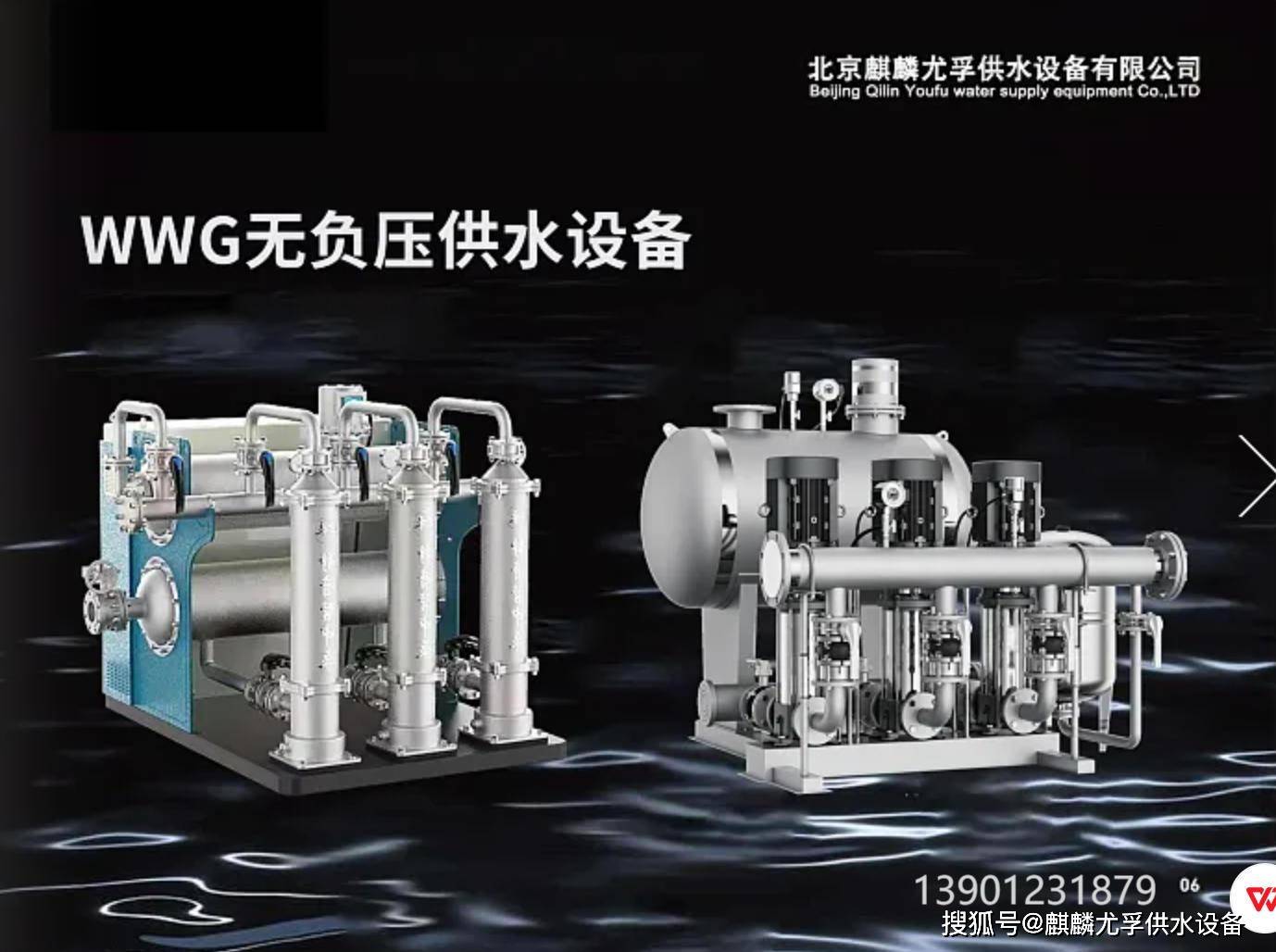
2025-2030年中国二次供水设备行业研究及前瞻分析报告
Sou Hu Cai Jing· 2025-12-29 06:30
Industry Overview - The secondary water supply system utilizes municipal water supply and self-built facilities for water storage and pressurization, addressing the insufficient pressure in municipal pipelines to meet daily water needs for high-rise residents and other users [1] - Secondary water supply equipment is designed to solve residential water issues, characterized by low investment costs, small footprint, high flexibility, and ease of operation, suitable for various high-rise residential areas, urban squares, campuses, and hospitals [1] Equipment Classification - Traditional secondary water supply methods involve using pumps and water tanks, which can lead to water quality contamination and high construction costs [2] - Advanced non-negative pressure secondary water supply systems directly draw water from municipal pipelines, reducing contamination risks and improving energy efficiency [2] Industry Chain - The top of the secondary water supply industry chain consists of raw materials like cast iron, steel, and key components such as pumps and control systems, which significantly impact the performance and lifespan of the equipment [3] - The midstream is dominated by manufacturers responsible for the design and production of various types of secondary water supply equipment [3] - The downstream involves sales to real estate developers, property management companies, and end-users in residential, commercial, and institutional settings [3] Current Industry Status - China faces immense water demand due to its large population and rapid urbanization, with total water usage reaching 5,906.5 billion cubic meters in 2023 [4] - Government policies aimed at water resource protection and efficiency have been implemented, promoting a water-saving society and alleviating supply pressures [4] Market Demand - The real estate sector's increasing project openings and completions have stimulated demand for secondary water supply equipment [5] - Infrastructure investments and urbanization efforts have led to a growing need for secondary water supply systems in high-rise and mid-rise residential areas [5] Market Size - The market size of China's secondary water supply equipment industry grew from 24.51 billion yuan in 2019 to 44.15 billion yuan in 2023 [6] - The market is expected to continue expanding, with projections indicating a market size of 135.34 billion yuan by 2031 [8] Competitive Landscape - The secondary water supply market in China is highly competitive, with numerous manufacturers across different tiers, including specialized manufacturers and local companies [6] - Leading companies with extensive networks and strong market presence are expected to capture larger market shares as industry standards rise [8] Future Trends - The industry is moving towards smart water management, integrating technologies like IoT and big data to enhance operational efficiency and water safety [8] - Innovations in high-efficiency and energy-saving systems are crucial for meeting increasing environmental standards and consumer demands [9][10] - Smaller manufacturers lacking R&D capabilities may struggle to compete, leading to increased industry consolidation [10]

第13版《新能源汽车蓝皮书》发布
Zhong Guo Qi Che Bao Wang· 2025-12-29 06:15
Core Viewpoint - The 2025 New Energy Vehicle Blue Book highlights the rapid development and significant technological innovations in China's new energy vehicle industry, emphasizing the need for innovation-driven breakthroughs, collaborative industry transformation, and sustainable development as the industry enters a new phase of high-quality growth [2][4]. Group 1: Structure of the Blue Book - The 2025 New Energy Vehicle Blue Book consists of eight sections: General Report, Industry Chapter, Policy Chapter, International Chapter, Demonstration Case Chapter, Hot Topics Chapter, Expert Insights Chapter, and Appendix [3]. - A new "Demonstration Case Chapter" has been added to showcase typical cases from local governments and enterprises in the new energy vehicle sector, highlighting advancements in electrification, intelligence, and vehicle-energy integration [3]. - The "General Report" objectively records the operational status of the new energy vehicle industry since 2024 and provides forecasts for the development during the 14th Five-Year Plan [3]. Group 2: Industry Analysis and Future Outlook - The "Industry Chapter" and "Policy Chapter" provide an objective record and rational analysis of the current state, issues, and trends in the new energy vehicle industry [3]. - The "International Chapter" analyzes the latest policy dynamics in developed countries and their implications for China, as well as the impact of external shocks under the backdrop of de-globalization [3]. - The Blue Book aims to promote high-quality development of the new energy vehicle industry by emphasizing the transition from scale expansion to a balance of scale and quality, focusing on opportunities in electrification, intelligence, low-carbon, and internationalization [4]. Group 3: Role and Impact of the Blue Book - The Blue Book has been published for 13 consecutive years, serving as an important medium for gathering industry intelligence and providing references for government decision-making, industry research, and enterprise development [4]. - It is positioned as a record and thinker of the historical development of China's new energy vehicle industry, as well as a promoter and leader of future industry development [4]. - The Blue Book will continue to fulfill its role as an industry think tank, tracking industry dynamics, exploring development patterns, and consolidating industry wisdom to inject stronger ideological momentum into high-quality development [4].

李毅中:准确把握“高端化”,防止中低端产业盲目退出
Feng Huang Wang Cai Jing· 2025-12-29 06:13
Group 1 - The 10th China Manufacturing Power Conference was successfully held in Beijing, focusing on the theme "Entity as the Root, Moving Towards New Directions" and discussing the high-quality development path of China's manufacturing industry during the 14th and 15th Five-Year Plans [1] - The conference emphasized the importance of transitioning to a modern industrial system supported by advanced manufacturing, highlighting the need for intelligent, green, and integrated approaches in industrialization [3] - The concept of "integration" was introduced, stressing the blurring lines between secondary and tertiary industries, and the necessity for multi-modal integration paths to enhance the modern industrial system [3] Group 2 - The importance of accurately understanding the connotation of "high-end" was highlighted, with a focus on technological innovation to optimize industrial and product structures, while ensuring the stability of supply chains and employment [4] - The need to integrate into global value chains, supply chains, and industrial chains was emphasized, advocating for a balanced approach to high-end industry development without blindly eliminating mid-to-low-end industries [4] - The goal for the 15th Five-Year Plan period is to achieve qualitative improvements and reasonable quantitative growth in the economy, addressing diverse economic and social needs [4]
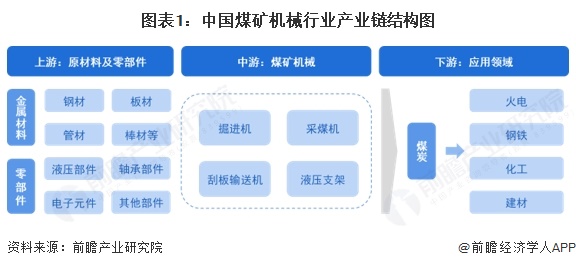
【干货】2025年煤矿机械产业链全景梳理及区域热力地图
Qian Zhan Wang· 2025-12-29 06:09
Core Insights - The coal mining machinery industry is experiencing a shift towards intelligent, green, and globalized operations, with major investments from leading companies and energy groups focusing on high-end equipment projects and technological collaborations [11]. Industry Overview - The coal mining machinery industry consists of three main segments: upstream (raw materials and components), midstream (manufacturing of coal mining equipment), and downstream (coal industry applications) [2][4]. - Upstream suppliers include companies like Benxi Steel and Hengli Hydraulic, while midstream manufacturers include Zhengzhou Coal Mining Machinery and SANY Heavy Industry [4][5]. - The downstream sector primarily consists of coal enterprises such as China Coal Energy and Datang Power [4][5]. Regional Distribution - Jiangsu Province is identified as the primary hub for coal mining machinery companies, with significant activity also in Shandong, Shaanxi, and Shanxi provinces [6]. - The coal mining machinery industry is well-established in Liaoning, Shanxi, and Beijing, covering all segments of the supply chain [9]. Investment Trends - Recent investments in the coal mining machinery sector focus on smart technology, green initiatives, and international expansion [11]. - Notable investments include: - In 2023, Shanxi Coal Machinery invested 2.1 billion yuan in a smart high-end coal machinery project, expected to generate an annual output value of 3 billion yuan [13]. - In 2023, Shaanxi Coal Group acquired Xuzhou Coal Mining Machinery for 1.8 billion yuan, increasing its market share in intelligent conveyor systems from 16% to 27% [13]. - In 2025, XCMG launched the world's first unmanned electric mining truck, aiming for zero-carbon operations [13].



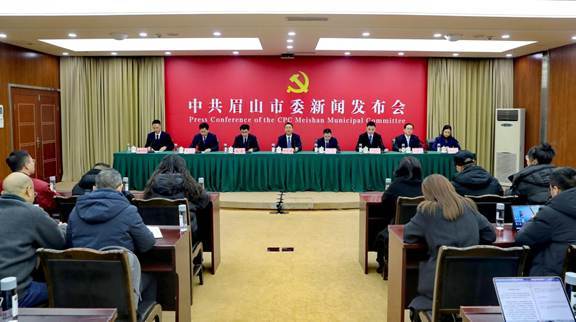
眉山新闻发布会:解码“十五五”制造业高端智能绿色发展新路径
Xin Lang Cai Jing· 2025-12-29 04:48
Core Viewpoint - The news conference highlighted the strategic planning of Meishan City for the development of its manufacturing industry, emphasizing the commitment to advancing industrial growth and high-quality development through technological innovation [5] Group 1: Manufacturing Development - During the 14th Five-Year Plan, Meishan implemented a "Manufacturing Strong City" strategy, achieving significant industrial growth, with an average annual growth rate ranking among the top in the province and a notable increase in GDP contribution [3] - The industrial structure has been optimized, with the new energy and new materials industry surpassing 100 billion yuan, establishing the world's largest single battery production base, and nurturing several advanced manufacturing clusters at national and provincial levels [3] - The city has built the first "Smart Transformation" promotion center in the province and established the world's first "lighthouse factory" in the photovoltaic battery sector, leading in green manufacturing system construction [3] Group 2: Future Development Plans - For the 15th Five-Year Plan, Meishan aims to enhance high-end, intelligent, and green manufacturing, focusing on new industrialization and developing new productive forces [4] - Key initiatives include strengthening the "1+3" industrial cluster led by new energy and new materials, integrating into the Chengdu-Chongqing economic circle, and accelerating the construction of national-level industrial clusters in lithium batteries and photovoltaics [4] - The city plans to establish a "1+N" pilot transformation system to promote the rapid conversion of cutting-edge technologies like solid-state batteries and perovskite batteries [4] Group 3: Smart and Green Manufacturing - Meishan will implement comprehensive "Smart Transformation" diagnostics, build advanced smart factories and digital workshops, and significantly increase the CNC rate of key processes in industrial enterprises [4] - The city will promote green manufacturing by constructing more green factories and parks, optimizing energy structures, and exploring green electricity supply models [4] - A recycling system for lithium battery materials will be established, promoting resource utilization of industrial waste and accelerating the development of a circular economy industrial park [4]
2025煤炭保供与转型底气足
中国能源报· 2025-12-29 03:58
Core Viewpoint - The coal industry in 2025 shows a mix of impressive achievements and potential challenges, with a historical high in coal supply but a notable decline in consumption for the first time in nearly nine years [1]. Group 1: Production and Supply - From January to November 2025, the national industrial raw coal output reached 4.4 billion tons, a year-on-year increase of 1.4%, with expectations for a record high in annual raw coal supply [1]. - Major coal-producing regions such as Shanxi, Shaanxi, and Xinjiang saw raw coal production increase by 2.4%, 2.6%, and 2.6% respectively, while Inner Mongolia's production is expected to exceed 1.2 billion tons despite a decrease compared to last year [1]. - The "rich mine precision mining" policy has led to a 6.3% increase in Guizhou's raw coal output, while some regions like Jiangxi have reduced production by 37.6% due to capacity withdrawal [1]. Group 2: Policy and Regulation - Policy adjustments have significantly influenced coal production, with the National Energy Administration's July 2025 notice targeting overproduction and promoting stable coal supply [2]. - The "anti-involution" policy has effectively regulated production order in major coal-producing areas, leading to a five-month consecutive year-on-year contraction in coal supply and a rebound in coal prices [2]. - The establishment of a capacity reserve system is underway, aiming for a reserve capacity of over 90 million tons by 2026, enhancing the resilience of coal supply [2]. Group 3: Industry Transformation - The modern coal chemical industry and coal-electricity joint operation models have matured, with an expected annual coal conversion of approximately 16 million tons of standard coal, becoming essential to the petrochemical sector [4]. - The coal industry is advancing in intelligent and green development, with over 900 intelligent coal mines established, accounting for nearly 25% of total coal mines, and over 50% of mining capacity now being smart mining [4]. - The National Energy Administration's guidance on integrating coal and renewable energy emphasizes the development of new energy resources in coal mining areas, with many coal companies expanding into solar, wind, and energy storage sectors [4]. Group 4: Market Dynamics and Future Outlook - The coal market sentiment remains complex, with consensus on coal consumption entering a peak plateau, leading to short-term supply-demand fluctuations and a gradual long-term decline in demand [5]. - The coal production focus is shifting towards resource-rich western regions, with Shanxi, Inner Mongolia, Shaanxi, and Xinjiang remaining the main supply areas, while older mining regions face challenges in resource continuity and transformation [5]. - As the industry moves into 2026, energy supply security and green transformation will continue to be key topics, with coal companies expected to drive high-quality development through innovative practices [5].

国金证券:家电行业掘金欧美庭院经济 中国泳池机器人品牌加速出海
智通财经网· 2025-12-29 03:44
Core Insights - The report from Guojin Securities highlights that the revolution in product capabilities is driving an increase in penetration rates for pool cleaning robots, leading to rapid market growth due to their "economical and reliable" features [1][4]. Industry Overview - Pool cleaning robots are automated devices designed to clean pool water, walls, and floors by moving autonomously. Their main advantage is the ability to clean underwater, utilizing a combination of structural, transmission, control, and cleaning components, along with multi-sensor fusion algorithms for intelligent navigation [2]. Market Size - The global pool market is steadily growing, with the total number of pools expected to reach approximately 32.9 million by 2024 and further increase to 39.3 million by 2029, representing a CAGR of 3.6%. Pool cleaning expenditures are projected to rise from $9 billion in 2019 to $12.9 billion by 2024, and reach $16.7 billion by 2029 [3]. Market Growth Drivers - The global shipment of pool robots is expected to reach 4.5 million units in 2024, with a market size of approximately 2.48 billion yuan and a penetration rate of 26.2%. The core driver of demand is the replacement of manual labor. By 2029, shipments are anticipated to grow to 6.6 million units, nearly a 50% increase from 2024. Cordless pool robots offer advantages such as ease of use and flexibility compared to corded models [4]. Competitive Landscape - The industry is highly concentrated, with the top five manufacturers holding over 70% of the market share. Overseas competitors, such as Maytronics, are experiencing a decline in market share, dropping from 48% in 2022 to 34.8% in 2024. Chinese brands are rapidly expanding internationally, leveraging technological innovation and supply chain advantages to gain market share and influence [5]. Key Players - Major Chinese players include: - Wangyuan Technology and Yuanding Intelligent, which are leading brands in pool robots with comprehensive R&D capabilities and a full product matrix including cordless and corded models. They focus on technological breakthroughs in underwater acoustic positioning and AI vision [6]. - Aiper, operated by Yuanding Intelligent, is projected to achieve revenue of approximately 3 billion yuan in 2024, becoming one of the fastest-growing smart cleaning brands globally [6]. - Xingmai Innovation targets the high-end market, emphasizing technology development and product iteration across four core areas: intelligence, mobility, cleaning ability, and user experience [6]. - Siaotuo focuses on ODM manufacturing of cost-effective underwater cleaning robots, targeting the mid-to-low-end market with products priced below $500 [6]. - Companies like Duzhimi Technology, Ecovacs, and Roborock are also entering the pool cleaning sector from the household cleaning robot market [6].

科尼赛克创始人:柴油混动是完美电动汽车替代方案,95%场景电池驱动,长途才靠柴油【附新能源汽车行业市场分析】
Qian Zhan Wang· 2025-12-29 03:43
Core Viewpoint - Christian von Koenigsegg, founder of Koenigsegg, proposes that diesel hybrid technology could be a "perfect alternative" to pure electric vehicles, particularly for long-distance travel, suggesting that a balanced approach may be more effective than solely focusing on electric vehicles [2][3]. Group 1: Diesel Hybrid Concept - Koenigsegg's diesel hybrid model is designed for specific usage scenarios, where 95% of daily driving is electric, achieving zero emissions, while the diesel engine is only activated for the remaining 5% of long-distance travel to alleviate range anxiety [2]. - This design allows for a significant reduction in battery size, potentially down to one-third of current pure electric models, resulting in a weight reduction of approximately 300 kilograms, which enhances energy efficiency and reduces environmental impact during battery production and recycling [2]. Group 2: Renewable Diesel Fuel - Koenigsegg emphasizes that the diesel component must utilize renewable diesel made from waste animal and plant oils, which can achieve carbon neutrality or even negative emissions, making the overall carbon footprint comparable to or better than that of pure electric vehicles [3]. Group 3: Market Trends and Growth - The global electric vehicle market reached a size of $505.27 billion in 2023, with a robust compound annual growth rate (CAGR) of 35.41% over the past five years, indicating strong growth in the sector [3]. - China, as the largest electric vehicle market, saw sales surge from 12,800 units in 2012 to 9.495 million units in 2023, with a projected 35.5% year-on-year growth to 12.866 million units in 2024 [5]. - By 2024, the penetration rate of electric vehicles in China is expected to reach 44.6%, with projections indicating it could exceed 50% in certain months of 2025, marking a shift from supplementary products to mainstream choices [7]. Group 4: Industry Perspectives - Experts, including Ouyang Minggao, an academician at the Chinese Academy of Sciences, assert that electrification is a well-established strategy that should not be altered, emphasizing the need to focus on next-generation technologies like solid-state batteries [10]. - BYD's chairman Wang Chuanfu highlights that the trend towards electric vehicles is irreversible, noting the rapid pace of change in the Chinese market compared to international counterparts [10]. - Magna's global R&D VP, Joerg Groten, confirms that the future of the automotive industry is undoubtedly electric [10].