国内国际双循环

Search documents
央行副行长陆磊最新发声
Jin Rong Shi Bao· 2025-04-23 14:30
Core Points - The People's Bank of China introduced the "Action Plan for Further Enhancing the Convenience of Cross-Border Financial Services in Shanghai International Financial Center," focusing on strengthening Shanghai's role as an international financial hub and improving cross-border financial service convenience [1][2] Summary by Sections Five Key Areas of Measures to Optimize Cross-Border Financial Services - The Action Plan aims to enhance cross-border capital flow efficiency, reduce trade costs, and support enterprises in participating in international economic competition and cooperation [2][3] - It includes five main areas: improving cross-border settlement efficiency, optimizing foreign exchange risk management, strengthening financing services, enhancing insurance support, and improving comprehensive financial services [3] Enhancing Shanghai's International Financial Center Competitiveness - The Action Plan is significant for increasing the internationalization level of Shanghai's financial center, directly benefiting enterprises going global by optimizing cross-border fund management and reducing international operational costs [4][5] - It promotes a collaborative development model of "finance + industry," supporting enterprises in integrating into global supply chains [4] Global Resource Allocation Function - The plan aims to deepen financial system openness and enhance the internationalization of financial infrastructure, supporting the "Belt and Road" initiative and improving the efficiency of long-term capital allocation [5][6] - It also seeks to promote the international use of the Renminbi by enhancing its cross-border usage and payment efficiency [5] International Service Level of Financial Institutions - The policy will provide Chinese financial institutions with opportunities to offer more efficient services to enterprises going global, enhancing their global competitiveness and resource allocation efficiency [6] - It emphasizes the importance of risk prevention and control, utilizing technologies like big data and blockchain to improve financial regulatory capabilities [6]
中共中央、国务院印发!
证券时报· 2025-04-21 09:33
Core Viewpoint - The implementation of the Free Trade Zone (FTZ) enhancement strategy is a significant measure to promote high-level opening up and high-quality development in China [1][2]. Group 1: Strategic Objectives - The FTZ enhancement strategy aims to establish a robust policy framework focusing on trade, investment, capital flow, transportation, personnel mobility, and data security [2]. - The strategy emphasizes the integration of technological and industrial innovation, aiming to elevate the capabilities of modern industrial clusters and accelerate the development of new productive forces [2]. Group 2: Trade and Investment Facilitation - The strategy seeks to enhance the comprehensive competitiveness of foreign trade, optimize goods trade, and invigorate service trade, while supporting the innovation of digital trade [2][3]. - It allows enterprises within the FTZ to engage in physical blending of gold-bearing minerals under different tax codes and explores the establishment of a "white list" system for imported research and development items in the biopharmaceutical sector [2]. Group 3: Innovation and Industry Development - The strategy promotes the integration of innovation chains and industrial chains, encouraging the development of advanced industrial clusters and supporting participation in national-level industrial cluster construction [3]. - It supports the testing and demonstration applications of intelligent connected vehicles and the establishment of civil unmanned aerial vehicle testing bases [3]. Group 4: Data and Financial Services - The strategy aims to facilitate efficient, convenient, and secure data flow, establishing rules for the data factor market and enhancing cross-border data flow [4]. - It encourages financial innovation and the expansion of financial services to the real economy, including pilot programs for qualified foreign limited partners and the opening of specific futures markets [4]. Group 5: Implementation and Coordination - Local governments and relevant departments are urged to strengthen their responsibilities and increase investments in projects, funds, and talent to ensure the effective implementation of the FTZ enhancement strategy [5]. - The Ministry of Commerce is tasked with coordinating efforts and promoting the replication of successful experiences from the FTZ [5].


观察│“三博会”创新办会的底气和锐气
Nan Fang Nong Cun Bao· 2025-04-21 08:35
Core Viewpoint - The 14th Guangdong Modern Agricultural Expo, referred to as "Sanbohui," successfully concluded in Dongguan, showcasing innovations in agriculture and food industries, with a focus on AI applications and market integration [10][12][14]. Group 1: Event Overview - The "Sanbohui" was held alongside the 9th China International Food and Ingredients Expo and the 3rd China International Prepared Food Industry Expo, attracting 1,351 exhibitors from 31 provinces and over 20 countries, with more than 20,000 attendees, including around 7,000 buyers [15][16]. - The event featured over ten discussion activities focusing on AI applications, food safety, and the development of local economies, demonstrating a commitment to innovative and practical event organization [17][18]. Group 2: Youth Engagement and Cultural Integration - The expo adopted a modern approach by creating immersive cultural experiences such as "Internet celebrity markets" and "intangible cultural heritage food streets," effectively attracting younger audiences [27][28]. - The event included an "open mic" stage where various stakeholders shared local specialties and promoted traditional food techniques, enhancing audience engagement [31][32]. Group 3: AI and Digital Agriculture - The "Sanbohui" marked the first AI agricultural food expo in China, showcasing AI applications like unmanned restaurants and agricultural drones, highlighting the future direction of agricultural modernization [53][56]. - The event emphasized the integration of AI with agriculture, including the establishment of data platforms that improved pest diagnosis accuracy to 95% and increased production efficiency by 30% [68][69]. Group 4: Market Integration and Cooperation - The expo promoted a "four sharing" model for inter-provincial agricultural cooperation, focusing on shared market systems, production facilities, storage, and research platforms [80][81]. - In response to the challenges posed by the US-China trade war, the event facilitated discussions on shifting agricultural exports to domestic markets and exploring new international markets [85][86]. Group 5: Food Safety and Prepared Food Industry - The "Sanbohui" addressed critical challenges in the prepared food industry, focusing on food safety standards and the development of a comprehensive cold chain system [120][121]. - Guangdong's leadership in the prepared food sector was highlighted, with initiatives aimed at enhancing production standards and expanding market reach [124][125]. Group 6: Branding and Market Development - The event showcased the "Starry Avenue," featuring regional public brands of agricultural products, emphasizing the importance of branding in agricultural market development [132][134]. - The "12221" market system, initiated to address sales challenges for local products, has been pivotal in establishing a comprehensive service platform for modern agriculture in Guangdong [137][138].

一季度全国铁路客货运实现双增长
Bei Jing Shang Bao· 2025-04-17 16:08
客运方面,一季度,全国铁路旅客发送量再破纪录,达到10.74亿人次,同比增长5.9%,创历史同期新 高。其中,3月份全国铁路发送旅客3.37亿人次,同比增长4.9%。 2025年一季度,全国铁路客流持续增长,货物运量稳步提升,为畅通国内国际双循环、保障国民经济平 稳运行提供有力支撑。4月17日,据中国国家铁路集团有限公司(以下简称"国铁集团")消息,2025年 一季度,全国铁路累计发送旅客10.74亿人次,同比增长5.9%,创同期历史新高。货运方面,一季度, 全国铁路货运发送量完成12.53亿吨,同比增长1%。其中,3月份全国铁路发送货物4.45亿吨,同比增长 2.4%。 旅客发送量破10亿 国铁集团有关负责人介绍,具体来看,客运能力持续增强。一季度,铁路部门用好2024年新开通的线 路、车站和新配置的动车组装备,充分发挥高铁成网运营优势,有效提升客运能力,一季度全国铁路日 均开行旅客列车11266列,同比增长7.4%。研发投用适老化旅游列车,打造"熊猫专列""伊春号""大河之 南号""齐鲁一号"等品牌,与沿线酒店、景区联动,拓展旅游消费新场景,一季度全国铁路累计开行旅 游列车187列,同比增长30%,为旅游 ...
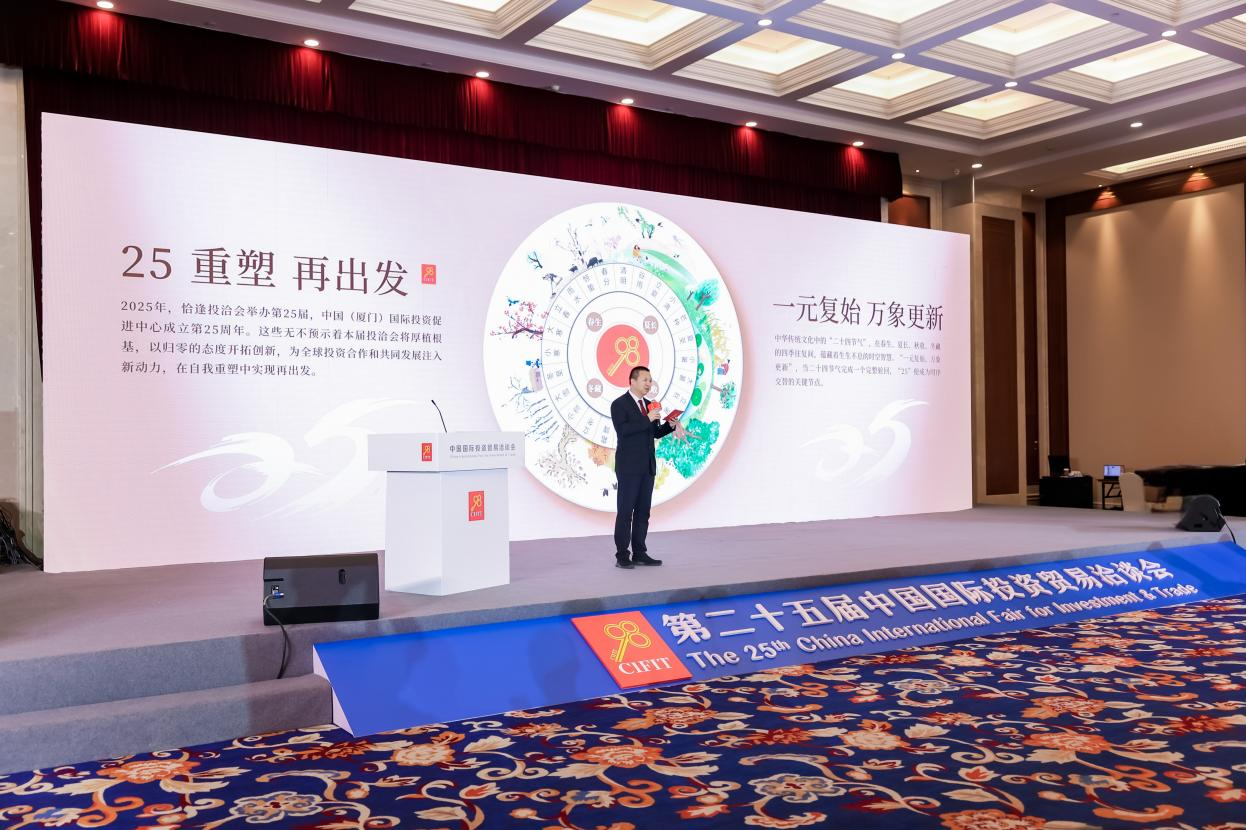
商务部投资促进局于广生:第25届投洽会上国际合作主题将更突出
Bei Ke Cai Jing· 2025-04-17 12:24
Core Viewpoint - The 25th China International Investment and Trade Fair (CIFIT) aims to enhance global investment cooperation and promote China's role in international investment, showcasing its commitment to open cooperation and free trade [3][5]. Group 1: Event Overview - The first promotional event for the 25th CIFIT was successfully held on April 17, 2023, in Beijing, attended by representatives from 21 countries and regions [1]. - The main event will take place from September 8 to 11, 2023, in Xiamen, Fujian, featuring various forums and exchange activities [3]. Group 2: Economic Context - The Deputy Director of the Cooperation Department of the Ministry of Commerce, Cao Wen, highlighted the rising instability and uncertainty in the global economy, emphasizing the need for countries to work together for mutual development and prosperity [3]. - Since 2013, Chinese enterprises have contributed over $550 billion in various taxes to host countries, creating an average of 2 million jobs annually [3]. Group 3: Investment Contributions - Chinese investment not only brings capital, technology, and management experience but also enhances local human resource development, industrial cooperation, and global market opportunities, thereby improving the welfare and economic development of host countries [4]. - The CIFIT will further increase the focus on Chinese investment, innovating and upgrading its activities to better serve international cooperation [4]. Group 4: CIFIT Characteristics - The CIFIT will feature a more pronounced dual investment orientation, a greater emphasis on financial capital, and a stronger theme of international cooperation, integrating exhibition and negotiation [5]. - The event will revolve around three main sections: "Investing in China," "Chinese Investment," and "International Investment," with specialized exhibition areas and various investment cooperation activities planned [5].
沿海省份周末开会 研究支持进出口企业相关政策
Zhong Guo Jing Ying Bao· 2025-04-15 14:58
近日,《中国经营报》记者在第五届海南消博会上获悉,一些沿海省份或将出台支持政策,以引导、帮 助企业在外贸与内销之间寻找更好发展机遇。 在当天的消博会上,市场监管总局认证监管司副司长杨冬介绍了"质量认证支持外贸企业出口转内销一 揽子政策"。同时,浙江省商务厅党组成员、副厅长陆勇介绍了浙江省帮助进出口企业的经验和做法。 今年一季度,广东、江苏、浙江、上海、北京、山东、福建七大省市合计进出口7.78万亿元,占全国进 出口总值的四分之三,保持了稳定增长。 近期,商务部已启动推进内销的相关措施。商务部方面表示,将坚决贯彻落实党中央、国务院决策部 署,稳步推进内外贸一体化工作,持续举办"外贸优品中华行"活动,搭建外贸企业拓展内销的平台,加 大在市场准入、渠道开拓、财政金融、服务保障等方面对外贸企业拓展内销的支持力度,促进内外贸渠 道对接、品牌对接、产销对接、标准对接。 4月14日,在消博会现场,商务部副部长盛秋平向记者表示,"外贸优品中华行"活动将促进内外贸融 合,有效应对国际国内环境的深刻变化。"消博会既涵盖消费品的出口,也涉及消费品的进口,真正有 助于形成国内国际双循环相互促进的新发展格局。" 企业迎来更多出口机遇 ...
东莞:争取到2027年“一带一路”市场出口占比达30%以上
news flash· 2025-04-14 06:20
Core Viewpoint - Dongguan's government has issued a work plan to promote stable growth in foreign trade, aiming to mitigate risks and external shocks while enhancing trade dynamics and expectations [1] Group 1: Objectives and Goals - The plan aims for exports to the "Belt and Road" markets to account for over 30% by 2027 [1] - It emphasizes coordinated development between trade and industry, imports and exports, and outbound and inbound investments [1] Group 2: Economic Strategy - The strategy focuses on significantly enhancing the advantages of an open economy [1] - There is an emphasis on optimizing the structure of foreign trade and improving supply chain security [1] Group 3: Development Outcomes - The plan aims for notable achievements in the dual circulation development model, enhancing both domestic and international economic interactions [1]
中国银行山东省分行:“单证巴士”赋能外贸企业扬帆出海
Qi Lu Wan Bao· 2025-04-11 03:40
德州某主营化学产品、化工和新能源材料的公司,是当地重点外贸企业集团之一,企业主要产品市场占 有率逐年提高,海外市场竞争力不断提升。为助力企业拓展海外市场,提升出口收汇质效,中国银行德 州分行成立国际业务专项小组,与企业外贸、财务人员建立业务沟通群,第一时间响应企业出口交单业 务需求,并指定业务专员,负责企业单据审核、寄单等工作,确保出口项下提交的单据相符,保障企业 出口收汇权益。中国银行以一如既往地快速响应和专业服务,助力企业在境外不断拓市场、增订单,赢 得了企业的认可和赞誉。 近年来,中国银行山东省分行持续推进"单证巴士"主题活动,立足企业视角,关注企业国际贸易结算中 的难点、堵点;同时创新服务机制,聚焦各地特色外贸客群,直面客户诉求,提供了个性化专业金融服 务。下一步,中国银行山东省分行将依托"单证巴士"品牌活动,持续提升跨境金融产品服务能力,为助 力打造山东高水平对外开放新高地贡献中行力量。 中国银行山东省分行积极服务山东高水平对外开放,充分发挥全球化综合化优势,高质量服务外贸企 业,致力于提升外贸企业"走出去"能力,助力外贸企业破局突围、扬帆出海。 德州是京津冀协同发展的重要节点城市,具备扎实的制造业 ...
李迅雷专栏 | 升级的关税战:历史的偶然与必然
中泰证券资管· 2025-04-09 10:57
Core Viewpoint - The article discusses the escalating import tariffs imposed by the United States on various trading partners, particularly focusing on the significant increases in tariffs against China and other countries, which could lead to the highest actual tariff rates in over a century [2][3][6]. Group 1: Tariff Increases - The U.S. has proposed a "reciprocal tariff" plan, imposing tariffs ranging from 20% to 49% on various countries, with a specific 34% tariff on China [2][6]. - If implemented, the actual tariff rate on all U.S. imports could rise from 2.3% at the end of 2024 to approximately 26%, marking a significant increase [2][3]. - The tariffs on China alone could exceed 70% when combined with previous tariffs from 2018, indicating a severe escalation compared to the trade war initiated in 2018 [2][3]. Group 2: Economic Implications - The increase in tariffs is expected to exacerbate inflation in the U.S., which is already experiencing high inflation rates, potentially leading to higher consumer prices [9][10]. - The effectiveness of increased tariffs in generating substantial government revenue is questioned, as exporters may reduce shipments to the U.S. if profitability declines [9][10]. - The challenges of revitalizing U.S. manufacturing are highlighted, particularly due to the high labor costs compared to emerging economies, making it difficult to compete effectively [9][10]. Group 3: Global Economic Impact - The trade war initiated by the U.S. is likely to harm not only the U.S. economy but also increase the risk of a global economic recession due to disrupted supply chains and rising transaction costs [10][11]. - Historical context is provided, noting that the current geopolitical tensions and economic disparities have roots in long-standing global dynamics, including the rise of China and the decline of traditional Western powers [11][13]. Group 4: China's Response and Strategy - In response to U.S. tariffs, China has implemented a 34% tariff on all U.S. goods, indicating a restrained approach while leaving room for negotiation [6][22]. - The article emphasizes the need for China to reduce reliance on external demand and focus on domestic consumption to stabilize its economy amid rising tariffs [22][24]. - The shift towards enhancing domestic demand is underscored, with the government prioritizing consumption as a key strategy to counteract the negative effects of tariffs [32][34]. Group 5: Future Economic Strategies - The article suggests that China should strengthen regional alliances and enhance trade cooperation with countries in Southeast Asia and South America to mitigate the impact of U.S. tariffs [25][29]. - It advocates for a focus on domestic economic reforms, including income redistribution and fiscal policy adjustments to stimulate consumption and support lower-income groups [39][41]. - The potential for monetary policy adjustments, such as interest rate cuts, is discussed as a means to alleviate economic pressures resulting from the trade war [42][44].

又一家锂电上市公司冲刺A+H!
起点锂电· 2025-04-05 06:30
4月1日晚间,A股新能源材料上市公司中伟股份(300919)公告,为深入推进"发展全球化"战略部署,打造国际化资本运作平台,助力全球 产业布局持续升维,加快构建国内国际双循环格局。经公司充分研究论证,拟发行H股股票并在香港联合交易所有限公司主板挂牌上市。 今年2月,有报道称,中伟股份正与摩根士丹利、华泰证券合作,筹划在香港上市,计划募资4亿至5亿美元。 关于海外印尼镍冶炼项目的进展方面,中伟股份此前表示,公司积极推进印尼各镍中成品生产基地建设及运营,稳定原材料供应体系并提高企 业整体话语权,在保障体量增长的同时提升风险抵御能力。从冶炼端看,公司目前已在印尼建立四大镍原料产业基地,建成及在建产能规模近 20万金属吨;其中,德邦、翡翠湾项目年产冰镍5.5万金属吨,全部实现满产;NNI8万金属吨冰镍项目以及印尼中青新能源6万金吨冰镍项目 均处于产能爬坡阶段。 2024年1-9月,中伟股份在印尼镍产品整体产出超6万金属吨,后续随着印尼镍冶炼项目产能放量,将持续推动公司盈利提升。从资源端看, 公司持续完善镍资源布局,与印尼具有镍资源开采权的相关企业通过共同投资、获取包销权等方式,共同参与红土镍矿的开发与冶炼,共建全 链 ...