
新零售

Search documents
森马服饰(002563):Q2控费效果不佳,但终端增速良好
HUAXI Securities· 2025-08-23 15:35
Investment Rating - The investment rating for the company is "Buy" [1] Core Views - The company has shown revenue growth in the first half of 2025, with total revenue of 6.149 billion, a year-on-year increase of 3.26%, but net profit has decreased significantly by 41.2% to 325 million due to rising expense ratios and asset impairment provisions [2] - The company plans to distribute an interim dividend of 0.15 yuan per share, with a payout ratio of 82.9% and a dividend yield of 5.41% [2] - The company is expanding its investment in the Shanghai industrial park project, increasing the total planned investment from 1.006 billion to 1.5 billion yuan [2] Summary by Sections Financial Performance - In H1 2025, the company's revenue, net profit attributable to the parent, and operating cash flow were 6.149 billion, 325 million, and -277 million yuan respectively, with a significant decline in net profit margin due to increased expenses and asset impairments [2] - The company's gross margin improved to 46.7%, a year-on-year increase of 0.6 percentage points, while the net profit margin decreased to 5.3%, down 4 percentage points [5] Brand and Channel Analysis - The main brand, Semir, and the children's brand, Balabala, reported revenues of 1.72 billion and 4.31 billion yuan respectively, with year-on-year growth of -4.98% and 5.97% [3] - The company has a total of 8,236 stores, with a net closure of 89 stores in the first half of 2025, while direct sales and store efficiency have both increased [4] Inventory and Receivables - The company's inventory at the end of H1 2025 was 3.326 billion yuan, an increase of 16.7% year-on-year, with inventory turnover days decreasing to 187 days [6] - Accounts receivable increased by 14.6% to 940 million yuan, with turnover days increasing by 4 days to 37 days [7] Investment Recommendations - Short-term challenges include high costs related to store expansion and weak franchise shipments compared to retail sales, indicating inventory pressure in the franchise sector [8] - Medium-term growth drivers include overseas expansion, partnerships with brands like PUMA and ASICS, and new retail initiatives [8] - Long-term potential for profit recovery exists as the company focuses on cost control and reducing discounts in online sales [8]

永辉超市“模仿秀”:学习胖东来模式却陷入亏损困境
Sou Hu Cai Jing· 2025-08-23 14:36
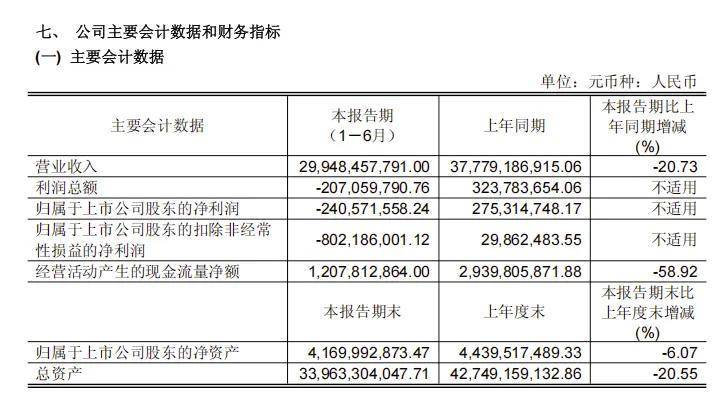
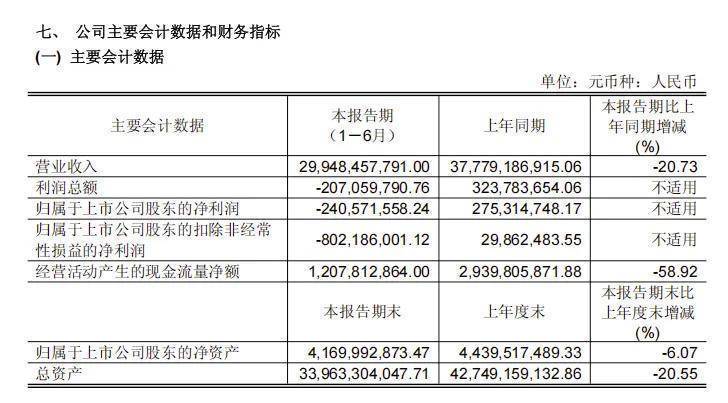
Core Viewpoint - Yonghui Supermarket has reported a significant decline in its financial performance for the first half of 2025, with a revenue drop of 20.73% year-on-year and a shift from profit to a net loss of 2.41 billion yuan, contrasting sharply with a profit of 2.75 billion yuan in the same period last year [1][2]. Financial Performance - Revenue for the first half of 2025 was 29.95 billion yuan, down from 37.78 billion yuan in the previous year, marking a decrease of 20.73% [2]. - The total profit for the period was -207.06 million yuan, compared to a profit of 323.78 million yuan last year [2]. - The net profit attributable to shareholders was -240.57 million yuan, a stark contrast to the previous year's profit of 275.31 million yuan [2]. - The net cash flow from operating activities decreased by 58.92%, from 2.94 billion yuan to 1.21 billion yuan [2]. - The net assets attributable to shareholders decreased by 6.07%, from 4.44 billion yuan to 4.17 billion yuan [2]. - Total assets fell by 20.55%, from 42.75 billion yuan to 33.96 billion yuan [2]. Strategic Decisions - Yonghui Supermarket has aggressively closed 227 stores in the first half of 2025 as part of its transformation strategy, which has led to a sharp decline in revenue [1]. - The company has implemented a store renovation plan, with 124 stores completed and reopened by June 30, 2025; however, the revenue increase from these stores has not compensated for the losses from closures [3]. - The shift to a supplier naked procurement model aimed at enhancing product quality has resulted in a decline in gross margin and consumer trust, as new suppliers have struggled to meet the company's needs [2][3]. Market Positioning - Yonghui Supermarket's transformation efforts have been criticized for lacking a clear strategic direction, leading to ineffective adaptation of successful models from competitors like Pang Donglai [4]. - The company has failed to leverage its extensive offline store network and fresh supply chain advantages to create a cohesive online-offline retail ecosystem [4]. - Yonghui's attempt to replicate Pang Donglai's success without considering regional consumer habits and market dynamics has resulted in a misalignment of its transformation strategy [5].


小米之家昆明公园1903汽车旗舰店开业,王晓雁:今年年底门店数量将突破2万家
Xin Lang Ke Ji· 2025-08-23 12:18
Core Insights - Xiaomi has opened its largest store in Yunnan, the Xiaomi Home Kunming Park 1903 Automotive Flagship Store, which features a castle-style architecture and is referred to as the "most beautiful Xiaomi Home" by fans [1][3] Group 1: Store Features and Offerings - The Kunming Park 1903 store spans 1,600 square meters and includes a variety of products such as smartphones, AIoT devices, and home appliances, with five Xiaomi cars, including the YU7, prominently displayed [3] - The second floor is dedicated to smart home appliances and a customer service center, along with a coffee and tea area for customers [3] - The store aims to serve not only as a sales space but also as a social hub for users to explore and share experiences, embodying the concept of a technology living room [3] Group 2: Expansion Plans and Strategic Goals - By the end of this year, Xiaomi plans to exceed 20,000 Xiaomi Home stores, marking a significant milestone in the brand's image upgrade process [3] - The company aims to upgrade 3,000 stores to enhance their locations, sizes, and product variety, with over 200 stores integrating the "people, vehicles, and home" ecosystem for a comprehensive product experience [3] - Additionally, Xiaomi has established over 2,000 integrated sales and service stores nationwide to improve customer service and experience [3]


永辉超市学胖东来模式,缘何转型之路越走越亏?
Sou Hu Cai Jing· 2025-08-23 07:48
Core Viewpoint - Yonghui Supermarket, once a leader in the retail industry, is facing severe challenges as revealed by its latest financial report, showing a significant decline in revenue and a shift from profit to loss [1][2]. Financial Performance - For the first half of 2025, Yonghui reported revenue of 29.95 billion, a year-on-year decrease of 20.73% from 37.78 billion [1]. - The net profit turned from a profit of 275 million in the same period last year to a loss of 240 million [1]. - The total assets decreased by 20.55% to approximately 33.96 billion, and net assets fell by 6.07% to about 4.17 billion [1]. Strategic Transformation - The company attributed its performance decline to a "deep transformation" initiated in the second half of 2024, which involved closing 227 underperforming stores [2][3]. - Yonghui's approach to transformation has been criticized as overly aggressive, lacking the careful analysis seen in the successful model of competitor Pang Donglai [2][5]. - The company attempted to implement a supplier naked procurement model but faced challenges, leading to a decline in overall gross margin due to the loss of quality suppliers [2][4]. Store Adjustments and Online Business - As of June 30, 2025, 124 stores had completed renovations, with some seeing significant sales increases; however, the overall revenue from these adjustments could not compensate for the losses from closed stores [3][4]. - Yonghui's online business reported a reduction in losses of 34.75 million compared to the previous year, but online revenue only accounted for 18.33% of total revenue, raising concerns about its growth potential [4]. Market Positioning and Competitive Analysis - Yonghui's transformation strategy has been criticized for failing to consider regional market differences and consumer habits, leading to a "poor fit" with the adopted model from Pang Donglai [5]. - The company has not effectively leveraged its strengths in offline retail and fresh supply chains, resulting in operational challenges and a loss of competitive edge [4][5].
丽尚国潮: 丽尚国潮2025年半年度报告
Zheng Quan Zhi Xing· 2025-08-22 12:10
Core Viewpoint - The report highlights the financial performance and operational strategies of Lanzhou Lishang Guochao Industrial Group Co., Ltd. for the first half of 2025, indicating a decline in revenue but an increase in net profit, alongside ongoing efforts in market management and retail transformation [1][2]. Financial Performance - The company reported a total revenue of approximately 323.40 million yuan, a decrease of 9.07% compared to the same period last year [2][6]. - The total profit reached approximately 116.56 million yuan, reflecting a growth of 10.57% year-on-year [2][6]. - The net profit attributable to shareholders was approximately 79.73 million yuan, an increase of 9.46% compared to the previous year [2][6]. - The company's total assets decreased by 7.74% to approximately 3.22 billion yuan, while net assets increased by 3.56% to approximately 2.00 billion yuan [2][6]. Business Overview - The company operates primarily in the retail and wholesale industry, focusing on professional market management and new retail business [3][4]. - The professional market management includes significant operations in Hangzhou and Nanjing, with a focus on fashion and textile products [3][4]. - The retail business is centered around the Euro-Asian Shopping Mall, which integrates retail, dining, and hotel services, and has been operational since 1994 [4][5]. Industry Context - The retail sector in China is experiencing a transformation, with a focus on quality, technology, and service innovation, moving away from traditional price competition [3][4]. - The overall retail market showed a growth of 5.0% in the first half of 2025, with specific categories like clothing and textiles seeing a 3.1% increase in retail sales [3][4]. - The company is adapting to market changes by enhancing digital transformation and integrating online and offline sales channels [5][6]. Strategic Initiatives - The company is implementing a stable dividend policy, distributing cash dividends to enhance investor confidence [7]. - An employee stock ownership plan has been initiated to align employee interests with company performance, fostering a culture of shared success [7][8]. - The company is focusing on upgrading its operational capabilities through digital platforms and improved logistics services to enhance market competitiveness [6][8].

欧亚集团上半年营收36.65亿元同比增0.32%,归母净利润1437.88万元同比增0.66%,毛利率下降1.00个百分点
Xin Lang Cai Jing· 2025-08-22 11:55
Group 1 - The core viewpoint of the news is the financial performance of Eurasia Group in the first half of 2025, showing modest growth in revenue and profit metrics [1] - The company's operating revenue for the first half of 2025 was 3.665 billion yuan, a year-on-year increase of 0.32% [1] - The net profit attributable to shareholders was 14.3788 million yuan, reflecting a year-on-year growth of 0.66% [1] - The company's basic earnings per share stood at 0.09 yuan, with a weighted average return on equity of 0.63% [1] Group 2 - The gross profit margin for the first half of 2025 was 36.56%, a decrease of 1.00 percentage points year-on-year, while the net profit margin was 2.44%, an increase of 0.19 percentage points [1] - In Q2 2025, the gross profit margin improved to 37.72%, up 0.09 percentage points year-on-year and up 2.18 percentage points quarter-on-quarter [1] - The net profit margin for Q2 2025 was 2.90%, an increase of 0.55 percentage points year-on-year and an increase of 0.86 percentage points quarter-on-quarter [1] Group 3 - The company's total number of shareholders reached 18,600 by the end of the first half of 2025, an increase of 3,564 households or 23.72% from the previous quarter [2] - The average market value held per household decreased from 114,700 yuan to 103,500 yuan, a decline of 9.69% [2] - The main business segments of Eurasia Group include food and daily necessities (45.39%), clothing and cosmetics (28.25%), and others [2]

便利店+商超=烘焙新势力?全球商超烘焙市场给中国的启示
东京烘焙职业人· 2025-08-22 08:34
Core Viewpoint - The Chinese baking market is experiencing a shift from independent bakeries to new retail channels such as supermarkets and convenience stores, indicating a change in consumer demand despite stable market demand [1]. Group 1: Market Dynamics - In 2024, the number of baking stores in China saw a net growth of nearly zero, with 92,000 new stores and 91,000 closures, highlighting a stagnation in traditional bakery growth [1]. - New retail channels are showcasing strong sales, with examples including Sam's Club's Swiss roll sales exceeding 1 billion yuan, Hema's strawberry box cake generating 200 million yuan in seasonal sales, and Pang Donglai's mooncake sales estimated at 200 million yuan [1]. Group 2: International Comparisons - The trends observed in the Chinese baking market are not unique but are part of a broader global phenomenon influenced by the development of industrial food technology and rapid market expansion [4]. - Mature baking markets in Japan, South Korea, Europe, and North America have established stable supermarket baking models that meet consumer needs while continuously creating popular products [5]. Group 3: Asian Market Insights - Japan and South Korea serve as benchmarks in the Asian baking market, characterized by high-frequency purchases and a preference for soft bread, with a supply chain model centered around short shelf-life products [6]. - The emphasis on freshness is a common principle in Japanese and Korean supermarkets, supported by a mature "factory collaboration + regional distribution" system [7]. Group 4: Consumer Preferences - In Japan, 82.8% of consumers prefer to buy bread from supermarkets, while in South Korea, this figure is 76%, indicating a strong consumer preference for supermarket-bought baked goods [11]. - Health considerations have become essential, with products like "no added sugar toast" and "low GI whole grain bread" dominating sales in Japan and South Korea [12]. Group 5: North American Market Characteristics - The U.S. baking market is characterized by family-oriented consumption, with supermarkets catering to bulk purchases and family needs, leading to a unique model of large packaging and high cost-effectiveness [23]. - Supermarkets in the U.S. account for approximately 70% of total bread sales, with a focus on stable quality and low prices, although they lack the innovative marketing strategies seen in Japanese convenience stores [30]. Group 6: European Market Trends - The European baking market is projected to reach $157.36 billion by 2025, with supermarkets contributing approximately 60%-70% of sales, reflecting a high dependency on supermarket channels [31]. - Different countries in Europe have tailored their baking strategies based on local consumer preferences, with Germany focusing on cost control through self-owned factories and local ingredients [33]. Group 7: Strategic Recommendations for China - Chinese supermarkets and chain brands can learn from international practices by adopting strategies such as fine segmentation, local sourcing, and fresh product delivery to enhance consumer trust and satisfaction [42][43]. - Emphasizing family-oriented products and transparent labeling can help build consumer confidence and cater to local market demands [44][46].
来伊份跌2.03%,成交额9518.28万元,主力资金净流出2073.51万元
Xin Lang Cai Jing· 2025-08-22 03:08
Group 1 - The core viewpoint of the news is that Laiyifen's stock has experienced a decline in price and trading activity, indicating potential challenges in the market [1] - As of August 22, Laiyifen's stock price dropped by 2.03% to 13.53 CNY per share, with a total market capitalization of 4.525 billion CNY [1] - The company has seen a net outflow of main funds amounting to 20.7351 million CNY, with significant selling activity [1] Group 2 - Laiyifen's stock has decreased by 12.26% year-to-date, with a slight increase of 1.50% over the last five trading days [1] - The company has appeared on the trading leaderboard 12 times this year, with the most recent occurrence on March 3 [1] - As of March 31, the number of Laiyifen's shareholders decreased by 5.44% to 43,100, while the average circulating shares per person increased by 6.10% to 7,810 shares [2] Group 3 - For the first quarter of 2025, Laiyifen reported a revenue of 1.048 billion CNY, reflecting a year-on-year decrease of 1.23% [2] - The company has distributed a total of 314 million CNY in dividends since its A-share listing, with 47.7924 million CNY distributed over the past three years [2] - Laiyifen operates in the food and beverage sector, specifically in the snack food industry, and is involved in various concepts such as community group buying and new retail [1]

妙可蓝多跌2.01%,成交额8576.09万元,主力资金净流出455.71万元
Xin Lang Cai Jing· 2025-08-22 03:04
Core Viewpoint - The stock of Miaokelan Duo has experienced fluctuations, with a year-to-date increase of 52.79% and a recent decline in the last 20 and 60 days, indicating potential volatility in the market [1]. Group 1: Stock Performance - On August 22, Miaokelan Duo's stock price decreased by 2.01%, reaching 27.35 CNY per share, with a trading volume of 85.76 million CNY and a turnover rate of 0.61% [1]. - The total market capitalization of Miaokelan Duo is 14.005 billion CNY [1]. - Year-to-date, the stock has risen by 52.79%, with a 1.00% increase over the last 5 trading days, but a decline of 2.39% over the last 20 days and 5.17% over the last 60 days [1]. Group 2: Financial Performance - For the period from January to June 2025, Miaokelan Duo achieved a revenue of 2.567 billion CNY, reflecting a year-on-year growth of 33.52% [2]. - The number of shareholders as of June 30, 2025, is 34,300, a decrease of 23.14% from the previous period, while the average circulating shares per person increased by 30.11% to 14,909 shares [2]. - Since its A-share listing, Miaokelan Duo has distributed a total of 368 million CNY in dividends, with no dividends paid in the last three years [2]. Group 3: Shareholder and Institutional Holdings - As of June 30, 2025, Hong Kong Central Clearing Limited has exited the list of the top ten circulating shareholders of Miaokelan Duo [2].

舍得酒业涨2.01%,成交额5.22亿元,主力资金净流入1378.43万元
Xin Lang Cai Jing· 2025-08-22 03:04
Group 1 - The core viewpoint of the news is that Shede Liquor has experienced fluctuations in stock price and trading volume, with a recent increase in share price despite a year-to-date decline [1] - As of August 22, Shede Liquor's stock price rose by 2.01% to 60.49 CNY per share, with a trading volume of 5.22 billion CNY and a market capitalization of 201.51 billion CNY [1] - The net inflow of main funds was 13.78 million CNY, with significant buying and selling activity from large orders [1] Group 2 - For the year-to-date, Shede Liquor's stock price has decreased by 7.66%, but it has seen gains of 11.98% over the last five trading days, 12.81% over the last twenty days, and 13.11% over the last sixty days [1] - As of March 31, the number of shareholders for Shede Liquor was 130,600, a decrease of 0.29% from the previous period, while the average circulating shares per person increased by 0.29% to 2,546 shares [2] - In the first quarter of 2025, Shede Liquor reported a revenue of 1.576 billion CNY, a year-on-year decrease of 25.14% [2]
