碳中和

Search documents
欧盟紧急撤回一个禁令: 德国燃油车赢得喘息机会
Xin Lang Cai Jing· 2025-12-23 17:03
Group 1 - The EU has ended the 2035 ban on the sale of combustion engine vehicles, shifting from a strict ban to a more flexible reduction pathway due to pressure from Germany and the European People's Party [1][3] - The new proposal adjusts the 2035 "zero emissions" target to a 90% reduction from 2021 levels, allowing for the continued sale of combustion engine vehicles if they use EU-manufactured low-carbon steel or alternative fuels [2][6] - The decision reflects a balance between climate goals and economic realities, with German automakers advocating for the ability to continue producing combustion vehicles amid international competition and declining European demand [3][4] Group 2 - Major automotive companies, including Stellantis and Mercedes-Benz, have engaged in intensive lobbying to influence the policy change, aiming to protect jobs and alleviate political tensions [5] - The European Automobile Manufacturers Association (ACEA) has indicated that the current demand for electric vehicles in Europe is insufficient, necessitating adjustments to avoid significant penalties for manufacturers [7] - The market share of pure electric vehicles in the EU remains low, with only 16.4% of new registrations from January to October being electric, highlighting the challenges in meeting future carbon reduction targets [7][8]
欧盟紧急撤回一个禁令
第一财经· 2025-12-23 14:13
Core Viewpoint - The EU's 2035 ban on the sale of fuel vehicles has been terminated, shifting from a strict ban to a more flexible reduction path, influenced by pressure from Germany and the European People's Party [3][9]. Group 1: Policy Changes - The new EU plan adjusts the 2035 "zero emissions" target for new cars to a 90% reduction from 2021 levels, allowing the remaining 10% to be offset by using EU-manufactured low-carbon steel or alternative fuels like biofuels and e-fuels [6][10]. - This change means that various vehicle types, including pure fuel vehicles and plug-in hybrid vehicles, can continue to exist post-2035 as long as they utilize "green steel" and non-fossil fuel sources [6][7]. Group 2: Industry Reactions - The decision to relax the ban was unexpected, with significant lobbying from major automotive manufacturers like Stellantis and Mercedes-Benz, who aimed to protect jobs and alleviate political tensions [11][12]. - The European Automobile Manufacturers Association (ACEA) indicated that the current demand for electric vehicles in Europe is too low, necessitating rule adjustments to avoid substantial fines [14]. Group 3: Market Dynamics - As of January to October this year, pure electric vehicles accounted for only 16.4% of new car registrations in the EU, highlighting a significant gap to meet the 2025 carbon reduction targets [14]. - The disparity in electric vehicle adoption across Europe is notable, with countries like the Netherlands seeing a 35% share, while Spain only has 8%, indicating challenges in infrastructure and consumer acceptance [14][15]. Group 4: Future Considerations - The debate over the ban's reversal is ongoing, with the automotive industry continuing to lobby for further regulatory relaxations [16]. - German automotive manufacturers are cautioned against relying solely on internal combustion engines, as the future of mobility is leaning towards electrification [15].


欧盟紧急撤回一个禁令!德国燃油车赢得喘息机会
Di Yi Cai Jing· 2025-12-23 13:17
Core Viewpoint - The EU's ban on the sale of combustion engine vehicles by 2035 has been effectively terminated, allowing for a more flexible approach to emissions reduction, primarily influenced by Germany's automotive industry and political pressure from the European People's Party [1][8]. Group 1: Policy Changes - The EU's new proposal adjusts the 2035 target for new cars from "zero emissions" to a "90% reduction" from 2021 levels, allowing the remaining 10% to be offset using low-carbon steel or alternative fuels like biofuels and e-fuels [3][11]. - This change means that various vehicle types, including traditional combustion engine cars and plug-in hybrid vehicles, can continue to be sold post-2035 as long as they utilize EU-manufactured "green steel" and non-fossil fuel sources [3][6]. Group 2: Industry Influence - The decision to relax the ban was significantly influenced by lobbying from major automotive manufacturers, including Stellantis and Mercedes-Benz, who sought to protect jobs and alleviate political tensions [10]. - German automotive companies have been proactive in negotiating agreements to prevent layoffs until 2029, indicating a strong desire to maintain production of combustion engine vehicles [10]. Group 3: Market Dynamics - The current market demand for electric vehicles in Europe is low, with only 16.4% of new car registrations being pure electric vehicles from January to October this year, creating a significant gap to meet future carbon reduction targets [12]. - The disparity in electric vehicle adoption across Europe is notable, with countries like the Netherlands seeing a 35% market share for electric vehicles, while Spain only has 8%, highlighting the uneven transition to electric mobility [13]. Group 4: Future Considerations - The reversal of the ban has sparked ongoing debates within EU institutions, with potential implications for future regulations aimed at achieving greener vehicle fleets [14]. - Industry experts caution that reliance on combustion engines may lead to long-term challenges for German automakers, emphasizing the need for a faster transition to electric vehicles [13].
海尔智家宣布不晚于2050年实现全球运营碳中和
Guan Cha Zhe Wang· 2025-12-23 13:08
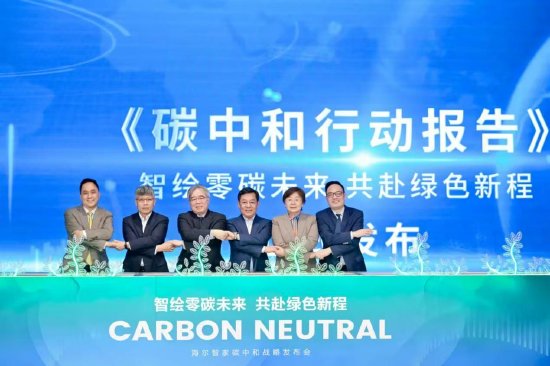
Core Viewpoint - Haier Smart Home has committed to achieving global carbon neutrality by 2050 and will use 100% renewable energy worldwide, marking it as the first major Chinese home appliance company to make such a commitment [1] Group 1: Carbon Neutrality Commitment - The company released a carbon neutrality white paper at the event, emphasizing its goal to integrate green strategies into product innovation and user lifestyles [1] - Haier Smart Home aims to create a comprehensive green low-carbon ecosystem through intelligent products and AI technology [1] Group 2: Product Innovations - The company has developed innovative products such as the "Lazy Three-Tub Washing Machine," which saves over 50% time and has sold over 300,000 units [2] - The "Mairang Refrigerator" uses award-winning preservation technology and consumes less than one kilowatt-hour per day, selling 1 million units in three months [2] - The "Smart Wind Air Conditioner" saves 580 kilowatt-hours of electricity annually through AI algorithms [2] - In Europe, the X11 washing machine is 70% more energy-efficient than the new European standard and has sold over 800,000 units [2] - The Combo large-capacity washing machine in the U.S. has sold over 1 million units despite being priced three times the industry average [2] - The UV COOL VOICE air conditioner in Southeast Asia helps users visualize electricity consumption to save energy [2] Group 3: Sustainable Production Practices - Haier Smart Home prioritizes renewable clean energy in the production phase to reduce the environmental burden of products throughout their lifecycle [3] - The company has received "zero carbon park" certification for its industrial parks and has the most "lighthouse factories" in the industry [3] - The "Smart Home Green Carbon System" allows for meticulous management of production execution, energy scheduling, and carbon emission management [3] Group 4: Scene-Driven Green Strategy - The company’s green strategy covers various scenarios, including smart homes, commercial buildings, and industrial settings [4] - In smart homes, the UHome model optimizes energy consumption, potentially reducing monthly electricity bills by 15%-25% [4] - The "Building Brain" technology in commercial buildings has saved 4.5 billion kilowatt-hours of electricity and reduced CO2 emissions by approximately 4 million tons [4] - In industrial applications, Haier Smart Home employs CO₂ refrigerants for low-carbon transformation, achieving significant energy savings [4] Group 5: Globalization and Collaboration - The company's green strategy reflects its globalization efforts, integrating local resources for green technology advancements [6] - In Australia and New Zealand, the company aims to reduce carbon emissions per appliance by 50% by 2030 and 90% by 2050 [6] - Haier Smart Home initiated a global carbon neutrality initiative, calling for collaboration across the industry and supply chain to achieve sustainability [6]

国泰海通:电力需求仍在上升趋势 长期看好火电
智通财经网· 2025-12-23 11:55
Core Viewpoint - The report from Guotai Junan indicates that industrial power generation in November reached 779.2 billion kWh, showing a year-on-year increase of 2.7%, while the growth rate for October was 7.9% [1] Group 1: Power Generation Data - In November, the breakdown of power generation showed a decline in thermal power by 4.2% compared to October, while hydropower increased by 17.1%, nuclear power by 4.7%, wind power by 22%, and solar power by 23% [1][3] - From January to November, total industrial power generation was 88,567 billion kWh, with a year-on-year increase of 2.4% [1][3] Group 2: Market Dynamics and Pricing - The National Energy Administration has penalized five cases of power plants colluding to raise prices, indicating a need for a long-term perspective in the energy market [2] - The second round of electricity pricing mechanisms may see lower prices compared to the first round, with specific prices for wind and solar power in Jiangxi and Jilin showing declines [2] - In Anhui, the retail market settlement price for electricity remained stable at 0.4182 yuan/kWh, with a slight difference from the wholesale market price [4] Group 3: Investment Trends - Fixed asset investment in the power sector grew by 10.7% from January to November, while overall investment in the secondary industry increased by 3.9% [3] - The manufacturing sector saw a modest investment growth of 1.9%, while the third industry experienced a decline of 6.3% [3]

调研速递|广东博盈特焊接待中信建投等3家机构调研 核心焊接技术优势显著 HRSG及油气复合管业务推进中
Xin Lang Zheng Quan· 2025-12-23 11:42
Core Viewpoint - The company, Guangdong Boying Special Welding Technology Co., Ltd., is focused on special equipment manufacturing, particularly in anti-corrosion and anti-wear welding equipment, with significant growth potential in various industrial sectors [2][9]. Group 1: Company Overview and Competitive Advantages - The company specializes in special equipment manufacturing, extending into industrial equipment, high-end structural components, and large equipment manufacturing [2]. - Key competitive advantages include deep technical barriers, experienced management, significant first-mover advantages, and high-quality customer resources [2]. - The company holds various certifications, including the national special equipment production license and international certifications such as ASME and EN [2]. Group 2: Market Opportunities - The company identifies strong market demand in waste incineration, coal-fired power generation, and chemical industries as growth drivers [2]. - The company is strategically positioning itself in the HRSG (Heat Recovery Steam Generator) and oil and gas composite pipe markets, with HRSG already having scalable production capacity [2]. Group 3: Global Expansion - The company has established three production bases domestically and internationally, with its Vietnam factory now operational and ongoing expansion in the Middle East oil and gas pipeline market [3]. Group 4: Technology and Applications - The company elaborated on its welding technologies, including MIG, TIG, and laser welding, highlighting their specific applications and advantages in various industrial contexts [4]. - Innovations such as digital pulse MIG high-frequency oscillation welding technology have positioned the company as a leader in welding quality [4]. Group 5: Oil and Gas Pipeline Market - The global oil and gas pipeline market is experiencing structural growth driven by increased natural gas demand, energy construction projects due to geopolitical conflicts, and the need for upgrading aging pipelines in Europe and the U.S. [5]. - The company plans to adopt a market-driven production strategy, ensuring stable commercial relationships with clients [5]. Group 6: HRSG Business Insights - The HRSG product production cycle is approximately six months, with a focus on components that have high value within the overall heat recovery boiler system [6]. - The company has established a competitive edge by covering major North American gas turbine suppliers and possessing extensive overseas experience [6]. Group 7: U.S. HRSG Demand Analysis - The U.S. HRSG market is currently in a growth phase, driven by structural increases in electricity demand from sectors like AI data centers and electric vehicle charging stations [8]. - The company's HRSG products align with the U.S. carbon neutrality goals, enhancing gas turbine efficiency and supporting the transition to cleaner energy [8]. Group 8: Summary and Outlook - As a globally recognized manufacturer of energy special equipment, the company is well-positioned for long-term growth due to its technological barriers, brand advantages, and scalable manufacturing capabilities [9]. - The advancement of HRSG and oil and gas composite pipe businesses is expected to further enhance growth potential and support sustained performance [9].

国泰海通|公用事业:上游反内卷,下游反垄断
国泰海通证券研究· 2025-12-23 11:27
第二轮机制电价竞价或容易低于第一轮。 1 、 12 月 15 日江西第二批增量机制电:风电电量 1.354 亿度,电价 0.365 元 / 度(首批为 0.375 元 / 度); 光伏电量 7.499 亿度,电价 0.379 元 / 度(首批为 0.330 元 / 度),第二批电价较第一批下降。 2 、江苏本年调度用电最高负荷 1.44 亿千瓦, YOY+6.06% ( 10 月 YOY+6.06% )。 3 、吉林 26 年机制电价:风电 0.25 ,光伏 0.33 ,吉林风电过剩相对更多一些。 11 月火电增速再现负增长。 国家统计局: 11 月份,规上工业发电量 7792 亿度, YOY+2.7% ( 10 月 +7.9% ) , YOY11 月 /10 月 : 火 -4.2%/7.3% , 水 +17.1%/+28% , 核 +4.7%/+4.2% , 风 +22%/-12% , 光 +23%/+6% 。 1-11 月 份 , 规 上 工 业 发 电 量 88567 亿 度 , YOY+2.4% ( 1-10 月 YOY+2.3% )。 2025 年 1-11 月份全国固定资产投资同比 -2.6% , ...

承诺不晚于2050年实现全球碳中和运营 海尔智家成中国首个发布全球碳中和目标的头部家电企业
Zheng Quan Ri Bao Wang· 2025-12-23 10:13
Core Viewpoint - Haier Smart Home has announced its carbon neutrality strategy, committing to achieve global operational carbon neutrality by 2050 and to use 100% renewable energy worldwide, marking it as the first major Chinese home appliance company to set such a clear commitment [1] Group 1: Carbon Neutrality Commitment - The company aims to achieve global operational carbon neutrality by 2050 and will utilize 100% renewable energy [1] - The carbon neutrality white paper was released during a conference themed "Smartly Drawing a Zero-Carbon Future" [1] Group 2: Green Ecosystem Development - Haier Smart Home is building a comprehensive green low-carbon ecosystem, focusing on various scenarios including smart homes, commercial offices, and industrial applications [1] - The company emphasizes the integration of "scenarios" as a key component of its green strategy [1] Group 3: Smart Home Innovations - In the smart home sector, Haier has developed the UHome smart home model, which optimizes energy consumption through real-time sensing and AI decision-making, achieving energy savings of approximately 20% for air conditioning and 10% for refrigerators [2] - The company has also introduced energy-saving solutions in smart buildings, with its magnetic levitation air conditioning saving 4.5 billion kWh of electricity and reducing CO2 emissions by about 4 million tons [2] Group 4: Product Innovations and Market Performance - Haier's innovative products, such as the "lazy three-tub washing machine" and the "Mairang refrigerator," have achieved significant sales, with the washing machine selling over 300,000 units and the refrigerator over 1 million units within three months [3] - The X11 washing machine, which is 70% more energy-efficient than the new European standard, has sold over 800,000 units across 20 countries [3] Group 5: Sustainable Manufacturing Practices - Haier prioritizes the use of renewable clean energy in the production phase of its green products and has received "zero-carbon park" certification for its industrial parks [4] - The company has established a "Smart Home Green Carbon System" for comprehensive management of production execution, energy scheduling, and carbon management [4] Group 6: Globalization Strategy - Haier's globalization strategy allows it to implement its green initiatives across over 200 countries, leveraging local resources for global collaboration [5] - The company has initiated a global carbon neutrality initiative, calling for collaboration with partners, employees, and users to build a sustainable green ecosystem [5]
海尔智家承诺不晚于2050年实现全球碳中和运营,100%使用可再生能源
Xin Lang Cai Jing· 2025-12-23 09:17
Core Viewpoint - Haier Smart Home has committed to achieving global carbon neutrality by 2050 and aims to use 100% renewable energy worldwide [2][5]. Group 1: Sustainability Commitment - The company emphasizes sustainable development as a core business philosophy, aiming to build a comprehensive green low-carbon ecosystem [2][5]. - The strategy includes a full coverage of green initiatives across smart home, commercial office, and industrial scenarios [2][5]. Group 2: Smart Home Innovations - Haier has developed the UHome smart home model, which utilizes sensors to monitor and adjust temperature, lighting, and energy consumption in real-time, achieving energy savings of approximately 20% for air conditioning and 10% for refrigerators [2][5]. - The company’s "building brain" technology autonomously allocates energy based on building energy consumption and external weather conditions, resulting in a cumulative energy saving of 4.5 billion kWh and a reduction of about 4 million tons of CO2 emissions [2][5]. Group 3: Product Innovations - The company has integrated artificial intelligence with green operations and product innovation, exemplified by the "lazy three-tub washing machine," which saves over 50% in time and has sold over 300,000 units [3][6]. - The Haier Mairang refrigerator, recognized for its all-space preservation technology, consumes less than one kWh per day and has sold 1 million units within three months of launch [3][6]. - The X11 washing machine, which exceeds the new European standard A by 70% in energy efficiency, has sold over 800,000 units across more than 20 countries [3][6].
手握203项授权专利,纳百川年入14亿登陆创业板
Xin Lang Cai Jing· 2025-12-23 09:12
Core Insights - The article discusses the rapid growth of China's new energy vehicle (NEV) industry driven by the "dual carbon" strategy, with a target of approximately 15.5 million NEV sales by 2025, representing a year-on-year growth of about 20% [3][22] - The heat management sector has become a critical bottleneck and core driver for technological development, with the market for heat management systems expected to exceed 100 billion yuan by 2030 [3][22] - The company Nabichuan (301667.SZ) successfully listed on the Shenzhen Stock Exchange's Growth Enterprise Market, with its stock price increasing by 408.17% on the first day, achieving a market capitalization of 12.842 billion yuan [3][22] Company Overview - Nabichuan specializes in the research, development, production, and sales of heat management products for NEV power batteries, fuel vehicle power systems, and energy storage batteries [5][24] - Key products include battery liquid cooling plates, battery integrated boxes, fuel vehicle engine radiators, and heaters, making it a primary supplier for several major NEV manufacturers [5][24] - The company has established itself as an early player in the high-growth segment of battery thermal management, starting product development as early as 2011 [8][27] Market Position and Growth - The global market for battery liquid cooling plates is projected to reach approximately 14.5 billion yuan by 2025, with significant growth opportunities in high-power AI servers and large-scale electrochemical energy storage systems [6][25] - Nabichuan's sales revenue for battery liquid cooling plates is expected to grow from 804 million yuan in 2022 to 1.179 billion yuan in 2024, capturing an estimated market share of 12.16% in its segment by 2024 [8][27] - The company has a strong focus on R&D, with 146 personnel dedicated to technology and research, accounting for 11.07% of its total workforce, and has invested 142 million yuan in R&D from 2022 to March 2025 [9][28] Financial Performance - Nabichuan's main business revenue is projected to grow from 1.008 billion yuan in 2022 to 1.408 billion yuan in 2024, with a compound annual growth rate of 18.17% [15][34] - The company reported a significant increase in net profit, with a year-on-year growth of 77.85% in the first quarter of 2025 [15][34] - The sales revenue from battery liquid cooling plates accounted for a high percentage of the main business revenue, maintaining levels of 79.79% to 92.27% from 2022 to March 2025 [16][35] Industry Trends - The global NEV market has been growing rapidly, with a compound annual growth rate exceeding 53% since 2017 [13][32] - By 2024, Chinese companies are expected to hold six of the top ten positions in global power battery installations, with a combined market share of 73.1% [15][34] - The domestic liquid cooling plate market is anticipated to exceed 9.6 billion yuan by 2025, with a compound annual growth rate of over 95% from 2022 to 2025 [15][34] Future Outlook - Nabichuan aims to expand its energy storage battery heat management business while continuing to innovate in battery box integration and other product enhancements [20][39] - The company plans to raise 632 million yuan through its IPO to fund a project for producing 3.6 million sets of water cooling plates annually, addressing capacity saturation and meeting downstream demand [18][37] - Industry experts believe that Nabichuan's strong performance, clear technological path, and strategic planning position it well to become a leading player in the global battery heat management sector [20][39]