智能化

Search documents
数字化成效持续显现 圆通速递市占率稳居行业前列
Mei Ri Jing Ji Xin Wen· 2025-12-25 14:45
Core Insights - YTO Express has established a dual-track strategy focusing on "domestic steady growth" and "overseas breakthroughs," enhancing its competitive advantage in the express delivery industry [1] Group 1: Domestic Market Performance - YTO Express has achieved a market share in express delivery that surpasses Yunda, becoming the second-largest player in the industry, with continued growth in parcel volume expected through 2024 and the first three quarters of 2025 [2] - The company has invested in digitalization and smart logistics, enhancing its operational efficiency and service quality [2][4] Group 2: International Expansion - YTO Express is expanding its international express and freight services, focusing on high-quality routes such as Japan-China and Australia-China, with an expected overall business volume increase of over 80% in these premium routes by 2024 [2] - The company is also developing its international supply chain services across various industries, including apparel, automotive, and electronics, aiming to create an integrated logistics service capability [2] Group 3: Capital Expenditure and Efficiency - YTO Express plans to invest over 6.7 billion yuan in 2024, leading the "Tongda" express companies in capital expenditure, which will support capacity optimization and operational efficiency [3] - The company has successfully reduced its single ticket transportation cost to 0.42 yuan in 2024 and 0.37 yuan in the first half of 2025, reflecting a focus on cost optimization [3] Group 4: Technological Advancements - YTO Express is exploring advanced technologies such as unmanned vehicles and smart delivery cabinets to enhance delivery efficiency and reduce last-mile delivery costs [4] - The company has improved its service quality and customer experience through differentiated products and marketing innovations, leading to increased brand value and premium pricing [4]

中联重科:用RFID等多种技术打造智能挖掘机工厂
Xin Lang Cai Jing· 2025-12-25 12:40
Core Viewpoint - The engineering machinery industry is undergoing a profound transformation towards intelligent and digital manufacturing, with Zoomlion actively embracing technological changes to integrate advanced technologies such as RFID, IoT, big data, and artificial intelligence into the entire production process of excavators, establishing an efficient, precise, and flexible smart factory. On November 27, Zoomlion's excavator factory was successfully included in the first batch of 15 pilot smart factories by the national government at the 2025 World Intelligent Manufacturing Conference [1][5]. Group 1: Technology Integration - The comprehensive application of RFID technology is a core highlight of Zoomlion's smart excavator factory, addressing issues such as component traceability, production transparency, and material delivery delays that have historically hindered production efficiency [2][6]. - Each core component is equipped with a dedicated RFID tag, allowing for real-time tracking of component information from the moment of storage, thus ensuring precise traceability throughout the component's lifecycle [2][6]. - In the assembly phase, workers can quickly read component information using handheld devices or fixed readers, effectively avoiding assembly errors and ensuring accurate matching with work orders [2][6]. Group 2: Advanced Production Systems - Zoomlion has integrated various cutting-edge technologies to create a comprehensive intelligent production system, including industrial robots for precise welding and intelligent painting robots that enhance consistency while reducing waste and environmental pollution [3][7]. - IoT technology enables real-time data collection and analysis of equipment operation parameters and fault information, allowing for automatic alerts and maintenance suggestions, significantly reducing equipment failure rates and improving utilization [3][8]. - A big data analysis platform optimizes production processes and predicts market demand changes, providing scientific support for production planning and product development [3][8]. Group 3: Efficiency and Quality Improvements - The establishment of the smart factory has led to significant efficiency gains, with per capita output increasing by over 30% and product delivery cycles shortened by 20%, effectively meeting market demands for rapid excavator delivery [4][8]. - The quality of products has improved substantially, with a significant increase in the first-pass qualification rate of excavators and a continuous rise in customer satisfaction due to precise detection and traceability systems [4][8]. - Cost control has been enhanced through intelligent scheduling that reduces material waste, smart maintenance that lowers repair costs, and big data optimization that minimizes redundant production processes, achieving the goal of cost reduction and efficiency improvement [4][8]. Group 4: Industry Implications - Zoomlion's use of RFID and other technologies to build a smart excavator factory represents a crucial step in the company's transformation and serves as a model for the intelligent development of the engineering machinery industry [4][9]. - The engineering machinery industry is currently facing trends towards green, low-carbon, and high-end intelligent development, and Zoomlion's practices demonstrate that technological innovation and industrial integration can effectively address industry challenges and promote sustainable growth [4][9].
【智能化】奔驰正式入股千里科技,持股3%完成交割
Xin Lang Cai Jing· 2025-12-25 12:40
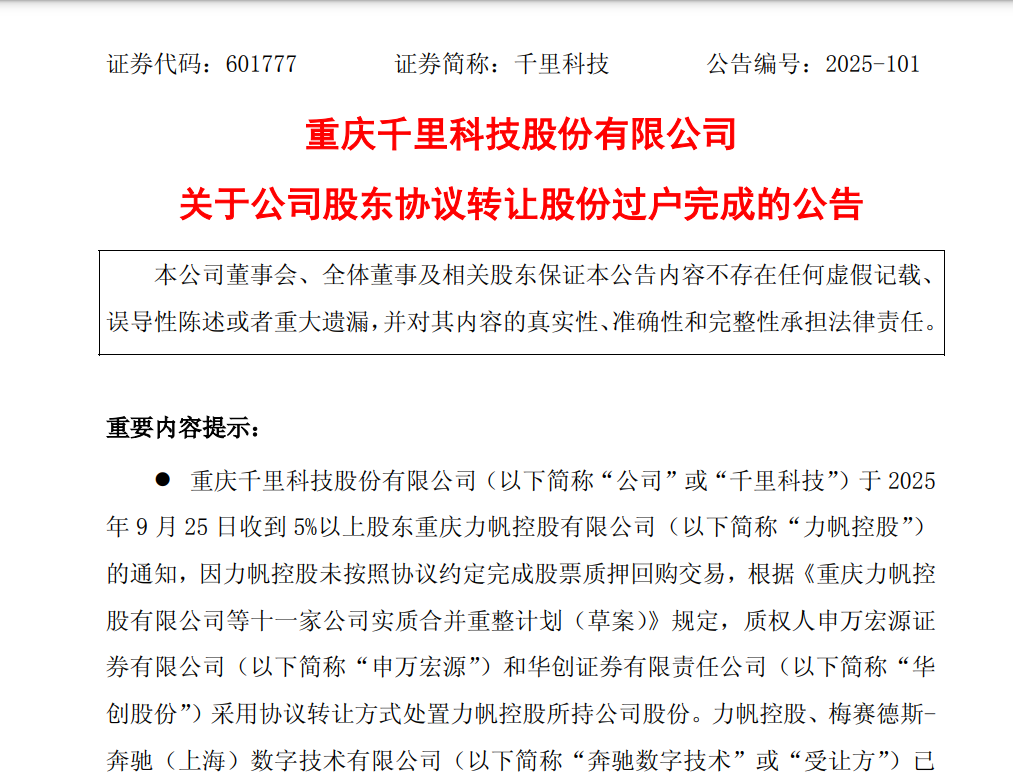
12月25日,千里科技发布公告称,公司已完成与梅赛德斯-奔驰(上海)数字技术有限公司(以下简称"奔驰数字技术")的股份过户登记。奔驰 数字技术以9.87元/股的价格,通过协议转让方式受让重庆力帆控股有限公司所持135,633,002股股份,占千里科技总股本的3.00%,成为公司第五 大股东。 此次交易源于力帆控股此前未能履行股票质押回购义务,其质权人申万宏源证券和华创证券决定通过协议转让处置相关股份。9月,力帆控股与 奔驰数字技术分别同两家券商签署《股份购买协议》,将合计1.36亿股千里科技股份转让予奔驰数字技术,交易总价约13.39亿元,所得款项用 于偿还力帆控股相关债务。 奔驰数字技术由梅赛德斯-奔驰(中国)投资有限公司100%持股,此次入股被视为奔驰在中国加强智能化领域布局的举措之一。千里科技董事长 印奇在9月曾回应此事表示,奔驰成为股东是对公司技术能力的认可,双方将在智能驾驶和智能座舱领域展开紧密战略合作。 随着股权过户完成,奔驰正式进入千里科技股东行列,后续合作细节有待进一步披露。 12月25日,千里科技发布公告称,公司已完成与梅赛德斯-奔驰(上海)数字技术有限公司(以下简称"奔驰数字技术")的股份 ...


25年车圈最后一笔融资到位,深蓝汽新年开启新征程
Sou Hu Cai Jing· 2025-12-25 12:34
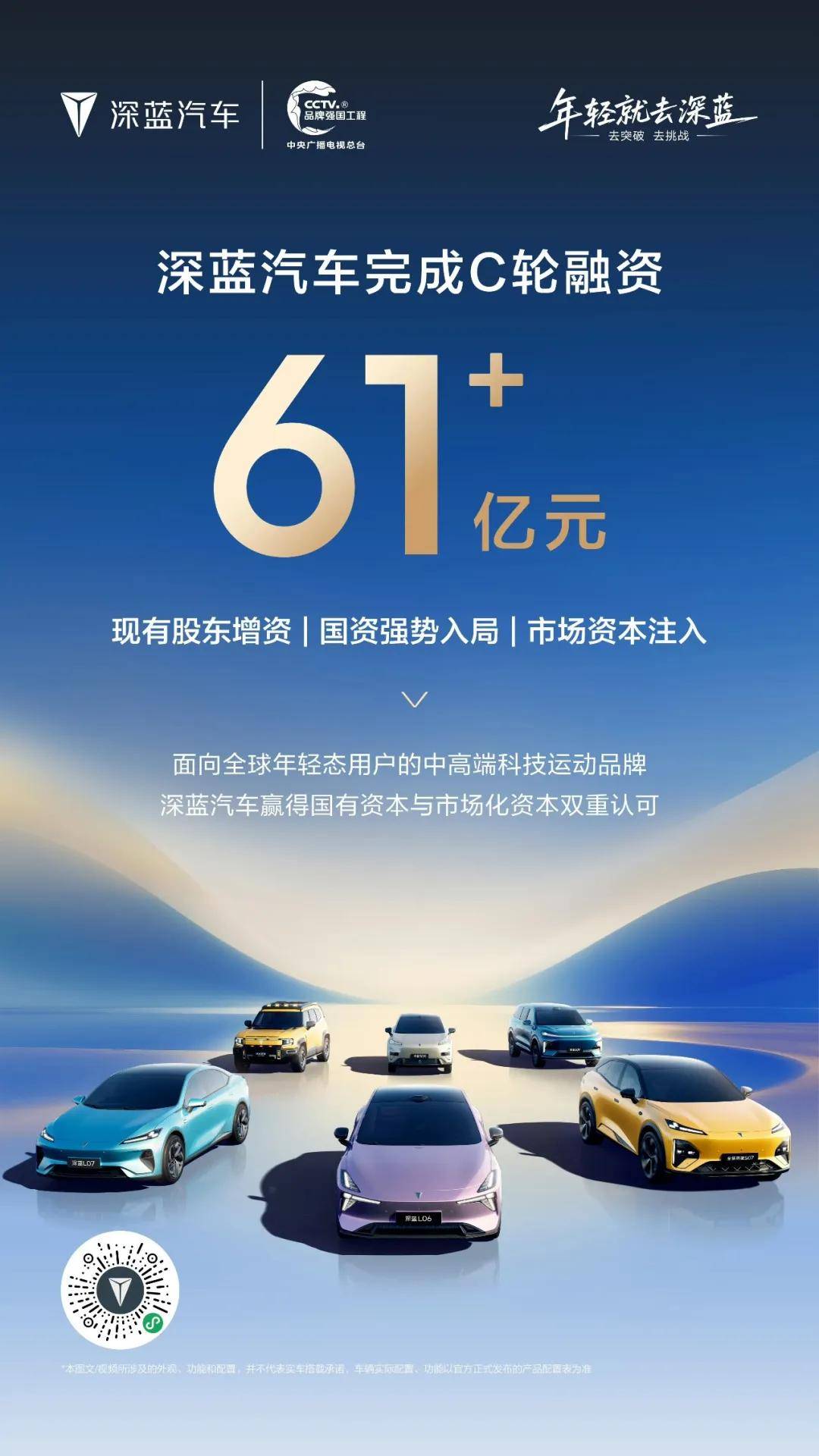
Core Viewpoint - Deep Blue Automotive has successfully completed a significant financing round of 6.122 billion yuan, marking it as the last major financing in the automotive sector for 2025, which is expected to catalyze a leap in brand, product, technology, and marketing dimensions in 2026 [1] Financing Details - The financing round included contributions from Chongqing Yufu Holding Group Co., Ltd. (2.5 billion yuan), Chongqing Changan Automobile Co., Ltd. (3.122 billion yuan), and Zhuhai Financial Asset Investment Co., Ltd. (500 million yuan), totaling 6.122 billion yuan [5] Shareholding Structure - Post-financing, Chongqing Changan Automobile Co., Ltd. remains the largest shareholder with a 50.9959% stake, while Chongqing Yufu Holding Group Co., Ltd. holds 12.0937% and Zhuhai Financial Asset Investment Co., Ltd. holds 2.4187%, indicating strong confidence from new investors [7] Strategic Advantages - Deep Blue Automotive benefits from its unique state-owned enterprise brand value, which enhances investor confidence and provides a solid foundation for financing [7] - As a mid-to-high-end brand under Changan Automobile, Deep Blue aligns with national strategies for technological self-reliance and automotive strength, with financing aimed at core technology advancements in smart and electric vehicles [7] Market Performance - By December 18, 2025, Deep Blue Automotive achieved cumulative deliveries of 700,000 vehicles and has established a presence in nearly 100 countries, with significant sales of its models, including over 300,000 units of the Deep Blue S07 and consistent monthly sales of over 10,000 units for the Deep Blue S05 [7][8] Technological Innovation - The financing will primarily support innovations in smart and electric vehicle technologies, including advancements in L3-level autonomous driving, laser radar algorithms, and the development of a complete technology ecosystem from chips to systems [12][15] - Deep Blue has been a leader in product development, exemplified by its collaboration with Jingxi Group on a magnetorheological suspension system, making the L06 the first Chinese brand model to adopt this technology [14] Future Growth Potential - The company's international success, particularly in Europe and Southeast Asia, is viewed as a key growth driver, enhancing its global brand strength and providing a clear path for future financing [8] - The upcoming changes in the automotive industry, particularly in smart driving and battery technology, are expected to widen the gap between manufacturers, with Deep Blue poised to leverage its technological advancements to gain a competitive edge [15][16] Conclusion - The successful financing not only strengthens Deep Blue's capabilities but also serves as a strategic boost against competitors, positioning the company for a new phase of high-quality development in 2026, with a target of achieving one million vehicle sales [16]
“工厂研学热”展现中国制造业新引力
Xin Lang Cai Jing· 2025-12-25 12:15
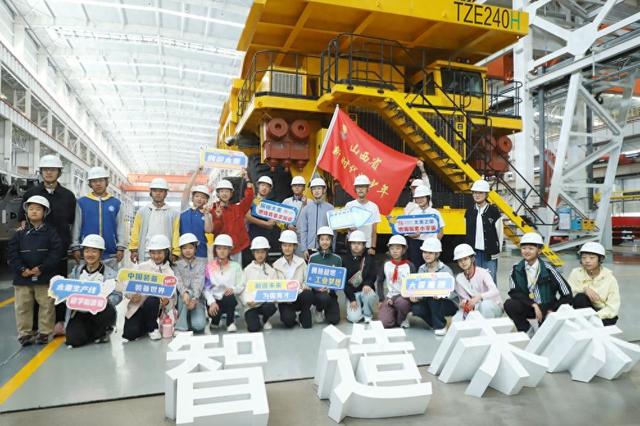
Group 1 - The core idea of the articles highlights the increasing popularity of factory study programs among students, allowing them to experience the manufacturing process firsthand and gain insights into China's advanced manufacturing industry [2][4][6] - The factory study theme has become a trending topic, with schools organizing weekly visits to factories, where students can observe assembly lines and interact with engineers [4][6] - The Chinese manufacturing sector has maintained its position as the world's largest for 15 consecutive years, with its manufacturing value added accounting for nearly 30% of the global total [4] Group 2 - The rise of factory study programs is attributed to the ongoing transformation of China's manufacturing industry towards high-end, intelligent, and green development [4] - Popular factories, such as Xiaomi's automotive factory, have seen significant interest, with over 100,000 registrations for visits this year, indicating a strong demand for such educational experiences [4] - Industrial study programs are seen as a means to enhance students' understanding of technological advancements and to inspire early career aspirations aligned with societal talent needs [4][6]
汽车与零部件行业周报:工信部发文许可深蓝和极狐两款L3级自动驾驶车型产品,一汽2027年量产固态电池首搭红旗旗舰车型-20251225
Shanghai Securities· 2025-12-25 11:10
Investment Rating - The industry investment rating is "Hold" [2] Core Insights - The automotive sector experienced a slight decline of -0.10% in the past week, with the automotive services sub-sector performing the best at +3.73% [5] - In November, the retail sales of passenger vehicles decreased by 7% year-on-year, while Tesla launched a budget version of Model 3 in Europe [5] - The Ministry of Industry and Information Technology approved two L3 level autonomous driving models, indicating advancements in smart vehicle technology [6] - China FAW plans to mass-produce solid-state batteries by 2027, which will be used in high-end Red Flag models [6] - The automotive market is currently adjusting due to the expiration of several consumer stimulus policies, with a projected retail market of approximately 2.3 million units in December [6] - The EU has proposed to relax the 2035 ban on new fuel vehicle sales, allowing for a 90% reduction in emissions compared to 2021 levels [7] Summary by Sections Market Review - The automotive sector's performance was ranked 21st among 31 first-level industries, with notable companies like Zhejiang Shibao and Weidi Co. showing significant gains [5] - The overall market sentiment reflects a mixed performance, with some companies experiencing substantial growth while others faced declines [5] Sales Data - From December 1 to 14, retail sales of passenger vehicles reached 764,000 units, a year-on-year decrease of 24% [6] - The wholesale volume for the same period was 734,000 units, down 31% year-on-year [6] - The new energy vehicle market showed resilience with retail sales of 476,000 units, only a 4% decline year-on-year [6] Investment Recommendations - Focus on companies involved in smart vehicle technology and those with potential for overseas sales [7] - Consider component manufacturers that can benefit from domestic substitution effects [7]
三羊马:公司始终重视智能化及新技术在企业中的运用,也在积极探索各种可以提高效率的技术和手段
Zheng Quan Ri Bao Wang· 2025-12-25 10:43
Core Viewpoint - The company emphasizes the importance of smart technology and new techniques in its operations and is actively exploring various methods to enhance efficiency [1] Group 1 - The company is committed to the application of intelligent and new technologies within its operations [1] - The company will strictly adhere to legal regulations and disclosure requirements regarding any relevant technologies [1] - Investors are advised to refer to official company announcements for accurate information [1]
聚焦“三化”转型,上海如何推动国际航运中心能级跃升?
Di Yi Cai Jing· 2025-12-25 09:27
Core Viewpoint - Shanghai International Shipping Center is at a critical juncture, transitioning from basic establishment to comprehensive completion, maintaining its position as the world's third-largest shipping center for five consecutive years, which underscores its strength as a global shipping hub and ensures the safety and stability of global supply chains [1][2] Group 1: Shipping Capacity and Performance - In 2024, Shanghai Port's container throughput is projected to reach 51.506 million TEUs, ranking first in the world for 15 consecutive years and becoming the first global port to exceed 50 million TEUs annually [1] - Shanghai's airport is also enhancing its hub capabilities, with air cargo and passenger throughput expected to reach 4.206 million tons and 125 million people, respectively, in 2024, representing year-on-year growth of 11% and 29%, ranking second and third globally [1] Group 2: Digital and Technological Transformation - The Shanghai International Shipping Center is undergoing a transformation towards digitalization, intelligence, and greening, driven by the integration of new technologies such as 5G, IoT, cloud computing, big data, AI, and blockchain [2][3] - A digital infrastructure for shipping trade is taking shape, with the launch of the International Container Transport Service Platform (MaaS), enabling one-stop queries for container transport status [3] Group 3: Green and Sustainable Development - Shanghai is accelerating its transition to a diversified new energy development track, with a significant increase in LNG refueling for international vessels, achieving 102 refuels and a total of 603,000 cubic meters, a 65% year-on-year increase [3] - The city aims to achieve a power-based energy structure for airports and ports by 2030, with carbon emissions reaching peak levels, and to establish a digital twin system for the international shipping hub [4] Group 4: Future Goals and Strategies - Shanghai plans to enhance water-to-water transshipment and sea-rail intermodal transport, promote the construction and use of shore power facilities, and advance the low-carbon transformation of shipping equipment [4][5] - The city is focused on building a smart travel system at airports and integrating new technologies like blockchain and digital twins into shipping operations [5]
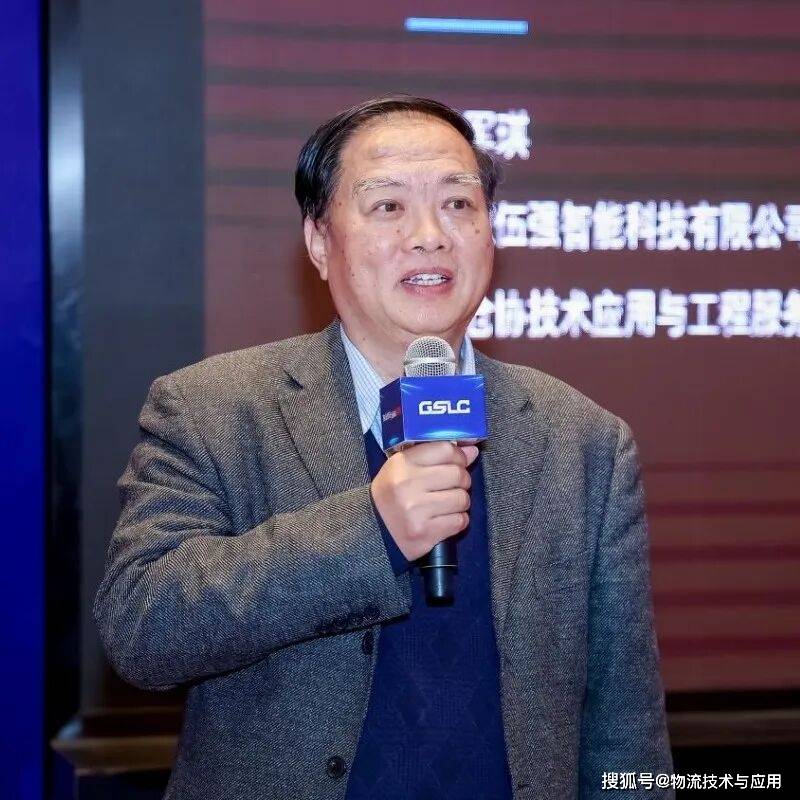
伍强智能科技董事长尹军琪:"价格"——“价值”,转变思路,走高质量发展之路
Sou Hu Cai Jing· 2025-12-25 08:40
Core Viewpoint - The article emphasizes the detrimental effects of price wars in the logistics industry, advocating for a shift from price competition to value competition to foster sustainable development and industry health [1][10]. Group 1: Causes of Price Wars - Price wars are primarily driven by overcapacity in the industry, leading to a supply-demand imbalance, where companies resort to lowering prices to survive [4][5]. - Factors contributing to price wars include product homogeneity, lack of competitive advantages, and pressures from market growth not meeting corporate growth expectations [4][5]. - Companies facing financial pressures, such as those preparing for IPOs or those without financing, often engage in price wars as a last resort for survival [4][5]. Group 2: Consequences of Price Wars - Price wars lead to a shrinking "effective market capacity," resulting in reduced employment opportunities within the industry, with estimates suggesting a potential loss of 30% to 50% of jobs in the logistics equipment sector [6]. - The competitive landscape becomes weakened as companies focus on cost-cutting measures rather than innovation, ultimately leading to a decline in market competitiveness [7][8]. - As price wars escalate, companies may compromise product quality to reduce costs, resulting in a market filled with low-quality products [7][8]. Group 3: The Illusion of Winners - Price wars create a multi-loss situation where suppliers lose their innovation capabilities and market competitiveness, often leading to a decline in brand reputation [8][9]. - Users who prioritize lower prices over quality may ultimately face negative consequences, as the quality of products and services deteriorates [9]. - The article stresses that maintaining a healthy industry requires mutual responsibility from both suppliers and users, highlighting the need for a balanced approach to competition [9]. Group 4: Understanding Value - The focus should shift from seeking the lowest prices to providing maximum value to users, ensuring that every investment is justified [10]. - Users must consider comprehensive comparisons of construction, equipment, and operations, as well as short-term and long-term costs and benefits when investing in logistics systems [13][14]. - The reliability and longevity of equipment are critical factors in evaluating value, as users often overlook the impact of product quality on overall costs [14]. Group 5: Strategies for Cost Reduction and Efficiency - Companies can enhance value through higher automation and flexibility in logistics systems, which can significantly improve operational efficiency [15][17]. - Standardization across various aspects of logistics can lead to better replicability and connectivity, maximizing industrial advantages [15]. - Optimizing processes and providing better solutions are essential for improving logistics systems, focusing on simplicity and reliability [17][18]. Group 6: Brand, Quality, and Service - From a supplier's perspective, brand, quality, and service are key indicators of value, and users should prioritize these over merely seeking lower prices [19]. - The lack of regulatory and certification mechanisms in the industry contributes to market chaos, necessitating a focus on quality and service in international markets [19]. - The article advocates for aligning Chinese standards with global standards to enhance the reputation of Chinese products abroad, moving away from reliance on price competition [19].
从“民族汽车”到“国民好车”,从燃油到新能源:红旗的两次破界生长
2 1 Shi Ji Jing Ji Bao Dao· 2025-12-25 08:21
Core Viewpoint - Hongqi, as a symbol of Chinese automotive pride, has successfully transformed from a luxury brand to a more accessible one, focusing on private passenger vehicles and transitioning to new energy vehicles (NEVs) to meet market demands [1][7]. Group 1: Strategic Transformation - Hongqi has undergone two significant strategic transformations: first, shifting focus to private passenger cars, and second, fully committing to new energy vehicle development, leveraging its historical legacy for competitive differentiation in the NEV market [1][2]. - The brand has successfully reached 2 million users, becoming the first Chinese luxury car brand to achieve this milestone, with a notable 60.8% year-on-year increase in NEV sales in November [1][2]. Group 2: Product Development - The newly launched Hongqi HS6 PHEV, priced from 178,800 yuan, boasts a comprehensive range of 1650 km, showcasing the advancements of the Honghu hybrid platform [3][6]. - The HS6 PHEV features a battery capacity of 23 kWh, surpassing its predecessors, and offers a pure electric range of 148 km, with the top model reaching 40 kWh and 228 km [3][6]. Group 3: Technological Innovations - The HS6 PHEV has achieved a Guinness World Record for the longest distance driven on a full charge and full tank, covering 2327.343 km, demonstrating its endurance and performance capabilities [6]. - The vehicle incorporates advanced driving technologies, including a high-performance electric motor with a maximum power of 165 kW and a peak torque of 340 N·m, ensuring robust performance even in challenging conditions [6][7]. Group 4: Intelligent Features - Hongqi is advancing its smart driving and cockpit technologies through the "Nine Chapters" platform, integrating AI algorithms and advanced hardware to enhance user experience [8][11]. - The HS6 PHEV features a sophisticated visual system and predictive algorithms, enabling it to analyze and respond to potential risks in real-time, enhancing safety and driving experience [9][10]. Group 5: Future Aspirations - Hongqi aims to develop a fully integrated vehicle model that combines intelligent driving, cockpit, and powertrain systems, aspiring to create a comprehensive AI-driven automotive experience [12][13]. - The brand's ultimate goal is to achieve a seamless integration of various vehicle systems, enhancing both functionality and user interaction, positioning itself as a leader in the intelligent automotive sector [12][13].