
地缘政治

Search documents
【环时深度】毛里求斯:从“印度洋钥匙”到“发展典范”
Huan Qiu Shi Bao· 2026-01-21 22:56
Core Viewpoint - The strategic significance of the Indian Ocean region, particularly Mauritius, is highlighted through recent diplomatic visits and its role as a key player in global trade and geopolitics [1][2]. Group 1: Geopolitical Importance - Mauritius is referred to as the "key to the Indian Ocean," attracting attention from major powers like France and India due to its strategic location and historical ties [2][7]. - The island's geopolitical relevance is underscored by its historical colonial past and ongoing territorial disputes, particularly regarding the Chagos Archipelago, which remains under British control [4][5]. Group 2: Economic Development - Mauritius has transitioned from a sugar-dependent economy to a diversified one, with key sectors including manufacturing, financial services, tourism, and information technology, leading to what is termed the "Mauritius Miracle" [8]. - The GDP of Mauritius is projected to be approximately $14.044 billion in 2024, with a per capita GDP exceeding $11,700, positioning it among the top economies in Africa [8]. Group 3: Diplomatic Relations - Mauritius maintains a pragmatic foreign policy, engaging in selective cooperation with multiple countries, including France, India, and the United States, to balance its geopolitical interests [7][10]. - The country has established strong economic ties with China, benefiting from infrastructure projects and technology transfer, which are crucial for its development goals [10][12]. Group 4: Cultural and Human Exchange - Tourism serves as a vital cultural link between Mauritius and China, with initiatives aimed at attracting Chinese tourists and promoting cultural exchanges through film and other media [11][12]. - The collaboration extends beyond tourism to include technology and environmental cooperation, particularly in addressing climate change challenges faced by the island nation [12].
俄方一点不绕弯子,欧洲如果暗杀普京,整个欧洲大陆将在地图上消失
Sou Hu Cai Jing· 2026-01-21 16:58
在全球政治舞台上,俄罗斯总统普京犹如一颗巨石,牵动着无数国家的神经。近日,俄罗斯外交与国防政策委员会的名誉主席、普京前顾问谢尔盖·卡拉加 诺夫直言不讳地表示,如果普京遭到暗杀,欧洲将会"从人类地图上消失"。这并不是简单的恐吓,而是一个立足于现实的严峻警告。这番言论揭示了当前地 缘政治局势的脆弱性以及潜在的全球风险。 首先,在理解这一观点之前,有必要深刻认识到普京政府所面临的内外压力。俄乌战争的持续不仅仅是普京的个人选择,而是整个俄罗斯国家战略的体现。 对于克里米亚的控制、对北约东扩的反对以及在东部地区的领土诉求,这些都是俄罗斯高层广泛共识的结果。如果普京被暗杀,这些核心利益并不会因为领 导人的更换而消失。相反,新的领导者可能会采用更加激进和果断的措施来实现这些目标。 想象一下,若普京被替换的人是来自强力部门的高官,如帕特鲁舍夫或绍伊古,他们的登场可能会引发一场大规模的报复行动。这种情况下,原本可能控制 在局部的冲突将迅速升级为全面战争,甚至引发核武器的使用。俄军的重型轰炸机虽然现在依然在谨慎打击,但一旦复仇情绪上升,这种克制将不复存在, 战火将不再局限于乌克兰,而是可能蔓延至整个欧洲大陆。波兰、罗马尼亚等北约 ...


AAPL, AMZN and GOOG Forecast – Major Tech Stocks Await Earnings and Surf Headlines
FX Empire· 2026-01-21 13:57
Amazon Technical AnalysisAmazon looks like it is going to be a little bit softer at the open during the trading session, as we are now between the 50-day EMA and the 200-day EMA. This is a market that I think probably just grinds back and forth, and much like Apple does, Amazon has an earnings call here in the next week or so, and that obviously will have a major influence on where we go next.Right now, the markets are being knocked around by the headlines with Greenland and tariffs, so I wouldn’t read too ...




能化维持偏弱对待
Tian Fu Qi Huo· 2026-01-21 12:07
Report Industry Investment Rating - The industry of energy and chemicals is maintained with a weak outlook [1] Core Viewpoints of the Report - The geopolitical premium in crude oil due to the Iran situation is facing a correction, and supply surplus is driving the price down. Chemicals are generally under pressure due to high supply, high inventory, and weak demand [2][3] Summary by Relevant Catalogs Crude Oil - Logic: The Iran geopolitical sentiment peaked on January 14 and reversed on January 15. The premium is being unwound, and supply surplus is pushing the price down [2][3] - Technical analysis: Daily and hourly charts show a downward structure. Hold short - positions with a stop - loss at 447, and there is a chance for a second short - entry [3][4] Asphalt - Logic: Weak supply - demand fundamentals in the off - season, the Venezuela situation is cooling, and the cost center is likely to shift down as the geopolitical premium in crude oil fades [8] - Technical analysis: Hourly chart shows a short - term oscillation. Temporarily hold off on trading [8] Styrene - Logic: Recent supply - demand improvement supports the price, but there are signs of a potential peak. After a breakdown, focus on short opportunities in pure benzene [10] - Technical analysis: Hourly chart shows a short - term upward structure with a potential top. The short - term support is at 7200 (03 contract). Temporarily hold off on trading and wait for a breakdown to short on rebounds [10][12] Pure Benzene - Logic: The price is pushed up by hedging purchases, but high inventory and potential pressure from crude oil price drops mean not to chase high prices [13] - Technical analysis: Hourly chart shows a short - term upward structure with a potential top. The short - term support is at 5580 (03 contract), and the 15 - minute support is at 515. Temporarily hold off on trading and look for short opportunities on rebounds after a 15 - minute breakdown [13] Rubber - Logic: No supply - side speculation before the new tapping season, weak demand due to high tire inventory, and high imports in Qingdao. It moves passively and weaker than synthetic rubber [16] - Technical analysis: Daily chart shows a medium - term oscillation, and the hourly chart shows a short - term decline. Look for short opportunities after a rebound, with a short - term pressure at 15900 [16] Synthetic Rubber - Logic: The cost - end crude oil may peak soon, and the driving logic for the previous rise is breaking down. The supply of butadiene is high, and synthetic rubber will face cost pressure [19][22] - Technical analysis: Daily chart shows a medium - term upward structure, and the hourly chart shows a short - term decline. Hold short - positions with a stop - loss at 11950 and look for a second short - entry at night [22] PX - Logic: The price rose due to early - stage capital inflow but is now facing a short - term correction due to increased supply, weak downstream acceptance, and a lower cost center. Wait for a second low - entry opportunity in the medium - term [26] - Technical analysis: Daily chart shows a medium - term upward structure, and the hourly chart shows a short - term decline. Temporarily hold off on trading during this short - term decline [26] PTA - Logic: High supply, weak downstream acceptance in the off - season, and a lower cost center lead to a short - term correction [27] - Technical analysis: Daily chart shows a medium - term upward structure, and the hourly chart shows a short - term decline. Temporarily hold off on trading [29] PP - Logic: The olefin industry chain has a weak fundamental outlook. It lacks a long - side driver and is suitable for a hedging strategy of long aromatics (PX, PTA) and short olefins [31] - Technical analysis: Hourly chart shows a short - term decline. Temporarily hold off on trading and look for short opportunities after a rebound [31] Methanol - Logic: Geopolitical premium is being unwound, high domestic supply, falling coal prices, high port inventory, and negative demand feedback [34] - Technical analysis: Daily and hourly charts show a decline. Look for short - entry opportunities on rebounds with a stop - loss at 2255 [34] PVC - Logic: High supply, high inventory, and weak demand. The differential electricity price policy in Shaanxi may reduce calcium carbide production, and the cancellation of export tax - rebate has a short - term positive and long - term negative impact [38] - Technical analysis: Daily chart shows a medium - term decline, and the hourly chart shows a short - term oscillation. Temporarily hold off on trading and look for short opportunities on rebounds in the 15 - minute cycle [38] Ethylene Glycol - Logic: High supply, weak demand in the off - season, and increasing port inventory lead to a downward - driving fundamental situation [39] - Technical analysis: Daily and hourly charts show a decline. Hold short - positions with a take - profit at 3770 [41] Plastic - Logic: The olefin industry chain has a weak fundamental outlook. It lacks a long - side driver and is suitable for a hedging strategy of long aromatics (PX, PTA) and short olefins [44] - Technical analysis: Daily and hourly charts show a decline. Wait for a rebound and then a short - entry signal [44] Soda Ash - Logic: High production, high inventory, and weak demand. There may be a rush - to - export market before April, but the export pressure will increase after April. Look for short opportunities after a rebound [46] - Technical analysis: Hourly chart shows a short - term decline. Temporarily hold off on trading and look for short opportunities on rebounds in the 15 - minute cycle [46] Caustic Soda - Logic: High supply, high inventory, and weak demand. The supply pressure remains high, and the downward trend is hard to reverse [50] - Technical analysis: Hourly chart shows a short - term decline. Temporarily hold off on trading and do not bottom - fish before the structure turns bullish [50]
贺博生:黄金强势上涨何时下跌 原油晚间行情分析及最新操作建议
Xin Lang Cai Jing· 2026-01-21 11:05
原油消息面解析:周三美原油小幅走高交投于59.70美元/桶附近,依然处于区间震荡之中,反弹力度有 限,主要受到最新经济数据改善的提振,但市场整体情绪依旧偏谨慎。作为全球最大原油进口方的亚洲 国家,其国内生产总值和工业生产数据被解读为经济活动正在趋于稳定,这在一定程度上缓解了此前市 场对需求持续走弱的担忧,为油价提供了阶段性支撑。不过,需求端的积极信号并未完全主导市场定 价。美欧之间围绕地缘与贸易担忧情绪的摩擦,使投资者对全球经济增长前景保持警惕。市场普遍认 为,一旦相关紧张局势扩大,全球制造业和贸易活动可能承压,从而拖累原油的中期需求表现。这种不 确定性使得油价在反弹过程中缺乏持续性动能。 黄金最新行情趋势分析: 1月21日,黄金消息面解析:周三(1月21日)亚欧时段,现货黄金震荡上涨,现交投于每盎司4885美元 附近,日内涨幅约2.55%,截至14:28,金价一度触及4888.17美元/盎司的历史新高。当前世界正处于 地缘政治、金融稳定与政治格局的多重风暴眼中,共同推升黄金的避险与价值存储需求。在2026年开年 之际,一场由美国总统特朗普引发的格陵兰岛主权风暴席卷全球,彻底点燃了地缘政治火药桶。特朗普 公开 ...
杨华曌:避险情绪升温全球市场外溢效应显著 黄金价格暴涨
Xin Lang Cai Jing· 2026-01-21 11:00
全球债券投资者越来越看空日本政府债务,因其正面临财政担忧和利率逐步走高的压力。这激起了人们 对长期被称为"寡妇制造者"的交易的兴趣——做空日本国债,当收益率飙升时将获利。 1月21日,随着财政担忧加剧,日本一度沉寂的债券市场的波动性自去年年初以来一直在上升,并对全 球产生了显著的外溢影响。在此之前,日本央行取消了收益率曲线控制政策并开始减少购买日本国债。 周二的抛售加剧了持有巨额政府债券投资组合的日本人寿保险公司的压力。日本一家大型人寿保险公司 的投资经理表示,对未来稳定性的担忧将使这些保险公司很难重返日本国债,即使利率变得更具吸引 力。 市场"抛售美国"浪潮自周二全面展开。上周六特朗普威胁对八个欧洲国家征收关税,这与美国控制格陵 兰岛直接相关,已将地缘政治推到了资产定价的核心。投资者纷纷减持美国风险资产,导致主要指数创 下自10月以来最差单日表现,并将标普500指数和纳斯达克指数拖入年内负值区间。 美国股市、国债和美元的同时抛售,是此次事件引人注目的原因。历史上,风险规避事件往往支撑国债 和美元。但这一次,两者与股票一同遭到抛售,这表明市场信心的丧失,而非美国市场内部简单的避险 轮动。 周二的抛售加剧了持有 ...
“夺岛风波”激化北约内部矛盾
Guo Ji Jin Rong Bao· 2026-01-21 10:43
美国总统特朗普有关获取格陵兰岛的主张引发世界关注,并迅速演变为牵动跨大西洋关系、北约前 途以及俄乌局势的重大地缘政治事件。 此前,特朗普方面以"维护国家安全"为由,重申美国"必须拥有格陵兰岛"。他将该岛描述为美 国"在北极战略中的关键一环",并威胁对近期向格陵兰岛派遣少量部队的八个欧洲国家征收10%的关 税。 曾在克里姆林宫任职的政治分析人士谢尔盖·马尔科夫则认为,美欧之间不断扩大的裂痕,可能标 志着西方安全政策全面重组的开始,这将明显有利于俄罗斯。 马尔科夫在社交平台Telegram上发文称,不排除紧张局势升级为双方交火,甚至导致北约解体。 若设想成真,"俄罗斯将恢复与乌克兰的良好关系,与一半欧洲国家建立良好关系,并与美国保持 正常关系。"马尔科夫认为,"格陵兰岛"将成为这一进程中的关键一环。 发言中,拉夫罗夫将格陵兰岛与克里米亚相提并论,称"克里米亚对俄罗斯联邦的重要性,不亚于 格陵兰岛对美国的重要性"。 他还同时驳斥了特朗普关于"若美国不行动,俄罗斯将夺取格陵兰岛"的说法,称俄方并无相关计 划。 拉夫罗夫的言论直接触及欧洲领导人的核心担忧:一旦美国以"国家安全"为由强行夺取格陵兰岛, 国际法中关于主权与 ...
每日期货全景复盘1.21:地缘局势紧张,沪金新高不断!
Xin Lang Cai Jing· 2026-01-21 10:26
Group 1: Lithium Carbonate Market - Lithium carbonate prices continued to rise, with the main contract up 7.26% to 166,740 yuan/ton [1][4] - Guotai Junan Futures noted a strengthening expectation of supply contraction, driven by stricter tailings processing policies and delayed recovery of major producers [1][4] - Demand remained strong despite seasonal trends, with a decrease in inventory by 263 tons last week, and positive signals from the overseas electric vehicle market [1][5] Group 2: Tin Market - Tin prices surged, with the main contract rising 5.79% to 418,420 yuan/ton [2][6] - Xinhuh Futures indicated that the supply-demand fundamentals have not changed significantly, with weak overall consumption and seasonal declines in end-user demand [2][6] - Despite a recent increase in visible inventory due to replenishment actions, the overall inventory levels remain high, and the market is influenced more by macroeconomic sentiment [2][6] Group 3: Gold Market - Gold prices reached new highs, with the main contract up 3.69% to 1,092.3 yuan/gram [3][7] - Everbright Futures highlighted that geopolitical tensions, including conflicts involving the U.S. and Iran, have heightened investor anxiety, sustaining strong demand for gold as a safe haven [3][7] - The Polish central bank's approval of a large-scale gold purchase plan provides solid long-term demand support for gold [3][7]
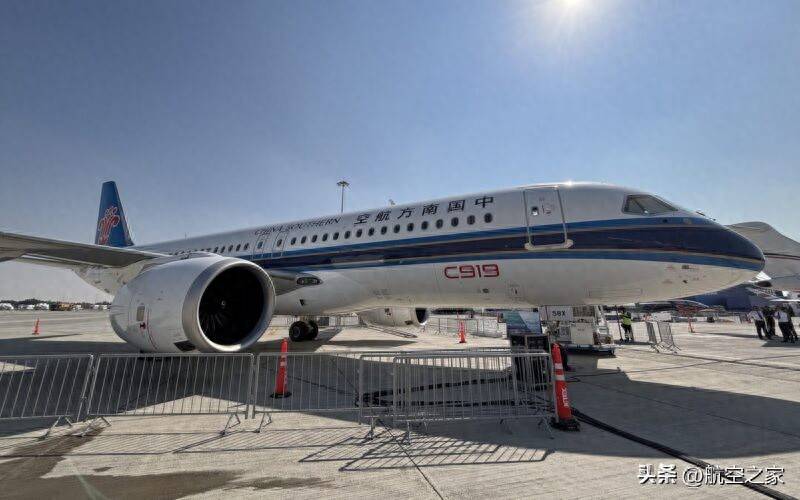
C919的欧洲航空安全局试飞:一场关乎“适航话语权”的跨国审计
Sou Hu Cai Jing· 2026-01-21 09:57
Core Viewpoint - The European Union Aviation Safety Agency (EASA) has completed a series of evaluation flights for China's COMAC C919 in Shanghai, marking a significant moment in Sino-European aviation cooperation, but it is primarily a deep audit of "airworthiness discourse" rather than just a technical test [2] Group 1: EASA Evaluation and Certification Process - EASA pilots assessed not only the basic performance of the C919 but also the human-machine interface (HMI), alarm system prioritization, and system redundancy under extreme conditions, focusing on whether these details align with European pilots' operational habits [2] - EASA has recognized the basic safety of the C919 but identified several initial adaptation issues that need optimization, which could delay certification due to the extensive software iterations and testing required [2] - EASA's projected certification timeline of 3 to 6 years is seen as a non-tariff barrier, reflecting both design logic conflicts and strategic considerations to maintain Airbus's market dominance until C919's production capacity matures [3] Group 2: Market Dynamics and Political Influences - Ryanair CEO Michael O'Leary's statement about purchasing C919 at a 20% discount is viewed as a negotiation tactic rather than a genuine procurement intention, using C919 as leverage against Boeing and Airbus [4] - The entry of C919 into Western markets is hindered by U.S. political barriers, with warnings from U.S. lawmakers labeling C919 as having military ties, which could lead to severe repercussions for Western airlines attempting to purchase it [5] Group 3: Strategic Market Focus - The true target market for C919 is not European airlines but rather emerging markets in Brazil, Southeast Asia, and the Middle East, where EASA certification serves as a "universal key" for market entry [6] - EASA's evaluation highlights that obtaining airworthiness certification is a test of comprehensive capabilities, often more challenging than aircraft manufacturing itself, suggesting that the focus should shift towards enhancing C919's international compliance and detail adaptation for emerging markets [7]
地缘政治催化金价飙升 多重利好构筑长期牛市
Jin Tou Wang· 2026-01-21 09:37
Core Viewpoint - Trump's radical remarks about Greenland have exacerbated the rift between the US and Europe, leading to a crisis of confidence in US assets, with the market trend shifting towards "selling dollars and buying gold" [1] Group 1: Market Reactions - The combination of a weak dollar, high global debt, and a trend towards de-dollarization has provided strong fundamental support for gold prices [1] - On a technical level, spot gold surged over 2% in a single day, breaking through the historical high of $4,880, which triggered a wave of quantitative funds entering the market [1] - The market shows clear differentiation: silver is under pressure, while platinum and palladium are fluctuating, highlighting the strong preference for gold among investors [1] Group 2: Price Movements and Sentiment - Institutions indicate that after breaking through key resistance levels, a "sell-off before reaching $5,000" mentality is spreading, transforming bullish consensus into a strong self-fulfilling momentum [1] - As of January 21, 16:41 Beijing time, spot gold was reported at $4,862.32 per ounce, with an increase of 2.09% [1]