产品创新

Search documents
外贸企业进入“后关税时代”
经济观察报· 2025-06-20 12:11
Core Viewpoint - The article emphasizes the necessity for Chinese foreign trade enterprises to diversify their overseas markets due to uncertainties in the U.S. market, marking a shift towards a "post-tariff era" where market diversification is a consensus among industry players [2][10]. Group 1: Market Diversification - Zhang Jiong, Vice President of the Guangdong Import and Export Chamber of Commerce, highlights the intense state of the U.S.-China tariff war and the impossibility of returning to previous conditions, urging companies to explore new markets [7][10]. - The cross-border e-commerce sector is particularly affected by tariff changes, with the tax rate on packages valued under $800 reduced from 120% to 54%, impacting low-priced products significantly [8][10]. - The North American e-commerce market is projected to be worth approximately $1.3 trillion in 2024, while the European market is valued at $800 billion, indicating substantial opportunities despite the challenges [9][10]. Group 2: Company Strategies - Guangdong Guanneng Electric Power Technology Development Co., a newcomer in foreign trade, has initiated an overseas expansion plan, focusing on markets outside the U.S. due to the potential in other regions [3][16]. - Ningbo Benye Heavy Industry Co. has pivoted towards the renewable energy sector, developing new products like firefighting reconnaissance robots, and plans to start expanding in Southeast Asia where market entry barriers are lower [12][13][14]. - Guanneng Technology aims to leverage its expertise in smart electric operation robots and plans to follow state-owned enterprises into overseas projects in regions like Australia and Malaysia, prioritizing quality and stability in its products [16][17]. Group 3: Emerging Markets - The article discusses the growing opportunities in Saudi Arabia, where local government initiatives are pushing for economic diversification away from oil dependency, creating a favorable environment for Chinese enterprises [20][21]. - A project involving collaboration between Chinese and Saudi companies is underway, focusing on the booming hotel industry and logistics capabilities in Riyadh, indicating a strategic move towards meeting local demands [21][22]. - The article also notes that while there are pressures in the domestic real estate sector, the Saudi market presents a viable opportunity for Chinese companies, emphasizing the importance of risk assessment before entering new markets [22].


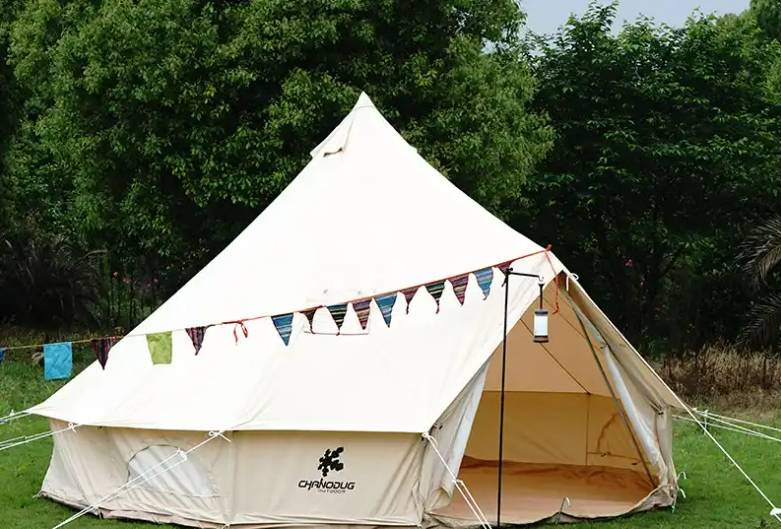
零距离租赁网:户外租赁帐篷行业竞争加剧:2025 年企业如何突出重围?
Sou Hu Cai Jing· 2025-06-20 11:06
Core Insights - The outdoor camping market in China is expected to exceed 248.3 billion yuan by 2025, driving the overall market size to over 1.4 trillion yuan, indicating a booming camping economy [1] - The outdoor tent rental industry is entering a golden development period amidst increasing competition, with many businesses entering the market, leading to rising market saturation [1] Consumer Demand - Consumers are seeking diverse and personalized outdoor camping experiences, moving beyond basic shelter to high-quality, unique products that align with their interests [3] - Younger consumers, particularly Generation Z, are attracted to trendy and innovative tents, such as those with smart temperature control systems or unique designs, and are willing to pay higher rental fees for these features [3] - Family customers prioritize safety, comfort, and spaciousness in tents, favoring options made from eco-friendly materials and designed for multiple occupants [3] Product and Service Quality - The quality of rental tents varies significantly, with some low-cost options lacking essential features like waterproofing and wind resistance, which negatively impacts consumer experience and industry reputation [4] - Companies must ensure high-quality materials and reliable performance in adverse weather conditions, while also enhancing service quality across all customer interaction points [4] - Implementing convenient online booking systems, professional installation services, and responsive customer support can significantly improve consumer satisfaction and loyalty [4] Innovation and Diversification - Innovation is crucial for companies to stand out, with opportunities to use biodegradable materials and new technologies for tent construction to meet consumer demand for sustainability [6] - Companies can explore diversified service models, such as bundling tent rentals with campsite tickets or offering professional photography services, to enhance the overall camping experience [6] - Utilizing digital tools for data analysis and smart tent management can improve operational efficiency and marketing precision [6] Brand Building and Market Expansion - Strong brand identity and consumer loyalty can be achieved through quality products, effective advertising, and social media engagement [8] - Collaborating with outdoor brands and tourism companies can enhance brand visibility and market reach, while expanding operations to popular tourist destinations can uncover new market opportunities [8] - Despite the competitive landscape in 2025, there are significant opportunities for companies that accurately understand market demands, prioritize quality, innovate, and strengthen brand presence [8]
外贸企业进入“后关税时代”
Jing Ji Guan Cha Wang· 2025-06-20 11:00
Core Viewpoint - The article discusses the shift of Chinese foreign trade enterprises towards market diversification in the "post-tariff era," emphasizing the need to explore new markets beyond the U.S. due to ongoing trade tensions and tariff challenges [2][3][4]. Group 1: Market Diversification - Companies are increasingly recognizing the importance of diversifying their markets to reduce reliance on the U.S. market, which is seen as uncertain and challenging [5][6]. - The Guangdong Import and Export Chamber of Commerce highlights that "market diversification" has become a consensus among foreign trade practitioners [3]. - The North American e-commerce market is projected to be valued at approximately $1.3 trillion in 2024, while the European market is valued at $800 billion, indicating significant opportunities despite challenges [4]. Group 2: Impact of Tariffs - The "800 USD exemption" for cross-border e-commerce packages remains a critical point in U.S.-China trade negotiations, affecting pricing strategies for low-cost products [3][4]. - The tariff rate for packages valued under $800 has decreased from 120% to 54%, but the fixed charge of $100 per item remains, impacting low-priced products significantly [3]. - Companies are warned that the situation may not improve significantly after the 90-day buffer period from the joint statement of the U.S.-China Geneva trade talks [4]. Group 3: Innovation and Brand Building - Trade tensions have prompted Chinese cross-border e-commerce companies to focus on brand building and product innovation to remain competitive [5]. - Companies are exploring new business models, such as social e-commerce and live-streaming sales, to adapt to changing global trade policies [5]. Group 4: New Market Opportunities - Companies like Ningbo Benye Heavy Industry Co., Ltd. are entering the renewable energy sector, indicating a shift towards innovative products and services [6][7]. - The company plans to expand into Southeast Asia, leveraging familiarity with the market and lower entry barriers while ensuring comprehensive service offerings [7]. - The Saudi Arabian market is highlighted as a growing opportunity for Chinese companies, with ongoing projects aimed at diversifying the local economy away from oil dependency [11][12].

天猫“反内卷”、美妆超预期?首个618三方共赢实验
FBeauty未来迹· 2025-06-20 09:31
Core Insights - The 618 shopping festival has undergone a significant transformation this year, with a shift in focus from extreme GMV pursuit to enhancing brand value and consumer experience [2][20][31] Group 1: Market Performance - From January to May 2023, the retail sales of cosmetics in China reached 188.9 billion yuan, a year-on-year increase of 4.1%, with May's sales at 43.5 billion yuan, up 4.4% [2][4] - The overall e-commerce sales during the 618 festival reached 855.6 billion yuan, marking a year-on-year growth of 15.2%, with skincare sales at 43.2 billion yuan and fragrance and makeup at 14.3 billion yuan [5][6] - High-end beauty brands saw significant growth, with brands like YSL and Hourglass reporting over 60% year-on-year increases [9][10] Group 2: E-commerce Platform Changes - Major e-commerce platforms, particularly Tmall, have simplified their promotional strategies, eliminating complex rules and focusing on direct discounts to enhance consumer experience [14][20] - Tmall's 618 festival saw a 9% year-on-year growth in the first cycle, with a significant increase in user engagement and purchasing intent [18][23] - The introduction of features like "sold-out add-to-cart" has improved inventory management for merchants while enhancing the shopping experience for consumers [17][20] Group 3: Brand Dynamics - International beauty brands have experienced strong growth on Tmall, with a ratio of domestic to international brands at 5:15 [7] - New and innovative brands have emerged, with some achieving over 900% growth during the 618 festival, indicating a shift towards quality and innovation in the beauty sector [10][12] - The consumer preference for familiar brands has increased, with 47% of Chinese consumers indicating a tendency to choose known brands, up 14 percentage points from 2024 [22][23] Group 4: Future Trends - The beauty industry is moving towards a phase where brand value, product innovation, and operational efficiency are prioritized over mere sales volume [31][32] - E-commerce platforms are focusing on supporting high-quality brands and providing strategic guidance to enhance brand growth [26][29] - The market is transitioning from a focus on traffic-driven growth to a more sustainable model that emphasizes brand loyalty and consumer satisfaction [31][32]





太平鸟:零售业绩承压 多举措重塑增长势能
Zheng Quan Ri Bao Wang· 2025-06-19 12:44
Core Viewpoint - The company is undergoing a strategic transformation to enhance brand value and operational quality, despite facing short-term pressure on annual performance [1] Group 1: Financial Performance - In 2024, the company achieved a revenue of 6.802 billion and a net profit of 258 million [1] - The company experienced a net reduction of 358 stores in 2024, focusing on improving store quality and profitability [1] Group 2: Strategic Initiatives - The company is enhancing its offline store layout while simultaneously strengthening its online e-commerce platform to create a comprehensive retail network [2] - The company is actively expanding social retail channels through platforms like Douyin and Xiaohongshu to engage consumers and enhance brand loyalty [2] Group 3: Product Development - In 2024, the company's R&D investment accounted for 2.55% of its revenue, indicating an increase from the previous year [2] - The company is focusing on customer-centric approaches and data-driven strategies to optimize the entire supply chain from design to marketing [2] Group 4: Market Positioning - The company's shift from "multi-point multi-store" to a main brand integrated store model is seen as strategically forward-looking, aimed at enhancing brand reputation [3] - There is a need for further breakthroughs in product development and supply chain responsiveness to meet diverse consumer demands [3]

影石的三大追问
雷峰网· 2025-06-19 12:08
Core Viewpoint - The article discusses the competitive landscape between Insta360 and DJI, highlighting the challenges Insta360 faces post-IPO and the strategies it employs to maintain its market position against DJI's aggressive tactics [2][3][14]. Group 1: Company Overview and Market Position - Insta360's market capitalization surged to nearly 80 billion yuan after its IPO, reflecting investor optimism despite the competitive pressures from DJI and other rivals [2]. - The company has undergone significant organizational restructuring to adapt to its growth and the competitive landscape, particularly in the panoramic camera segment [2][3]. - Insta360's current market share in the panoramic camera segment is projected to be 81.7% in 2024, with DJI expected to capture around 20% [16]. Group 2: Competitive Strategies - Insta360 has adopted a proactive approach by launching the Insta360 X5 ahead of schedule, reducing the product cycle from two years to one year [5]. - The company has significantly increased its marketing budget for the X5, utilizing various channels and KOLs to enhance brand recognition and consumer awareness [6][11]. - In contrast, DJI has historically been hesitant to invest heavily in marketing but has recently ramped up its efforts in response to the competitive threat posed by Insta360 [10][12]. Group 3: Product Development and Innovation - The Insta360 X5 features an upgraded 1/1.28-inch CMOS sensor, improving low-light performance and addressing issues seen in previous models [11][12]. - DJI's upcoming Osmo 360 is expected to face challenges in matching the performance of the X5 due to its current sensor specifications [12][13]. - Insta360's strategy focuses on continuous product innovation rather than engaging in price wars, which is seen as a more sustainable approach in the long term [26][27]. Group 4: Financial Valuation and Market Expectations - The current price-to-earnings (PE) ratio of 70 for Insta360 is considered excessive by some investors, with a more reasonable range suggested to be between 20-30 [15]. - Despite the high PE ratio, it reflects market confidence in Insta360's potential to navigate the competitive landscape effectively [15]. - The financial disparity between DJI and Insta360 is significant, with DJI's annual profits exceeding 10 billion yuan compared to Insta360's approximately 1 billion yuan [17][25]. Group 5: Management Perspective and Future Outlook - Insta360's management emphasizes the importance of product quality and innovation over price competition, aiming to avoid the pitfalls of a price war [26][27]. - The company is focused on expanding its product lines and enhancing its organizational structure to better compete in a rapidly evolving market [28]. - The entry of DJI into the panoramic camera market is viewed as a double-edged sword, potentially expanding the overall market while also intensifying competition [22].

安凯客车:以创新实力引领商用车高质量发展
Zhong Guo Chan Ye Jing Ji Xin Xi Wang· 2025-06-17 22:12
Core Viewpoint - Ankai Bus has been recognized for its outstanding contributions to the transportation industry, showcasing its commitment to product innovation, service enhancement, and social responsibility in the context of high-quality development in China's commercial vehicle sector [1][2][3] Group 1: Awards and Recognition - Ankai Bus received two prestigious awards: "Outstanding Contribution Unit for Major Event Transportation Services" and "Service Gold Reputation Award" at the recent forum [1] - The N12 and E12S double-decker sightseeing buses were awarded "Hot-Selling Model" and "Tourism Gold Reputation Award," respectively, highlighting Ankai's strong market performance [1][2] Group 2: Product Innovation and Market Performance - The N12 luxury highway bus is designed for the high-end passenger transport market, featuring a new "smile front" design and advanced comfort systems, catering to the growing demand for personalized and high-quality travel experiences [1][2] - The E12S double-decker sightseeing bus, known for its spacious design and cultural integration, has been deployed in major cities and exported to countries like the USA, UK, and France, enhancing the "public transport + tourism" development model [2] Group 3: Service Excellence - Ankai Bus has established a comprehensive service network based on four core functions: sales service, information management, parts supply, and warranty support, achieving significant improvements in service response efficiency and customer satisfaction [3] - The company has received multiple industry certifications, including the first "Five-Star" after-sales service certification in the bus industry, and has been recognized as a service brand leader for five consecutive years [3] Group 4: Future Outlook - Ankai Bus aims to continue driving technological innovation and service upgrades, contributing to sustainable global transportation development with a focus on "green intelligence empowerment" [3]

陷入“中年危机” 迭代成发展主旋律 传统包装面包向创新要出路
Zhong Guo Chan Ye Jing Ji Xin Xi Wang· 2025-06-17 00:35
Core Viewpoint - The traditional packaged bread industry in China is facing significant challenges, leading to a "mid-life crisis" as new brands and innovative baking models rapidly emerge, necessitating innovation and upgrades across the entire baking sector [1][2]. Group 1: Challenges Faced by Traditional Brands - Traditional packaged bread brands are experiencing a decline, attributed to insufficient product innovation, quality issues, and decreasing profit margins [2]. - There has been a notable reduction in R&D spending among traditional brands, which is critical for developing new products and meeting diverse market demands [2]. - The market is increasingly stratified, with short-shelf-life brands struggling to penetrate lower-tier cities, where long-shelf-life brands dominate due to lower transportation costs and higher turnover rates [2]. Group 2: Market Competition and Consumer Preferences - Changing consumer perceptions are undermining the traditional belief that short-shelf-life equals freshness, with consumers now valuing product innovation, affordability, and clean ingredient lists [3]. - New brands are gaining traction through innovative products, targeted marketing, and digital operations, appealing particularly to younger consumers [3]. - The disruption of channel dynamics, including the rise of fresh baking in convenience stores and supermarkets, is a significant driver of change in the traditional packaged bread market [3][4]. Group 3: Strategies for Innovation and Growth - To attract younger consumers, traditional brands must understand their preferences and engage in collaborations with trendy brands, as well as leverage social media for brand promotion [5]. - Exploring new growth points and consumption scenarios is essential, including focusing on specific demographics and expanding delivery models to adapt to the evolving market landscape [6]. - The introduction of DIY baking kits, which allow consumers to create fresh bread at home, could meet the demand for fresh experiences while fostering consumer interaction [6].
泡泡玛特珠宝店首店开张;永辉“胖东来模式”调改完成100店;星巴克中国降价 | 品牌周报
3 6 Ke· 2025-06-15 09:14
Group 1: Pop Mart's Expansion - Pop Mart's independent jewelry brand popop opened its first global store in Shanghai, featuring popular IP jewelry priced between 319-2699 yuan [1] - The brand aims to capture a share of the global $50 billion fashion jewelry market, leveraging its existing 70-75% female user base and IP brand strength [1] - Pop Mart's market capitalization reached over 360 billion HKD as of June 13, with a target of achieving 20 billion yuan in total revenue by 2025, including 10 billion yuan from overseas markets [1] Group 2: Inditex's Underperformance - Inditex reported Q1 2025 revenue of 8.27 billion euros, below analyst expectations of 8.36 billion euros, with a net income increase of only 0.8% to 1.3 billion euros [2] - Summer sales growth has slowed, with a 6% increase from May 1 to June 9, compared to a 12% increase in the same period last year [2] - Inditex operates 5,562 stores globally and focuses on unique fashion propositions, customer experience, sustainability, and talent development [2] Group 3: H&M's Sales Decline - H&M experienced a sales increase of only 1% in March, down from 4% in the same month last year, with a 2% revenue growth from December 2024 to February 2025, below analyst expectations [3] Group 4: Yonghui Supermarket's Model Adjustment - Yonghui Supermarket completed the adjustment of the "Fat Donglai" model in 100 stores, focusing on upgrading "people, goods, and space" [4] - The company aims to enhance employee skills, transition from "cost performance" to "quality-price ratio," and upgrade retail spaces to quality life centers [4] Group 5: L'Oréal's Acquisition of Medik8 - L'Oréal announced the acquisition of a majority stake in UK skincare brand Medik8, pending regulatory approval, to strengthen its luxury product portfolio [5][6] - Medik8 is known for its effective skincare products and has established a strong brand image in clinical and scientific skincare [6] Group 6: Starbucks' Stake Sale Consideration - Starbucks is considering selling a portion of its Chinese business to attract external investors and restore growth in the region [7] - The CEO noted significant interest from potential investors, with plans to increase store numbers from 8,000 to 20,000 [7] Group 7: New Product Launches - "Let Tea" and JD.com launched a new product, "Orange C Oolong Tea," featuring a no-sugar formula with added vitamin C [8] - Lululemon introduced the second season of its SLNSH designer collaboration series, focusing on breathable and functional materials for summer [9] - Nongfu Spring launched a carbonated tea drink called "Ice Tea," emphasizing natural ingredients and health trends [10] Group 8: Dr. Martens' Revenue Decline - Dr. Martens reported a 10% decline in net revenue to 790 million pounds for FY2025, with net profit dropping significantly to 4.5 million pounds [14] - Direct sales revenue fell by 4.2%, while wholesale revenue decreased by 19.5%, with EMEA and Americas regions seeing declines of 11% and 11.4%, respectively [14] Group 9: Other Company Developments - Salia plans to establish its China headquarters in Guangdong to accelerate its business expansion [15] - Baifei Dairy's IPO application has been accepted, marking the first food consumption project in the Shanghai Stock Exchange for 2024 [16] - Fat Donglai estimates a net profit of 1.5 billion yuan for 2025, with an average monthly income of 9,000 yuan for employees [17] - Haidilao has introduced a self-service lunch priced at 22 yuan in some locations, reflecting a strategy to find new growth points [18] - Nissin Foods is shifting sales focus to inland markets in China, particularly in industrial towns [19] - General Mills is reportedly considering selling its Haagen-Dazs stores in China for several hundred million dollars [20] - Starbucks China announced a price reduction of 5 yuan on various iced and tea drinks to compete in the growing non-coffee market [21]





冰淇淋旺季竞争加剧
Huan Qiu Wang· 2025-06-15 01:45
Group 1 - The ice cream market is entering a sales peak in mid-June 2025, with increased competition and new product launches [1][3] - General Mills, the parent company of Häagen-Dazs, reported a continuous decline in store traffic in China, indicating challenges faced by foreign brands in adapting to local market demands [1] - Domestic dairy companies like Mengniu and Yili are looking to boost their performance through ice cream sales, while Unilever plans to independently list its ice cream brand this year [1] Group 2 - Companies are preparing for the summer season earlier, with Unilever announcing 31 new products in January, two months ahead of last year [1] - Traditional best-selling ice cream products remain stable in sales, with popular items priced around 5 yuan, appealing to a wide range of consumers [1] - Analysts note that competition is shifting from price wars to product innovation, channel expansion, and refined operations, with major companies like Yili and Unilever reducing reliance on price adjustments for growth [3]