制度型开放

Search documents
勇立潮头向未来(奋勇争先,决战决胜“十四五”)
Ren Min Ri Bao· 2025-10-05 21:52
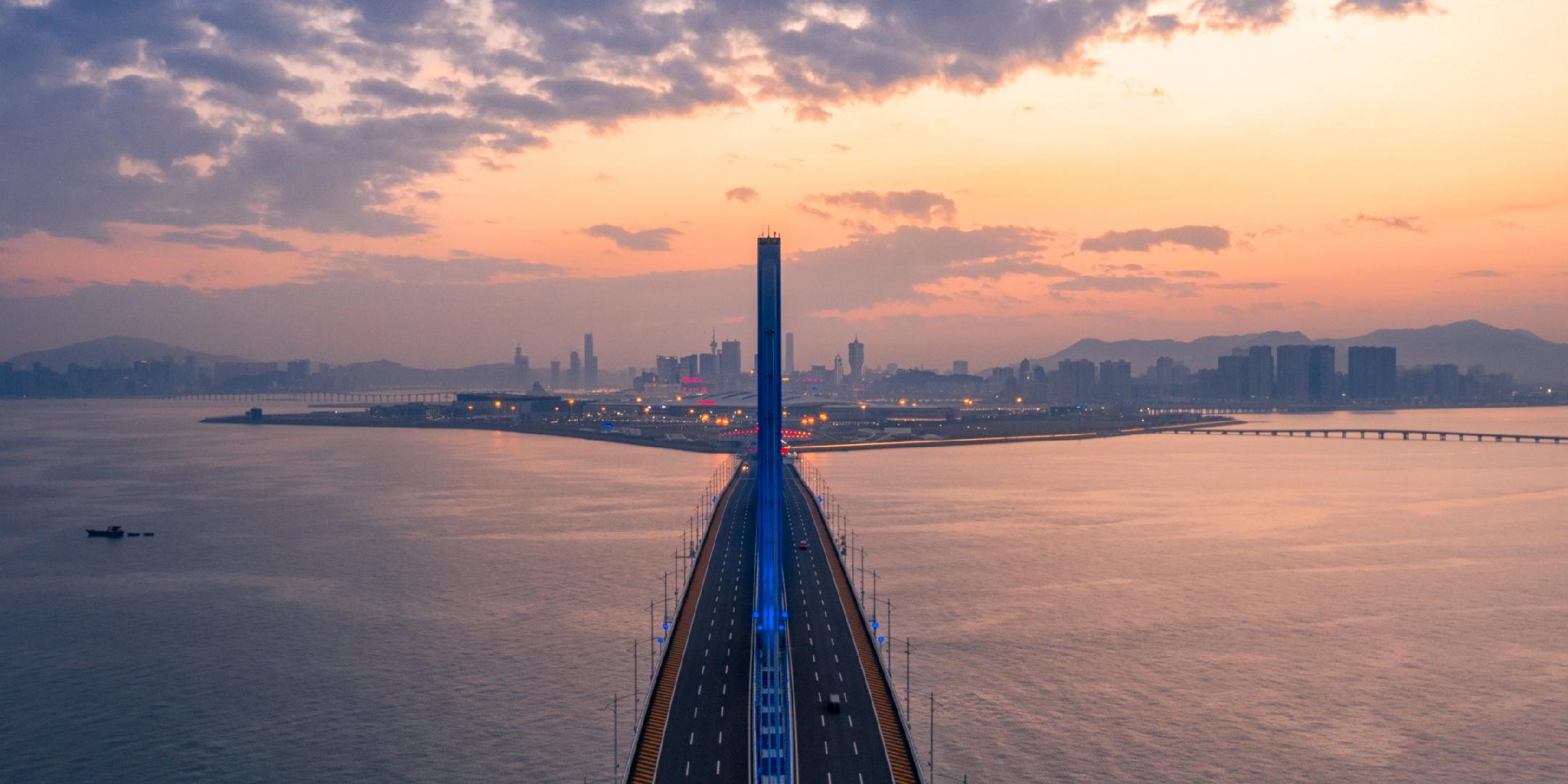
Group 1 - The Guangdong-Hong Kong-Macao Greater Bay Area (GBA) is a unique region characterized by "one country, two systems, three customs zones, and three currencies," making it unprecedented internationally [1][2] - The GBA is recognized as one of the most open and economically vibrant areas in China, with a strategic focus on high-quality development and modernization [2][3] - The GBA's economic total is projected to reach 14 trillion yuan during the 14th Five-Year Plan period, marking significant progress in building a world-class city cluster [3] Group 2 - The GBA is enhancing connectivity through "hard," "soft," and "heart" connections, facilitating deeper cooperation between mainland China and Hong Kong/Macao [5][10] - The Shenzhen-Zhongshan Bridge has seen an average daily traffic of over 86,400 vehicles, accounting for about 20% of the total cross-river traffic in the Pearl River Delta [6][7] - The GBA is developing a "one network, one ticket, one city" system, accelerating the formation of a "railway-based Greater Bay Area" [9] Group 3 - The GBA is experiencing a surge in cross-border travel, with the Guangzhou-Shenzhen-Hong Kong Express Rail Link transporting 15.03 million passengers in the first half of the year, a 16.1% increase year-on-year [10] - New policies are being implemented to facilitate cross-border travel and trade, including "one sign for multiple trips" for residents traveling from Zhuhai to Macao [12][13] - The GBA is fostering a collaborative innovation environment, with over 200 high-end research projects initiated in the Shenzhen-Hong Kong Innovation and Technology Cooperation Zone [16][19] Group 4 - The GBA is focusing on high-standard trade and investment rules to enhance international cooperation and competitive advantages [20][23] - The introduction of a cross-border data verification platform has enabled mainland enterprises operating in Hong Kong to secure nearly 100 million Hong Kong dollars in loans [25][26] - The GBA's foreign trade has shown resilience, with the nine cities in the Pearl River Delta achieving an import-export total of 4.38 trillion yuan, a 4.3% year-on-year increase [28][29]
王一鸣:纵深推进全国统一大市场建设的基本要求和任务|宏观经济
清华金融评论· 2025-10-03 09:39
Core Viewpoint - The construction of a unified national market is essential for leveraging China's vast market advantages, building a high-level socialist market economy, and supporting the new development pattern [2][3]. Group 1: Significance of Advancing a Unified National Market - Advancing the unified national market is a strategic measure to unleash China's enormous domestic demand potential and promote sustained economic recovery [3]. - It is necessary to enhance the unity, openness, competitiveness, and orderliness of the market system to fully realize the potential of China's super-large market [5]. - The unified national market serves as a strategic support for constructing a new development pattern, facilitating smooth circulation of goods and resources, and enhancing international competitiveness [6]. Group 2: Unified Market Basic System - The core of the unified market basic system includes unified property rights protection, market access, fair competition, and social credit systems to ensure uniformity of institutional rules nationwide [7]. - Strengthening the unified property rights protection system is crucial for the operation of the socialist market economy, particularly for non-public economic entities [7]. - Implementing a unified market access system is essential to eliminate local protectionism and market segmentation, ensuring equal access for all market entities [8]. Group 3: Unified Market Infrastructure - High-standard connectivity of market infrastructure is fundamental for the smooth flow and efficient allocation of goods and resources [10]. - Enhancing the modern logistics system and commercial circulation system is vital to reduce logistics and transaction costs, thereby improving market operation efficiency [10][11]. - The construction of a modern commercial circulation system is necessary to promote the integration of commerce and circulation, enhancing overall efficiency [11]. Group 4: Unified Government Behavior Standards - Standardizing government behavior is essential for maintaining fair competition in the market, particularly in areas like investment attraction and procurement [12]. - It is important to eliminate regulations that hinder the construction of a unified market and ensure fair competition in the bidding and procurement sectors [13][20]. Group 5: Unified Market Supervision and Law Enforcement - Establishing unified market supervision rules is crucial for creating a fair competitive market order and enhancing regulatory efficiency [14]. - Improving the effectiveness of market supervision through various methods, including big data and digital technologies, is necessary for advancing the unified national market [14][22]. Group 6: Unified Factor Resource Market - A unified factor resource market is essential for promoting the free flow and efficient allocation of production factors such as land, labor, capital, technology, and data [15]. - Developing a unified capital market and enhancing the interconnectivity of various financial infrastructures are critical for facilitating resource allocation [16]. Group 7: Expanding Domestic and International Openness - Continuous expansion of both domestic and international openness is fundamental for fostering competitive conditions in the unified national market [17]. - Promoting the integration of domestic and international markets will enhance the efficiency of resource allocation and support the new development pattern [21]. Group 8: Focus on Key Challenges - Addressing "involution" in competition, which leads to price wars rather than innovation, is essential for fostering a healthy competitive environment [19]. - Promoting the orderly exit of outdated production capacity and enhancing industry concentration are necessary for improving market efficiency [19].

拓展中国式现代化广阔空间
Jing Ji Ri Bao· 2025-10-02 22:15
Core Insights - China is advancing towards a new phase of institutional openness, aiming to align domestic regulations with international high-standard economic and trade rules, thereby enhancing its global economic engagement [2][4][10] Group 1: Institutional Openness - China is actively engaging in international economic and trade rule-making, including efforts to join the Comprehensive and Progressive Agreement for Trans-Pacific Partnership (CPTPP) [2][3] - The establishment of Free Trade Zones (FTZs) is a key strategy for promoting institutional openness, with 22 FTZs launched during the 14th Five-Year Plan, resulting in nearly 200 institutional innovations [3][4] - The Hainan Free Trade Port is set to achieve full island closure operations, serving as a new high ground for China's high-level opening-up [3] Group 2: Financial Sector Developments - The financial sector has seen significant foreign investment, with restrictions on foreign ownership in key areas like securities and insurance lifted, enhancing international competitiveness [4][5] - Major global financial institutions have established wholly-owned subsidiaries in China, indicating a growing international presence in the Chinese financial market [4] Group 3: Foreign Investment Trends - In 2024, China attracted $116.24 billion in foreign direct investment, maintaining its position as the leading developing economy for foreign investment [6] - The proportion of foreign investment in high-tech industries reached 34.6%, reflecting a shift towards high-value and high-tech sectors [6] Group 4: Digital Trade and Innovation - Digital trade is emerging as a new competitive advantage for China, with significant investments in digital infrastructure and technology innovation [7] - China is actively participating in international digital trade negotiations and initiatives, enhancing its global competitiveness in digital products and services [7] Group 5: Global Economic Cooperation - China is promoting inclusive and sustainable global economic development through various initiatives, including the Belt and Road Initiative, which has seen trade with partner countries grow significantly [8][9] - The country is committed to reducing the North-South gap by offering zero-tariff rates on products from least developed countries that have diplomatic relations with China [9] Group 6: Future Outlook - China aims to continue its path of openness and innovation, fostering high-quality development and contributing to a more inclusive and sustainable global economy [10]
如何看待中国增设K字签证
Huan Qiu Shi Bao· 2025-09-30 03:29
Core Points - The introduction of the K visa aims to enhance the exchange and cooperation of young scientific and technological talents between China and foreign countries, reflecting a more open and confident China [1][2][3] - The K visa is designed specifically for foreign young scientific and technological talents, facilitating their entry into China without the need for a domestic employer or invitation [1][2] - The global talent mobility landscape is shifting from a traditional one-way model to a more diverse and bilateral flow, with significant growth in international migration numbers [1][2] Group 1 - The K visa represents a practical implementation of China's institutional openness, addressing the actual needs of talent mobility and aligning with the characteristics of innovation activities [2][3] - This policy not only provides convenience for foreign young talents but also demonstrates the systematic and forward-looking nature of China's talent policies [2][3] - The management of the new visa measures will be crucial for future success, marking a strategic deployment in global talent governance [2][3] Group 2 - Talent mobility has evolved beyond mere technology transfer to become a process of optimizing the allocation of innovative factors, essential for technological advancement and economic development [2][3] - The collaboration of talents from different cultural backgrounds can generate synergistic effects, particularly in cutting-edge fields like biomedicine and artificial intelligence [2][3] - China's K visa differs from the U.S. H-1B visa, focusing on facilitating international talent exchange and technological innovation rather than solely employment [3][4] Group 3 - China's approach to talent mobility reflects a strategic choice based on its development needs, showcasing its confidence and providing new ideas for global talent governance [4] - The K visa's introduction has garnered significant attention globally, indicating China's growing attractiveness as a destination for international talent [3][4]
广东吸引外资三重跃迁背后的开放进阶
2 1 Shi Ji Jing Ji Bao Dao· 2025-09-29 23:22
Core Insights - Guangdong is experiencing significant growth in foreign direct investment (FDI) despite a global decline, with new foreign enterprises increasing by 34% and actual FDI amounting to 70.87 billion yuan, a 9.4% increase year-on-year [1][2] - The province's ability to attract foreign investment is attributed to its strategic role in China's new development pattern and its strong industrial foundation [1][4] Summary by Sections Foreign Investment Growth - Guangdong established 21,000 new foreign enterprises from January to August this year, significantly outperforming the national average [1] - The actual FDI in Guangdong reached 70.87 billion yuan, contrasting with a national FDI decline of 13.4% in the same period [1][2] Historical Phases of Foreign Investment - The first phase (early reform to mid-1990s) saw Guangdong attract capital primarily from Hong Kong and Taiwan, focusing on labor-intensive industries [2] - The second phase (mid-1990s to around 2010) marked diversification of foreign investment sources, with a rise in technology-intensive sectors, establishing Guangdong as a global manufacturing hub [2][3] Current Trends in Foreign Investment - The third phase reflects a shift towards high-quality foreign investment, focusing on innovation and integration into local supply chains, with Guangdong becoming a center for advanced manufacturing [3][5] - The province is now a leader in strategic emerging industries like semiconductors, robotics, and biomedicine, with foreign investments increasingly directed towards R&D and innovation [5][6] Regional Development and Market Dynamics - The Guangdong-Hong Kong-Macau Greater Bay Area is transitioning from a "world factory" to a "global innovation hub," attracting foreign investment through high-level openness and industrial transformation [4][6] - Guangdong's large consumer market and geographical advantages are prompting foreign companies to shift their focus from international manufacturing to meeting local demand [7][8] Investment Environment and Policy Support - Guangdong has implemented a series of policies to enhance its investment environment, including measures to protect foreign investment rights and attract multinational corporations [9][10] - The province's proactive approach has resulted in over 100 investment promotion events this year, reinforcing its appeal to foreign investors [9] Future Outlook - The region is positioned as a key player in the global supply chain, with ongoing projects enhancing its manufacturing capabilities and market responsiveness [8][9] - Guangdong's commitment to innovation and collaboration is expected to further solidify its status as a preferred destination for foreign investment [12]
扎实迈向更高水平金融开放
Jin Rong Shi Bao· 2025-09-29 02:05
Core Viewpoint - China's financial opening during the "14th Five-Year Plan" period has been steady and robust, contributing significantly to high-quality economic development [1][2][3] Group 1: Financial Opening Achievements - The financial sector has seen a clear "construction blueprint" for opening up, with specific achievements over the past five years [1] - The international status of the Renminbi has steadily risen, and the construction of international financial centers has progressed [1] - The business environment has become more friendly and inclusive, enhancing the ability to prevent financial risks within an open framework [1] Group 2: Future Directions for Financial Opening - The commitment to expanding high-level financial opening remains unchanged, focusing on building a mutually beneficial financial development framework [2] - There is a need to continue expanding institutional financial opening, leveraging successful experiences from free trade zones and ports [2] - Enhancing financial services for the real economy is crucial, supporting enterprises to utilize both domestic and international markets effectively [2] Group 3: Long-term Vision - Financial high-level opening is a long-term and systematic project, with significant progress made during the "14th Five-Year Plan" period [3] - The future of financial opening will advance to higher levels, deeper layers, and broader fields, continuing to move forward steadily [3]
时隔11年自贸区条例重新修订 更加强调系统集成与整体谋划 “无缝衔接”国际高标准经贸规则
Jie Fang Ri Bao· 2025-09-28 01:34
Core Points - The newly revised "China (Shanghai) Free Trade Pilot Zone Regulations" aims to showcase the achievements and confidence of the Shanghai Free Trade Zone over the past decade, emphasizing its role as a national leader in reform and innovation [1][2] - The revision highlights a shift from a focus on "first-line liberalization and second-line control" to a more comprehensive approach that includes post-border management, covering various areas such as environmental protection, labor standards, and digital trade [2] - The regulations aim to align with international high-standard economic and trade rules, particularly in the digital economy, by promoting innovation, cross-border technology transactions, and data security compliance mechanisms [2][3] Industry Implications - The financial sector is transitioning from a focus on "financial services" to "financial openness," indicating a deeper level of institutional opening, with measures to enhance financial infrastructure and cross-border financial services [3] - The regulations support the development of technology finance, green finance, and digital finance, reflecting a commitment to fostering innovation and attracting global talent [3] - The new policies aim to streamline the process for foreign talent to work and reside in Shanghai, enhancing the city's appeal as a hub for international talent in key industries such as biomedicine and artificial intelligence [3]
广东不必学江苏经济模式,也难以复制|微观视界
Jing Ji Guan Cha Wang· 2025-09-28 01:13
Economic Overview - In 2024, Guangdong's GDP reached 14.16 trillion yuan, while Jiangsu's GDP was 13.7 trillion yuan, narrowing the gap to 462.6 billion yuan. Jiangsu's real growth rate of 5.8% significantly outpaced Guangdong's 3.5% [2] - By the first half of 2025, Jiangsu's GDP was 669.68 billion yuan, and Guangdong's was 687.25 billion yuan, further reducing the economic gap to 175.76 billion yuan, the smallest in nearly six years [2] Infrastructure Investment - Since 2019, Jiangsu has shown a clear upward trend in infrastructure investment growth, while Guangdong's investment has been declining. In 2024, Jiangsu's infrastructure investment growth was 13.3%, compared to Guangdong's mere 0.2% [2][3] - Jiangsu's county-level state-owned enterprises (SOEs) have significantly larger financing scales compared to Guangdong, with Jiangsu's county SOEs financing 8.54 trillion yuan through 481 enterprises, while Guangdong's 49 enterprises financed only 1.54 trillion yuan [3] Development Models - Jiangsu's development model is characterized by "government-led, park-driven, and debt-supported," while Guangdong's model emphasizes "market-led, private enterprise-driven, and global layout" [5] - Jiangsu's unique fiscal system allows county-level governments significant financial autonomy, enabling them to mobilize resources effectively, unlike Guangdong, where only a few cities have similar fiscal arrangements [5][8] Financing Mechanisms - Jiangsu has a special financial support mechanism for county-level investment companies, allowing them to obtain funds at costs below 3%, creating a sustainable funding loop for infrastructure projects [6] - In contrast, Guangdong's financing relies heavily on government special bonds, raising concerns about its future economic sustainability [3][6] Cultural and Risk Factors - The cultural differences between Jiangsu and Guangdong affect their economic governance, with Jiangsu's model being more reliant on government intervention, while Guangdong's market-oriented approach fosters greater entrepreneurial spirit [9][10] - Guangdong's historical financial issues have led to a more cautious approach to debt, limiting its ability to replicate Jiangsu's high-leverage investment strategies [10][19] Consumer Market Potential - Guangdong's large domestic market, with a retail sales total of 4.79 trillion yuan in 2024, provides significant opportunities for industrial development, emphasizing the importance of building a consumer market [11][12] - The province's manufacturing sector is diverse, with a complete industrial chain, making it well-positioned to transition from "Made in Guangdong" to "Brand from Guangdong" [11][14] Internationalization and Reform - Guangdong needs to enhance its internationalization efforts, drawing lessons from Japan's overseas investment strategies to support its manufacturing sector [15][17] - The province should explore institutional reforms to enhance its role as a "co-legislator" in national policy-making, particularly in areas like cross-border finance and professional services [18][19]
AI驱动制度型开放,浙江数字自贸区建设迎来新阶段
Mei Ri Shang Bao· 2025-09-28 00:10
Core Insights - The core task of the Free Trade Zone (FTZ) is to test systems for national development, with AI emerging as a crucial enabling factor for institutional openness [1][2] - The Zhejiang FTZ has achieved 458 institutional innovations in the digital field, including 122 national firsts, laying a solid foundation for high-quality development [1] - The event highlighted the transition of the digital FTZ into a new phase of technology-driven institutional innovation [1][2] Group 1 - The Zhejiang FTZ has launched the "Top Ten Institutional Innovation Cases of Digital FTZ by 2025," providing a "Zhejiang experience" for the nation [1] - A public service and security platform for cross-border data flow in the Hangzhou area has been officially launched, supporting the safe and orderly movement of data elements [1] - A cooperation agreement for innovative collaboration has been signed between the Zhejiang FTZ and Hainan Free Trade Port, marking a new chapter in institutional innovation and industrial collaboration [1] Group 2 - AI industry development requires high-quality data support, and establishing a convenient data exit mechanism is crucial [2] - The concept of creating an "International Data Processing Hub" has been proposed to transform the FTZ from a data channel to a data value-added area [2] - The Hangzhou area has initiated a "Free Trade Zone AI + Cooperation Initiative" in collaboration with eight other FTZs, aiming to build an "AI + FTZ" innovation community [2] Group 3 - The construction of the Zhejiang digital FTZ has evolved from isolated technology applications to a new stage of systematic institutional innovation [2] - By focusing on data value realization, modern governance, and regional collaboration, Zhejiang is accelerating its transition from a "testing ground" to an "innovation source" [2] - The region aims to contribute more Zhejiang experience to China's participation in the formulation of global digital trade rules [2]
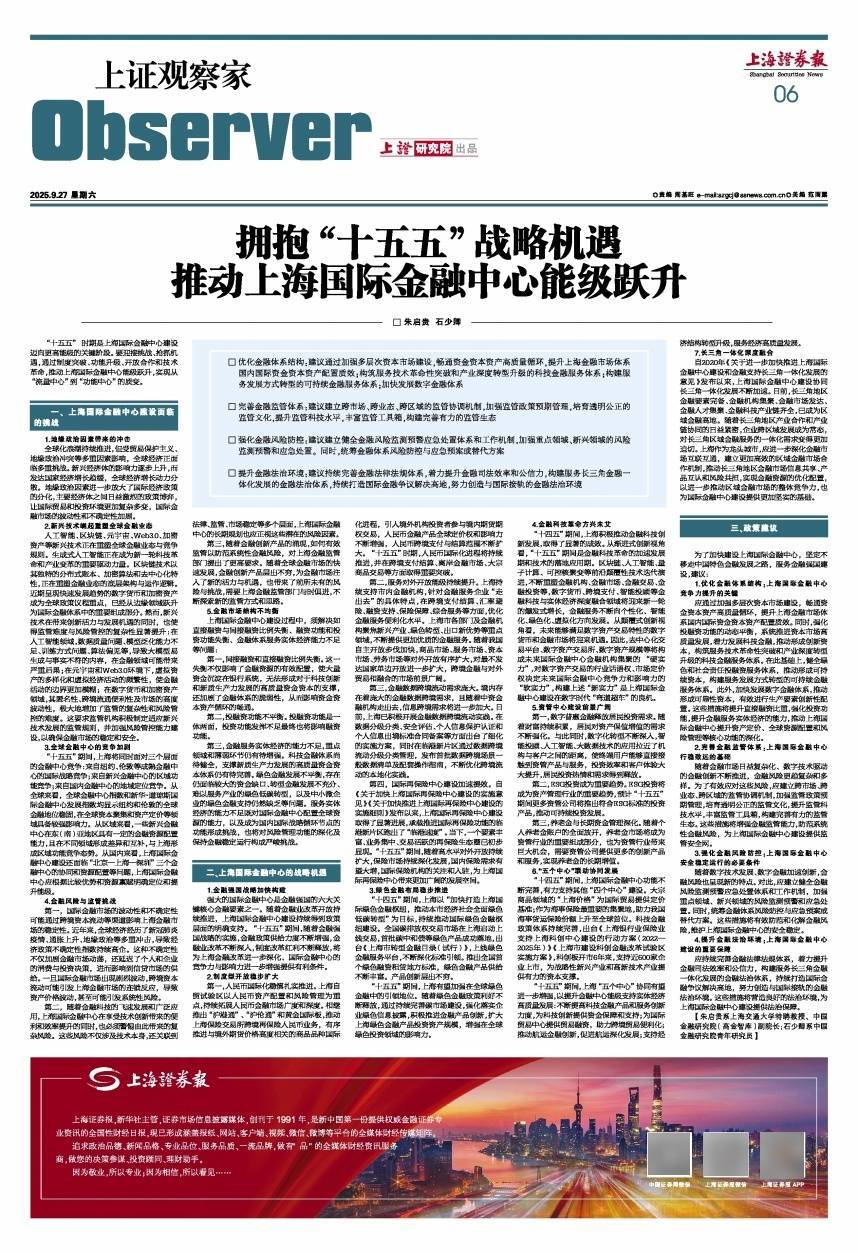
上证观察家 | 拥抱“十五五”战略机遇 推动上海国际金融中心能级跃升
Sou Hu Cai Jing· 2025-09-27 02:50
Core Insights - The construction of Shanghai International Financial Center is entering a critical phase during the "14th Five-Year Plan" period, aiming for a transformation from a "flow center" to a "functional center" through institutional breakthroughs, functional upgrades, open cooperation, and technological revolutions [1][7]. Challenges Facing Shanghai International Financial Center - Geopolitical factors are creating shocks, leading to increased volatility and uncertainty in international financial markets, complicating the international trade and investment environment [8]. - Emerging technologies such as AI, blockchain, and digital currencies are reshaping the global financial landscape, presenting both opportunities and regulatory challenges [9]. - Competition from established financial centers like New York and London, as well as emerging financial hubs, is intensifying, necessitating a clear positioning for Shanghai [10]. - Financial risks and regulatory challenges are heightened due to market volatility, technological advancements, and the emergence of innovative financial products [11]. Strategic Opportunities for Shanghai International Financial Center - The financial power strategy is accelerating, with ongoing policy support for the development of Shanghai as an international financial center [14]. - Institutional openness is expanding, with initiatives like the internationalization of the Renminbi and the establishment of cross-border financial services [15][16]. - The development of green finance is progressing, with Shanghai aiming to enhance its global leadership in this area [17]. - The financial technology revolution is gaining momentum, with significant advancements expected in areas like digital currencies and smart investment [18][19]. - The asset management center has promising prospects, driven by increasing demand for digital inclusive finance and ESG investments [20]. Collaborative Development - The synergy among the "five centers" in Shanghai is expected to enhance financial capabilities and support high-quality economic development [21]. - The integration of the Yangtze River Delta region is deepening, with Shanghai positioned as a leading city to facilitate financial services across the region [22]. Policy Recommendations - Optimizing the financial system structure is crucial for enhancing competitiveness, focusing on multi-level capital market development and improving the quality of capital asset circulation [23]. - Improving the financial regulatory framework is essential for maintaining stability, requiring a coordinated regulatory mechanism across markets and regions [24]. - Strengthening financial risk prevention and control measures is necessary to ensure the safe and stable operation of the financial center [25]. - Enhancing the legal environment for finance will provide a solid foundation for the development of the Shanghai International Financial Center [26].